SOLUTIONS

2022 BOARD EXAM

CBSE Class 10 English Board Paper 2022 — Set 4 Solutions

2022

English

Class 10

CBSE EXAMINATION PAPER-2022

ENGLISH

(Solved)

Time allowed : 3 hours

Maximum Marks : 42

General Instructions :

Read the following instructions carefully and follow them :

  1. This question paper contains 23 questions. All questions are compulsory.
  2. This question paper is divided into 7 sections.
  3. Section A – questions number 1 to 7 are unseen passage
  4. Section B – questions number 8 to 9 are case based questions
  5. Section C – questions number 10 to 16 are short answer
  6. Section D – questions number 17 to 18 are grammar short
  7. Section E – questions number 19 to 21 are long answer
  8. Section F – questions number 22 to 22 are letter
  9. Section G – questions number 23 to 23 are paragraph
  10. There is no overall choice given in the question paper. However, an internal choice has been provided in few questions.
  11. Use of calculator is NOT allowed.

Section A

Question 1. Read the passage given below : (1) Milkha Singh, also known as The Flying Sikh, was an Indian track and field sprinter who was introduced to the sport while serving in the Indian Army. He is the only athlete to win gold in 400 metres at the Asian Games as well as the Commonwealth Games. He also won gold medals in the 1958 and 1962 Asian Games. He represented India in the 1956 Summer Olympics in Melbourne, the 1960 Summer Olympics in Rome and the 1964 Summer Olympics in Tokyo. He was awarded the Padma Shri, India’s fourth-highest civilian honour, in recognition of his sporting achievements. (2) The race for which Singh is best remembered is his fourth-place finish in the 400 metres final at the 1960 Olympic Games. He led the race till the 200 m mark before easing off, allowing others to pass him. Singh’s fourth-place time of 45.73 seconds was the Indian national record for almost 40 years. (3) From beginnings that saw him orphaned and displaced during the partition of India, Singh became a sporting icon in the country. In 2008, journalist Rohit Brijnath described Singh as “the finest athlete India has ever produced”. (4) He was disappointed with his debut performance at the 1956 Melbourne Olympics. “I returned to India, chastened by my poor performance in Melbourne. I had been so excited by the prospects of being part of the Indian Olympics team, but, hadn’t realized how strong and professional the competition would be. My success in India had filled me with a false sense of pride and it was only when I was on the track that I saw how inconsequential my talents were when pitted against superbly fit and seasoned athletes. It was then that I understood what competition actually meant, and that if I wanted to succeed on the international arena, I must be prepared to test my mettle against the best athletes in the world.” (5) Then he decided to make sprinting the sole focus of his life. “Running had thus become my God, my religion and my beloved.” “My life during those two years was governed by strict rules and regulations and a self-imposed penance. Every morning I would rise at the crack of dawn, get into my sports kit and dash off to the track, where I would run two or three miles cross-country in the company of my coach.” (6) On how he pushed himself through the tough days of vigorous training. “I practiced so strenuously that often I was drained of all energy, and there were times when I would vomit blood or drop down unconscious through sheer exercise. My doctors and coaches warned me, asked me to slow down to maintain my health and equilibrium but my determination was too strong to give up. My only focus was to become the best athlete in the world. But then images of a packed stadium filled with cheering spectators, wildly applauding me as I crossed the finishing line, would flash across my mind and I would start again, encouraged by visions of victory. Based on your reading answer any five questions from the six given below :
Question 2.
Question 3.
Question 4.
Question 5. What is Milka Singh known as ? What realization did Milkha Singh have when he was on the track during the Melbourne Olympics ?
Question 6.

Read the passage given below : (1)Milkha Singh, also known as The Flying Sikh, was an Indian track and field sprinter who was introduced to the sport while serving in the Indian Army. He is the only athlete to win gold in 400 metres at the Asian Games as well as the Commonwealth Games. He also won gold medals in the 1958 and 1962 Asian Games. He represented India in the 1956 Summer Olympics in Melbourne, the 1960 Summer Olympics in Rome and the 1964 Summer Olympics in Tokyo. He was awarded the Padma Shri, India’s fourth-highest civilian honour, in recognition of his sporting achievements.

(2) The race for which Singh is best remembered is his fourth-place finish in the 400 metres final at the 1960 Olympic Games. He led the race till the 200 m mark before easing off, allowing others to pass him. Singh’s fourth-place time of 45.73 seconds was the Indian national record for almost 40 years.

(3)From beginnings that saw him orphaned and displaced during the partition of India, Singh became a sporting icon in the country. In 2008, journalist Rohit Brijnath described Singh as “the finest athlete India has ever produced”.

(4)He was disappointed with his debut performance at the 1956 Melbourne Olympics. “I returned to India, chastened by my poor performance in Melbourne. I had been so excited by the prospects of being part of the Indian Olympics team, but, hadn’t realized how strong and professional the competition would be. My success in India had filled me with a false sense of pride and it was only when I was on the track that I saw how inconsequential my talents were when pitted against superbly fit and seasoned athletes. It was then that I understood what competition actually meant, and that if I wanted to succeed on the international arena, I must be prepared to test my mettle against the best athletes in the world.”

(5)Then he decided to make sprinting the sole focus of his life. “Running had thus become my God, my religion and my beloved.” “My life during those two years was governed by strict rules and regulations and a self-imposed penance. Every morning I would rise at the crack of dawn, get into my sports kit and dash off to the track, where I would run two or three miles cross-country in the company of my coach.”

(6)On how he pushed himself through the tough days of vigorous training. “I practiced so strenuously that often I was drained of all energy, and there were times when I would vomit blood or drop down unconscious through sheer exercise. My doctors and coaches warned me, asked me to slow down to maintain my health and equilibrium but my determination was too strong to give up. My only focus was to become the best athlete in the world. But then images of a packed stadium filled with cheering spectators, wildly applauding me as I crossed the finishing line, would flash across my mind and I would start again, encouraged by visions of victory.” Based on your reading answer any five questions from the six given below :

(1) What is Milka Singh known as ? What realization did Milkha Singh have when he was on the track during the Melbourne Olympics ?

[1 Mark]
Answer: Milkha Singh is known as The Flying Sikh. During the Melbourne Olympics, he realized that his talents were not enough when competing against very fit and experienced athletes, and he understood the true meaning of competition. He learned that to succeed internationally, he must prepare himself to compete against the best athletes in the world.
Key Points: Milkha Singh is called The Flying Sikh - He realized his talents were insufficient at the international level - Understood the real meaning of competition - Decided to prepare to compete with best athletes globally

(2)

State two consequences of his hard and strenuous practice.

[1 Mark]
Answer: Two consequences of Milkha Singh's hard and strenuous practice were that he often vomited blood and sometimes dropped unconscious due to extreme exhaustion.
Key Points: milkha singh practiced strenuously-vomited blood-dropped unconscious-due to hard training-strong determination

(3)

What motivated Milkha Singh to become the best athlete in the world

[1 Mark]
Answer: Milkha Singh was motivated to become the best athlete in the world by his strong determination and passion for running. Despite facing hardships and tough training, he was encouraged by his vision of winning and the support of cheering spectators. Running became like his religion, and this deep love for the sport pushed him to keep practicing hard and never give up.
Key Points: Strong determination-Passion for running-Visions of victory and cheering spectators-Running became his religion-Hard training and never giving up

(4)

Explain the phrase ‘I would start again’ in the last sentence.

[1 Mark]
Answer: The phrase 'I would start again' means that despite the extreme physical exhaustion and difficulties he faced during his training, Milkha Singh did not give up. Whenever he felt tired or discouraged, the mental image of a cheering stadium and the thought of winning motivated him to begin training again with renewed energy and determination.
Key Points: Milkha Singh faced physical challenges during training-He would vomit blood or lose consciousness due to exhaustion-Doctors advised him to slow down but he was determined-The vision of victory and cheering spectators encouraged him to continue-His strong passion and desire to become the best athlete made him start training again

(5)

List any two of Milkha Singh’s achievements.

[1 Mark]
Answer: Two of Milkha Singh’s achievements are: He won gold medals in the 400 metres at the Asian Games and the Commonwealth Games. He also represented India in three Olympic Games - Melbourne in 1956, Rome in 1960, and Tokyo in 1964.
Key Points: Won gold medals in 400 metres at Asian Games and Commonwealth Games-Participated in 1956, 1960, and 1964 Summer Olympics-Awarded the Padma Shri for sporting achievements

(6)

What strict rules and regulations did Milkha Singh follow ?

[1 Mark]
Answer: Milkha Singh followed strict rules and regulations including waking up at the crack of dawn every morning, wearing his sports kit, and running two or three miles cross-country daily with his coach. He made sprinting the sole focus of his life, treating running as his religion and dedicating himself to rigorous training to become the best athlete.
Key Points: Woke up early every morning-Wore sports kit-Daily cross-country runs of 2 to 3 miles-Trained under the guidance of his coach-Made sprinting his sole focus-Considered running as his religion and passion
Question 7.

Read the following excerpt from a Case Study. J.K. Rowling — A Journey The story of Joanne Kathleen Rowling’s near magical rise to fame is almost as well known as the characters she creates.

Rowling was constantly writing and telling stories to her younger sister Dianne. “The first story I ever wrote down was about a rabbit called Rabbit.” Rowling said in an interview. “He got the measles and was visited by his friends including a giant bee called Miss Bee. And ever since Rabbit and Miss Bee, I have always wanted to be a writer, though I rarely told anyone so.

However, my parents, both of whom come from impoverished backgrounds and neither of whom had been to college, took the view that my overactive imagination was an amusing personal quirk that would never pay a mortgage or secure a pension.

A writer from the age of six, with two unpublished novels in the drawer, she was stuck on a train when Harry walked into her mind fully formed. She spent the next five years constructing the plots of seven books, one for every year of his secondary school life.

Rowling says she started writing the first book, Harry Potter and the Sorcerer’s Stone, in Portugal, where she was teaching English.

At first nobody wanted to publish Harry Potter. She was told that plot was too complex. Refusing to compromise, she found a publisher.

In 1997 Rowling received her first royalty cheque. By book three, she had sky rocketed to the top of the publishing world. A row of zeroes appeared on the author’s bank balance and her life was turned upside down. Day and night she had journalists knocking on the unanswered door of her flat.

Rowling’s quality control has become legendary, as her obsession with accuracy. She’s thrilled with Stephen Fry's taped version of the books and outraged that an Italian dust jacket showed Harry minus his glasses. “Don’t they understand that the glasses are the clue to his vulnerability.”

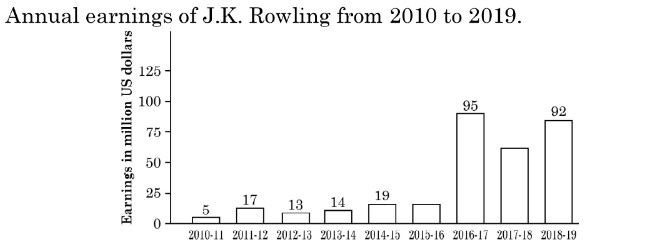
Annual earnings of J.K. Rowling from 2010 to 2019.

On the basis of your understanding of the passage answer any five of the six questions given below.
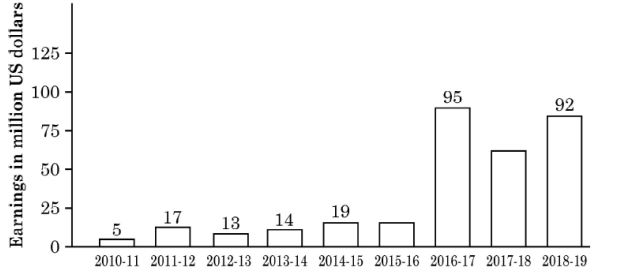
Diagram 1 – CBSE Class 10 English 2022 Set 4 Solutions

(1) Explain J.K. Rowling’s ‘near magical rise to fame’.

[1 Mark]
Answer: J.K. Rowling’s rise to fame is described as ‘near magical’ because she started writing stories from a young age and despite many difficulties, including several rejections from publishers, she never gave up. The idea of Harry Potter came to her while she was stuck on a train, and she spent five years developing the story. After persistent efforts, her first book was published in 1997, and it soon became a huge success, making her one of the most famous and successful authors in the world.
Key Points: Started writing stories from childhood - Faced multiple rejections from publishers - Developed Harry Potter story over five years - First book published in 1997 - Book became a huge success quickly - Achieved worldwide fame and success

(2)

What reason did the publishers give for rejecting Rowling’s book ?

[1 Mark]
Answer: The publishers rejected Rowling's book because they thought the plot was too complex.
Key Points: Publishers' rejection - Plot considered too complex - Initial difficulty in finding a publisher

(3)

Find a word in the last para that means the same as ‘insecure/helpless’.

[1 Mark]
Answer: The word from the last paragraph that means 'insecure' or 'helpless' is 'vulnerability'.
Key Points: The word should be found in the last paragraph-The word 'vulnerability' means the state of being exposed to the possibility of being attacked or harmed, which is similar to feeling insecure or helpless-The word is related to Harry's glasses as a clue to his 'vulnerability'

(4)

Why was Rowling outraged with the Italian dust jacket ?

[1 Mark]
Answer: Rowling was outraged with the Italian dust jacket because it showed Harry Potter without his glasses. She believed that the glasses were an important clue to Harry's vulnerability, and removing them was inaccurate and misleading.
Key Points: Rowling's obsession with accuracy-The dust jacket showed Harry without glasses-Glasses symbolize Harry's vulnerability-Rowling was upset because it misrepresented her character

(5)

According to the graph, how many years did it take Rowling to become very successful ?

[1 Mark]
Answer: It took J.K. Rowling about three years to become very successful, as by the time she published the third Harry Potter book, she had reached the top of the publishing world.
Key Points: Rowling started writing the first book in the early 1990s-She received her first royalty cheque in 1997-By the third book’s publication (around 3 years later), she became very successful-The significant rise in her earnings and popularity occurred within these first few years

(6)

What has become legendary about Rowling ?

[1 Mark]
Answer: Rowling's quality control and her obsession with accuracy have become legendary.
Key Points: Rowling's quality control-obsession with accuracy-example of her concern about details such as Harry's glasses

(7)

What was the drawback of achieving fame ?

[1 Mark]
Answer: The drawback of achieving fame was that J.K. Rowling's life was turned upside down, with journalists knocking on the door of her flat day and night, disturbing her privacy.
Key Points: Loss of privacy-Journalists constantly at her flat-Life turned upside down due to sudden fame

Section B

Question 8. Read the passage given below : (1) Milkha Singh, also known as The Flying Sikh, was an Indian track and field sprinter who was introduced to the sport while serving in the Indian Army. He is the only athlete to win gold in 400 metres at the Asian Games as well as the Commonwealth Games. He also won gold medals in the 1958 and 1962 Asian Games. He represented India in the 1956 Summer Olympics in Melbourne, the 1960 Summer Olympics in Rome and the 1964 Summer Olympics in Tokyo. He was awarded the Padma Shri, India’s fourth-highest civilian honour, in recognition of his sporting achievements. (2) The race for which Singh is best remembered is his fourth-place finish in the 400 metres final at the 1960 Olympic Games. He led the race till the 200 m mark before easing off, allowing others to pass him. Singh’s fourth-place time of 45.73 seconds was the Indian national record for almost 40 years. (3) From beginnings that saw him orphaned and displaced during the partition of India, Singh became a sporting icon in the country. In 2008, journalist Rohit Brijnath described Singh as “the finest athlete India has ever produced”. (4) He was disappointed with his debut performance at the 1956 Melbourne Olympics. “I returned to India, chastened by my poor performance in Melbourne. I had been so excited by the prospects of being part of the Indian Olympics team, but, hadn’t realized how strong and professional the competition would be. My success in India had filled me with a false sense of pride and it was only when I was on the track that I saw how inconsequential my talents were when pitted against superbly fit and seasoned athletes. It was then that I understood what competition actually meant, and that if I wanted to succeed on the international arena, I must be prepared to test my mettle against the best athletes in the world.” (5) Then he decided to make sprinting the sole focus of his life. “Running had thus become my God, my religion and my beloved”. “My life during those two years was governed by strict rules and regulations and a self-imposed penance. Every morning I would rise at the crack of dawn, get into my sports kit and dash off to the track, where I would run two or three miles cross-country in the company of my coach.” (6) On how he pushed himself through the tough days of vigorous training. “I practiced so strenuously that often I was drained of all energy, and there were times when I would increase my speed to such an extent that after my rounds, I would vomit blood or drop down unconscious through sheer exercise. My doctors and coaches warned me, asked me to slow down to maintain my health and equilibrium but my determination was too strong to give up. My only focus was to become the best athlete in the world. But then images of a packed stadium filled with cheering spectators, wildly applauding me as I crossed the finishing line, would flash across my mind and I would start again, encouraged by visions of victory.”

(1) What is Milka Singh known as ? What realization did Milkha Singh have when he was on the track during the Melbourne Olympics ?

[1 Mark]
Answer: Milkha Singh is known as The Flying Sikh.
During the Melbourne Olympics, he realized that his talents were not enough against world-class athletes and that he needed to work much harder and be prepared to compete at the highest level.
Key Points: Known as The Flying Sikh - Realized his talents were insufficient against top athletes - Needed to prepare harder for international competition

(2) State two consequences of his hard and strenuous practice.

[1 Mark]
Answer: The hard and strenuous practice made Milkha Singh sometimes vomit blood and drop unconscious because of extreme exercise. Despite warnings from doctors and coaches, he continued training with strong determination to become the best athlete, showing his passion and perseverance.
Key Points: Vomited blood due to intense practice - Dropped unconscious from exhaustion - Continued training despite health warnings because of determination

(3) List any two of Milkha Singh’s achievements.

[1 Mark]
Answer: Milkha Singh’s achievements include winning gold medals in the 400 metres at the Asian Games in 1958 and 1962 and the Commonwealth Games. He also set an Indian national record of 45.73 seconds in the 400 metres at the 1960 Olympics, which stood for nearly 40 years.
Key Points: Gold medals in 400 metres at Asian Games - Gold medal in 400 metres at Commonwealth Games - Indian national record of 45.73 seconds in 400 metres at 1960 Olympics

(4) What strict rules and regulations did Milkha Singh follow ?

[1 Mark]
Answer: Milkha Singh followed strict rules and regulations by waking up early at dawn, wearing his sports kit, and running two or three miles cross-country daily with his coach. He was disciplined and treated running as his religion, showing great dedication and focus on training as stated in paragraph 5 of the passage.
Key Points: Woke up early at dawn - Ran two or three miles daily - Followed strict discipline and focus on training

(5) What motivated Milkha Singh to become the best athlete in the world ?

[1 Mark]
Answer: Milkha Singh was motivated to become the best athlete in the world by his passion for running which became his God and religion. Despite facing tough training and health warnings, his determination and visions of victory encouraged him to keep pushing himself as described in paragraph 5 and 6 of the passage.
Key Points: Passion for running - Strong determination despite hardships - Encouragement from visions of victory

(6) Explain the phrase ‘I would start again’ in the last sentence.

[1 Mark]
Answer: The phrase 'I would start again' means that despite feeling extremely tired and unwell due to intense training, Milkha Singh found new energy and motivation to continue his practice. The vision of winning and the cheering crowd encouraged him to overcome difficulties and keep trying, showing his strong passion and determination to succeed in sprinting.
It reflects his never giving up attitude as described in the passage.
Key Points: Encouragement from visions of victory - Overcoming exhaustion and pain - Strong determination and passion to succeed
Question 9. Read the following excerpt from a Case Study. J.K. Rowling – A Journey The story of Joanne Kathleen Rowling’s near magical rise to fame is almost as well known as the characters she creates. Rowling was constantly writing and telling stories to her younger sister, Dianne. “The first story I ever wrote down was about a rabbit called Rabbit.” Rowling said in an interview. “He got the measles and was visited by his friends including a giant bee called Miss Bee. And ever since Rabbit and Miss Bee, I have always wanted to be a writer, though I rarely told anyone so. However, my parents, both of whom come from impoverished backgrounds and neither of whom had been to college, took the view that my overactive imagination was an amusing personal quirk that would never pay a mortgage or secure a pension. A writer from the age of six, with two unpublished novels in the drawer, she was stuck on a train when Harry walked into her mind fully formed. She spent the next five years constructing the plots of seven books, one for every year of his secondary school life. Rowling says she started writing the first book, Harry Potter and the Sorcerer’s Stone, in Portugal, where she was teaching English. At first nobody wanted to publish Harry Potter. She was told that plot was too complex. Refusing to compromise, she found a publisher. In 1997 Rowling received her first royalty cheque. By book three, she had sky rocketed to the top of the publishing world. A row of zeroes appeared on the author’s bank balance and her life was turned upside down. Day and night she had journalists knocking on the unanswered door of her flat. Rowling’s quality control has become legendary, as her obsession with accuracy. She’s thrilled with Stephen Fry’s taped version of the books and outraged that an Italian dust jacket showed Harry minus his glasses. “Don’t they understand that the glasses are the clue to his vulnerability.”
Diagram 2 – CBSE Class 10 English 2022 Set 4 Solutions

(1) Rowling was outraged because an Italian dust jacket showed Harry without his glasses, which she believed were important as they showed his vulnerability.

[1 Mark]
Answer: Rowling was upset because the Italian dust jacket showed Harry without his glasses, but according to the case, the glasses are important as they show Harry’s vulnerability. She wanted every detail to be accurate and true to her story, so missing the glasses was wrong and ignored Harry’s true character.
Key Points: Rowling’s obsession with accuracy - Glasses represent Harry’s vulnerability - Importance of details in character portrayal

(2) J.K. Rowling’s rise to fame is called ‘near magical’ because she went from being an unknown writer to becoming extremely famous and successful after the Harry Potter books became popular worldwide.

[1 Mark]
Answer: J.K. Rowling’s rise to fame is called near magical because she was an unknown writer who faced many rejections but still believed in her story. After Harry Potter was published, she quickly became very famous and successful, as mentioned in the case where a row of zeroes appeared on her bank balance after book three. This shows her journey from struggle to great success.
Key Points: Unknown writer faced rejection - Harry Potter publication led to huge success - Became extremely famous and wealthy

(3) The drawback of achieving fame was that her life was turned upside down and journalists kept knocking on the door of her flat day and night.

[1 Mark]
Answer: The drawback of J.K. Rowling's fame was that her life became very busy and disturbed because journalists kept knocking on her flat day and night. This shows that while she gained success, she lost her privacy as mentioned in the case passage, "her life was turned upside down" due to constant media attention.
Key Points: Fame brought loss of privacy - Constant journalist visits disturbed her life - Life was turned upside down due to success

(4) The publishers rejected her book because they thought the plot was too complex.

[1 Mark]
Answer: The publishers initially rejected J.K. Rowling's Harry Potter book because they thought the plot was too complex. However, Rowling did not change her story and finally found a publisher who accepted her work. This shows her determination to stay true to her creative vision as mentioned in the case study.
Key Points: Publishers found plot too complex - Rowling refused to compromise - Finally found a publisher

(5) The word is “vulnerability.”

[1 Mark]
Answer: Vulnerability means being open to harm or weakness. In the case of Harry Potter, Rowling says that his glasses are a clue to his vulnerability, showing that he is not perfect and has weaknesses. This makes the character more relatable and realistic, showing he can face challenges.
Key Points: Meaning of vulnerability - Glasses as a symbol of Harry's weakness - Shows character's relatable traits

(6) It took Rowling about five years to become very successful, as she spent five years constructing the plots of the seven books.

[1 Mark]
Answer: Rowling spent five years constructing the plots of seven Harry Potter books before she became very successful. This shows that she worked hard and patiently to create her stories. As mentioned in the case, Harry came into her mind fully formed during a train journey, and it took time for her to develop the books. Her success came after this dedicated effort and finding a publisher who accepted her complex plot.
Key Points: Rowling spent five years planning - She developed seven book plots - Success came after dedicated effort

Section C

Question 10.

What does the writer recall about his childhood in Goa? (Glimpses of India)

[2 Marks]
Answer: In the story "Glimpses of India," the writer recalls his childhood in Goa with a deep sense of nostalgia. He remembers the simplicity and charm of Goan life, particularly the traditional bread-making by the elders, which was once a popular household activity. The writer fondly recollects the warm and lively atmosphere of Goan homes, where family bonds and cultural traditions were strong. These memories of Goa's peaceful environment and close-knit community left a lasting impression on him and contributed to shaping his personality and future interests.
Key Points: Nostalgia for childhood in Goa - Bread-making was a common tradition - Warm family atmosphere - Cultural traditions and close-knit community - Lasting influence on writer's personality
Question 11.

“These sights so moved him that he at once went out into the world to seek enlightenment.” What were the sights that moved ‘him’ ? (The Sermon at Benaras)

[2 Marks]
Answer: The sights that moved him deeply were the suffering and sorrow he witnessed in the world. He saw people experiencing pain, old age, sickness, and death, which made him realize the inevitable truth of human suffering. This realization compelled him to leave his comfortable life and embark on a journey in search of enlightenment and a solution to end suffering. He wandered for seven years seeking spiritual knowledge until he attained enlightenment under the peepal tree, later called the Bodhi Tree. This transformation led to his role as the Buddha, who shared his wisdom through sermons, including the famous Sermon at Benares.
Key Points: Sights of suffering and sorrow witnessed - Realization of pain, old age, sickness, and death - Desire to understand and overcome suffering - Journey to seek enlightenment - Attainment of enlightenment under the Bodhi Tree - Became the Buddha and shared his wisdom through sermons
Question 12. Mention any two issues over which Amanda was nagged and scolded.
[2 Marks]
Answer: Amanda was often nagged and scolded for being moody and for talking too much. The speaker mentioned that Amanda was always so moody, indicating that her changeable moods were a concern. Additionally, Amanda was told that she was a chatterbox, meaning she talked a lot, which annoyed the person speaking to her. These were the two main issues for which Amanda faced nagging and scolding.
Key Points: Amanda was nagged for being moody-Amanda was scolded for talking too much (being a chatterbox)
Question 13.

Why does the poet wish to ‘turn’ and live with animals ? (Animals)

[2 Marks]
Answer: In the poem "Animals" by Carolyn Wells, the poet expresses a wish to 'turn' and live with animals because animals live freely and authentically without the complications and constraints of human society. The poet contrasts the instinctive, natural lives of animals with the sometimes harsh, hypocritical, and artificial lives of humans. By living with animals, the poet hopes to experience a life that is fearless, genuine, and connected to nature. Animals are presented as honest creatures who follow their instincts, whereas humans often live under social pressures that limit their freedom and happiness. This wish reflects a desire for simplicity, purity, and a life unburdened by human worries.
Key Points: Poet’s wish to live with animals due to their freedom-Natural and instinctive life of animals contrasted with complex human life-Desire for a genuine and fearless existence-Animals’ honesty and freedom from social constraints-Poem's underlying theme of simplicity and natural living
Question 14. Describe Custard the dragon.
[2 Marks]
Answer: Custard the dragon is a character in the poem 'The Tale of Custard the Dragon' by Ogden Nash. Although Custard looks fierce with big sharp teeth, spikes on his back, and scales underneath, he is actually a coward. The other animals call him 'cowardly dragon' because he is afraid of even small things and cries for a safe cage to protect himself. However, when danger comes, Custard shows his true bravery by courageously fighting off the threat, surprising everyone with his courage.
Key Points: Custard has big sharp teeth-Custard has spikes on top and scales underneath-Custard is scared and cries for a safe cage-He is called a coward by the other animals-Despite this, Custard shows bravery when danger arises
Question 15.

What did Ebright learn from his failure at the Science fair ? (The making of a scientist)

[2 Marks]
Answer: When Richard Ebright did not win anything at the science fair, he learned an important lesson. He realized that the winners had conducted real experiments rather than just creating neat displays. This failure made him understand the value of genuine experimentation and scientific inquiry. Motivated by this experience, Ebright developed a competitive spirit and decided that for the next year's fair, he would undertake a real experiment. This marked a turning point in his journey, teaching him that dedication, hard work, and true scientific investigation are essential qualities for a scientist.
Key Points: Ebright did not win at science fair-Ebright realized winners did real experiments, not just displays-He learned the importance of genuine scientific inquiry-Ebright developed a competitive spirit-He decided to do real experiments next time-Failure motivated him to work harder-Lesson: dedication and real experimentation are key qualities of a scientist
Question 16.

How did Lutkins impress the lawyer ? (The Hack Driver)

[2 Marks]
Answer: Lutkins impressed the lawyer by showing his professionalism and sobriety. Despite being offered a dollar tip by Dr. Margolin, Lutkins took it without uttering a word, which showed his respectful behavior and seriousness towards his job. Additionally, the lawyer recognized Lutkins' potential and offered him cleaner employment, appreciating his qualities such as honesty and a willingness to work hard. This impressed the lawyer as he saw Lutkins as someone reliable and deserving of better opportunities.
Key Points: Lutkins took the tip silently-showed professionalism and respect-The lawyer recognized his potential-The lawyer offered cleaner employment-Lutkins was seen as reliable and hardworking

Section D

Question 17.

The following paragraph has an error in each line. Identify the error and write its correction against the correct line number. The first one has been done as an example:

Air pollution is emerging like a eg like as

global problem among the world. (a) ______________ _____________

Much of our cities have (b) ______________ ________________________

industries which is responsible for 20% of the (c) ___________ ____

pollutants.

[3 Marks]
Answer:

The paragraph contains errors in each line. The first error is identified as 'like a eg like' which should be corrected to 'as'.

(a) 'global problem among the world' should be corrected to 'a global problem in the world.'

(b) 'Much of our cities have' should be corrected to 'Many of our cities have.'

(c) 'industries which is responsible for 20% of the pollutants' should be corrected to 'industries which are responsible for 20% of the pollutants.'

Corrections ensure proper grammar, subject-verb agreement, and natural expression.

Key Points: Identify the incorrect words/phrases in each line-Correct errors related to prepositions and articles (e.g. 'like' to 'as')-Correct noun quantifiers (e.g. 'Much' to 'Many')-Ensure subject-verb agreement (e.g. 'is' to 'are' when referring to 'industries')-Write corrected sentences clearly against each line number
Question 18.

Read the following conversation and complete the passage that follows :

Neha: I'm really looking forward to the class picnic tomorrow.

Nanita : Yes, after a long time we will be meeting our friends and

teachers.

Neha told Namita (1) _______________looking forward to the class picnic

______________ Namita agreed that after a long time.

2)_____________ friends and teachers.

[3 Marks]
Answer: Neha told Namita (1) that she was really looking forward to the class picnic the next day. Namita agreed that after a long time they would be meeting their friends and teachers. (2) She expressed her happiness about seeing everyone after a long time.
Key Points: Use indirect speech for Neha's statement - 'was really looking forward to the class picnic tomorrow'-Change 'tomorrow' to 'the next day'-Use agreement statement by Namita - 'agreed that after a long time'-Include sentence expressing meeting friends and teachers after a long time

Section E

Question 19.

As Valli, make a diary entry sharing your joys and disappointments during the bus ride.

[4 Marks]
Answer:

Dear Diary,

Today was a very special day for me because I finally got to take my first bus ride all by myself. I had been so excited for a long time and had saved money to pay for the fare. When I boarded the bus, I felt a mix of nervousness and happiness. I enjoyed seeing the bustling streets and the different people around me. The ride itself was thrilling and made me feel grown-up and independent.

However, not everything was perfect. While I enjoyed looking out the window and watching the scenes outside, on my return journey, I was too scared to look outside because the bus was moving fast, and I felt a little uneasy. Also, some passengers seemed concerned for me, which made me feel a bit shy. Still, the conductor was kind and friendly, which made me feel more at ease.

Overall, this experience was a mix of joy and nervousness, but I am proud of myself for taking this step. I look forward to more adventures!

Key Points: Valli's excitement and preparation for the bus ride - Savings of fare and plans made for the ride - Joy of seeing new sights and feeling independence - Nervousness and shyness during the ride - Kindness of the conductor and interactions with passengers - Fear while looking out the window on return journey - Overall feelings of accomplishment and joy.
Question 20.

Natalya and her father Chubukov ‘turn around’ when Lomov puts his proposal in the open. As a reader briefly describe what you think of Natalaya and Chubukov from the play “The Proposal”.

[4 Marks]
Answer: In the play "The Proposal" by Anton Chekhov, Natalya and her father Chubukov are portrayed as quarrelsome yet caring characters. When Lomov puts forth his marriage proposal, both Natalya and Chubukov 'turn around,' showing their surprise and perhaps embarrassment. Chubukov is a proud landowner who is eager to see his daughter married to a wealthy neighbor, Lomov. However, he is also somewhat humorous and impatient, as seen when he suspects Lomov's purpose and later makes affectionate yet ironic remarks like loving Lomov as his own son. Natalya, on the other hand, demonstrates a strong personality; she is quick to argue and assert herself, reflecting her quarrelsome nature. She is also sensitive and somewhat romantic, as Chubukov describes her as "like a lovesick cat." Their constant quarreling over trivial matters adds a comedic element to the play and shows their human flaws, but underneath lies genuine concern and affection for each other and their prospective relationships. Overall, both characters make the proposal scene lively and engaging, emphasizing the humorous complexities of social interactions and marriage proposals.
Key Points: Chubukov is a proud landowner eager for Lomov's proposal - He is humorous and shows affection despite suspicion - Natalya is quarrelsome but caring - She is sensitive and quick to argue - Both characters quarrel over trivial issues - Their reactions add comedy and reveal human nature - They show genuine affection and concern - Their personalities make the proposal scene lively
Question 21.

The credit of Bholi’s transformation to Sulekha goes to her teacher. Elaborate with reference to the text.

[4 Marks]
Answer:

Bholi, whose real name is Sulekha, was initially a timid and neglected girl, often called 'Bholi' meaning simpleton, which reflected her low self-esteem and the way society and even her family treated her. Her transformation largely credit goes to her teacher, who recognized her potential and took a special interest in her growth. The teacher boosted Bholi’s confidence by encouraging her to believe in herself and by making her realize her worth. She helped Bholi overcome the social barriers and the negative labels attached to her. Through education and personal attention, the teacher empowered Bholi to stand up for herself, especially when she courageously rejected the unequal marriage proposed by her parents. By the end of the story, Bholi’s confident and assertive personality leads her to reclaim her real name, Sulekha, symbolizing her transformation and self-respect. The teacher’s role was crucial in changing Bholi’s life as she not only provided knowledge but also motivation and moral support, encouraging her to rise above her circumstances and societal stereotyping.

Key Points: Bholi's initial low self-esteem and social neglect - Teacher's encouragement and personal attention - Building Bholi's confidence and self-worth - Teacher's role in helping Bholi reject unequal marriage - Transformation symbolized by reclaiming her real name Sulekha - Importance of education and motivation from the teacher

Section F

Question 22.

You are Vikram Vanya, Librarian, B.S. Public School, Delhi. Write a letter to the Manager of Amar Publication House, Mumbai, placing an order for 4 sets of Social Studies books for grades 6 -8 published by NCERT. In not more than 120 words, mention school discount, mode of payment, and date of delivery.

[5 Marks]
Answer: B.S. Public School,
Delhi,
15 April 2024

The Manager,
Amar Publication House,
Mumbai.

Subject: Order for Social Studies books for grades 6 to 8

Dear Sir,
I am Vikram Vanya, librarian of B.S. Public School, Delhi. I would like to place an order for 4 sets of NCERT Social Studies books for classes 6, 7, and 8. Kindly provide the school discount as applicable. We shall make the payment through cheque after receiving the invoice. Please deliver the books by 10 May 2024 to our school address.

Thank you.

Sincerely,
Vikram Vanya
Librarian
Key Points: Order for 4 sets of NCERT Social Studies books for grades 6 to 8 - Mention of school discount - Payment mode as cheque - Request for delivery date

Section G

Question 23.

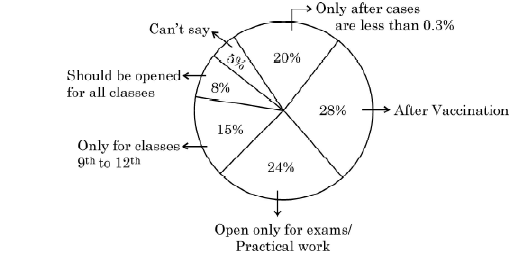
A group of enterprising young adults conducted a survey on reopening of educational institutions in the National Capital

Write a paragraph in about 120 words analysing the listed responses
[5 Marks] Diagram 3 – CBSE Class 10 English 2022 Set 4 Solutions
Answer: The survey conducted by the group of young adults on the reopening of educational institutions in the National Capital revealed a variety of opinions. Many respondents expressed concerns about health and safety amid the ongoing situation, emphasizing the need for strict safety protocols before reopening. Others supported reopening with precautions, highlighting the importance of in-person learning for better understanding and social interaction. Some participants suggested hybrid models combining online and offline classes to balance safety and learning. Additionally, many recognized the role of digital tools and services in continuing education during closures, reflecting the growing importance of digital education. Overall, the responses show a cautious but hopeful attitude towards reopening, urging authorities to consider safety and the benefits of blended education models.
Key Points: Concerns about health and safety-Importance of safety protocols-Support for reopening with precautions-Need for in-person learning-Preference for hybrid learning models-Role of digital education tools-Cautious yet hopeful attitudes towards reopening

Paper Details

CBSE Board Exam 2022

Class

Class 10

Subject

English

Year

2022

Set

Set 4

Other Years — English

2022 Set-1

2022 Set-2

2022 Set-3

2022 Set-4

2023 Set-1

2023 Set-2

2023 Set-3

2023 Set-4

2024 Set-1

2024 Set-2

2024 Set-3

2024 Set-4

2024 Set-5

2025 Set-1

2025 Set-2

2025 Set-3

2025 Set-4

2025 Set-5

2025 Set-6

CBSE Class 10 English 2022 Set 4 Solutions | Prepzy