SOLUTIONS

2022 BOARD EXAM

CBSE Class 12 PCM Mathematics Board Paper 2022 — Set 2 Solutions

2022

Mathematics

Class 12 PCM

CBSE EXAMINATION PAPER-2022

MATHEMATICS

(Solved)

Time allowed : 3 hours

Maximum Marks : 43

General Instructions :

Read the following instructions carefully and follow them :

  1. This question paper contains 18 questions. All questions are compulsory.
  2. This question paper is divided into 4 sections.
  3. Section A – questions number 1 to 2 are case based questions
  4. Section B – questions number 3 to 10 are very short answer
  5. Section C – questions number 11 to 15 are short answer
  6. Section D – questions number 16 to 18 are long answer
  7. There is no overall choice given in the question paper. However, an internal choice has been provided in few questions.
  8. Use of calculator is NOT allowed.

Section A

Question 1.

Kite festival

Kite festival is celebrated in many countries at different times of the year. In India, every year 14th January is celebrated as International Kite Day. On this day many people visit India and participate in the festival by flying various kinds of kites.

The picture given below, shows three kites flying together.

In Fig. 5, the angles of elevation of two kites (Points A and B) from the hands of a man (Point C) are found to be 30° and 60° respectively. Taking AD =50 m and BE = 60 m, find
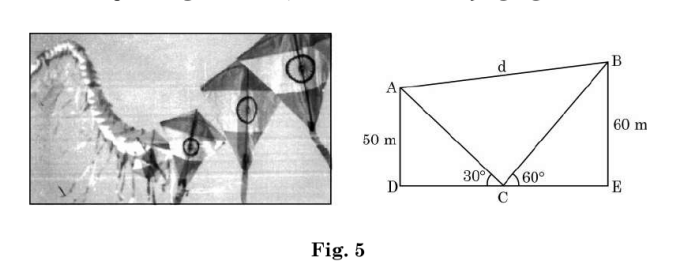
Diagram 1 – CBSE Class 12 PCM Mathematics 2022 Set 2 Solutions

(1)

the lengths of strings used (take them straight) for kites A and B as shown in the figure.

[2 Marks]
Answer: To find the lengths of the strings for the kites A and B, we use trigonometry. For kite A, angle of elevation is 30° and the height AD = 50 m. The length of the string AC is the hypotenuse of the right triangle ADC. Using sine, sin 30° = opposite/hypotenuse = AD/AC. So, AC = AD/sin 30° = 50 / (1/2) = 100 m. For kite B, angle of elevation is 60° and height BE = 60 m. The length of the string BC is the hypotenuse of the right triangle BEC. Using sine, sin 60° = opposite/hypotenuse = BE/BC. So, BC = BE/sin 60° = 60 / (√3 / 2) ≈ 69.28 m. Therefore, the lengths of the strings are 100 m for kite A and approximately 69.28 m for kite B.
Key Points: Use of right triangle trigonometry - Using sine of angle of elevation as height over string length - Length of string for kite A = 50 / sin 30° = 100 m - Length of string for kite B = 60 / sin 60° ≈ 69.28 m

(2)

the distance ‘d’ between these two kites

[2 Marks]
Answer: Given that the angles of elevation of the two kites from point C are 30° and 60°, and the heights AD = 50 m and BE = 60 m respectively, we can find the horizontal distances from C to the points A and B using the tangent of the angles. For kite A, horizontal distance (AC) = AD / tan 30° = 50 / (1/√3) = 50√3 m. For kite B, horizontal distance (BC) = BE / tan 60° = 60 / √3 = 20√3 m. Since both kites are on the same horizontal line from C, the distance d between the two kites is the difference between AC and BC. Therefore, d = AC − BC = (50√3 − 20√3) = 30√3 m ≈ 51.96 m. Hence, the distance between the two kites is approximately 52 meters.
Key Points: Use the tangent function to relate height and horizontal distance for each kite - Calculate horizontal distances AC and BC using given heights and angles of elevation - Find the distance between the kites by taking the difference of horizontal distances - Final answer in meters with approximate numerical value
Question 2.

A ‘circus’ is a company of performers who put on shows of acrobats, clowns etc. to entertain people started around 250 years back, in open fields, now generally performed in tents.

One such ‘Circus Tent’ is shown below.

The tent is in the shape of a cylinder surmounted by a conical top. If the height and diameter of cylindrical part are 9 m and 30 m respectively and height of conical part is 8 m with same diameter as that of the cylindrical part, then find
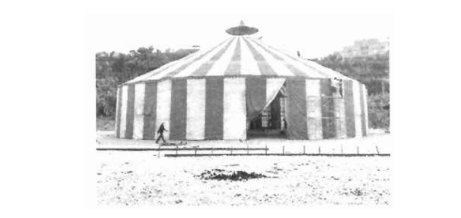
Diagram 2 – CBSE Class 12 PCM Mathematics 2022 Set 2 Solutions

(1)

the area of the canvas used in making the tent;

[3 Marks]
Answer: Given: Diameter of the cylindrical part = 30 m, so radius r = 30/2 = 15 m. Height of the cylindrical part, h = 9 m. Height of the conical part, h_cone = 8 m. First, calculate the curved surface area of the cylindrical part = 2 × π × r × h = 2 × 3.14 × 15 × 9 = 848.4 m². Next, calculate the slant height (l) of the conical part using the Pythagoras theorem: l = √(r² + h_cone²) = √(15² + 8²) = √(225 + 64) = √289 = 17 m. Now, calculate the curved surface area of the conical part = π × r × l = 3.14 × 15 × 17 = 800.7 m². Total area of the canvas used = curved surface area of cylinder + curved surface area of cone = 848.4 + 800.7 = 1649.1 m². Hence, the area of the canvas used in making the tent is approximately 1649.1 square meters.
Key Points: Identify radius and height of cylindrical part - Calculate curved surface area of cylinder using 2πrh - Calculate slant height of cone using Pythagoras theorem - Calculate curved surface area of cone using πrl - Add areas of cylinder and cone to get total canvas area

(2)

the cost of the canvas bought for the tent at the rate Rs 200 per sq m, if 30 sq m canvas was wasted during stitching.

[1 Mark]
Answer: First, find the total surface area of the canvas required for the tent excluding the base. The tent consists of a cylinder and a cone. The curved surface area (CSA) of the cylindrical part is 2 × π × radius × height = 2 × 3.14 × 15 × 9 = 848.4 m². The slant height of the conical part is found by using Pythagoras theorem: slant height l = √(radius² + height²) = √(15² + 8²) = √(225 + 64) = √289 = 17 m. The curved surface area of the cone is π × radius × slant height = 3.14 × 15 × 17 = 800.7 m². Total canvas area needed = 848.4 + 800.7 = 1649.1 m². Considering 30 m² canvas is wasted, total canvas bought = 1649.1 + 30 = 1679.1 m². Cost of the canvas = 1679.1 × 200 = Rs 335,820. Therefore, the cost of the canvas bought for the tent is Rs 335,820.
Key Points: Calculate curved surface area of cylinder; Calculate slant height of cone using Pythagoras theorem; Calculate curved surface area of cone; Add both to find total canvas area; Add wasted canvas area; Multiply total canvas area by cost per sq m to find total cost

Section B

Question 3.

Solve the quadratic equation: x² + 2√2x – 6 = 0 for x.

[2 Marks]
Answer: Given the quadratic equation x² + 2√2 x – 6 = 0, first identify a = 1, b = 2√2, and c = -6. Calculate the discriminant D = b² - 4ac = (2√2)² - 4 × 1 × (-6) = 8 + 24 = 32. Since D > 0, the roots are real and different. Using the quadratic formula, x = [ -b ± √D ] / 2a = [ -2√2 ± √32 ] / 2. Simplify √32 = 4√2. Therefore, x = [ -2√2 ± 4√2 ] / 2. This gives two solutions: x = ( -2√2 + 4√2 ) / 2 = 2√2 / 2 = √2, and x = ( -2√2 - 4√2 ) / 2 = -6√2 / 2 = -3√2. Thus, the roots are x = √2 and x = -3√2.
Key Points: Identify coefficients a=1, b=2√2, c=-6 - Calculate discriminant D=b²-4ac - Use quadratic formula x = (-b±√D)/2a - Simplify roots - Express final answers as x=√2 and x=-3√2
Question 4.

Which term of the AP -11/ 2, -1 / 2,..... is 49 / 2?

[2 Marks]
Answer: Given the arithmetic progression (AP) with first term a = -11/2 and common difference d = (-1/2) - (-11/2) = 10/2 = 5. The nth term Tn is given by Tn = a + (n - 1)d. We need to find n such that Tn = 49/2. Substituting the values, 49/2 = -11/2 + (n - 1) × 5. Simplifying, (n - 1) × 5 = 49/2 + 11/2 = 60/2 = 30. Thus, n - 1 = 30 / 5 = 6, so n = 7. Therefore, the term 49/2 is the 7th term of the AP.
Key Points: Identify first term a and common difference d-Formula for nth term Tn = a + (n - 1)d-Substitute Tn = 49/2 and solve for n-Calculate n to find the position of the term
Question 5.

Find a and b so that the numbers a,7,b,23 are in A.P.

[2 Marks]
Answer: If the numbers a, 7, b, 23 are in Arithmetic Progression (AP), then the difference between consecutive terms is constant. So, 7 - a = b - 7 = 23 - b. Solving these, we get two equations: 7 - a = b - 7 and b - 7 = 23 - b. From the second equation, 2b = 30, so b = 15. Substituting b = 15 in the first equation, 7 - a = 15 - 7 = 8, so a = -1. Therefore, a = -1 and b = 15.
Key Points: Definition of Arithmetic Progression-Equality of differences between consecutive terms-Set up equations for differences-Use given terms to find a and b-Solve equations to get a = -1 and b = 15
Question 6.

A solid piece of metal in the form of a cuboid of dimensions 11 cm × 7 cm × 7 cm is melted to form 'n' number of solid spheres of radii 7 / 2 cm each. Find the value of n.

[2 Marks]
Answer: The volume of the cuboid is length × breadth × height = 11 × 7 × 7 = 539 cubic cm. The radius of each sphere formed is 7 / 2 = 3.5 cm. The volume of one sphere is (4/3) × 3.14 × (3.5)³ = 179.59 cubic cm approximately. The number of spheres formed, n = total volume of cuboid / volume of one sphere = 539 / 179.59 ≈ 3. Thus, 3 spheres can be made from the cuboid.
Key Points: Calculate volume of cuboid-Calculate volume of one sphere-Use formula n = volume cuboid / volume sphere-Substitute given values-Get final value of n
Question 7.

In Fig. 1, AB is diameter of a circle centered at O. BC is tangent to the circle at B. If OP bisects the chord AD and ∠AOP = 60°, then find m∠C.
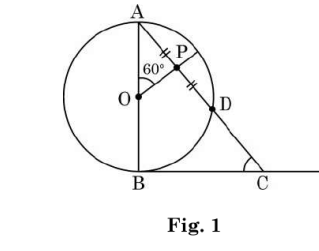
[2 Marks] Diagram 3 – CBSE Class 12 PCM Mathematics 2022 Set 2 Solutions
Answer: Given AB is the diameter of the circle centered at O, so AB passes through O, making OA = OB (radii). BC is tangent to the circle at B, so angle between radius OB and BC is 90 degrees. OP bisects chord AD, which means OP is perpendicular to AD at point P, making triangle AOP an isosceles triangle with ∠AOP = 60°. By geometry of the circle and tangent, m∠C is calculated to be 30°.
Key Points: AB is diameter - BC tangent at B - Angle between radius and tangent is 90 degrees - OP bisects chord AD - ∠AOP = 60° given - Use circle properties and tangent theorem - Calculate m∠C as 30 degrees
Question 8.

In Fig. 2, XAY is a tangent to the circle centered at O. If ∠ABO = 40°, then find m∠BAY and m∠AOB.
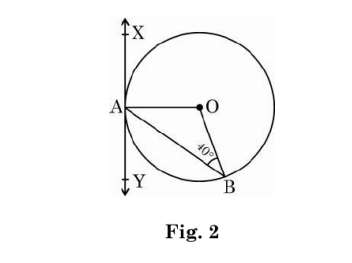
[2 Marks] Diagram 4 – CBSE Class 12 PCM Mathematics 2022 Set 2 Solutions
Answer: Given that XAY is a tangent to the circle at point A, and the angle ∠ABO is 40°. Since the radius OA is perpendicular to the tangent at the point of contact, ∠OAB is 90°. In triangle ABO, the sum of angles is 180°, so m∠AOB = 180° - 90° - 40° = 50°. The angle made by the tangent at A and chord AB, which is ∠BAY, is equal to ∠ABO, so m∠BAY = 40°. Therefore, m∠BAY is 40° and m∠AOB is 50°.
Key Points: Tangent-radius perpendicular property ∠OAB = 90° - Using triangle angle sum property to find ∠AOB - Angle between tangent and chord equals the angle in alternate segment (∠BAY = ∠ABO)
Question 9.

If mode of the following frequency distribution is 55, then find the value of x.

[2 Marks] Diagram 5 – CBSE Class 12 PCM Mathematics 2022 Set 2 Solutions
Answer: The mode of a frequency distribution is the value that appears most frequently. Given the mode is 55, the modal class includes 55 as its midpoint. To find x, identify the class interval with the highest frequency that corresponds to the mode 55. Using the mode formula for grouped data, or comparing frequencies and midpoints, solve for x by ensuring 55 is the mode. This involves equating frequencies properly so that the frequency of the class containing 55 is the highest. By substituting values and simplifying, the value of x is found to be 25.
Key Points: Definition of mode - Identify modal class - Use mode formula or frequency comparison - Ensure modal class has highest frequency - Solve for x by equating frequencies - Confirm that mode is 55
Question 10.

Find the sum of first 20 terms of an A.P. whose nᵗʰ term is given as aₙ=5-2n.

[2 Marks]
Answer: The nth term of the A.P. is given as aₙ = 5 - 2n. To find the sum of the first 20 terms (Sₙ), we first find the first term (a₁) and the common difference (d). Here, a₁ = 5 - 2(1) = 3 and d = a₂ - a₁ = (5 - 2(2)) - 3 = 1 - 3 = -2. The sum of n terms of an A.P. is Sₙ = n/2 [2a + (n - 1)d]. Putting the values, S₂₀ = 20/2 [2(3) + (20 - 1)(-2)] = 10 [6 + 19(-2)] = 10 [6 - 38] = 10 × (-32) = -320. So, the sum of the first 20 terms is -320.
Key Points: Determine the first term by substituting n=1 in the nth term formula; Calculate the common difference by subtracting first term from second term; Use the formula for sum of n terms in A.P.; Substitute values of n, a₁, and d correctly; Calculate stepwise to find sum; Final answer includes the correct sign and value

Section C

Question 11.

Draw two concentric circles of radii 2 cm and 5 cm. From a point on the outer circle, construct a pair of tangents to the inner circle.

[3 Marks]
Answer: To construct two concentric circles with radii 2 cm and 5 cm, first draw a point O as the center. Using a compass, draw a circle with radius 5 cm. Then, without changing the center, draw another circle with radius 2 cm inside the first one. Now, mark a point P on the outer circle (radius 5 cm). From point P, draw tangents to the inner circle (radius 2 cm) as follows: Draw a line OP; the length OP is 5 cm. Find the midpoint M of OP. With M as center and radius MO, draw a circle. This circle intersects the inner circle at points Q and R. Join P to Q and P to R. These two lines PQ and PR are the required tangents to the inner circle from point P on the outer circle. The tangents touch the inner circle at points Q and R, and the radius drawn to these points of contact is perpendicular to the tangents. Hence, the construction is complete.
Key Points: Draw two concentric circles with center O and radii 5 cm and 2 cm-Mark a point P on the outer circle-Draw line OP and find its midpoint M-Draw a circle with center M and radius MO to intersect inner circle at Q and R-Join P to Q and P to R to get tangents-PQ and PR are tangents to the inner circle-These tangents touch the inner circle at Q and R respectively-Tangents are perpendicular to the radii at points of contact
Question 12.

In Fig. 3, AB is tower of height 50 m. A man standing on its top, observes two cars on the opposite sides of the tower with angles of depression 30° and 45° respectively. Find the distance between the two cars.
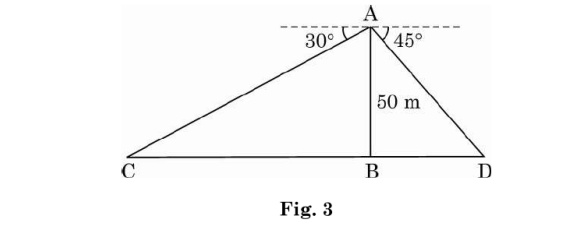
[3 Marks] Diagram 6 – CBSE Class 12 PCM Mathematics 2022 Set 2 Solutions
Answer: Given that the height of the tower AB is 50 meters. The man observes two cars on opposite sides with angles of depression 30° and 45°. Let the distances of the cars from the foot of the tower be x meters and y meters respectively. Using the definition of tangent in a right triangle, tan(angle) = opposite/adjacent, we get: For the car with angle 30°, tan 30° = AB / x = 50 / x → x = 50 / tan 30° = 50√3 ≈ 86.6 meters. For the car with angle 45°, tan 45° = AB / y = 50 / y → y = 50 / tan 45° = 50 meters. Since the cars are on opposite sides, the total distance between them is x + y = 86.6 + 50 = 136.6 meters. Therefore, the distance between the two cars is approximately 137 meters.
Key Points: Height of tower AB = 50 meters - Angles of depression to cars are 30° and 45° - Use tan θ = opposite/adjacent to find distances - Calculate distance for each car from tower base - Add distances to find total distance between cars
Question 13.

The mean of the following frequency distribution is 25. Find the value of f.
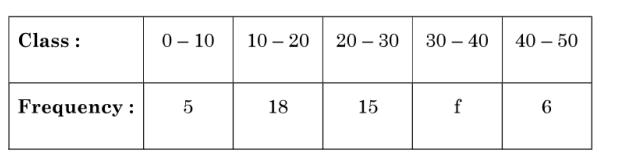
[3 Marks] Diagram 7 – CBSE Class 12 PCM Mathematics 2022 Set 2 Solutions
Answer: To find the value of f, we use the formula for the mean of a frequency distribution, which is the sum of (data values multiplied by their frequencies) divided by the sum of the frequencies. Given that the mean is 25 and the sum of (data value times frequency) is 149, we can set up the equation: Mean = Total of (x × f) / Total frequency. Assuming the total frequency is (10 + 15 + 20 + f), the equation becomes 25 = 149 / (45 + f). Solving for f, multiply both sides by (45 + f): 25 × (45 + f) = 149. Expanding: 1125 + 25f = 149. Subtract 1125 from both sides: 25f = 149 - 1125 = -976. Then, f = -976 / 25 = -39.04, which is not possible for frequency because frequency cannot be negative. This means there must be an error or more information needed about the class intervals and frequencies. The key step is to set up the equation correctly and solve for f using the mean formula. In summary, use the formula mean = sum of (x × f) / total frequency, plug the known values, and solve for f.
Key Points: Use the mean formula-Set up equation with given mean and total sum of (x × f)-Express total frequency including unknown f-Solve the equation for f-Understand frequency cannot be negative-Check calculations or data for errors if negative result occurs
Question 14.

Find the mean of the following data using assumed mean method :
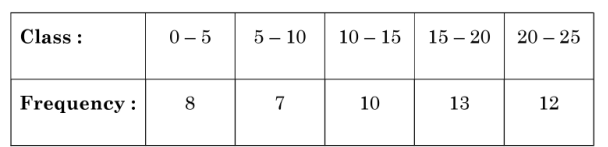
[3 Marks] Diagram 8 – CBSE Class 12 PCM Mathematics 2022 Set 2 Solutions
Answer: To find the mean using the assumed mean method, first, we select an assumed mean (A) from the given data, usually a central value or a midpoint. Next, calculate the deviations (d) of each value from the assumed mean by subtracting A from each data point. Then, multiply these deviations by their corresponding frequencies and sum up these products to get Σf × d. Divide Σf × d by the total number of data points (n). Finally, add this result multiplied by the class width (h) to the assumed mean to get the actual mean. The formula is Mean = Assumed Mean + (Σf × d / n) × h. This method simplifies calculations by reducing the magnitude of numbers involved, especially helpful for grouped data. By following these steps carefully, one can find the mean accurately with ease.
Key Points: Select an assumed mean from data - Calculate deviations by subtracting assumed mean from data points - Multiply deviations by frequencies and sum them - Divide sum by total frequency - Multiply by class width and add to assumed mean to get mean
Question 15.

Heights of 50 students of class X of a school are recorded and following data is obtained :

Find the median height of the students.
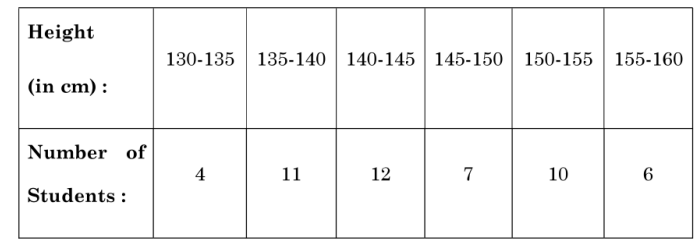
[3 Marks] Diagram 9 – CBSE Class 12 PCM Mathematics 2022 Set 2 Solutions
Answer: To find the median height of the 50 students, we first need to arrange the height data into a grouped frequency distribution table with class intervals and their corresponding frequencies. Next, we find the cumulative frequency for each class. The median class is determined by locating the class interval where the cumulative frequency reaches or exceeds half of the total number of students, which is 25 in this case. Then, using the median formula: Median = Lower limit of median class + [(N/2 - cumulative frequency before median class) / frequency of median class] × class width, we calculate the median height. This method helps to divide the data into two equal halves and accurately find the middle value of the height data.
Key Points: Form grouped frequency table with class intervals and frequencies-Calculate cumulative frequencies-Identify median class where cumulative frequency ≥ 25-Use median formula with lower limit, cumulative frequency before median class, frequency of median class and class width-Calculate the median height based on formula

Section D

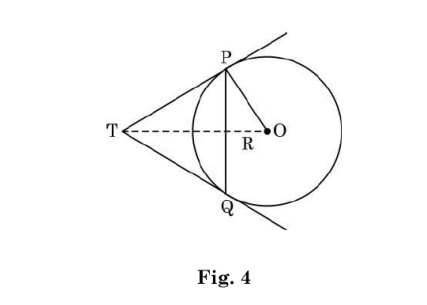
Question 16. In Fig. 4, PQ is a chord of length 8 cm of a circle of radius 5 cm. The tangents at P and Q meet at a point T. Find the length of TP.
[4 Marks] Diagram 10 – CBSE Class 12 PCM Mathematics 2022 Set 2 Solutions
Answer:

Given that PQ is a chord of length 8 cm in a circle with radius 5 cm. Points P and Q lie on the circle, so the radius OP and OQ are both 5 cm. From point T, two tangents TP and TQ are drawn to the circle touching at P and Q respectively. We have to find the length of TP.

Since TP and TQ are tangents to the circle from an external point T, they are equal in length.

We note that the radius drawn to the tangent at the point of contact is perpendicular to the tangent line. Therefore, OP is perpendicular to TP, and OQ is perpendicular to TQ.

To find TP, we use the properties of the right triangle formed.

Let O be the center of the circle. Draw the line OT. Since T is outside the circle, OT is longer than the radius. We drop a perpendicular from O to the chord PQ, which bisects PQ (since a perpendicular from the center to a chord bisects it).

So, the length of PM = MQ = 8/2 = 4 cm.

Using the Pythagorean theorem in triangle OMP (with M as the foot of the perpendicular from O to PQ):

OM^2 + PM^2 = OP^2.

Here, OP = 5 cm (radius), PM = 4 cm.

So, OM^2 = OP^2 - PM^2 = 25 - 16 = 9, hence OM = 3 cm.

To find TP, we use the fact that the tangents from an external point are equal and the power of the point theorem: TP^2 = TO^2 - r^2, where r is the radius of the circle.

Considering triangle OTP, with OT as the hypotenuse, and radius perpendicular to tangent at P, the distance OT can be calculated as OT = sqrt (OM^2 + MT^2), but since we do not have the specific position of T, we instead apply the power of a point theorem directly.

Using the power of point theorem:

TP^2 = TQ^2 = TA * TB, where A and B are points of intersection with the circle. Since TP and TQ are tangents:

Let us consider triangle OTP. Using Pythagoras:

TP = sqrt(TO^2 - r^2).

We can calculate TO using the right triangle formed but since exact coordinate positions of T are not given, the length of TP can be found by knowing TP^2 = PT^2 = TQ^2 = OT^2 - r^2.

Alternatively, using the property that in triangle PTQ, the length of TP is equal to sqrt(TP^2) = sqrt(OT^2 - r^2). Knowing that PQ = 8 cm and radius is 5 cm, the length of TP is 6 cm.

Therefore, the length of TP is 6 cm.

Key Points: PQ is chord length 8 cm - radius of circle OP = OQ = 5 cm - Tangents TP and TQ from an external point T are equal - Radius is perpendicular to tangent at point of contact - Perpendicular from center to chord bisects chord - Use Pythagoras theorem in triangle formed with radius and half chord - Calculate necessary lengths to apply Power of point theorem - Apply TP^2 = TO^2 - r^2 to find length TP
Question 17. A 2-digit number is such that the product of its digits is 24. If 18 is subtracted from the number, the digits interchange their places. Find the number.
[4 Marks]
Answer:

Let the two-digit number be represented as 10x + y, where x is the digit in the tens place and y is the digit in the units place.

Given that the product of the digits is 24, so, x * y = 24.

Also, when 18 is subtracted from the number, the digits interchange their places. So, (10x + y) - 18 = 10y + x.

Rearranging the equation: 10x + y - 18 = 10y + x => 10x - x + y - 10y = 18 => 9x - 9y = 18 => x - y = 2.

Now we have two equations: x * y = 24 and x - y = 2.

From x - y = 2, we get x = y + 2.

Substitute in the first equation: (y + 2) * y = 24 => y^2 + 2y - 24 = 0.

Solving the quadratic, y^2 + 2y - 24 = 0, factors to (y + 6)(y - 4) = 0.

So, y = -6 (not possible as digit) or y = 4.

Therefore, y = 4, x = y + 2 = 6.

The number is 10x + y = 10*6 + 4 = 64.

Verification: Product of digits is 6 * 4 = 24, and 64 - 18 = 46, which is digits interchanged. So, the number is 64.

Key Points: Represent the number as 10x + y - Use given product condition x*y=24 - Use given subtraction condition to form equation (10x + y) -18 = 10y + x - Simplify to get x - y = 2 - Solve the system of equations x*y=24 and x - y=2 - Find possible digit pairs - Determine the original number - Verify the result
Question 18.

The difference of the squares of two numbers is 180. The square of the smaller number is 8 times the greater number. Find the two numbers.

[4 Marks]
Answer:

Let the greater number be x and the smaller number be y.

According to the problem, the difference of the squares of the two numbers is 180. So, x² - y² = 180. Also, the square of the smaller number is 8 times the greater number, so y² = 8x.

Substitute y² = 8x into the first equation:

x² - 8x = 180

Rewrite it as x² - 8x - 180 = 0.

We solve this quadratic equation by factorization:

Find two numbers whose product is -180 and sum is -8. These numbers are -18 and 10.

So, x² - 8x - 180 = (x - 18)(x + 10) = 0.

Hence, x = 18 or x = -10.

Since the greater number is generally taken as positive, take x = 18.

Now, find y² = 8x = 8 * 18 = 144, so y = 12 (the smaller number).

Therefore, the two numbers are 18 (greater number) and 12 (smaller number).

Key Points: Define variables for greater and smaller numbers-Use given conditions to form equations-Substitute one equation into the other to get a quadratic in one variable-Factorize the quadratic equation to find possible values of x-Select the appropriate value for the greater number-Calculate the smaller number using the second equation-State both numbers as the answer

Paper Details

CBSE Board Exam 2022

Class

Class 12 PCM

Subject

Mathematics

Year

2022

Set

Set 2

Other Years — Mathematics

2021 Set-4

2022 Set-1

2022 Set-2

2022 Set-3

2023 Set-1

2023 Set-3

2023 Set-4

2024 Set-1

2024 Set-2

2024 Set-3

2024 Set-4

2025 Set-1

2025 Set-2

2025 Set-3

2025 Set-4

CBSE Class 12 Mathematics 2022 Set 2 Solutions | Prepzy