Class 6 . English . Poorvi . Culture and Tradition
Chapter 5: Culture And Tradition
Ch 5
English
Class 6
Culture And Tradition Of INDIA (Hamara Bharat — Incredible India!)
Bharat: A Land of Diversity
- Identity: Bharat is known for wise and heroic people, and its rich culture has attracted travellers since ancient times.
- Unity: People live together as one nation while sharing many different cultures—this is unity in diversity.
- Landscape: Rivers, lakes, mountains and green forests support a wide variety of plants and animals.
- Responsibility: Citizens should work hard to help the country prosper and earn respect around the world.
Culture and Shared Identity
Culture — The shared ideas, customs, traditions, values, arts and languages of a community.
Elements of Cultural Identity
- Traditions: Customs and practices passed from one generation to the next.
- Festivals and folk art: Shared celebrations and creative practices help communities express their heritage.
- Stories: Families pass on culture, history and languages through stories told to children.
Ek Bharat, Shreshtha Bharat
The Students’ Meeting
- Purpose: The programme helps students from different parts of the country meet and learn about one another.
- Shared bond: Its message is that all people belong to one nation, and unity in diversity makes Bharat special.
Traditional Art Forms from Different States
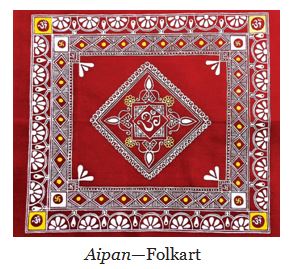
Aipan — Uttarakhand
- Materials and setting: White rice-flour paste is drawn on brick-red walls coloured with geru; designs also decorate floors and puja-room spaces.
- Use and makers: Women in the family create Aipan for family functions and festivals.
- Designs: The patterns are connected to cultural traditions and observations of nature, and often have a mathematical quality.
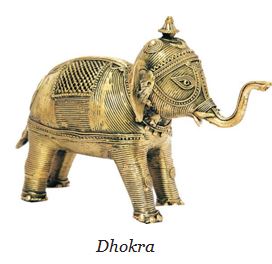
Dhokra — Odisha
- Tradition: Dhokra is a metal craft practised by a tribe and described as about 4,000 years old.
- Lost-wax method: Shape clay, cover it with wax and carve details; add another clay layer and heat the figure so the wax escapes.
- Casting: Pour melted brass into the space left by the wax; when it cools, remove the clay covering and finish the metal figure.
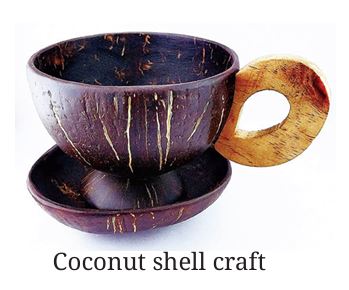
Coconut-Shell Craft — Kerala
- Making: Clean and smooth a coconut shell, shape it, attach a base to keep it steady, and polish it.
- Products and value: Shells can be made into household items such as bowls and into jewellery; this is a biodegradable craft.
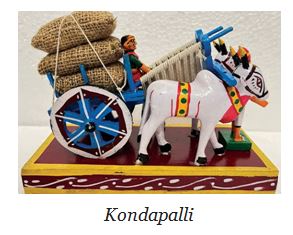
Kondapalli Toys — Andhra Pradesh
- Tradition: Kondapalli village is known for a toy-making tradition described as about 400 years old.
- Materials and method: Artisans carve soft wood into separate parts and join them with makku, a paste of tamarind-seed powder and sawdust.
- Finishing and subjects: They add details and colour the toys with oil, watercolours, vegetable dyes or enamel paints. Subjects include folk stories, animals, birds, bullock carts and rural life.
| Art form | State | Key materials or feature |
|---|---|---|
| Aipan | Uttarakhand | Rice-flour paste and geru-coloured surfaces |
| Dhokra | Odisha | Clay, wax, brass and heat |
| Coconut-shell craft | Kerala | Cleaned, shaped and polished coconut shells |
| Kondapalli toys | Andhra Pradesh | Soft wood, makku paste and colours |
Language Features
| Purpose | Useful words |
|---|---|
| Start | To begin, first |
| Continue | Then, after that, next |
| Finish | Finally, at last |
Present tense — The verb form used for actions or habits that happen regularly or are generally true.
Present-Tense Rule
- I, you, we, they: Use the base verb: “They make toys.”
- He, she, it: Usually add -s or -es: “She draws patterns”; “He speaks clearly.”
Madhubani and Natural Colours
Madhubani Painting
- Origin: Madhubani is a traditional painting style from Bihar, often made on house walls.
- Natural colours: Yellow can come from turmeric, green from leaves, red from flowers, geru or sindoor, orange from flowers, and blue from indigo.
The National Programme
Aims of Ek Bharat, Shreshtha Bharat
- Approach: States and Union Territories are paired to encourage interaction and mutual understanding.
- Cultural exchange: People share experiences and best practices across languages, cuisines, arts, festivals, crafts, sports and literature.
- National purpose: The programme celebrates unity in diversity, strengthens emotional bonds and builds a shared sense of identity.
- Geru
- Red clay used as a colour.
- Carve
- To shape or decorate by cutting with a tool.
- Scrap
- Small leftover or unwanted pieces.
- Stable
- Firm and unlikely to move or fall.
- Biodegradable
- Able to break down naturally without harming the environment.
- Sawdust
- Fine particles produced when wood is cut or shaped.
- Dye
- A substance used to give colour.
- Enamel paint
- Paint that dries to form a protective surface layer.
- Makku
- Paste made from tamarind-seed powder and sawdust, used to join toy parts.
Unity in Diversity
India’s many regional traditions enrich a shared national identity. Learning about one another’s cultures builds understanding, respect and unity.
Quick recap
- Bharat’s identity combines cultural diversity with a shared national bond.
- Ek Bharat, Shreshtha Bharat encourages exchange and understanding across states and Union Territories.
- Aipan is a family folk art from Uttarakhand, made with rice-flour paste and linked to nature and tradition.
- Dhokra uses a lost-wax method to cast brass figures; it is practised in Odisha.
- Kerala’s coconut-shell craft makes useful, biodegradable items; Kondapalli is known for carved wooden toys.
- Madhubani painting comes from Bihar and can use colours derived from natural materials.
- Use sequencing words for order; in the present tense, he, she and it usually take a verb ending in -s or -es.
The Kites
Poem and Poet
- Poet: “The Kites” is a poem by Daphne Lister.
- Idea: The poem describes a child’s wish to ride a kite and enjoy the view high above the town.
Poetic Devices and Meaning
Imagination and Freedom
The poem celebrates the freedom and excitement of flying a kite, while showing how imagination lets the child picture the world from above.
Kite Parts and Movement
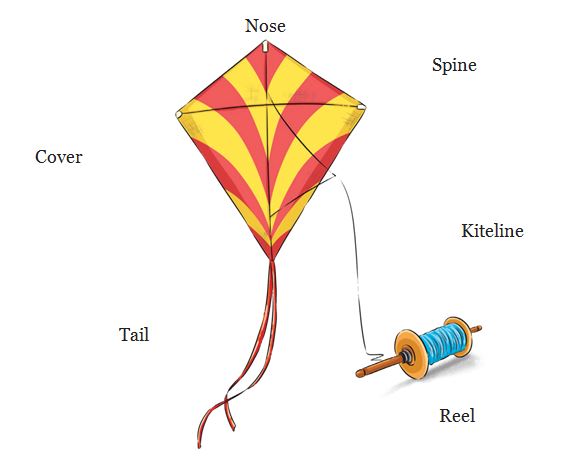
Cinquain and Kite Types
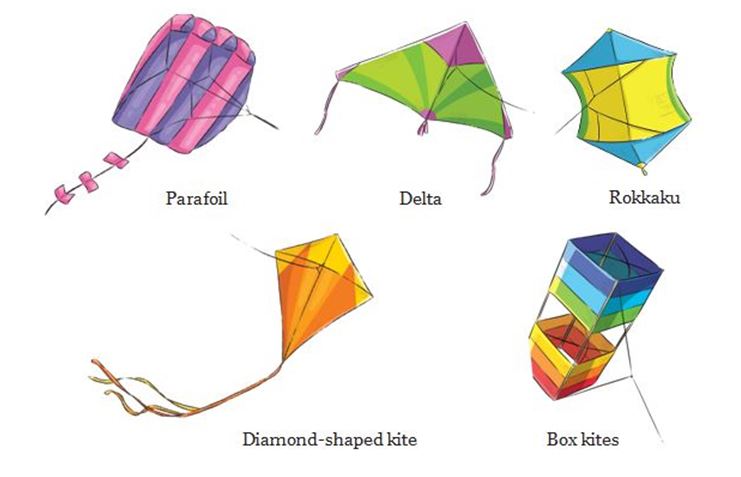
Kites in Indian Tradition
- wind-whipped
- blown strongly by the wind
- drift
- move gently and slowly
- sail
- move smoothly through the air
- rooftops
- the outer top surfaces of roofs
- stare
- look fixedly for a while
- soar
- fly or rise high
- swoop
- move down quickly through the air
How does the poet describe the kites at the beginning?
What does the child imagine seeing while riding the kite?
What is a simile? Give an example from the poem.
Quick recap
- The kites are compared to coloured birds in the windy sky.
- The child imagines climbing onto a kite and sailing above the town.
- The poem uses simile, alliteration, repetition and rhyme.
- Drift, glide, soar, dive, swoop and circle describe different movements.
- A cinquain is a five-line poem.
- Namadeva’s thirteenth-century poetry refers to kites as “gudi” and paper as “kaagad”.
Ila Sachani (Embroidering Dreams with her FEET)
Ila’s Early Life and Challenge
Early life
- Home: Ila Sachani was born into a farmer’s family in Amreli, Gujarat, and lived in Moti Vavdi village, Bhavnagar.
- Challenge: She was born with hands that she could not use in the usual way, so she could not draw or do everyday tasks like other children.
- Family support: Her mother and grandmother encouraged her, while her parents helped her learn to do things using her legs.
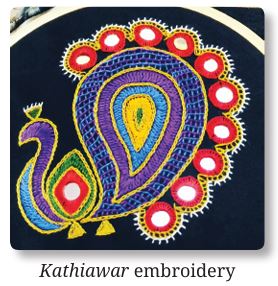
Learning Embroidery with Her Feet
Learning and practice
- Training: Ila’s mother and grandmother taught her Kathiawar embroidery, adapting the work so she could make patterns with her feet.
- Persistence: Threading a needle was difficult, but she kept practising until she became skilled at a young age.
- Help: Her younger brother and sister also supported her learning.
- Styles: Besides Kathiawar embroidery, she learned Kachhi, Kashmiri and Lucknawi styles.
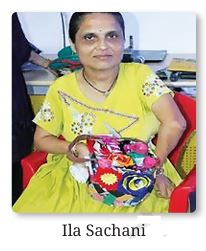
Recognition and Independence
From local talent to celebrated artist
- First admirers: Ila initially made embroidery for family and friends. Their praise helped her talent become known in the village.
- State exhibition: Officials in Surat arranged for her work to be displayed at a state exhibition. Visitors admired and bought her creations.
- Wider success: She later took part in state and national exhibitions and received many awards and honours, including the President’s Medal.
- New independence: Her art gave her a regular income and the joy of doing what she loved.
Ila Sachani
- Determined: She did not give up even when learning to thread a needle was hard.
- Creative and skilled: She developed beautiful embroidery using her feet and learned several regional styles.
- Independent: Her work helped her earn an income and build a life around her talent.
Turning Challenges into Victories
Ila’s story shows that focus, hard work, a positive attitude and persistence can help people overcome challenges. Her art also shows that creativity can rise beyond physical limitations and move others.
- Embroidery
- Decorative patterns made by stitching thread onto cloth.
- Tiny
- Very small.
- Wonderful
- Very good or pleasing.
- Task
- A piece of work to be done.
- Tough
- Difficult.
- Single-minded
- Focused on one aim.
- Determination
- The will to keep trying.
- Awestruck
- Filled with amazement.
- Popularity
- The state of being liked or admired by many people.
- Independence
- The ability to manage one’s life and make choices.
Why was the first state exhibition important to Ila?
How did Ila’s embroidery give her new independence?
What helped Ila overcome the difficulties she faced?
Quick recap
- Ila Sachani was born in Gujarat with a physical challenge affecting the use of her hands.
- Her family taught and encouraged her to learn embroidery with her feet.
- She mastered Kathiawar embroidery and other styles, including Kachhi, Kashmiri and Lucknawi.
- A state exhibition brought her work public attention; later she earned awards, including the President’s Medal.
- Embroidery gave Ila income, independence and happiness.
- Her story celebrates perseverance, creativity and support from others.
National War Memorial
About the National War Memorial
- Established: The National War Memorial in New Delhi was established in February 2019.
- Purpose: Built by the Government of India to honour brave soldiers.
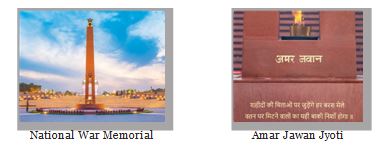
National War Memorial
- The memorial is a striking place in the heart of India.
- Its names and stones preserve the stories of courageous soldiers.
- Soldiers serve the country across land, air and sea; the flame honours their courage.
- We should remember their sacrifices with lasting pride and respect.
Honour and Remembrance
The poem pays tribute to soldiers’ courage and sacrifice and urges us to remember them with respect.
- Behold
- To see or look at.
- Etched
- Carved or engraved on a surface.
- Confide
- To share or entrust something.
- Homage
- Respect shown to someone.
- Sacrifice
- Giving up something valuable for a greater cause.
Quick recap
- The National War Memorial is in New Delhi and was established in February 2019.
- The Government of India built it to honour brave soldiers.
- The poem remembers soldiers who served on land, in the air and at sea.
- The eternal flame symbolises homage to soldiers’ courage.
- The poem asks us to remember their sacrifices with pride and respect.