Class 12 Commerce . English . Flamingo . Lost Spring Stories of Stolen Childhood
Chapter 2: Lost Spring (Stories of Stolen Childhood)
Ch 2
English
Class 12 Commerce
Finding Gold in Garbage: The Reality of Street Kids
Anees Jung
- Born in 1944 in Rourkela; she grew up in Hyderabad and studied in India and the United States.
- Her parents were writers; she began her own writing career in India.
- She worked as an editor and columnist for major newspapers in India and abroad.
- Her books include *Lost Spring: Stories of Stolen Childhood*, from which this excerpt is taken.
Saheb and the Ragpickers of Seemapuri
Saheb: Searching for Gold
- Saheb-e-Alam means “lord of the universe,” but the name contrasts sharply with the poverty and lack of control in his life.
- Rag-picking is Saheb’s way of surviving after his family fled storms and lost their home and fields in Bangladesh.
- Schooling is out of reach: there is no school in his neighbourhood. The narrator’s half-joking promise to start one proves hollow.
- Bare feet are explained by some as tradition or a child’s choice; the narrator suspects these explanations hide continuing poverty.
- Shoes and dreams: Saheb watches tennis players and treasures donated shoes, even though one has a hole. The game remains beyond his reach.
- Tea-stall work brings Saheb 800 rupees and meals, but his carefree look disappears. The employer’s canister replaces his own bag, and he is no longer his own master.
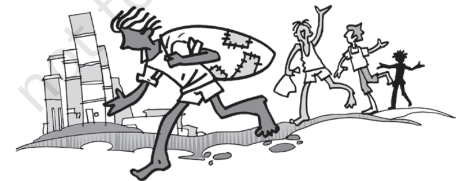
Seemapuri: Survival through Rag-Picking
- Residents: Seemapuri, on Delhi’s outskirts, is home to about 10,000 ragpickers, including migrants who came from Bangladesh in 1971.
- Living conditions: Families live in mud structures with tin or tarpaulin roofs, without sewage, drainage or running water; many lack official identity documents.
- Food over identity: Ration cards help residents buy grain and appear on voter lists, but food matters most because it helps families survive.
- Children’s work: Children grow up helping their families. Rag-picking is both their daily livelihood and a search that can hold hope.
- Garbage’s meaning: For children, garbage may contain surprising finds; for adults, it is a means of survival—a source of food and shelter.
Mukesh and the Bangle Makers of Firozabad
Mukesh’s Dream and Firozabad’s Industry
- Firozabad is famous for its glass-bangle industry; many families have made bangles for generations.
- Mukesh’s ambition is to become a motor mechanic. Unlike his family, he wants to choose a different future and be his own master.
- Child labour: About 20,000 children work in glass furnaces, though employing children there is illegal. They work long hours in intense heat and poorly ventilated, dim spaces.
- Health hazards: Heat, dust and dim light damage workers’ eyes; many children lose their eyesight before adulthood.
- Inherited hardship: Mukesh’s father has worked as a tailor and bangle maker but has not been able to educate his sons or improve the family home. He passes on only the skill of bangle-making.
- Tradition and destiny: Mukesh’s grandmother sees bangle-making as the family’s inherited fate. Her husband has gone blind from glass-polishing dust.
- Bangles and marriage: Bangles symbolise a woman’s suhaag, or auspicious married life. Savita makes them without yet experiencing their meaning as a bride.
- Poverty and exploitation: Middlemen trap workers in a cycle of poverty. The young men fear that organising a cooperative will lead to police harassment and arrest.
- Cycle of despair: Long toil, lack of leadership and injustice weaken initiative and hope across generations.
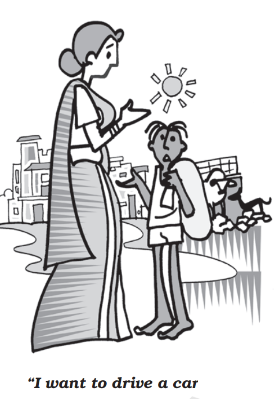
Saheb-e-Alam
- Hopeful: He eagerly asks whether the narrator’s promised school is ready.
- Resourceful: He searches garbage for anything valuable and is delighted by small finds.
- Vulnerable: Poverty limits his choices; tea-stall employment takes away the freedom he had while rag-picking.
Mukesh
- Determined: He insists that he will become a motor mechanic.
- Independent-minded: He wants to be his own master rather than follow the family’s bangle-making tradition.
- Hopeful: His ambition stands apart from the resignation of many around him.
Childhood Stolen by Poverty and Labour
Saheb and Mukesh face different forms of child labour: rag-picking and hazardous bangle-making. Poverty forces children to work instead of enjoying education, safety and freedom.
Inherited Exploitation and Hope
Tradition, caste, middlemen and poverty keep bangle-making families trapped across generations. Mukesh’s wish to become a mechanic offers a small sign of resistance and hope.
- Scrounging
- Searching for or collecting things that may be useful or valuable.
- Perpetual
- Continuing without a break; constant.
- Slog
- Work extremely hard for a long time.
- Roof over his head
- A place to live or shelter.
- Hutments
- Small, roughly built huts or dwellings.
- Baggage
- A burden or responsibility imposed on someone.
- Suhaag
- A married woman’s auspicious marital status, symbolised here by bangles.
- Cooperative
- An organisation in which members work together for shared benefit.
What is Saheb looking for in the garbage, and where has he come from?
Why is Saheb unhappy at the tea stall?
How does Mukesh’s attitude differ from that of his family?
Quick recap
- Saheb’s family left Bangladesh after storms destroyed their home and livelihood.
- In Seemapuri, rag-picking is a means of survival, but children also find hope in what they collect.
- Saheb’s tea-stall job provides food and wages but takes away his independence.
- Firozabad’s bangle industry passes from one generation to the next amid poverty and exploitation.
- Glass-furnace work is illegal for children and threatens their eyesight and health.
- Mukesh challenges inherited hardship by dreaming of becoming a motor mechanic.
Exercise
Key Ideas for Exam Answers
Why do people migrate from villages to cities, and why can promises to poor children remain unfulfilled?
What keeps Firozabad’s bangle workers in poverty, and what are the hazards of their work?
How can Mukesh pursue his dream, and why should child labour be eliminated?
Literary Language and Effects
Hyperbole — A deliberate exaggeration that makes something seem greater or more striking than it really is.
Metaphor — A figure of speech that describes one thing in terms of another, transferring a quality between them without using “like” or “as.”
Simile — A comparison between unlike things that uses “like” or “as.”
| Phrase or image | Device | Effect |
|---|---|---|
| Saheb-e-Alam, “the lord of the universe,” contrasted with Saheb’s reality | Irony / contrast | The grand name sharply conflicts with his circumstances. |
| “Drowned in an air of desolation”; “web of poverty” | Metaphor | Presents despair and poverty as engulfing or trapping forces. |
| “like the tongs of a machine” | Simile | Shows the worker’s repetitive, mechanical movements. |
| “For the children it is wrapped in wonder; for the elders it is a means of survival” | Contrast | Shows how the same activity carries different meanings for children and adults. |
| “She still has bangles on her wrist, but not light in her eyes” | Contrast / metaphor | Sets the bangles’ brightness against the woman’s lost vitality. |
| “Few airplanes fly over Firozabad” | Suggestive image | Hints at how distant wider possibilities seem. |
| “Scrounging for gold” | Metaphor | Makes discarded items seem precious to those who need them. |
| Survival in Seemapuri as “a fine art” | Metaphor / exaggeration | Emphasises the skill and ingenuity involved in survival. |
| The steel canister seeming heavier than the plastic bag | Contrast / symbolism | Suggests the burden associated with a different kind of work. |
How the prose makes hardship vivid
- Irony and contrast: The name Saheb-e-Alam means “lord of the universe,” yet his reality is very different.
- Metaphor and simile: Figurative comparisons make poverty, despair and repetitive labour easier to picture.
- Images and symbols: Bright bangles set against dimmed eyes reveal the human cost behind a beautiful product.
Writing about a Social Paradox
Plan a short response
- Paradox: A beautiful or valuable product may be made by workers who live in hardship.
- Examples: Consider the contrast between gold or diamond mining, carpet weaving, or construction work and the lives of the people doing that labour.
- Paragraph plan: Introduce the contrast → describe the workers’ lives → show the value of what they produce → conclude with the injustice.
Quick recap
- People may migrate in search of livelihood and greater security.
- Poverty and the need to survive can prevent promises of education from being fulfilled.
- Hardship and exploitation make it difficult for Firozabad’s workers to escape their circumstances.
- Child labour harms children and denies them education and future opportunities.
- Hyperbole exaggerates; metaphor transfers a quality; simile compares using “like” or “as.”
- Contrast and figurative images reveal the misery behind the beauty of glass bangles.
English — ALL CHAPTERS
1
The Last Lesson
2
Lost Spring (Stories of Stolen Childhood)
3
Deep Water
4
The Rattrap
5
Indigo
6
Poets and Pancakes
7
The Interview (From the Introduction to The Penguin Book of Interviews edited by Christopher Silvester).
8
Going Places
9
My Mother at Sixty-six
10
Keeping Quiet
11
A Thing of Beauty
12
A Roadside Stand
13
Aunt Jennifer’s Tigers
1
I Sell My Dreams
2
Eveline
3
A Wedding In Brownsville
4
Tomorrow
5
One Centimetre
6
A Lecture Upon The Shadow
7
Poems By Milton
8
Poems By Blake
9
Kubla Khan OR A Vision In A Dream: A Fragment
10
Trees
11
The Wild Swans At Coole
12
Time And Time Again
13
Blood
14
Freedom
15
The Mark On The Wall
16
Film-making
17
Why The Novel Matters
18
The Argumentative Indian
19
On Science Fiction
20
Chandalika
21
Broken Images
1
The Third Level
2
The Tiger King
3
Journey to the end of the Earth
4
The Enemy
5
On The Face Of It
6
Memories of Childhood