Class 12 Commerce . English . Flamingo . The Last Lesson
Chapter 1: The Last Lesson
Ch 1
English
Class 12 Commerce
The Calm Before the Classroom Storm: A Student's Story
Context
- Writer: Alphonse Daudet (1840–1897), a French novelist and short-story writer.
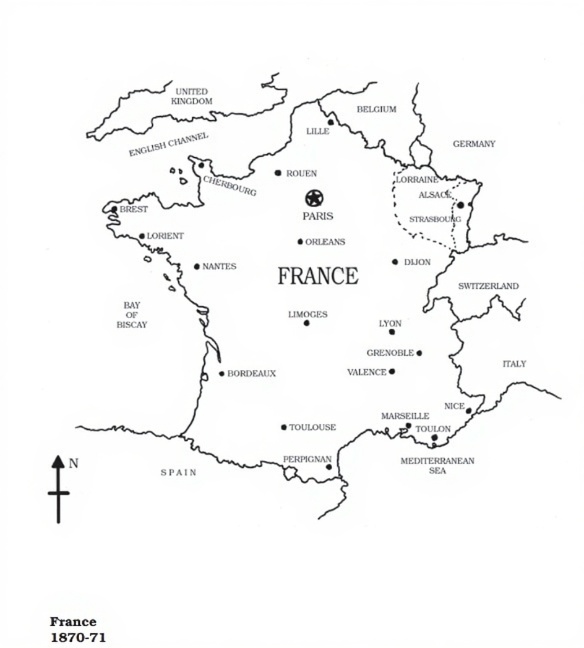
- Setting: The story takes place during the Franco-Prussian War (1870–1871), when France was defeated by Prussia, led by Bismarck.
- Historical change: Alsace and Lorraine passed into Prussian hands; an order from Berlin made German the language of instruction in their schools.
Franz Arrives at School
The unusual morning
- Franz was late and feared being scolded because he had not prepared the lesson on participles. He was tempted by the outdoors but hurried to school.
- A crowd gathered at the town hall bulletin-board, which had carried the region’s bad news for two years. The blacksmith Wachter told Franz not to hurry.
- School was unusually quiet: the pupils were already seated, and M. Hamel did not scold Franz for arriving late.
- M. Hamel wore his special clothes, and village elders—including old Hauser—sat on the normally empty back benches with a worn primer.
The Last French Lesson
The order from Berlin
- M. Hamel announced that Berlin had ordered German to be taught in Alsace and Lorraine. A new teacher would arrive the next day, making this their final French lesson.
- Franz was shocked and regretted neglecting his studies. His books became precious to him, and he felt sadness at the thought of losing both French lessons and M. Hamel.
- The villagers had come to honour M. Hamel’s forty years of service and to show respect for their lost homeland. They also regretted not learning more.
Regret, responsibility and the value of language
- When Franz could not recite the participle rule, M. Hamel did not scold him. He explained that people had repeatedly postponed learning until the next day.
- M. Hamel shared responsibility: parents prioritised work and money, while he too had sometimes sent pupils on errands or given them holidays.
- He praised French as beautiful, clear and logical. He urged the people to preserve their language, which can sustain a people under oppression.
- Franz understood the grammar more easily because he listened attentively and M. Hamel taught with unusual patience.
The final hours
- The pupils copied the words “France, Alsace” in writing. The room remained silent except for pens; even the children ignored beetles, while pigeons cooed outside.
- M. Hamel gazed around the classroom he had taught in for forty years, taking in its familiar garden, trees and windows before leaving the country.
- The class continued through history and the younger children’s alphabet lesson. Old Hauser followed the lesson, visibly moved.
- At noon, as the Angelus and Prussian trumpets sounded, M. Hamel struggled to speak. He wrote “Vive La France!” on the blackboard and dismissed the class with a gesture.
Characters
Franz
- Initially careless about school and anxious about being questioned on participles.
- The news of the last lesson awakens regret, affection for his books and teacher, and a stronger appreciation of French.
M. Hamel
- A devoted teacher who has served the school for forty years; he is dignified and deeply attached to his classroom and country.
- He is gentle with Franz, admits his own failings, and urges the people to protect their language.
The villagers
- Their silent presence shows respect for M. Hamel and sorrow at losing French instruction and their homeland.
- Old Hauser follows the lesson with emotion, sharing the community’s regret.
Themes
Language and identity
The story presents a mother tongue as a vital part of a people’s identity and a source of inner freedom under foreign rule.
Regret and responsibility
The last lesson makes Franz, the villagers and M. Hamel recognise how they had postponed learning and undervalued education.
Patriotism and loss
The forced change of language turns an ordinary school day into a farewell to French culture, the homeland and a familiar way of life.
““as long as they hold fast to their language it is as if they had the key to their prison.””
M. Hamel
““Vive La France!””
M. Hamel
- in great dread of
- very afraid of
- counted on
- expected or relied on
- thumbed at the edges
- worn from frequent handling
- in unison
- together, at the same time
- a great bustle
- a lot of noisy activity
- reproach ourselves with
- blame ourselves for
What unusual things did Franz notice at school that day?
What changes did Berlin’s order bring to the school?
How did Franz’s feelings about school and M. Hamel change?
Quick recap
- Franz arrives late, expecting a participle test, but finds the school unusually quiet and solemn.
- Berlin’s order makes this the last French lesson in Alsace and Lorraine.
- The villagers attend to honour M. Hamel and share in the loss of French instruction.
- Franz and M. Hamel recognise how they had postponed or neglected learning.
- M. Hamel urges the people to preserve French as a source of identity and strength.
- He ends the lesson by writing “Vive La France!” on the blackboard.
Exercise
Understanding the Text
Why do the people suddenly recognise the value of their language?
What could Franz mean by wondering whether even the pigeons would be made to sing in German?
Language, Identity and Minorities
Language and freedom
- Language as identity: A language carries a community’s memories, culture and shared identity.
- Enslavement and language: Holding on to one’s language can preserve solidarity and a sense of self under foreign rule.
- Linguistic minority: A group whose language differs from the dominant language used in its region or state.
- Keeping a language alive: Use it at home and in community events; teach it to children; support books, media and cultural organisations.
- Linguistic chauvinism: Excessive pride in one language that leads to treating other languages or their speakers as inferior.
How can people take pride in their language without becoming chauvinistic?
Working with Words
Key idea
- Borrowing: English has adopted words from many languages. This openness has helped it develop a large vocabulary and become widely used around the world.
Noticing Form: Past Perfect
Past perfect — A verb form used for an action completed before another event or point in the past.
Form and use
- Form: had + past participle.
- Use: It makes the order of past events clear: the past-perfect action happened first.
- In the story: “M. Hamel had said” refers to something he said before the events Franz narrates.
- When identifying examples: Find the earlier action and explain which later past event it comes before.
Writing
Notice
- Purpose: Announce an event, state a requirement or communicate a rule clearly.
- Include: School or organisation name, “NOTICE”, date, brief subject, essential details, and the writer’s name and designation.
- Style: Keep it concise, factual and easy to scan; include time, place and action needed when relevant.
Argument and personal narrative
- Three-language study: Build a short argument with a clear position, reasons and a concluding sentence. Consider benefits such as communication and cultural understanding, as well as concerns such as workload.
- Changing an opinion: Narrate the earlier view, the experience or evidence that changed it, and the new view. Use a clear sequence of events and a reflective ending.
Things to Do: Language Rights and Survey
Linguistic rights in India
- Article 29(1): Protects the right of a section of citizens to conserve its distinct language, script or culture.
- Article 30(1): Gives religious and linguistic minorities the right to establish and administer educational institutions.
- Article 350A: Provides for facilities for instruction in the mother tongue at the primary stage for children belonging to linguistic minority groups.
- Article 350B: Provides for a Special Officer for Linguistic Minorities to investigate safeguards for them.
Class language survey
- Purpose: See how students’ languages differ across home, neighbourhood, city or town, and school.
- Record: Languages known and the language used in each setting; compare responses to notice multilingual patterns.
Quick recap
- The villagers’ attendance at the final lesson shows their renewed appreciation of French.
- Language can protect cultural identity and solidarity, but pride should not become chauvinism.
- Minority languages can be sustained through home use, teaching and community support.
- The past perfect uses “had” plus a past participle for an action earlier than another past event.
- A clear notice includes its heading, date, purpose, key details and author’s designation.
- Articles 29(1), 30(1), 350A and 350B provide important linguistic and minority safeguards in India.
English — ALL CHAPTERS
1
The Last Lesson
2
Lost Spring (Stories of Stolen Childhood)
3
Deep Water
4
The Rattrap
5
Indigo
6
Poets and Pancakes
7
The Interview (From the Introduction to The Penguin Book of Interviews edited by Christopher Silvester).
8
Going Places
9
My Mother at Sixty-six
10
Keeping Quiet
11
A Thing of Beauty
12
A Roadside Stand
13
Aunt Jennifer’s Tigers
1
I Sell My Dreams
2
Eveline
3
A Wedding In Brownsville
4
Tomorrow
5
One Centimetre
6
A Lecture Upon The Shadow
7
Poems By Milton
8
Poems By Blake
9
Kubla Khan OR A Vision In A Dream: A Fragment
10
Trees
11
The Wild Swans At Coole
12
Time And Time Again
13
Blood
14
Freedom
15
The Mark On The Wall
16
Film-making
17
Why The Novel Matters
18
The Argumentative Indian
19
On Science Fiction
20
Chandalika
21
Broken Images
1
The Third Level
2
The Tiger King
3
Journey to the end of the Earth
4
The Enemy
5
On The Face Of It
6
Memories of Childhood