Class 7 . English . Poorvi . Three Days to See
Chapter 3: Three Days to See
Ch 3
English
Class 7
A Wish to See the World
Helen Keller
- Writer: Helen Keller is the writer of this extract.
- Perspective: The passage is told by someone who cannot see and experiences many things through touch.
- Focus: The extract introduces her wish to use her eyes for three days.
Experiencing the World Through Touch and Sight
The World Through Touch
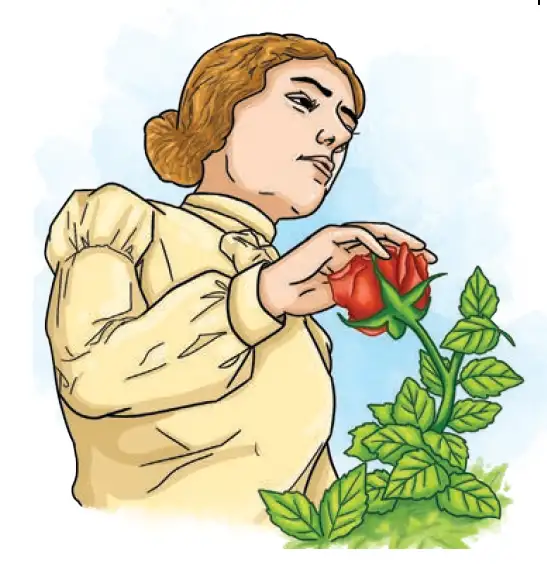
- Touch: The narrator finds interest in the world by feeling things, such as a leaf’s balanced shape and the different textures of tree bark.
- Signs of spring: By touching branches, she searches for buds—the first signs of Nature waking after winter.
- Birdsong: She sometimes feels the happy quiver of a singing bird while gently touching a small tree.
The Wish to See
- Longing: Although touch brings her pleasure, the narrator wonders how much more beauty sight could reveal.
- Three days: She imagines what she would most like to see if she could use her eyes for just three days.
- First day: She would look at the people whose kindness and companionship have made her life meaningful.
Recognising Friends
- Eyes: The narrator describes the eye as a “window of the soul,” through which one might see a friend’s inner feelings.
- Touch: She recognises friends by feeling their faces and can sense obvious emotions such as laughter and sorrow.
- Symmetry
- Evenness or balanced arrangement.
- Birch
- A slender tree with thin, peeling bark.
- Shaggy
- Hairy or rough-looking.
- Quiver
- To tremble or shiver.
The Value of the Senses
The passage shows how touch helps the narrator connect with the world, while also expressing her deep wish to experience its beauty through sight.
Quick recap
- Touch lets the narrator explore textures, shapes, buds, and the quiver of a singing bird.
- Sight is something she longs for because it might reveal more beauty.
- Three days with sight are imagined as a chance to see the world.
- First day would be devoted to the people whose kindness and companionship matter to her.
- Friends are recognised by touch, and their obvious emotions can be felt in their faces.
Three Days to See
The Second Day: The Past and Present
The Second Day: The Past and Present
- Dawn: The narrator would watch night turn into day and admire the sunlight waking the earth.
- Museums: She would explore the world’s past and present, including animals and people in their natural settings.
- Human progress: She would view the remains of dinosaurs and mastodons, and reflect on how humans—with small bodies but powerful minds—came to dominate the animal kingdom.
The Third Day: People and Daily Life
The Third Day: People and Daily Life
- The city: The narrator would spend the day among people going about their ordinary work and activities.
- Understanding people: By looking at their expressions, she would try to understand their lives and feelings.
- Expressions: Smiles make her happy, determined faces make her proud, and signs of suffering make her compassionate.
The End of the Three Days
The End of the Three Days
- Midnight: Permanent darkness would return, and the narrator would realise that even three days were not enough to see everything she wanted.
- Advice: She urges people to use every sense with care, as if they might lose it the next day.
- Senses: Enjoy voices, birdsong, music, touch, flowers’ scents and food; the narrator considers sight the most delightful sense.
Appreciating the Senses
The passage reminds readers not to take sight or any other sense for granted. Paying close attention to the world helps us value its beauty and understand other people.
- behold
- see
- panorama
- a wide or complete view
- glimpse
- a brief look
- pageant
- a grand display
- condensed
- made brief or compact
- carcasses
- dead bodies or remains of animals
- mastodons
- large, furry, elephant-like animals
- stature
- physical build or height
- haunts
- places regularly visited
- strains
- tunes or musical passages
- tactile sense
- sense of touch
- morsel
- a small piece of food
What would the narrator explore on the second day?
How would the narrator try to understand people in the city?
What advice does the narrator give to people who can see?
Quick recap
- On the second day, the narrator would watch dawn and explore the past and present in museums.
- She would spend the third day observing people in the city and their everyday lives.
- Faces and expressions help her recognise happiness, determination and suffering.
- Three days would not be enough to see everything she wished to see.
- She advises people to value every sense as if they might lose it the next day.
- She believes sight is the most delightful sense.
English — ALL CHAPTERS
1
The Day The River Spoke
2
Poem-Try Again
3
Three Days to See
4
Animals, Birds, and Dr. Dolittle
5
Poem - A Funny Man
6
Say the Right Thing
7
My Brother’s Great Invention
8
Poem-Paper Boat
9
North, South, East, West
10
The Tunnel
11
Poem- Travel
12
Conquering the Summit
13
A Homage to Our Brave Soldiers
14
Poem- My Dear Soldiers
15
Poem - Rani Abbakka