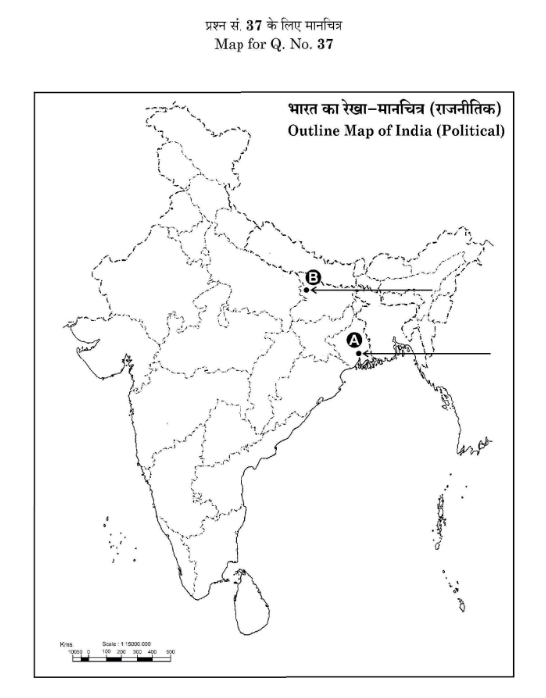
Section B
[1 Mark]
-
(A) only I, II and III are correct
-
(B) only II, III and IV are correct
-
(C) only I, II and IV are correct
-
(D) only I and IV are correct
Explanation: The correct option is 'only I, II and III are correct' because the Napoleonic Code abolished privileges based on birth, established equality before the law, and secured property rights. However, it did not impose manorial dues on the peasants; rather, it eliminated such feudal practices.
[1 Mark]
-
(A) For American Market
-
(B) For European Market
-
(C) For Asian Market
-
(D) For Australian Market
Explanation: The correct answer is 'For European Market' because, according to the provided context, plantations in America were growing cotton and sugar specifically for the European markets during the 18th century.
[1 Mark]
-
(A) Tomato
-
(B) Potato
-
(C) Soya
-
(D) Groundnut
Explanation: The correct answer is Potato. The introduction of the potato allowed the poor in Europe to diversify their diet beyond the monotony of bread. It significantly improved their nutrition and living conditions, leading to a longer lifespan. The reliance on potatoes became so critical that when crops failed, as in Ireland during the mid-1840s, it resulted in severe famine.
[1 Mark]
-
(A) English Press worked on commercial perspectives
-
(B) Restriction of British government on the regional press
-
(C) Increase in the demand for the regional press in the market
-
(D) Reason and rationality were not prominent in press
Explanation: The correct option is 'Restriction of British government on the regional press'. This choice is accurate because the provided context indicates that the English language press in India faced severe limitations imposed by the colonial government, particularly after events like the revolt of 1857, which led to increased restrictions on publications, especially those attempting to assert nationalist sentiments.
[1 Mark]
-
(A) Manas Tiger Reserve - Assam
-
(B) Corbett National Park - Himachal Pradesh
-
(C) Bandhavgarh National Park - Rajasthan
-
(D) Sunderban National Park - Kerala
Explanation: The correct option is 'Manas Tiger Reserve - Assam'. According to the provided context, Manas Tiger Reserve is indeed located in Assam, while the other options incorrectly match the locations of the respective national parks.
[1 Mark]
-
(A) Sambhar Lake
-
(B) Wular Lake
-
(C) Bhopal Lake
-
(D) Chilka Lake
Explanation: The correct answer is Bhopal Lake, as it is mentioned in the context that Bhopal Lake, one of the largest artificial lakes of its time, was built in the 11th century.
[1 Mark]
-
(A) Both (A) and (R) are true and (R) is the correct explanation of (A)
-
(B) Both (A) and (R) are true but (R) is not the correct explanation of (A)
-
(C) (A) is true but (R) is false
-
(D) (A) is false but (R) is true
Explanation: Both (A) and (R) are true and (R) is the correct explanation of (A) because the assertion correctly states that minerals can be found as alluvial deposits in specific geological settings, while the reason accurately explains that these minerals tend to be resistant to corrosion by water, which is why they accumulate in those locations.
[1 Mark]
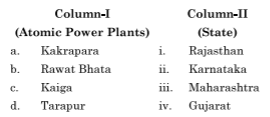
-
(A) a-iv b-i c-iii d-iii
-
(B) a-i b-ii c-iii d-iv
-
(C) a-iv b-i c-iii d-ii
-
(D) a-ii b-iii c-iv d-i
Explanation: The correct option is 'a-iv, b-i, c-iii, d-ii' because matching the monthly incomes from the context shows that Country A's average income corresponds to option IV (10000), while Country B's average income corresponds to option I (500). The other matches align accordingly with the given values in the context.
[1 Mark]
-
(A) Defence, Banking, Education
-
(B) Education, Forest, Marriage
-
(C) Marriage, Currency, Commerce
-
(D) Agriculture, Trade, Irrigation
Explanation: The correct options related to the concurrent list are Education, Forest, and Marriage. These subjects are mentioned in the context as examples of those that fall under the concurrent list, which includes subjects of common interest to both the Union and State Governments.
[1 Mark]
-
(A) Only 1, 3 and 4 are correct
-
(B) Only 1, 2 and 3 are correct
-
(C) Only 2, 3 and 4 are correct
-
(D) Only 1, 2 and 4 are correct
Explanation: Only statements 1, 3, and 4 are correct. Political parties have a decisive role in making laws as most members in the legislature belong to parties and follow party leadership. They also shape public opinion by raising issues and mobilizing members, and present policies to voters. Statement 2 is inaccurate as political parties do not specifically make interest groups; rather, many pressure groups are extensions of parties.
[1 Mark]
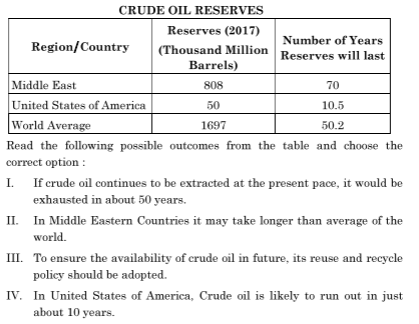
-
(A) OnlyI,II and IV, are correct.
-
(B) Only II,IIIand IVare correct.
-
(C) Only,I,II and IV are correct.
-
(D) Only I,II and III are correct.
Explanation: The correct option is 'Only I, II and IV are correct.' This is because the discussion points directly relate to the increases in educational institutions and address the adequacy of college admissions, the need for more universities, and insights on future educational developments. The inclusion of teacher growth in the context supports the importance of these discussions.
[1 Mark]
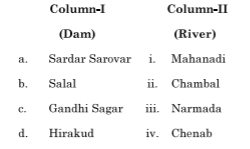
-
(A) a-ii b-i c-iv d-iii
-
(B) a-iii b-iv c-ii d-i
-
(C) a-i b-iii c-iv d-ii
-
(D) a-iii b-iv c-i d-ii
Explanation: The correct option is 'a-ii b-i c-iv d-iii'. This matches the monthly incomes of citizens in each country correctly based on the provided data: Country A has incomes in ascending order of 9500, 9800, 10000, and 10500, which corresponds to ii, i, iv, and iii respectively. Country B has all individuals earning 500, which corresponds to the first option in Column II.
[1 Mark]

-
(A) Mustard
-
(B) Rubber
-
(C) Cotton
-
(D) Groundnut
Explanation: Rubber requires high rainfall (more than 200cm) and thrives in warm temperatures, making it suitable for equatorial regions. It is also used as a raw material in various industries.
[1 Mark]
-
(A) Administrative diversities
-
(B) Historical diversities
-
(C) Religious diversities
-
(D) Cultural diversities
Explanation: The correct option is 'Cultural diversities' because the context indicates that the Belgian leaders acknowledged both regional differences and cultural diversities. This recognition led them to amend their constitution to create an arrangement allowing different communities to coexist peacefully.
[1 Mark]
-
(A) Nepal
-
(B) Pakistan
-
(C) India
-
(D) Myanmar
Explanation: Among the options Nepal, Pakistan, India, and Myanmar, India generally has a higher Human Development Index (HDI) score compared to the others. The provided context mentions that Nepal and Bangladesh have low per capita income and that life expectancy is better in some countries than India, but overall India still ranks higher in HDI compared to its neighbours like Nepal, Pakistan, and Myanmar. India, as a larger economy with better education and health indices, tends to have a higher HDI score.
[1 Mark]
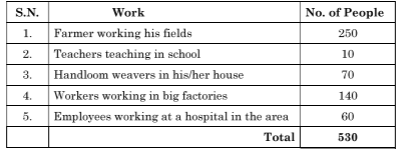
-
(A) 140
-
(B) 380
-
(C) 320
-
(D) 210
Explanation: Farmers- 250
Handloom weavers- 70
Total unorganised sector= 250+70=320
[1 Mark]
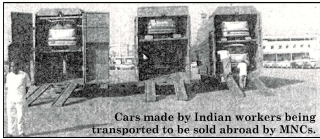
-
(A) Quaternary
-
(B) Tertiary
-
(C) Primary
-
(D) Secondary
Explanation: The picture describes "cars made by Indian workers being transported to be sold abroad by MNCs. This falls under Tertiary sector of economy.
[1 Mark]
-
(A) Cooperative Bank
-
(B) Relatives
-
(C) Friends
-
(D) Agricultural Traders
Explanation: The correct option is 'Cooperative Bank'. Cooperative banks provide loans specifically to farmers for agricultural purposes, often at lower interest rates and with more favorable terms compared to informal sources like relatives and friends. This aligns with Shyamal's needs to buy HYV seeds and implements, as mentioned in the context.
[1 Mark]
-
(A) By increasing the circulation of currency
-
(B) By expanding the scope of markets
-
(C) By creating awareness amongst people
-
(D) By registering the buyer and seller
Explanation: The correct option is 'By increasing the circulation of currency.' This is because increasing the circulation of currency allows individuals to use money as a medium of exchange. In a barter system, double coincidence of wants occurs when two parties each desire what the other offers. In contrast, with the use of money, individuals can easily exchange their goods for currency and then use that currency to buy what they need, thus eliminating the necessity for a double coincidence of wants.
[1 Mark]
-
(A) Only I is false but II is true.
-
(B) Only I is true but II is false.
-
(C) Both I and II are true and II is the correct explanation of I
-
(D) Both I and II are true but II is not the correct explanation of I
Explanation: Both I and II are true and II is the correct explanation of I, because the rapid changes in technology include advancements in the internet that enable features like instant email and voice communication at low costs, reflecting the technological evolution described in Statement I.
Section C
[2 Marks]
Answer: Salt became a powerful weapon during the Civil Disobedience Movement as it symbolized resistance against British colonial oppression. Primarily, salt was a basic necessity, making the protest relatable to all Indians, regardless of class. The second cause was Gandhi's strategic choice to break the Salt Law, thus uniting individuals across various regions in a common cause. This collective action fostered national unity and showcased the potential of nonviolent resistance.
Key Points: Salt symbolized resistance-basic necessity-relation to all-Indians-Gandhi's strategy-breaking Salt Law-unification-common cause-nonviolent resistance
[2 Marks]
Answer: The colonial government employed various repressive measures to suppress the Civil Disobedience Movement, which included the imposition of laws that prohibited gatherings and demonstrations. They arrested thousands of activists, including notable leaders, and confiscated properties associated with the movement. The British also used police brutality to disperse gatherings, instilling fear among the participants, while restricting publications that supported the movement. These actions aimed to stifle dissent and maintain colonial control.
Key Points: Imposition of laws against gatherings-arrests of leaders and activists-police brutality and violence-restriction of supportive publications
[2 Marks]
Answer: Two effective ways to combat land degradation include afforestation and proper management of grazing. Afforestation involves planting trees to restore lost vegetation, which helps prevent soil erosion and improves soil fertility. On the other hand, managing grazing responsibly helps to avoid overgrazing, allowing the land to recover and maintain its health. Both measures can considerably reduce the degradation and promote the sustainability of land resources.
Key Points: Afforestation, management of grazing
[2 Marks]
Answer: To increase the representation of women in India's legislatures, one measure is to implement a mandatory reservation of one-third of political party tickets for women candidates. This would ensure that women have equitable opportunities to contest elections. Another important measure is to legally mandate quotas for women in decision-making bodies at all levels of politics, similar to the provisions in Panchayati Raj. These initiatives can significantly enhance women's political representation.
Key Points: Mandatory one-third reservation of political party tickets for women-Quotas for women in decision-making bodies like Panchayati Raj
[2 Marks]
Answer: Liberalization in India allowed for fewer government restrictions on trade, enabling businesses to make independent decisions about imports and exports. This reduction of barriers attracted foreign investments and fostered international business collaborations, leading to greater integration of the Indian economy with the global market. Consequently, Indian companies began to establish a multinational presence, exemplified by firms like Tata Motors and Infosys, which have expanded operations internationally, thereby promoting globalization.
Key Points: Liberalization reduces trade barriers - Encourages foreign investment - Promotes international collaborations - Indian companies become multinationals
Section D
[3 Marks]
Answer: The Non-Cooperation Movement had significant economic impacts on India's struggle for independence. Firstly, the boycott of foreign goods severely restricted the sales of British products, leading to economic pressure on British industries. This was symbolically demonstrated through the burning of foreign cloth, showcasing the unity of Indian consumers. Secondly, the movement encouraged self-reliance, with many Indians turning to indigenous crafts and industries. This was a crucial step towards the promotion of 'Swadeshi' goods, fostering local economies. Lastly, the movement disrupted British trade practices by boycotting liquor shops and government institutions, thus significantly affecting British economic interests in India. Overall, these actions united various social groups in the fight for Swaraj.
Key Points: Boycott of foreign goods leading to economic pressure on British industries; Promotion of self-reliance through indigenous crafts; Disruption of British trade practices by boycotting liquor shops and government institutions.
[3 Marks]
Answer: In India, credit sources can be categorized into formal and informal sectors. Formal sources include registered institutions like banks and cooperatives that provide loans under regulated terms. For example, a farmer might obtain a loan from a cooperative bank with specified interest rates and repayment schedules. In contrast, informal sources consist of unregulated lenders such as moneylenders, relatives, or friends, often charging higher interest rates and lacking standardized contracts. For instance, a farmer may borrow from a local moneylender under conditions that are not documented, leading to uncertainty and potential exploitation.
Key Points: Formal sources, e.g., banks, cooperatives; regulated terms - Informal sources, e.g., moneylenders, relatives; unregulated, often higher interest rates - Examples: cooperative bank loan vs. loan from a moneylender.
[3 Marks]
Answer: To increase employment opportunities in urban areas in India, three effective measures can be implemented. First, promoting industrial development is crucial. Establishing new industries, especially in tribal and backward regions, can create numerous jobs and lessen urban migration. Second, enhancing the tourism sector holds significant potential; improvements could lead to the creation of over 3.5 million jobs annually. Finally, expanding the IT and service sectors through government support and better infrastructure will cater to the growing urban workforce, thus spurring job creation.
Key Points: Promote industrial development; Enhance tourism sector; Expand IT and service sectors
[3 Marks]
Answer: In India, the system of 'Checks and Balances' is essential for ensuring that no single organ of government dominates the others. This horizontal distribution of power involves three branches: the legislature, the executive, and the judiciary. The legislature creates laws but is subject to judicial review, ensuring laws comply with the Constitution. The executive enforces laws but can be checked by the legislature through mechanisms like impeachment. The judiciary interprets laws and can invalidate those that are unconstitutional. This dynamic interrelation allows for accountability and prevents abuse of power. Furthermore, regular elections reinforce this system by allowing citizens to choose their representatives, making the government accountable to the public. This framework not only maintains a balance among branches but upholds democracy in India, ensuring that each branch functions effectively within its defined role.
Key Points: Horizontal distribution of power - Legislature, Executive, Judiciary; Accountability mechanisms - Legislative oversight, Judicial review; Role of regular elections in reinforcing democracy
[3 Marks]
Answer: Political parties in India face several significant challenges that undermine their effectiveness in a democracy. Firstly, there is a lack of internal democracy within parties. Often, decisions are centralized in the hands of a few leaders, leading to authoritarian structures and limiting participation. Secondly, political parties are increasingly influenced by money and muscle power, particularly during elections. This trend encourages corruption and favors wealthy candidates, reducing the representativeness of political parties. Lastly, the unpopularity of political parties has resulted in widespread public dissatisfaction, prompting calls for reform and greater accountability. Together, these challenges threaten the core functions of political parties and their ability to act as instruments of democracy.
Key Points: Lack of internal democracy; Influence of money and muscle power; Unpopularity and public dissatisfaction
[3 Marks]
Answer: The Non-Cooperation Movement began to lose momentum in urban areas due to a few key reasons. Firstly, the initial enthusiasm among the middle-class participants began to wane as the movement faced government repression and arrests, leading to discouragement. Secondly, divisions within the Congress regarding the pace and strategy of the movement caused confusion and reduced participation from various sectors. Lastly, as the movement progressed, the focus shifted towards more localized issues rather than the broader goal of Swaraj, leading to diminished interest from the urban populace who were more engaged with immediate concerns. These factors collectively contributed to the slowing down of the movement in cities.
Key Points: Diminishing enthusiasm due to government repression-Confusion caused by internal divisions within Congress-Focus on localized issues over national aspirations
Section E
[5 Marks]
Answer: Democracy's outcomes in the economic sector are multifaceted, encompassing both positive and negative aspects. On one hand, democratically governed nations like Denmark and Hungary often exhibit higher economic well-being, characterized by better quality of government and substantial social welfare programs. This results in improved living standards, access to education, and healthcare. However, inequality remains a persistent challenge, as evidenced by the unequal opportunities faced by poorer sections of society. Furthermore, while economic growth is significant in democratic contexts, the distribution of wealth is often uneven. It is critical to note that economic outcomes are influenced by various factors beyond the political framework, such as global economic conditions, a nation's population size, and its specific economic policies. Therefore, while democracy supports certain economic advancements, the expectation of equal economic opportunities for all citizens remains an ongoing struggle. Ultimately, democracy is not the sole determinant of economic success, but it plays a vital role in fostering an environment conducive to growth and addressing inequalities.
Key Points: Positive outcomes include improved governance and social welfare; Economic growth is linked to democracy but accompanied by inequality; Wealth distribution is often uneven; Factors influencing economic outcomes include global context and national policies; Democracy supports growth but struggles with equitable opportunities.
[5 Marks]
Answer: Democracy significantly impacts the social sector by fostering equality, inclusivity, and representation. Outcomes like the promotion of social justice are critical, as citizens are afforded equal rights and the ability to voice their concerns. Moreover, through democratic institutions, marginalized groups can seek redress for their grievances. Education and healthcare policies can be aimed at reducing disparities. Although challenges like social inequalities persist, democracy engenders a framework for dialogue and reform, allowing continuous improvement in societal conditions. Ultimately, the success of democracy lies in the engagement of citizens in utilizing these democratic processes to achieve their goals and address issues of inequality. Thus, while the outcomes are mixed, a commitment to the principles of democracy holds promise for enhancing social welfare.
Key Points: Promotes equality; Encourages representation of marginalized groups; Facilitates social justice; Supports education and healthcare policies; Generates dialogue and reform; Mixed outcomes but potential for improvement.
[5 Marks]
Answer: Development encompasses both social and economic goals that aim to improve the quality of life of citizens. Socially, development focuses on enhancing health, education, and well-being, ensuring that individuals have access to quality services and can participate fully in society. Economically, goals include reducing poverty and inequality, generating employment, and promoting sustainable growth. For instance, providing quality education and reducing social discrimination empower marginalized communities. Ultimately, true development should lead to shared prosperity, where economic growth translates into tangible benefits for all, thus fostering social stability and cohesion.
Key Points: Social well-being; Economic growth; Quality education; Health improvement; Reduction of inequality; Citizen participation; Shared prosperity
[5 Marks]
Answer: The sustainability of development is increasingly challenging due to several intertwined factors. Firstly, reliance on crude oil, especially in countries like India, poses significant challenges. With limited domestic reserves, dependency on imports creates vulnerability, particularly with fluctuating global prices. Moreover, the ecological consequences of development, such as pollution and resource depletion, undermine future generations' ability to meet their needs. The globalization of these issues means that environmental degradation is not confined to national borders, leading to collective action problems. Developing nations face unique challenges as they strive to enhance their development while balancing ecological integrity. Additionally, the socio-economic disparities within and between countries complicate the implementation of sustainable practices. As scientists and economists examine these challenges, it's evident that a multi-faceted approach involving cooperation across disciplines and borders is essential to forge a path toward a sustainable future.
Key Points: Dependence on imported crude oil is problematic due to price volatility; Environmental degradation transcends national borders, raising collective action issues; Developing countries struggle to balance development with ecological sustainability; Socio-economic disparities hinder the implementation of sustainable practices; Multi-disciplinary cooperation is necessary for sustainable development.
[5 Marks]
Answer: The French Revolution of 1789 marked a significant turning point in the history of France, shifting the concept of sovereignty from an absolute monarchy to the people. Before the revolution, France was ruled by King Louis XVI, with power concentrated in his hands. However, the National Assembly was formed, representing 'active citizens' and aimed to create a constitutional framework limiting monarchical authority. In 1791, a new constitution was drafted, defining the separation of powers among the legislature, executive, and judiciary, thus establishing a constitutional monarchy. This change highlighted the transition towards a system governed by elected representatives rather than hereditary rulers. The revolutionary ideals emphasized the notions of 'la patrie' – the fatherland, and 'le citoyen' – the citizen, promoting equal rights and a unity among the French populace. The introduction of the tricolour flag symbolized this shift towards national identity over royal allegiance. The impact of these changes extended beyond France, inspiring movements across Europe and other colonized nations, as they sought to establish sovereignty and self-determination, thereby reshaping global political landscapes.
Key Points: Shift from an absolute monarchy to sovereignty with the National Assembly- Draft of the 1791 constitution established separate powers of government- Emphasis on equal rights, national identity, and citizenship- Influence of revolutionary ideas on Europe and colonized nations
[5 Marks]
Answer: In the 19th century, liberalisation represented a pivotal shift towards market freedom and minimal state interference in economic activities. The emerging middle class championed liberalism, driving demands for abolition of government-imposed barriers on trade and capital movement. This change empowered businesses to freely decide their import and export activities without heavy regulations. Such economic liberty was believed to enhance societal development, as it encouraged competition and innovation. The movement encapsulated ideas of individual freedom and equality, aiming to foster an environment where labor and capital could thrive unimpeded. This period marked the transition from mercantilism to a more capitalist-oriented economy, reinforcing the belief among liberals that economies flourished when free from state control. Ultimately, the landscape of trade and economics was reshaped by these liberal ideas, allowing for increased economic growth and prosperity.
Key Points: Liberalisation promotes market freedom; Abolition of state restrictions on goods; Empowerment of the middle class; Encouragement of free trade; Belief in societal development through economic liberty; Shift from mercantilism to capitalism; Importance of competition and innovation.
[5 Marks]
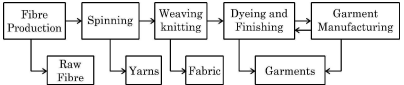
Answer: The textile industry exemplifies value addition by transforming raw materials through various stages into finished goods. Starting with fiber production, such as cotton or jute, the process progresses through spinning, weaving, and dyeing to finally result in garments. Each stage adds value - for instance, spinning converts raw fibers into yarn, followed by weaving that turns yarn into fabric. Dyeing and finishing enhance the aesthetic appeal and usability of the fabric, culminating in the manufacture of garments. This structured process not only enriches the products but also contributes significantly to the economy through job creation, industrial output, and foreign exchange earnings. The textile industry is uniquely positioned as it encompasses the entire value chain, from agricultural inputs to the final consumer goods. Additionally, the incorporation of human labor, infrastructure, and technology at every step underscores the industry's role in economic development. Overall, the added value from the raw fiber to finished garments showcases the importance of each stage in creating high-value products that meet consumer needs.
Key Points: 1. Value addition starts from raw fiber production to finished garments. 2. Each manufacturing stage, including spinning, weaving, and dyeing, enhances value. 3. The textile industry supports economic growth through employment and foreign exchange.
[5 Marks]

Answer: The process of manufacturing steel begins with the transportation of raw materials, primarily iron ore, to the steel plant. Once at the plant, the iron ore is introduced into a blast furnace, where it is subjected to high temperatures to undergo smelting. During this phase, limestone is added as a fluxing agent, which helps in removing impurities by forming slag, which can be easily discarded.
Coke, a form of carbon, is burnt to generate the necessary heat for this process. The molten product from the blast furnace, known as pig iron, is then poured into molds referred to as 'pigs.' This pig iron is an intermediate product and contains a significant amount of impurities that must be removed before it can become steel.
The next stage is steelmaking, where the pig iron undergoes further refining. This is achieved by melting the pig iron and oxidizing its impurities. To enhance the final product, alloying elements such as manganese, nickel, and chromium are added, which confer specific properties to the resulting steel based on its intended use. After these processes, the output is steel, which can be sold to various industries for further use, demonstrating the intricate steps and engineering required to convert raw materials into a versatile material essential for many applications.
Key Points: Transportation of raw materials to plant - Iron ore melted in blast furnace - Limestone is added as flux - Slag is removed - Coke is burnt for heating - Molten material poured into pigs - Pig iron refined in steel making - Impurities oxidized - Alloying elements added - Final output is steel