Class 11 Humanities . Sociology . Introducing Sociology . Culture and Socialisation
Chapter 4: Culture And Socialisation
Ch 4
Sociology
Class 11 Humanities
Introduction
Understanding Culture
Shared Meaning and Socialisation
- Human capacity: Humans are distinguished from other animals by their ability to develop shared understandings and draw common meanings from signs and symbols.
- Learning through interaction: In families, groups and communities, people learn tools, techniques, signs and symbols from others.
- Passing on knowledge: Cultural knowledge is conveyed orally and through books, preparing people for their roles and responsibilities in society.
- Socialisation: Learning in the family is primary socialisation; learning at school and other institutions is secondary socialisation.
Diverse Settings, Different Cultures
How Settings Shape Culture
- Natural settings: People live in mountains, plains, forests, deserts, river valleys, islands and mainland areas.
- Social settings: People also live in villages, towns and cities.
- Adaptation: Different natural and social conditions lead people to develop different strategies and ways of life, producing diverse cultures.
Tsunami Example
- 26 December 2004A devastating tsunami struck parts of the Tamil Nadu and Kerala coasts and the Andaman and Nicobar Islands.
Cultural Knowledge and Coping with Nature
- Those caught unaware: Many fisherfolk and service personnel in the islands suffered extensive devastation and loss of life.
- Experiential knowledge: The Onges, Jarawas, Great Andamanese and Shompens anticipated the calamity through experience and moved to higher ground.
- Key lesson: Access to modern science and technology does not make modern cultures inherently superior to tribal cultures.
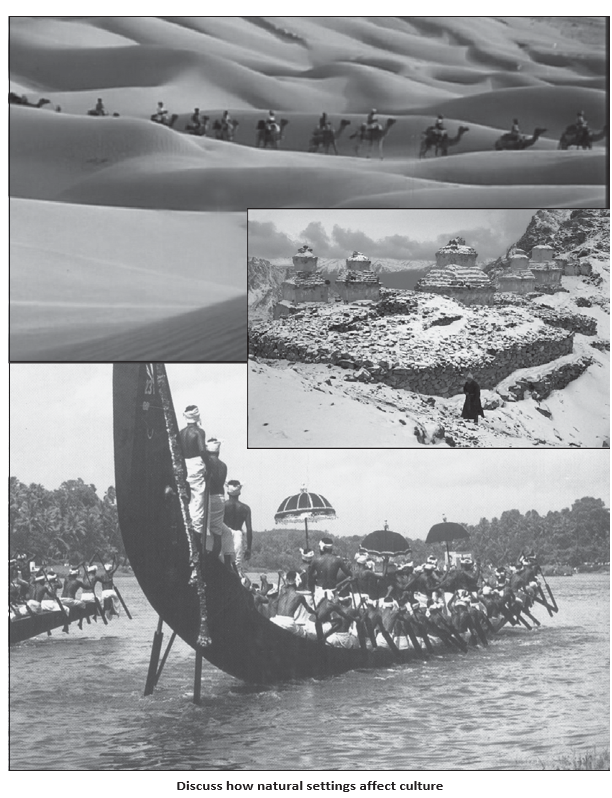
- Cultures cannot be ranked as superior or inferior; they can be judged adequate or inadequate according to how well they cope with the strains imposed by nature.
- Culture
- Shared understanding learned and developed through social interaction.
- Primary socialisation
- Learning that takes place in the family.
- Secondary socialisation
- Learning that takes place in school and other institutions.
- Experiential knowledge
- Knowledge gained through experience, which helped island communities anticipate the tsunami.
Quick recap
- Culture is shared understanding learned through interaction, not merely the arts or customs.
- Shared meanings and the interpretation of signs and symbols distinguish humans and give groups an identity.
- Culture changes continually; people learn tools, meanings and social responsibilities through socialisation.
- Family learning is primary socialisation; learning at school and other institutions is secondary socialisation.
- Diverse natural and social settings encourage diverse ways of life.
- In the 2004 tsunami, some island tribal communities used experiential knowledge to reach higher ground; modern cultures are not inherently superior.
- Cultures are not ranked; their adequacy can be judged by how well they cope with environmental challenges.
Defining Culture
Culture as a Way of Life
| Point | Everyday use | Sociological meaning |
|---|---|---|
| Meaning | Often refers to refined taste in classical music, dance, painting, or similar pursuits. | The shared way of life in which members of a society participate. |
| View of people | May distinguish the supposedly ‘cultured’ from the ‘uncultured’. | Culture is not an individual distinction; it belongs to social life. |
| Scope | Often limited to particular tastes or arts. | Every social organisation develops a culture of its own. |
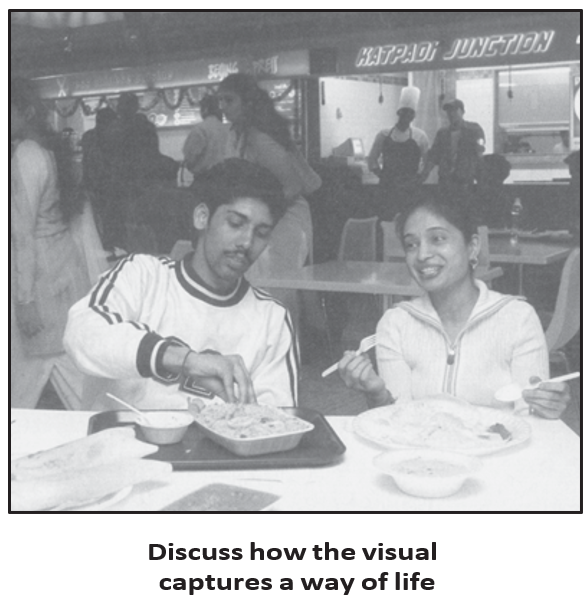
Anthropological Definitions
Edward Tylor’s definition — Culture is a complex whole of knowledge, belief, art, morals, law, custom, and other abilities and habits acquired by people as members of society.
Further Views of Culture
- Bronislaw Malinowski: Culture includes inherited artefacts, goods, technical processes, ideas, habits, and values; his definition explicitly includes material things.
- Clifford Geertz: Culture consists of webs of significance that people create; human actions can be interpreted like words that convey meaning.
- Geertz’s approach: The aim is an interpretative explanation of meaning, rather than a causal explanation.
- Leslie White: Culture gives meaning to objective reality; for example, a particular water source may be regarded as holy.
| Point | Tylor | Malinowski |
|---|---|---|
| Emphasis | Knowledge, beliefs, customs, habits, and other cultural elements. | Material culture as well as ideas, habits, and values. |
| Material culture | The definition chiefly lists non-material elements, apart from art. | Explicitly includes artefacts, goods, and technical processes. |
Understanding Tylor and Malinowski
- Tylor’s focus: His definition highlights culture’s intangible dimensions; this does not mean he ignored material objects in his anthropological work.
- Malinowski’s contribution: His experience of living for an extended period with a society helped establish fieldwork as a research tradition.
Key Publications and Dates
- 1871Edward Tylor presented an early anthropological definition of culture.
- 1931Bronislaw Malinowski described culture as including inherited material and non-material elements.
- 1952Alfred Kroeber and Clyde Kluckhohn published a comprehensive survey of concepts and definitions of culture.
- 1973Clifford Geertz presented his view of culture as webs of significance that require interpretation.
Different Dimensions of Culture
| Definition | Emphasis |
|---|---|
| A way of thinking, feeling, and believing | Mental life |
| The total way of life of a people | The broad pattern of everyday life |
| An abstraction from behaviour | A general idea drawn from people's actions |
| Learned behaviour | Culture is acquired, not simply innate |
| A storehouse of pooled learning | Knowledge accumulated by a group |
| The social legacy acquired from a group | Culture is shared and passed across generations |
| Standardised orientations to recurring problems | Shared ways of responding to repeated situations |
| A mechanism for normative regulation of behaviour | Culture guides behaviour through shared standards |
How the Definitions Differ
- Recurring words: ‘Way’, ‘learn’, and ‘behaviour’ appear in several definitions, but the emphasis and meaning shift.
- Sharing and transmission: Definitions focused on learned behaviour, pooled learning, and social legacy stress sharing within a group and transmission across generations.
- Guiding behaviour: The final definitions present culture as directing behaviour through shared orientations and norms.
- Material culture
- Physical objects and technologies associated with a society, such as artefacts, goods, and tools.
- Non-material culture
- Ideas, beliefs, values, customs, and other intangible elements of a way of life.
- Fieldwork
- Studying a society by spending an extended period with the people being studied.
- Normative regulation
- The way shared standards and norms guide or regulate behaviour.
How does the sociological meaning of culture differ from its everyday meaning?
Quick recap
- Sociology studies culture as a society’s shared way of life, not simply as refined taste.
- Tylor defined culture as a complex whole of acquired knowledge, belief, art, morals, law, customs, and habits.
- Malinowski explicitly included material objects and technical processes alongside ideas and values.
- Geertz emphasised interpreting culture as webs of meaning; White showed how culture can make something sacred.
- Culture may be learned, shared, passed across generations, and used to guide behaviour.
- Definitions of culture differ in whether they stress mental life, total way of life, shared learning, or behavioural norms.
Dimensions of Culture
Culture — Culture has cognitive, normative and material dimensions that shape how people understand and organise social life.
Three Dimensions of Culture
| Dimension | What it involves | Example |
|---|---|---|
| Cognitive | Learning to process information from our surroundings and give it meaning. | Recognising our phone’s ringtone. |
| Normative | Rules and expectations that guide conduct. | Not opening another person’s letters; performing rituals at death. |
| Material | Activities and objects made possible through materials, tools or machines. | Online chatting; using rice-flour paste to make a kolam. |
How the Dimensions Connect
- Interdependence: Understanding art and social processes often requires knowledge of material, cognitive and normative aspects together.
- Example: Where few people can read, having a third person read private letters aloud may become a social norm.
Cognitive Aspects
Cognition — The process of making sense of information received from the environment.
Oral and Written Knowledge
- Visibility: Cognitive aspects can be harder to recognise than material aspects, which are tangible or perceptible, and normative aspects, which are often explicitly stated.
- Literate societies: Ideas may be recorded in books and documents and preserved in libraries, institutions or archives.
- Non-literate societies: Legends and lore are memorised and passed on orally; trained practitioners may narrate them at rituals or festivals.
- Oral forms: Repetition helps people remember; live audiences may be more involved than readers encountering an unfamiliar written culture.
- Writing: Written texts can become more elaborate than material that is not written down.
Study Cited on Literacy
- 1971A study cited by Walter Ong reported that only 78 of about 3,000 existing languages had literature.
Literacy and Changing Media
- Access to literacy: Historically, literacy has often been available mainly to privileged groups; sociology studies how it can become relevant to people whose families have not attended school.
- Different needs: A vegetable-seller questioned the need to learn the alphabet when he could calculate customers’ bills mentally.
- Memory in learning: Students of Indian classical music may still be encouraged to remember what they learn instead of writing it down.
- Modern records: People increasingly rely on written, audio and visual records; the effects of electronic media and instant access on attention and cognition remain a question.
Normative Aspects
Social norms — Values and rules that guide behaviour in particular social contexts.
| Form | Meaning |
|---|---|
| Folkways, mores, customs and conventions | Social rules that guide conduct; people commonly follow them through habit and socialisation. |
| Laws | Explicit, formal rules set by the State, applicable across society and enforced through penalties or punishment. |
Norms, Sanctions and Power
- Socialisation: People often follow norms because repeated social learning makes them habitual.
- Sanctions: Norms are accompanied by sanctions that encourage conformity.
- Implicit and explicit: Norms are generally implicit; laws are explicit and derive authority from the State.
- Variation: Norms can differ between groups, institutions and social statuses, while laws apply to those under the State’s authority.
- Dominant norms: Powerful social groups can establish norms that discriminate against others, such as restrictions on Dalits’ access to shared water or women’s freedom in public spaces.
| Point | Norms | Laws |
|---|---|---|
| Nature | Usually implicit and shaped by social life. | Explicit rules formally defined by government. |
| Scope | May be specific to a family, school or group. | Apply across society under the State’s authority. |
| Enforcement | Social sanctions promote conformity. | Violations can lead to legal penalties or punishment. |
| Example | A family rule that children stay indoors after sundown. | Stealing violates the law protecting private property and may lead to punishment after trial. |
Understanding Cultural Norms
- Pierre Bourdieu: Understanding another culture requires noticing implicit expectations that may not be stated as rules.
- Example: Giving a return-gift too quickly may seem like an attempt to clear a debt rather than a friendly expression of gratitude.
Material Aspects and Culture Lag
Material culture — The tools, technologies, machines, buildings, transport and production or communication instruments used in social life.
Examples and Importance
- Urban examples: Mobile phones, music systems, cars, buses, ATMs, refrigerators and computers show everyday reliance on technology.
- Rural examples: Transistor radios and electric motor pumps for irrigation show how technology is adopted to support production.
- Role: Material culture can increase production and improve quality of life; effective cultural functioning also depends on its connection with non-material culture.
| Point | Material culture | Non-material culture |
|---|---|---|
| Includes | Tools, technologies, machines and other physical objects. | Cognitive and normative aspects: ways of understanding, values and rules. |
| Change | Technological dimensions may change rapidly. | Values and norms may take longer to adjust. |
Culture lag — A situation in which non-material culture cannot keep pace with rapid advances in material or technological culture.
How Culture Lag Develops
- Technology changes rapidly
- Values and norms adjust more slowly
- Non-material culture falls behind technological change
- A culture-lag situation emerges
- Cognition
- Making sense of information from the environment.
- Norms
- Rules and values guiding behaviour in social contexts.
- Sanctions
- Responses that encourage conformity to social rules.
- Material culture
- Physical tools, technologies and objects used in society.
- Culture lag
- A gap caused when norms and values fail to keep up with technological change.
What are the three dimensions of culture?
How do norms differ from laws?
What is culture lag?
Quick recap
- Culture has cognitive, normative and material dimensions that are interconnected.
- Cognitive culture concerns how people understand information; oral knowledge relies on memory, repetition and narration.
- Norms guide conduct and are supported by sanctions; laws are explicit State rules with formal penalties.
- Norms vary across groups and may reflect dominant power, including discriminatory practices.
- Material culture includes technologies and tools that can support production and quality of life.
- Culture lag occurs when values and norms do not adjust as quickly as technology.
Culture and Identity
Culture, Roles and Identity
Subcultures and Group Identity
- Subculture: A distinct group within a wider culture, such as elite or working-class youth.
- Group identity: A subculture can act as a cohesive unit; members may have leaders and followers but work towards shared purposes.
- Example: A neighbourhood youth club can organise sports and constructive activities, earning local recognition.
- Effect: Positive recognition can strengthen members' self-image, encourage them to perform better and distinguish their group from others.
Ethnocentrism and Cosmopolitanism
Ethnocentrism — Judging the behaviour and beliefs of other cultures by the values of one's own culture, which are treated as superior or as the norm.
| Point | Ethnocentrism | Cosmopolitanism |
|---|---|---|
| How other cultures are viewed | Evaluates them by one's own cultural standards, often treating them as inferior. | Values cultural differences without judging them by one's own standards. |
| Cultural contact | Can express a sense of cultural superiority, especially in colonial situations. | Accommodates different cultural practices and encourages exchange and borrowing. |
Example: Macaulay's Minute on Education
- Colonial example: In his 1835 Minute on Education, Thomas Babington Macaulay proposed educating Indians to be Indian in blood and colour but English in tastes, opinions, morals and intellect.
- Why it is ethnocentric: It presented English cultural values as the standard for Indians.
Cultural Change
Cultural change — A change in the patterns of culture within a society.
Sources and Causes
- Internal causes: New farming methods can raise production, changing food consumption and quality of life in an agrarian community.
- External causes: Conquest, colonisation and contact with other cultures can alter established cultural practices and behaviour.
- Environment and adaptation: Ecological change can reshape a way of life; loss of forest access or forest resources has seriously affected tribal communities in North East and Middle India.
- Language example: Hinglish shows cultural mixing through words such as “prepone” and “time-pass”; “Bangalored” is a newer term linked to outsourcing.
| Point | Evolutionary change | Revolutionary change |
|---|---|---|
| Nature | Cultural patterns change gradually over time. | Culture changes rapidly and its values and meaning systems undergo radical transformation. |
| Possible drivers | Long-term adaptation and changing practices. | Political intervention, technological innovation or ecological transformation. |
| Example | Changes in farming practices can gradually reshape food and quality of life. | The French Revolution rapidly transformed French society and its values. |
French Revolution: Revolutionary Change
- Changes: The French Revolution abolished the monarchy and the estate system of social ranking.
- Values: It promoted liberty, equality and fraternity among citizens.
Key Dates
- 1789The French Revolution transformed social ranking, monarchy and civic values.
- 1835Macaulay's Minute on Education exemplified ethnocentric assumptions in colonial India.
Quick recap
- Identity is shaped through social relationships, roles, recognition and shared language.
- Subcultures create group identities through distinctive styles, speech, associations and shared purposes.
- Ethnocentrism judges other cultures by one's own standards; cosmopolitanism values difference and cultural exchange.
- Cultural change alters a society's cultural patterns and may arise internally, externally or through environmental change.
- Evolutionary change is gradual; revolutionary change is rapid and radically transforms values and meaning systems.
- The French Revolution of 1789 abolished the estate system and monarchy and promoted liberty, equality and fraternity.
Socialisation
Meaning and Process of Socialisation
Socialisation — The lifelong process through which a person becomes self-aware and learns the culture, norms and ways of behaviour of the society into which they are born.
How socialisation works
- Begins early: The infant initially knows nothing of society; learning starts in childhood and continues throughout life.
- Primary socialisation: The crucial early-years stage, when basic ways of behaving and relating are learned.
- Secondary socialisation: Continues throughout life as people enter new groups, relationships and settings.
- Not passive: People do not simply absorb culture; they respond and assert themselves. An infant’s crying, for example, prompts caregivers to act.
- Changes relationships: A child’s birth can reorganise family routines and create new learning and relationships for parents, grandparents and siblings.
Why socialisation matters
- Human development: Socialisation helps people learn socially meaningful behaviour; without it, a person would not develop in the usual human way.
- Illustration: The reported Wolf-children of Midnapore, found in a wolf den in Bengal in 1920, walked on all fours, preferred raw meat, howled and lacked speech.
- Cultural learning: People learn what behaviour is approved or disapproved, and what is considered good or bad.
Groups, Roles and Differences in Socialisation
- Memberships: A child belongs to a family and kin-group, as well as wider groups such as a tribe, sub-caste, clan, biradari, religious group and linguistic group.
- Norms and values: Each group and institution expects certain behaviour and passes on particular norms, attitudes and values.
- Multiple roles: A person may perform several roles at once, such as son or daughter, grandchild and student.
- Different experiences: Socialisation varies with family, caste, region, social class, religion, village or city life, and tribal membership.
- Language: The language and form of speech a person learns are influenced by region and by the family’s social, economic and cultural background.
- Primary socialisation
- The critical learning of basic social behaviour during the early years.
- Secondary socialisation
- Further social learning that continues across a person’s life.
- Peer group
- A friendship group made up of people of a similar age.
- Hidden curriculum
- Unspoken lessons and expectations learned alongside a school’s formal subjects.
Agencies of Socialisation
Main agencies
- Agencies: People are socialised through family, school, peer groups and neighbourhoods, as well as through occupational groups and social class, caste, region and religion.
- Combined influence: These agencies may teach different expectations, shaping how people learn and behave.
Family
- Family structure: Children may grow up in nuclear or extended families, so the people most influential in their early learning can differ.
- Socialising agents: Parents may be central in a nuclear family; in an extended family, grandparents, uncles or cousins may also be especially important.
- Social position: In many traditional societies, the family a person is born into largely determines their social position. More broadly, family region and social class strongly affect socialisation.
- Everyday learning: Children often pick up behaviour characteristic of parents and people in their neighbourhood or community.
- Not unquestioning: Children may not adopt their parents’ outlook completely, especially when other agencies and social change provide different influences.
Peer Groups
- Age and friendship: Peer groups are friendship groups of children of similar age; children often spend much time with peers from around age four or five.
- Age-grades: In some small traditional societies, peer groups are formally organised into age-grades.
- More give-and-take: Peer relationships are often more egalitarian than family relationships, where children depend on parents’ authority. Stronger children may still dominate.
- Testing behaviour: Peers offer a setting where children can explore and test rules of behaviour.
- Lasting influence: Similar-age informal groups can continue to shape attitudes and behaviour in adult life, including at work.
Schools
- Formal learning: School is an organised institution with a set of subjects and a formal curriculum.
- Hidden curriculum: Schools also shape behaviour and expectations through lessons not explicitly taught in subjects.
- Gender expectations: If girls, but rarely boys, are expected to sweep classrooms, this can reinforce gendered roles. Having boys and girls do tasks not normally expected of them can challenge those roles.
Mass Media
- Forms: Print media remains important, while television and internet-based digital media have become increasingly significant.
- Print example: In nineteenth-century India, conduct-books advising women on housekeeping and being attentive wives were popular in several languages.
- Access to information: Media can make information more widely accessible; electronic communication can reach places lacking road connections or literacy centres.
- Influence: Media exposes people to information and experiences beyond their immediate surroundings. Indian television serials and films also reach audiences abroad.
- Effects debated: Research findings do not always have clear implications; the connection between on-screen violence and aggressive behaviour among children remains debated.
- Viewing time: A British study reported that children’s television viewing equalled almost a hundred school days a year; adults’ viewing time was not far behind.
Examples and Periods Mentioned
- Nineteenth-century IndiaConduct-books on women’s household roles circulated in many languages.
- 1920Two girls were reportedly found in a wolf den in Bengal; their case illustrates the importance of social learning.
Why is socialisation not simply cultural programming?
What is the hidden curriculum?
How do peer groups differ from the family as a setting for learning?
Quick recap
- Socialisation is lifelong learning of culture, norms, values and behaviour; its early stage is especially critical.
- People are active: Socialisation is not passive absorption or cultural programming.
- Groups and roles shape learning, and people perform multiple roles at once.
- Family and peers teach behaviour in different ways; peers often provide more egalitarian interaction.
- Schools socialise through both formal subjects and a hidden curriculum.
- Mass media spreads information and distant experiences, while some effects on behaviour remain debated.
Other Socialising Agencies
Work and Mass Media
Mass media and imitation
- Imitation is a way people, including children, learn behaviours they observe.
- Example: After the *Shaktimaan* serial was telecast, children imitated the character by diving from buildings; these attempts caused fatal accidents.
Socialisation and Individual Freedom
- Socialisation shapes us: interaction with others influences our personality, values and behaviour.
- It does not create complete conformity: socialising agencies can conflict, for example home with school or home with peer groups.
- It also enables freedom: socialisation helps develop self-identity and the capacity for independent thought and action.
Gendered Socialisation
| Point | Boys | Girls |
|---|---|---|
| Use of the street | Used it to watch, stand around, play and ride bikes. | Generally used it only to go directly home from school. |
| Movement and safety | Could use the street more freely. | Often travelled in groups, partly because of fear of assault. |
The Bell: Social Norms, Status and Resistance
- Status-based restriction: The priest’s daughter, Thangam, is permitted to touch and ring the temple bell; the visiting girl is told she may not.
- Challenge: The girl argues that Thangam is her playmate and that they are equal before God, then rings the bell despite the adults’ opposition.
- Conflicting influences: The girl’s schooling and ideas of equality conflict with the adults’ authority and local expectations.
- Gender norms: In the village she is escorted and has her hair tightly styled, unlike her independent walk to school in town; she watches boys play football but does not join them.
- Social sanction: The adults punish her with tight-lipped silence and the conspicuous absence of her favourite tiny pappadams at dinner.
- Cultural Evolutionism
- A theory that culture evolves through variation and natural selection, like natural species.
- Estates System
- A feudal European ranking system based on occupation: nobility, clergy and the third estate; peasants and labourers did not have the vote.
- Great Tradition
- Written cultural traditions widely accepted by a society’s educated and learned elites.
- Little Tradition
- Oral cultural traditions that operate at the village level.
- Self-Image
- A person’s image of themselves as reflected in the eyes of others.
- Social Roles
- The rights and responsibilities associated with a person’s social position or status.
- Socialisation
- The process through which people learn to become members of society.
- Subculture
- A group within a larger culture that borrows and may alter, exaggerate or invert its symbols, values and beliefs to distinguish itself.
Quick recap
- Work is a socialising context in all cultures; industrial work is often separate from home.
- Children may imitate mass-media behaviour; imitation of *Shaktimaan* led to fatal falls from buildings.
- Socialisation shapes personality and values while also developing self-identity and independent thought.
- Gender norms can limit girls’ use of public spaces and participation in activities.
- The girl challenges the restriction that only the priest’s daughter may ring the temple bell.
- Social groups may enforce norms through disapproval and everyday punishments.
Sociology — ALL CHAPTERS
1
Sociology And Society
2
Terms, Concepts And Their Use In Sociology
3
Understanding Social Institutions
4
Culture And Socialisation
5
Doing Sociology : Research Methods
1
Social Structure, Stratification And Social Processes In Society
2
Social Change And Social Order In Rural And Urban Society
3
Environment And Society
4
Introducing Western Sociologists
5
Indian Sociologists