Class 11 Humanities . Sociology . Introducing Sociology . Understanding Social Institutions
Chapter 3: Understanding Social Institutions
Ch 3
Sociology
Class 11 Humanities
Introduction
Individuals, Society and Institutions
- Social position: Individuals occupy places in society, each with a status and one or more roles.
- Institutions: Family and state are examples of social institutions that organise social life.
Rules, Constraints and Opportunities
- Rules: Institutions operate through rules established or acknowledged by law or custom.
- Effects: Institutions constrain individuals while also providing them with opportunities.
Functionalist and Conflict Perspectives
- Status
- A person’s recognised social position.
- Role
- The expected behaviour associated with a social position.
- Formal institution
- An institution organised through formal rules, such as law or formal education.
- Informal institution
- An institution shaped largely through social norms and customs, such as family or religion.
- Dominant section
- A group with greater social power, which may be based on class, caste, tribe or gender.
How do social institutions affect individuals?
How do functionalist and conflict perspectives differ in their understanding of institutions?
When discussing an institution, consider both how it constrains and enables people, and whether its effects differ across social groups.
Quick recap
- Institutions are rule-governed systems that organise regular social life.
- They shape people’s statuses and roles, and both constrain and provide opportunities.
- Institutions can be macro, like the state, or micro, like the family.
- The main areas include family, marriage and kinship; politics; economics; religion; and education.
- Functionalists emphasise society’s needs; conflict theorists emphasise inequality and dominant-group interests.
- Institutional effects may differ by class, caste, tribe and gender.
Family, Marriage And Kinship
Family as a Social Institution
- Social institution: Family is a central institution, but its form and character vary across societies.
- Connections: Family life is linked to economic, political, cultural and educational spheres.
Functionalist View and Its Critique
- Functionalist view: The family performs tasks that meet society’s needs and help maintain social order.
- Role division: Functionalists traditionally assign men the breadwinner role and women the domestic and emotional role.
- Critique: This model is gender unjust and is not supported by evidence across cultures and history.
Variation in Family Forms
| Period | Men (years) | Women (years) |
|---|---|---|
| 1941–50 | 32.5 | 31.7 |
| 1981–85 | 55.4 | 55.7 |
| Pattern | Meaning |
|---|---|
| Matrilocal | The newly married couple lives with the woman’s parents. |
| Patrilocal | The newly married couple lives with the man’s parents. |
| Patriarchal | Men exercise authority and dominance in the family. |
| Matriarchal | Women play a major role in family decision-making. |
| Matrilineal | Descent or lineage is traced through the mother’s line; this does not by itself mean women hold authority. |
Do not confuse matrilineal descent with matriarchy: matrilineal societies exist, but that does not establish that women exercise dominant authority.
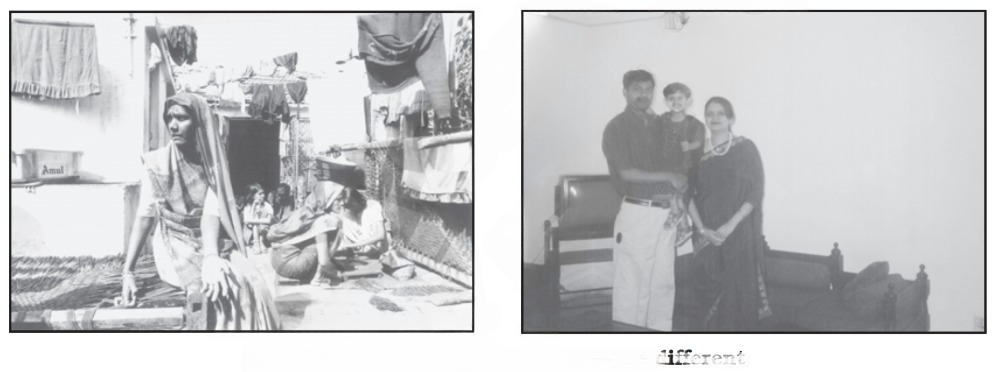
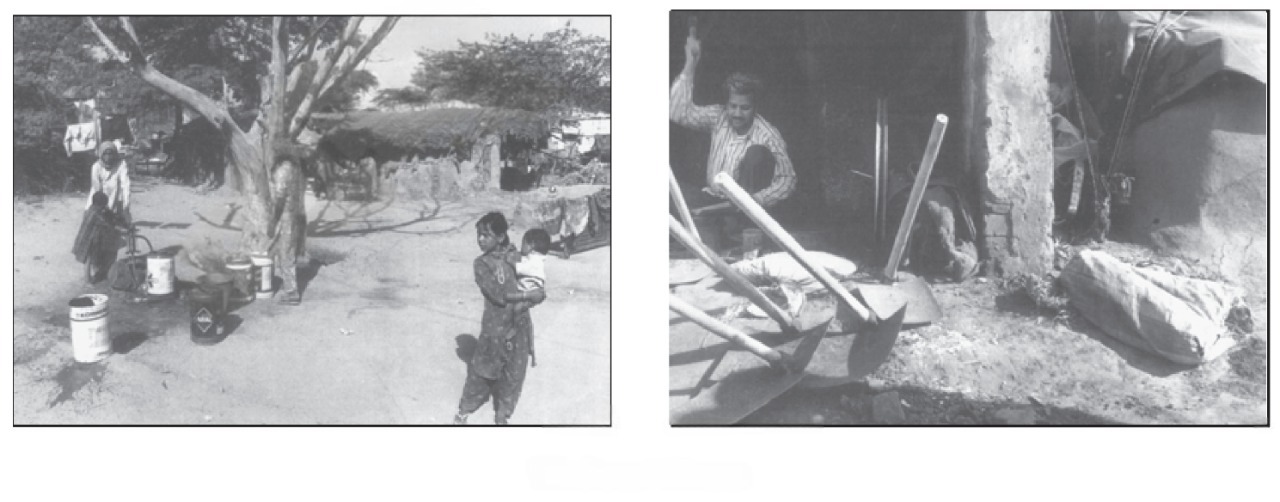
Family, Society and Social Change
German Unification: Economic Insecurity and Marriage
- After German unification, the state withdrew family protection and welfare schemes.
- Families faced greater economic insecurity.
- Many people responded by refusing to marry.
- Marriage declined rapidly in the 1990s as an unintended consequence of the policy change.
Key Periods
- 1941–50Life expectancy cited by A.M. Shah: 32.5 years for men and 31.7 years for women.
- 1981–85The cited figures rose to 55.4 years for men and 55.7 years for women.
- 1990sAfter German unification, withdrawal of family welfare schemes was followed by a rapid decline in marriage.
How Gendered Is the Family?
| Year | Sex ratio |
|---|---|
| 1901 | 972 |
| 1911 | 964 |
| 1921 | 955 |
| 1931 | 950 |
| 1941 | 945 |
| 1951 | 946 |
| 1961 | 941 |
| 1971 | 930 |
| 1981 | 934 |
| 1991 | 926 |
| 2001 | 933 |
| 2011 | 940 |
| Year or place | Child sex ratio |
|---|---|
| India, 1991 | 934 |
| India, 2011 | 919 |
| Punjab | 846 |
| Some districts of Haryana | Below 800 |
| Maharashtra and Uttar Pradesh | The situation is identified as especially grave; no specific figure is given. |
Why should claims about a shift from joint to nuclear families in India be treated cautiously?
Distinguish matrilocal, patrilocal, patriarchal and matriarchal family patterns.
How did the withdrawal of welfare schemes after German unification affect marriage?
Quick recap
- Family forms vary: Family, marriage and kinship exist across societies, but their forms and norms differ.
- Avoid overgeneralising: Industrialisation does not automatically produce nuclear families or fixed gender roles.
- Residence and authority differ: Matrilocal and patrilocal describe residence; patriarchal and matriarchal describe authority.
- Change coexists with continuity: Economic processes can change family life without erasing all earlier norms.
- Gender inequality matters: Son preference and female foeticide contribute to adverse sex-ratio patterns.
- Child sex ratio: India’s ratio fell from 934 girls per 1,000 boys in 1991 to 919 in 2011; the text also flags Punjab, Haryana, Maharashtra and Uttar Pradesh as especially grave cases.
The Institution of Marriage
Marriage across societies
- Variety: Marriage takes many forms across societies and can perform different functions.
- Partner arrangements: Customs and rules for selecting and arranging marriage partners vary widely.
Forms of Marriage
| Form | Meaning | Key point |
|---|---|---|
| Monogamy | One spouse at a time. | A person may remarry after a spouse’s death or divorce, but cannot have multiple spouses simultaneously. |
| Serial monogamy | A sequence of monogamous marriages. | Remarriage is allowed, but there is only one spouse at any given time. |
| Polygamy | Marriage to more than one spouse at the same time. | Its two forms are polygyny and polyandry. |
| Polygyny | One husband has two or more wives. | A form of polygamy. |
| Polyandry | One wife has two or more husbands. | May occur where economic hardship makes it difficult for one man to support a wife and children. |
Marriage and remarriage
- Prevalence: Monogamy is more common in practice, even where polygamy is permitted.
- Widow remarriage: Remarriage after a wife’s death has generally been accepted for men.
- Upper-caste Hindu widows: Their right to remarry was denied; widow remarriage became a major issue in 19th-century reform movements.
- India: The cited 2000 source reports that nearly 10% of all women and 55% of women over 50 were widows.
Economic hardship and polyandry
- Harsh economic conditions make survival and support difficult.
- A single man may be unable to adequately support a wife and children.
- Polyandry may emerge as one social response.
- Extreme poverty may also pressure a group to limit its population.
Widow remarriage reform
- 19th centuryCampaigns for widow remarriage became a major issue in reform movements.
Arranging Marriages: Rules and Prescriptions
| Point | Family-arranged choice | Individual choice |
|---|---|---|
| Decision-makers | Parents or relatives make the decision. | Individuals have relatively more freedom to choose their own partners. |
| Point | Endogamy | Exogamy |
|---|---|---|
| Rule | A person must marry within a culturally defined group they belong to. | A person must marry outside their own group. |
| Possible group | Caste, clan, ethnic, racial or religious group. | Clan, caste, village or another defined group. |
| Example | Marriage within one’s caste. | Village exogamy in parts of North India. |
Village exogamy in parts of North India
- Daughters were married into families in villages far from their natal homes.
- The distance was intended to help the bride adjust to her affinal home without interference from her kinsmen.
- Distance and the unequal relations of the patrilineal system meant married daughters did not see their parents often.
- Parting from the natal home was therefore a sad occasion, often reflected in folk songs.
Do not confuse: Endogamy means marrying within a defined group; exogamy means marrying outside it. The relevant group may be a caste, clan, village or another social grouping.
Family, Kinship and Marriage
- Family
- A group linked by kin connections whose adult members take responsibility for caring for children.
- Kinship ties
- Connections formed through marriage or descent between blood relatives.
- Marriage
- A socially acknowledged and approved sexual union between two adult individuals.
- Family of orientation
- The family into which a person is born.
- Family of procreation
- The family formed through a person’s marriage.
- Consanguineous kin and affines
- Consanguineous kin are related by blood; affines are related through marriage.
Marriage creates wider kinship
- New kin ties: When two people marry, they become kin to one another.
- Extended connections: Each partner’s parents, siblings and other blood relatives become relatives of the other partner through marriage.
- Social link: Family life and economic life are closely interconnected.
Distinguish between polygyny and polyandry.
What is the difference between the family of orientation and the family of procreation?
Quick recap
- Marriage varies across societies in its forms, functions and partner-selection customs.
- Monogamy allows one spouse at a time; serial monogamy allows remarriage but not simultaneous spouses.
- Polygamy includes polygyny and polyandry; economic hardship may be associated with polyandry.
- Endogamy requires marriage within a defined group, while exogamy requires marriage outside it.
- Village exogamy sent brides to distant villages to support adjustment without interference from their kinsmen; distance and patrilineal relations limited visits to natal families.
- Marriage creates kin ties between spouses and their wider families; kin may be connected by blood or through marriage.
Work And Economic Life
What Is Work?
Informal economy — Economic transactions outside regular employment, sometimes paid in cash and often involving the direct exchange of goods or services.
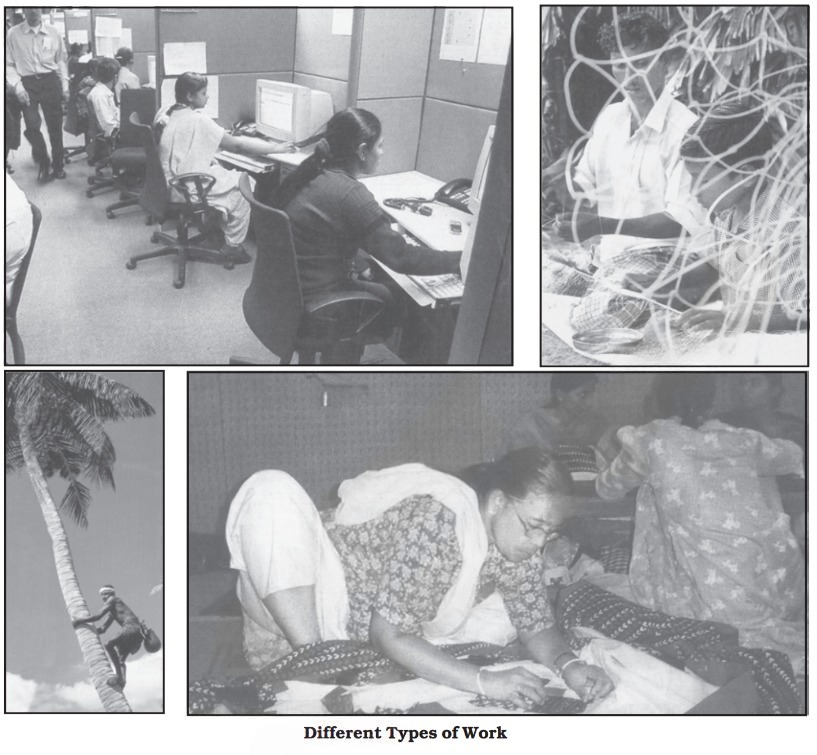
Changing Patterns of Work
Division of labour — The organisation of production by dividing work into many different occupations and specialised tasks.
Work, Home and the Factory
- Before industrialisation: Much work was done at home and involved members of the household collectively.
- Industrialisation: Machinery and factory production separated work from home, with workers performing specialised tasks under management.
Economic Interdependence
- Interdependence: Modern societies rely on the work of many people, often across the world, for food, housing and other goods and services.
- Specialisation: Most people consume products and services they do not produce themselves.
Transformation of Work
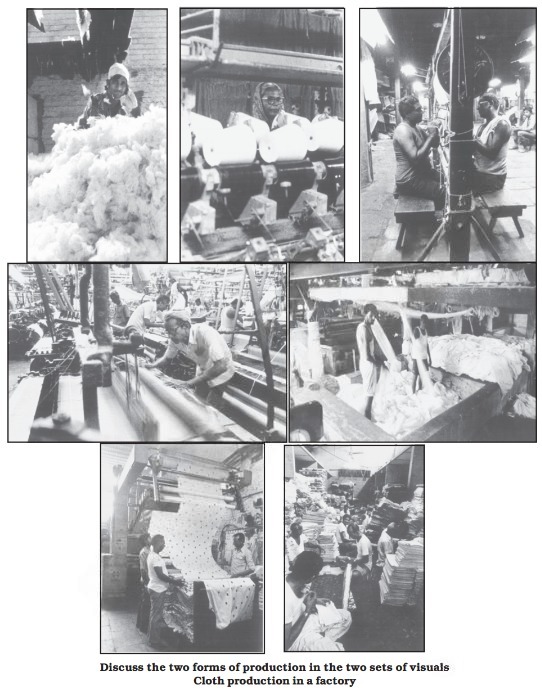
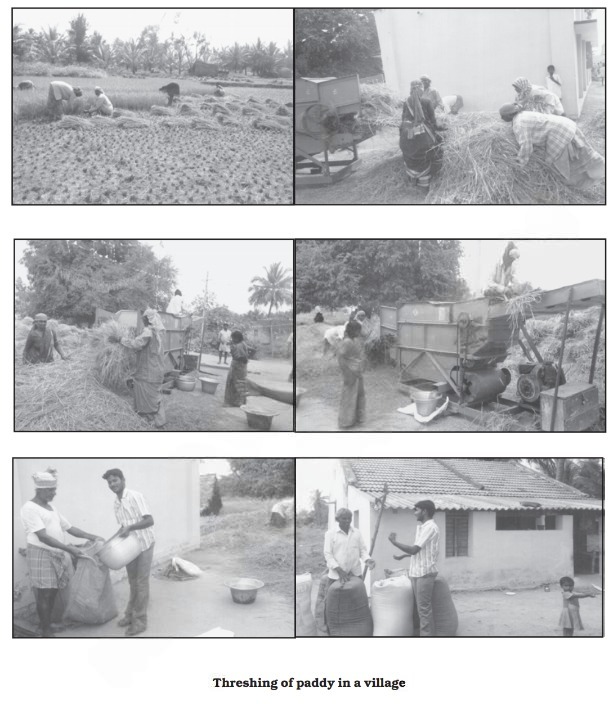
Production and Wider Markets
- Wider markets and customers outside a country can change the economics and politics of production.
- Work
- Paid or unpaid tasks requiring mental and physical effort to produce goods or services for human needs.
- Informal economy
- Transactions outside regular employment, often not captured in official employment statistics.
- Division of labour
- Dividing production into different occupations and specialised tasks.
- Economic interdependence
- Reliance on other workers for goods and services.
Why is it incorrect to define work only as paid employment?
How did industrialisation change the organisation and location of work?
What is economic interdependence in modern society?
Quick recap
- Work includes paid and unpaid tasks requiring mental and physical effort to produce goods or services for human needs.
- Informal economic transactions may be unrecorded and can involve direct exchanges.
- Modern economies have a complex division of labour and specialised occupations.
- Industrialisation moved much work from households to factories and strengthened managerial supervision.
- Modern production uses timed operations, assembly lines, mass markets and employee monitoring.
- People in modern societies depend on a wide network of workers for their daily needs.
Politics
Power and Authority
- Power: The ability of an individual or group to carry out their will, even when others oppose it.
- Relational: Power is held in relation to others; those who wield it do so at the cost of others’ power.
- Authority: Power accepted as legitimate—as right and just—is called authority.
- Legitimation: Ideologies can help people accept authority by presenting its control as fair and justified.
Quick recap
- Politics concerns how power is distributed and exercised in society.
- Authority is power accepted as legitimate and fair.
- Order can be maintained through informal social mechanisms as well as government.
- States govern territories through political institutions, law and, when needed, military force.
- Citizenship rights are civil, political and social.
- Nationalism creates belonging to a political community, while sociology studies power across many social settings.
Religion
The Sociological Study of Religion
Sociological study of religion — The empirical and comparative study of how religion functions in society and relates to other institutions and cultural aspects.
How Sociologists Study Religion
- Empirical method: Studies how religious beliefs, practices and institutions actually operate; it does not judge religious claims as true or false.
- Comparative method: Compares religions and societies, helping reduce bias and prejudice.
- Sociological perspective: Understands religious life in relation to domestic, economic and political life.
Shared Features of Religion
- Presence and variation: Religion exists in all known societies, but beliefs and practices differ across cultures.
- Symbols: Religious symbols invoke feelings of reverence or awe.
- Rituals and ceremonies: Believers perform acts connected with religious symbols.
- Community: Religions involve a community of believers.
Rituals and the Sacred
Ritual — A religious act or ceremony oriented towards symbols regarded as sacred.
Forms and Meaning of Rituals
- Examples: Prayer, chanting, singing, fasting, and eating or avoiding particular foods.
- Personal and collective forms: Rituals may be practised individually in everyday life, or collectively in ceremonies.
- Special places: Regular collective ceremonies often occur in churches, mosques, temples and shrines.
- Meaning matters: Lighting a diya to honour the divine differs in significance from lighting it simply to illuminate a room.
- Respectful conduct: Covering or uncovering the head, removing shoes or wearing particular clothes can express respect for sacred places.
| Point | Sacred | Profane |
|---|---|---|
| Meaning | What a society sets apart as worthy of awe, reverence or respect. | The ordinary realm of everyday life, distinguished from the sacred. |
| Connection | Often associated with a supernatural force, though not always. | Not set apart as sacred. |
Durkheim and the Sacred Realm
- Émile Durkheim: Sociologists examine how societies distinguish the sacred from the profane.
- Supernatural link: A tree or temple may be treated as sacred because people believe a supernatural force is behind it.
- Exception: Early Buddhism and Confucianism had no conception of the supernatural, yet showed reverence for things and people considered sacred.
Religion, Society and Secularisation
Religion and Public Life
- Interconnection: Religion cannot be studied separately; political debates, economic conditions and gender norms influence religious institutions and behaviour.
- Reciprocal influence: Religious norms can also shape—and sometimes determine—social understandings.
- Public character: Religion is more than private belief; its public role can affect other social institutions.
- Power and change: Religious movements have sought social change, including anti-caste movements and movements against gender discrimination.
- Gender: Sociology asks how women, half of the world's population, relate to and participate in religion.
Secularisation — The process, expected by classical sociologists, in which religion becomes less influential across spheres of life as societies modernise.
Religion in Changing Societies
- Classical view: Modernisation was expected to reduce religion's influence over different areas of life.
- Contemporary pattern: Religion continues to play a role in many aspects of society.
Weber: Calvinism and Capitalism
Max Weber's argument — Calvinist beliefs encouraged habits and values that, Weber argued, supported the emergence and growth of capitalism.
Calvinist Beliefs and Work Ethic
- Calvinism: A branch of Protestant Christianity analysed by Weber.
- Work as worship: The world was believed to exist for God's glory, so work in any occupation could serve that purpose.
- Predestination: The belief that whether a person would go to heaven or hell was decided in advance.
- Search for signs: Since people could not know their fate, consistent and successful work could be read as a sign of God's favour.
- Frugality: Earnings were not to be spent on worldly consumption; investment gained the importance of a religious duty.
Weber's Explanation of the Link
- Predestination creates uncertainty about one's salvation.
- People look for signs of God's favour through their occupation and work consistently.
- Success and frugality limit personal consumption and encourage saving.
- Savings are invested to produce more goods and profit.
- Investment expands capital, supporting the growth of capitalism.
Key Reference
- 1864–1920Max Weber's life; his work examined religion's links with social and economic behaviour.
Religion in Traditional Societies
- Central role: Religion usually plays a central part in social life in traditional societies.
- Cultural integration: Religious symbols and rituals are often woven into society's material and artistic culture.
- Empirical method
- Studying how religion functions in society without judging the truth of its beliefs.
- Sacred
- What a society sets apart as worthy of reverence or respect.
- Profane
- The ordinary realm distinguished from the sacred.
- Secularisation
- The expected decline of religion's influence as societies modernise.
- Predestination
- The Calvinist belief that salvation is determined in advance.
How does the sociological study of religion differ from theological study?
Explain Weber's argument about Calvinism and capitalism.
Quick recap
- Religion exists in all known societies, but beliefs and practices vary across cultures.
- Sociologists study religion empirically and comparatively, linking it to other aspects of social life.
- Religions commonly include symbols, rituals or ceremonies, and a community of believers.
- Societies distinguish the sacred from the profane; sacredness does not always require belief in the supernatural.
- Religion has a public role, interacts with power and social institutions, and can inspire movements for social change.
- Weber connected Calvinist work ethic, frugality and investment with the growth of capitalism.
- In traditional societies, religion is often central and integrated with material and artistic culture.
Education
Education and the Transmission of Culture
- Education: A life-long process involving formal and informal learning.
- Social purpose: Education transmits the group’s heritage and communicates knowledge, ideas and practices across generations.
Simple and Complex Societies
Nasik: Changing Work and Education
- Changing opportunities: After Independence, new education and employment opportunities in Nasik encouraged priests’ children to attend school and train for non-traditional jobs.
- Craft work: Pilgrims bought copper, brass and silver wares, but uncertain demand meant craft work could not support all adult men.
- Occupational change: Many craftsmen moved into industry and business, illustrating how changing economic life can reshape education and occupations.
Values and Standardisation in Schools
| Point | Particularistic values | Universalistic values |
|---|---|---|
| Basis | Specific ties and group membership | Standards intended to apply across groups |
| Examples or context | Family, kin, tribe, caste or religion | Promoted by schools in modern societies |
Durkheim and the Functionalist View
- Common values: Durkheim argued that education inculcates shared ideas, sentiments and practices needed for society to survive.
- Preparation: Education prepares children for particular occupations and helps them internalise society’s core values.
- Social functions: It transmits and develops culture, renews social structure and helps allocate individuals to future roles.
Education and Social Stratification
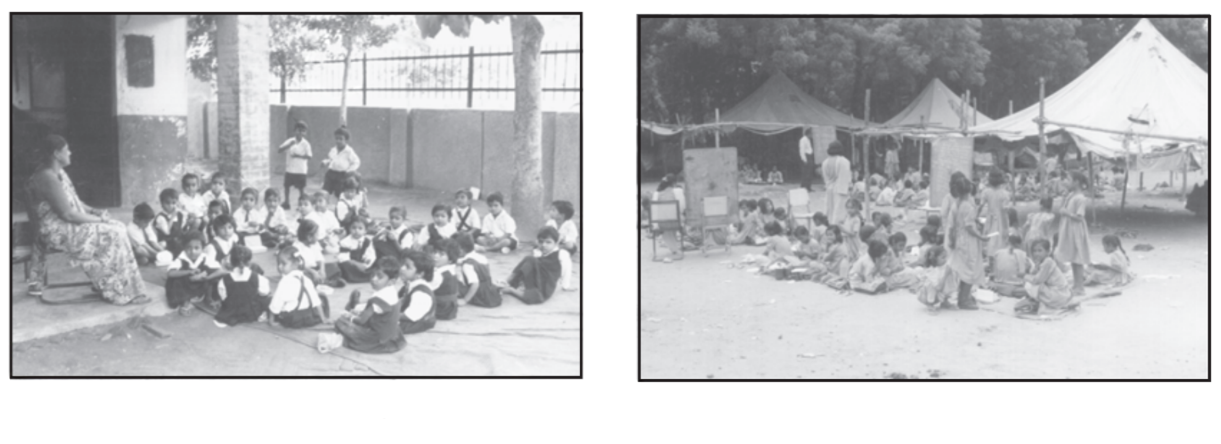
Social Barriers to School Attendance
- Cultivation season draws parents away for work → children take on household responsibilities.
- Household and income-generating work → lower school attendance among some SC and ST children.
- Gendered work expectations → girls in these communities may seldom attend school; one reported example is a 10-year-old girl collecting dry cow dung to sell.
- Caste and gender discrimination → unequal chances of education and, later, unequal opportunities.
- Division of labour
- Specialisation of work tasks across occupations in a production system.
- Gender
- Social expectations about behaviour considered appropriate for members of each sex.
- Social stratification
- The unequal differentiation of people into social positions, affecting access to education and opportunities.
- Universalistic values
- Values and standards intended to apply across different social groups.
Why is formal education especially important in complex societies?
How does the functionalist perspective explain the role of education?
How are education and social stratification connected?
Quick recap
- Education is lifelong, but this lecture focuses on school education and its role in transmitting shared heritage.
- Complex societies need formal, explicit learning because work, knowledge and social organisation are specialised.
- Schools promote shared standards and universalistic values, alongside occupational preparation and socialisation.
- Functionalists see education as transmitting culture and allocating people to social roles.
- School access and outcomes are shaped by social stratification, including socio-economic background, caste and gender.
Sociology — ALL CHAPTERS
1
Sociology And Society
2
Terms, Concepts And Their Use In Sociology
3
Understanding Social Institutions
4
Culture And Socialisation
5
Doing Sociology : Research Methods
1
Social Structure, Stratification And Social Processes In Society
2
Social Change And Social Order In Rural And Urban Society
3
Environment And Society
4
Introducing Western Sociologists
5
Indian Sociologists