Class 11 Humanities . Sociology . Understanding Society . Environment and Society
Chapter 3: Environment And Society
Ch 3
Sociology
Class 11 Humanities
Introduction
Society, Resources and the Environment
Society–environment relationship — The relationship between society and the environment is the way people depend on, use and transform nature, while also being shaped by it.
Following a resource through society
- Natural origins: Everyday objects rely on natural resources, often sourced from different regions.
- Linked production: A classroom chair may use wood, iron, glue and varnish; its production also relies on energy, transport, trade and communication.
- Many contributors: Loggers, carpenters, managers, transporters, traders and buyers take part in the chair’s journey.
- Sociological focus: These connections are complex and vary across places and over time; sociology studies them to understand and address environmental problems.
Ecology and Human Change
Ecology — Ecology is the web of physical and biological systems and processes in which humans are one element.
Ecology is shaped by nature and people
- Biophysical factors: Landforms, rivers, rainfall, soils, climate, plants and animals interact to shape local ecology.
- Local adaptation: Desert species and ways of life are shaped by scarce rainfall, sandy or rocky soils and extreme temperatures.
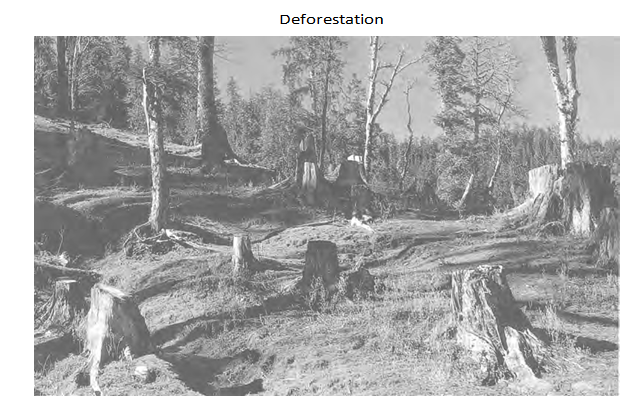
- Human influence: Deforestation can make a river more flood-prone; global warming changes climate. Such impacts can make natural and human causes of ecological change difficult to separate.
- Cultural intervention: Delhi’s Ridge forest was planted by the British around 1915; its dominant Prosopis juliflora was introduced from South America and became naturalised in north India.
- Changed landscapes: Corbett’s grassy chaurs were once agricultural fields; villages were relocated to create the landscape now seen as wilderness.
| Point | Biophysical ecology | Human-made environment |
|---|---|---|
| What it includes | Physical and biological systems, sometimes altered by people | Features and systems deliberately made or organised by humans |
| Example | A forest’s species composition or a river’s flow | A farm with cultivated crops, domesticated animals, conservation works, fertilisers and pesticides |
| Built environment | Nature supplies materials and resources | Cities use materials such as concrete, cement, brick, stone, glass and tar |
Social environment — The social environment emerges from the two-way interaction between biophysical ecology and human intervention.
| Direction | Example | Social effect |
|---|---|---|
| Ecology → society | Fertile Indo-Gangetic floodplain supports intensive, productive agriculture | Dense settlements, agricultural surplus, non-farm activities and complex hierarchical societies and states |
| Ecology → society | Rajasthan’s desert supports mobile pastoralism | Pastoralists move to find fodder for their livestock |
| Society → ecology | Capitalist production and the private automobile transform landscapes and daily life | Air pollution, urban congestion, conflicts and wars over oil, and global warming |
Industrial Change and Ecological Effects
The cotton industry’s global ecological footprint
- Industrial Revolution in Britain increased demand for cotton in Lancashire’s mills.
- Large areas of southern North America and the Caribbean were converted to cotton plantations.
- Young West Africans were forcibly transported to America as enslaved plantation labour.
- West Africa’s depopulation weakened its agricultural economy; fields fell into wasteland.
- Coal smoke polluted British air, while displaced rural people moved to cities and lived in poor conditions.
Ecological footprint — The ecological footprint of an industry is the environmental impact of its resource use and production across the places connected to it.
Social Organisation, Values and Knowledge
Access to resources and division of labour
- Property relations: Ownership determines who may use natural resources and on what terms. Government-owned forests, for example, may be leased to timber companies or opened to villagers for forest produce.
- Private ownership: Private control of land or water can restrict other people’s access.
- Division of labour: People’s work and control over resources shape how they experience the environment.
- Gender and scarcity: In rural India, women often gather fuel and fetch water but may not control these resources, so shortages can affect them more acutely.
| Value system | Possible effect on environment and resources |
|---|---|
| Capitalist values | Commodify nature by treating it as something to buy and sell for profit; a river’s varied meanings may be reduced to profit-and-loss calculations. |
| Socialist values | Emphasise equality and justice; in some countries, land has been taken from large landlords and redistributed to landless peasants. |
| Religious values | May encourage protection of sacred groves and species, or support the belief that people have divine sanction to alter nature. |
Perspectives and knowledge about society and nature
- Nature–nurture debate: Asks whether individual characteristics are innate or shaped by environmental conditions and opportunities—for example, whether poverty reflects innate ability or disadvantage.
- Social context: Theories and data reflect the conditions in which they arise. Ideas claiming women were inherently less capable than men, or Black people than White people, were challenged as equality gained wider support during the 18th-century social and political revolutions.
- Colonial knowledge: Colonial powers systematically gathered knowledge about environments to make resources accessible for imperial use.
- Institutionalised disciplines: Geology, geography, botany, zoology, forestry and hydraulic engineering developed or became established to help manage natural resources for colonial purposes.
Environmental Management and Risk
Why industrial environments can be risky
- Limits of prediction: Biophysical processes are not fully understood, making them difficult to predict and control.
- Growing impact: Industrialisation has expanded and accelerated resource extraction, affecting ecosystems on an unprecedented scale.
- Complex systems: Industrial technologies and organisations need sophisticated management, but these systems can be fragile and vulnerable to error.
- Risk society: People rely on technologies and products whose workings and dangers they may not fully understand.
- Examples: The Chernobyl nuclear disaster, the Bhopal industrial disaster and Mad Cow disease in Europe illustrate industrial risks.
The Bhopal Industrial Disaster
Bhopal disaster — On 3 December 1984, methyl isocyanate (MIC) gas accidentally escaped from a Union Carbide pesticide factory in Bhopal, killing about 4,000 people and leaving around 200,000 permanently disabled.
| Factor | Evidence from the Bhopal case |
|---|---|
| Ignored warnings | The factory had previous leakages, including one that killed an operator. A municipal corporation head warned the company to move; employees, experts and local reporting also raised safety concerns. |
| Weak government oversight | Warnings were disregarded; the factory was declared safe and received environmental clearance shortly before the leak, despite concerns and Department of Environment siting guidelines. |
| Political and corporate influence | The report described close links between the company and powerful politicians and officials, including employment and hospitality connections, alongside donations. |
| Inadequate design and safety | The plant lacked several safety features, including a computerised early-warning system used at the company’s US factories; no emergency evacuation plan had been developed with the community. |
| Poor operation and maintenance | Many instruments were out of order; staffing had been cut, experienced workers had left, morale was low and the plant was operating at a third of capacity. |
How institutional failures increased disaster risk
- Industrial risks and repeated warnings were present.
- Company and government organisations failed to respond adequately.
- Unsafe design, weak maintenance and insufficient staffing left the plant vulnerable.
- No effective emergency evacuation plan was in place for the surrounding community.
- A gas leak became a mass-casualty disaster.
Which social institutions and organisations can contribute to or prevent industrial accidents?
What measures could help prevent disasters like Bhopal?
Selected dates and periods
- 18th centurySocial and political revolutions helped widen support for equality, challenging claims of innate differences between social groups.
- Around 1915The British planted Delhi’s Ridge forest; Prosopis juliflora, introduced from South America, became naturalised in north India.
- 1977Union Carbide came to Bhopal amid rising pesticide demand after the Green Revolution.
- Late 1970sA Bhopal municipal corporation head warned Union Carbide to move its factory out of the city.
- May 1982Three Union Carbide Corporation experts from the USA surveyed the plant and identified serious safety lapses.
- 3 December 1984MIC gas leaked from the Bhopal factory, causing thousands of deaths and widespread permanent disability.
- Ecology
- The interconnected physical and biological systems and processes that include humans.
- Social environment
- The environment formed through interaction between ecology and human activity.
- Property relations
- Rules and arrangements determining who owns, controls and can use resources.
- Commodification of nature
- Treating natural resources as goods that can be bought and sold, often for profit.
- Risk society
- A society increasingly exposed to risks created by complex technologies and industrial systems.
- Ecological footprint
- The environmental effects of an activity across the places connected to its resource use and production.
Quick recap
- Societies depend on natural resources and organise complex networks to produce and distribute goods.
- Ecology includes physical and biological processes; human actions can modify landscapes and ecological conditions.
- Nature shapes social life, while social systems and technologies also reshape nature.
- Property relations, labour divisions, social values and knowledge systems influence who controls and experiences environmental resources.
- Industrialisation increases resource extraction and can create risks that are hard to predict or manage.
- The Bhopal disaster reflected interacting company failures, weak oversight and ignored warnings—not simply an accidental leak.
Major Environmental Problems And Risks
Overview
- Global concerns: Environmental problems are recognised worldwide, though their urgency differs between countries and contexts.
- Major categories: Resource depletion, pollution, global warming, genetically modified organisms, and natural or man-made disasters.
A. Resource Depletion
Resource depletion — The exhaustion or destruction of natural resources through their use or poor environmental management.
Water and land
- Non-renewable resources: Using up resources such as fossil fuels, especially petroleum, is a serious concern.
- Groundwater: Levels are declining rapidly in India, particularly in Punjab, Haryana and Uttar Pradesh. Aquifers that took centuries or millennia to fill are being emptied within decades.
- Growing demand: Intensive agriculture, industry and urban centres increase pressure on groundwater.
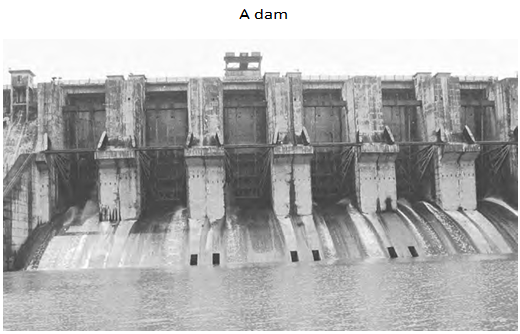
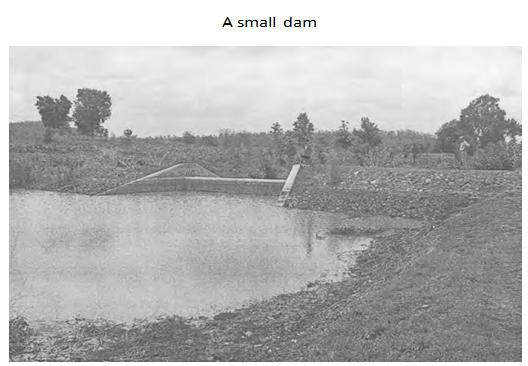
- Rivers and urban water bodies: Damming and diverting rivers can irreversibly damage basin ecology; filling and building over urban water bodies disrupts natural drainage.
- Topsoil: This slow-forming agricultural resource is lost through erosion, water-logging, salinisation and brick-making.
Biodiversity habitats
- Habitats at risk: Forests, grasslands and wetlands are shrinking, largely as agricultural land expands.
- Overall trend: Some regions have gained vegetation through re-forestation, but biodiversity loss remains the wider trend.
- Consequences: Habitat loss endangers species, including species unique to India; the sharp decline in tiger numbers illustrates the risk despite laws and large sanctuaries.
B. Pollution
Pollution — The contamination of air, water or surroundings in ways that harm people and the environment.
Air pollution
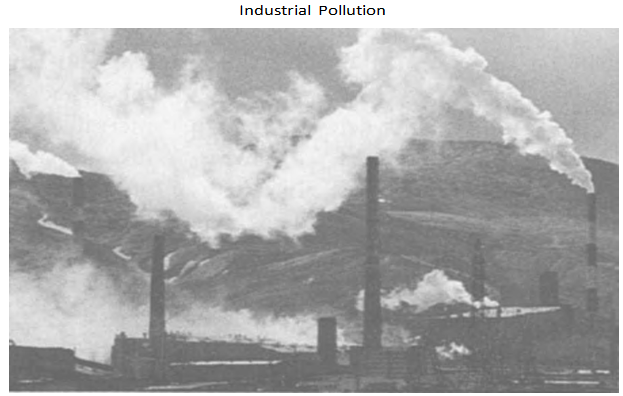
- Sources: Industrial and vehicle emissions, and burning wood or coal for domestic use.
- Indoor risk: Cooking with green or poorly burning wood in badly designed chulhas and poorly ventilated homes creates dangerous indoor pollution, especially for rural women who cook.
- Health effects: Air pollution causes respiratory and other illnesses, serious illness and death.
- WHO estimate: In 2012, exposure to air pollution was linked to around 7 million deaths—one in eight global deaths—and identified as the world’s largest single environmental health risk.
- 2012 figures: The text links 3.3 million deaths to indoor air pollution and 2.6 million to outdoor air pollution. Reducing exposure could save millions of lives.
Water pollution
- Affected water: Both surface water and groundwater can be polluted.
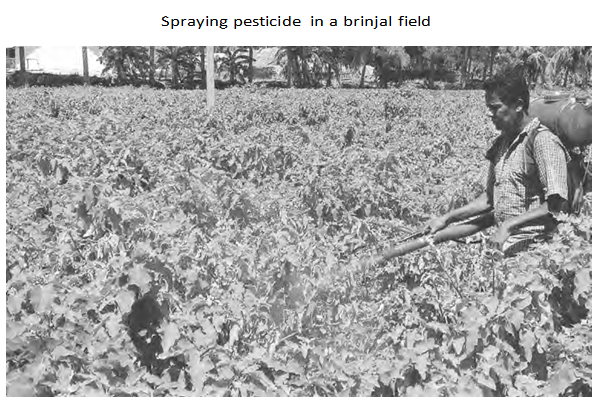
- Main sources: Domestic sewage, factory effluents and farm runoff containing synthetic fertilisers and pesticides.
- Key concern: Pollution of rivers and other water bodies is particularly serious.
Noise pollution
- Where it occurs: Noise pollution is a significant urban problem and has been addressed through court orders in many cities.
- Sources: Amplified loudspeakers at religious and cultural events, political campaigns, vehicle horns and traffic, and construction work.
C. Global Warming
Global warming — A rise in global temperatures caused when greenhouse gases trap heat that would otherwise dissipate.
Causes and consequences
- Greenhouse gases: Carbon dioxide, methane and other gases trap the sun’s heat, producing a small but significant rise in global temperatures.
- Climate impacts: Climate change is expected to melt polar ice-fields and raise sea levels, threatening low-lying coasts and ecological balance.
- Uncertainty: Global warming is likely to increase climate fluctuations and make conditions less predictable worldwide.
- Major contributors: China and India are increasingly significant sources of global carbon and greenhouse-gas emissions.
Global warming: cause to impact
- Release of greenhouse gases
- Heat is trapped in the atmosphere
- Global temperatures rise
- Ice melts and sea levels rise
- Coastal areas and ecological balance are threatened; climate becomes more variable
D. Genetically Modified Organisms
Genetically modified organism (GMO) — An organism whose characteristics are changed by introducing genes, including genes from another species.
Uses, uncertainties and concerns
- Gene-splicing: New techniques allow scientists to transfer genes from one species into another.
- Example: A gene from *Bacillus thuringiensis* has been introduced into cotton, making it resistant to bollworm.
- Crop traits: Genetic modification may shorten growing time or increase crop size and shelf-life.
- Unknown effects: Long-term effects on people who eat modified foods and on ecological systems are not well known.
- Seed dependence: Companies may create sterile seeds that farmers cannot reuse, keeping seed ownership and profits with companies and making farmers dependent on them.
E. Natural and Man-made Environmental Disasters
| Type | Example | What happened |
|---|---|---|
| Man-made | Bhopal disaster (1984) | A toxic gas leak from the Union Carbide factory killed about 4,000 people. |
| Natural | Tsunami (2004) | Killed thousands of people. |
Key dates in the lecture
- 1984The Bhopal toxic gas disaster killed about 4,000 people.
- 2004A tsunami killed thousands of people.
- 2012WHO linked around 7 million deaths worldwide to air-pollution exposure.
- Aquifer
- An underground layer that stores water.
- Topsoil
- The upper, fertile soil layer important for agriculture.
- Salinisation
- The build-up of salts in soil, which can reduce its agricultural usefulness.
- Greenhouse effect
- The trapping of heat by gases in the atmosphere.
- Gene-splicing
- A technique used to combine or transfer genetic material.
How do human activities contribute to the depletion of water and land resources?
State two concerns about genetically modified crops.
Quick recap
- Resource depletion: Groundwater, topsoil and biodiversity habitats are being lost through increasing demand and poor management.
- Pollution: Air, water and noise pollution harm health and ecosystems; indoor cooking smoke is also a serious air-pollution risk.
- Global warming: Greenhouse gases trap heat, contributing to rising temperatures, melting ice, sea-level rise and climate uncertainty.
- GMOs: Genetic modification can add useful crop traits, but long-term effects and farmer dependence on seed companies are concerns.
- Disasters: The Bhopal gas leak (1984) and the tsunami (2004) illustrate man-made and natural environmental disasters.
Why Environmental Problems Are Also Social Problems
Environmental Problems and Social Inequality
- Unequal impacts: Social status and power shape people’s ability to avoid environmental crises or recover from them.
- Kutch example: Rich farmers’ deep borewells can leave poorer villagers’ wells dry during failed rains, even while wealthy fields remain green.
- Contested public interest: Environmental policies may benefit powerful groups while harming poorer or politically weaker communities.
- Social ecology: Property relations and production shape how groups use and understand nature, creating conflicts such as those between forest departments and bamboo artisans.
Sociology — ALL CHAPTERS
1
Sociology And Society
2
Terms, Concepts And Their Use In Sociology
3
Understanding Social Institutions
4
Culture And Socialisation
5
Doing Sociology : Research Methods
1
Social Structure, Stratification And Social Processes In Society
2
Social Change And Social Order In Rural And Urban Society
3
Environment And Society
4
Introducing Western Sociologists
5
Indian Sociologists