Class 11 Humanities . Sociology . Understanding Society . Social Change and Social Order in Rural and Urban Society
Chapter 2: Social Change And Social Order In Rural And Urban Society
Ch 2
Sociology
Class 11 Humanities
Introduction
The Pace of Social Change
Change Across Human History
- Modern society: Constant change is a prominent feature, but rapid and continuous change is historically recent.
- Sociology: The discipline emerged partly to understand the rapid changes Western European societies experienced between the seventeenth and nineteenth centuries.
- Acceleration: Change has sped up over time; the last fifty years changed more rapidly than the previous fifty, and the last twenty years may have changed more than the thirty before them.
- Human-history clock: If human existence were a 24-hour day, agriculture would begin at 11:56 pm, civilisation at 11:57 pm, and modern societies at 11:59:30 pm. The final thirty seconds may have brought as much change as all the time before them.
Approximate Timescales
- About 500,000 years agoHuman beings began to exist on Earth.
- About 12,000 years agoAgriculture developed, enabling fixed settlements.
- About 6,000 years agoCivilisations began.
- The last 400 yearsConstant and rapid change became a feature of human society.
- The last 100 yearsThe pace of change accelerated further.
Meaning and Scope of Social Change
Social change — A significant transformation that alters the underlying structure of an object or social situation over time.
What Makes Change Social?
- Not every change qualifies: Social change refers to fundamental transformations, not minor or routine alterations.
- Intensity: The change must have a substantial impact.
- Extent: It must affect a large section of society.
- Classification: Sociologists examine social change by its causes, nature or impact, and pace.
Change Classified by Pace
| Point | Evolutionary change | Revolutionary change |
|---|---|---|
| Pace | Slow change over a long period | Comparatively quick and sometimes sudden change |
| Typical example | Gradual adaptation over generations | Rapid transformation of a political power structure |
| Broader use | Describes gradual development | Can describe sharp transformations such as an industrial or telecommunications revolution |
Evolution and Social Darwinism
- Darwin's theory: Living organisms evolve gradually over long periods by adapting to natural conditions.
- Survival of the fittest: Organisms best adapted to their environment are more likely to survive; those unable or too slow to adapt may die out.
- Human evolution: Darwin proposed a sequence from sea-borne life forms to land-based mammals, through monkeys and chimpanzees, and finally to Homo sapiens.
- Social Darwinism: An application of evolutionary ideas to society that emphasises adaptive change.
Examples of Revolutionary Change
- Political revolutions: The French Revolution (1789–93) and the Russian Revolution (1917) involved rapid changes in political power, including the overthrow of a ruling group by challengers.
- Broader usage: “Revolution” also describes sudden, far-reaching transformations in fields such as industry and telecommunications.
Change Classified by Nature or Impact
- Structural change
- Transformation in society's structure, institutions, or the rules governing institutions.
- Change in values and beliefs
- A shift in shared ideas or beliefs that can alter social practices, institutions, and laws.
Paper Money and Structural Change
- Currency shifts from coins whose value is tied to gold or silver.
- Paper notes are accepted because people trust what they represent.
- Money need not be intrinsically valuable to facilitate exchange.
- Credit markets and banking structures develop.
- The organisation of economic life changes.
Changing Ideas About Childhood
- Children were once commonly treated as small adults and expected to work from a young age, including in early factories.
- During the nineteenth and early twentieth centuries, childhood increasingly came to be seen as a distinct stage of life.
- Children's work became less socially acceptable, and compulsory schooling gained support.
- Many countries passed laws banning child labour and requiring education.
- In India, child labour is illegal and employers can be punished, although some industries still rely on it partially.
Examples of Industries Where Child Labour Persists
- Examples: Carpet weaving, small tea shops or restaurants, and matchstick making.
Change Classified by Sources
Sources and Causes
- Most common classification: Social change is grouped according to its causes or sources.
- Internal (endogenous) causes: Originate within a society.
- External (exogenous) causes: Originate outside a society.
- Five broad sources: Environmental, technological, economic, political, and cultural.
What conditions must a change meet to qualify as social change?
Distinguish evolutionary change from revolutionary change.
Name the five broad sources of social change.
Quick recap
- Rapid, continuous social change is historically recent and has accelerated over time.
- Social change is a significant transformation with substantial impact and broad reach.
- Evolutionary change is gradual; revolutionary change is comparatively rapid and may be sudden.
- Structural change transforms institutions or their rules; shifts in values and beliefs can also reshape society.
- Paper money and changing ideas about childhood show how social change can transform economic life, practices, and laws.
- Social change may have internal or external causes and five broad sources: environmental, technological, economic, political, and cultural.
Environment
Environment and Society
Environmental influence — The physical environment and climate shape how people live and organise society.
How the environment shapes social life
- Earlier influence: With little ability to control nature, environmental conditions strongly shaped food, clothing, livelihoods and social interaction.
- Different settings: Deserts, cold regions, ports, trade routes, mountain passes and fertile river valleys supported different ways of life.
- Technology: Technology helps people adapt to or overcome natural conditions, reducing some differences between societies.
- Changing relationship: Technology also alters nature and our relationship with it; nature’s effect on society is changing, not simply declining.
Environmental Factors as Causes of Social Change
Destructive and constructive environmental change
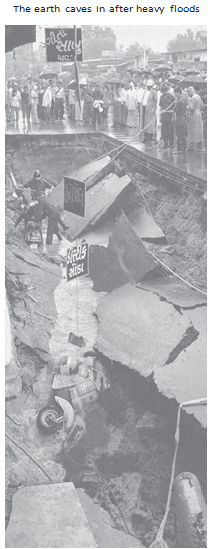
- Natural disasters: Earthquakes, volcanic eruptions, floods and tidal waves can drastically alter societies.
- Irreversible effects: Disasters may destroy livelihoods and settlements permanently, changing community life and social structures.
- Tsunami: The December 2004 tsunami affected Indonesia, Sri Lanka, the Andaman Islands and parts of Tamil Nadu; some coastal communities may not return to their former livelihoods.
- Constructive change: Environmental factors can also create wealth. Oil discoveries transformed West Asian societies, including Saudi Arabia, Kuwait and the United Arab Emirates.
- Example: The transformative effect of Middle Eastern oil is compared with the discovery of gold in California in the 19th century.
Environmental Change and Society
- Natural disaster → destruction of homes and livelihoods → disruption of community life → lasting social change.
- Discovery of oil in West Asia → major oil wealth → transformation of societies such as Saudi Arabia, Kuwait and the United Arab Emirates.
Technology and Economy
Technology’s social impact
- Combined forces: Technological and economic change together have driven immense social change, especially in the modern period.
- Technology and nature: Technology can help people resist, control, adapt to or harness nature.
- Markets: In combination with the market, technology can have social effects as powerful as a tsunami or the discovery of oil.
- Industrial Revolution: It is a major example of large-scale, immediately visible social change driven by technological change.
Steam Power, Railways and Steamships
Effects of steam-powered transport
- Steam power: It provided energy stronger than human or animal power and could operate continuously without rest, supporting large-scale industry.
- Railways: Railways enabled the westward expansion of industry and trade across the American continent and in Asia.
- India: Railways shaped the Indian economy, especially during the first century after their introduction in 1853.
- Steamships: Faster, more reliable ocean voyages changed international trade and migration.
- Wider effects: Railways and steamships produced economic, social, cultural and demographic changes across world society.
Social Effects of Steam Transport
- Steam power → large-scale industry and powered transport.
- Railways → expansion of industry and trade across regions.
- Steamships → faster, more reliable ocean travel → changes in international trade and migration.
- Transport changes → wider economic, social, cultural and demographic effects.
Delayed Effects of Technology
Delayed technological impact — An invention may have limited effects at first, then become socially transformative when later conditions make it useful.
Technology in new contexts
- Context matters: An invention can gain significance when later economic and social conditions enable wider use.
- Chinese discoveries: Gunpowder and writing paper had limited impact for centuries before conditions in modernising Western Europe gave them greater significance.
- Consequences: Gunpowder transformed warfare, while paper and printing brought a far-reaching social change.
- British textiles: Spinning and weaving machines, combined with market forces and imperial power, destroyed the Indian subcontinent’s handloom industry, which had been the world’s largest and most advanced.
Technology in New Contexts
- Invention or discovery → limited immediate effect.
- Later economic and social conditions → new opportunities to use it.
- Wider use → major changes in warfare, communication or industry.
- British textile machines + markets + imperial power → destruction of the Indian handloom industry, formerly the largest and most advanced in the world.
Economic Organisation and Social Change
Plantation agriculture — Large-scale cultivation of a single cash crop, creating substantial demand for labour.
Economic organisation, labour and trade
- Cash crops: Sugarcane, tea and cotton are examples grown on plantations.
- Slavery and trade: Plantation labour demand helped establish slavery and the slave trade between Africa, Europe and the Americas.
- India: Assam’s tea plantations involved forced migration of labour from Eastern India, especially Adivasi areas of Jharkhand and Chhattisgarh.
- Tariffs: Changes in customs duties under international agreements and institutions such as the World Trade Organisation can wipe out industries and occupations, or create booms and prosperity for others.
Economic Changes and Their Consequences
- Large-scale plantation of cash crops → heavy demand for labour.
- Labour demand → expansion of slavery and the slave trade between Africa, Europe and the Americas.
- Tea plantations in Assam → demand for workers → forced migration from Eastern India, especially Adivasi areas.
- Changes in tariffs → shifts in trade conditions → industries and occupations may decline or prosper.
Key Dates and Periods
- 17th–19th centuriesPlantation agriculture helped drive slavery and the slave trade between Africa, Europe and the Americas.
- 19th centuryThe discovery of gold in California is an example of a resource discovery transforming society.
- 1853Railways were introduced in India.
- December 2004A tsunami struck Indonesia, Sri Lanka, the Andaman Islands and parts of Tamil Nadu.
- Irreversible change
- A lasting change that does not allow a return to the way things were.
- Plantation agriculture
- Large-scale cultivation of a single cash crop, creating substantial labour demand.
- Tariff
- A customs duty on trade that can affect the prospects of industries and occupations.
- Delayed technological impact
- A technology’s major social effects emerge later, when conditions make it significant.
How can natural disasters bring about social change?
Why can a technological invention’s social impact appear long after its discovery?
How did plantation agriculture affect labour and society?
Quick recap
- Environment shapes livelihoods and social life, while technology changes how societies relate to nature.
- Natural disasters can cause lasting social disruption; resource discoveries such as oil can also transform societies.
- Steam power, railways and steamships reshaped industry, trade, migration and social life.
- Technologies may become transformative only when later conditions make them useful.
- British textile machines, markets and imperial power damaged the Indian handloom industry, then the world’s largest and most advanced.
- Plantations and tariff changes can reorganise labour, trade and the fortunes of industries.
Politics
Political Forces and Social Change
- Political forces: Warfare, conquest, independence movements and changes in political systems can reshape society and redistribute power among social groups.
- Wider context: Political leaders act within larger social and economic trends, while political change can also set further changes in motion.
Japan and the United States: Change Beyond Warfare
- Japan and the United States: After the Second World War, the United States occupied Japan and introduced changes including land reform. Japan later surpassed the United States in industrial methods, reshaping industries through economic and technological competition rather than warfare.
Political Change Within Countries
- Domestic political change: Political shifts within a country can transform society as well as its government. India’s independence movement ended British rule, while Nepal’s rejection of monarchy in 2006 marked another major political change.
- Redistribution of power: Political changes often alter how power is shared among social groups and classes.
Universal Adult Franchise
- Universal adult franchise: The principle of “one person, one vote” gives adult citizens an equal right to vote and participate in choosing their government.
- Historical change: Voting rights expanded through long struggles from systems that restricted the vote by wealth, gender, race or social status.
Limits and Continuing Influence of Voting
- Political change
- A shift in political power or arrangements that can bring wider changes to society.
- Universal adult franchise
- The principle that adults have the right to vote.
- Legitimacy
- Acceptance that a government has a valid right to exercise power.
- Redistribution of power
- A shift in power among social groups and classes.
How can warfare bring social change?
How did Japanese industry affect the United States and other countries?
Why is universal adult franchise a major source of social change?
Quick recap
- Political forces are part of wider social and economic contexts and can cause major social change.
- Warfare and conquest can lead to influence in either direction between conquerors and conquered.
- Japan’s industrial rise reshaped industries abroad, especially in the United States.
- Political changes at home, including Indian independence and Nepal’s 2006 rejection of monarchy, can transform society.
- Universal adult franchise expanded political participation after long struggles against restricted voting; modern democracies make elections necessary for legitimate power.
- Voting norms pressure governments to seek public approval, although democratic participation and equality remain incomplete.
Culture
Culture and Social Change
- Culture: Ideas, values and beliefs shape people’s lives; changes in them can therefore transform social relationships and institutions.
- Religion: Religious beliefs and norms have influenced social organisation, as seen in the impact of Buddhism in ancient India and the Bhakti Movement on medieval society.
- Women’s equality: Changing ideas about women’s roles, supported by women’s struggles and their participation in wartime work, have helped alter social and economic life.
- Sport: Cricket became a symbol of national and racial pride in former colonies, while its popularity in South Asia has reshaped the game’s commercial profile.
Social Order
Social Change and Social Order
- Social change and order: Social change is understood in contrast with continuity. Social order is the tendency within established systems to resist and regulate change.
- Relationship: Continuity provides a backdrop for recognising change, while social order helps maintain stability in society.
Why Societies Resist Change
- Stability: Societies need to reproduce themselves over time, with rules and institutions creating predictable patterns of behaviour.
- Unequal interests: Dominant groups often resist changes that threaten their status and resources, while subordinated groups are more likely to seek change.
How Social Order Is Maintained
- Maintaining order: Societies sustain established patterns of relationships, values and norms through a combination of people’s willingness to follow rules and measures that compel obedience.
Socialisation and Consent
- Socialisation: People internalise shared values and norms through socialisation, which encourages them to consent to social rules.
- Limits of consent: Socialisation cannot remove individual choice completely; beliefs and views about right and wrong can change over time.
Power and Domination
- Social order
- The maintenance and reproduction of established social relations, values and norms.
- Socialisation
- The process through which people learn and internalise shared values and norms.
- Power
- The ability to make others act as one wants, regardless of their wishes.
- Domination
- A stable power relationship in which the parties become accustomed to their relative positions.
- Dominant
- Routinely or habitually in a position of power.
Why do dominant and subordinated groups often have different interests in social change?
Why is socialisation not enough on its own to maintain social order?
Quick recap
- Social change is understood against continuity; social order helps regulate change and maintain stability.
- Stratification gives dominant and subordinated groups different interests in preserving or changing society.
- Social order involves maintaining and reproducing social relations, values and norms.
- Societies sustain order through both spontaneous consent and compulsion.
- Socialisation internalises norms, but people can still question and change their beliefs.
- Stable power relationships are called domination; people or institutions habitually holding power are dominant.
Domination, Authority and Law
Legitimacy and Authority
- Legitimacy: Power is legitimate when it is accepted as proper, just and fitting within prevailing social norms.
- Authority: Max Weber defines authority as legitimate power—power regarded as justified or proper.
Authority Has Limits
- Defined scope: Authority applies within a particular domain: a judge exercises it in court, a police officer over public actions within the law, and a teacher in the classroom.
- Informal authority: Religious leaders, scholars, artists and other figures may exercise influence without formally specified powers.
Law and the Legitimation of Power
- Law: A law is an explicitly codified rule, usually written down, with procedures for making, changing and enforcing it.
- Binding rules: In a modern democracy, laws are enacted by elected representatives and apply to citizens regardless of individual agreement.
- Legitimation: Lawful authority supports domination by making power legitimate and securing regular cooperation, alongside other forms of power.
Contestation, Crime and Violence
Crime — An act that violates an existing law; its legal status alone does not decide its moral worth.
State’s monopoly over legitimate violence — A defining feature of the modern state: within its jurisdiction, only the state and its authorised functionaries may lawfully use violence.
- Legitimacy
- Social acceptance of power as proper and justified.
- Authority
- Power regarded as legitimate.
- Law
- An explicitly codified rule that binds citizens.
- Contestation
- Broad, insistent disagreement or dissent.
- Crime
- An act that violates an existing law.
- Monopoly over legitimate violence
- The state’s exclusive lawful right to use violence through authorised functionaries.
How does authority differ from power?
Why can an act be a crime even if it is considered morally justified?
How can violence threaten social order and state authority?
Quick recap
- Legitimacy is social acceptance of power as proper; authority is legitimate power.
- Authority is limited to the role and domain in which it is recognised.
- Law is a codified rule made through recognised processes and binding on citizens.
- The mix of lawful, legitimate authority and other forms of power shapes a social system and its dynamics.
- Social order allows disagreement; contestation becomes illegal when it crosses legal boundaries.
- Crime means breaking an existing law, although legality alone does not settle an act’s morality.
- The state claims the lawful monopoly over violence; violence challenges order and state authority.
Social Order And Change In Village, Town And City
Rural and Urban Settlements
- Rural and urban life: Villages, towns and cities have different conditions of life, forms of social organisation and patterns of social order and change.
- Historical development: Villages emerged with settled agriculture, which enabled surplus production, wealth accumulation and occupational specialisation.
Distinguishing Villages, Towns and Cities
- Population density: Towns and cities generally have more people per unit of area, while villages are more spread out.
- Economic activity: Villages have a larger share of agriculture-related work, production and income than urban settlements.
- Urban terms: Towns and cities differ mainly by size and administrative definition; an urban agglomeration includes a city and nearby settlements, while a metropolitan area may include multiple cities.
Urbanisation
- Sedentary agriculture
- Agriculture practised in a settled place rather than by moving from place to place.
- Surplus
- Production beyond what is needed for survival.
- Occupational specialisation
- The development of distinct occupations through a division of labour.
- Urbanisation
- A growing share of the population living in urban areas rather than rural areas.
Quick recap
- Villages emerged as societies shifted from nomadic life to settled agriculture.
- Agricultural surplus and occupational specialisation contributed to social differences and village organisation.
- Density and the share of agriculture-related activity are key rural–urban distinctions; population size alone is insufficient.
- Towns and cities are similar settlement types, differentiated mainly by size and administrative definition.
- Urban agglomerations include a city and nearby settlements; metropolitan areas cover multiple cities or very large continuous urban areas.
- Urbanisation is increasing globally and in India, as reflected in Census figures and United Nations projections.
Social Order and Social Change in Rural Areas
Rural social order — The pattern of relationships and institutions that organizes village life, often shaped strongly by traditional practices and local power structures.
| Point | Rural areas | Urban areas |
|---|---|---|
| Relationships | Smaller communities often mean more personalised relationships; people commonly know one another by sight. | Greater size and anonymity can create more distance between people. |
| Institutions | Caste, religion and customary practices tend to be stronger. | Traditional institutions generally have less influence than in villages. |
| Pace of change | Change is often slower because social order is resilient and links to the wider world may be weaker. | Change tends to arrive sooner; stronger communication links also reduce the rural–urban gap. |
Why Shifts in Rural Power Are Often Slow
- Small village communities and limited anonymity make dissenters easy to identify.
- Dominant groups can punish dissent and control many jobs and other resources.
- Poorer groups depend on powerful groups because alternative employment and support are scarce.
- Small populations make large gatherings difficult to organise and easy for powerful groups to suppress.
- An established power structure is therefore difficult to dislodge, so shifts in power often come late.
Communication and the Pace of Change
- Earlier barriers: Scattered settlements and weaker connections with the wider world could slow the spread of change.
- Communication: Telephone and television have shortened, or sometimes removed, the cultural gap between villages and towns.
- Transport: Improvements to road and rail links have reduced village isolation and helped accelerate change.
- Important qualification: Rural change is not always slow; exceptional circumstances can alter its pace.
Land Reform and Dominant Castes
Dominant caste — A caste group that holds substantial economic, social and political power in a regional rural setting; the term was introduced by M. N. Srinivas.
Effects of the First Phase of Land Reforms
- After independence, proprietary rights were taken from absentee landlords and transferred to groups managing and cultivating village land.
- Many new rights-holders belonged to intermediate castes, although they were not always the cultivators themselves.
- Land rights, group numbers and the importance of their votes increased these groups’ social status and political influence.
- In many regions, dominant castes gained economic power and influence over countryside and electoral politics.
- Later, assertive uprisings by lower and most backward castes challenged dominant castes, contributing to upheavals in Andhra Pradesh, Bihar, Uttar Pradesh and Tamil Nadu.
Agricultural and Economic Changes
How Agricultural Changes Affect Rural Society
- Land reform changes ownership and rights over land.
- New machinery or cropping patterns change the demand for agricultural labour.
- Changing labour demand can alter the bargaining strength of landlords and labourers.
- Technological or economic shifts can redistribute economic power and trigger further social change.
- Price fluctuations, droughts and floods can cause severe disruption; farmer suicides in India are cited as a recent example of rural distress.
Rural Development Programmes
- Development programmes: Large-scale programmes aimed at the rural poor can have a major impact on rural society.
- Example: The Mahatma Gandhi National Rural Employment Guarantee Act (MGNREGA) was enacted in 2005.
- After independenceThe first phase of land reforms transferred proprietary rights from absentee landlords to groups managing village land.
- 2005The Mahatma Gandhi National Rural Employment Guarantee Act (MGNREGA) was enacted as a rural development programme.
- Land reform
- Measures that change land ownership or rights over land.
- Absentee landlord
- A landowner who does not live on or directly manage the land.
- Agrarian social relations
- Social and economic relationships connected with land, farming and agricultural labour.
- Bargaining strength
- A group’s relative ability to negotiate or influence terms, such as work and wages.
Why are shifts in power often slower in rural areas?
How did land reforms contribute to the rise of dominant castes?
Quick recap
- Village relationships are often personalised, and customary institutions can strongly shape social order.
- Low anonymity, economic dependence and suppression of collective action make rural power structures hard to challenge.
- Telephone, television, roads and railways have reduced isolation and the cultural gap with towns.
- Land reforms shifted rights and helped many intermediate castes gain social and political influence.
- Technology, labour demand, prices and natural disasters can alter economic power and cause wider rural change.
- Large-scale programmes such as MGNREGA (2005) can significantly affect rural society.
Social Order and Social Change in Urban Areas
Cities, Urbanism and Modernity
Individual Freedom and Urban Identities
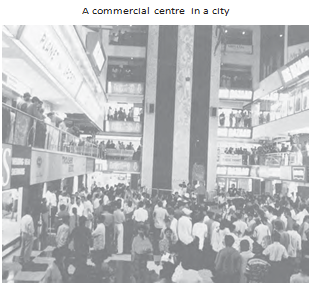
- Urban possibilities include anonymity, amenities and institutions made possible by large populations; cities are also centres of mass politics.
- Unequal freedom: a socially and economically privileged minority can enjoy a more fully free and fulfilling life; most residents face limited freedoms and wider social and economic constraints.
- Group identities based on race, religion, ethnicity, caste, region and class are strongly represented in cities.
- Urban concentration intensifies these identities, which can become important to survival, resistance and assertion.
Space and Urban Social Order
- Spatial viability: A central task of urban social order is managing limited space in densely populated cities.
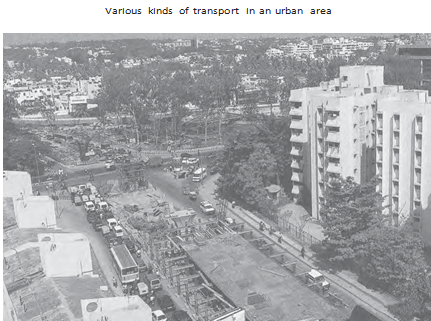
- Urban management: This involves coordinating land uses, mass transit, public health, sanitation, policing and public safety amid social and economic divisions.
Housing, Slums and Gated Communities
Housing, Work and Urban Transport
Neighbourhood Change and Gentrification
Changing Fortunes of City Centres
- 19th and early 20th centuryCity centres were important power centres.
- Latter half of the 20th centuryMany city centres declined as affluent residents moved to suburbs.
- Recent periodSome major Western city centres have revived through efforts to regenerate community life and the arts.
Transport and Urban Social Change
- Mass transit
- Fast urban transport designed to carry large numbers of people.
- Gated community
- An affluent urban locality enclosed by walls, fences or gates, with controlled entry and exit.
- Gentrification
- The conversion of a lower-class urban neighbourhood into a middle- or upper-class one.
- Ghetto
- A neighbourhood with a concentration of people sharing a religion, ethnicity, caste or other identity.
- Ghettoisation
- The process by which a mixed neighbourhood becomes a single-community neighbourhood, producing a ghetto.
What are the main responsibilities of urban social order?
How are housing and transport connected in cities?
What is gentrification, and how can it affect a neighbourhood?
Quick recap
- Urbanism for large populations is modern, although cities are ancient.
- City life can support individual possibilities, but freedoms are unequal and identities remain important.
- Urban order must organise space, housing, transport, land use and civic services.
- Housing shortages can cause homelessness and slums; gated communities separate affluent areas.
- City centres may decline and revive; gentrification can change a neighbourhood’s class character.
- Transport choices and population growth shape urban life, commuting and social change.
Sociology — ALL CHAPTERS
1
Sociology And Society
2
Terms, Concepts And Their Use In Sociology
3
Understanding Social Institutions
4
Culture And Socialisation
5
Doing Sociology : Research Methods
1
Social Structure, Stratification And Social Processes In Society
2
Social Change And Social Order In Rural And Urban Society
3
Environment And Society
4
Introducing Western Sociologists
5
Indian Sociologists