Class 8 . English . Poorvi . Poem Harvest Hymn
Chapter 11: Poem-Harvest Hymn
Ch 11
English
Class 8
Poem - Men’s Voices
Men’s Voices
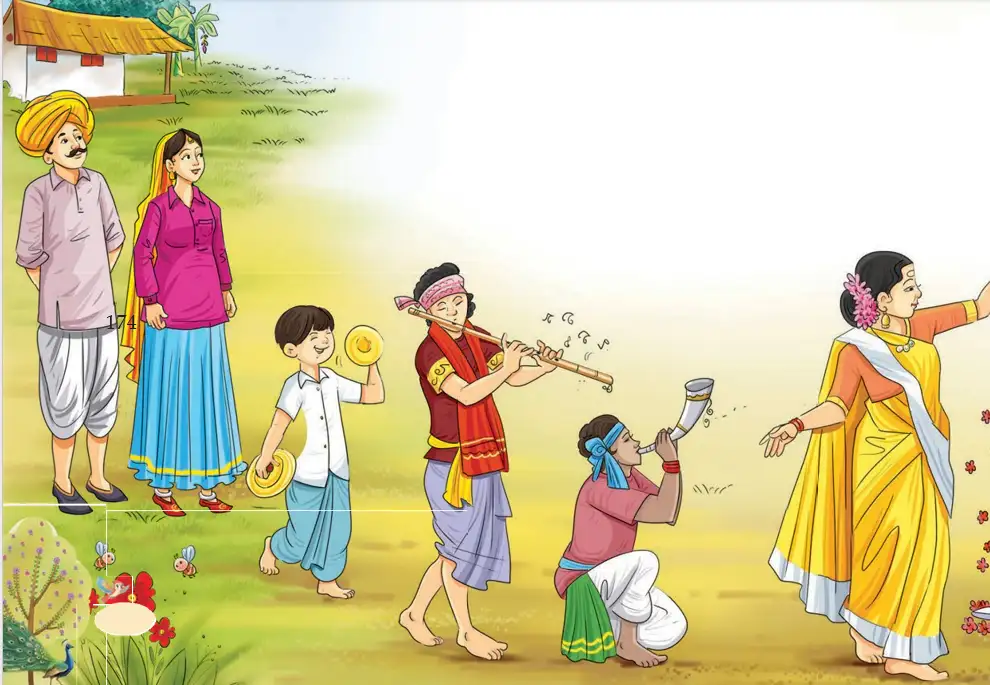
- The farmers thank Surya, the sun god, for the sunlight that helped their crops grow.
- They offer songs, garlands and the harvest’s riches in joyful praise.
- The farmers praise Varuna, the god associated with water, for rain and dew that nourish the fields.
- They give thanks for the ripe harvest and celebrate with music and offerings.
| Device | Example | Effect |
|---|---|---|
| Apostrophe | “We praise thee, O Surya” | Directly addresses and praises the deity. |
| Repetition | “Thine is the bounty”; “We praise thee” | Emphasises gratitude and devotion. |
| Imagery | “The gold of our fields”; “new-garnered and ripe” | Creates a vivid picture of the abundant harvest. |
| Alliteration | “Lord of the lotus, lord of the harvest” | The repeated initial “l” sound adds a musical quality. |
Gratitude for the Harvest
The poem celebrates a successful harvest and expresses the farmers’ gratitude to Surya for sunlight and Varuna for rain and dew. Their offerings and music reflect communal joy and devotion.
- Munificent
- Very generous.
- Bounty
- A plentiful gift or supply.
- Sowing
- Planting seeds.
- Tribute
- An offering made to show respect or gratitude.
- Radiance
- A bright glow.
- Furrows
- Long, narrow trenches made in soil for planting.
- Fostered
- Helped to grow or develop.
- Garnered
- Gathered or collected.
- Dewfall
- The settling of dew.
- Beneficent
- Doing good; kind and helpful.
Quick recap
- The farmers offer thanks for a rich and successful harvest.
- Surya is praised for sunlight that helps crops grow.
- Varuna is praised for rain and dew that nourish the fields.
- Songs, garlands and music are offered as acts of gratitude.
- The poem presents harvest as a joyful, shared celebration.
Poem - Women’s Voices
Women’s Voices
- The women praise Earth as a powerful, nurturing mother who provides food and brings forth wealth.
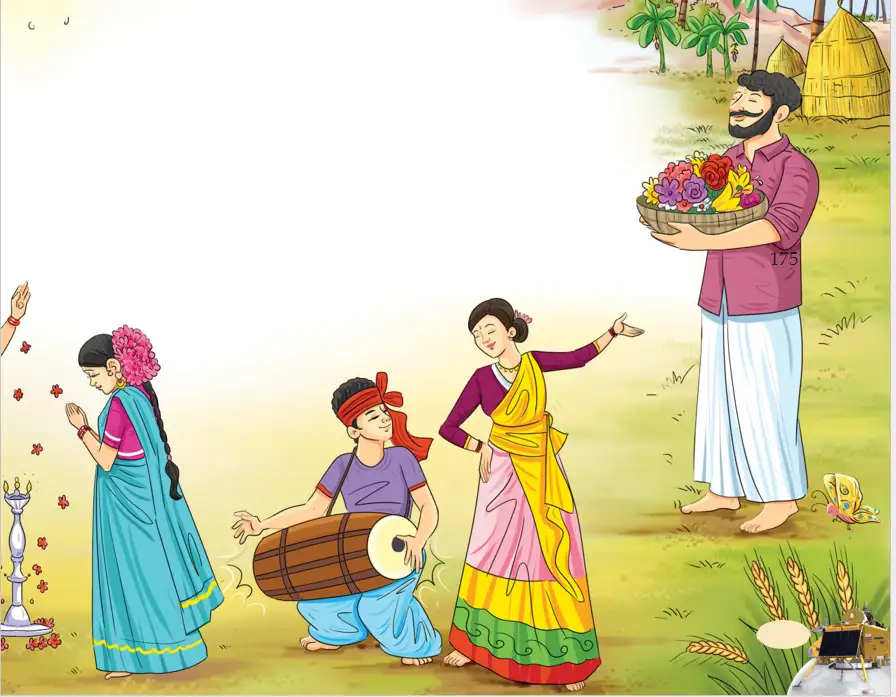
- They offer love and garlands, thanking Prithvi for the abundance and joy she gives.
- All voices praise the divine as creator, sustainer and the source of life, work and home.
- They offer their lives and labour, asking for help, guidance and care.
| Device | Example | Effect |
|---|---|---|
| Personification | “Sweet and omnipotent mother, O Earth!” | Presents Earth as a loving, life-giving mother. |
| Imagery | “with cymbal and drum” | Creates a vivid sense of a festive harvest celebration. |
| Repetition | “We praise thee” | Emphasises gratitude and devotion. |
| Symbolism | “the Seed and the Scythe” | Suggests the divine is present in both the beginning and the harvest of life. |
Gratitude for Nature and Divine Care
The poem celebrates Earth’s abundance and the divine force behind life. Both are honoured with gratitude, offerings and prayer.
Quick recap
- The first part praises Earth, or Prithvi, as a nurturing provider.
- The women offer love and garlands in gratitude for Earth’s gifts.
- The second part praises Bramha as the source and sustainer of life.
- All voices offer their lives and labour and ask for divine care.
- The poem’s central idea is gratitude for nature and divine blessings.
English — ALL CHAPTERS
1
The Wit That Won Hearts
2
Poem- A Concrete Example
3
Wisdom Paves The Way
4
A Tale of Valour:Major Somnath Sharma and the Battle of Badgam
5
Poem- Somebody’s Mother
6
Verghese Kurien - I Too Had A Dream
7
The Case of the Fifth World
8
Poem - The Magic Brush of Dreams
9
Spectacular Wonder
10
The Cherry Tree
11
Poem-Harvest Hymn
12
Waiting for the Rain
13
Feathered Friend
14
Poem - The Magnifying Glass
15
Bibha Chowdhuri: The Beam of Light That Lit the Path for Women in Indian Science