Class 9 . English . Kaveri . Carrier of Words
Chapter 13: Carrier of Words
Ch 13
English
Class 9
The Village Postman
The Postal Service as a Link
Before the Internet
- Mail delivery: Before online communication became common, letters were posted in post boxes and delivered through the postal system.
- Remote communities: In areas beyond railways and roads, Gramin Dak Sewaks remain a vital link between isolated people and their families.
Khetaram’s Work
A Postman in the Thar
- Khetaram: A Gramin Dak Sewak and the sole postman of Somarad Branch Post Office, he has served the village and its families for 15 years.
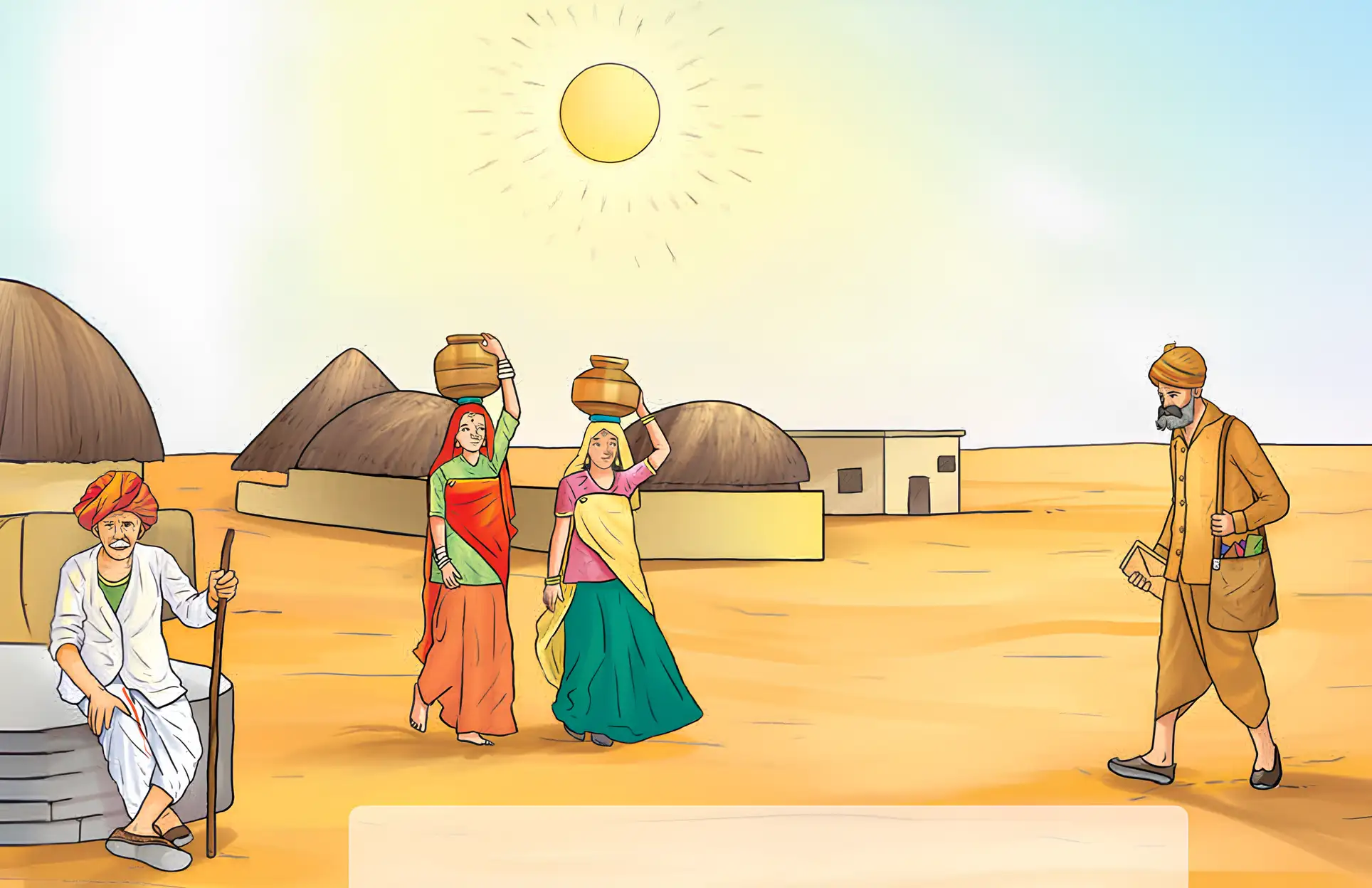
- Route: He crosses the remote Thar Desert to reach far-flung hamlets, including settlements just 2.5 km from the Indo-Pakistan border.
- Isolation: His route is about 120 km beyond Barmer’s last railhead, 50 km beyond the last phone and 10 km beyond the road’s end.
- Delivery: Mail travels from Jodhpur, about 330 km away, and Khetaram ensures it reaches the border within 24 hours of dispatch.
- Physical effort: He carries the mail on foot across soft sand and dunes; the rules limit his load to 28 kg.
- Desert hardship: In summer, the sand burns beneath his traditional mojri footwear; even one delivery can tire him after a 20 km walk.
Khetaram
- Dedicated: He continues delivering mail through the harsh desert and extreme summer heat.
- Hardworking: He walks long distances over sand while carrying a heavy mailbag.
- Dependable: For 15 years, he has connected the village’s residents with their faraway families.
Service and Connection
The passage highlights the postman’s demanding service and the importance of postal workers in keeping people connected, especially in isolated regions.
- sole
- only
- hamlets
- small settlements
- ply
- move or travel
- hefted
- lifted with effort
- stipulate
- specify as a rule
- mojri
- traditional footwear of Rajasthan
Quick recap
- Before internet communication, letters were carried through the postal system.
- Gramin Dak Sewaks connect remote communities with distant families.
- Khetaram has served as Somarad’s postman for 15 years.
- He delivers mail across the harsh Thar Desert, sometimes walking 20 km for one delivery.
- His work is difficult but essential to isolated border settlements.
Hard Work in Harsh Conditions
Khetaram’s Work in the Desert
- Extreme heat: Khetaram keeps delivering in temperatures recorded at 49.9°C; a reading of 50°C would mean a state holiday.
- Changing his schedule: When the heat is severe, he postpones deliveries until after sundown.
- Desert conditions: His khaki turban and uniform offer limited protection from scorching winds and sandstorms.
- Water scarcity: He wipes himself rather than washing, and sand gathers around him by the end of the day.
Gramin Dak Sewaks
- Earlier role: Until 2001, workers such as Khetaram were called delivery agents and served rural areas lacking schools and primary healthcare centres.
- GDS status: From 2001, they were recognised as Gramin Dak Sewaks (GDS). India has over three lakh GDS, making up more than half of its postal workforce.
- Diverse territories: GDS serve remote regions including Ladakh, Lakshadweep and riverine communities in the northeast.
- Last-mile service: They deliver in interior places that may be reachable only on foot.
India Post’s Reach and Services
- Earlier postal system: The British system mainly carried company dak between administrative centres.
- After independence: India Post aimed to bring the entire population within the reach of postal services.
- Network growth: India had 25,000 post offices in 1947; today it has more than 1.5 lakh across the country.
- Rural savings: Through GDS, India Post reaches rural depositors who entrust their monthly savings to local post offices; the many active accounts show public trust.
Khetaram
- Dedicated: Continues delivering despite extreme heat and difficult desert weather.
- Resourceful: Adjusts delivery times when the heat becomes severe.
- Resilient: Works through sandstorms and water scarcity.
Service and Perseverance
The lecture highlights the dedication of rural postal workers and the importance of India Post in connecting remote communities and supporting their financial needs.
- operating
- working or functioning
- riverine
- situated along a river
- inaccessible
- difficult or impossible to reach
- ambit
- range or scope
Quick recap
- Khetaram delivers letters through extreme heat, winds and sandstorms.
- When conditions are severe, he shifts deliveries to after sundown.
- Since 2001, rural delivery agents have been recognised as Gramin Dak Sewaks.
- GDS serve remote communities, sometimes travelling only on foot.
- India Post expanded from 25,000 offices in 1947 to more than 1.5 lakh.
- Postal services also connect rural people to savings accounts.
Importance of the Postman
Gramin Dak Sewaks and Livelihood
Gramin Dak Sewaks and Livelihood
- GDS conditions: Access to another livelihood is an essential criterion for selection. GDS work five hours daily and may continue until age 65, even after turning 60.
- Purpose: These conditions help provide GDS with assured income and retain a large workforce for remote areas. Regular postmen’s salaries are revised like those of other government employees.
Khetaram and the Money Order
- Khetaram’s livelihood: His appointment as a postman gave him a new lease of life. In his arid region, even a good year brings only one crop of bajra, which cannot feed his family of five.
- Money orders: Money sent by relatives is vital to families in the region. Mulk Raj Anand’s *Story of the Indian Post Office* highlights how people in remote villages depend on the post office to send small sums and trust it deeply.
- GDS role: A proposal to replace GDS with patwaris was rejected because villagers believed the patwaris could not do the work as well.
Trust and Community Service
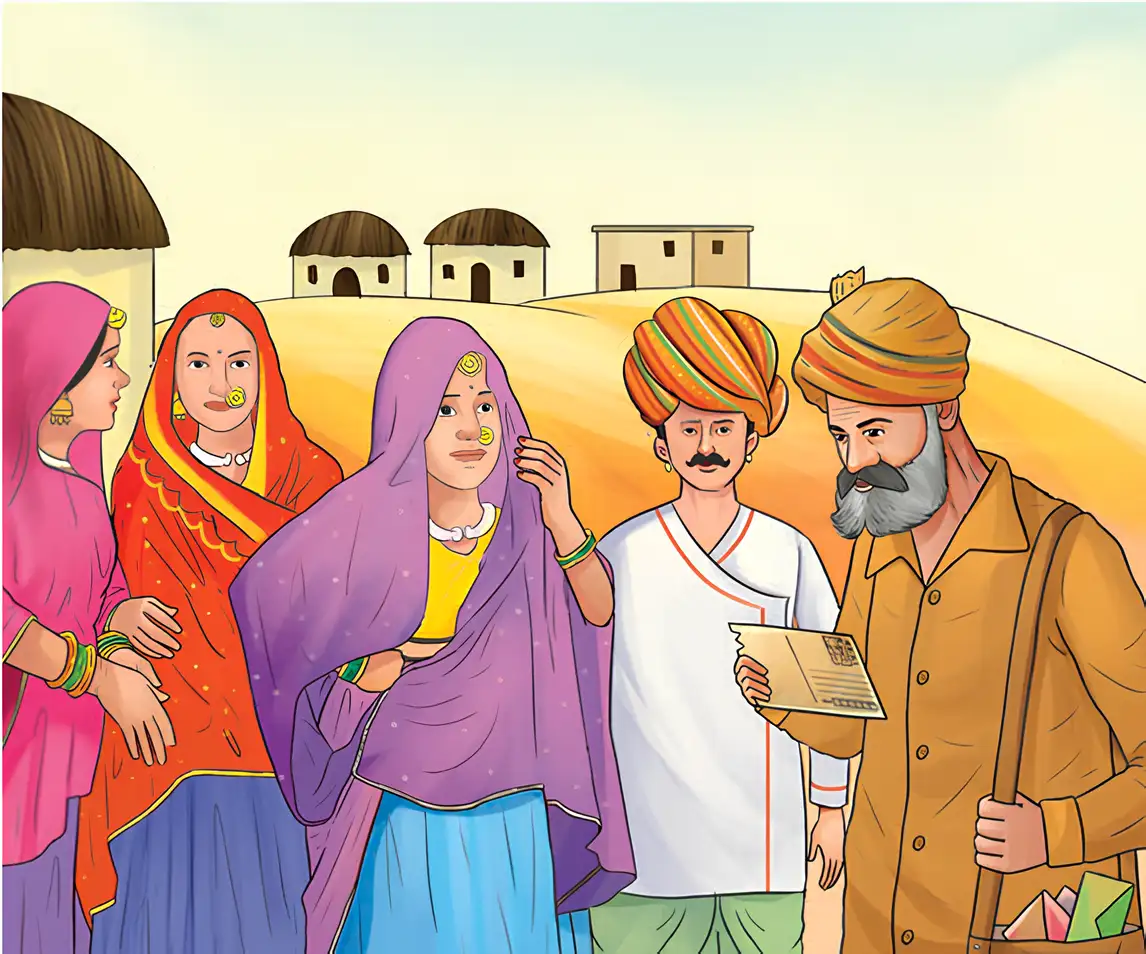
- Trusted helper: Khetaram is welcomed into people’s homes. He reads letters aloud and writes replies, so villagers feel comfortable seeking his help.
- Kindness: Border Security Force personnel give him lifts and tea when he delivers their post. Villagers offer jaggery when he brings news of births or weddings.
Delivering News of Death
- Sign of bad news: A letter with its upper-right corner torn off carries news of death.
- Khetaram’s custom: He does not carry such a letter inside the home. He stands outside, reads it twice, then tears it up, believing bad news should be destroyed.
Khetaram’s Future and the Postman’s Importance
- Endurance: After more than fifteen years of carrying mail across difficult terrain, Khetaram says his spine is strong. He is grateful to serve people even after 60.
- Changing role: Phone lines are approaching, and Khetaram hopes to become a Gramin Sanchar Sewak, carrying a phone and the post from house to house.
- Tribute: People like Khetaram are an important part of society and provide great support to their communities.
Khetaram
- Resilient: Continues working across harsh, arid terrain despite hardship.
- Helpful and trusted: Reads letters and writes replies for villagers.
- Dedicated: Takes pride in serving the community and is ready to adapt to a future role involving phones.
The Postman as a Lifeline
The postman connects remote communities with money, messages and one another. Khetaram’s work depends on the villagers’ trust and supports their everyday lives.
- Access
- Opportunity or means of reaching something.
- Remitted
- Sent, especially money to someone.
- Scrap
- Remove or abandon.
- Dwell
- Stay for some time.
- Threshold
- The entrance to a home.
- BSF
- Border Security Force.
- Dreads
- Fears greatly.
- Missive
- A letter.
- Entail
- Involve or require.
- Striding
- Walking with long steps.
Why are money orders important to families in Khetaram’s region?
How does Khetaram serve the villagers beyond delivering mail?
Quick recap
- GDS work five hours a day and may continue serving until age 65.
- Khetaram’s postman job supports his family in a region with scarce crops.
- Money orders are a vital source of support for remote village families.
- Villagers trust Khetaram to read letters, write replies and deliver news.
- He handles death messages according to the local custom described in the passage.
- Khetaram is ready to adapt to a future role carrying phones and post.
English — ALL CHAPTERS
1
How I Taught My Grandmother to Read
2
Bharat Our Land
3
The Pot Maker
4
Gifts of Grace: Honouring Our Vocations
5
Winds of Change
6
Canvas of Soil
7
Vitamin-M
8
I Cannot Remember My Mother
9
The World of Limitless Possibilities
10
Nine Gold Medals
11
Twin Melodies
12
A Friend Found in Music
13
Carrier of Words
14
Word
15
Follow That Dream
16
Believe in Yourself