Class 9 . English . Kaveri . How I Taught My Grandmother to Read
Chapter 1: How I Taught My Grandmother to Read
Ch 1
English
Class 9
Kashi Yatre: Faith & Sacrifice
The Narrator and Triveni
Village Life and a Favourite Writer
- At about twelve, the narrator lived with her grandparents in a village in north Karnataka.
- Because transport was limited, newspapers arrived in the afternoon and the weekly magazine came a day late.
- Triveni was a popular Kannada writer known for clear, convincing stories about complex psychological problems in ordinary people.
- She died young, but readers continued to appreciate her novels decades later.
The Story of Kashi Yatre
Faith and Sacrifice
- Publication: Triveni’s novel *Kashi Yatre* appeared as a serial in the Kannada weekly *Karmaveera*.
- Old woman’s wish: She ardently wants to visit Kashi (Varanasi) and worship Lord Vishweshwara, which she believes will bring the highest punya.
- Orphan girl: The story also follows a young orphan who falls in love, but lacks money for her wedding.
- Sacrifice: The old woman gives the girl all her savings instead of travelling to Kashi, placing the girl’s happiness above her own religious wish.
The old woman
- Deeply devoted to the idea of visiting Kashi.
- Compassionate and generous: she gives her savings to help the orphan girl marry.
The orphan girl
- A young girl who falls in love.
- She cannot afford her wedding until the old woman gives her savings to help.
Compassion and Selflessness
The old woman’s choice shows that caring for another person’s happiness can be more meaningful than fulfilling one’s own desire. Her faith is expressed through kindness and sacrifice.
“‘The happiness of this orphan girl is more important than worshipping Lord Vishweshwara at Kashi.’”
The old woman
- ardent
- Keen or deeply passionate.
- serial
- A story published in parts over successive issues.
- punya
- Religious or spiritual merit.
- orphan
- A child whose parents have died.
- savings
- Money kept aside for future use.
- convincing
- Believable or persuasive.
What is the central choice made by the old woman in Kashi Yatre?
Why is the old woman’s act a sacrifice?
Quick recap
- The narrator grew up with her grandparents in a village in north Karnataka.
- Triveni was a popular Kannada writer whose stories explored ordinary people’s complex problems.
- *Kashi Yatre* was serialised in the weekly *Karmaveera*.
- The old woman dreams of visiting Kashi and worshipping Lord Vishweshwara.
- She gives her savings to help an orphan girl marry, choosing compassion over her pilgrimage.
A Grandmother’s Love for Stories
Krishtakka and Kashi Yatre
Stories and friendship
- Krishtakka had never attended school and could not read. Every Wednesday, the narrator read her the next episode of *Kashi Yatre*.
- She listened intently, remembered the story by heart and eagerly wanted to know what happened next.
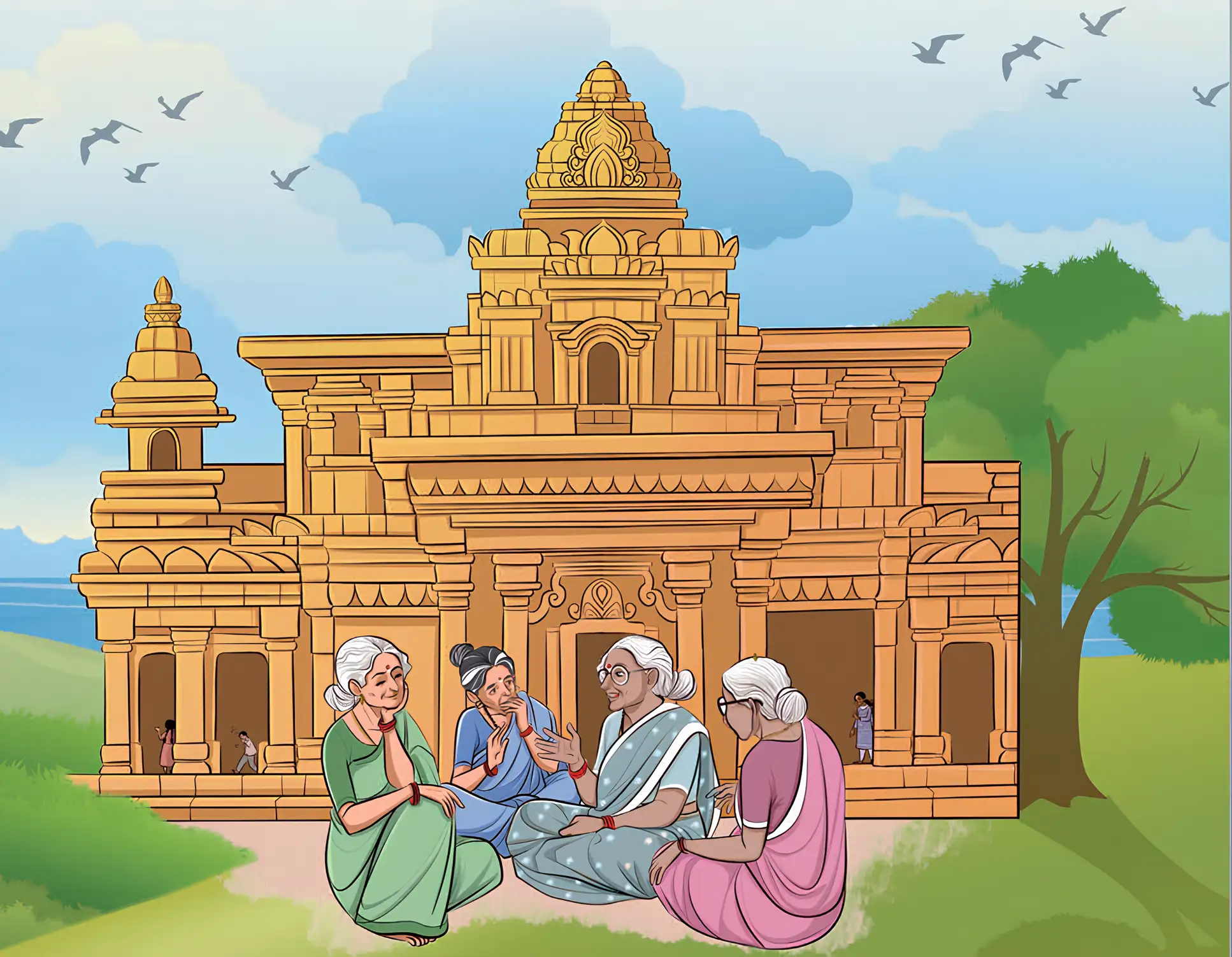
- She identified with the novel’s protagonist, who had never visited Kashi, and discussed each episode with her friends at the temple courtyard.
The narrator’s return
- The narrator went with her cousins to a wedding in a neighbouring village and stayed for a week.
- On returning, she found her grandmother crying—something she had never seen before, even during difficult times.
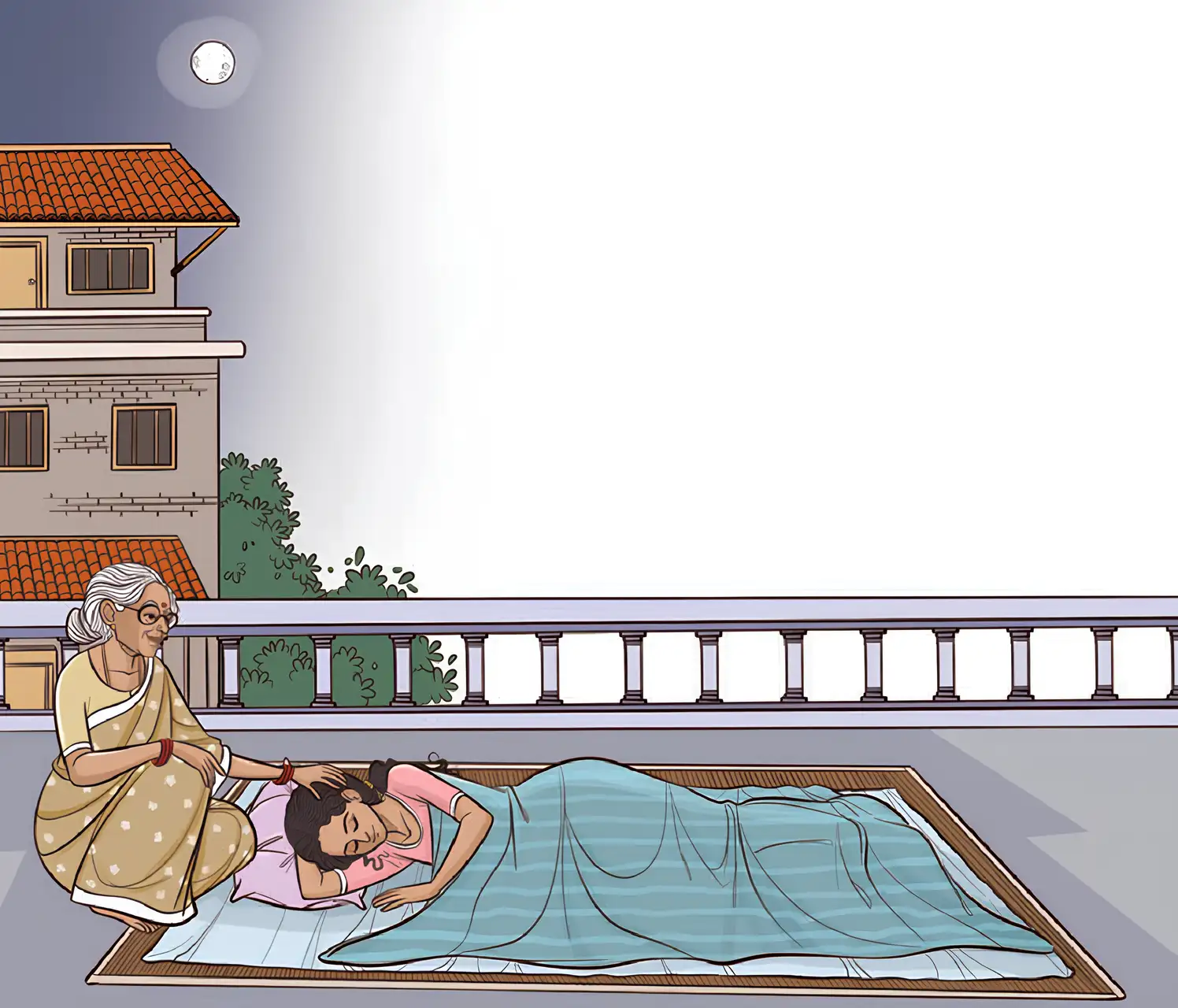
- That night, under the full moon on the terrace, Krishtakka sat beside her and began to share her past.
Krishtakka’s childhood and regret
- Krishtakka lost her mother when she was young; her busy father remarried, and she lacked someone to guide her.
- Girls’ education was not considered essential in those days. She married young, raised a family and became busy caring for her children and grandchildren.
- She sometimes regretted never going to school, so she made sure her children and grandchildren received an education.
Krishtakka
- Attentive and enthusiastic: listened closely to each episode and remembered it.
- Sociable: shared her views about the story with her friends.
- Caring and education-minded: found happiness in caring for her family and encouraged the younger generations to study.
Avva — A Kannada word meaning “mother” in the speech of north Karnataka.
The value of education and stories
Stories can bring people together and offer deep enjoyment. Krishtakka’s regret at missing school shows the lasting value of education, especially for girls.
- Savouring
- Enjoying something to the fullest.
Quick recap
- Krishtakka could not read because she had never attended school.
- The narrator read her weekly episodes of *Kashi Yatre*.
- Krishtakka listened closely, remembered the story and discussed it with friends.
- After the narrator returned from a week away, she found her grandmother in tears.
- Krishtakka had missed schooling because girls’ education was not valued in her childhood.
- She regretted this and ensured that her children and grandchildren studied.
Avva Learns to Read
Avva's Decision
- While the twelve-year-old narrator is away, sixty-two-year-old Avva receives the magazine *Karmaveera* but cannot read the story of *Kashi Yatre*.
- She feels helpless and embarrassed to ask someone in the village to read it for her, despite being financially well-off.
- Avva decides to learn the Kannada alphabet and sets Saraswati Puja during Dassara as her deadline to read a novel independently.
- The narrator initially laughs at her because of her age, but Avva insists that determination can overcome obstacles and that learning has no age limit.
Avva
- Determined: sets a clear learning goal and works towards it.
- Courageous: admits her dependence and chooses to overcome it.
- Independent-minded: wants to read on her own rather than rely on others.
Narrator
- Loving and caring: notices Avva’s distress, holds her hand and asks how to help.
- Initially immature: makes fun of Avva’s decision because of her age.
Lifelong Learning
Avva’s determination shows that age is no barrier to learning when a person is committed to a goal.
Independence and Self-Respect
Avva wants literacy so she can read for herself and no longer feel helpless or dependent on others.
“For learning there is no age bar.”
Avva
- Immensely
- Extremely; greatly.
Quick recap
- Avva is sixty-two, and the narrator is twelve.
- Avva cannot read the story of *Kashi Yatre* in *Karmaveera*.
- Feeling dependent and helpless motivates her to learn.
- She plans to learn the Kannada alphabet and read a novel by Saraswati Puja during Dassara.
- Avva’s determination conveys that learning has no age limit.
Avva’s Success
Avva’s Learning
- The narrator begins teaching Avva, who works diligently by reading, repeating, writing and reciting.
- Avva is the narrator’s first student; the narrator later becomes a Computer Science teacher.
A Teacher Honoured
- At Dassara, the narrator gives Avva a copy of *Kashi Yatre*, while Avva gives her granddaughter frock material.
- Avva touches the narrator’s feet to honour her as a teacher, explaining that teachers deserve respect regardless of age or gender.
- Avva reads the book’s title and publisher’s name immediately, showing that she has become an independent reader and has succeeded.
Avva
- Hardworking: practises reading, repeating, writing and reciting.
- Respectful: honours the narrator as her teacher despite being her grandmother.
- Determined and independent: learns to read a novel confidently in a short time.
Narrator
- Patient and dedicated: teaches Avva with affection.
- Proud of her student’s success and gives Avva a book as a gift.
Respect for Teachers and the Joy of Learning
Avva’s success shows that determination can overcome barriers to learning. Her gesture affirms that a teacher deserves respect regardless of age or gender.
- Taken aback
- Surprised by something unexpected.
Why did Avva touch the narrator’s feet?
How does the ending show that Avva has succeeded?
Quick recap
- Avva studies conscientiously under her granddaughter’s guidance.
- She practises reading, repeating, writing and reciting.
- At Dassara, Avva honours the narrator as her teacher.
- Avva believes teachers deserve respect whatever their age or gender.
- Reading the book’s title and publisher confirms Avva’s independence and success.
English — ALL CHAPTERS
1
How I Taught My Grandmother to Read
2
Bharat Our Land
3
The Pot Maker
4
Gifts of Grace: Honouring Our Vocations
5
Winds of Change
6
Canvas of Soil
7
Vitamin-M
8
I Cannot Remember My Mother
9
The World of Limitless Possibilities
10
Nine Gold Medals
11
Twin Melodies
12
A Friend Found in Music
13
Carrier of Words
14
Word
15
Follow That Dream
16
Believe in Yourself