Class 9 . English . Kaveri . Winds of Change
Chapter 5: Winds of Change
Ch 5
English
Class 9
Lecture 1
Reference video · Lecture 1History of Pankha
History of Pankha
Word meanings
- Indigenous
- Local; originating in a particular place.
- Innovative
- New and original in approach.
- Industrious
- Hardworking.
- Intricate
- Elaborate or detailed.
- Invoked
- Brought out or called forth.
- Initiatives
- Actions taken to improve a situation.
Origins and Early Use
The Pankha in Ancient India
- Origin: Pankha comes from *pankh*, meaning a bird’s feather; *pankha* refers to fans generally.
- Pankhi: The word describes a small, plumed fan used in ancient India.
- Evidence: Ajanta Buddhist wall paintings from the 2nd century CE show pankhis; embroidery, sculptures and carvings also depict pankhas.
- Uses: Pankhas were used to fan deities in temples and kings in royal courts.
- Size: They ranged from tiny fans about two inches long to large ones that needed a person’s full arm strength to move.
Pankhas as Cultural Goods
Regional Variety and Materials
- Trade: Pankhas spread along trade routes and became valued cultural goods, seen as exotic and stylish.
- Regional styles: While their use was common across India, villages and towns developed distinctive pankhas with local materials and designs.
- Materials: Depending on geography, culture and ritual, makers used bamboo, cane, palm leaf, silk, brass, leather or silver.
- Decoration: Some pankhas were adorned with beads and stones.
Quick recap
- Pankha derives from *pankh*, meaning a bird’s feather; *pankhi* means a small plumed fan.
- Ajanta paintings dating to the 2nd century CE provide evidence of ancient pankhis.
- Pankhas were used in temples and royal courts, and varied greatly in size.
- Trade routes helped pankhas become valued, exotic cultural goods.
- Regional pankhas differed in materials and intricate designs shaped by local culture and geography.
Lecture 2
Reference video · Lecture 2Different Types of Pankhas
Different Types of Pankhas
Traditional Fans of Rajasthan
- Modern use: Pankhas are now mainly decorative craft items, with designs reflecting the culture of their region.
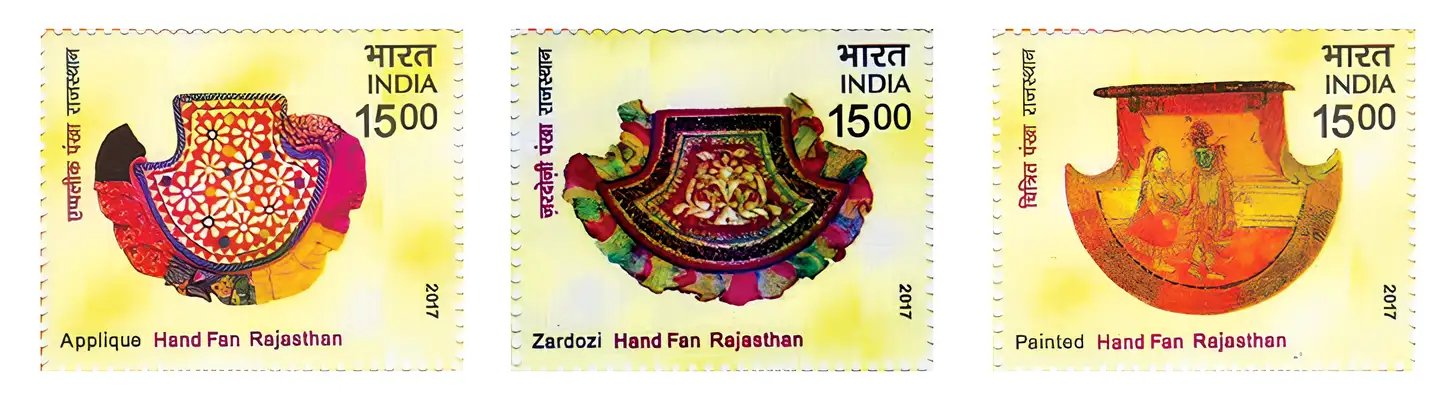
- Appliqué fan: An antique fan made by sewing shaped and patterned fabric pieces onto another cloth using ornamental needlework.
- Zardozi fan: Distinguished by glittering, ornate gold threadwork.
- Temple fan: Made by engraving brass and fitted with a long handle.
- Painted fan: A cardboard fan featuring images, usually offered to gods.
Fans of Gujarat
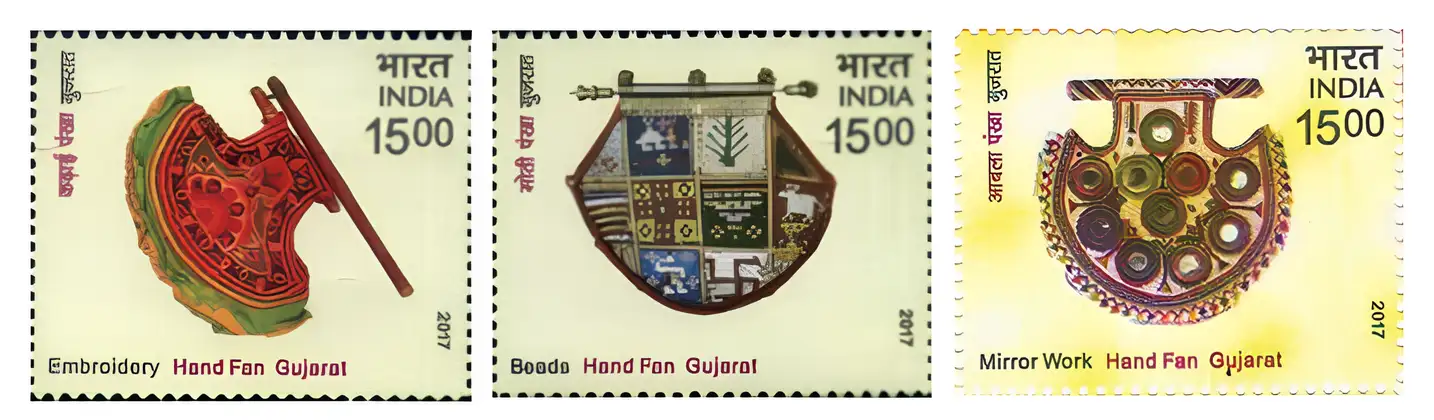
- Mirror-work fans: Elegant, pure-cotton fans embellished with mirrors; embroidered versions also use traditional cross-stitch patterns.
- Beaded fans: Covered with colourful beads and fitted with a silver handle. Gujarat is the centre for bead craft in India, and these delicate fans are often used as wall decorations.
- Leather fans: Kutch is known for hand-stitched leather fans decorated with thread and wool along the seams.
- Artisans: Women working from home make embroidered fans with mirror work and cross-stitch designs in varied shapes and sizes.
Fans of Bengal and Other States
- Bengal: Delicate fans are made from the milky-white, spongy centre of sola. Palm-leaf fans, called Tal Patar Pankha, are easy to carry and are commonly kept in Bengali homes.
- Uttar Pradesh: Phadh fans are adorned with gold, silver zari, silk and satin frills.
- Odisha and Bihar: Odisha is known for large palm-leaf fans; Bihar is known for colourful, sturdy bamboo fans. Both are recognised for their antiquity and rarity.
Tribal Fans
- Materials: Tribal artisans use grass and metal in fans, embedding them with bamboo sticks and grass. Cane and palm leaves are also used; silk and brass are reserved for antique pieces.
- Designs: Geometric patterns and white designs on red backgrounds create distinctive, varied pankhas.
Changing Use and Preservation
- Changing role: Technology and new creations put the pankha tradition at risk of fading. A craft once made for personal use has become a commercial business and a source of livelihood for artisans.
- Demand: The variety of pankha designs being made has helped increase their popularity and demand.
- Preservation: Celebrating the craft and valuing its cultural stories and artistry can help makers regain attention and earn a sustainable livelihood.
- Awareness: Pankha-making workshops, including those held at handicraft exhibitions and elsewhere, can spread awareness of the craft.
Theme
Cultural Heritage and Craft Preservation
India’s regional pankhas express local artistry and traditions. Appreciating and promoting this craft can help preserve its cultural presence while supporting artisans’ livelihoods.
Word meanings
- Encrusted
- Covered or decorated.
- Sola
- A type of water grass.
- Perpetually
- Constantly; always.
- Antiquity
- The distant past.
- Advent
- Arrival.
Quick recap
- Pankhas are now chiefly decorative crafts that express regional culture.
- Rajasthan, Gujarat, Bengal, Uttar Pradesh, Odisha and Bihar each have distinctive fan styles.
- Gujarat is the centre for bead craft in India; its beaded fans are often used as wall decorations.
- Tribal fans use materials such as grass, bamboo, cane and palm leaves, often with geometric designs.
- Modern changes threaten the craft, although pankha-making provides artisans with a livelihood.
- Celebrations and workshops can raise awareness and help preserve the tradition.
English — ALL CHAPTERS
1
How I Taught My Grandmother to Read
2
Bharat Our Land
3
The Pot Maker
4
Gifts of Grace: Honouring Our Vocations
5
Winds of Change
6
Canvas of Soil
7
Vitamin-M
8
I Cannot Remember My Mother
9
The World of Limitless Possibilities
10
Nine Gold Medals
11
Twin Melodies
12
A Friend Found in Music
13
Carrier of Words
14
Word
15
Follow That Dream
16
Believe in Yourself