Class 11 PCM . English . Hornbill . Discovering Tut the Saga Continues
Chapter 3: Discovering Tut: The Saga Continues
Ch 3
English
Class 11 PCM
Unraveling King Tut’s Mystery.
Tut’s Tomb and the 2005 Scan
- Tutankhamun died unexpectedly in his late teens, more than 3,300 years ago. He was the last heir of his family’s line, and his death marked the end of the dynasty.
- Howard Carter discovered Tut’s tomb in 1922 after years of searching. The tomb’s remarkable royal collection made Tut famous around the world.
- On 5 January 2005, Tut’s mummy was taken from its tomb for a CT scan to investigate questions about his life and death.
- Visitors were fascinated by Tut’s early death and the supposed pharaoh’s curse on anyone who disturbed his tomb.
- The scan was briefly interrupted when sand caused a cooler fan to fail. Replacement fans allowed the procedure to continue, and the mummy was returned within three hours.
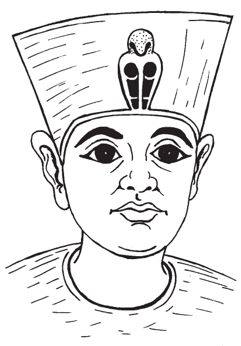
Carter’s Examination of the Mummy
- Carter recorded the tomb’s contents, but hardened ritual resins had cemented Tut’s mummy to the solid-gold coffin.
- Heating the mummy in sunlight to 149°F did not loosen the resins, so Carter chiselled them away to raise the remains.
- Carter’s men removed Tut’s head and nearly all major joints to take off the gold ornaments, then reassembled the mummy in a padded box.
- Carter’s investigation was resented because it damaged the body. He defended the action as necessary to free the mummy and prevent thieves from breaking it apart for its gold.
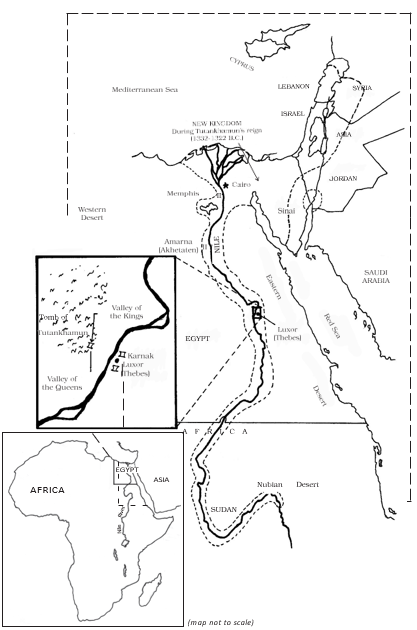
Tut’s Burial and Treasures
- Royal wealth: Tut was buried with gold collars, necklaces, bracelets, rings, amulets, a ceremonial apron, sandals, finger and toe sheaths, and a gold coffin and mask.
- Afterlife provisions: His everyday goods included board games, a bronze razor, linen undergarments, food and wine.
- Burial details: Garlands of willow, olive, celery, lotus and cornflowers suggested a burial in March or April.
- Belief: Egyptians hoped that burial goods and gold would accompany the dead and help guarantee resurrection.
Changing Tools and New Questions
- Modern archaeology investigates how people lived and died, using medical technology and forensic expertise as well as studying treasures.
- In 1968, an X-ray revealed that Tut’s breastbone and front ribs were missing beneath the hardened resin.
- Computed tomography (CT): Hundreds of cross-sectional X-ray images are combined to create a detailed three-dimensional view of the body.
- The 2005 scan produced 1,700 digital images; Tut’s head was scanned in 0.62-millimetre slices, showing intricate structures.
- The Egyptian Mummy Project began its inventory in late 2003 and had recorded nearly 600 mummies. Tut was among the first scanned with its portable CT machine.
Tut’s Family and Egypt’s Religious Upheaval
- Amenhotep III, Tut’s father or grandfather, ruled for nearly four decades during the eighteenth dynasty’s golden age.
- His successor, Amenhotep IV, renamed himself Akhenaten, promoted worship of Aten (the sun disk), and moved the religious capital from Thebes to Akhetaten, now known as Amarna.
- Akhenaten attacked the worship of Amun by destroying images and closing temples, disrupting Egypt’s established religious order.
- After Akhenaten, the mysterious Smenkhkare ruled briefly. Tutankhaten then became king, changed his name to Tutankhamun (‘living image of Amun’) and restored traditional religious practices.
- Tut ruled for about nine years and died unexpectedly. As the last heir of his family’s line, his death marked the end of the dynasty; the details of his death and its aftermath remain unclear.
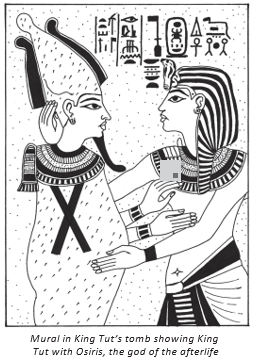
Howard Carter
- A determined archaeologist who discovered Tut’s tomb in 1922 after years of searching.
- His investigation damaged the mummy, but he believed freeing it from the coffin was necessary to protect the gold from thieves.
Tutankhamun
- A young king who ruled for about nine years and died unexpectedly in his late teens.
- He changed his name from Tutankhaten and restored traditional worship of Amun; he was the last heir of his family’s line.
Science, History and Respect
The account shows how modern technology can investigate ancient mysteries, while raising questions about the damage and ethical choices involved in examining human remains.
- Forensic reconstruction
- A scientific reconstruction of a person’s body or appearance from evidence.
- Scudded across
- Moved quickly across, as clouds driven by wind.
- Casket grey
- A dull, coffin-like grey colour.
- Resurrection
- The belief that the dead will return to life.
- Funerary treasures
- Objects buried with the dead as part of burial customs.
- Circumvented
- Managed to get around or evade an obstacle.
- Computed tomography
- Imaging that combines X-ray slices to show internal structures.
- Eerie detail
- An unsettlingly clear or lifelike level of detail.
- Ritual resins
- Substances used in burial rites that hardened around the mummy.
- Virtual body
- A digital three-dimensional representation of a body.
Why did Carter chisel away the hardened resins around Tut’s mummy?
What did the CT scan reveal, and how did it differ from the earlier X-ray?
Why did Tutankhaten change his name to Tutankhamun?
Quick recap
- Tutankhamun died in his late teens, and his death ended his family’s line and dynasty.
- Howard Carter discovered Tut’s tomb in 1922 and damaged the mummy while freeing it from hardened resins.
- Tut’s burial included gold treasures, personal objects and provisions for the afterlife.
- Akhenaten promoted Aten, attacked Amun’s worship and moved the religious capital; Tut later restored traditional practices.
- A 1968 X-ray showed missing chest bones, while the 2005 CT scan produced 1,700 detailed images.
- The lecture explores how science investigates the past and the need to treat ancient remains respectfully.
The Laburnum Top (Poem)
The Laburnum Top — Ted Hughes
- The quiet tree comes alive when the goldfinch arrives; her movements and calls awaken her family and fill the tree with sound and motion.
- The whole tree is described as the engine of the bird’s family: it becomes animated by their activity. After the goldfinch leaves, the tree returns to silence and emptiness.
Life and stillness in nature
The poem contrasts the laburnum’s quiet emptiness with the lively activity brought by the goldfinch and her family. The bird’s arrival briefly transforms the tree into an energetic living space.
| Device | Example | Effect |
|---|---|---|
| Simile | “sleek as a lizard” | Compares the bird’s smooth, quick movement to a lizard’s. |
| Metaphor | “The whole tree… It is the engine of her family.” | Presents the tree, animated by the family’s activity, as their engine. |
| Onomatopoeia and sound imagery | “chirrup”, “chitterings”, “trillings” | Recreates the birds’ lively calls and activity. |
Key Images and Words
- Beginning and ending: The tree is still before the bird arrives and becomes empty and quiet again after she leaves.
- Engine image: The whole tree is called the engine of the goldfinch’s family; the bird’s arrival fills it with the family’s sound and movement.
- “Barred face identity mask”: The bird’s barred facial markings look like a distinctive mask that identifies her.
- Sound words: “chirrup”, “chitterings”, “trillings”, “whistle-chirrup”, “whisperings”.
- Movement words: “twitching”, “enters”, “tremor”, “stokes”, “flirts”, “launches”.
- Dominant colour: Yellow, suggested by the September sunlight, yellowing leaves and the goldfinch.
- Laburnum
- A short tree with hanging branches, yellow flowers and poisonous seeds.
- Goldfinch
- A small singing bird with yellow feathers on its wings.
- Startlement
- A sudden feeling or moment of surprise.
- Sleek
- Smooth and graceful in appearance or movement.
- Abrupt
- Sudden or unexpected.
- Tremor
- A slight shaking or quivering.
- Stokes
- Adds fuel to a fire; here, the bird fills the tree with activity.
- Subsides
- Becomes quieter or less active.
How is the goldfinch’s movement compared to a lizard, and why?
Why does the poet describe the whole tree as an engine?
What contrast is created between the beginning and the end of the poem?
Quick recap
- The goldfinch’s arrival transforms a quiet laburnum into a lively home for her family.
- Her movement is compared to a lizard’s smooth, alert motion.
- The whole tree is described as the engine of the goldfinch’s family.
- Sound words create a vivid sense of birdsong and movement.
- The tree returns to silence when the goldfinch flies away.
The Voice of the Rain (Poem)
Walt Whitman
- Walt Whitman was an American poet.
- He lived from 1819 to 1892.
- His best-known collection is Leaves of Grass.
- His poetry is known for its use of free verse.
What the poem is about
- Rain’s voice: The rain describes itself as Earth’s poem, rising from land and sea before returning to nourish and renew the Earth.
- Song and rain: The rain’s cycle is compared to a song that travels from its source and returns after fulfilling its purpose.
The Voice of the Rain
- The speaker asks the rain who it is, and the rain answers that it is Earth’s poem.
- Rain rises from Earth and sea, changes form, then returns to end dryness and awaken hidden life.
- The rain’s return is likened to a song that leaves its source and travels through the world.
- Whether noticed or not, the song—and the rain—returns to its origin after fulfilling its purpose.
| Device | Example | Effect |
|---|---|---|
| Personification | “said the voice of the rain” | Gives rain a voice so it can explain its cycle. |
| Metaphor | “I am the Poem of Earth” | Presents rain as Earth’s creative expression. |
| Imagery | “droughts, atomies, dust-layers” | Creates a picture of dry, dusty Earth before rain returns. |
| Comparison | The rain’s cycle is linked to a song returning to its birthplace. | Shows how both rain and song fulfil a purpose before returning to their source. |
- Impalpable
- Impossible to touch or feel.
- Lave
- Wash or bathe.
- Atomies
- Tiny particles.
- Latent
- Hidden or not yet active.
Renewal and the Cycle of Nature
Rain continually rises from Earth and sea, returns to nourish the land, and brings life to what was dormant. The poem presents this natural cycle as purposeful and life-giving.
Quick recap
- The poem, by Walt Whitman, presents rain as the “Poem of Earth.”
- Rain rises from the land and sea, changes form, and returns as rain.
- Rain ends drought and awakens seeds and other dormant life.
- The rain’s return to Earth is compared to a song returning to its source.
- The poem highlights nature’s recurring cycle of renewal.
Exercise
Who are the two voices in the poem? What does “strange to tell” mean?
How are rain and music linked, and how does the poem describe the rain cycle?
Why are the final two lines bracketed? List opposites in the poem and rewrite the given patterns in prose.
Quick recap
- The poem’s two voices are the poet and the rain.
- The rain calls itself the “Poem of Earth” and describes its life-giving journey.
- The rain cycle is presented as a journey of rising, falling, and returning to renew the earth.
- The poem links rain and song through their journeys from and back to their sources.
English — ALL CHAPTERS
1
The Portrait of a Lady
2
“We’ re Not Afraid To Die...If We Can All Be Together”
3
Discovering Tut: The Saga Continues
4
The Ailing Planet: The Green Movement’s Role
5
The Adventure
6
Silk Road
7
Note-making
8
Summarising
9
Sub-titling
10
Essay-writing
11
Letter-writing
12
Creative Writing
1
The Summer of the Beautiful White Horse
2
The Address
3
Mother’s Day
4
Birth
5
The Tale of Melon City