Class 11 PCM . English . Snapshots . Mother S Day
Chapter 3: Mother’s Day
Ch 3
English
Class 11 PCM
Insights from Family’s Living Room
Opening Setting and Characters
Setting
- Author: J. B. Priestley wrote this humorous play about the mother’s position in a family.
- Place and time: The action begins in the Pearson family’s comfortably furnished living room in a London suburb, one afternoon in early autumn; the play is set in the present.
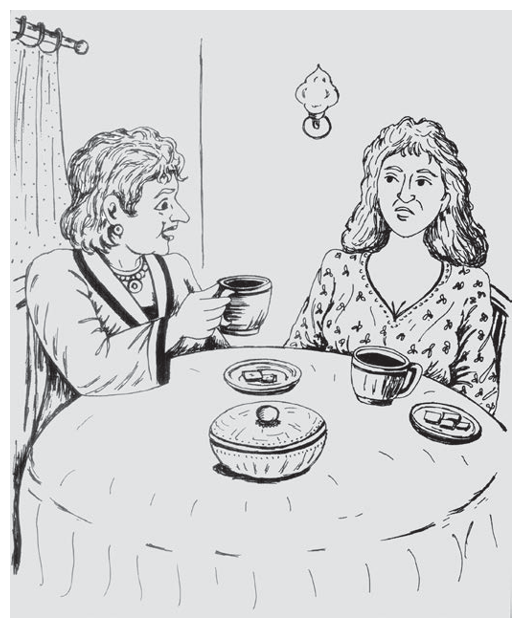
- Opening situation: Mrs Pearson and Mrs Fitzgerald sit over tea; Mrs Fitzgerald has just told Mrs Pearson’s fortune.
- Family members named: Mrs Annie Pearson, George Pearson, Doris Pearson and Cyril Pearson; Mrs Fitzgerald is their neighbour.
| Character | Description and manner |
|---|---|
| Mrs Pearson | Pleasant but worried; speaks in a light, flurried, apologetic way. She loves her family but struggles to stand up to them. |
| Mrs Fitzgerald | Older, heavier and forceful; speaks in a deep, confident voice. She says she learned fortune-telling and other skills while living in the East. |
Mrs Fitzgerald’s Advice and Proposal
- Mrs Fitzgerald urges Mrs Pearson to become the boss of her own home and stop allowing her husband and children to treat her like a servant.
- She argues that constantly running after the family and giving in to their orders spoils them, while leaving Mrs Pearson neglected.
- Mrs Pearson admits that her family can be thoughtless and selfish, but says she avoids confrontation and cannot find the courage to challenge them.
- When Mrs Pearson says she cannot keep a promise to confront her family, Mrs Fitzgerald offers to do it for her—not as herself, but as Mrs Pearson.
- Mrs Fitzgerald proposes that they exchange bodies using a trick she learned in the East. She says the change will not last long, but will last long enough for their purpose.
- Mrs Pearson is doubtful, but gives Mrs Fitzgerald her hands as instructed; Mrs Fitzgerald begins an incantation to make the exchange.
Respect for Mothers
The opening highlights how a mother’s constant service can be taken for granted, and the need for family members to treat her with consideration and respect.
Quick recap
- J. B. Priestley’s play humorously examines the mother’s status in family life.
- The opening takes place in the Pearsons’ living room in a London suburb.
- Mrs Pearson loves her family but feels unable to challenge their selfish behaviour.
- Mrs Fitzgerald urges her to stop serving her family without receiving respect.
- Mrs Fitzgerald proposes a temporary body swap, saying it will last long enough to help their purpose.
The Dynamics of Friendship
The Exchange of Personalities
- After the spell: Their personalities and bodies are exchanged: Mrs Pearson has Mrs Fitzgerald’s bold personality in Mrs Fitzgerald’s body, while Mrs Fitzgerald has Mrs Pearson’s nervous personality in Mrs Pearson’s body.
- Mrs Pearson’s plan: She decides to confront the Pearson family herself, using the confidence she has gained.
- Mrs Fitzgerald’s reaction: Alarmed by the change, she worries about being unable to return to her own personality.
- Reassurance: Mrs Pearson says they can change back whenever they wish, but asks Mrs Fitzgerald to wait while she deals with the family.
| Point | Mrs Pearson | Mrs Fitzgerald |
|---|---|---|
| Body | Mrs Fitzgerald’s body | Mrs Pearson’s body |
| Personality | Mrs Fitzgerald’s: bold and decisive | Mrs Pearson’s: nervous and hesitant |
| Action | Stays to confront the Pearson family | Goes to her own house and is asked to return later |
Doris Returns
The Conversation with Doris
- Doris comes home expecting her mother to iron her yellow silk dress and prepare tea. She is astonished to find Mrs Pearson smoking and playing cards.
- Mrs Pearson refuses to make tea or iron the dress, and says she may get a proper meal at the Clarendon instead.
- She reminds Doris that she works longer hours than her daughter, without wages or thanks.
- When Doris says she is going out with Charlie Spence, Mrs Pearson questions her choice and mocks Charlie’s appearance and intelligence.
- Doris is offended and nearly in tears, revealing how unaccustomed she is to her mother speaking firmly.
Mrs Fitzgerald
- Confident and assertive in her usual personality; she offers Mrs Pearson practical support.
- After the exchange, she has Mrs Pearson’s nervous personality and worries about the change.
Mrs Pearson
- Usually nervous and apologetic, she has difficulty standing up to her family.
- With Mrs Fitzgerald’s personality, she becomes cool, direct and unwilling to accept demands for unpaid work.
Doris
- Self-centred and demanding; she expects her mother to iron her dress and prepare tea.
- Shocked and offended when her mother refuses to meet her demands.
Friendship and Self-Respect
Mrs Fitzgerald’s friendship helps Mrs Pearson find the confidence to challenge her family. The scene stresses the need to value a mother’s work, dignity and right to respect.
Quick recap
- The women exchange bodies and personalities: Mrs Pearson has Mrs Fitzgerald’s personality in Mrs Fitzgerald’s body, and vice versa.
- Mrs Pearson, now bold and decisive, chooses to confront the family.
- Mrs Fitzgerald, now nervous, goes to her own house and worries about the change.
- Doris expects her mother to prepare tea and iron her dress, but Mrs Pearson refuses.
- Mrs Pearson points out her unpaid work and challenges Doris’s expectations.
A Living Room Transformation Story
Cyril Encounters the Changed Mrs Pearson
Cyril’s Arrival
- Cyril expects service: He asks for tea and his clothes, assuming his mother will have prepared them.
- Mrs Pearson refuses: She says she could not be bothered with tea or mending and points out that the family avoids unwanted duties too.
- A new attitude: She describes her change as joining the movement, leaving Cyril confused.
Doris and Cyril Compare Their Reactions
The Siblings’ Private Conversation
- Doris is upset: She blames her mother’s harsh manner for making her cry and says the change in her mother’s behaviour shocked her.
- Shared confusion: Doris and Cyril realise that both have faced the same unexpected treatment and wonder whether Mrs Pearson is unwell.
- Comic anticipation: They imagine how their father might react and begin to laugh, treating the situation as an amusing spectacle.
Mrs Pearson
- Assertive: She refuses to keep doing chores simply because her family expects it.
- Direct and witty: Her sharp remarks challenge her children’s sense of entitlement.
Cyril and Doris
- Cyril: He assumes his mother will provide tea and prepare his clothes; her refusal leaves him bewildered.
- Doris: She is hurt by her mother’s changed manner and tries to explain it as possible illness or injury.
Domestic Expectations and Role Reversal
Mrs Pearson’s refusal exposes how the family takes her household work for granted. Her children’s confusion highlights their expectation that she will always serve them.
Why does Mrs Pearson refuse to prepare tea and mend Cyril’s clothes?
Why is Doris upset by her mother’s behaviour?
Quick recap
- Cyril expects his mother to provide tea and prepare his clothes.
- Mrs Pearson refuses these duties and challenges the family’s double standard.
- Doris is hurt and shocked by her mother’s altered manner.
- The siblings privately wonder whether their mother is ill or injured.
- Their laughter creates comic anticipation about their father’s arrival.
The Art of Duality
Mrs Pearson Challenges Doris and Cyril
- Mrs Pearson criticises Doris and Cyril for treating her as someone who exists only to serve them.
- When Cyril complains that he has worked all day, she points out that she has also completed an eight-hour day.
- She says she will no longer wait on the family during weekends without being asked politely and thanked.
- Doris is shocked when Mrs Pearson says she may spend the weekend away and insists that her plans are her own business.
- Mrs Pearson firmly tells Doris to stop crying and reminds her that she is old enough to behave maturely.
George Arrives
- George enters and notices Doris crying, but she leaves after saying, “You’ll see.”
- Puzzled by Doris’s words, George asks Mrs Pearson what she meant; she tells him to ask Doris himself.
Mrs Pearson
- Assertive and self-respecting: she insists that her work and free time deserve recognition.
- Independent: she says weekend plans are her own decision.
- Firm with her children: she refuses to indulge Doris’s tears or Cyril’s complaints.
Doris and Cyril
- They expect their mother to provide for them and react with alarm when she sets limits.
- Doris is shocked and upset by her mother’s changed manner; Cyril complains that he is tired after work.
George Pearson
- He enters as a solemn, self-important man and is confused by Doris’s cryptic remark.
Self-Respect and Fairness at Home
Mrs Pearson challenges the assumption that a mother should serve her family without rest or appreciation. She demands fair treatment, gratitude and time for herself.
Duality and Changed Behaviour
The contrast between Mrs Pearson’s former accommodating manner and her new confidence drives the scene. Her family is unsettled when she begins asserting herself.
““Forty-hour week for all now.””
Mrs Pearson
““That’s my business.””
Mrs Pearson
Quick recap
- Mrs Pearson confronts Doris and Cyril about taking her work and care for granted.
- She claims equal rest and respect after completing her own working day.
- She sets boundaries around weekend chores and considers making plans for herself.
- Doris and Cyril are shocked by Mrs Pearson’s unusually firm behaviour.
- George arrives to find Doris upset but cannot understand her parting remark.
- The scene highlights self-respect, fairness at home and the contrast in Mrs Pearson’s behaviour.
A Closer Look on Family Dynamics
George and Mrs Pearson
- George is startled to see Mrs Pearson drinking stout. She calmly says she chose to have it, challenging his expectation that she follow her usual routine.
- When George complains that she has not prepared his tea—even though he does not want any—Mrs Pearson points out how unreasonable his expectation is.
- She tells George that the men at his club mock him as “Pompy-ompy Pearson.” Cyril reluctantly confirms this, and George leaves deeply shocked.
Mrs Pearson and Cyril
- Cyril accuses his mother of hurting George’s feelings. Mrs Pearson replies that people may need to hear the truth.
- She criticises Cyril for spending too much time and money at greyhound races, dirt tracks and ice shows, and questions whether these activities truly make him happy.
Mrs Pearson
- Assertive and direct: she refuses to keep serving her family as if her own wishes do not matter.
- Frank and perceptive: she exposes George’s treatment at the club and questions Cyril’s spending and leisure habits.
George Pearson
- Used to routine and service: he expects tea to be ready even when he does not want it.
- Insecure and unaware: he is shocked to learn that the club members make him a joke.
Cyril
- Embarrassed but honest: he admits that the club members mock his father.
- Defensive and self-indulgent: he objects to Mrs Pearson’s criticism but offers little evidence that his pastimes benefit him.
Respect and fairness within the family
The scene challenges the family’s assumption that Mrs Pearson should meet everyone’s needs without consideration for her own. Her firm responses make the others face their behaviour.
Truth and self-awareness
Mrs Pearson believes that honest criticism can help people change. George and Cyril are made to question how they behave and spend their time.
““The truth oughtn’t to hurt anybody for long.””
Mrs Pearson
Quick recap
- Mrs Pearson challenges George’s unreasonable expectation that she prepare tea he does not want.
- She reveals that George is mocked at his club, and Cyril confirms it.
- George’s shock exposes his lack of awareness about how others see him.
- Mrs Pearson urges Cyril to reconsider his costly, time-consuming pastimes.
- The scene stresses fairness, respect and the value of honest criticism.
Finding Balance in Family Dynamics
Mrs Pearson Takes Charge
- Mrs Pearson firmly invites Mrs Fitzgerald in and rebukes Cyril for speaking disrespectfully about her.
- She tells Mrs Fitzgerald not to interfere while she deals with her family, insisting that she is setting them right.
- Mrs Fitzgerald is uneasy about Mrs Pearson’s forceful behaviour, but Mrs Pearson believes it will teach the family to respect her.
George Is Challenged
- George returns, complains about Mrs Pearson’s behaviour and Doris’s distress, and is surprised when Mrs Fitzgerald calls him by his first name.
- Mrs Pearson rebukes him for ignoring a visitor and insists that he show good manners.
- She taunts George about going to his club, making him angry and exposing his embarrassment about his standing there.
The Confusion Deepens
- When George shouts at Mrs Pearson, she threatens to slap him, while Mrs Fitzgerald nervously pleads for calm.
- George notices the apparent mix-up: Mrs Fitzgerald seems to speak as though she were addressing herself.
- Mrs Pearson’s commanding behaviour leaves George bewildered; he suspects that something is wrong, but quickly backs down when challenged.
Mrs Pearson (under Mrs Fitzgerald’s influence)
- Assertive and commanding: she expects her family to listen and behave respectfully.
- Direct: she confronts George about his manners and the way others treat him.
Mrs Fitzgerald
- Anxious and hesitant: she worries about the conflict and tries to calm it.
- Uncomfortable with the family being controlled through fear or humiliation.
George Pearson
- Rude and self-centred: he dismisses the visitor and complains about his family’s behaviour.
- Insecure about his reputation at the club; he becomes angry when Mrs Pearson mentions it.
Respect and Family Balance
The scene challenges the family’s disrespect towards Mrs Pearson. It also raises the question of whether restoring balance through intimidation is the right way to achieve mutual respect.
Quick recap
- Mrs Pearson firmly defends Mrs Fitzgerald and demands respect from her family.
- Mrs Fitzgerald remains uneasy as Mrs Pearson takes control.
- George is confronted about his poor manners and his reputation at the club.
- George becomes confused by the apparent identity mix-up between the two women.
- The scene explores family respect and whether forcefulness can create a healthier balance.
Understanding Social Dynamics
Doris Is Confronted by Mrs Pearson’s Firmness
Doris Returns Home
- Doris returns miserable and tells Mrs Fitzgerald that she has called off her date with Charlie Spence.
- She explains that her mother’s criticism of Charlie—especially his buck-teeth and supposed lack of intelligence—made her feel miserable.
- Mrs Pearson insists that Doris speak respectfully, showing a new firmness that surprises the family.
- When George expresses helplessness, Mrs Pearson reminds him about the club and tells Doris not to start crying.
Mrs Pearson
- Speaks firmly and expects Doris to answer Mrs Fitzgerald respectfully.
- Continues to challenge her family’s behaviour, believing that more of the same treatment may do them good.
Mrs Fitzgerald
- Initially nervous when Doris speaks rudely, but later takes charge of the situation.
- Feels unable to watch the family remain miserable and insists that she and Mrs Pearson change back.
Mrs Fitzgerald Calls for a Change Back
- Mrs Fitzgerald sends George and Doris out so she can speak privately with Mrs Pearson.
- She admits that the family are miserable and asks to change back, while Mrs Pearson believes her firm approach is making a difference.
- Mrs Fitzgerald insists, and Mrs Pearson agrees; they clasp hands and prepare to change back.
Assertiveness and Family Relationships
The scene shows Mrs Pearson responding firmly to Doris’s rudeness and continuing to challenge her family. Mrs Fitzgerald’s concern reveals how this firm approach makes the family uncomfortable.
Why had Doris cancelled her date with Charlie Spence?
Quick recap
- Doris returns upset and says she has cancelled her date with Charlie Spence.
- She blames her mother’s criticism of Charlie for making her miserable.
- Mrs Pearson insists on respectful behaviour and remains firm with her family.
- Mrs Fitzgerald sends George and Doris away to speak privately.
- Mrs Fitzgerald asks to change back because she cannot bear the family’s misery; Mrs Pearson agrees.
Finding the Right Parenting Balance
The Exchange Ends
Mrs Pearson Takes Charge
- After the women return to their proper personalities, Mrs Pearson admits she is unsure how to explain what happened.
- Mrs Fitzgerald warns her not to apologise or soften her manner, or the family may return to taking her for granted.
- Mrs Pearson asks her family to stay home, help prepare supper and play rummy with her.
- At first anxious, the family agrees when Mrs Pearson speaks firmly. Mrs Fitzgerald leaves, and the family gathers around Mrs Pearson.
Mrs Pearson
- She begins to assert herself by calmly making plans and expecting her family to cooperate.
- She still worries about upsetting them, but learns that firmness can help her gain respect.
Mrs Fitzgerald
- She is direct and practical, urging Mrs Pearson to maintain her new firmness.
- She supports Mrs Pearson but leaves her to manage her family herself.
The Pearson family
- George, Doris and Cyril initially approach Mrs Pearson anxiously.
- They readily accept her plans when she speaks with authority, suggesting that her changed manner has affected their behaviour.
Respect and Firmness in Family Life
The ending suggests that care for one’s family need not mean accepting unfair treatment. Clear expectations and a firm manner can help create a more balanced relationship.
What does Mrs Fitzgerald advise Mrs Pearson to do after they return to their proper personalities?
What plans does Mrs Pearson make for the evening?
How does the family respond to Mrs Pearson’s new manner?
Quick recap
- Mrs Fitzgerald tells Mrs Pearson to stay firm and avoid apologising.
- Mrs Pearson asks her family to stay home, play rummy and prepare supper.
- The family agrees when she speaks with authority.
- The ending points towards greater respect and balance in the family.
Exercise
Key Discussion Points
Focus of the Exercise
- Context: Written in the 1950s, the play humorously and satirically depicts the mother’s status within the family.
- Discussion: Identify the issues, consider whether they are caricatured or genuine, and assess the play’s resolution.
- Present-day relevance: Connect the play’s concerns to current examples and problems.
- Drama and reform: Discuss drama as a way to convey social messages; the exercise also invites performance and discussion of plays or films promoting social reform.
What issues does the play raise, and how does it resolve them? Do you agree with the resolution?
What related issues might be relevant today?
Is drama an effective medium for conveying a social message?
Quick recap
- The play, written in the 1950s, uses humour and satire to depict the mother’s status in the family.
- It raises concerns about mothers’ undervalued work, lack of respect and limited freedom.
- The role reversal makes the family recognise their behaviour; readers can judge whether the comic resolution is convincing.
- Present-day parallels include unequal domestic work, caregiving and household decision-making.
- Drama can make social concerns vivid and encourage discussion, but lasting reform requires action.
- The exercise also invites students to enact the play and discuss plays or films with social-reform messages.
English — ALL CHAPTERS
1
The Portrait of a Lady
2
“We’ re Not Afraid To Die...If We Can All Be Together”
3
Discovering Tut: The Saga Continues
4
The Ailing Planet: The Green Movement’s Role
5
The Adventure
6
Silk Road
7
Note-making
8
Summarising
9
Sub-titling
10
Essay-writing
11
Letter-writing
12
Creative Writing
1
The Summer of the Beautiful White Horse
2
The Address
3
Mother’s Day
4
Birth
5
The Tale of Melon City