Class 12 PCB . English . Kaleidoscope . A Lecture Upon the Shadow
Chapter 6: A Lecture Upon The Shadow
Ch 6
English
Class 12 PCB
A Lecture Upon The Shadow
Poetry and Metaphysical Style
Poetry — A composition in verse using concentrated, heightened language; its words are chosen for their sound, suggestive power and meaning, while rhythm and metre contribute to its musical effect.
Metaphysical Poetry
- Effect: At its best, metaphysical poetry startles readers into noticing or understanding something they had not previously considered.
- Donne’s style: It combines vibrant language, striking imagery, direct speech, intellectual argument and wit.
- This poem: It gives greater emphasis to intellect and wit than to feeling and emotion.
Poets in the Selection
- Classical tradition: John Donne, John Milton, William Blake and Samuel Taylor Coleridge.
- Closer to contemporary times: W. B. Yeats, A. K. Ramanujan, Emily Dickinson and Kamala Das.
John Donne
- Dates: John Donne lived from 1572 to 1631.
- Style: A representative metaphysical poet, known for energetic language, startling imagery, wit and intellectual argument.
- Faith and role: Raised as a Roman Catholic, he later became Anglican and served as Dean of St. Paul’s Church.
- Featured work: “A Lecture Upon the Shadow” explores love through the changing shadows cast by the sun.
A Lecture Upon the Shadow
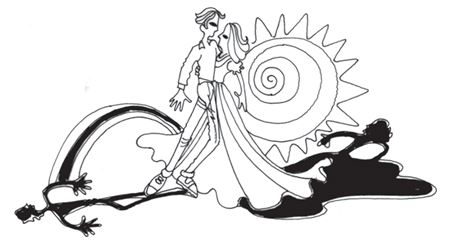
- The speaker recalls how the lovers’ shadows followed them earlier; at noon, they tread on the shadows as the sun stands overhead.
- The shadows suggest concealment in young love; mature love should be open and no longer hide from others.
- As the sun moves westward, shadows lengthen; if the lovers’ feelings weaken, they may deceive each other and become blind to the truth.
- True love is a growing or constant light. If love begins to decline, its end is already near.
| Device | Example | Effect |
|---|---|---|
| Extended metaphor | Love is presented through the sun’s changing light and shadows. | Connects the sun’s movement to changing stages of love. |
| Symbolism | Early shadows suggest secrecy; lengthening shadows suggest decline and deception. | Makes the relationship’s changing state visible through nature. |
| Contrast | Love as “growing” or “constant light” contrasts with love that “decay[s]”. | Emphasises lasting love versus failing love. |
| Metaphysical conceit | The sun’s position and the lovers’ shadows form an extended comparison. | Turns an ordinary observation into a witty argument about love. |
Love, Truth and Time
The poem contrasts love that grows into open, steady light with love that weakens into concealment and mutual deception. The sun’s passage from morning to afternoon mirrors the possible course of a relationship.
What do the changing shadows represent in the poem?
How does the speaker describe true love?
Quick recap
- Poetry uses concentrated, heightened language, with words chosen for sound, suggestive power and meaning; rhythm and metre contribute to its music.
- Donne’s metaphysical style uses wit and intellectual argument to startle readers into new insights.
- Donne, Milton, Blake and Coleridge belong to the classical tradition; Yeats, A. K. Ramanujan, Emily Dickinson and Kamala Das are closer to contemporary times.
- The poem gives greater weight to intellect and wit than to feeling and emotion.
- The sun and the lovers’ shadows form an extended comparison for the stages of love.
- Noon brings clarity, while lengthening afternoon shadows suggest weakening love and deception.
- The poem presents true love as growing or constant light.
Exercise
Understanding the Poem
How do shadows before and after noon differ, and what do they represent?
Why does the poet use shadows to discuss love, and what is the effect of the title?
What message does the poet convey to his beloved?
Language Features
- Archaic spelling: Forms such as “houres,” “shadowes,” “Sunne,” “noone,” “clearnesse” and “behinde” reflect older English spelling; the extra “e” was later dropped in many words.
- Other old forms: The poem also uses spellings such as “doe” and “blinde.”
- Possessive form: “Loves philosophy” means the philosophy of love; the possessive is written without an apostrophe.
- Infant: In isolation, it means a very young child; in “infant loves,” it describes love in its early, undeveloped stage.
- Brave: In isolation, it means courageous or bold; in “brave clearnesse,” it suggests bold, fearless clarity.
Quick recap
- Before-noon shadows represent disguises that conceal early love from others.
- Noon brings clarity; after-noon shadows can represent concealment and self-deception if love declines.
- The shadow image explains how love may move from hiddenness to clarity or back towards deception.
- The poet urges his beloved to keep their love sincere and clear.
- Older spellings include “houres” and “shadowes”; “loves philosophy” has no possessive apostrophe.
English — ALL CHAPTERS
1
The Last Lesson
2
Lost Spring (Stories of Stolen Childhood)
3
Deep Water
4
The Rattrap
5
Indigo
6
Poets and Pancakes
7
The Interview (From the Introduction to The Penguin Book of Interviews edited by Christopher Silvester).
8
Going Places
9
My Mother at Sixty-six
10
Keeping Quiet
11
A Thing of Beauty
12
A Roadside Stand
13
Aunt Jennifer’s Tigers
1
I Sell My Dreams
2
Eveline
3
A Wedding In Brownsville
4
Tomorrow
5
One Centimetre
6
A Lecture Upon The Shadow
7
Poems By Milton
8
Poems By Blake
9
Kubla Khan OR A Vision In A Dream: A Fragment
10
Trees
11
The Wild Swans At Coole
12
Time And Time Again
13
Blood
14
Freedom
15
The Mark On The Wall
16
Film-making
17
Why The Novel Matters
18
The Argumentative Indian
19
On Science Fiction
20
Chandalika
21
Broken Images
1
The Third Level
2
The Tiger King
3
Journey to the end of the Earth
4
The Enemy
5
On The Face Of It
6
Memories of Childhood