Class 12 PCB . English . Vistas . Memories of Childhood
Chapter 6: Memories of Childhood
Ch 6
English
Class 12 PCB
The Cutting of My Long Hair
Zitkala-Sa
- Identity: Gertrude Simmons Bonnin was a Native American writer born in 1876; she wrote under the name Zitkala-Sa.
- Activism: From 1900, she published articles criticising the Carlisle Indian School and the oppression of Native American culture.
- Context: This autobiographical account recalls her childhood experience of forced assimilation at a school for Native American children.
Bama
- Identity: Bama is the pen name of a Tamil Dalit woman from a Roman Catholic family.
- Works: Her books include the autobiography *Karukku* (1992), the novel *Sangati* (1994) and the short-story collection *Kisumbukkaaran* (1996).
- Title meaning: *Karukku* refers to palmyra leaves whose serrated edges on both sides resemble double-edged swords; linked to *karu* (embryo or seed), it also suggests freshness and newness.
Arrival at the School
The unfamiliar school
- Setting: Zitkala-Sa arrives on a bitterly cold day at a school where snow, bare trees and harsh noises intensify her fear and loneliness.
- Cultural disorientation: Strange voices, unfamiliar routines and the loss of her blanket make her feel trapped and separated from her former life.
- Unequal comfort: Native American girls wear tight school clothes and shoes; Zitkala-Sa notices that they seem accustomed to the changes.
The dining-room rules
- Confusion: She misunderstands the sequence of bells and sits before the others, then has to get up and sit again.
- Pressure: The pupils follow the school’s formal routine for prayer and eating; watched by a white woman, Zitkala-Sa becomes frightened and cries instead of eating.
- Effect: The rigid rules make her feel powerless in a place whose customs and language are unfamiliar.
The Threat to Cut Her Hair
Warning and resistance
- Judewin’s warning: Her friend has understood some English and reports that the school plans to cut the girls’ long hair.
- Cultural meaning: In their community, short hair is worn by mourners, while hair shingled by an enemy marks a captured, unskilled warrior or a coward.
- Different responses: Judewin believes they must submit because the authorities are powerful; Zitkala-Sa decides to resist.
“No, I will not submit! I will struggle first!”
Zitkala-Sa
The Forced Haircut
Hiding and capture
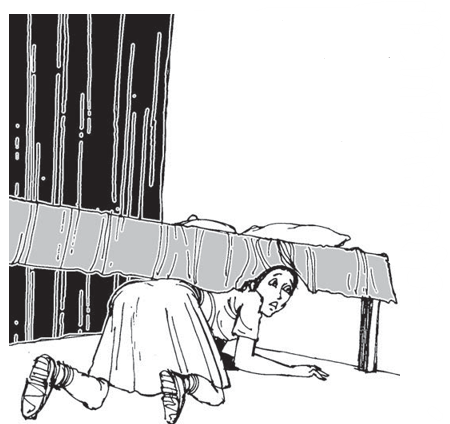
- Attempt to escape: After her moccasins have been replaced by squeaking shoes, Zitkala-Sa slips away and hides beneath a bed.
- Capture: The searchers find her, drag her out despite her kicking and scratching, and tie her to a chair.
- Outcome: She cries and struggles as her braid is cut; the forced haircut leaves her feeling defeated and deeply humiliated.
Aftermath
- Loss of identity: The haircut violates a cultural belief that gives hair personal and communal meaning.
- Accumulated indignities: Zitkala-Sa recalls being taken from her mother, stared at and tossed about like a puppet.
- Dehumanisation: She feels treated not as a child deserving comfort, but as one of many animals controlled by a herder.
Zitkala-Sa
- Independent and defiant: She refuses to accept the haircut without a struggle.
- Culturally rooted: She understands that cutting her hair dishonours her people’s customs.
- Vulnerable and lonely: She is frightened by the school and longs for her mother’s comfort.
Judewin
- Helpful: She warns Zitkala-Sa about the planned haircut.
- Pragmatic: She advises submission because she believes the school authorities are too powerful to resist.
Cultural oppression and forced assimilation
The school’s rules, clothing and forced haircut impose the dominant culture on Native American children and disregard their traditions and dignity.
Resistance and identity
Zitkala-Sa’s attempt to hide expresses resistance; the forced cutting of her hair represents an attack on her cultural identity and autonomy.
Why was Zitkala-Sa distressed by the plan to cut her hair?
How did Zitkala-Sa try to avoid having her hair cut?
Quick recap
- Arrival: The unfamiliar school environment makes Zitkala-Sa feel isolated and powerless.
- Routine: Confusing dining-room rules show the pressure to conform to unfamiliar customs.
- Hair: In her culture, hair carries meaning linked to mourning, capture and cowardice.
- Resistance: Zitkala-Sa hides and struggles rather than willingly submitting to the haircut.
- Violation: The school forcibly cuts her hair, humiliating her and attacking her cultural identity.
- Theme: The episode exposes the harm of forced assimilation and the loss of dignity it causes.
We Too are Human Beings
A Child’s Walk Home
- As a third-class student, Bama often took much longer than necessary to walk home, absorbed by the lively sights and sounds of the bazaar.
- Street performers, shops, seasonal foods and everyday activities made the walk entertaining and kept her from hurrying home.
- One day, she stopped to watch workers threshing grain while the landlord sat nearby.
The Packet and the Discovery of Untouchability
- An elder from Bama’s community carried a packet of snacks by its string and respectfully handed it to the landlord without touching it.
- Bama first found the elder’s manner of carrying the packet amusing. Her brother Annan explained that the landlord considered people of their caste ‘polluting’ to touch.
- Bama’s amusement changed to sadness and anger. She questioned why her people had to perform errands and be treated as inferior.
- She concluded that her community should work for wages, rather than meekly carry out petty tasks for the landlords.
Annan’s Advice and Bama’s Response
- Annan explained that people judged their caste by the street they lived on, as shown when a landlord’s worker asked him where he lived.
- He told Bama that education and progress could help her challenge the indignities imposed on her community.
- Bama took his advice seriously, studied intensely, and stood first in her class. Her achievement helped many people become her friends.
Bama
- Observant and lively: she notices the people, performances and activity along her walk home.
- Sensitive to injustice: she feels sadness and anger when she understands the caste-based humiliation.
- Determined: she works hard at her studies and earns first place in her class.
Annan
- Insightful: he explains the caste discrimination behind the elder’s actions.
- Encouraging: he urges Bama to study and learn as a way to resist indignity.
- His advice gives Bama a clear goal and influences her determination.
Caste Discrimination and Human Dignity
The episode exposes untouchability and the denial of respect to people because of caste. Bama’s response asserts that all people deserve equal dignity.
Education as Empowerment
Annan presents education and hard work as ways to challenge social humiliation and earn respect. Bama responds by excelling in school.
“But we too are human beings.”
Bama
- Untouchability
- A discriminatory practice that treats some people as ‘untouchable’ because of caste.
- Dawdle
- To move or act slowly, often because one is distracted.
- Threshing
- Separating grain from harvested stalks.
- Muzzled
- Fitted with a covering over the mouth to prevent eating or biting.
- Indignity
- Treatment that takes away a person’s dignity or self-respect.
- Meekly
- In a quiet, submissive way.
Why was the elder carrying the snack packet by its string?
What advice did Annan give Bama, and how did she respond?
Quick recap
- Bama’s walk home introduces her to the lively everyday life of the bazaar.
- The elder’s way of carrying the snack packet reveals the reality of untouchability.
- Bama’s amusement turns into anger when she understands the caste-based humiliation.
- Annan explains how caste prejudice denies people honour and respect.
- He encourages education as a means of challenging discrimination.
- Bama studies hard, stands first in class and gains many friends.
Exercise
What common theme connects Bama’s and Zitkala-Sa’s accounts?
Can injustice escape the notice of children?
What discrimination does Zitkala-Sa experience, and how do both girls respond?
Quick recap
- Both accounts reveal childhood experiences of identity-based oppression.
- Children can recognise unfair treatment even before understanding its wider causes.
- Bama’s account depicts caste discrimination.
- Zitkala-Sa’s account depicts racial and cultural oppression.
- Zitkala-Sa resists directly; Bama pursues education and achievement.
English — ALL CHAPTERS
1
The Last Lesson
2
Lost Spring (Stories of Stolen Childhood)
3
Deep Water
4
The Rattrap
5
Indigo
6
Poets and Pancakes
7
The Interview (From the Introduction to The Penguin Book of Interviews edited by Christopher Silvester).
8
Going Places
9
My Mother at Sixty-six
10
Keeping Quiet
11
A Thing of Beauty
12
A Roadside Stand
13
Aunt Jennifer’s Tigers
1
I Sell My Dreams
2
Eveline
3
A Wedding In Brownsville
4
Tomorrow
5
One Centimetre
6
A Lecture Upon The Shadow
7
Poems By Milton
8
Poems By Blake
9
Kubla Khan OR A Vision In A Dream: A Fragment
10
Trees
11
The Wild Swans At Coole
12
Time And Time Again
13
Blood
14
Freedom
15
The Mark On The Wall
16
Film-making
17
Why The Novel Matters
18
The Argumentative Indian
19
On Science Fiction
20
Chandalika
21
Broken Images
1
The Third Level
2
The Tiger King
3
Journey to the end of the Earth
4
The Enemy
5
On The Face Of It
6
Memories of Childhood