Class 12 PCM . English . Flamingo . My Mother At Sixty Six
Chapter 9: My Mother at Sixty-six
Ch 9
English
Class 12 PCM
The Silent Struggles of Watching a Parent Age
Kamala Das
- Born in 1934 in Malabar, Kerala; died in 2009.
- A major Indian poet known for originality, versatility and a strong regional flavour.
- Published novels and short stories in English and Malayalam under the name Madhavikutty.
- Wrote five books of poetry and often explored the subtleties of human relationships.
My Mother at Sixty-six
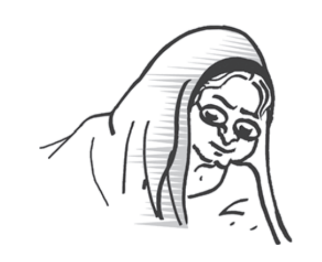
- During a drive to Cochin, the speaker sees her sleeping mother’s pale, lifeless-looking face and is struck by how old she has become.
- At the airport, seeing her mother again awakens the speaker’s childhood fear of losing her; she hides her sadness behind repeated smiles and a cheerful farewell.
| Device | Example | Effect |
|---|---|---|
| Simile | “ashen like that of a corpse” | Emphasises the mother’s pallor and the speaker’s shock at her ageing. |
| Simile | “pale as a late winter’s moon” | Suggests the mother’s frailty and fading vitality. |
| Contrast | “Young Trees” and “merry children” beside the ageing mother | Sets youthful energy against old age and decline. |
| Repetition | “smile and smile and smile” | Shows the speaker trying to conceal her sadness and fear. |
Love, Ageing and Separation
The poem captures the pain of recognising a parent’s ageing and the fear of eventual separation. The speaker’s outward smile masks her private grief and anxiety.
- Sprinting
- Running at full speed.
- Wan
- Pale or colourless, often from illness or weakness.
- Ashen
- Very pale or grey, like ash.
- Doze
- Sleep lightly.
Quick recap
- The speaker notices her mother’s ageing during a drive to Cochin.
- The mother’s pale, frail appearance awakens the speaker’s fear of losing her.
- Young trees and children contrast with the mother’s old age.
- The airport farewell brings back the speaker’s childhood fear of separation.
- The repeated smile hides the speaker’s sadness.
Exercise
What pain and ache does the poet feel?
Why are the young trees and merry children described as they are, and why is the mother compared to the late winter’s moon?
What do the poet’s parting words and smile signify? What does the poem’s single-sentence form suggest?
Quick recap
- The poet’s ache comes from her mother’s ageing and her fear of separation.
- The lively trees and children contrast with the mother’s frailty.
- The late winter’s moon suggests the mother’s pale, wan appearance.
- The poet’s smile and farewell conceal worry while offering reassurance.
- The poem’s single sentence links the poet’s thoughts with her observations.
English — ALL CHAPTERS
1
The Last Lesson
2
Lost Spring (Stories of Stolen Childhood)
3
Deep Water
4
The Rattrap
5
Indigo
6
Poets and Pancakes
7
The Interview (From the Introduction to The Penguin Book of Interviews edited by Christopher Silvester).
8
Going Places
9
My Mother at Sixty-six
10
Keeping Quiet
11
A Thing of Beauty
12
A Roadside Stand
13
Aunt Jennifer’s Tigers
1
I Sell My Dreams
2
Eveline
3
A Wedding In Brownsville
4
Tomorrow
5
One Centimetre
6
A Lecture Upon The Shadow
7
Poems By Milton
8
Poems By Blake
9
Kubla Khan OR A Vision In A Dream: A Fragment
10
Trees
11
The Wild Swans At Coole
12
Time And Time Again
13
Blood
14
Freedom
15
The Mark On The Wall
16
Film-making
17
Why The Novel Matters
18
The Argumentative Indian
19
On Science Fiction
20
Chandalika
21
Broken Images
1
The Third Level
2
The Tiger King
3
Journey to the end of the Earth
4
The Enemy
5
On The Face Of It
6
Memories of Childhood