Class 12 PCM . English . Vistas . On the Face of It
Chapter 5: On The Face Of It
Ch 5
English
Class 12 PCM
The Hidden Wonders of Mr. Lamb's Garden
Writer
- Susan Hill is the writer of the play.
Scene One: Derry Meets Mr. Lamb
- Fourteen-year-old Derry enters Mr. Lamb’s garden by climbing the wall, believing the place is empty.
- Mr. Lamb welcomes him calmly and explains that the gate is always open; he is not bothered by visitors.
- Derry says people fear and pity him because acid has badly burned one side of his face. He believes he can read their thoughts.
- Derry admits he is afraid of his own reflection and avoids people. He expects Mr. Lamb to avoid asking about his face.
- Mr. Lamb accepts Derry’s wish to talk and says the injury is not the whole of him. He invites Derry to help gather crab apples for jelly.
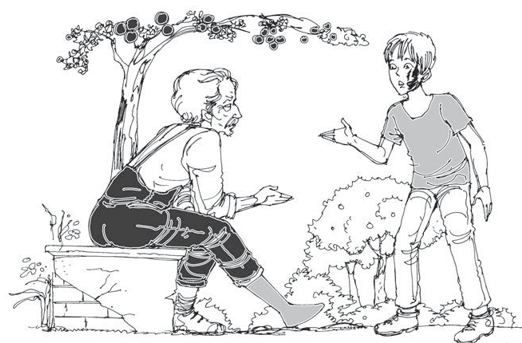
Derry
- Withdrawn and distrustful: he expects people to fear or pity him because of his disfigured face.
- Insecure and isolated: he is afraid when he sees himself in the mirror and says he dislikes being with anyone.
- Direct and defiant: he challenges Mr. Lamb for changing the subject instead of asking about his injury.
Mr. Lamb
- Welcoming and accepting: he keeps the garden gate open and tells Derry he is welcome.
- Calm and considerate: he lets Derry speak openly and does not treat him as only his injury.
- Positive and engaged with life: he enjoys the garden and plans to make crab-apple jelly.
Acceptance and Human Connection
Mr. Lamb’s open welcome contrasts with Derry’s expectation of rejection. Their first conversation begins a bond based on listening and acceptance.
Appearance and Self-Perception
Derry’s facial injury shapes how he sees himself and how he assumes others see him. Mr. Lamb suggests that a person is more than outward appearance.
“The gate’s always open.”
Mr. Lamb
“No, Not the whole of you. Not of you.”
Mr. Lamb
Quick recap
- Susan Hill wrote the play.
- Derry is fourteen and has severe facial burns caused by acid.
- He expects people to fear or pity him, so he avoids them.
- Mr. Lamb welcomes Derry into his garden and listens without judging him.
- Mr. Lamb sees Derry as more than his injured face.
- The garden and the crab-apple invitation begin a connection between the two.
A Journey of Self-Discovery in Mr. Lamb's Garden
The Garden as a Place of Acceptance
Seeing Life Differently
- Weeds and flowers: Mr. Lamb asks why one growing plant is called a weed and another a flower; both are living forms, like people.
- Shared differences: Derry has a burned face and Mr. Lamb a tin leg, but Mr. Lamb treats these differences as unimportant.
- Attention shifts: He points Derry towards crab apples, weeds, a spider and sunflowers, inviting him to notice the wider world.
Derry's Pain and Mr. Lamb's Perspective
Appearance, Cruelty and Possibility
- Derry’s fears: He believes no one will love or kiss him because of his face, and rejects the familiar “Beauty and the Beast” lesson that inner worth matters.
- A challenge about love: Mr. Lamb asks whether Derry cares only that nobody will kiss him, or also whether he will never kiss anyone—shifting attention to Derry’s own capacity for love.
- The wider world: Mr. Lamb accepts that Derry’s face will not change, but says the world remains whole and worth looking at.
- A painful memory: Derry recalls a woman calling his face “a face only a mother could love”; Mr. Lamb questions whether Derry should believe everything he hears.
- Different responses to pain: Mr. Lamb admits his tin leg sometimes hurts, but does not let pain or comparisons with people worse off define his outlook.
Opening Up to the World
Derry Begins to Connect
- An open welcome: Mr. Lamb says the gate is open and Derry need not answer questions or stay, giving him freedom rather than pressure.
- Bees and listening: Mr. Lamb hears his bees as singing, showing how an attentive outlook can find beauty in ordinary things.
- Derry’s response: He admits that he likes the garden and came in because he liked what he saw over the wall.
- Fear and isolation: Derry dislikes people staring at or fearing him. Mr. Lamb describes a man who shut himself away because he feared every possible danger.
Characters and Themes
Mr. Lamb
- Open-minded: Finds value and interest in all living things, including weeds.
- Resilient: Accepts his tin leg and occasional pain without letting them dominate his life.
- Encouraging: Uses questions and observations to prompt Derry to reconsider isolation and notice life beyond appearance.
Derry
- Self-conscious: Feels defined by his burned face and expects rejection.
- Wounded by cruelty: Remembers hurtful remarks and fears people’s stares.
- Beginning to open up: Engages in conversation and admits he likes the garden, though he remains doubtful about acceptance.
Acceptance Beyond Appearance
Physical differences do not determine a person’s worth. Mr. Lamb encourages Derry to notice life and connection beyond other people’s judgements.
Isolation and Fear
Avoiding people may feel protective but can become a prison. Mr. Lamb’s story of the fearful man shows how fear can shut a person off from life.
How does Mr. Lamb help Derry view his appearance differently?
Why does Derry avoid people, and what does he reveal about the garden?
What does Mr. Lamb’s question about kissing make Derry consider?
Quick recap
- Garden: Mr. Lamb sees weeds and flowers as living things and encourages Derry to look beyond labels.
- Difference: He accepts his tin leg and treats physical differences as no measure of human worth.
- Derry: His shame and fear of rejection are deepened by cruel remarks about his face.
- Love: Mr. Lamb’s question shifts Derry’s focus from being loved to his own capacity to love.
- Isolation: The fearful man’s story shows how avoiding life can become a prison.
Lessons from Derry
Mr Lamb’s open way of life
- An open home: Mr Lamb keeps the gate open and dislikes curtains because he welcomes light, sounds and people.
- A full life: He reads, enjoys nature and makes honey toffee; children and other visitors come to his house.
- A lively outlook: He jokes about a man killed by a falling picture and says that life can hold unexpected things.
Derry’s fears and Mr Lamb’s encouragement
- Derry’s insecurity: His face was burned by acid, and he hears people worry that he will not manage life because of his appearance.
- Mr Lamb’s encouragement: He points to Derry’s abilities and says that determination can help him make his own way in life.
- Friendship without conditions: Mr Lamb accepts Derry as a friend without needing his full particulars or expecting constant contact.
Difference, acceptance and belonging
- Derry’s view: He believes people stare at or avoid him, and admits that there are some people he hates.
- Mr Lamb’s insight: He argues that hatred harms a person inwardly, and that people should not be separated or judged only by appearance or disability.
- A first step: Derry likes the idea of an open garden and considers returning, but still fears that others will mind his presence.
Mr Lamb
- Open-hearted: He welcomes visitors and considers Derry a friend.
- Wise: He encourages Derry to value his abilities and not let hatred consume him.
- Resilient: Despite losing a leg, he lives independently and stays engaged with people and the world around him.
Derry
- Self-conscious: He is deeply affected by his burned face and expects people to reject him.
- Distrustful: He questions whether friendship is possible without familiarity or regular contact.
- Tentatively hopeful: He imagines returning to Mr Lamb’s garden, though he still fears others’ reactions.
Acceptance beyond appearance
People should be valued as individuals, not reduced to appearance or disability. Mr Lamb’s acceptance challenges Derry’s fear of prejudice.
Openness and connection
Mr Lamb’s welcoming outlook makes room for friendship and belonging. Derry’s fear of rejection shows how prejudice can leave a person feeling isolated.
“People are never just nothing. Never.”
Mr Lamb
“That’d do you more harm than any bottle of acid. Acid only burns your face.”
Mr Lamb
Quick recap
- Mr Lamb welcomes visitors and remains open to life despite losing a leg.
- Derry feels judged because of his burned face and doubts that people can accept him.
- Mr Lamb urges Derry to trust his abilities and choose his own path.
- Friendship does not require full personal details or constant contact.
- The lesson: Acceptance can challenge prejudice, while hatred harms the person who holds it.
Insights from a Unique Friendship
Trust and the risk of friendship
- Derry believes others will reject him because of his burned face and worries that Mr Lamb may lose his friends by being seen with him.
- Mr Lamb explains that children sometimes tease him about his artificial leg, but they still visit. He is not afraid of them, so they are not afraid of him.
- Their exchange shows how Derry expects rejection, while Mr Lamb responds to people with openness rather than fear.
Derry considers his choices
- Derry worries that Mr Lamb could be injured while climbing a ladder alone. Mr Lamb says he has learned to manage and takes things steadily.
- Derry says his mother will expect him home. Mr Lamb distinguishes between others’ worries and Derry’s own decisions.
- Derry admits he wants something unique, something that belongs only to him. Mr Lamb suggests he can discover it by waiting, watching, listening and exploring.
Derry decides to return
- Derry doubts that anyone visits Mr Lamb and calls him crazy. Mr Lamb suggests this could become Derry’s excuse not to return.
- Derry fears that people either pity his face, fear it or think it ugly. Mr Lamb does not answer his outburst, and Derry realises he is not judging him.
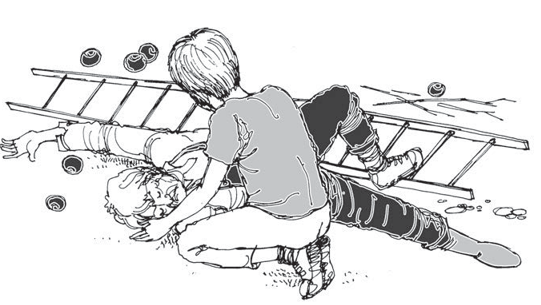
- Derry leaves saying he will come back. The figure shows him returning and finding Mr Lamb fallen beside the ladder, then trying to help him.
- Alone, Mr Lamb says people never come back. His words reveal his loneliness and uncertainty about whether Derry will return.
Derry
- Insecure and defensive: he expects people to reject or fear him because of his burned face.
- Curious and reflective: he asks about Mr Lamb’s life and begins thinking about what he wants for himself.
- More hopeful by the end: he chooses to leave, but promises to return and later tries to help Mr Lamb.
Mr Lamb
- Accepting and unafraid: he treats teasing children without resentment and welcomes people to his garden.
- Independent and resourceful: he has learned to manage despite losing a leg.
- Patient and encouraging: he lets Derry make his own choices and urges him to discover what he wants.
- Lonely beneath his calm manner: he says people never come back.
Self-acceptance and choice
Mr Lamb encourages Derry not to let others’ reactions define him. Derry must decide for himself what he wants and what he is capable of.
Friendship and loneliness
Their meeting offers Derry acceptance and companionship, while Mr Lamb’s final words expose his own fear of being left alone.
“Once you got home, you’d never let yourself come back.”
Mr Lamb
“Waiting. Watching. Listening.”
Mr Lamb
How does Mr Lamb help Derry think differently about himself?
What does Derry’s promise to return suggest?
Quick recap
- Derry expects rejection because of his burned face; Mr Lamb does not share his fear of people.
- Mr Lamb’s independence challenges Derry’s assumptions about disability and limitation.
- Mr Lamb encourages Derry to discover what he wants for himself.
- Derry decides to return and later tries to help Mr Lamb.
- Their connection offers companionship, though Mr Lamb remains afraid of being forgotten.
A Conversation with Mr. Lamb
Scene Two: Derry at Home
Derry’s decision
- Derry’s mother warns him not to return to Mr. Lamb’s garden, saying she has heard unsettling things about the old man.
- Derry insists that he values Mr. Lamb’s company, the garden, and the chance to listen, observe, and think.
- He explains that his wish to return has nothing to do with his face; he wants to experience and understand the world.
- Despite his mother’s command, Derry runs back, saying that if he does not go, he may never go anywhere in the world.
Derry
- Determined: he chooses to return to Mr. Lamb despite his mother’s warning.
- Curious and thoughtful: he wants to listen to the bees, observe the garden, and think about meaningful things.
- Growing in confidence: he wants to explore life rather than let his appearance define him.
Derry’s mother
- Protective but controlling: she forbids Derry from visiting Mr. Lamb based on what she has heard.
- She believes Derry is better off staying at home, but does not understand how strongly he wants independence.
Scene Three: Return to the Garden
The tragic ending
- Derry returns to the garden and calls out that he has come back, despite Mr. Lamb having said he would not.
- He finds Mr. Lamb lying still after the ladder falls while Mr. Lamb is gathering apples.
- Derry rushes to Mr. Lamb, tries to comfort him, and repeats that he came back; Mr. Lamb does not respond.
- Derry begins to weep. Mr. Lamb’s condition is left unconfirmed, making the ending poignant and tragic.
Mr. Lamb
- Derry recalls that Mr. Lamb had said he would not return; Derry’s return challenges that prediction.
- He falls with the ladder while gathering apples and is unresponsive when Derry finds him.
Independence and facing the world
Derry’s decision to return marks a move towards independence. He refuses to let fear, other people’s judgments, or his appearance keep him from exploring life.
Connection and loss
Derry’s bond with Mr. Lamb gives him a reason to return and engage with the world. Finding Mr. Lamb unresponsive makes their connection poignant and leaves the ending uncertain and tragic.
Why does Derry insist on returning to Mr. Lamb’s garden?
What does Derry find when he returns to the garden?
Quick recap
- Derry’s mother warns him against visiting Mr. Lamb, but he insists on going back.
- Derry wants to listen, observe, think, and take part in the wider world.
- His return shows growing determination and independence.
- Mr. Lamb falls from a ladder while gathering apples.
- Derry finds Mr. Lamb unresponsive and weeps beside him; his fate is not confirmed.
- The ending brings together Derry’s new resolve and the poignant uncertainty of Mr. Lamb’s condition.
Exercise
What draws Derry towards Mr Lamb, and how might their meeting affect Derry’s future?
In which section does Mr Lamb show loneliness and disappointment? How does he cope with these feelings?
What behaviour should a person with a disability expect from others? Suggest another possible ending to the play.
Quick recap
- Derry is drawn to Mr Lamb’s openness and the way he treats him as an equal.
- Mr Lamb reveals his loneliness during the opening garden conversation.
- He counters loneliness by welcoming people, tending his garden and enjoying nature.
- People with disabilities deserve respect, inclusion and ordinary human warmth.
- Their meeting may help Derry lead a more confident and less isolated life.
English — ALL CHAPTERS
1
The Last Lesson
2
Lost Spring (Stories of Stolen Childhood)
3
Deep Water
4
The Rattrap
5
Indigo
6
Poets and Pancakes
7
The Interview (From the Introduction to The Penguin Book of Interviews edited by Christopher Silvester).
8
Going Places
9
My Mother at Sixty-six
10
Keeping Quiet
11
A Thing of Beauty
12
A Roadside Stand
13
Aunt Jennifer’s Tigers
1
I Sell My Dreams
2
Eveline
3
A Wedding In Brownsville
4
Tomorrow
5
One Centimetre
6
A Lecture Upon The Shadow
7
Poems By Milton
8
Poems By Blake
9
Kubla Khan OR A Vision In A Dream: A Fragment
10
Trees
11
The Wild Swans At Coole
12
Time And Time Again
13
Blood
14
Freedom
15
The Mark On The Wall
16
Film-making
17
Why The Novel Matters
18
The Argumentative Indian
19
On Science Fiction
20
Chandalika
21
Broken Images
1
The Third Level
2
The Tiger King
3
Journey to the end of the Earth
4
The Enemy
5
On The Face Of It
6
Memories of Childhood