Class 12 PCM . English . Vistas . The Tiger King
Chapter 2: The Tiger King
Ch 2
English
Class 12 PCM
The Enigmatic Life and Death of the Tiger King
Part I: The prophecy
- The Tiger King: The Maharaja of Pratibandapuram has many grand formal titles, but his name is often shortened to the Tiger King.
- Death revealed: The narrator says at the outset that the King is dead, but withholds the manner of his death until the end.
- Birth prophecy: Astrologers predict that the prince will grow into a great warrior but will eventually die.
- The astrologer’s explanation: The prince was born in the hour of the Bull; because the Bull and Tiger are enemies, the chief astrologer predicts that a tiger will cause his death.
- Unusual infant: At ten days old, the prince points out that everyone must die and asks for the manner of death to be predicted.
- Defiant response: After hearing the prophecy, the infant declares, “Let tigers beware!”
- Narrative tone: The narrator treats the extraordinary events with humour and irony, adding that the popular account may have some truth.
The Tiger King
- Defiant: Even as an infant, he challenges the astrologers’ prediction and warns the tigers.
- Confident: His fearless words, “Let tigers beware!”, show his bold attitude.
- Fated: The prophecy links his death to a tiger, setting up the story’s central irony.
The chief astrologer
- Predictive: He forecasts that a tiger will cause the prince’s death, based on the supposed enmity between the Bull and the Tiger.
- Astonished: He is amazed that the ten-day-old prince can speak and ask an intelligent question.
Fate and irony
The prophecy makes the King’s death seem inevitable. His challenge to tigers creates irony, while the narrator delays revealing how the prophecy is fulfilled.
Humour and satire
The grand royal titles, the infant’s unexpected speech and the narrator’s exaggerated comparisons make the opening humorous and gently satirical.
- Indomitable
- Impossible to defeat or discourage.
- Imperative
- Absolutely necessary.
- Stupefaction
- Great astonishment or shock.
- Enunciated
- Spoke or pronounced clearly.
- Rife
- Widespread or commonly circulating.
- With hindsight
- Looking back with knowledge of what happened later.
Who is the Tiger King, and why is he called that?
What does the chief astrologer predict about the prince?
Quick recap
- Kalki’s story introduces the Maharaja of Pratibandapuram, often called the Tiger King.
- The narrator reveals that the King is dead but postpones explaining how he died.
- Astrologers predict that the prince will die because of a tiger.
- The ten-day-old prince argues that the useful prediction is the manner of death, not the fact that everyone dies.
- After hearing the explanation, the prince declares, “Let tigers beware!”
- The opening combines fate, irony, humour and satire.
The Enigmatic Journey of The Tiger King II
Part II: The Prince and the Prediction
The Prince and the First Tiger
- Upbringing: Crown Prince Jung Jung Bahadur grows up with English milk, a nanny, a tutor and films, like other Indian princes of the time.
- Accession: At twenty, he takes charge of the State, which had been under the Court of Wards.
- Prophecy: The astrologer’s prediction remains a topic of discussion and reaches the Maharaja.
- First hunt: The Maharaja invokes the idea of self-defence to justify hunting tigers in his forests.
- Warning: After the first kill, the astrologer says he may kill ninety-nine more tigers but must beware of the hundredth.
- Comic boast: If the hundredth tiger is killed, the astrologer says he will burn his astrology books, cut his hair and become an insurance agent.
Part III: The Hunt and the British Officer
The Maharaja’s Hunting Campaign
- Hunting ban: Only the Maharaja may hunt tigers; anyone else who harms one risks confiscation of all property.
- Single-minded goal: He vows to attend to other matters only after killing one hundred tigers.
- Danger: Sometimes his bullet misses and a tiger attacks, but he manages to defeat it each time.
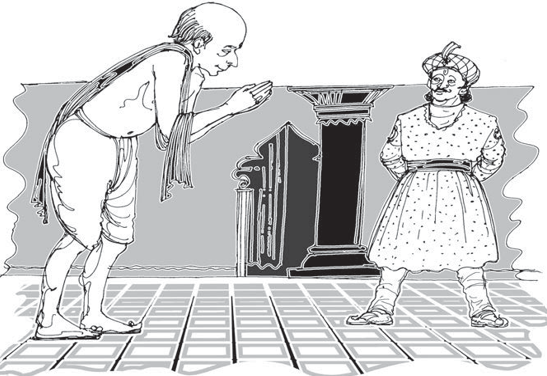
- British officer: A visiting officer wants a tiger hunt and a photograph holding a gun over the carcass.
- Refusal: The Maharaja refuses permission, even when told that he could kill the tiger while the officer posed with the gun over its carcass.
- Threat to the throne: The refusal risks the Maharaja’s kingdom, so he and the dewan seek a way to appease the officer.
- Costly solution: The Maharaja sends about fifty diamond rings to the officer’s wife. She keeps them all, and the jewellers bill him three lakh rupees.
- Outcome: The Maharaja is pleased that the costly gift has helped him retain his kingdom.
The Tiger King
- Obsessive: Makes killing one hundred tigers his overriding goal.
- Authoritarian: Bans others from hunting tigers and threatens confiscation of their property.
- Defiant: Refuses the British officer’s request despite the danger to his throne.
- Pragmatic: Spends heavily on gifts to protect his position.
The Astrologer
- Cautious: Warns the Maharaja specifically about the hundredth tiger.
- Comic: Claims that if the hundredth tiger is killed, he will abandon astrology and become an insurance agent.
Power and Obsession
The Maharaja turns his fixation on the prophecy into royal policy, showing how unchecked power can serve personal desires.
Satire of Colonial Power
The episode humorously exposes the pressure British officials could exert and the extravagant measures a ruler might take to preserve his throne.
What warning did the astrologer give the Maharaja after his first tiger kill?
How did the Maharaja avoid a conflict with the British officer?
Quick recap
- The prince becomes Maharaja at twenty, and the astrologer’s prophecy continues to concern the kingdom.
- After the first tiger kill, the astrologer warns him to beware of the hundredth.
- The Maharaja reserves tiger hunting for himself and prioritises killing one hundred tigers.
- He refuses a British officer’s request to pose with a tiger he has killed, risking his kingdom.
- A gift of diamond rings costs three lakh rupees but helps the Maharaja retain his throne.
The Maharaja's Quest: A Tale of Tigers and Tradition IV
The Tigers Disappear
- Hunt tally: In ten years, the Maharaja killed seventy tigers.
- Crisis: Tigers became extinct in Pratibandapuram, leaving thirty more for him to kill to fulfil his mission.
- Satire: The narrator jokingly suggests absurd explanations for the tigers’ disappearance, making fun of the Maharaja’s obsession.
Marriage as a Hunting Strategy
- The dewan’s misunderstanding: Frightened by the Maharaja’s gun, the dewan panics; the Maharaja clarifies that he wants to marry a human bride, not a tiger or a gun.
- The plan: The Maharaja orders the dewan to find a royal state with many tigers and identify a suitable bride there.
- More tigers: After the marriage, he kills five or six tigers on each visit to his father-in-law’s state.
- Ninety-nine skins: The tiger skins decorate the palace reception hall, bringing him close to his target.
The Maharaja
- Obsessive: He remains determined to kill the required number of tigers.
- Calculating: He chooses a bride from a state with many tigers so he can continue hunting there.
- Arrogant: He treats marriage and royal connections as means to serve his personal goal.
The Dewan
- Fearful: He trembles when the Maharaja brandishes his gun.
- Obedient: He follows the order to find a bride from a state with a large tiger population.
Satire of Power and Obsession
The episode mocks the Maharaja’s single-minded hunt and the way royal power turns marriage and state relations into tools for private ambition.
Why did the Maharaja decide to marry?
How did the Maharaja reach ninety-nine tiger kills?
Quick recap
- The Maharaja had killed seventy tigers in ten years.
- Tigers disappeared from Pratibandapuram, interrupting his hunt.
- He arranged to marry a princess from a state with many tigers.
- He hunted tigers during visits to his father-in-law’s state.
- Ninety-nine tiger skins decorated the palace reception hall.
- The episode satirises his obsession and misuse of royal power.
The Maharaja's Relentless Pursuit of the Last Tiger V
The Search for the Hundredth Tiger
- The final tiger: With ninety-nine tigers killed, the Maharaja became obsessed with finding one more. The tiger farms had run out, and the chief astrologer’s warning about the hundredth tiger made him especially cautious.
- A clue: When sheep began disappearing in a village, the Maharaja assumed a tiger was responsible. He offered the village a three-year tax exemption and went hunting.
- Growing anger: The tiger remained hidden, and the Maharaja refused to leave the forest. His fury grew; several officers lost their jobs.
- The tax order: In anger, he ordered the Dewan to double the land tax. The Dewan warned that discontent could help the Indian National Congress gain influence; the king told him he could resign.
The Staged Hundredth Kill
- The Dewan’s solution: To protect himself and appease the king, the Dewan brought a tiger from the People’s Park in Madras and secretly took it to the forest.
- The encounter: The tiger resisted getting out of the car, but the next day it appeared before the Maharaja. He fired and believed he had killed it.
- The truth: The bullet missed; the tiger fainted from fright. Afraid of losing their jobs, the hunters concealed this and one shot it at close range.
- The procession: The dead tiger was taken through the town and buried, with a tomb erected over it. The Maharaja believed his vow was fulfilled.
The Wooden Tiger and the King's Death
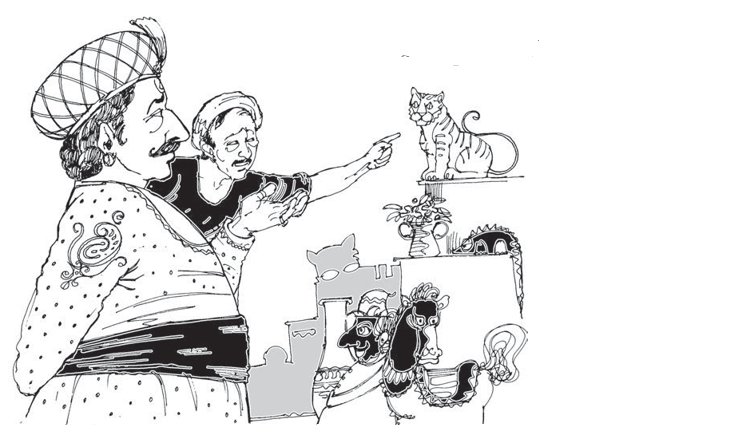
- The birthday gift: On his son’s third birthday, the Maharaja bought him a wooden tiger. It cost two annas and a quarter, but the shopkeeper falsely praised it as rare craftsmanship and charged three hundred rupees.
- The splinter: The rough toy pierced the Maharaja’s right hand. Infection spread from the wound up his arm.
- The ending: Three surgeons operated and declared the operation successful, but the Maharaja died. The wooden tiger’s splinter—not the real tiger—became the instrument of his death.
The Maharaja
- Obsessive: He lets the hunt for the hundredth tiger dominate his thoughts and actions.
- Arbitrary: He fires officers and orders a tax increase when frustrated.
- Overconfident: He assumes he has killed the tiger and believes the prophecy has been defeated.
The Dewan
- Fearful and resourceful: He fears the king’s anger and finds a tiger to satisfy him.
- Complicit: He helps stage the hunt rather than reveal the truth.
Irony, Fate and Power
The Maharaja believes he has escaped the prophecy by killing a hundredth tiger, but the real tiger survives his shot. A wooden tiger ultimately causes his death, making his triumph deeply ironic.
How did the Dewan arrange the hundredth tiger?
Was the prophecy about the hundredth tiger indisputably disproved?
Quick recap
- The Maharaja becomes consumed by the search for his hundredth tiger.
- The Dewan secretly brings a tiger from Madras to satisfy the king.
- The Maharaja misses his shot, but the hunters hide the truth and kill the tiger.
- The king believes his vow is fulfilled and has the tiger buried with a tomb.
- A splinter from his son’s wooden tiger causes an infection that leads to his death.
- The ending uses irony to suggest that the prophecy was not truly escaped.
Exercise
How does dramatic irony strengthen the satire on those in power?
Are the Maharaja’s minions sincere, or do they obey from fear? What might this suggest about political systems?
What does the story suggest about human treatment of wildlife and the need for an ecological system?
Quick recap
- Dramatic irony helps expose the conceit of those in power.
- Obedience by a ruler’s minions does not necessarily show sincere loyalty.
- The story invites reflection on authority and political behaviour.
- The treatment of animals raises questions about human callousness.
- An ecological system should care for people, the Earth and all life.
English — ALL CHAPTERS
1
The Last Lesson
2
Lost Spring (Stories of Stolen Childhood)
3
Deep Water
4
The Rattrap
5
Indigo
6
Poets and Pancakes
7
The Interview (From the Introduction to The Penguin Book of Interviews edited by Christopher Silvester).
8
Going Places
9
My Mother at Sixty-six
10
Keeping Quiet
11
A Thing of Beauty
12
A Roadside Stand
13
Aunt Jennifer’s Tigers
1
I Sell My Dreams
2
Eveline
3
A Wedding In Brownsville
4
Tomorrow
5
One Centimetre
6
A Lecture Upon The Shadow
7
Poems By Milton
8
Poems By Blake
9
Kubla Khan OR A Vision In A Dream: A Fragment
10
Trees
11
The Wild Swans At Coole
12
Time And Time Again
13
Blood
14
Freedom
15
The Mark On The Wall
16
Film-making
17
Why The Novel Matters
18
The Argumentative Indian
19
On Science Fiction
20
Chandalika
21
Broken Images
1
The Third Level
2
The Tiger King
3
Journey to the end of the Earth
4
The Enemy
5
On The Face Of It
6
Memories of Childhood