Class 11 Humanities . History . Themes In World History . Nomadic Empires
Chapter 3: NOMADIC EMPIRES
Ch 3
History
Class 11 Humanities
Introduction & Social and Political Background
Nomadic Empires: Meaning and Context
Nomadic empire — A large, organised state created by mobile peoples, combining steppe traditions with systems for governing conquered territories.
- Why it seems contradictory: Nomads suggest mobility and relatively simple political organisation; empires suggest territorial stability, complex structures and extensive administration.
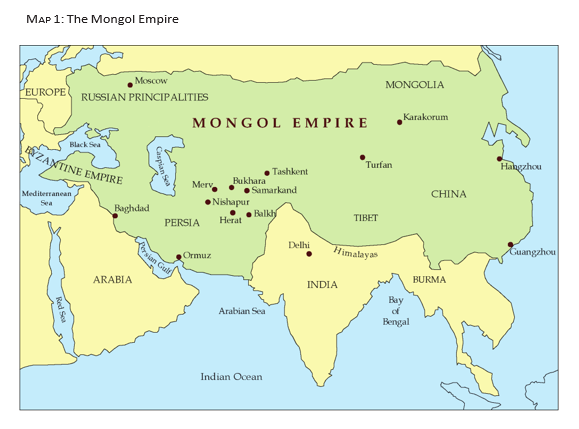
- Mongol example: Under Genghis Khan and his successors, Mongol groups built a transcontinental empire across Europe and Asia during the thirteenth and fourteenth centuries.
- Adaptation: Mongol rulers shaped traditional social and political customs into a powerful military system and sophisticated governance.
- Governing diversity: The empire included varied peoples, economies and religions, so the Mongols innovated and compromised rather than simply imposing steppe traditions.
- Historical impact: Contact with conquered territories changed Mongol society even as Mongol rule affected the history of Eurasia.
| Point | Nomadic communities | Empires |
|---|---|---|
| Typical association | Mobility and family-based organisation | Territorial control and stable administration |
| Mongol reality | Steppe customs remained important | A powerful empire also governed settled regions |
Sources and Interpretations of Mongol History
- Written accounts: Since steppe peoples produced little literature, Mongol history is known mainly through chronicles, travelogues and documents written by city-based authors.
- Bias: Some sedentary writers described nomads as primitive barbarians; accounts by visitors or officials serving Mongol rulers could be more sympathetic, even eulogistic.
- Varied authors: Writers came from Buddhist, Confucian, Christian, Turkish and Muslim backgrounds, and were not always familiar with Mongol customs.
- Russian scholarship: Research grew in the eighteenth and nineteenth centuries as Tsarist rule expanded in Central Asia; much consisted of survey notes by travellers, soldiers, merchants and antiquarian scholars.
- Soviet interpretation: Early twentieth-century Marxist historians argued that the mode of production shaped social relations, placing the Mongols on a transition from tribal to feudal society.
- Boris Yakovlevich Vladimirtsov: Conducted important research on Mongol languages, society and culture.
- Vasily Vladimirovich Bartold: Presented a sympathetic assessment of Mongol achievements; Stalinist censorship curtailed the circulation of his work.
| Evidence | Interpretation | |
|---|---|---|
| Outsider accounts | Chronicles, travelogues and documents by city-based authors | Could be hostile, sympathetic or shaped by unfamiliarity with Mongol customs |
| Soviet scholarship | Studies of Mongol society, language and culture | Often explained society through a tribal-to-feudal evolutionary framework |
Languages and Textual Challenges
- Source languages: The most important sources are in Chinese, Mongolian, Persian and Arabic; significant material also exists in Italian, Latin, French and Russian.
- Different versions: The Mongolian and Chinese versions of *The Secret History of the Mongols* differ; so do the Italian and Latin versions of Marco Polo’s travels.
- Historical method: Historians often need philological skills to interpret phrases and approximate Mongol usage across languages and cultural settings.
- Research examples: Igor de Rachewiltz studied *The Secret History of the Mongols*; Gerhard Doerfer examined Mongol and Turkic terms that entered Persian.
Key Dates and Periods
- Eighth century BCEChinese regimes were already building fortifications against nomadic incursions.
- Third century BCEChinese fortifications began to be linked into a common defensive outwork later known as the Great Wall.
- Fifth centuryAttila formed a confederation whose size was compared with Genghis Khan’s later alliance.
- Early thirteenth centuryGenghis Khan united the Mongols and established a major political power in the Central Asian steppes.
- 1220Genghis Khan captured Bukhara.
- 1227Genghis Khan died.
- 1236–1241Batu’s campaigns devastated Russian lands up to Moscow, seized Poland and Hungary, and camped outside Vienna.
- 1251–1260Mongke, Genghis Khan’s grandson, ruled.
- Eighteenth and nineteenth centuriesRussian scholars produced extensive research and survey notes on Central Asia.
- Early twentieth centurySoviet Marxist historiography interpreted Mongol society through modes of production.
- 1960sBartold’s writings were published in nine volumes during and after the more liberal Khrushchev era.
Genghis Khan and Mongol Expansion
- Unification: In the early thirteenth century, Genghis Khan united the Mongol people and created a powerful political force in the Central Asian steppes.
- Political vision: He claimed a divine mandate from the Eternal Heaven to rule the world, not merely to unite Mongol tribes.
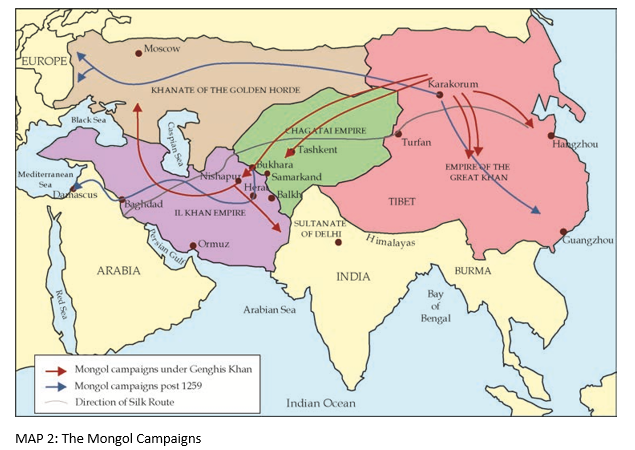
- Campaigns in his lifetime: He consolidated control over the Mongols and led campaigns into north China, Transoxiana, Afghanistan, eastern Iran and the Russian steppes.
- Successors: His descendants travelled farther afield to fulfil his vision and create the largest empire the world had then seen.
- Mongke’s warning: In a message to French ruler Louis IX, Mongke presented world unity under one ruler as the Eternal Heaven’s decree and warned against resistance.
- Batu’s campaigns: In 1236–1241, Batu devastated Russian lands up to Moscow, seized Poland and Hungary, and camped outside Vienna.
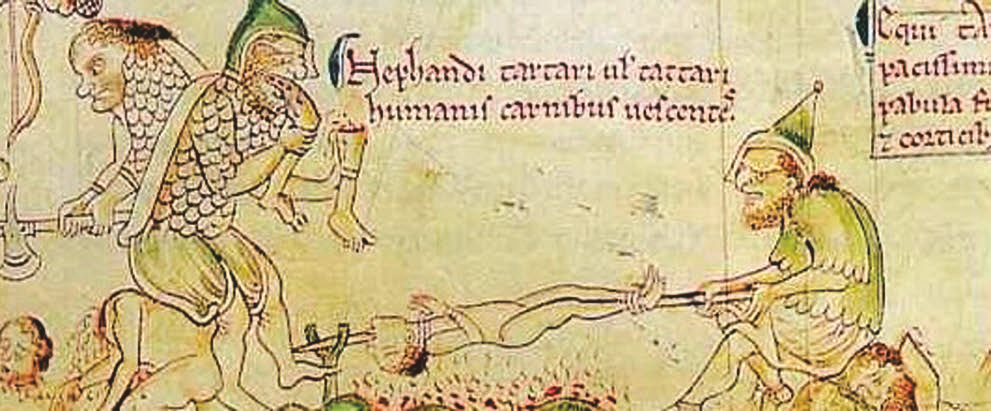
- Contemporary reaction: Conquests across China, the Middle East and Europe were seen by many as the ‘wrath of God’ and the beginning of the Day of Judgement.
The Capture of Bukhara
- Juwaini’s account: The late-thirteenth-century Persian chronicler described Genghis Khan addressing Bukhara’s wealthy residents after the city was conquered in 1220.
- Claim of divine punishment: Genghis Khan reportedly said that he was God’s punishment for the people’s sins.
- A survivor’s report: A man who escaped to Khurasan said the Mongols mined the walls, burnt, killed and plundered, then departed.
- Significance: The account conveys the devastation of conquest and the religious language used to explain Mongol victory.
Mongol Society and Environment
- Peoples and language ties: Mongols were linked by language to the Tatars, Khitan and Manchus to the east, and Turkic tribes to the west.
- Pastoralists: Many Mongols herded horses and sheep, and to a lesser extent cattle, goats and camels, across the Central Asian steppes.
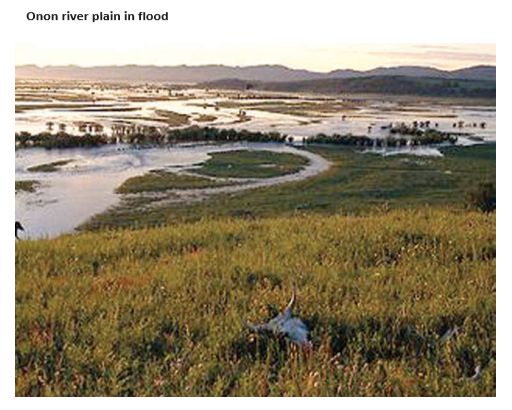
- Landscape: The region included broad plains, the Altai Mountains in the west, the Gobi Desert in the south, and the Onon and Selenga rivers and many springs.
- Hunter-gatherers: They lived north of the pastoralists in Siberian forests and earned a living partly by trading furs from animals trapped in summer.
- Climate and livelihood: The region had harsh, long winters and brief, dry summers. Farming was possible for short periods in pastoral areas, but the Mongols did not take to farming.
- Settlement: Neither pastoralism nor hunting-gathering supported dense settlements; the region had no cities. Mongols lived in tents called gers and moved herds between winter and summer pastures.
Lineages, Resources and Alliances
Patrilineal lineage — A social group whose descent and identity are traced through the male line.
- Unequal resources: Scarcity divided Mongol society into patrilineal lineages; richer families had more animals and pasture, attracted more followers and gained local influence.
- Natural calamities: Harsh winters could exhaust game and stored food; drought could parch grasslands and reduce pasture.
- Competition: Families forced to forage farther afield could come into conflict over pasture and raid for livestock.
- Temporary alliances: Families sometimes joined richer, powerful lineages for defence or raids, but most confederacies were small and short-lived.
- Genghis Khan’s confederation: His alliance of Mongol and Turkish tribes was unusually large, comparable in size only to the confederation formed by Attila in the fifth century.
How Scarcity Shaped Steppe Politics
- Harsh winter or drought
- Pasture, game and stored food become scarce
- Families move farther to find resources
- Competition over pasture and livestock raids increase
- Temporary alliances may form around powerful lineages
A Durable Political System
- Durability: Unlike Attila’s confederation, Genghis Khan’s political system survived its founder.
- Military strength: It could defeat larger armies with superior equipment in China, Iran and eastern Europe.
- New challenge: Mongol rulers then governed agrarian economies and urban settlements far removed from their own steppe experience.
| Point | Nomadic steppe society | Agrarian society |
|---|---|---|
| Economic base | Pastoralism and hunting-gathering | Agriculture and urban economies |
| Settlement | Mobile households; no cities in the Mongol region | Settled communities and cities |
| Trade | Exchanged steppe products with neighbours | Supplied agricultural produce and iron utensils |
| Warfare | Could retreat from conflict zones with marginal losses | Wars could disrupt agriculture and lead to city plunder |
Mongol Relations with China
- Exchange: Chinese agricultural produce and iron utensils were traded for steppe horses, furs and game.
- Tension: Trade benefited both sides, but military pressure could be used to improve terms; when Mongol lineages united, they might abandon trade for plunder.
- Changing influence: When Mongols were divided, the Chinese could assert greater influence in the steppe.
- Unequal effects of war: Frontier conflict disrupted agriculture and plundered cities; nomads could retreat from the conflict zone with relatively marginal losses.
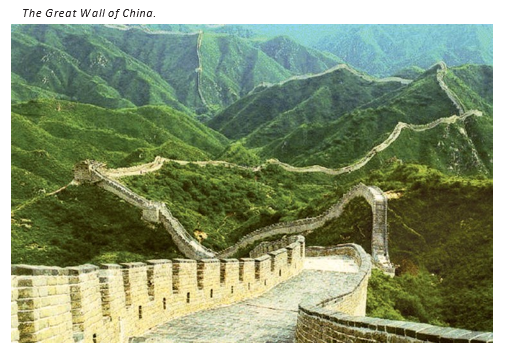
- Fortifications: Chinese regimes built defences against nomadic raids; from the third century BCE these began to be linked into a common defensive outwork known today as the Great Wall of China.
- Ger
- A tent used as a mobile dwelling by Mongol households.
- Pastoralist
- A person who raises livestock and moves to use available pasture.
- Sedentary society
- A settled society based on agriculture, towns or cities.
- Confederacy
- An alliance of groups formed for shared political or military purposes.
- Mode of production
- The way a society organises production and economic life.
Why does the term “nomadic empire” seem contradictory?
What sources do historians use to study Mongol society, and what problems do they pose?
How did environmental conditions shape Mongol social and political life?
Quick recap
- The Mongols combined steppe traditions with military and governing systems to build a vast, durable empire.
- Mongol history depends largely on outsider accounts in many languages, requiring careful comparison and interpretation.
- Genghis Khan united the Mongols, claimed a mandate from the Eternal Heaven and launched campaigns that his successors expanded.
- Pastoralism, hunting-gathering, harsh climate and scarce resources shaped mobility, inequality, conflict and alliances.
- Mongols did not take to farming, although farming was possible for short periods in pastoral regions.
- Mongols traded and fought with settled neighbours; Chinese fortifications, later linked as the Great Wall, reflected nomadic raids.
The Career of Genghis Khan
Temujin’s Early Life and Rise
Early life and alliances
- Birth and family: Temujin was born near the Onon River in northern Mongolia around 1162; the lecture’s chronology also gives c. 1167. His father, Yesugei, led the Kiyat, a group related to the Borjigid clan.
- Hardship: After Yesugei was murdered, Temujin’s mother Oelun-eke raised him and his brothers in hardship. Temujin was later captured and enslaved; soon after his marriage, his wife Borte was kidnapped.
- Allies: Boghurchu became Temujin’s first ally and trusted friend. Jamuqa was his anda (blood-brother), while Tughril, ruler of the Kereyits, renewed an old alliance with Temujin.
- Rivalries: During the 1180s and 1190s, Temujin allied with Tughril/Ong Khan and fought powerful rivals, including Jamuqa, who had become an enemy.
Unification and the Title of Genghis Khan
Consolidating steppe power
- Expansion of power: After defeating Jamuqa, Temujin moved against the Tatars, whose people had killed his father, and later against the Kereyits and Ong Khan in 1203.
- Final victories: By 1206, Temujin had defeated the Naiman and Jamuqa, becoming the dominant leader of the steppe.
- Quriltai: At an assembly of Mongol chieftains in 1206, Temujin was proclaimed Great Khan (Qa’an) and given the title Genghis Khan, meaning “Oceanic Khan” or “Universal Ruler.”
- Military reorganisation: Before the 1206 assembly, Genghis Khan reorganised the Mongols into a more disciplined and effective military force, supporting later campaigns.
Conquests under Genghis Khan
| Region or opponent | Campaign and outcome |
|---|---|
| China | China was divided among the Hsi Hsia in the north-west, the Jurchen Chin dynasty in the north (based at Peking), and the Sung dynasty in the south. |
| Hsi Hsia and Chin | The Hsi Hsia were defeated by 1209. The Great Wall was breached in 1213 and Peking was sacked in 1215; fighting against the Chin continued until 1234. |
| Return to Mongolia | Genghis Khan returned to Mongolia in 1216, leaving regional military affairs to his subordinates. |
| Qara Khita | After their defeat in 1218, Mongol dominions reached the Amu Darya and the states of Transoxiana and Khwarazm. |
| Khwarazm | Sultan Muhammad provoked Genghis Khan by executing Mongol envoys. Between 1219 and 1221, Mongols captured major cities, including Otrar, Bukhara, Samarqand, Balkh, Gurganj, Merv, Nishapur and Herat. |
Resistance and destruction
- Cities that surrendered came under Mongol control.
- Towns that resisted were devastated.
- At Nishapur, a Mongol prince was killed during the siege; Genghis Khan then ordered the city destroyed so completely that the site could be ploughed.
| Place | Reported toll |
|---|---|
| Nishapur (1220) | 1,747,000 |
| Herat (1222) | 1,600,000 |
| Baghdad (1258) | 800,000 |
| Nasa and Baihaq district | 70,000 each |
| Tun, Kuhistan | 12,000 executed |
How chroniclers produced casualty figures
- Reported totals: Chroniclers gave enormous figures for deaths following the capture of cities that resisted Mongol authority.
- Juwaini’s account: The Persian chronicler said 1,300,000 people died at Merv because counting the dead allegedly took 13 days, at 100,000 bodies per day.
Campaigns towards the west and south
- Western pursuit: Mongol forces pursued Sultan Muhammad into Azerbaijan, defeated Russian forces in Crimea and travelled around the Caspian Sea.
- Southern pursuit: Another army followed Jalaluddin, the Sultan’s son, into Afghanistan and Sindh.
- Indus frontier: At the Indus, Genghis Khan considered returning through North India and Assam. Heat, unfamiliar natural conditions and warnings from his shaman led him to change his plan.
- Death: Genghis Khan died in 1227 after spending much of his life in military campaigns.
Mongol Military Strength
Methods and innovations
- Mobility: Mongol and Turkish horse-riding skills made the army fast and mobile; steppe cavalry travelled light and used its knowledge of terrain and weather.
- Mounted archery: Archers could shoot rapidly from horseback. Regular hunts also trained them and served as field manoeuvres.
- Winter warfare: Campaigns could continue in deep winter; frozen rivers became routes to enemy cities and camps.
- Siege warfare: Genghis Khan adopted siege engines and naphtha bombardment to overcome fortified positions. Engineers made light, portable equipment for these attacks.
Mongol Rule after Genghis Khan
| Phase | Main campaigns and results |
|---|---|
| 1236–1242 | Batu led campaigns through the Russian steppes, Bulghar, Kiev, Poland and Hungary. |
| 1255–1300 | Mongol campaigns conquered China, Iran, Iraq and Syria; China was reunited under Mongol rule in 1279. |
Succession, fragmentation and the end of western expansion
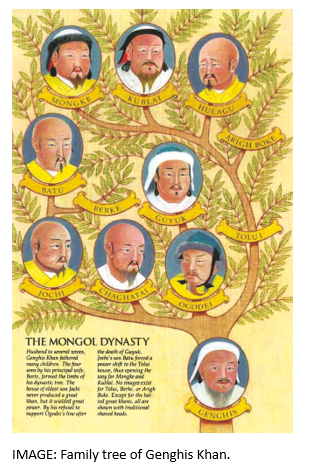
- Early unity: The Great Khans who followed Genghis Khan maintained Mongol unity for a time, but rival family lineages competed for succession.
- Dynastic politics: In the first generations, Jochi and Ogodei descendants allied over the Great Khan’s office; succession struggles mattered more than continuing European campaigns.
- Toluyid priorities: Under Mongke, a Toluyid, campaigns in Iran gained energy in the 1250s. In the 1260s, Toluyid attention shifted increasingly to conquering China, drawing troops and supplies east.
- Western defeat: Mongols retreated from the Hungarian steppes and were defeated by Egyptian forces. A small, understaffed Mongol force contributed to the defeat.
- Further constraint: Conflict between Jochid and Toluyid descendants along the Russian–Iranian frontier diverted Jochid forces from Europe. Western expansion stalled after the 1260s, while campaigns in China continued.
| Lineage | Territories and later development |
|---|---|
| Toluyid | Ruled China through the Yuan dynasty and Iran through the Il-Khanid state. |
| Chaghataid | Ruled the steppes north of Transoxiana and the region called Turkistan. |
| Jochid | Ruled the Russian steppes; observers called their realm the Golden Horde. |
| Ogodei | The lineage was defeated and absorbed into the Toluyid branch. |
Genghis Khan and the Mongol successor states
- c. 1162Temujin was born near the Onon River; the lecture’s chronology also gives c. 1167.
- 1160s–1170sTemujin experienced slavery and hardship.
- 1180s–1190sTemujin formed alliances and fought rivals.
- 1203Temujin defeated the Kereyits and Ong Khan.
- 1206A quriltai proclaimed Temujin Genghis Khan, Great Khan of the Mongols.
- 1209The Hsi Hsia were defeated.
- 1213Mongol forces breached the Great Wall of China.
- 1215Peking was sacked.
- 1216Genghis Khan returned to Mongolia.
- 1218The Qara Khita were defeated.
- 1219–1221Mongols campaigned in Khwarazm and captured major cities.
- 1227Genghis Khan died; the period of the Great Khans continued to 1260.
- 1227–1241Ogodei, son of Genghis Khan, ruled as Great Khan.
- 1236–1242Batu led campaigns in Russia, Hungary, Poland and Austria.
- 1246–1249Guyuk, son of Ogodei, ruled as Great Khan.
- 1251–1260Mongke, son of Toluy, ruled as Great Khan.
- 1253–1255Mongke began fresh campaigns in Iran and China.
- 1257–1267Berke, Batu’s son, ruled the Golden Horde; it shifted from Nestorian Christianity towards Islam. Its definitive conversion came only in the 1350s, and an alliance with Egypt against the Il-Khans began.
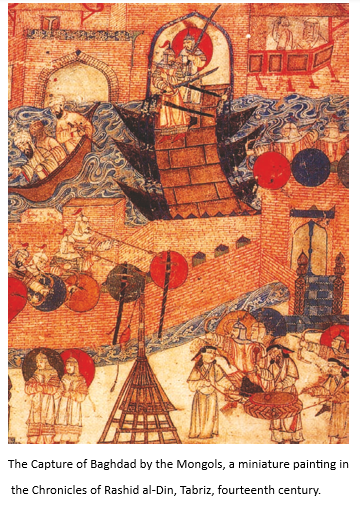
- 1258Baghdad was captured, ending the Abbasid caliphate; Hulegu established the Il-Khanid state in Iran, and conflict between Jochids and Il-Khans began.
- 1260Qubilai Khan became Grand Khan in Peking. Conflict among Genghis Khan’s descendants fragmented the realm into lineages.
- 1279Mongol rule reunited all of China.
- 1295–1304Il-Khanid ruler Ghazan Khan converted from Buddhism to Islam; other Il-Khanid chieftains gradually followed.
- 1368The Yuan dynasty in China ended.
- 1370–1405Timur, a Barlas Turk claiming Chaghataid and Genghis Khanid descent, built a steppe empire and adopted the title Guregen (“royal son-in-law”) by marrying a Genghis Khanid princess.
- 1495–1530Babur, descendant of Timur and Genghis Khan, lost Ferghana and Samarqand, captured Kabul, and seized Delhi and Agra in 1526 to found the Mughal Empire.
- 1500Shaybani Khan, a Jochid descendant, captured Transoxiana and strengthened Shaybanid (Uzbeg) rule, expelling Babur and other Timurids.
- 1759The Manchus of China conquered Mongolia.
- 1921The Republic of Mongolia was established.
- Quriltai
- Assembly of Mongol chieftains.
- Qa’an
- Great Khan; supreme Mongol ruler.
- Anda
- Blood-brother or sworn brother.
- Golden Horde
- Name used by observers for the Jochid realm in the Russian steppes.
What factors made the Mongol army effective under Genghis Khan?
Why did Mongol expansion in the West slow after the 1260s?
Quick recap
- Temujin rose from hardship through alliances, military victories and the defeat of rival steppe groups.
- In 1206, a quriltai proclaimed him Genghis Khan, Great Khan of the Mongols.
- His campaigns reached China, Central Asia, Khwarazm and the Indus frontier; towns that resisted were devastated.
- Mongol military power relied on mobility, mounted archery, winter campaigning and portable siege technology.
- After 1236, expansion spread west and into China, but succession disputes and shifting Toluyid priorities weakened western campaigns.
- The Mongol realm fragmented into Toluyid, Chaghataid and Jochid lineages, which developed into distinct successor states.
Social, Political and Military Organisation & Conclusion
Building a Mongol Army and New Social Order
Army and confederacy
- Military service: Able-bodied adult Mongol men could be called to arms; campaigns brought new peoples into Genghis Khan’s army.
- Diverse membership: The army included willing allies such as Turkic Uighurs and defeated groups such as the Kereyits.
- Breaking tribal loyalties: Genghis Khan split older tribal groups and reassigned people to new units; moving between units without permission was harshly punished.
- New identity: Units mixed people from different clans and tribes, weakening old loyalties and creating a shared identity linked to Genghis Khan.
| Unit | Approximate size | Key point |
|---|---|---|
| Ten | 10 soldiers | Part of the decimal structure |
| Hundred | 100 soldiers | Part of the decimal structure |
| Thousand | 1,000 soldiers | Part of the decimal structure |
| Tuman | 10,000 soldiers | Largest unit; drew people from different tribes and clans |
Ranks and loyalty
- Noyan: Specially chosen captains commanded military units; contingents also served under Genghis Khan’s four sons.
- Anda: A publicly honoured ‘blood-brother’ of Genghis Khan, recognised for loyal service.
- Naukar: A freeman of humbler rank given a special position as the Khan’s bondsman and close follower.
- New aristocracy: Status came from personal ties to the Great Khan, not from the rights of former clan chiefs.
Rule of the Empire and Communication
| Son | Lands or role |
|---|---|
| Jochi | Russian steppes; the western boundary was uncertain and extended as far as his horses could roam |
| Chaghatai | Transoxiana and lands north of the Pamir Mountains |
| Ogodei | Chosen successor as Great Khan; established the capital at Karakorum |
| Toluy | Ancestral Mongolian lands |
Shared rule and administration
- Ulus: Originally a share of people and dominion, not a fixed territory; its boundaries remained fluid during rapid expansion.
- Collective rule: Genghis Khan expected his sons to share the empire; each prince’s military contingent, called a tama, was placed in every ulus.
- Quriltai: Assembly of chieftains where decisions on campaigns, plunder, pasture lands and succession were made collectively.
- Courier network: The yam used relay outposts, fresh mounts and dispatch riders to connect distant parts of the empire.
- Qubcur tax: Nomads contributed one-tenth of their herd—horses or other livestock—to maintain the courier system.
- Safe travel and trade: Travellers carried a paiza (Persian) or gerege (Mongolian); traders paid the baj tax, acknowledging Mongol authority.
Conquest, Trade and Sedentary Societies
Effects of conquest
- Mongol campaigns → cities destroyed, farmland laid waste, and trade and craft production disrupted.
- Mass killing and enslavement → elites and ordinary people across conquered societies suffered.
- Neglect of qanats, underground irrigation canals in the arid Iranian plateau → canals fell into disrepair and desert spread.
- Environmental damage → parts of Khurasan suffered ecological devastation from which they never recovered.
Pax Mongolica and trade
- Pax Mongolica: The peace established after conquest connected Europe and China and encouraged trade and travel.
- Silk Route: Commerce reached its peak under Mongol rule; routes continued north through Mongolia to Karakorum rather than ending in China.
- Imperial control: The yam, travel passes and taxes helped the Great Khans monitor distant regions and secure movement across the empire.
| Point | Pastoral interests | Peasant interests |
|---|---|---|
| Land use | Pasture for herds; some leaders favoured turning fields into grazing land | Cultivated fields and crops had to be protected |
| Immediate gain | Pillaging could provide food and wealth | Oxen, seed and crops were essential for farming |
| Long-term need | Sustained supplies depended on settled production | Peasants needed security and functioning farms to produce grain |
Changing policies and administrators
- Shift in policy: In the 1230s, some Mongol leaders advocated killing peasants and converting fields to pasture; by the 1270s, Qubilai Khan presented himself as protector of peasants and cities.
- Ghazan Khan: In the 1290s, he warned commanders not to pillage peasants, because destroying oxen, seed and crops threatened future food supplies; rebels and obedient peasants should be distinguished.
- Civil administrators: Mongol rulers recruited officials from conquered societies and sometimes moved them between regions, including Chinese secretaries in Iran and Persians in China.
- Examples: Yeh-lu Ch’u-ts’ai restrained some of Ogodei’s predatory policies; the Juwaini family served in Iran; Rashiduddin drafted Ghazan’s speech.
- Why officials were trusted: Their expertise helped govern distant lands and limit predation; Mongol rulers relied on them while they continued to raise revenue.
From Shared Empire to Separate Dynasties
Fragmentation and sedentarisation
- Changing ulus: By the mid-thirteenth century, a shared family patrimony increasingly became separate territorial dynasties.
- Causes: Succession struggles and competition among Genghis Khan’s descendants for the Great Khan’s office and valuable pasture lands encouraged division.
- Toluy’s descendants: Ruled China and Iran, forming the Yuan and Il-Khanid dynasties.
- Jochi’s descendants: Formed the Golden Horde, ruling the Russian steppes.
- Chaghatai’s descendants: Ruled Transoxiana and the region later called Turkistan; nomadic traditions lasted longest among them and the Golden Horde.
How historical accounts reshaped the past
- Separate dynasties and rival lineages → competing accounts of family history.
- Toluyid control of China and Iran → access to many literati and greater influence over written histories.
- Sedentary audiences and new rulers → chronicles emphasised the contrast between present rulers and past monarchs.
- Il-Khanid chronicles → exaggerated killings attributed to Genghis Khan while also suggesting that the era of mass killing had ended.
Chronicle example
- Bukhara: An eyewitness account said 400 soldiers defended its citadel; an Il-Khanid chronicle claimed 30,000 were killed in the attack.
- Significance: Such accounts still praised Genghis Khan but presented changing times and helped descendants appear as credible rulers to sedentary subjects.
Yasa: Law and Mongol Identity
| Point | Yasaq | Yasa |
|---|---|---|
| Meaning | An early term meaning law, decree or order | By the mid-thirteenth century, a general term for Genghis Khan’s legal code |
| Known contents | Administrative rules concerning the hunt, army and postal system | A claimed authoritative code associated with Genghis Khan |
| Role | Practical regulations | A shared source of identity and legitimacy for Mongols ruling diverse, urban societies |
Origins and purpose of the yasa
- Origins: The yasa was probably a compilation of customary Mongol traditions; its attribution to Genghis Khan gave it the authority of an ancestral law.
- Context: Mongols were a numerical minority ruling sophisticated societies with established histories, cultures and laws.
- Purpose: The yasa strengthened unity, affirmed ties to Genghis Khan’s descendants and helped Mongols retain a distinct identity.
- Political force: Presenting it as a sacred, authoritative code allowed Mongol rulers to claim the right to impose their law on conquered peoples.
- Important qualification: Genghis Khan may not have planned a single comprehensive legal code; later generations shaped the memory and meaning of the yasa.
Yasa and later rulers
- Genghis Khan at Bukhara: After its conquest, he admonished wealthy Muslim residents at the festival ground and demanded that they surrender hidden wealth.
- ‘Abdullah Khan: In the late sixteenth century, this Jochid descendant went to the same ground to perform Muslim holiday prayers.
- Chronicler’s claim: Hafiz-i Tanish said the prayer was ‘according to the yasa of Genghis Khan’, showing how later rulers could connect their actions and authority to the founder’s legacy.
Genghis Khan and the Mongols in World History
| Point | Conquered peoples’ view | Mongol view |
|---|---|---|
| Genghis Khan | Destroyer of cities and cause of mass death | Leader who united the Mongols and ended tribal conflict and Chinese exploitation |
| Empire | Conquest brought fear and destruction | A source of prosperity, restored trade routes and a vast transcontinental dominion |
| Historical perspective | Accounts often reflect the suffering of defeated sedentary communities | Mongol memories emphasise unity, achievement and the founder’s legacy |
Pluralism and legacy
- Religious diversity: Mongol Khans followed Shamanism, Buddhism, Christianity and eventually Islam, but did not let personal faith dictate public policy.
- Multiethnic rule: The empire recruited administrators and soldiers from many ethnic and religious groups, creating a multiethnic, multilingual and multi-religious regime.
- Political influence: Mongol rule offered models that later empires, including the Mughals of India, could draw upon.
- Timur: In the fourteenth century, he hesitated to claim kingship because he was not descended from Genghis Khan; he presented himself as a Genghis Khanid son-in-law, or guregen.
- Modern Mongolia: After decades of Soviet control, independent Mongolia revived Genghis Khan as a national hero and symbol of identity and shared historical memory.
Key dates and periods
- 1206The quriltai at which Genghis Khan was said to have promulgated the yasa.
- 1221After conquering Bukhara, Genghis Khan admonished wealthy residents at its festival ground.
- 1230sSome Mongol leaders advocated converting North China’s peasant lands to pasture; Yeh-lu Ch’u-ts’ai restrained some of Ogodei’s rapacious policies.
- Mid-thirteenth centuryThe Mongols increasingly used yasa to mean Genghis Khan’s legal code; separate dynasties began replacing the idea of shared family rule.
- 1270sAfter South China was annexed, Qubilai Khan appeared as a protector of peasants and cities.
- 1290sGhazan Khan warned Mongol commanders to protect peasantry and avoid destructive pillaging.
- 1295–1304Ghazan Khan ruled as Il-Khanid ruler and became the first Il-Khanid ruler to convert to Islam.
- Late thirteenth centuryIl-Khanid chronicles presented accounts of Genghis Khan’s conquests and killings for new sedentary audiences.
- Fourteenth centuryTimur sought universal dominion but grounded his claim in his relationship as a Genghis Khanid son-in-law.
- Late sixteenth century‘Abdullah Khan prayed at Bukhara’s festival ground; his chronicler linked the act to Genghis Khan’s yasa.
- Tuman
- A military unit of approximately 10,000 soldiers, assembled from different tribes and clans.
- Ulus
- A share of people and dominion; later, a territorial domain ruled by a dynasty.
- Yam
- The Mongol relay courier and communication network.
- Quriltai
- An assembly of chieftains that made collective decisions on state and family matters.
- Yasa
- A later general term for Genghis Khan’s legal code, associated with Mongol identity and authority.
- Pax Mongolica
- The peace under Mongol rule that supported travel and trade across the empire.
How did Genghis Khan reorganise the Mongol army and society?
Why did the yasa become important to the Mongols?
How did Mongol rule affect trade and conquered societies?
Quick recap
- Army: Decimal units mixed different tribes, while the Khan’s personal followers formed a new elite.
- Government: The four sons received ulus; quriltais supported collective decisions, and yam couriers connected the empire.
- Trade: Pax Mongolica expanded Silk Route travel, supported by passes, taxes and communication networks.
- Conquest and settlement: Campaigns caused severe destruction, but later rulers and administrators increasingly protected peasant production.
- Dynasties and yasa: Shared rule gave way to separate dynasties; yasa developed into a powerful symbol of Mongol law and identity.
- Legacy: Mongol history has contrasting perspectives, and Genghis Khan remained a source of authority and national identity.