Class 11 Humanities . History . Themes In World History . Paths to Modernisation
Chapter 7: PATHS TO MODERNISATION
Ch 7
History
Class 11 Humanities
Introduction & Japan
East Asia and Modernisation
- East Asian contrast: At the start of the nineteenth century, Qing China seemed powerful while Japan appeared isolated.
- Divergent outcomes: Japan built an industrial nation and empire, while China faced foreign control, political turmoil and revolution.
Sources and Scholarship on China and Japan
Naito Konan — A Japanese scholar of China who used Western historiographical methods and argued that republican government could weaken aristocratic and centralised power and revitalise local society.
China and Japan: Physical and Cultural Features
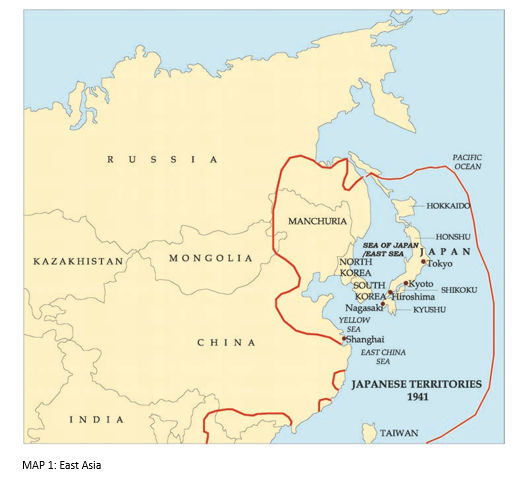
Japan — Japan is an island country whose geography shaped settlement, food and building practices.
Japan under the Tokugawa Shogunate
Changes in Japan before the Meiji Restoration
- Late sixteenth centuryPeasants were disarmed, daimyo were required to live in their domain capitals, and land surveys identified owners, taxpayers and land productivity.
- 1603–1867The Tokugawa family held the shogunate.
- Mid-seventeenth centuryEdo became the world’s most populated city; Osaka, Kyoto and several castle-towns also grew.
- 1713An order encouraged domestic yarn in Nishijin’s silk industry.
- 1859Foreign trade began, and silk exports became an important source of profit.
Tokugawa-era social and economic change
- Disarmament of peasants and land surveys → greater peace, order and a stable revenue base.
- Daimyo capitals and growing cities → commercial activity, financial and credit systems, and a larger urban population.
- Commercial growth → merit became more important alongside inherited status; merchants supported theatre and the arts.
- Popular reading and woodblock printing → writers could earn a living through writing, and books could be rented cheaply in Edo.
- Costly imports of Chinese silk and Indian textiles → precious-metal exports were restricted and domestic silk production was encouraged.
- Nishijin silk production → regional entrepreneurs grew in influence and Japan gained a profitable export after foreign trade began.
Culture and Identity before the Meiji Restoration
- Cities and culture: Edo, Osaka and Kyoto supported a vibrant urban culture, including theatre and arts patronised by merchants.
- Nishijin: Kyoto’s weaving community expanded from 31 households in the sixteenth century to over 70,000 people by the late seventeenth century. It specialised in high-quality, expensive silk.
- National identity: Study of ancient Japanese literature led some to question Chinese cultural influence and locate Japanese identity in earlier classics and origin myths.
- Tale of the Genji: Murasaki Shikibu’s fictionalised account of Heian court life became a central work of Japanese fiction. It depicts Prince Genji and women’s independence in choosing husbands and living their lives.
- Writing: Women such as Murasaki wrote in Japanese script, while men used Chinese script for education and government.
The Meiji Restoration and Opening of Japan
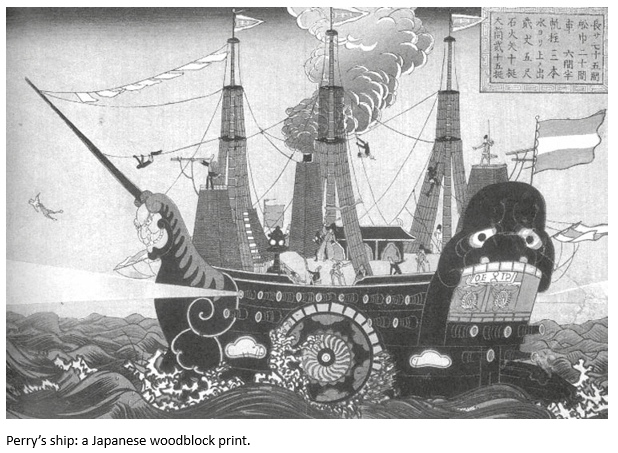
Meiji-era reforms and expansion
- 1853Commodore Perry arrived to demand trade and diplomatic relations.
- 1854Japan agreed to a treaty opening relations.
- 1868The shogun was removed; the emperor was brought to Edo, which became Tokyo.
- 1869The Meiji government created a bureau to collect records and write its account of the Restoration.
- From the 1870sA compulsory school system was built for boys and girls; by 1910 schooling was almost universal.
- 1880sA completely phonetic script or adoption of a European language was proposed, but neither was adopted.
- 1890The Imperial Rescript on Education urged learning, public good and common interests.
- 1894; 1895; 1905; 1910Japan defeated China (1894), incorporated Taiwan (1895), defeated Russia (1905) and incorporated Korea (1910).
Building a Modern Nation-State
Japanese writing system — Japanese writing combines Chinese-derived characters with two phonetic syllabaries: hiragana and katakana.
Centralisation, Military Power and Political Tensions
- Redrawn village and domain boundaries → local administrative units could support schools, health facilities and military recruitment.
- National integration → all young men over twenty had to complete a period of military service, and a modern army was built.
- State control → laws regulated political groups and meetings and imposed strict censorship.
- Direct imperial command → the military and bureaucracy remained outside government control even after a constitution was enacted.
- Conflict between ideals → democratic demands clashed with the army’s drive for territory; wars and colonial rule limited democracy and provoked conflict with colonised peoples.
Do not describe Japan as completely closed before Perry: it participated in East Asian trade and accessed wider knowledge through the Dutch and Chinese.
- Shogun
- Military ruler who governed Japan in the emperor’s name.
- Daimyo
- Lord who ruled one of Japan’s domains.
- Samurai
- Warrior class that served the shoguns and daimyo.
- Meiji Restoration
- The 1868 removal of the shogun and restoration of the emperor’s central role.
- Emperor system
- The power structure involving the emperor, bureaucracy and military.
- Fukoku kyohei
- “Rich country, strong army,” the Meiji modernisation goal.
What were the main features of Tokugawa rule and its effect on Japan?
Why did the Meiji government adopt the slogan “rich country, strong army”?
What tension shaped Japan’s modern political development?
Quick recap
- East Asia: China faced political breakdown and later market reforms, while Japan modernised rapidly and built an empire.
- Sources: Official records, literature, travel accounts and modern scholarship help reconstruct East Asian history.
- Tokugawa Japan: Shogunate rule, urban growth and commercial change fostered a dynamic society before the Meiji era.
- Meiji Restoration: Perry’s arrival and fear of colonisation preceded the restoration of the emperor in 1868.
- Nation-building: The Meiji state used education, conscription and central administration to build national strength.
- Political tension: Economic and military modernisation coexisted with limited democracy, imperial expansion and colonial conflict.
Modernising the Economy
Economic Modernisation
- State-led development: Meiji Japan used agricultural taxes to fund modern infrastructure and industry, including railways, textile production and banking.
- Industrial support: Foreign experts and overseas study helped transfer technology, while subsidies and tax benefits supported major firms such as Mitsubishi and Sumitomo.
Population, Migration and Urbanisation
- Population growth: Japan’s population rose from 35 million in 1872 to 55 million in 1920.
- Migration and urbanisation: The government encouraged migration to Hokkaido and overseas; as industry expanded, the urban population grew from 21% in 1925 to 32% in 1935.
Industrial Workers and Factories
- Growing workforce: Manufacturing employment rose from 700,000 in 1870 to 4 million in 1913; more than half of modern factory workers were women.
- Factory structure: Many workers remained in very small workshops, though the number of large factories increased substantially from 1909 to the 1930s.
Industrial Pollution and Protest
- Industrial damage: Rapid, poorly regulated growth and demand for resources caused environmental destruction and pollution.
- Tanaka Shozo’s protest: In 1897, he and 800 villagers protested pollution from the Ashio Mine; their agitation forced the company to take pollution-control measures.
Aggressive Nationalism and Military Power
- Military influence: From 1890, the emperor’s command of the armed forces was interpreted as giving the army and navy independent control.
- Expansion and dissent: Military strength and colonial expansion were justified by fear of Western powers, while that fear was also used to silence opposition and support higher military taxes.
Westernisation, Tradition and Political Ideas
- Zaibatsu
- Large business organisations controlled by individual families.
- Diet
- Japan’s parliament, established under the Meiji Constitution with limited powers.
- Restricted franchise
- A limited right to vote, rather than voting rights for the whole population.
- Popular Rights Movement
- A movement that demanded constitutional government.
How did the Japanese government promote economic modernisation?
How did industrialisation affect Japanese workers and the environment?
How did military power and intellectual debates shape modern Japan?
Quick recap
- Agricultural taxes and state support helped build Japan’s transport, banking and industrial capacity.
- Population growth prompted government-backed migration, while industrialisation encouraged urbanisation.
- Manufacturing expanded, but small workshops stayed common; women were central to modern factory work and early labour protest.
- Industrial pollution damaged farmland, and Tanaka Shozo’s agitation helped force corrective measures.
- The Meiji political system restricted representation while increasing the military’s influence.
- Japanese thinkers debated Westernisation, indigenous values, constitutional government and democracy.
Daily Life & Overcoming Modernity
Daily Life in Modern Japan
Patriarchal household — A multigenerational family living together under the authority of the head of the house.
Changing Homes and Domestic Life
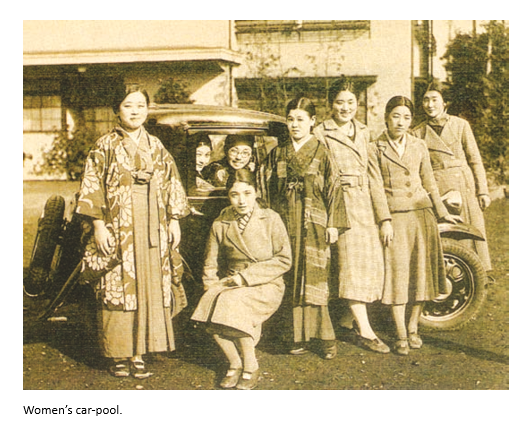
- Family change: As affluence grew, the nuclear family spread, with the husband as breadwinner and the wife as homemaker; the Japanese called the new home homu.
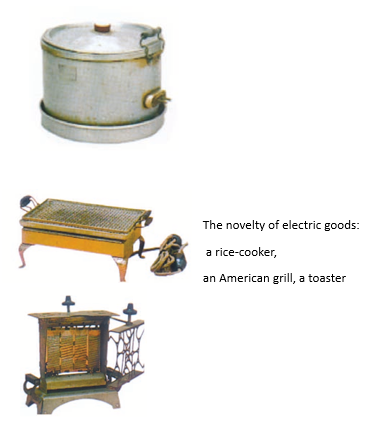
- New domesticity: New family life created demand for household goods, family entertainment and different forms of housing.
- Affordable housing: In the 1920s, housing was offered with a 200-yen down payment and monthly instalments of 12 yen for ten years; a bank employee earned about 40 yen per month.
- Moga
- Short for “modern girl”; represented gender equality, cosmopolitan culture and a developed economy.
- Ginbura
- A blend of “Ginza” and “burbura,” meaning to stroll aimlessly in Tokyo’s fashionable Ginza district.
- Matsui Sumako
- Actress who became a national star for playing Nora in Ibsen’s A Doll’s House.
Leisure and Popular Culture
- Urban amenities: Electric trams improved transport; public parks opened from 1878, and department stores were built.
- Ginza: The fashionable Tokyo district became a place for Ginbura—walking aimlessly and enjoying urban life.
- Radio and film: Japan’s first radio stations opened in 1925; films began in 1899, and soon about a dozen companies made hundreds of films.
- Social change: New lifestyles and entertainment reflected a period of vitality and questioning of traditional social and political behaviour.
Overcoming Modernity
Nationalism, War and Social Control
- Imperial expansion: State-centred nationalism grew in the 1930s and 1940s as Japan launched wars to expand its empire in China and elsewhere in Asia.
- Second World War: Japan’s attack on the USA at Pearl Harbor brought its wars into the wider Second World War.
- Control at home: The state increased its control over society, repressing and imprisoning dissidents; patriotic organisations, including many women’s groups, supported the war.
| Thinker | Argument |
|---|---|
| Moroi Saburo | Asked how music could be rescued from mere sensory stimulation and restored as an art of the spirit. He did not reject Western music, but sought an approach beyond simply playing Japanese music on Western instruments. |
| Nishitani Keiji | Defined modernity as the unity of the Renaissance, Protestant Reformation and natural sciences. He argued that Japan’s “moral energy” had helped it escape colonisation and that it should establish a Greater East Asia order through a vision integrating science and religion. |
The Symposium’s Central Dilemma
- Question: How could Japan combat the West while remaining modern?
- Moral energy: Nishitani used a term borrowed from German philosopher Ranke to explain Japan’s escape from colonisation.
- Proposed vision: Nishitani called for a new world order in Greater East Asia, integrating science and religion.
Defeat, Occupation and Reconstruction
Defeat and the Post-war Occupation
- End of empire: Japan’s attempt to build a colonial empire ended in defeat by the Allied forces.
- Atomic bombings: The bombs dropped on Hiroshima and Nagasaki are viewed by some as a way to shorten the war; others argue the immense destruction and suffering were unnecessary.
- Occupation: Under the US-led Occupation (1945–47), Japan was demilitarised and a new constitution was introduced.
- Article 9: The “no war” clause renounced the use of war as an instrument of state policy.
- Other reforms: Agrarian reform, the re-establishment of trade unions, efforts to dismantle the zaibatsu, and the revival of political parties took place.
- Women’s voting rights: Women voted for the first time in the first post-war election, held in 1946.
- Article 9
- The constitutional clause renouncing war as an instrument of state policy.
- Zaibatsu
- Large monopoly houses that dominated the Japanese economy.
- Post-war miracle
- The rapid rebuilding and growth of Japan’s economy after its defeat.
- Shinkansen
- Japan’s high-speed bullet-train network, a symbol of advanced technology.
Factors Behind Japan’s Economic Recovery
- A long history of popular struggles and intellectual engagement with widening political participation
- → Strengthened social cohesion and close cooperation among government, bureaucracy and industry
- → US support and demand created by the Korean and Vietnamese wars
- → Rapid post-war economic rebuilding and growth
Economic Growth and Technology
- Post-war “miracle”: Japan’s rapid recovery was rooted not only in post-war changes but also in its longer history and traditions of political participation.
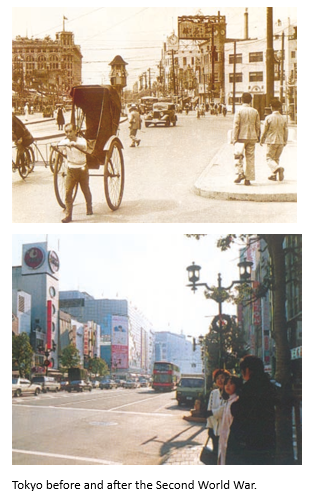
- 1964 Olympics: Tokyo’s hosting of the Olympics symbolised Japan’s coming of age.
- Shinkansen: The bullet-train network began in 1964; its speed and technology came to represent Japan’s capacity to produce better and cheaper goods.
- Speed: The trains initially ran at 200 miles per hour; the text gives their later speed as 300 miles per hour.
Industrialisation and Environmental Challenges
Pollution, Public Pressure and Government Action
- Industrialisation proceeded with little regard for health and the environment
- → Cadmium poisoning caused a painful disease; mercury poisoning occurred in Minamata in the 1960s, and air pollution became a problem in the early 1970s
- → Grass-roots movements demanded recognition of pollution and compensation for victims
- → Government action and new legal regulations helped improve conditions
Environmental Policy and Japan’s Continuing Challenge
- From the mid-1980s: Interest in environmental issues declined as Japan enacted some of the world’s strictest environmental controls.
- Ongoing challenge: Japan must use its political and technological capabilities to maintain its position as a leading world power.
Key Dates and Periods
- From 1878Public parks began opening.
- 1899Films began to be made in Japan.
- 1920sNew nuclear-family lifestyles and affordable housing schemes spread.
- 1925Japan’s first radio stations opened.
- 1930s–1940sState-centred nationalism and imperial expansion intensified.
- 1943The “Overcoming Modernity” symposium debated how Japan could resist the West while remaining modern.
- 1945–1947The US-led Occupation brought demilitarisation and major reforms.
- 1946The first post-war election was held; women voted for the first time.
- 1960sCivil society movements grew amid industrial pollution, including mercury poisoning in Minamata.
- 1964Tokyo hosted the Olympics and the Shinkansen network began.
- Early 1970sAir pollution problems became a major concern.
- Mid-1980s onwardInterest in environmental issues declined as strict controls were enacted.
What did Article 9 provide, and what other major reforms took place during the Occupation?
What did the 1943 symposium debate about “overcoming modernity”?
What factors supported Japan’s post-war economic recovery?
Quick recap
- Modernisation reshaped Japanese family life, housing, household goods and urban leisure.
- Moga and new forms of entertainment reflected changing social norms and cosmopolitan culture.
- The 1943 symposium debated how Japan could resist the West while remaining modern.
- Japan’s colonial ambitions ended with Allied defeat; Occupation reforms included demilitarisation and Article 9.
- Social cohesion, historical political engagement, US support and wartime demand helped power economic recovery.
- Industrial pollution prompted grassroots pressure and government regulation; environmental issues remain part of Japan’s wider challenges.
China
China’s Modernisation Debates
Modernisation in China — China’s modern history centred on regaining sovereignty, ending foreign domination, and achieving equality and development.
| Group | Main approach | Key figures or aim |
|---|---|---|
| Early reformers | Adapt traditional ideas to meet Western challenges. | Kang Youwei and Liang Qichao |
| Republican revolutionaries | Draw inspiration from Japan and the West. | Sun Yat-sen, the first president of the republic |
| Communist Party of China (CCP) | End long-standing inequalities and drive out foreigners. | The Communist Party of China |
Early Encounters and the Opium War
- 16th–17th centuriesJesuit missionaries introduced Western sciences, including astronomy and mathematics; this began China’s early encounter with the West.
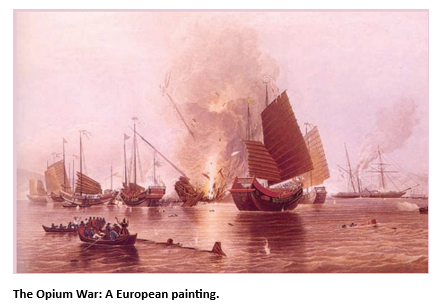
- 1839–1842Britain’s use of force to expand the opium trade led to the First Opium War, weakening the Qing dynasty and intensifying calls for reform.
The Opium Trade
Why Opium Became Important
- Trade imbalance: Britain wanted Chinese tea, silk and porcelain, but Western goods found little market in China, so trade was paid for in silver.
- Company solution: The East India Company sold opium grown in India in China and used the silver earned to buy Chinese goods.
- Triangular trade: Opium moved from India to China; silver was transferred to Company agents in Canton for letters of credit; the Company used it to buy goods for Britain.
Reform and the Challenge of Foreign Domination
Qing Reformers
- Kang Youwei and Liang Qichao sought to strengthen China and protect it from colonisation.
- Reform plans: Create a modern administration and army, improve education, and establish local assemblies as a step toward constitutional government.
Lessons from Colonised Countries
- Poland: Its partition in the 18th century became a warning; by the late 1890s, “to Poland us” (*bolan wo*) meant to divide or destroy China.
- India: In 1903, Liang Qichao argued that India had been destroyed by a “non-country”—the East India Company—and stressed that people must see China as a nation to resist the West.
- Liang’s criticism: He condemned Indians for mistreating their own people and submitting to British rule; Chinese observers also saw Britain use Indian soldiers in wars against China.
Confucianism — A tradition based on the teachings of Confucius and his disciples, emphasising good conduct, practical wisdom and proper social relationships.
Changing Attitudes and New Learning
- Confucian influence: It shaped Chinese values and social standards, and informed political theories and institutions.
- Call for change: Many came to view traditional thinking, especially Confucianism, as an obstacle to new ideas and institutions.
- Study abroad: Students went to Japan, Britain and France to learn modern subjects; many who studied in Japan during the 1890s later became leading republicans.
- Borrowed vocabulary: Chinese thinkers adopted Japanese translations of European terms such as justice, rights and revolution, aided by the shared ideographic script.
The Examination System
| Feature | Details |
|---|---|
| Purpose | The main route into the elite ruling class, which numbered about 1.1 million until 1850. |
| Examination | Candidates wrote an eight-legged essay (*pa-ku wen*) in classical Chinese using a prescribed form. |
| Frequency and success | Held twice every three years at different levels; only about 1–2% of candidates passed the first level, usually by age 24, becoming “beautiful talent”. |
| Degree holders before 1850 | About 526,869 civil and 212,330 military provincial (*sheng-yuan*) degree holders across China. |
| Employment | There were only about 27,000 official positions, so many lower-level degree holders had no job. |
Why the Examination System Was Abolished
- Examinations required literary skills in classical Chinese.
- They gave little importance to science and technology.
- Classical learning was seen as irrelevant to the modern world.
- The system was abolished in 1905.
Key Turning Points
- 1890sMany Chinese students went to Japan; some returned with new ideas and later became leading republicans.
- 1903Liang Qichao wrote about India as a warning of the consequences of foreign domination.
- 1905After the Russo-Japanese War, fought on Chinese soil and over Chinese territory, China abolished its centuries-old examination system.
- Sovereignty
- A country’s ability to govern itself without foreign control.
- Triangular trade
- The opium, silver and goods trade linking Britain, India and China.
- Bolan wo
- “To Poland us”—a late-1890s expression warning that China might be partitioned or destroyed.
- Pa-ku wen
- The prescribed eight-legged essay required in the traditional examinations.
- Sheng-yuan
- Provincial degree holders in the traditional examination system.
Quick recap
- China’s modernisation debates centred on sovereignty, foreign domination, equality and development.
- The First Opium War (1839–1842) weakened the Qing dynasty and strengthened demands for change.
- The East India Company’s opium trade linked India, China and Britain in a triangular trade.
- Qing reformers sought modern administration, an army, education and constitutional government.
- Thinkers warned of foreign domination through examples such as Poland and India, while many questioned Confucian traditions.
- The traditional examination system prioritised classical literary skills and was abolished in 1905.
Establishing the Republic
The Republic and Sun Yat-sen
Sun Yat-sen’s Three Principles
- Republic: The Manchu empire was overthrown and a republic established in 1911 under Sun Yat-sen (1866–1925), regarded as the founder of modern China.
- Nationalism: Overthrow the Manchu dynasty, viewed as foreign, and resist other foreign imperialists.
- Democracy: Establish a democratic government.
- Socialism: Regulate capital and equalise landholdings; the Guomindang did not fully carry out these aims.
The May Fourth Movement and Political Change
The May Fourth Movement
- China had been on the victorious side in the First World War, but the peace settlement did not return territories seized from it.
- Anger led to a demonstration in Beijing on 4 May 1919; the protest grew into the May Fourth Movement.
- The movement challenged tradition and promoted modern science, democracy and nationalism.
- Revolutionaries opposed foreign control of China’s resources and demanded less inequality and poverty.
- Reforms included simple written language, ending foot-binding and women’s subordination, equality in marriage and economic development.
Political Instability
- After the revolution: China remained unstable and entered a period of turmoil.
- Major parties: The Guomindang (National People’s Party) and the CCP became leading forces seeking to unite the country and restore stability.
The Guomindang under Chiang Kai-shek
Party Ideas and Leadership
- Guomindang philosophy: Sun Yat-sen’s ideas shaped the party; it identified clothing, food, housing and transportation as the “four great needs”.
- Chiang Kai-shek (1887–1975): After Sun’s death, Chiang led the Guomindang and campaigned to defeat regional warlords and eliminate the communists.
- National order: Chiang promoted a secular, rational, “this-worldly” Confucianism and sought to militarise the nation, encouraging a habit of unified behaviour.
- Women’s role: He promoted the virtues of chastity, appearance, speech and work, while confining women’s role to the household; even hemlines were prescribed.
Urban Society and Cultural Change
Work and Social Change in the Cities
- Guomindang base: The party’s social base was mainly urban, while industrial growth remained slow and limited.
- Workers: By 1919, Shanghai had an industrial working class of about 500,000; only a small proportion worked in modern industries such as shipbuilding.
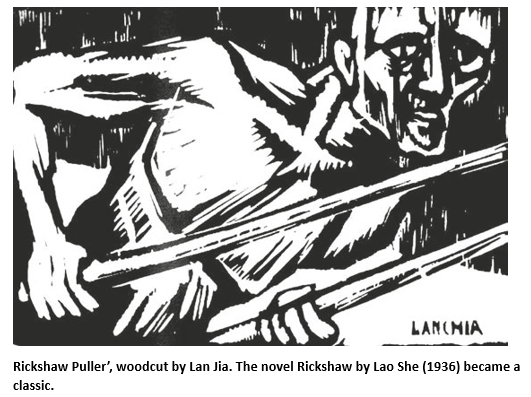
- Petty urbanites: Many city residents were traders and shopkeepers. Urban workers, especially women, faced low wages, long hours and poor working conditions.
- Changing attitudes: Growing individualism prompted discussion of women’s rights, family life, love and romance.
Education, Journalism and New Ideas
- Education: The spread of schools and universities supported social and cultural change; Peking University was established in 1902.
- Journalism: Life Weekly, edited by Zao Taofen (1895–1944), introduced readers to new ideas and leaders including Mahatma Gandhi and Kemal Ataturk.
- Circulation: Life Weekly grew from 2,000 copies in 1926 to 200,000 in 1933.
Why the Guomindang Failed
Limits of the Guomindang
- The Guomindang had a narrow social base and limited political vision.
- It neglected the peasantry and rising social inequalities.
- Sun’s aims of regulating capital and equalising landholdings were not carried out.
- The party prioritised military order over people’s problems, weakening its ability to unite the country.
Key China Events
- 1912Sun Yat-sen founded the Guomindang.
- 1919The May Fourth Movement followed protests in Beijing.
- 1921The CCP was founded.
- 1926–1949China experienced civil wars.
- 1931Japan invaded China, as recorded in the chapter timeline.
- 1937Japan’s invasion of China forced the Guomindang to retreat; the prolonged war weakened the country.
- 1949The People’s Republic of China was established; Chiang Kai-shek founded the Republic of China in Taiwan.
- 1962China attacked India over a border dispute.
- 1966The Cultural Revolution began.
- 1976Mao Zedong and Zhou Enlai died.
- 1997Hong Kong was returned to China by Britain.
The Rise of the Communist Party of China
War and Rural Crisis
- Japanese invasion: Japan invaded China in 1937; the Guomindang retreated and the long war weakened China.
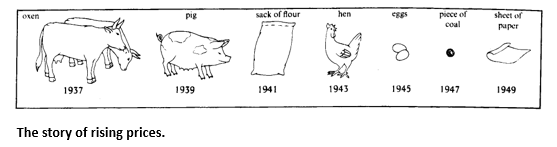
- Inflation: Prices rose by 30 per cent per month between 1945 and 1949, devastating ordinary people.
- Ecological crisis: Soil exhaustion, deforestation and floods damaged rural life.
- Socio-economic crisis: Exploitative land tenure, indebtedness, primitive technology and poor communications deepened rural hardship.
The CCP, the Comintern and Mao
- CCP: Founded in 1921, after the Russian Revolution, whose success influenced communist movements worldwide.
- Comintern: Lenin and Trotsky established the Third International in March 1918 to help create a world government that would end exploitation.
- Comintern’s approach: It and the Soviet Union supported communist parties, initially following the Marxist view that urban workers would lead revolution; it later became a tool of Soviet interests and was dissolved in 1943.
- Mao Zedong (1893–1976): Mao based his revolutionary programme on the peasantry rather than city workers; this strategy helped the CCP become a powerful force and ultimately defeat the Guomindang.
Mao’s Rural Programme and the Long March
Jiangxi Soviet
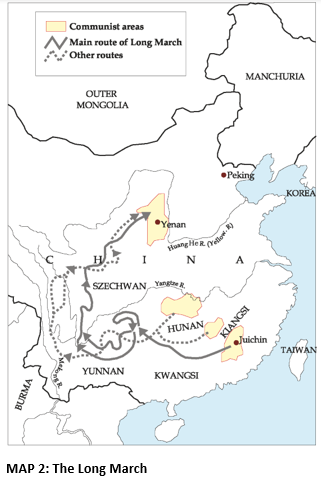
- Base: From 1928 to 1934, Mao and the Communists were based in the mountains of Jiangxi, relatively secure from Guomindang attacks.
- Land policy: A peasants’ council, or soviet, was organised; land was confiscated and redistributed.
- Organisation: Mao stressed the need for an independent government and army.
- Women’s reforms: Rural women’s associations were supported. A new marriage law banned arranged marriages, stopped the purchase or sale of marriage contracts and simplified divorce.
Mao’s Social Investigation
- Xunwu survey (1930): Mao studied everyday goods, local organisations, traders, craftsmen and religious groups to understand different levels of exploitation.
- Evidence of hardship: He recorded the sale of boys for 100–200 yuan. The survey found no instances of girls being sold because the need was for hard labour, not sexual exploitation.
The Long March and Communist Growth
- The Guomindang blockaded the Communists’ Jiangxi base.
- The CCP undertook the Long March in 1934–1935, travelling about 6,000 miles to Shanxi.
- At their new base in Yanan, the Communists developed policies to end warlordism, carry out land reforms and fight foreign imperialism.
- These policies built a strong social base; after wartime cooperation with the Guomindang ended, the Communists defeated it and took power.
Establishing the New Democracy: 1949–1965
| Point | New Democracy | Dictatorship of the Proletariat |
|---|---|---|
| Political basis | An alliance of all social classes. | Marx’s term for a revolutionary working-class government replacing the repressive government of the propertied class. |
| Meaning | The framework adopted by the People’s Republic of China in 1949. | “Dictatorship” here means revolutionary working-class rule, not dictatorship in the modern, usual sense. |
Economic Transformation after 1949
- Government control: Critical areas of the economy came under government control; private enterprise and private land ownership were gradually ended.
- Socialist transformation: The government announced this programme in 1953, after the New Democracy programme that began in 1949.
The Great Leap Forward and Mass Mobilisation
- Industrial drive: Launched in 1958, the Great Leap Forward sought rapid industrialisation and encouraged people to build backyard steel furnaces.
- Communes: Rural people’s communes collectively owned and cultivated land. By 1958, 26,000 communes covered 98 per cent of the farm population.
- Socialist ideal: Mao promoted a “socialist man” devoted to the fatherland, people, labour, science and public property.
- Mass organisations: The All-China Democratic Women’s Federation had 76 million members; the All-China Students Federation had 3.29 million.
Debate within the Party
- Alternative priorities: In 1953–1954, some party members called for more attention to industrial organisation and economic growth.
- Reform efforts: Liu Shaoqi (1896–1969) and Deng Xiaoping (1904–1997) tried to modify the communes because they were not working efficiently.
- Backyard steel: Steel produced in backyard furnaces was unusable for industrial purposes.
- Three Principles
- Sun Yat-sen’s programme of nationalism, democracy and socialism.
- Guomindang
- The National People’s Party, led by Sun Yat-sen and later Chiang Kai-shek.
- CCP
- The Communist Party of China, founded in 1921 and led by Mao Zedong.
- Soviet
- A peasants’ council established by the Communists in Jiangxi.
- New Democracy
- The 1949 political framework based on an alliance of social classes.
- People’s commune
- A rural collective in which land was owned and cultivated collectively.
What were Sun Yat-sen’s Three Principles?
How did Mao’s strategy differ from the traditional Marxist approach?
What were the main features and limitations of the Great Leap Forward?
Quick recap
- The 1911 republic was associated with Sun Yat-sen’s Three Principles: nationalism, democracy and socialism.
- The May Fourth Movement of 1919 challenged tradition and demanded national independence and social reform.
- The Guomindang failed to gain broad support because it neglected peasants and inequality.
- Mao’s peasant-based strategy, Jiangxi reforms and the Long March helped the CCP build a strong base.
- New Democracy began in 1949; socialist transformation was announced in 1953.
- The 1958 Great Leap Forward promoted communes and backyard furnaces, but implementation faced serious inefficiencies.
- Key later milestones include the Cultural Revolution in 1966, the deaths of Mao and Zhou in 1976, and Hong Kong’s return in 1997.
Conflicting Visions: 1965-78 & Reforms From 1978
Conflicting Visions: 1965–78
Great Proletarian Cultural Revolution — A campaign Mao launched in 1965 to counter his critics and promote the creation of a “Socialist Man,” placing Communist ideology above professional expertise.
Campaign and effects
- Central conflict: Maoists sought to create a “Socialist Man”; critics objected to ideology being valued above expertise.
- Red Guards: Mainly students and the army led campaigns against old culture, customs and habits.
- Re-education: Students and professionals were sent to the countryside to learn from the masses.
- Ideology over expertise: Communist commitment was valued above professional knowledge; denunciations and slogans replaced rational debate.
- Consequences: Turmoil weakened the Party and severely disrupted the economy and education system.
Shift in Party priorities
- Late 1960sThe tide began to turn against the turmoil of the Cultural Revolution.
- 1975The Party stressed social discipline and building an industrial economy so China could become a power before the century ended.
Reforms from 1978
Deng Xiaoping’s reforms
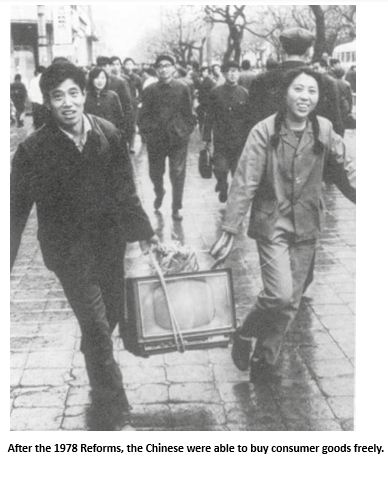
- Political control: Deng kept the Communist Party’s control strong while introducing a socialist market economy.
- Four Modernisations: The 1978 goal was to develop science, industry, agriculture and defence.
- Limits on debate: Discussion was permitted as long as the Party itself was not questioned.
The Fifth Modernisation — A demand for democracy, argued to be essential for the other modernisations to succeed.
Calls for openness
- 5 December 1978A wall-poster, “The Fifth Modernisation,” argued that democracy was necessary for the Four Modernisations and criticised the CCP over poverty and sexual exploitation, including abuses within the Party.
- 1989On the 70th anniversary of the May Fourth Movement, intellectuals called for greater openness and an end to “ossified dogmas.” Student demonstrators at Tiananmen Square in Beijing were brutally repressed, a response condemned around the world.
| Viewpoint | Main argument |
|---|---|
| Party’s dominant view | Keep strong political control while liberalising the economy and integrating China into the world market. |
| Critics | Market-led development can increase inequalities between social groups, regions and men and women, creating social tensions. |
| Revival of traditional ideas | Confucianism and other Chinese traditions may offer a path to modernity without simply copying the West. |
The Story of Taiwan
Taiwan: key developments
- 1894–95After the war with Japan, China ceded Taiwan, which became a Japanese colony.
- 1943The Cairo Declaration stated that Taiwan should be restored to China.
- February 1947Mass demonstrations were followed by the GMD’s brutal killing of a generation of leading Taiwanese figures.
- 1949The Potsdam Proclamation reaffirmed restoration of Chinese sovereignty. After defeat by the CCP, Chiang Kai-shek fled to Taiwan and established the Republic of China.
- 1973Taiwan’s GNP was second only to Japan’s in Asia.
- 1975After Chiang Kai-shek’s death, Taiwan’s gradual political transformation began.
- 1987Martial law was lifted and opposition parties were legally permitted.
Political and economic change
- Chiang’s move to Taiwan: He brought over 300 million US dollars in gold reserves and crates of priceless art treasures.
- GMD rule: The government restricted free speech and political opposition and excluded local people from positions of power.
- Land reform: Reforms raised agricultural productivity and helped modernise the economy.
- Economic pattern: Taiwan relied heavily on trade; its economy grew while the gap between rich and poor steadily declined.
- Democratisation: Free elections began the process of bringing local Taiwanese people to power.
Taiwan’s international status and cross-strait relations
- Diplomatic status: Most countries maintain trade missions rather than full diplomatic relations or embassies because Taiwan is considered part of China.
- Reunification: The question of reunification with mainland China remains contentious.
- Cross-strait ties: Trade, investment and travel between Taiwan and mainland China have grown; Taiwanese trade and investment in the mainland are massive.
- China’s position: China may tolerate a semi-autonomous Taiwan if it does not seek independence.
- Red Guards
- Groups led mainly by students and the army that carried out Cultural Revolution campaigns.
- Four Modernisations
- The 1978 programme to develop science, industry, agriculture and defence.
- The Fifth Modernisation
- Democracy, demanded as necessary for the other modernisations.
- GMD
- The nationalist government that ruled Taiwan under Chiang Kai-shek.
- Cross-strait relations
- Relations between Taiwan and mainland China.
What were the main aims and consequences of the Cultural Revolution?
What was the Fifth Modernisation, and how did the Party respond?
How did Taiwan change politically and economically?
Quick recap
- Mao’s Cultural Revolution arose from conflict over creating a “Socialist Man” and prioritised Communist ideology over expertise.
- Red Guard campaigns caused political turmoil and severely disrupted China’s economy and education system.
- Deng’s 1978 reforms combined strong Party control with a socialist market economy and the Four Modernisations.
- The Fifth Modernisation demanded democracy; the 1989 Tiananmen protests were violently suppressed.
- Debates over China’s development involve political control, inequality, market liberalisation and the role of Chinese traditions.
- Taiwan experienced economic growth and gradual democratisation, while its status and reunification with mainland China remain contested.
The Story of Korea
Beginnings of Modernisation
Korea under the Joseon Dynasty
- Joseon Dynasty: Ruled Korea from 1392 to 1910; in its later years it faced internal political and social conflict.
- Foreign pressure: China, Japan and Western powers increasingly influenced Korea.
- Modernisation: Reforms affected government, diplomacy, infrastructure and society.
- Annexation: Japan annexed Korea in 1910, ending the Joseon Dynasty after more than 500 years.
Colonial rule and the struggle for independence
- Japanese rule suppressed Korean culture and imposed forced assimilation.
- Koreans demonstrated against colonial rule and sought independence.
- Independence activists established a provisional government and appealed to foreign leaders.
- Delegations appealed at international meetings, including the Cairo, Yalta and Potsdam conferences.
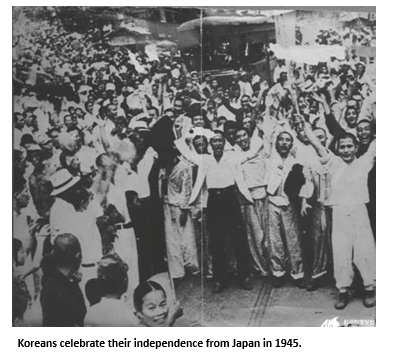
- Japan's defeat in World War II ended its 35-year colonial rule in August 1945.
Liberation and division
- Independence: Activists working inside and outside Korea helped secure independence after Japan's defeat.
- Temporary division: The peninsula was divided along the 38th parallel; the Soviet Union managed the North and the United Nations managed the South while Japanese forces were disbanded.
- Permanent division: Separate governments were established in North and South Korea in 1948.
A Post-War Nation
The Korean War and its consequences
- War: The Korean War began in June 1950. South Korea received support from US-led United Nations forces; North Korea received support from communist China.
- Cold War context: The conflict became a proxy war of the Cold War era.
- Armistice: The war ended in July 1953 after three years, but Korea remained divided.
- Damage: The war caused massive losses of life and property, destroyed colonial-era industrial facilities and delayed free-market development and democratisation.
- Economic strain: Increased national expenses and currency issuance during the war caused inflation and sudden price rises; South Korea relied on US economic assistance.
War's economic effects
- War increased national expenditure and the amount of currency issued.
- Inflation rose, causing prices to increase suddenly.
- Industrial facilities were destroyed, delaying economic development.
- South Korea relied on economic assistance from the United States.
Political unrest and military takeover
- Syngman Rhee: South Korea's first president, elected in 1948, extended his administration twice through illegal constitutional amendments.
- April Revolution: In April 1960, citizens protested a rigged election and forced Rhee to resign.
- After Rhee: The Democratic Party administration could not respond effectively to public demands because of internal divisions. Reformist political forces emerged, and the student movement grew into a unification movement.
- Military coup: Military authorities opposed these developments. In May 1961, General Park Chung-hee and other military authorities overthrew the government.
Rapid Industrialisation under Strong Leadership
Park Chung-hee's economic strategy
- Election: Park Chung-hee, leader of the 1961 coup, was elected president in October 1963.
- State-led growth: Five-year economic plans favoured large firms, sought to expand employment and aimed to increase Korea's competitiveness.
- Export focus: From the early 1960s, policy shifted from import substitution industrialisation (ISI) towards export-oriented growth.
- Light industry: Government support initially prioritised labour-intensive products such as textiles and garments, where Korea had a comparative advantage.
| Period / policy | Industrial focus | Examples |
|---|---|---|
| Early 1960s: export-oriented policy | Labour-intensive light industries | Textiles and garments |
| Late 1960s and 1970s | Value-added heavy and chemical industries | Steel, non-ferrous metals, machinery, shipbuilding, electronics and chemicals |
Saemaul Movement and drivers of growth
- Saemaul Movement: Introduced in 1970 to mobilise rural communities and modernise agriculture.
- Goals: Encourage a shift from passivity and discouragement to initiative and hope; help people improve villages and living conditions through self-help.
- Expansion: The movement later reached neighbourhoods near industrial plants and in urban areas. Korea has shared its experience with developing countries.
- People and skills: Strong leaders, trained bureaucrats, ambitious industrialists and a capable workforce supported growth. High literacy helped workers acquire new skills.
- Resources and connections: An open economic policy helped absorb foreign institutions and technologies. Foreign investment, high domestic savings and overseas workers' remittances supported economic development.
How the growth strategy worked
- Government plans and incentives supported large firms and export growth.
- Entrepreneurs responded to incentives by increasing exports and developing new industries.
- Literate, capable workers could learn new skills, while foreign institutions and technologies were absorbed.
- Foreign investment, domestic savings and overseas remittances helped develop the heavy industrial sector and the economy.
- Rapid economic growth became the foundation of the Park administration's long-term power.
The Yusin Constitution and political crisis
- Third term: Park revised the constitution to run for a third term and was re-elected in 1971.
- Yusin Constitution: Declared and implemented in October 1972, it made permanent presidency possible.
- Presidential power: The president had authority over legislation, jurisdiction and administration, and could repeal laws through constitutional 'emergency measures'.
- Democracy restricted: Absolute presidential authority temporarily suspended democratic progress in pursuit of economic development.
- Crisis: The second oil crisis in 1979 hindered economic policy, which had overinvested in heavy and chemical industries. Protests against the Yusin Constitution and the administration's emergency measures and suppression contributed to political instability.
- End of Park's rule: Amid economic crisis and political instability, Park Chung-hee was assassinated in October 1979.
Key dates
- 1392–1910The Joseon Dynasty ruled Korea.
- 1910Japan annexed Korea.
- August 1945Japan's defeat in World War II ended colonial rule and Korea became independent.
- 1948Separate North and South Korean governments were established; Syngman Rhee was elected president of South Korea.
- June 1950–July 1953The Korean War began and ended in an armistice.
- April 1960The April Revolution forced Rhee to resign.
- May 1961Park Chung-hee and other military authorities staged a coup.
- October 1963Park was elected president.
- 1970The Saemaul Movement was introduced.
- 1971Park was re-elected for a third term.
- October 1972The Yusin Constitution established sweeping presidential powers.
- 1979The second oil crisis hindered economic policy; Park was assassinated in October.
- Proxy war
- A conflict in which major powers support opposing sides rather than fighting each other directly; the Korean War reflected Cold War rivalry.
- Import substitution industrialisation (ISI)
- An industrial strategy that prioritises domestic production of goods instead of importing them.
- Export-oriented policy
- A growth strategy that promotes production for export.
- Saemaul Movement
- A community-based campaign to modernise villages through local initiative and self-help.
- Yusin Constitution
- The 1972 constitution that gave Park sweeping authority and made permanent presidency possible.
What were the major effects of the Korean War on South Korea?
How did South Korea achieve rapid industrial growth?
What powers did the Yusin Constitution give the president?
Quick recap
- Joseon-era Korea faced internal strife and foreign pressure before Japan annexed it in 1910.
- Japan's defeat in 1945 ended colonial rule, but separate governments made Korea's division permanent in 1948.
- The Korean War devastated the peninsula and left South Korea reliant on US economic assistance.
- The April Revolution forced Rhee to resign; a 1961 military coup brought Park Chung-hee to power.
- Park's export-led policies, changing industrial priorities and the Saemaul Movement accompanied rapid economic growth.
- The 1972 Yusin Constitution concentrated power in Park; economic and political crises preceded his assassination in 1979.
Continued Economic Growth and Calls for Democratisation
Democratisation under Chun Doo-hwan
Protests and Political Change
- December 1979Chun Doo-hwan led a military coup after Park Chung-hee's death.
- May 1980Students and citizens protested for democracy; the military imposed martial law nationwide. The Gwangju Democratisation Movement was a determined protest against martial law, suppressed by the military.
- Later in 1980Chun became president through an indirect election under the Yusin Constitution.
- 1980–1983Economic growth rose from 1.7% to 13.2%, while inflation fell.
- May 1987Public knowledge of the Chun administration's limited inquiry into a university student's death by torture fuelled a large-scale pro-democracy struggle.
- June 1987The June Democracy Movement brought together students and the middle class, forcing the government to revise the constitution to allow direct presidential elections.
Economic Growth and Demand for Political Rights
- Economic development → urbanisation, improved education and advances in the media.
- Greater public awareness → stronger understanding of political rights.
- Political demands → calls for constitutional change and direct election of the president.
- June Democracy Movement → constitutional revision and a new phase of Korean democracy.
Economic Growth under Chun
- Political control: Chun's administration suppressed pro-democracy activity to stabilise its rule.
- Economic context: An international economic boom helped growth rise from 1.7% in 1980 to 13.2% in 1983; inflation also fell.
- Constitutional outcome: The June Democracy Movement forced constitutional revision, enabling direct presidential elections.
Korean Democracy and the IMF Crisis
Democratic Transitions and Economic Crisis
- December 1987The first direct presidential election since 1971 was held. Roh Tae-woo, a fellow military leader, won as opposition parties failed to unite.
- 1990Long-time opposition leader Kim Young-sam joined Roh's party to form a large ruling party.
- December 1992Kim Young-sam, a civilian, was elected president, ending decades of military rule.
- Early 1990sExport-oriented policies and government support helped Korean conglomerates grow globally, including in heavy, chemical and electronic industries.
- 1996South Korea joined the Organisation for Economic Co-operation and Development (OECD) amid pressure to open its markets and improve competitiveness.
- 1997A foreign currency crisis followed trade deficits, weak financial management and reckless conglomerate operations; emergency support came from the International Monetary Fund (IMF).
- December 1997Kim Dae-jung was elected president, marking Korea's first peaceful transfer of power.
- 2008Conservative Lee Myung-bak won after the progressive Roh Mu-hyun administration, marking the second peaceful transfer of power.
- 2012Conservative Park Geun-hye became South Korea's first female president.
- October 2016Revelations that Park had allowed a friend to secretly manage government affairs led to nationwide protests.
- March 2017Park Geun-hye was impeached and removed from office.
- May 2017Moon Jae-in was elected president, marking the third peaceful transfer of power.
Growth, Crisis and Public Contribution
- Industrial strategy: Export-led policies and government backing helped conglomerates invest in capital-intensive heavy, chemical and electronic industries; the state also developed industrial and social infrastructure.
- IMF crisis causes: Trade deficits, poor financial-institution management and reckless business operations contributed to the 1997 foreign currency crisis.
- Crisis response: The IMF provided emergency financial support, while efforts were made to improve the economy.
- Gold Collection Movement: Citizens voluntarily contributed gold to help repay foreign loans.
Democratic Consolidation
- Citizens' political awareness → sustained demands for democratic government.
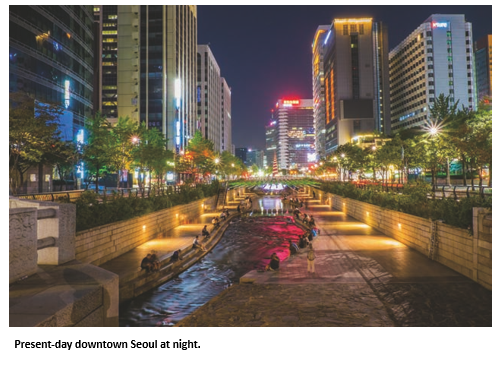
- Peaceful transfers of power → democratic institutions gained strength.
- 2016 candlelight protests → citizens peacefully demanded Park Geun-hye's resignation within democratic laws and systems.
- Public action and economic development → both shaped modern Korea, but citizens' political awareness played the leading role in advancing democracy.
- Gwangju Democratisation Movement
- The 1980 protest by students and citizens in Gwangju demanding an end to martial law and democratic rights.
- June Democracy Movement
- The 1987 mass struggle, involving students and the middle class, that forced constitutional revision and direct presidential elections.
- Gold Collection Movement
- Citizens' contribution of gold to support repayment of foreign loans during the 1997 crisis.
- Peaceful transfer of power
- A change of government through elections rather than military force; Korea achieved its first in 1997.
How did economic development encourage demands for democratisation in South Korea?
What led to the 1997 foreign currency crisis, and how was it addressed?
Quick recap
- Chun Doo-hwan's military rule suppressed democracy, including the Gwangju movement of 1980.
- Economic growth and social change strengthened public awareness of political rights.
- The June Democracy Movement of 1987 forced constitutional reform and direct presidential elections.
- Civilian Kim Young-sam's 1992 election ended decades of military rule.
- The 1997 foreign currency crisis brought IMF support and the citizens' Gold Collection Movement.
- Peaceful transfers of power and citizen protests strengthened Korean democracy.
Two Roads to Modernisation & Conclusion
Different Paths to Modernisation
- Distinct routes: Japan and China followed different paths shaped by their political conditions, foreign pressures and social movements.
- Modernisation’s consequences: Their experiences reveal both the possibilities of building modern nations and the tensions between national independence, equality and political control.
Japan: Adapting Tradition While Modernising
- Japan’s transformation: Japan retained its independence and adapted traditional skills and institutions to build a modern nation.
- Contradictions: Modernisation also strengthened aggressive nationalism and empire, which suppressed dissent and left lasting regional hostility.
China: Revolution, Communist Rule and Reform
| Point | Japan | China |
|---|---|---|
| Approach to tradition | Creatively adapted traditional skills and practices alongside foreign influences. | The Communist movement rejected traditions seen as obstacles to equality and national development; traditions later revived. |
| Political outcome | Modernisation sustained a repressive regime and aggressive nationalism. | Communist rule built a highly centralised, tightly controlled political system. |
| Key challenge | Colonial expansion left regional hostility and affected internal development. | Economic power grew, but inequality and the question of preserving heritage remain. |
- Elite-led modernisation
- Modernisation directed by powerful elites, as in Japan, which also supported an aggressive and repressive political order.
- CCP
- The Communist Party of China, whose supporters sought to end old inequalities and build national unity and strength.
- Centralised state
- A state in which political authority is concentrated at the centre.
How did Japanese modernisation combine foreign and indigenous influences?
State two achievements and two contradictions of Communist rule in China.
Quick recap
- Japan retained independence and modernised by combining borrowed models with adapted traditions.
- Japanese elite-led modernisation supported aggressive nationalism and a repressive regime.
- Japanese imperial expansion left regional hostility and affected Japan’s internal development.
- Imperialism and weak Qing control contributed to disorder and suffering in China.
- Communist rule in China removed old inequalities and spread education, but remained repressive and centralised.
- Market reforms strengthened China’s economy, while tight political control, inequality and heritage remain key challenges.