Class 11 Humanities . History . Themes In World History . The Three Orders
Chapter 4: THE THREE ORDERS
Ch 4
History
Class 11 Humanities
An Introduction to Feudalism & the Three Orders
Changing Traditions in Europe
From Roman rule to feudal society
- Roman legacy: After the western Roman Empire disintegrated in the fifth century CE, Germanic groups established kingdoms in western and central Europe; Roman institutions were adapted to their needs and customs.
- Changing society: Church and royal governments combined Roman institutions with tribal customary rules. Charlemagne’s empire in the early ninth century was a major example, though it soon collapsed.
- Towns and trade: Western European urban centres were smaller than those farther east, but places such as Aix, London, Rome and Siena and their trading networks persisted.
- Feudalism: From the ninth to eleventh centuries, land-based production and obligations developed around lords, peasants, castles and manor houses.
- Long-term changes: Between the ninth and seventeenth centuries, Europe gradually developed experimental science, new ideas about government and law, and improved agricultural and industrial technology.
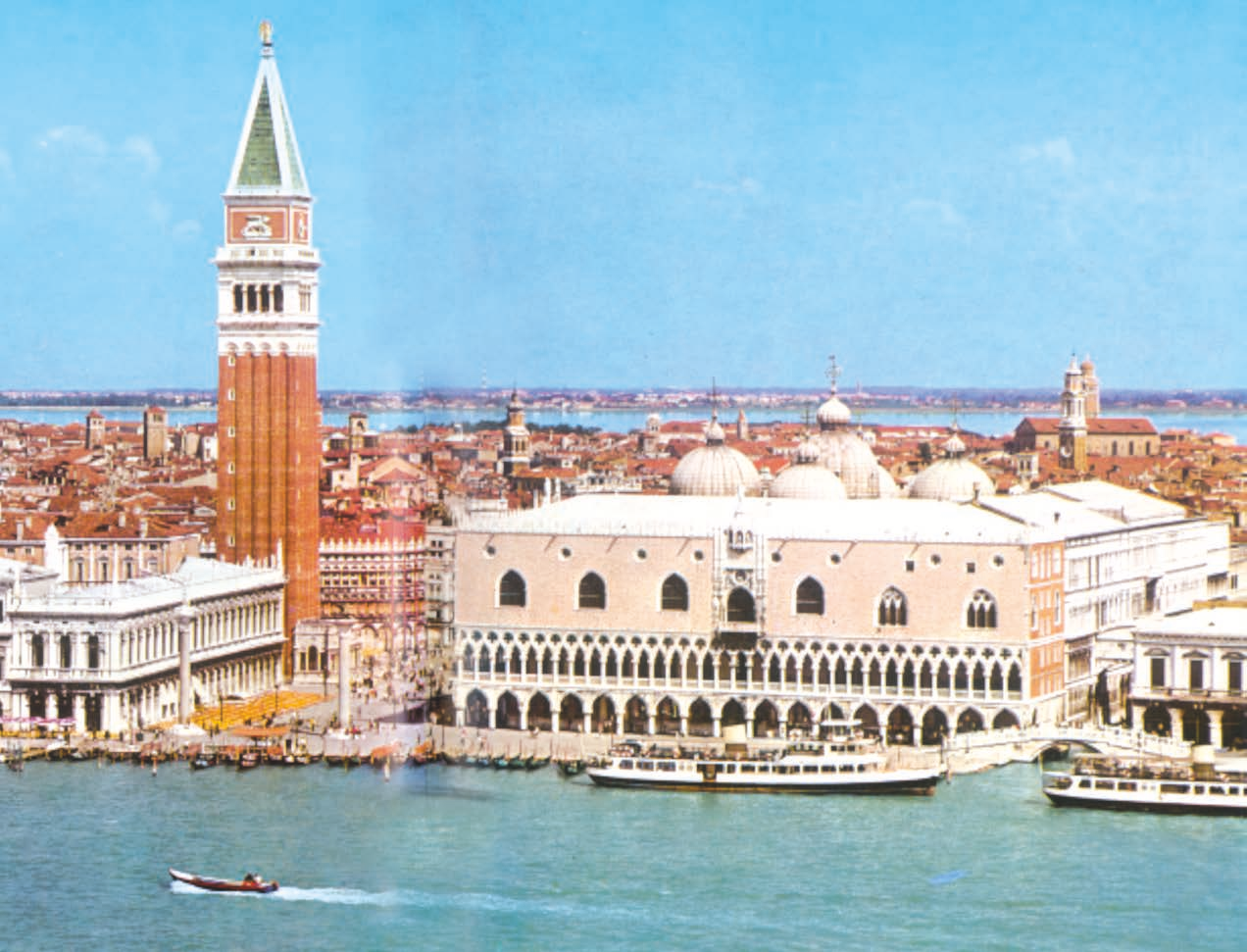
Trade, cultural exchange and exploration
- Mediterranean trade: From the twelfth century, merchants from Venice and Genoa expanded trade with Muslim states and the eastern Roman Empire; crusades also strengthened European links across the Mediterranean.
- European trade: Fairs and ports on the Baltic and North Seas grew as Europe’s population increased.
- Renaissance: From the fourteenth century, especially in northern Italian towns, interest increasingly turned toward human life, art and the natural world, alongside life after death.
- Exploration: By the late fifteenth century, Europeans sought routes to Asian trade. Portuguese voyages down Africa eventually reached India around the Cape of Good Hope; Columbus reached the West Indies in 1492 while seeking a western route to India.
- Cross-cultural learning: Hasan al-Wazzan (Leo Africanus) wrote a geography of Africa for Pope Leo X in the early sixteenth century. Jesuits wrote about Japan, and Will Adams became an adviser to Tokugawa Ieyasu in the early seventeenth century.
- Local intermediaries: Dona Marina, an Aztec woman, helped Cortés as an interpreter and negotiator during the Spanish conquest of Mexico.
- Unequal encounters: Europeans sometimes studied other cultures but also imposed trade monopolies and used force. After Vasco da Gama reached Calicut in 1498, the Portuguese tried to control Indian Ocean trade.
- Different responses: Japan began producing muskets on a large scale by the late sixteenth century. In much of the Islamic world, India and China, Europeans remained minor curiosities or traders until the end of the seventeenth century.
- Conquest and disease: European diseases devastated Indigenous populations in the Americas; in some areas, over 90 per cent had died by the end of the sixteenth century.
The Church in feudal society and cultural contact
- Feudal order: The Catholic Church, centred on the papacy, supported the feudal system and owned land; it was also a major political and social institution.
- Religious life: In a world of insecurity, poor medicine and low life expectancy, the Church taught people how to live in hope of a tolerable afterlife. Monasteries provided a setting for religious devotion.
- Scholarship and contact: Churches formed part of a scholarly network connecting Muslim Spain and Byzantium, and introduced European rulers to the wealth of the eastern Mediterranean and beyond.
- Two-sided influence: The Church encouraged the study of other cultures and languages, but also supported attacks on people it regarded as un-Christian.
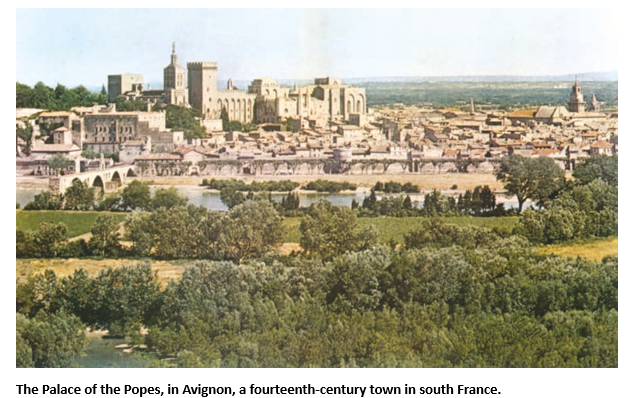
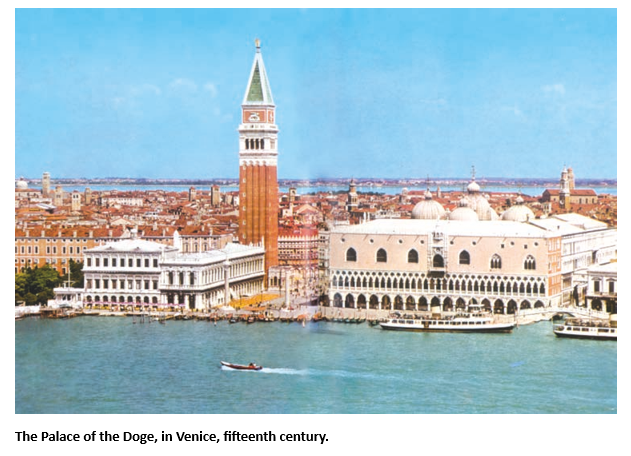
Effects of intercontinental contact
- Trade and travel increased contact between continents.
- Goods, ideas and inventions circulated between societies.
- Competition for land, resources and trade routes led to warfare.
- Warfare and conquest displaced, enslaved or killed many people; disease caused catastrophic population losses in the Americas.
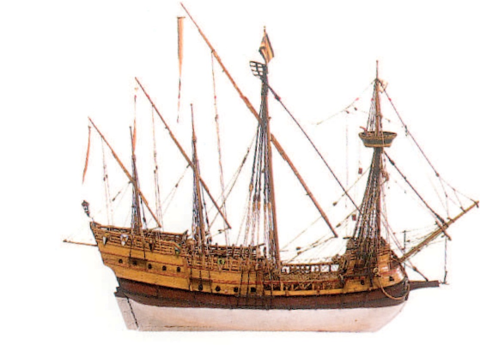
Timeline: Contacts and Developments, c. 1300–1700
Africa and Europe
- 1300–1325The Alhambra and Granada emerge as important cultural centres in Spain.
- 1325–1350The Black Death spreads through Europe from 1348; plague strikes Egypt in 1348–1355. The Hundred Years War between England and France lasts from 1337 to 1453.
- 1350–1375Ibn Battuta explores the Sahara; French peasants protest high taxes in 1358.
- 1375–1400A peasant revolt occurs in Britain in 1381; Geoffrey Chaucer writes The Canterbury Tales in 1388.
- 1425–1450The Portuguese begin slave trading in 1442.
- 1450–1475The Songhai Empire develops around trans-Saharan trading networks; Portuguese expeditions and settlements on Africa’s west coast begin from 1471. Europe’s first printed book appears, and Leonardo da Vinci is born in 1452.
- 1475–1500The Portuguese convert the king of Bongo to Christianity; the Tudor dynasty is established in England in 1485.
- 1500–1525African slaves are taken to American sugar plantations in 1510; the Ottoman Turks conquer Egypt in 1517. Coffee is first drunk in Europe in 1517, alongside tobacco, chocolate, tomatoes and turkey; Martin Luther attempts to reform the Catholic Church.
- 1525–1550Copernicus proposes his theory of the solar system in 1543.
- 1550–1575William Shakespeare is born in 1564.
- 1575–1600Zacharias Janssen invents the microscope in the 1590s.
- 1600–1625The Oyo kingdom of Nigeria reaches the height of its power and develops metal-working centres; Don Quixote is written in Spain in 1605.
- 1625–1650William Harvey demonstrates in 1628 that the heart pumps blood through the body.
- 1650–1675The Portuguese destroy the Kongo kingdom in 1662; Louis XIV rules France (1638–1715).
- 1675–1700Peter the Great (1682–1725) attempts to modernise Russia.
Asia and South Asia
- 1325–1350The Vijayanagara Empire is established in South Asia in 1336.
- 1350–1375The Ming dynasty begins ruling China in 1368.
- 1400–1425Regional sultanates emerge in South Asia.
- 1450–1475The Ottoman Turks capture Constantinople in 1453.
- 1475–1500Vasco da Gama reaches India in 1498.
- 1500–1525Portuguese entry into China is opposed; they are driven out to Macao in 1522.
- 1525–1550Babur establishes Mughal control over northern India after the first Battle of Panipat in 1526.
- 1550–1575Akbar (1556–1605) consolidates Mughal rule.
- 1575–1600The first Kabuki play is staged in Japan in 1586; Shah Abbas of Persia (1587–1629) introduces European military training methods.
- 1600–1625The British East India Company is established in 1600; the Tokugawa Shogunate is established in Japan in 1603.
- 1625–1650In 1637, Japan forbids European traders except the Dutch. Manchu rule in China begins in 1644 and lasts nearly 300 years; European demand for Chinese tea and silk grows. The Taj Mahal is built in 1652–1653.
The Americas and Australia/Pacific Islands
- 1300–1325The Aztec capital Tenochtitlan is established in 1325, with temples, irrigation and an accounting system noted in the timeline.
- 1425–1450The Incas establish control over Peru in 1465.
- 1475–1500Columbus reaches the West Indies in 1492.
- 1500–1525Magellan reaches the Pacific Ocean in 1519; the Spanish conquer Mexico in 1521.
- 1525–1550French explorers reach Canada in 1534.
- 1550–1575The Spanish conquest of Peru takes place in 1572.
- 1575–1600Dutch sailors reach Australia by accident.
- 1600–1625England establishes its first North American colonies in 1607; the first slaves from West Africa are brought to Virginia in 1619. Spanish sailors reach Tahiti in 1606.
- 1625–1650The Dutch found New Amsterdam (now New York) in 1626; a printing press is set up in Massachusetts in 1635. Abel Tasman sails around Australia, then reaches Van Diemen’s Land (later Tasmania) and New Zealand.
- 1650–1675The first sugar plantations are established in the West Indies in 1654.
- 1675–1700The French colonise the Mississippi basin in 1682, naming it Louisiana after Louis XIV.
The Three Orders and the Medieval Era
Medieval era — The period of European history from the fifth to the fifteenth centuries.
Origins and structure of the three orders
- Background: After Rome fell, Germanic peoples from eastern and central Europe occupied parts of Italy, Spain and France. With no unifying political authority, conflict was frequent and control of land became central.
- Mixed traditions: European social organisation drew on Roman imperial traditions and Germanic customs.
- Church power: Christianity survived Rome’s collapse and gradually spread to central and northern Europe. The Church became a major landholder and political force.
- Three orders: Society was commonly described as clergy who pray, nobles who fight, and peasants who work.
- Significance: Changing relationships among priests, landowning nobles and peasants shaped European society and politics for centuries.
| Order | Group | Commonly assigned role |
|---|---|---|
| First | Clergy | Pray and serve religious life |
| Second | Nobility | Fight, own land and wield political power |
| Third | Peasantry | Work the land and provide labour |
Historical evidence and Marc Bloch
- Sources: Church records of births, marriages and deaths help reconstruct families and population; documents on landownership, prices and legal cases reveal economic relations.
- Community evidence: Church inscriptions, traders’ association records, songs and stories provide evidence about work, festivals and community life.
- Historical change: These sources help historians study long-term changes, such as population growth, and short-term events, such as peasant revolts.
- Marc Bloch (1886–1944): A French historian who argued that history must go beyond politics, international relations and great individuals to study geography and collective behaviour.
- Feudal Society: Bloch’s study examines European, especially French, society from 900 to 1300, including social hierarchy, land management and popular culture. The Nazis shot him during the Second World War.
An Introduction to Feudalism
Feudalism — A system of economic, legal, political and social relationships based on landholding and obligations in medieval Europe.
How feudalism worked
- Term and roots: The term is linked to the German word “feud,” meaning a piece of land. Feudal practices had roots in the Roman Empire and the age of Charlemagne (742–814).
- Development: Feudalism became an established way of life in large parts of Europe in the eleventh century. It developed in medieval France and later in England and southern Italy.
- Production: Peasants cultivated their own plots as well as the lord’s land and owed labour services to the lord.
- Exchange: Lords provided military protection and exercised extensive judicial control over peasants.
- Wider system: Land-based duties and protection shaped social and political relationships as well as agricultural production.
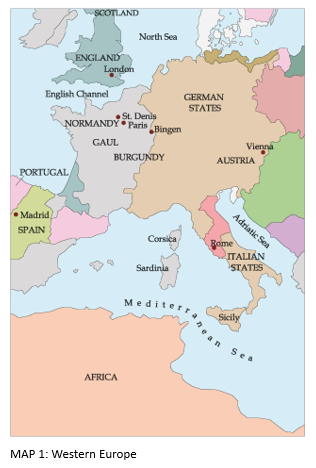
France and England
Geography, kingship and the Church
- Gaul: This Roman province had extensive coastlines, mountains, rivers, forests and broad fertile plains suited to agriculture.
- Franks: The Germanic Franks gave Gaul its later name, France. From the sixth century, Christian Frankish kings ruled the region.
- Church alliance: In 800, Pope Leo III crowned Charlemagne Holy Roman Emperor, strengthening the relationship between Frankish kingship and the Church.
- England: Across the Channel, England was conquered in the eleventh century by a duke from Normandy, a French province.
Early Frankish and Carolingian milestones
- 481Clovis becomes king of the Franks.
- 486Clovis and the Franks begin conquering northern Gaul.
- 496Clovis and the Franks convert to Christianity.
- 714Charles Martel becomes mayor of the palace.
- 751Pepin, Martel’s son, removes the Frankish ruler, becomes king and establishes a dynasty; wars of conquest double the kingdom’s size.
- 768Pepin is succeeded by his son Charlemagne, also called Charles the Great.
- 800Pope Leo III crowns Charlemagne Holy Roman Emperor.
- 840 onwardsViking raids from Norway take place.
- Abbey
- A religious community governed by an abbot or abbess; the word derives from Syriac abba, meaning “father.”
- Clergy
- The Christian religious order, commonly described as those who pray.
- Nobility
- The landowning order, commonly described as those who fight.
- Peasantry
- The working order that cultivated land and provided labour.
The Second Order: The Nobility
Vassalage — A reciprocal relationship in which a lord granted protection and land-related rights in return for a vassal’s loyalty and service.
Land and loyalty
- King acts as a senior lord, or seigneur, to major nobles.
- Noble receives land and pledges loyalty and service to the king.
- Peasants work the land and owe duties to their landowning lord.
Noble power and obligations
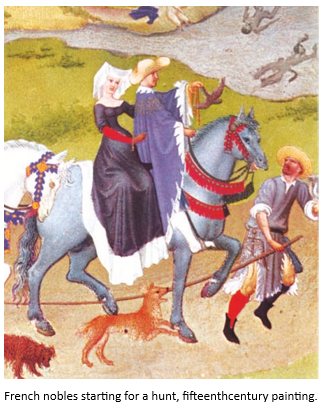
- Oath and ceremony: Lord and vassal exchanged vows, often on a Bible in a church. A written charter, staff or clod of earth could symbolise the land granted.
- Landholding: A noble held privileged control over property, often in perpetuity, and ruled the people settled on his lands.
- Military power: Lords could raise troops called feudal levies; peasants might also be required to serve as foot soldiers.
- Judicial and political authority: A lord held courts of justice and could even issue his own money.
- Work duties: Peasants worked their own farms and the lord’s private fields, and could owe labour or military service.
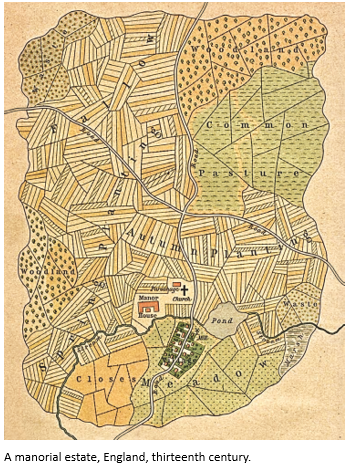
The Manorial Estate
Life and work on the manor
- Manor: The lord’s manor-house stood within an estate that could include one village or many. Small estates might have about twelve families; large ones had fifty or sixty.
- Production: Fields produced grain; blacksmiths and carpenters maintained tools and weapons; stonemasons repaired buildings; women spun and wove cloth, and children worked in wine-presses.
- Land use: Estates included woodlands for hunting, pastures for cattle and horses, a church and often a castle for defence.
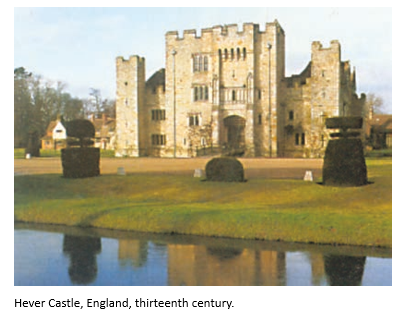
- Castles: In England, castles were practically unknown before the Norman Conquest. Under feudalism they became centres of military power and political administration; from the thirteenth century, some were enlarged as residences.
- Limits of self-sufficiency: Manors needed outside supplies such as salt, millstones and metalware. Luxury furnishings, musical instruments and ornaments also came from elsewhere.
- Feudalism
- Medieval system of land-based economic, political, legal and social relationships.
- Vassalage
- Relationship involving a lord’s protection or land grant and a vassal’s loyalty and service.
- Manor
- The lord’s residence and the estate of villages, fields and other land under his control.
- Feudal levy
- Troops raised by a lord for military service.
- Seigneur
- A senior lord to whom a vassal owed loyalty.
What were the three orders of medieval European society?
Explain the economic basis of feudalism.
What were the Church’s roles in feudal society and cultural contact?
Quick recap
- After Rome’s fall, Roman institutions and Germanic customs shaped new European kingdoms; control of land became central to power and security.
- Feudalism was a land-based system of duties, protection and authority that became established in much of Europe in the eleventh century.
- The three orders were clergy, nobles and peasants, commonly associated with praying, fighting and working.
- The Church supported feudal society, owned land and organised religious life, while also acting as a centre of scholarship and cultural contact.
- Vassalage linked lords and vassals through reciprocal obligations; noble landholding brought military, judicial and political power.
- The manor organised agricultural and craft production but depended on outside trade for some essentials and luxuries.
- Trade and exploration connected continents, spreading goods and ideas while also driving warfare, enslavement, conquest and devastating disease.
The Knights
Knights and Feudal Service
The knight’s role
- Rise: From the ninth century, frequent local wars made peasant-soldiers insufficient; skilled cavalry was needed.
- Feudal link: Knights were connected to lords much as lords were connected to the king.
- Fief: A lord granted a knight inheritable land, often 1,000–2,000 acres or more, and promised to protect it.
- Fief holdings: It could include the knight’s home, a church, facilities for dependants, a watermill and a wine-press; peasants cultivated its land.
- Obligations: The knight paid his lord a regular fee and promised to fight for him in war.
- Training and loyalty: Knights practised fencing and tactics daily. A knight might serve several lords, but his foremost loyalty was to his own lord.
Why knights became important
- Frequent local wars from the ninth century
- Peasant-soldiers proved inadequate
- Need for skilled cavalry
- Growing importance of knights and their service to lords
Minstrels and knightly stories
- Minstrels: From the twelfth century in France, travelling singers visited manors with partly historical and partly invented stories about brave kings and knights.
- Importance: Their songs reached people in a time when few could read and manuscripts were scarce.
- Minstrels’ gallery: Many manor halls had a narrow balcony from which singers entertained nobles during feasts.
The First Order: The Clergy
Clergy — The bishops and clerics who guided Christians and formed the first order of medieval European society.
The Church’s authority and income
- Power: The Catholic Church had its own laws, owned lands granted by rulers and could levy taxes; it did not depend on the king.
- Leadership: The Pope headed the western Church and lived in Rome. Bishops and clerics guided Christians across Europe.
- Local worship: Most villages had a church where people gathered on Sundays to hear a priest’s sermon and pray.
- Tithe: The Church received one-tenth of the peasants’ annual produce from their land.
- Endowments: The rich donated money for their own welfare and that of deceased relatives in the afterlife.
- Bishops: They formed the religious nobility, used vast estates and lived in grand palaces.
Rules for becoming a priest
- Restrictions: Serfs and physically challenged people could not become priests; women were also barred from priesthood.
- Celibacy: Men who became priests could not marry.
Feudal customs in religious life
- Prayer: Kneeling with clasped hands and a bowed head resembled a knight’s posture when taking vows of loyalty to a lord.
- Language: Calling God “lord” reflected the influence of feudal culture.
- Connection: Religious and lay life shared customs and symbols.
Monks and Monasteries
Monastery or abbey — A religious community, often isolated from towns and villages, where people devoted their lives to prayer, study and work.
Monastic life
- Vows and routine: Monks and nuns vowed to remain in the abbey for life, devoting time to prayer, study and manual work such as farming.
- Women and men: Unlike priesthood, monastic life was open to both sexes; men became monks and women became nuns. They did not marry.
- Community: Except in a few cases, men and women lived in separate, single-sex abbeys.
- Growth: Communities that began with 10 or 20 people could grow to several hundred, with large buildings, landed estates, schools or colleges and hospitals.
- Arts: Abbess Hildegard was a gifted musician who helped develop communal singing of prayers in church.
- Friars: From the thirteenth century, some monks travelled from place to place preaching and living on charity rather than staying in a monastery.
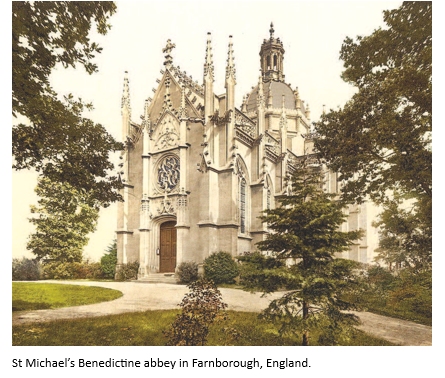
Benedictine rules
- Rule book: Benedictine monasteries followed a manuscript containing 73 chapters of rules.
- Speech and obedience: Speech was rarely permitted; humility meant obedience.
- Property and work: Monks could own no private property and were expected to do manual labour and sacred reading at set times.
- Self-sufficiency: Monasteries were to contain necessities such as water, a mill, a garden and workshops.
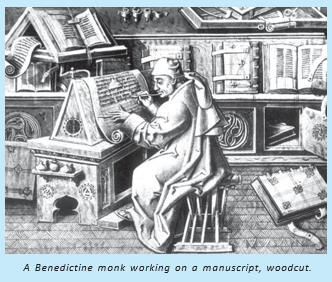
Changing views of monasticism
- Growing doubt: By the fourteenth century, people increasingly questioned the value and purpose of monasticism.
- Langland: In *Piers Plowman* (c. 1360–70), the English poet contrasted some monks’ comfortable lives with the pure faith of poor labourers, ploughmen and shepherds.
- Chaucer: In *The Canterbury Tales*, comic portraits of a nun, a monk and a friar also reflected this criticism.
The Church and Society
Christian festivals and village life
- Older beliefs: Even after becoming Christian, Europeans continued to hold beliefs in magic and folk traditions.
- Christmas: Celebrated on 25 December from the fourth century; it replaced an older pre-Roman festival dated by the solar calendar.
- Easter: Marked Christ’s crucifixion and resurrection. Its date varied because it followed the lunar calendar and replaced a spring festival.
- Parish custom: Villagers traditionally toured their lands on this day; under Christianity, the village was called the parish, the area supervised by one priest.
- Holidays: Peasants welcomed holy days because they did not have to work. Though meant for prayer, the days were often spent feasting and enjoying themselves.
Parish — The area placed under the supervision of one priest.
Pilgrimage
- Importance: Pilgrimage was an important part of Christian life.
- Destinations: People travelled long distances to shrines of martyrs and major churches; English pilgrims especially journeyed to Canterbury.
- Fief
- Land granted by a lord to a knight, often inheritable and held in return for service.
- Tithe
- One-tenth of the peasants’ annual produce given to the Church.
- Clergy
- Bishops and clerics who formed the first order and guided Christians.
- Friar
- A travelling religious preacher who lived on charity rather than in a monastery.
- Pilgrimage
- A religious journey to a shrine or important church.
Dates and periods
- From the ninth centuryFrequent local wars increased the need for skilled cavalry and knights.
- Fourth centuryChristmas and Easter became important Christian dates.
- 529St Benedict established a monastery in Italy.
- 910The monastery of Cluny was established in Burgundy.
- From the twelfth centuryMinstrels travelled between French manors singing stories of kings and knights.
- From the thirteenth centuryFriars travelled to preach and lived on charity.
- c. 1340–1400Geoffrey Chaucer lived; his Canterbury Tales portrayed religious figures.
- By the fourteenth centuryUncertainty about the value and purpose of monasticism was growing.
- c. 1360–70Langland’s Piers Plowman criticised the luxury of some monks in contrast to poor workers’ faith.
What was the feudal relationship between a lord and a knight?
How did the Church obtain resources and exercise authority?
How did monastic life differ from ordinary clerical life?
Quick recap
- Knights: A lord granted a fief and protection in return for a fee and military service.
- Clergy: The Church was a powerful institution; its resources included tithes and endowments.
- Monastic life: Monks and nuns took vows of prayer, study and labour in abbeys; friars later travelled to preach.
- Social influence: Feudal customs shaped religious practices, while Christian festivals blended with older traditions.
- Faith and travel: Pilgrimages to shrines and churches were an important part of medieval Christian life.
The Third Order: Peasants, Free and Unfree
Free Peasants and Serfs
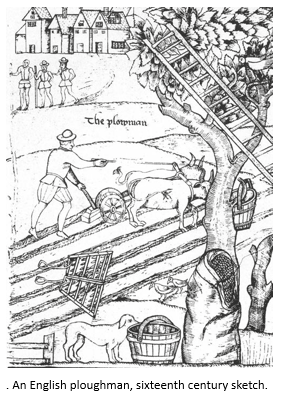
Feudalism in England
England
- Sixth centuryAngles and Saxons from central Europe settled in England.
- Eleventh centuryWilliam, Duke of Normandy, conquered England; feudalism developed there.
- Thirteenth centuryHever Castle in England dates from this century.
Factors Changing Social and Economic Relations
- Changing relations: Feudal ties between lords and peasants were transformed by agricultural and economic changes.
- Key developments: Improved farming increased production, while the growing use of money weakened obligations based on personal service.
The Environment
Environmental Change
- Fifth to tenth centuriesCold conditions and extensive forests limited cultivation and shortened the growing season.
- From the eleventh centuryA warmer phase and retreating forests made cultivation easier to expand.
Land Use and Peasant Resistance
Lordly Demands and Peasant Resistance
- Lords sought higher incomes, but output from the land could not easily be increased.
- Peasants were pressed to cultivate more of the estate and work beyond their legal obligations.
- Unable to protest openly, peasants resisted passively: they prioritised their own fields, kept more of their produce and avoided extra unpaid services.
- Disputes arose over pasture and forest lands: peasants viewed them as shared community resources, while lords treated them as private property.
New Agricultural Technology
| Point | Two-field system | Three-field system |
|---|---|---|
| Fields in rotation | Land divided into two halves | Land divided into three fields |
| Use | One half cropped while the other lay fallow; the crops alternated | One field had an autumn crop, a second a spring crop and the third lay fallow; use rotated each year |
| Crops | Winter wheat and rye | Wheat or rye for people; peas, beans and lentils for people; oats and barley for horses |
| Effect | Soil slowly deteriorated and yields were often poor | Each field could be used two years out of three |
Effects of Agricultural Improvements
Changing Farm Size
- By the thirteenth centuryThe average peasant farm had shrunk from about 100 acres to 20–30 acres.
| Point | Lords | Peasants |
|---|---|---|
| Main role | Funded costly watermills and windmills | Extended arable land and adopted three-field rotation |
| Other initiatives | Could invest in expensive infrastructure | Set up village forges and smithies to make and repair iron-tipped ploughs and horseshoes cheaply |
Money and the Weakening of Feudal Bonds
Money and Prices
- From the eleventh centuryCash rents and money-based crop sales increasingly replaced service obligations and exchange.
- 1270s–1320sAgricultural prices in England doubled.
- Serf
- A cultivator bound to the lord’s estate, receiving no wages and unable to leave without permission.
- Labour-rent
- Work performed by peasants on the lord’s land, with its produce going to the lord.
- Fallow
- Land left uncropped for a time to rest.
- Mould-board
- The part of an improved plough that turns the topsoil.
- Three-field system
- Crop rotation across three fields: autumn crop, spring crop and fallow, rotated each year.
How did the three-field system improve farming?
What differences separated free peasants from serfs?
Quick recap
- Free peasants held farms as tenants and owed labour and services; serfs were more tightly bound to the lord’s estate.
- William I’s Norman conquest established a feudal hierarchy in England, with landholders owing military service.
- Cold climate and forest cover restricted early farming; warmer conditions from the eleventh century encouraged expansion.
- Primitive ploughs and two-field rotation limited yields, while peasants resisted extra demands passively.
- Improved tools, harnesses, mills and three-field rotation increased food output and changed farm sizes.
- Cash rents and crop sales weakened personal feudal ties; English agricultural prices doubled from the 1270s to the 1320s.
A Fourth Order? New Towns and Towns People & the Crisis of the Fourteenth Century
Population Growth and the Revival of Towns
Population and agriculture
- Population growth: Europe’s population rose from about 42 million in 1000 to 62 million around 1200 and 73 million in 1300.
- Food and lifespan: Better food helped people live longer; by the thirteenth century, average life expectancy was about 10 years greater than in the eighth century.
- Unequal diets: Women and girls generally lived shorter lives than men, who ate better food.
- Town revival: From the eleventh century, expanding agriculture supported more people, and towns began to grow again after the decline of Roman towns.
How towns grew
- Surplus: Peasants produced grain to sell and needed places to trade it for tools, cloth and other goods.
- Markets: Periodic fairs and small marketing centres developed into settlements with squares, churches, roads, shops, homes and governing offices.
- Other centres: Some towns grew around castles, bishops’ estates or large churches.
Townspeople and the ‘fourth order’
- Payments: Town residents paid taxes to the lords who owned the town land, instead of providing services.
- Freedom: Towns offered paid work and a chance to escape a lord’s control; the saying was, “Town air makes free.”
- Serfs: A serf who lived undiscovered in a town for one year and one day became free.
- Occupations: Many residents were free peasants, escaped serfs doing unskilled work, shopkeepers and merchants; later, towns also needed bankers and lawyers.
- New social group: Larger towns had populations of about 30,000; their townspeople could be seen as a ‘fourth’ order alongside the three traditional orders.
Guild — An association of people in a craft or industry that controlled the quality, price and sale of its products.
Town organisation and trade
- Guild-hall: A town’s guilds met in a common hall for formal and ceremonial functions.
- Town services: Guards patrolled walls; musicians performed at feasts and civic processions; innkeepers accommodated travellers.
- Trade links: By the eleventh century, routes connected Europe with West Asia. Scandinavian merchants traded furs and hunting-hawks for cloth; English traders sold tin.
- Crafts: By the twelfth century, French commerce and crafts expanded. Craftspeople increasingly settled in one place to produce goods and trade them for food.
- Rising merchant power: As trade and towns grew, merchants became wealthy and powerful enough to rival the nobility.
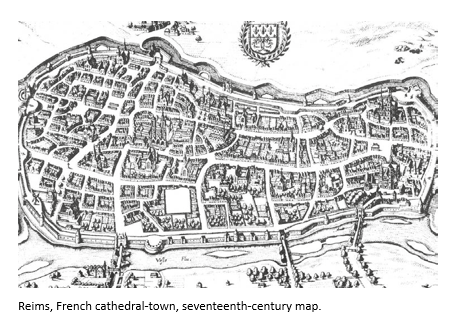
Cathedral Towns
How cathedral towns developed
- Funding: From the twelfth century, wealthy merchants donated to churches, while different groups contributed labour, materials or money to cathedral building.
- Ownership: The cathedrals belonged to monasteries.
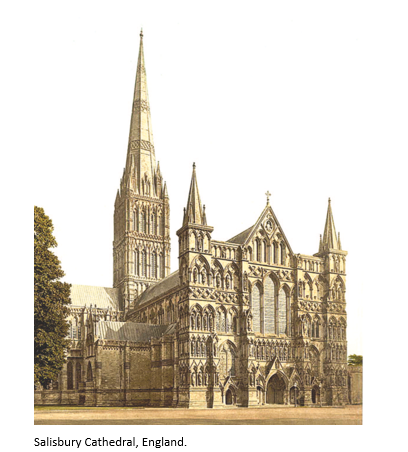
- Construction: French cathedrals were large stone churches that took many years to complete.
- Settlement and pilgrimage: The growing population around a building cathedral, followed by pilgrims visiting it after completion, helped small towns develop.
Cathedral design and stained glass
- Sound: Cathedrals were designed so priests could be heard, monks’ singing would resonate, and bells could carry over a long distance.
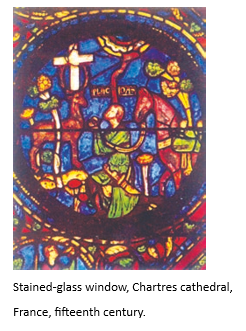
- Light: Stained-glass windows glowed in sunlight inside the cathedral; after sunset, candlelight made them visible from outside.
- Teaching: Pictures in stained glass told Bible stories, allowing people who could not read to understand them.
- Example: Abbot Suger (1081–1151) enlarged the Abbey of St Denis near Paris and arranged for valuable windows to be protected and maintained.
The Crisis of the Fourteenth Century
Three causes of economic slowdown
- Climate and farming: By the end of the thirteenth century, colder summers shortened growing seasons by a month and made high-ground cultivation harder. Storms and coastal floods damaged farms and reduced tax income.
- Soil and resources: Earlier land clearance and intensive ploughing exhausted soil despite three-field rotation; reduced pasture also meant fewer cattle.
- Famine: Population growth exceeded available resources, contributing to severe famine in 1315–1317 and massive cattle deaths in the 1320s.
- Money shortage: Silver output fell in mines in Austria and Serbia. Governments responded by reducing the silver content of coins and mixing in cheaper metals.
The Black Death and its effects
- Expanding trade: Ships from distant countries brought goods—and rats carrying bubonic plague—to European ports.
- Epidemic: The Black Death struck western Europe in 1347–1350; estimated mortality was 20% across Europe, reaching 40% in some places.
- Uneven impact: Cities and enclosed communities such as monasteries and convents were especially vulnerable; infants, young people and the elderly suffered heavily. Further, smaller outbreaks occurred in the 1360s and 1370s.
- Population collapse: Europe’s population fell from 73 million in 1300 to 45 million in 1400.
- Labour and prices: Depopulation caused labour shortages and disrupted the balance between agriculture and manufacture. Agricultural prices fell, while demand for labour—particularly agricultural labour—rose by as much as 250% in England.
- Bargaining power: Surviving workers could demand twice their earlier wages.
Social Unrest
Economic crisis and peasant resistance
- Lordly income falls: Lower agricultural prices and higher wages reduced lords’ incomes.
- Attempted reversal: Lords tried to abandon money-contracts and restore labour-services.
- Peasant opposition: Peasants, especially better-educated and more prosperous ones, resisted violently; revolts occurred in Flanders (1323), France (1358) and England (1381).
- Long-term result: Although rebellions were crushed, their intensity showed peasants defending earlier gains. Lords could not restore old feudal relations because the money economy had advanced too far.
Key dates and developments
- 1000Europe’s population was about 42 million.
- 1066The Normans defeated the Anglo-Saxons and conquered England.
- 1081–1151Abbot Suger lived; he was associated with enlarging the Abbey of St Denis.
- 1100 onwardsCathedrals began to be built in France.
- Around 1200Europe’s population was about 62 million.
- 1300Europe’s population reached about 73 million.
- 1315–1317Severe famine struck Europe.
- 1320sMassive cattle deaths followed the famine.
- 1323Peasants revolted in Flanders.
- 1338–1461The Hundred Years War was fought between England and France.
- 1347–1350The Black Death devastated western Europe.
- 1358Peasants revolted in France.
- 1360s–1370sFurther, relatively minor episodes of plague occurred.
- 1381Peasants revolted in England.
- 1400Europe’s population had fallen to about 45 million.
- Serf
- A dependent peasant who owed services to a lord; a serf could gain freedom by living undiscovered in a town for one year and one day.
- Guild
- A craft or trade association that regulated product quality, prices and sales.
- Cathedral
- A large church that could attract builders, local settlement and pilgrims.
- Black Death
- The deadly bubonic plague epidemic that devastated Europe in 1347–1350.
- Money-contract
- An arrangement in which peasants paid money instead of providing labour-services.
Why did towns grow in medieval Europe, and who formed the ‘fourth order’?
State the main effects of the Black Death on Europe.
Why could lords not restore earlier feudal relations after the peasant revolts?
Quick recap
- Agricultural expansion increased population, trade and town growth; towns offered paid work and a route to freedom.
- Townspeople—including merchants, craftspeople and specialists—formed a powerful new social group, sometimes called a fourth order.
- Guilds regulated crafts and trade, while cathedral building helped towns grow and pilgrimage flourish.
- Colder weather, exhausted soil, famine and silver shortages weakened Europe’s economy.
- The Black Death caused massive population loss, labour scarcity, lower agricultural prices and higher wages.
- Peasant revolts resisted lords’ attempts to restore labour-services; the money economy made a return to old feudal relations impossible.
Political Changes
The New Monarchies
- New monarchies: In the fifteenth and sixteenth centuries, European kings built stronger states and reshaped political authority.
- Examples: Louis XI in France, Henry VII in England, Maximilian in Austria, and Isabella and Ferdinand in Spain.
Why Royal Power Grew—and Why It Met Resistance
Growth of Royal Power
- Feudal lordship weakens and economic growth remains slow.
- Kings gain greater control over their subjects and replace feudal levies with royal armies.
- National taxes fund larger, better-equipped forces.
- Royal armies defend and expand frontiers and suppress resistance, strengthening central authority.
Aristocratic Resistance and Accommodation
- Noble adaptation: Many nobles shifted from opposing royal regimes to serving within them, preserving their influence.
- Political differences: France’s Estates-General and England’s Parliament developed along different paths, shaping each country’s later history.
Courts, Patronage and Money
| Point | France | England |
|---|---|---|
| Assembly | The Estates-General represented the three orders: clergy, nobility and the rest. | Parliament developed from the Anglo-Saxon Great Council; it had a House of Lords and a House of Commons. |
| Taxation and power | The Estates-General was consultative; after its meeting in 1614, kings did not summon it again for nearly two centuries, avoiding power-sharing with the three orders. | The Great Council had to be consulted before a tax was imposed. The Commons represented towns and rural areas; the Lords included lords and clergy. |
| Later outcome | The later political path led to a republican form of government. | After conflict between Charles I and Parliament, the monarchy was restored on the condition that Parliament be called regularly; England retained a monarchy. |
Parliament and the English Monarchy
Key Dates
- 1461–83Louis XI ruled France and struggled against dukes and princes.
- 1461–1559Period listed for the new monarchy in France.
- 1474–1556Period listed for the new monarchy in Spain.
- 1485–1547Period listed for the new monarchy in England.
- 1497, 1536, 1547, 1549, 1553Taxation-related rebellions in England were suppressed.
- Sixteenth centuryFrench religious wars partly contested royal privileges against regional liberties.
- 1614The Estates-General met in France; it was not summoned again until 1789.
- 1629–40Charles I ruled England for 11 years without calling Parliament.
- 1789The Estates-General was summoned again in France, nearly two centuries after 1614.
- Standing army
- A permanent, professionally trained military force under royal control.
- National taxation
- Taxes collected across a kingdom to fund the central state, including its army.
- Estates-General
- The French consultative assembly representing clergy, nobility and the rest.
- Parliament
- The English representative body, divided into the House of Lords and House of Commons.
Why did monarchs establish standing armies and increase taxation?
Why is royal absolutism described as a modified form of feudalism?
How did the political paths of France and England differ?
Quick recap
- New monarchs strengthened central authority with standing armies, bureaucracy and national taxes.
- Royal military power weakened aristocratic resistance, but taxation remained a major source of opposition.
- Many nobles adapted to central rule by becoming royal administrators, making absolutism a modified form of feudalism.
- Patronage and royal borrowing gave merchants and bankers access to the court and a role in the state.
- France and England followed different paths in their dealings with representative assemblies and the monarchy.