Class 12 Commerce . Accountancy . Company Accounts and Analysis of Financial Accounts . Financial Statements of a Company
Chapter 3: Financial Statements of a Company
Ch 3
Accountancy
Class 12 Commerce
Meaning of Financial Statements
Meaning and scope
Financial statements — Formal annual reports through which company management communicates summarised financial information to owners and external users.
| Statement | What it reports |
|---|---|
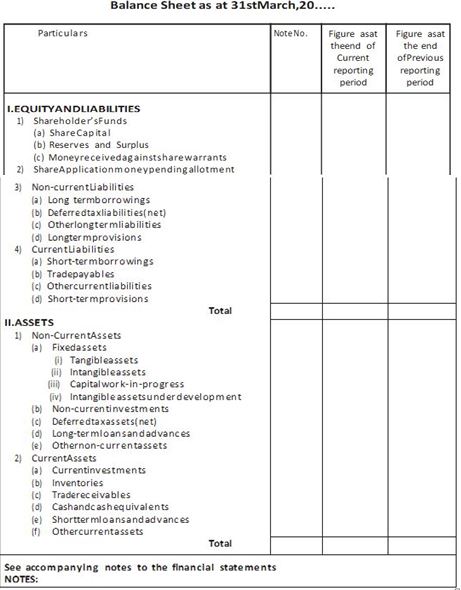
| Balance Sheet | Financial position as at the end of the accounting period |
| Statement of Profit and Loss | Financial results during the accounting period |
| Cash Flow Statement | Cash flows during the accounting period |
Purpose and preparation
- Purpose: Summarise accounting information so users can understand profitability and financial position and make economic decisions.
- Preparation: Follow consistent accounting policies, applicable accounting standards, accounting concepts and principles, procedures, and legal requirements, including the Companies Act.
Nature of financial statements
Nature of financial statements — Periodical reports based on recorded monetary facts that show financial position on a particular date and results over a period.
Key characteristics
- AICPA description: Financial statements review management’s progress, investment in the business, and results achieved; they combine recorded facts, accounting principles, and personal judgements.
- Recorded facts: Figures are taken from accounting books and are generally based on original or historical cost.
- Historical-cost limitation: Assets bought at different times and prices are shown at recorded costs, not market prices; therefore, statements do not show the concern’s current financial condition.
| Convention | Application / example |
|---|---|
| Valuation | Inventory is valued at cost or market price, whichever is lower; assets are shown at cost less depreciation. |
| Materiality | Small items such as pencils, pens, and postage stamps are treated as expenditure in the year purchased, even though they are assets in nature. |
| Stationery | Stationery is valued at cost; the cost-or-market-price-whichever-is-lower rule is not applied to it. |
| Effect | Conventions make financial statements comparable, simple, and realistic. |
Postulates
- Going concern: Assume the business will continue operating for a long time; assets are generally shown on a historical-cost basis.
- Money measurement: Record items in monetary terms and assume the value of money remains the same across periods, despite changes in purchasing power.
- Realisation: Include revenue in the year the sale is made, even if the sale price is received over a number of years.
Personal judgements and overall character
- Estimates: Depreciation depends on the estimated useful economic life of fixed assets; provisions for doubtful debts depend on estimated recoverability.
- Inventory valuation: Choosing cost or market value requires judgement and consideration of relevant factors.
- Conservatism: Judgements help avoid overstating assets, liabilities, income, and expenditure.
- Overall: Financial statements summarise recorded facts using accounting concepts, conventions, policies, standards, and legal requirements.
Objectives of financial statements
Primary objective — Provide information that helps users make decisions about a business’s profitability, financial position, and resources.
Specific objectives
- Resources and obligations: Provide adequate, reliable, and periodic information to investors and other external users who may have limited ability or resources to obtain it themselves.
- Earning capacity: Help users predict, compare, and evaluate the business’s ability to earn.
- Cash flows: Help investors and creditors assess potential cash flows, including their amount, timing, and uncertainty.
- Management effectiveness: Help users judge how effectively management uses the business’s resources.
- Effects on society: Report measurable business activities that affect society and are important in its social environment.
- Accounting policies: Disclose significant accounting policies and concepts, including changes during the year, so users can interpret the statements properly.
State the three main financial statements and what each reports.
Why do financial statements combine recorded facts with judgements?
Quick recap
- Financial statements are formal reports that communicate summarised financial information to owners and external users.
- The main statements are the Balance Sheet, Statement of Profit and Loss, and Cash Flow Statement.
- They combine historical-cost recorded facts, accounting conventions, postulates, and personal judgements.
- Historical-cost figures may not reflect current financial condition; conventions support comparability, simplicity, and realism.
- Going concern, money measurement, and realisation are key postulates.
- Their primary objective is to support users’ decisions, with information on earning capacity, cash flows, management, social effects, and accounting policies.
Types of Financial Statements
Main Financial Statements
Financial statements — Statements that communicate a company’s financial position, performance and movements in funds.
- Balance Sheet: Shows the company’s financial position at a particular date.
- Statement of Profit and Loss: Reports the company’s financial performance for a period.
- Cash Flow Statement: Shows movements of cash and cash equivalents and helps explain changes in financial position.
- Uses: These statements support external reporting and management planning, decision-making and control.
Schedule III and Presentation Requirements
Schedule III — The Companies Act, 2013 requires companies to prepare the Balance Sheet, Statement of Profit and Loss and related Notes to Accounts in the manner prescribed by revised Schedule III.
- Purpose: Schedule III harmonises disclosure requirements with accounting standards and new reforms.
- Applies to: Indian companies preparing financial statements under Schedule III.
- Does not apply to: Banking and insurance companies, or companies whose statement format is prescribed by another Act.
- Precedence: Applicable accounting standards prevail over Schedule III.
- Disclosure: Information on the face of statements or in Notes to Accounts is essential and mandatory.
- Terminology: Schedule III terms carry the meanings given by applicable accounting standards.
- Balance of detail: Provide useful information without excessive detail or omission of important information.
- Classification: Assets and liabilities are divided into current and non-current categories.
- Presentation: A vertical format is prescribed, and rounding-off requirements are mandatory.
- Profit and loss balance: A debit balance is shown as a negative figure under “Surplus”.
- Share application money: Pending allotment must be disclosed.
- Updated terms: “Sundry Debtors” and “Sundry Creditors” are replaced by “Trade Receivables” and “Trade Payables”.
| Turnover | Rounding basis |
|---|---|
| Less than Rs. 100 crore | Nearest hundreds, thousands, lakhs or millions, or a decimal thereof |
| More than Rs. 100 crore | Nearest lakhs or millions, or a decimal thereof |
Shareholders’ Funds
Shareholders’ funds — The Shareholders’ Funds section of the Balance Sheet is presented under three broad heads.
- Share Capital
- Reserves and Surplus
- Money Received against Share Warrants
- Presentation: The face of the financial statements shows broad, significant items; detailed disclosures are provided in Notes to Accounts.
Share Capital: Notes to Accounts
Share capital disclosures — Notes to Accounts provide detailed information about each class of a company’s shares.
- Authorised capital: State the number and amount of shares authorised.
- Issued and subscribed capital: State the number of shares issued, subscribed, fully paid and subscribed but not fully paid.
- Value and movement: State the par value per share and reconcile the number outstanding at the beginning and end of the reporting period.
- Class-specific terms: Explain rights, preferences and restrictions, including limits on dividend distribution and repayment of capital.
- Ownership by related companies: For each class of shares, disclose the aggregate shares held by the holding company or ultimate holding company, including shares held by their subsidiaries or associates.
- Major shareholders: Disclose the number of shares held by each shareholder holding more than 5% of the company’s shares.
- Reserved shares: Give shares reserved under options or contracts/commitments for sale or disinvestment, including terms and amounts.
- Convertible securities: State conversion terms and dates, listed in descending order starting with the farthest date.
- Other details: Disclose aggregate calls unpaid and forfeited shares, including the amount originally paid up.
| Disclosure | What to report |
|---|---|
| Non-cash contractual allotments | Aggregate number and class of shares allotted as fully paid under contracts without cash being received |
| Bonus shares | Aggregate number and class of shares allotted as fully paid by way of bonus |
| Buy-backs | Aggregate number and class of shares bought back |
| Reserved shares | Shares reserved under contracts or commitments |
| Other non-cash consideration | Number and class of shares allotted for consideration other than cash and bonus shares |
Reserves and Surplus
Reserves and Surplus — This Balance Sheet head groups the company’s reserves and the balance in its Statement of Profit and Loss.
- Classifications: Capital Reserve; Capital Redemption Reserve; Securities Premium Reserve; Debenture Redemption Reserve; Revaluation Reserve; Share Options Outstanding Account; Other Reserves; and Surplus.
- Other Reserves: Specify the nature and purpose of each reserve.
- Surplus: Show the Statement of Profit and Loss balance and disclose appropriations, such as dividends, bonus shares and transfers to or from reserves.
- Fund: A reserve specifically represented by earmarked investments is termed a “Fund”.
- Negative Surplus: A debit balance in the Statement of Profit and Loss is shown as a negative figure under Surplus.
- Net presentation: Show Reserves and Surplus after adjusting any negative Surplus, even if the resulting total is negative.
- Share options: Share Options Outstanding Account is a separate item under Reserves and Surplus. Under the cited ICAI guidance, a credit balance in the Stock Option Outstanding Account is shown separately between Share Capital and Reserves and Surplus as part of Shareholders’ Funds.
Money Received against Share Warrants
Money received against share warrants — An amount received by the company that is convertible into shares at a specified date and rate; share warrants are the instruments issued against that amount.
- Presentation: Disclose it as a separate line item under Shareholders’ Funds.
Quick recap
- The main statements are the Balance Sheet, Statement of Profit and Loss and Cash Flow Statement.
- Schedule III sets presentation requirements for covered companies; applicable accounting standards take precedence.
- Financial statement disclosures are mandatory, and assets and liabilities are split into current and non-current.
- Shareholders’ Funds comprise Share Capital, Reserves and Surplus, and Money Received against Share Warrants.
- Share capital notes disclose share amounts, ownership and rights by class, share movements and other key details.
- Reserves are classified by type; a debit Statement of Profit and Loss balance is shown as negative Surplus.
- Money received against share warrants is convertible into shares at a specified date and rate; warrants are issued against the amount received.
Illustration 1 based on Share capital
Share Capital in the Balance Sheet
Share-capital terms
- Authorised capital: Maximum capital the company is permitted to issue.
- Issued capital: Shares offered by the company for subscription.
- Subscribed capital: Shares taken up by applicants.
- Calls-in-arrears: Amount called by the company but unpaid by shareholders.
- Forfeited shares: Shares cancelled for non-payment of a call; the amount already received is credited to Share Forfeiture A/c.
Dinkar Ltd. has authorised capital of Rs. 50,00,000 divided into shares of Rs. 100 each. It offered 40,000 shares and received applications for 36,000 shares. The final call of Rs. 20 was unpaid on 500 shares; 200 of these shares were forfeited. Show share capital in the Balance Sheet and Notes to Accounts.
- Find the shares remaining after forfeiture.
- Separate the fully paid shares from the 300 shares still owing the final call.
- Calculate calls-in-arrears on the 300 shares.
- Calculate the amount received on the 200 forfeited shares.
- Add fully paid capital, net capital on partly paid shares, and forfeiture balance.
| Particulars | Note No. | Amount (Rs.) |
|---|---|---|
| Equity and Liabilities — Shareholders’ funds — Share capital | 1 | 35,90,000 |
| Particulars | Amount (Rs.) | Amount (Rs.) |
|---|---|---|
| Authorised: 50,000 equity shares of Rs. 100 each | 50,00,000 | |
| Issued: 40,000 equity shares of Rs. 100 each | 40,00,000 | |
| Subscribed and fully paid: 35,500 equity shares of Rs. 100 each | 35,50,000 | |
| Subscribed but not fully paid: 300 equity shares of Rs. 100 each, fully called up | 30,000 | |
| Less: Calls-in-arrears () | (6,000) | 24,000 |
| Add: Share Forfeiture A/c () | 16,000 | 40,000 |
| Total share capital | 35,90,000 |
Current and Non-current Classification
Current item — An asset or liability is current when it meets at least one of the applicable current-classification criteria below.
Classification criteria
- Operating cycle: An asset or liability involved in the entity’s operating cycle is current.
- Timing: An asset expected to be realised, or a liability expected to be settled, within 12 months after the reporting period is current.
- Trading: An item held primarily for trading is current.
- Cash: Cash and cash equivalents are current assets.
- Liabilities: A liability is current if the entity has no unconditional right to defer settlement for at least 12 months after the reporting period.
- Non-current: Other assets and liabilities are classified as non-current.
Illustration: Classifying Balance Sheet Items
| Particulars | Note No. | Amount (Rs.) |
|---|---|---|
| Equity and Liabilities — Shareholders’ funds — Share capital | 50,00,000 | |
| Shareholders’ funds — Reserves and surplus | 1 | 1,30,000 |
| Non-current liabilities — Long-term borrowings | 2 | 10,00,000 |
| Assets — Current assets — Inventories | 3 | 20,000 |
| Current assets — Cash and cash equivalents | 4 | 98,000 |
| Current assets — Other current assets | 5 | 10,000 |
| Note | Particulars | Amount (Rs.) |
|---|---|---|
| 1. Reserves and surplus | Securities premium | 20,000 |
| Less: Preliminary expenses | (40,000) | |
| Subtotal | (20,000) | |
| Add: Statement of Profit and Loss (credit balance) | 1,50,000 | |
| Reserves and surplus total | 1,30,000 | |
| 2. Long-term borrowings | 8% debentures | 10,00,000 |
| 3. Inventories | Loose tools | 20,000 |
| 4. Cash and cash equivalents | Bank balance | 60,000 |
| Cash in hand | 38,000 | |
| Cash and cash equivalents total | 98,000 | |
| 5. Other current assets | Discount on issue of 8% debentures (issue discount: Rs. 40,000) | 10,000 |
Writing off expenses
- Preliminary expenses: Write off fully in the year incurred; use securities premium first, then charge any balance to Statement of Profit and Loss.
- Debenture discount: Discount on issue of debentures is a borrowing cost and should be written off in the same year the debentures are issued.
Other Balance Sheet Classifications
Share application money pending allotment — Non-refundable application money not exceeding the issued capital is shown on the face of the Balance Sheet as share application money pending allotment.
| Category | Classification criterion | Balance Sheet presentation |
|---|---|---|
| Long-term borrowings | Repayable after more than 12 months or beyond the operating cycle. | Shown as long-term borrowings. |
| Short-term borrowings | Repayable on demand, or with an original tenure of no more than 12 months or the operating cycle. | Shown as short-term borrowings. |
| Current maturities of long-term debt | The part of a long-term loan repayable within 12 months or the operating cycle. | Shown under other current liabilities, with a Note to Accounts. |
- Deferred tax assets and deferred tax liabilities are always non-current under Schedule III of the Companies Act.
Quick recap
- Share capital is presented under shareholders’ funds, with authorised, issued, subscribed and paid-up details in Notes to Accounts.
- For Dinkar Ltd., calls-in-arrears are Rs. 6,000 and the Share Forfeiture A/c balance is Rs. 16,000; share capital totals Rs. 35,90,000.
- Current classification depends on operating cycle, 12-month timing, trading purpose, cash status, or the liability’s lack of an unconditional deferral right.
- Amba Ltd.’s reserves and surplus are Rs. 1,30,000; its long-term borrowings are Rs. 10,00,000.
- Write off preliminary expenses first against securities premium, then against Statement of Profit and Loss; write off debenture issue discount in the year issued.
- Qualifying non-refundable share application money is shown pending allotment; borrowings are classified by repayment timing.
- Deferred tax assets and liabilities are always non-current under Schedule III.
Trade payables
Trade Payables
Trade payables — Amounts owed for goods or services purchased in the normal course of business; this term replaces “sundry creditors”.
Balance sheet classification
- Non-current: Amounts due beyond 12 months from the balance sheet date or beyond the operating cycle are shown under Other Long-term Liabilities, with a note to accounts.
- Current: The remaining trade payables are current liabilities and appear on the face of the balance sheet.
- Example: Amounts payable for goods purchased or services received in the ordinary course of business.
Proposed Dividend
Approval and accounting
- Board of Directors propose the final dividend after annual accounts are prepared.
- Shareholders approve it at the Annual General Meeting (AGM), normally held in the next financial year.
- Shareholders may reduce, not increase, the amount proposed by the Board.
- After approval: The dividend becomes a company liability and is recorded in the books.
Balance sheet treatment
- Before approval: It is contingent on shareholder approval, so it is disclosed as a contingent liability in the Notes to Accounts, as prescribed by AS 4, Contingencies and Events Occurring after the Balance Sheet Date.
- Timing: A previous year’s proposed dividend is accounted for in the current year after shareholders approve it at the AGM.
- Current year: The proposed dividend for the current year is relevant to the next financial year.
Provisions
| Settlement timing | Classification | Balance sheet presentation |
|---|---|---|
| Within 12 months from the balance sheet date or within the operating cycle from recognition | Short-term provision | Current liabilities; shown on the face |
| Beyond the applicable 12-month or operating-cycle period | Long-term provision | Non-current liabilities; shown on the face |
Fixed Assets
- Classification: Both tangible and intangible fixed assets are non-current assets.
- Useful life: An asset remains non-current even if its useful life is less than 12 months.
Investments
| Expected realisation | Classification | Presentation |
|---|---|---|
| Within 12 months | Current investment | Current assets; shown on the face |
| After 12 months | Non-current investment | Non-current assets; shown on the face |
Inventories
Inventories — Inventories are always classified as current assets.
Trade Receivables
Trade receivables — Amounts due from customers for goods sold or services provided in the normal course of business.
Balance sheet classification
- Non-current: Amounts expected to be realised beyond 12 months from the reporting date or beyond the operating cycle from recognition are shown as Other Non-current Assets, with a note to accounts.
- Current: The remaining trade receivables are current assets and appear on the face of the balance sheet.
Cash and Cash Equivalents
- Classification: Cash and cash equivalents are always current assets.
- What to include: Only amounts qualifying as cash and cash equivalents under AS 3 are disclosed under this heading.
- Standards: Where Schedule III and an Accounting Standard differ, the Accounting Standard takes precedence; apply AS 3 to this disclosure.
Reserves and Surplus: Debit Balance in Statement of Profit and Loss
- Treatment: Deduct a debit balance in the Statement of Profit and Loss from available reserves when presenting Reserves and Surplus.
- Net credit balance: Present the remaining positive amount under Shareholders’ Funds.
- Net debit balance: If the debit balance exceeds the reserves, show the resulting negative balance under Reserves and Surplus.
How should the two balances be presented in the balance sheet?
- Sunfill Ltd. has a General Reserve of Rs. 5,00,000 and a debit balance in the Statement of Profit and Loss of Rs. 3,00,000.
- Deduct the debit balance from the reserve.
- Present the net balance under Shareholders’ Funds as Reserves and Surplus.
| Item | Major head / sub-head | Presentation |
|---|---|---|
| Sunfill Ltd.: net reserve Rs. 2,00,000 | Equity and Liabilities → Shareholders’ Funds → Reserves and Surplus | Balance sheet face; note gives reserve less debit balance |
| Avalon Ltd.: General Reserve Rs. 5,00,000 less debit balance Rs. 8,00,000 | Equity and Liabilities → Shareholders’ Funds → Reserves and Surplus | Negative balance Rs. (3,00,000); note shows the calculation |
Debentures Redeemable at a Premium
Illustration: Arushi Ltd.
- Debentures issued: 5,000 debentures of Rs. 100 each at par give long-term borrowings of Rs. 5,00,000.
- Redemption premium: A 5% premium payable on redemption is Rs. 25,000 and is shown under Other Long-term Liabilities.
- Net effect shown in the illustration: The premium is reflected as a negative Rs. 25,000 balance in Reserves and Surplus; cash at bank is Rs. 5,00,000.
| Particular | Balance sheet head | Amount |
|---|---|---|
| 5,000 debentures of Rs. 100 each | Long-term Borrowings | Rs. 5,00,000 |
| Premium payable on redemption | Other Long-term Liabilities | Rs. 25,000 |
| Premium reflected in the illustration | Reserves and Surplus | Rs. (25,000) |
| Cash at bank | Current Assets → Cash and Cash Equivalents | Rs. 5,00,000 |
A company has trade payables due in 15 months. Where should it present them?
The Board proposes a final dividend after accounts are prepared. Has it become a liability before the AGM approves it?
Quick recap
- Trade payables and receivables are classified by settlement or realisation timing; long-term balances go under the relevant “Other” category with a note.
- Proposed dividends are contingent before shareholder approval and become liabilities after approval.
- Provisions are short-term or long-term according to their settlement period.
- Fixed assets remain non-current; investments may be current or non-current; inventories and cash equivalents are current.
- A debit balance in the Statement of Profit and Loss reduces reserves and may create a negative Reserves and Surplus balance.
- Debentures redeemable at a premium include the debenture amount as borrowing and the premium payable as an other long-term liability.
Illustration 6 based on balance sheet
Preparing a Balance Sheet under Schedule III
| Schedule III heading | Item | Amount in particulars (Rs.) |
|---|---|---|
| Non-current liabilities: Long-term borrowings | 10% debentures | 2,00,000 |
| Current liabilities: Short-term provisions | Provision for taxation | 16,000 |
| Non-current assets: Tangible fixed assets | Motor vehicles | 4,75,000 |
| Non-current assets: Intangible fixed assets | Goodwill | 30,000 |
| Other non-current assets (as shown in the illustration) | Preliminary expenses | 2,40,000 |
| Current assets: Inventories | Stock-in-trade and loose tools | 1,52,000 |
| Current assets: Trade receivables | Bills receivable | 1,20,000 |
| Current assets: Cash and cash equivalents | Cash at bank | 1,35,000 |
Preparing a Balance Sheet
- Classify each item as equity, liability or asset, then decide whether it is current or non-current.
- Place each item under its Schedule III heading and total the relevant items.
- Prepare notes to accounts to give details of headings such as borrowings and inventories.
- Enter current- and previous-period figures and check that total assets equal total equity and liabilities.
Classify the main items in Illustration 6 and find the inventory total.
- Add stock-in-trade and loose tools under inventories.
- Classify debentures as long-term borrowings and the tax provision as a short-term provision.
- Show motor vehicles and goodwill as tangible and intangible fixed assets, respectively; show bank cash separately.
- Use the figures given in the particulars, but check them against the inconsistent solution figures before finalising the statement.
Illustration 6 contains inconsistent figures: preliminary expenses are Rs. 2,40,000 in the particulars and notes, but Rs. 2,60,000 in the Balance Sheet; bills receivable are Rs. 1,20,000 in the particulars, but Rs. 12,000 in the Balance Sheet and notes. The displayed Balance Sheet also omits equity and does not provide a balancing total. Verify the source figures; do not silently use the conflicting amounts or assume the extract is complete.
Statement of Profit and Loss
| Stage | What is shown |
|---|---|
| Income | Revenue from operations; other income; total revenue. |
| Expenses | Applicable expense heads, followed by total expenses. |
| Before exceptional items | Total revenue less total expenses gives profit before exceptional items and tax. |
| Exceptional items | Show exceptional items and arrive at profit before extraordinary items and tax, as set out in the statement format. |
| Extraordinary items and tax | Show extraordinary items to arrive at profit before tax; then show tax expense and profit or loss. |
| Discontinued operations and per-share information | Show the result and tax for discontinued operations, total profit or loss for the period, and basic and diluted earnings per equity share. |
| Heading | Items included |
|---|---|
| Revenue from operations | Sale of products, services and other operating revenue. For a finance company, it also includes interest, dividends and income from financial services. |
| Other income | For a non-finance company: interest income, dividend income, net gain or loss on sale of investments, and other non-operating income net of directly attributable expenses. |
| Materials and stock | Cost of materials consumed relates to materials used in production; purchases of stock-in-trade are goods bought for resale. |
| Changes in inventories | Reflects changes in finished goods, work-in-progress and stock-in-trade between the beginning and end of the period. |
| Employee benefits | Includes wages, salaries, leave encashment and staff welfare costs. |
| Finance costs | Includes interest on borrowings. Other bank-related charges are generally reported under other expenses. |
| Depreciation and amortisation | Depreciation applies to tangible fixed assets; amortisation applies to intangible assets. |
| Other expenses | Expenses not reported under another specified heading, such as office supplies and utilities. |
First deduct total expenses from total revenue; then apply the exceptional-item and extraordinary-item adjustments shown in the statement format. If neither adjustment is given, profit before tax is total revenue less total expenses.
Calculating Profit before Tax
- Record revenue from operations and other income; add them to find total revenue.
- Classify and add the expenses given in the question.
- Calculate interest for the period if the borrowing rate and period are provided.
- Deduct expenses and apply any exceptional and extraordinary item adjustments in the sequence shown to obtain profit before tax.
Prepare the key Statement of Profit and Loss figures for Illustration 8 and calculate profit before tax.
- Total revenue is sales; employee benefits are wages plus salaries.
- Calculate one year’s debenture interest at 10% on Rs. 1,00,000.
- Add adjusted purchases, employee benefits, finance cost and depreciation to find total expenses.
- No exceptional or extraordinary items are provided, so subtract total expenses from sales.
| Particulars | Amount (Rs.) |
|---|---|
| Revenue from operations: sales | 10,00,000 |
| Cost of materials consumed: adjusted purchases | 4,00,000 |
| Employee benefit expenses: wages and salaries | 2,00,000 |
| Finance cost: interest on debentures | 10,000 |
| Depreciation and amortisation | 16,000 |
| Total expenses | 6,26,000 |
| Profit before tax | 3,74,000 |
Do not include Balance Sheet items such as land, plant and machinery, bank overdraft or share capital as Statement of Profit and Loss income or expenses. Include only relevant period expenses, such as depreciation or interest.
A company has sales of Rs. 8,00,000, adjusted purchases of Rs. 3,10,000, wages of Rs. 90,000, salaries of Rs. 70,000 and depreciation of Rs. 20,000. Find profit before tax, assuming no other income, expenses or special-item adjustments.
Classify goodwill, bills receivable, cash at bank and 10% debentures.
Quick recap
- A Balance Sheet reports financial position at a particular date and classifies equity, liabilities and assets.
- Debentures are borrowings; vehicles are tangible fixed assets; goodwill is an intangible fixed asset.
- Stock-in-trade and loose tools are grouped under inventories; bills receivable are trade receivables.
- The Illustration 6 solution conflicts with the particulars for preliminary expenses and bills receivable, and its displayed Balance Sheet omits equity.
- The Statement of Profit and Loss reports income and classified expenses for a period.
- Profit before tax follows the revenue-expense calculation with applicable exceptional and extraordinary adjustments; Illustration 8 has none.
- In Illustration 8, total expenses are Rs. 6,26,000 and profit before tax is Rs. 3,74,000.
Uses and Importance of Financial Statements
Financial Statements — Financial statements report a company’s financial performance and position to users who need to make economic decisions.
Users and Reporting Context
Who uses financial statements?
- Users: Management, investors, shareholders, creditors, government, bankers, employees and the public.
- Purpose: The statements provide information about management performance and help users make appropriate economic decisions.
- Annual report: Financial statements form an integral part of a company’s annual report, alongside the directors’ report, auditors’ report, corporate governance report, and management discussion and analysis.
Uses and Importance
| Use | How the statements help |
|---|---|
| Report on stewardship | Shareholders assess management’s performance and compare it with ownership expectations. |
| Basis for fiscal policies | Government uses financial performance information as an input for taxation, industrial and other economic policies. |
| Basis for granting credit | Banks and other financial institutions assess a company’s financial performance before granting credit. |
| Basis for prospective investors | Short-term and long-term investors assess security, liquidity, short-term and long-term solvency, and profitability before investing. |
| Guide to existing investment | Shareholders judge the status, safety and return on their investment, and whether to continue or discontinue it. |
| Support for trade associations | Associations analyse statements to serve and protect members, develop standard ratios and design uniform accounting systems. |
| Support for stock exchanges | Exchanges assess reporting transparency and seek information needed to protect investors; stockbrokers use statements to judge financial position and quote prices. |
Limitations of Financial Statements
| Limitation | Why it matters |
|---|---|
| Do not reflect current situation | Statements use historical cost; changing purchasing power means recorded asset and liability values may not show current market values. |
| Assets may not realise stated values | In forced liquidation, assets may fetch less than their balance-sheet amounts; those amounts may represent only unexpired or unamortised cost. |
| Bias | Recorded facts, accounting conventions and accountants’ judgements can affect results, so the reported position may not be fully realistic. |
| Aggregate information | Statements present summarised totals rather than all the detailed information some users need. |
| Vital information may be missing | A balance sheet may not reveal important matters such as loss of markets or cessation of agreements. |
| No qualitative information | Financial statements contain only monetary information, not qualitative details such as industrial relations, industrial climate, labour relations or quality of work. |
| Only interim reports | Profit or loss is reported for a specified period, while the balance sheet shows position at one date; neither establishes future earning capacity or future position. |
Key Terms
| Term | Meaning |
|---|---|
| Statement of Profit and Loss | A financial statement reporting profit or loss for a specified accounting period. |
| Balance Sheet | A financial statement showing the company’s financial position at a particular date. |
| Cost of Material Consumed | Term introduced in the chapter; its meaning is not defined in this lecture. |
| Shareholders’ Funds | Term introduced in the chapter; its meaning is not defined in this lecture. |
How do financial statements help a prospective investor and an existing shareholder?
Give two limitations of financial statements and explain each briefly.
Quick recap
- Financial statements inform a wide range of users and support economic decisions.
- They report management stewardship and help shareholders compare results with expectations.
- Governments, lenders, investors, trade associations and stock exchanges use the information for different decisions.
- Prospective investors use statements to assess security, liquidity, short-term and long-term solvency, and profitability.
- Historical-cost values and accounting judgements can limit how realistic reported figures are.
- Statements may be aggregated, omit important or qualitative information, and describe only a period or a point in time.
Summary
Financial Statements: Meaning and Purpose
Financial statements — The end products of the accounting process that report financial results for a specified period and financial position on a particular date.
Purpose and contents
- Prepared and published by: Corporate undertakings, for the benefit of stakeholders.
- Main statements: Statement of Profit and Loss and Balance Sheet.
- Objective: Provide information for decision-making by management and other people interested in the undertaking’s affairs.
Balance Sheet
Balance Sheet — A statement showing an undertaking’s assets, liabilities to outsiders and owners’ claims on a particular date.
What it shows
- Assets: What the concern owns.
- Liabilities: Obligations payable to outsiders or creditors.
- Owners’ claims: The owners’ interest in the undertaking.
- Use: Indicates the undertaking’s financial position, status or strength at a specific date.
Statement of Profit and Loss
Statement of Profit and Loss — A statement prepared for a specific period to report revenue earned, expenses incurred and the resulting operational profit or loss.
What it shows
- Performance report: Records changes in income, expenses, profits and losses resulting from business operations.
- Period covered: The time between two Balance Sheet dates.
| Point | Balance Sheet | Statement of Profit and Loss |
|---|---|---|
| Purpose | Shows financial position | Shows operational results and performance |
| Time reference | On a particular date | For a specified period |
| Main information | Assets, liabilities and owners’ claims | Revenue, expenses, profits and losses |
Significance of Financial Statements
Users and their needs
- Users include: Shareholders, investors, creditors, lenders, customers, management and government.
- Importance: They provide information that helps these users make decisions and meet their general-purpose information needs.
Limitations of Financial Statements
Key limitations
- Aggregate information: They provide broad, general-purpose information rather than all details users may need.
- Technical nature: Understanding them requires some accounting knowledge.
- Historical information: They reflect past events and may not represent the current situation needed for decisions.
- Quantitative focus: They show measurable changes but do not adequately report qualitative factors such as labour relations, quality of work or employee satisfaction.
- Judgement and estimates: Income and expenses are separated using accepted concepts and best judgement, so the statements may be neither complete nor fully accurate.
- Need for analysis: Users should analyse the statements before relying on them for decisions.
Distinguish between the Balance Sheet and the Statement of Profit and Loss.
State any three limitations of financial statements.
Quick recap
- Financial statements are the accounting process’s end products, prepared to support stakeholder decisions.
- The Balance Sheet reports assets, liabilities and owners’ claims on a particular date.
- The Statement of Profit and Loss reports revenue, expenses and operating results for a period.
- Users include shareholders, investors, creditors, lenders, customers, management and government.
- Statements are limited by their aggregate, technical and historical nature, and by their limited coverage of qualitative factors.
- Analyse financial statements before using them to make decisions.
Formula sheet
Accountancy — ALL CHAPTERS
1
Accounting for Share Capital
2
Issue and Redemption of Debentures
3
Financial Statements of a Company
4
Analysis of Financial Statements
5
Accounting Ratios
6
Cash Flow Statement
1
Overview Of Computerised Accounting System
2
Spreadsheet
3
Use Of Spreadsheet In Business Applications
4
Graphs And Charts For Business Data
1
Accounting for Partnership: Basic Concepts
2
Reconstitution of a Partnership Firm –Admission of a Partner
3
Reconstitution of a Partnership Firm –Retirement/Death of a Partner
4
Dissolution of Partnership Firm