Class 8 . Social Science . Exploring Society India and Beyond Part I . Factors of Production
Chapter 7: Factors of Production
Ch 7
Social Science
Class 8
Introduction
Production and its inputs
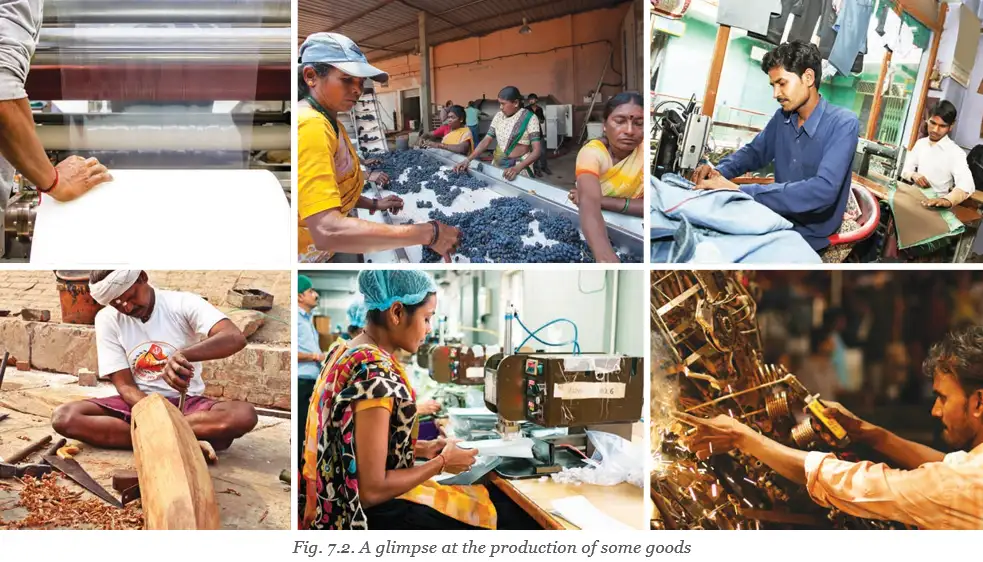
Four factors of production
How the factors work together
- A business chooses a location and organises the resources it needs.
- It combines land, labour, capital and entrepreneurship.
- The combined inputs produce goods or services.
Technology as a facilitator
- Factors of production
- Resources or inputs used to produce goods and services.
- Business
- A firm, shop or factory that produces or sells goods, or provides a service.
- Labour
- People’s work used in the production of goods or services.
- Technology
- A facilitator that can increase output with the same or fewer inputs.
What are the four factors of production?
How does technology support production?
Quick recap
- Factors of production are the inputs used to make goods and provide services.
- The four factors are land, labour, capital and entrepreneurship.
- Businesses combine these factors to produce goods and services.
- Ratna’s restaurant illustrates the need for a location, workers, money and equipment, and planning.
- Technology facilitates production and can increase output with the same or fewer inputs.
Factors of Production
Land: Natural Resources
Land — In economics, land means geographical space and all natural resources used in production.
- Includes: Soil, forests, water, air, sunlight, minerals, oil and natural gas.
- Use in business: A business may buy the land it needs or pay rent to use it for a period.
Labour and Human Capital
Labour — Labour is the physical and mental effort people contribute to producing goods and services.
- Different work: Farmers, carpenters, construction workers, teachers and doctors contribute in different ways.
- Contribution: Work uses different levels of physical effort, knowledge and skill to meet society’s needs.
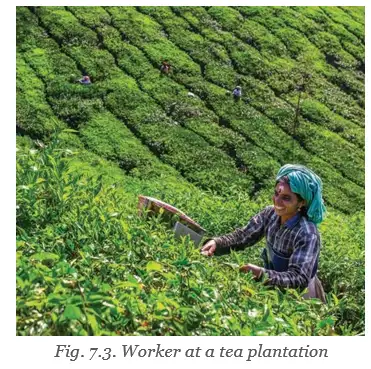
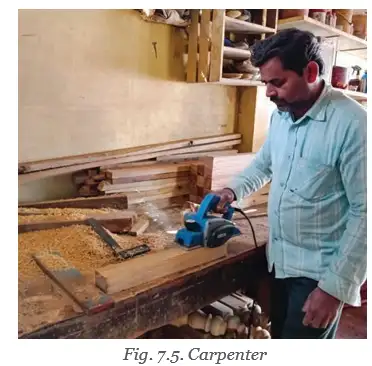
Skill — Skill is the ability to do an activity or job well, developed through practice and training.
Human capital — Human capital is the specialised knowledge, skills, abilities and expertise people use to perform work.
| Point | Labour | Human capital |
|---|---|---|
| Meaning | Physical and mental effort used in production | Specialised qualities that make the effort effective |
| Focus | The work people do | The knowledge, skill and expertise applied to that work |
| Example | A person building a road | An engineer’s design knowledge and construction expertise |
- Human contribution: People apply knowledge, skills and decision-making to create goods and services.
- Examples: Police officers maintain law and order; scientists develop technologies; chefs create recipes.
- Importance: Human capital raises the quality and efficiency of labour.
Developing Human Capital
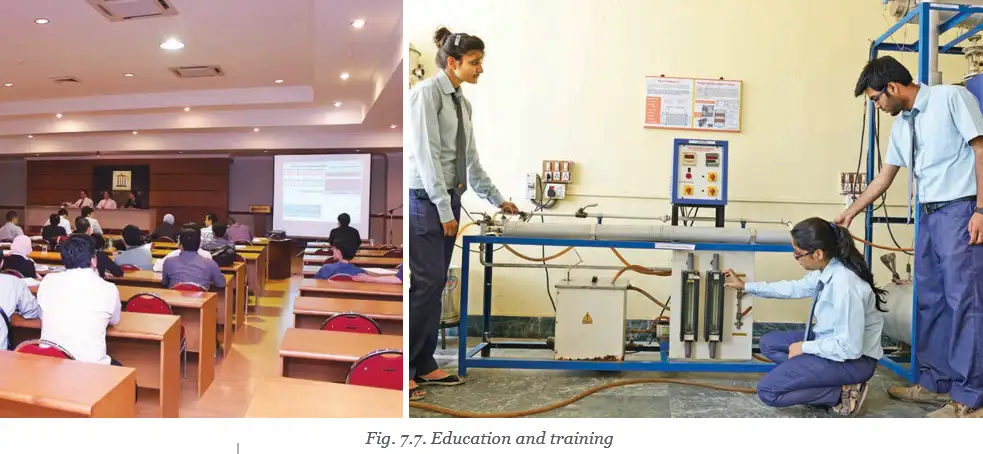
Training — Training is learning the skills required to perform a particular job or activity.
| Facilitator | How it develops human capital | Example or benefit |
|---|---|---|
| Education | Builds knowledge, from basic literacy to specialist understanding. | A civil engineering student learns design principles and materials. |
| Training | Develops job-specific skills through practical learning. | Site observation, material testing, safety learning and hands-on work prepare engineers for construction. |
| Healthcare | Supports physical and mental well-being and cognitive development. | Healthy children attend and learn at school; healthy workers can work effectively and regularly. |
Why healthcare matters
- For learning: Good health supports cognitive development and regular school attendance.
- For work: Healthy workers can do more in less time, contribute creatively and miss fewer workdays due to illness.
- Healthcare systems: Hospitals, primary health centres, doctors, pharmacies and diagnostic labs help people access care and maintain the health needed to learn and work.
- Land
- Geographical space and natural resources used in production.
- Labour
- Physical and mental effort used to produce goods and services.
- Human capital
- Knowledge, skills, abilities and expertise that improve work.
- Training
- Learning skills needed for a particular job or activity.
- Cognitive development
- The development of learning, knowing and understanding.
Quick recap
- Land in economics includes geographical space and natural resources.
- Labour is the physical and mental effort people use in production.
- Human capital is the specialised knowledge and skill that make labour more effective.
- Education and training build knowledge and job-related skills.
- Healthcare supports learning, attendance, productivity and creativity.
Social and Cultural Influences
Work Culture and Human Capital
- Work culture: Values such as hard work, continuous improvement, punctuality and attention to quality strengthen human capital.
- Examples: Japan’s kaizen approach promotes continuous improvement, while Germany’s work ethic is associated with punctuality and high-quality production.
Challenges to Developing Human Capital
- Literacy: Literacy helps people develop skills and improve their productivity.
- India: In 2023, the adult literacy rate was estimated at 85% for males and 70% for females.
- Key need: Developing human capital requires access to quality education, healthcare, training and skills development.
Demographic Dividend
- Meaning: A demographic dividend is the benefit a country can gain from having a large working-age population and fewer dependants.
- Opportunity: Working people can support business growth and help improve living standards.
- Preparation: Quality education, healthcare, training and skills help people contribute productively.
India’s Ancient Skill Heritage
- Work and devotion: Ancient Indians viewed work as an expression of one’s nature and a pursuit of perfection.
- Knowledge and art: Production combined art (Kalā) with knowledge (Vidyā), passed down and developed across generations.
- Design standards: The Shilpa Shastras set detailed guidelines for sculptures, paintings, buildings, wooden items and jewellery.
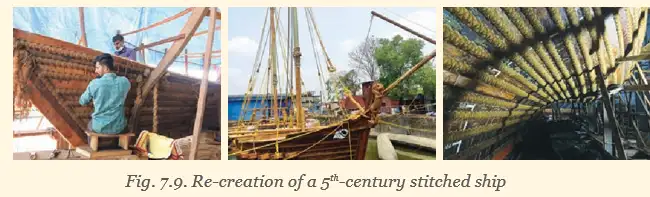
Stitched Shipbuilding
Dates and Periods
- Over 2,000 years agoIndians used stitched wooden ships and boats for maritime trade and cultural exchange.
- 16th centuryThe stitched-ship technique declined sharply after Europeans arrived in the Indian Ocean.
- Mid-1940sJapan began applying the idea of kaizen.
- 2023India’s adult literacy estimates were 85% for males and 70% for females.
- 2024The Economic Survey reported that 65% of India’s population was below age 35.
What is a demographic dividend, and what is needed for India to benefit from it?
How did the stitched-ship technique help trade and travel?
Quick recap
- Work culture: Continuous improvement and attention to quality can strengthen human capital and national progress.
- Literacy and skills: Education helps build skills and productivity; a shortage of skilled workers can challenge businesses.
- Demographic dividend: A young population creates potential benefits when people can access education, healthcare and training.
- Skill heritage: Indian crafts drew on devotion, inherited knowledge and detailed design guidelines.
- Stitched ships: Flexible cord-stitched planks aided Indian Ocean navigation, trade and cultural exchange.
Capital
Capital as a Factor of Production
Sources of Business Capital
How businesses obtain capital
- Personal savings, family and friends can provide initial funds and support.
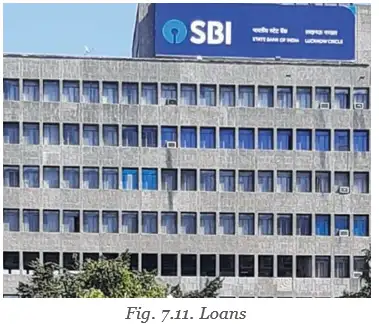
- If these funds are insufficient, a business may borrow from a bank.
- The borrower repays the loan over time and also pays interest.
- Large companies can raise money from the public by selling shares through the stock market.
Interest — Money paid by a borrower to a lender for using the lender’s money for a specific period.
Stock market — A special market where shares of companies are bought and sold.
Dividend — Money a company regularly pays its shareholders from its profits.
Shares and dividends
- Large companies can raise financial capital by offering shares to the public.
- Shareholders are offered a share of company profits, paid as dividends.
Entrepreneurship
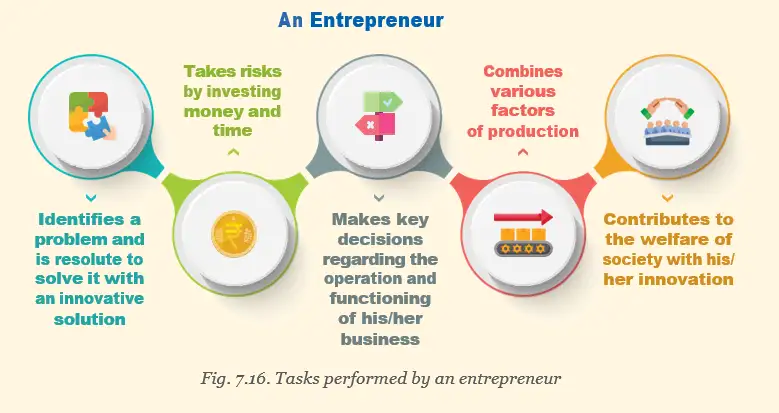
Entrepreneurship — Starting a business or creating something new to solve a problem.
The role and value of an entrepreneur
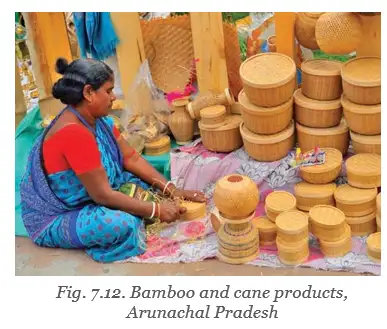
- Entrepreneur: A person who develops an idea, takes risks, gathers other factors of production and works to make the venture successful.
- Innovation: An entrepreneur’s vision can bring new products and services to the market and help solve problems.
- Benefits: Entrepreneurship can serve society, create jobs and support livelihoods, as well as provide personal satisfaction.
Startup — An entrepreneurial venture with limited resources that aims for rapid growth and expansion while leveraging technology.
J.R.D. Tata: An Indian Entrepreneur
Example of entrepreneurship
- J.R.D. Tata (Jehangir Ratanji Dadabhoy Tata) was an entrepreneur, industrialist and philanthropist who led the Tata Group, one of India’s largest business groups.
- Business growth: Under his leadership, the Tata Group expanded into steel, cars, power and chemicals.
- Social responsibility: He believed businesses should help society and valued good working conditions for workers.
J.R.D. Tata: Key Dates
- 1904J.R.D. Tata was born.
- 1932He started Tata Airlines, India’s first airline, which later became Air India.
- 1992He received the Bharat Ratna for his service to the nation.
How can a company raise financial capital through the stock market?
What does an entrepreneur do, and how can entrepreneurship benefit society?
- Capital
- A physical or financial asset used to produce goods and services.
- Interest
- Payment for using borrowed money for a specific period.
- Stock market
- A market where company shares are bought and sold.
- Dividend
- A regular payment to shareholders from company profits.
- Entrepreneur
- A person who develops an idea, takes risks and gathers resources to create a business.
- Startup
- A technology-leveraging entrepreneurial venture with limited resources and aims for rapid growth and expansion.
Quick recap
- Capital includes financial resources and human-made assets used to produce goods and services.
- Businesses may use savings, family and friends, bank loans or stock-market funding to obtain capital.
- Borrowers pay interest; companies may pay shareholders dividends from profits.
- Entrepreneurs develop ideas, take risks and gather production resources to start ventures.
- Entrepreneurship can introduce useful products and services, create jobs and support livelihoods.
- J.R.D. Tata started Tata Airlines in 1932; it later became Air India.
Technology: An Enabler of Production
Meaning and Use of Technology
- Meaning: Technology is the application of scientific knowledge.
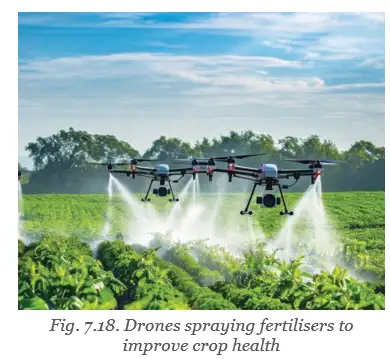
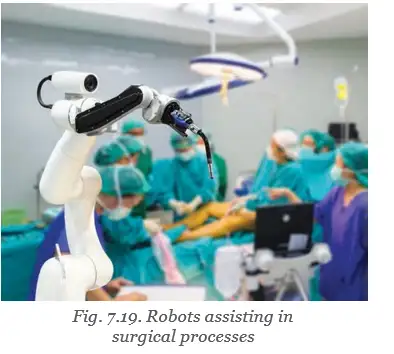
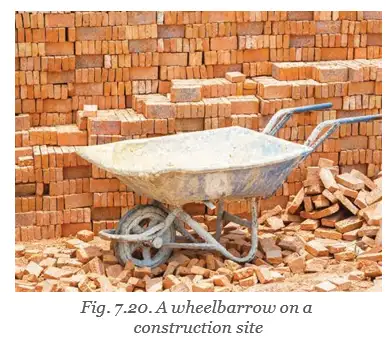
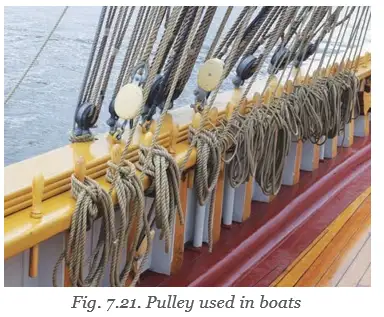
- Role: Production-related activities use technology to carry out tasks and make goods and services.
- Continuity: Technology includes both ancient methods that remain in use and newer developments.
Technology in Production Today
Changing and Continuing Technologies
Access to Knowledge, Skills, and Jobs
Technology Expands Access
- Online platforms provide learning and career information.
- People can access courses and job opportunities remotely.
- Geographical barriers are reduced.
- Knowledge, skill development, and job access become possible across India and abroad.
- UPI
- Unified Payments Interface; enables digital payments.
- GPS
- Global Positioning System; can help identify shorter routes.
- SWAYAM
- Study Webs of Active Learning for Young Aspiring Minds; a Government online learning platform offering courses from Grade 9 onwards.
- MOOC
- Massive Open Online Course; an online course open to many learners.
- National Career Service
- Government online portal that helps people find job opportunities.
How does technology support production and daily work?
How can technology improve access to learning and jobs?
Quick recap
- Technology applies scientific knowledge to practical tasks and is used in production.
- Modern technology can make work easier, faster, and more effective.
- New technologies may replace older ones, but useful older tools can remain in use.
- SWAYAM (Study Webs of Active Learning for Young Aspiring Minds) provides online courses; MOOCs offer flexible learning to many learners.
- The National Career Service connects people with job opportunities across sectors.
- Online platforms reduce geographical barriers to knowledge, skills, and jobs.
How are the Factors Connected?
Combining the Factors of Production in Different Ways and Places.
Factors of production — Land, labour, capital, entrepreneurship and technology are combined to produce goods and services.
How the factors work together
- Different proportions: The amount of each factor used depends on the product.
- Interdependence: Factors complement one another; a missing or misused input can make production inefficient or stop it.
- Changing methods: New techniques can change the proportion of factors used and affect output.
| Point | Labour-intensive | Capital-intensive |
|---|---|---|
| Relies more on | Labour | Capital and specialised machinery |
| Examples | Agriculture, construction and handicrafts | Semiconductor chips and satellites |
Technology can change production
- Agriculture: Greater use of machines can reduce dependence on labour.
- Textiles: 3-D printing can help revive traditional textile art by producing handloom products on a larger scale for the market.
Geographic Connections and Supply Chains
Inputs from different places
- Geographic interconnectedness: Businesses obtain inputs from different locations and combine them to make goods and services.
- Benefit: Access to varied inputs helps businesses produce.
Supply chain — A network of people, organisations, resources, activities and technology involved in producing and selling goods.
Supply-chain disruption
- Businesses rely on inputs from far-off places instead of local sources.
- A disruption in this supply chain interrupts the flow of required inputs.
- The production process comes to a halt; this occurred during the COVID-19 pandemic.
Mobile Phone Manufacturing
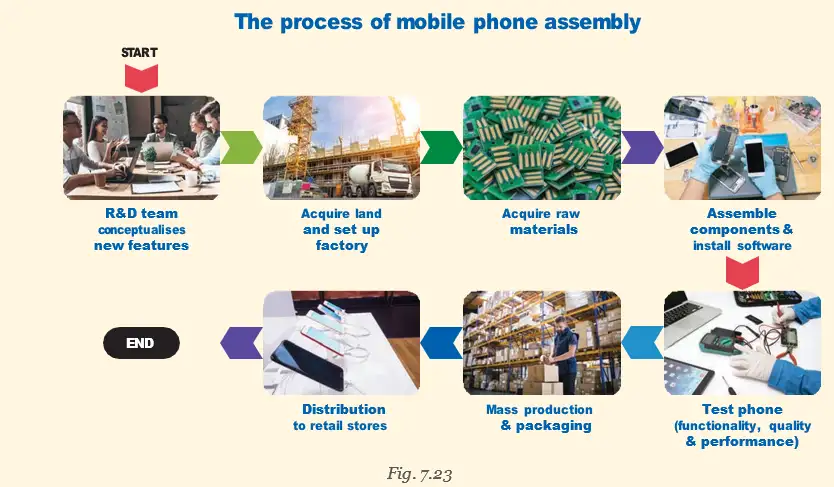
Factors involved in phone production
- Labour: Human effort is needed at every stage to design, supervise and improve products and processes.
- Expertise: Software, electrical and mechanical engineers, together with project managers, contribute to product development.
- Entrepreneurship: The entrepreneur guides how resources should be used.
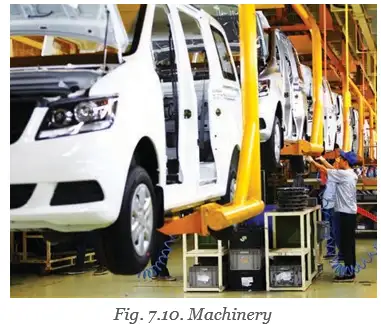
- Capital and other inputs: Financial resources are needed to obtain land or factory space, machinery and skilled workers.
India’s mobile phone manufacturing
- 2025India is the world’s second-largest mobile phone manufacturer, after China.
- Labour-intensive
- Production that relies more on human labour.
- Capital-intensive
- Production that relies more on capital and specialised machinery.
- Geographic interconnectedness
- The connection created when businesses obtain inputs from different locations.
- Supply chain
- The network involved in producing and selling goods.
Quick recap
- Land, labour, capital, entrepreneurship and technology combine to produce goods and services.
- The proportion of each factor depends on the product; factors are interconnected.
- New technologies can change the mix of inputs and the scale of production.
- Businesses obtain inputs from different places, linking production geographically.
- Supply-chain disruption caused by dependence on far-off sources can halt production.
- Phone production needs human effort, expertise, entrepreneurial guidance and financial resources.
Responsibilities towards Factors of Production
Responsibilities towards Natural Resources
Sustainable practices — Ways of producing goods that meet present needs while protecting resources for future generations.
Responsible use of natural resources
- Resources: Production uses land and natural resources such as water and minerals; these are limited and can be damaged.
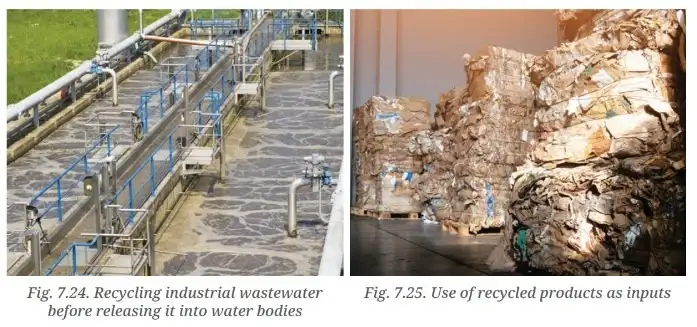
- Producer responsibilities: Reduce waste, prevent pollution and protect the environment during production.
- Sustainable production: Replenish and conserve natural resources so they remain available for future use.
Effects of pollution from production and waste
- Leather-factory waste in Tamil Nadu can enter rivers and soil.
- Improperly recycled smartphones can release lead and mercury into land and water.
- Polluted land and water can harm people, animals, plants and biodiversity.
Responsibilities towards Workers
| Responsibility | What it involves |
|---|---|
| Fair compensation and safe conditions | Pay workers fairly and provide a safe workplace. |
| Skill development | Invest in training and education so workers can develop skills and remain competitive in the labour market. |
| Workplace rights and protections | Follow laws on fair treatment and non-discrimination, and provide benefits such as health care or paid leave. |
Corporate Social Responsibility
Corporate Social Responsibility (CSR) — The responsibility of businesses to address social and environmental concerns through their operations for the benefit of society and biodiversity.
Examples of CSR
- Environment: Reduce polluting activities and protect biodiversity.
- Communities: Consider the well-being of local communities.
- People: Treat employees and customers with respect.
Quick recap
- Natural resources are limited and can be harmed by production.
- Producers should conserve resources, reduce waste and prevent pollution.
- Leather-factory waste and improperly discarded smartphones can pollute land and water.
- Pollution can harm people, animals, plants and biodiversity.
- Employers should provide fair pay, safe conditions, training and workplace protections.
- CSR means businesses address social and environmental concerns in their operations.
Summary
Corporate Social Responsibility
India’s CSR Law
- First: India was the first country in the world to introduce a Corporate Social Responsibility (CSR) law.
- Requirement: Companies had to spend 2% of their average profits over the previous three years on CSR activities.
CSR Law
- 2014India introduced the world’s first law mandating CSR spending by companies.
Factors of Production
How Production Factors Work
- Four factors: Land, labour, capital and entrepreneurship are used together to produce goods and services.
- Relationship: These factors are used in particular proportions; they complement one another and are interconnected.
Human Capital
Human capital — The knowledge, skills, experience and abilities of people that help them work and create economic value.
What Influences Human Capital
- Influences: Education, training, health, use of technology and social context shape human capital.
- Outcome: These factors can make people more productive in the workforce.
Using Resources Responsibly
- Purpose: Resources support the production of goods and services that serve society.
- Responsibility: Resources should be preserved and used judiciously.
Quick recap
- The four factors of production are land, labour, capital and entrepreneurship.
- These factors work together in particular proportions and are interconnected.
- Human capital includes people’s knowledge, skills, experience and abilities.
- Education, training, health, technology and social context influence human capital.
- Resources help produce goods and services for society and should be used carefully.
- India introduced the world’s first CSR law in 2014, requiring a specified level of company spending.