Class 8 . Social Science . Exploring Society India and Beyond Part I . Reshaping India S Political Map
Chapter 2: Reshaping India’s Political Map
Ch 2
Social Science
Class 8
Introduction
Understanding the Period
Medieval period — In these chapters, “medieval” refers broadly to the period from the 11th to the 17th centuries.
| Point | Europe | India |
|---|---|---|
| Period and meaning | Originally described the time from the fall of the Roman Empire in the 5th century CE to the Renaissance (14th–16th centuries). | Used broadly for the 11th–17th centuries; historians do not always agree on its exact span. |
| Caution | It was once viewed as a dark age before modern science. | India’s history differs from Europe’s, so applying the same label is not ideal. |
Period Covered
- 11th centuryA new phase began as invasions from beyond the Hindu Kush reshaped India’s political map.
- 13th century onwardThis chapter explores India’s changing political landscape from this point onward.
- 11th–17th centuriesThe broad period called “medieval” in these chapters.
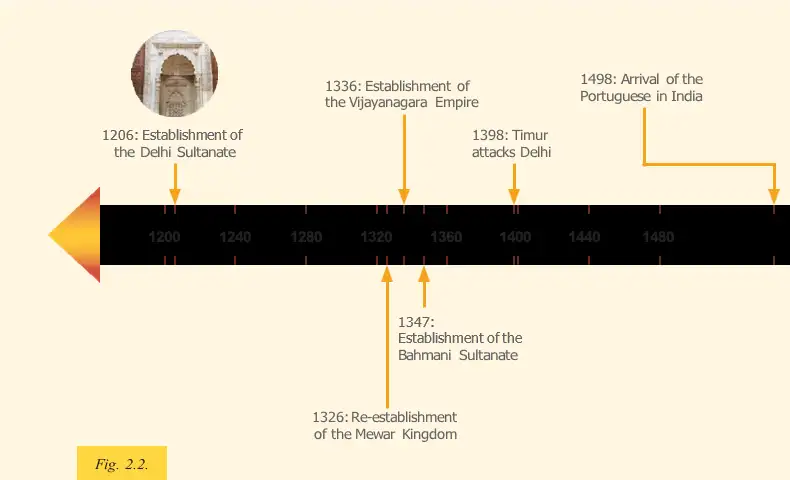
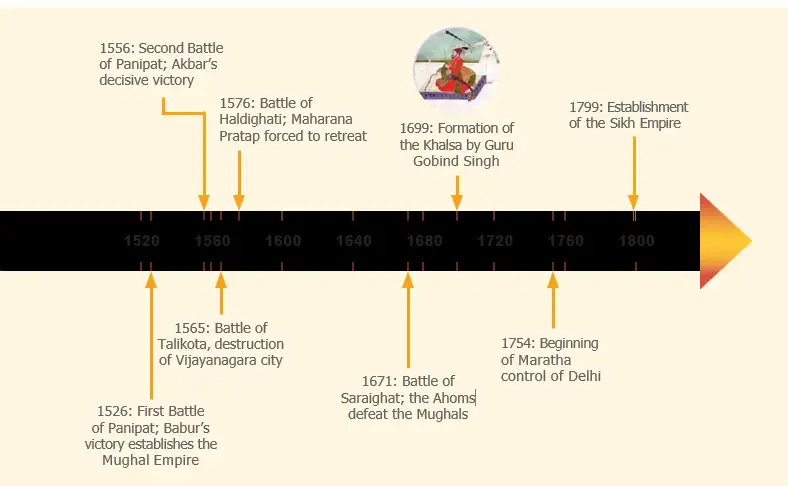
Invasions and Political Change
Why Invasions Took Place
- Origin: Invaders crossed into the subcontinent from beyond the Hindu Kush mountains; many were Central Asian, including Turkic and Afghan peoples.
- Scale: Warfare existed in earlier periods too, but invasions by people from outside the subcontinent came in an unprecedented wave.
- Motives: Invaders sought India’s reputed riches and territory; some also aimed to spread their own versions of religion, using violence if necessary.
- Impact: These invasions and the rise of new dynasties repeatedly changed India’s political boundaries.
How the Political Map Changed
- Invasions from beyond the Hindu Kush
- Conquests and territorial ambitions
- New dynasties rise
- India’s political boundaries and ruling powers change
- Turkic
- Peoples, languages and cultures historically associated with a vast region from Central Asia to Turkey and Siberia.
- Hindu Kush
- Mountain range beyond which many of the invaders came from.
- Renaissance
- Europe’s cultural revival in the 14th–16th centuries, encouraged by renewed interest in Greek and Roman art and literature.
Spellings Used
- Khalji/Khilji: Alternative spellings for the same name.
- Mughal: The standard spelling used here; “Mughul” and “Moghul” are also found.
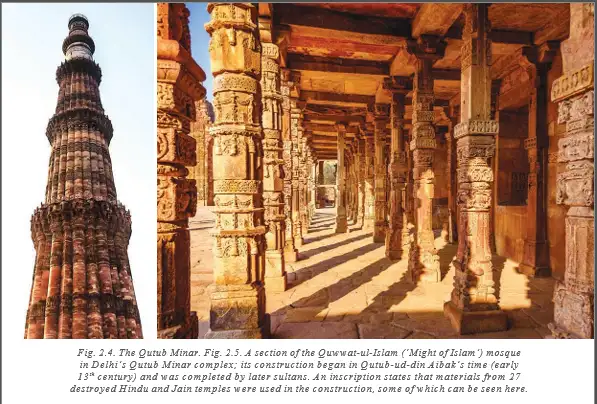
Quick recap
- “Medieval” refers broadly to the 11th–17th centuries in these chapters, though historians may differ on its boundaries.
- In Europe, the term was used for the period from the fall of the Roman Empire in the 5th century CE to the Renaissance.
- A new phase began in the 11th century with invasions from beyond the Hindu Kush.
- Many invaders were Central Asian Turkic or Afghan peoples.
- Invaders sought wealth, territory and, in some cases, the spread of their own versions of religion.
- Invasions and new dynasties reshaped India’s political boundaries; the chapter follows this changing landscape from the 13th century onward.
Rise and Fall of the Delhi Sultanate
Formation and Extent
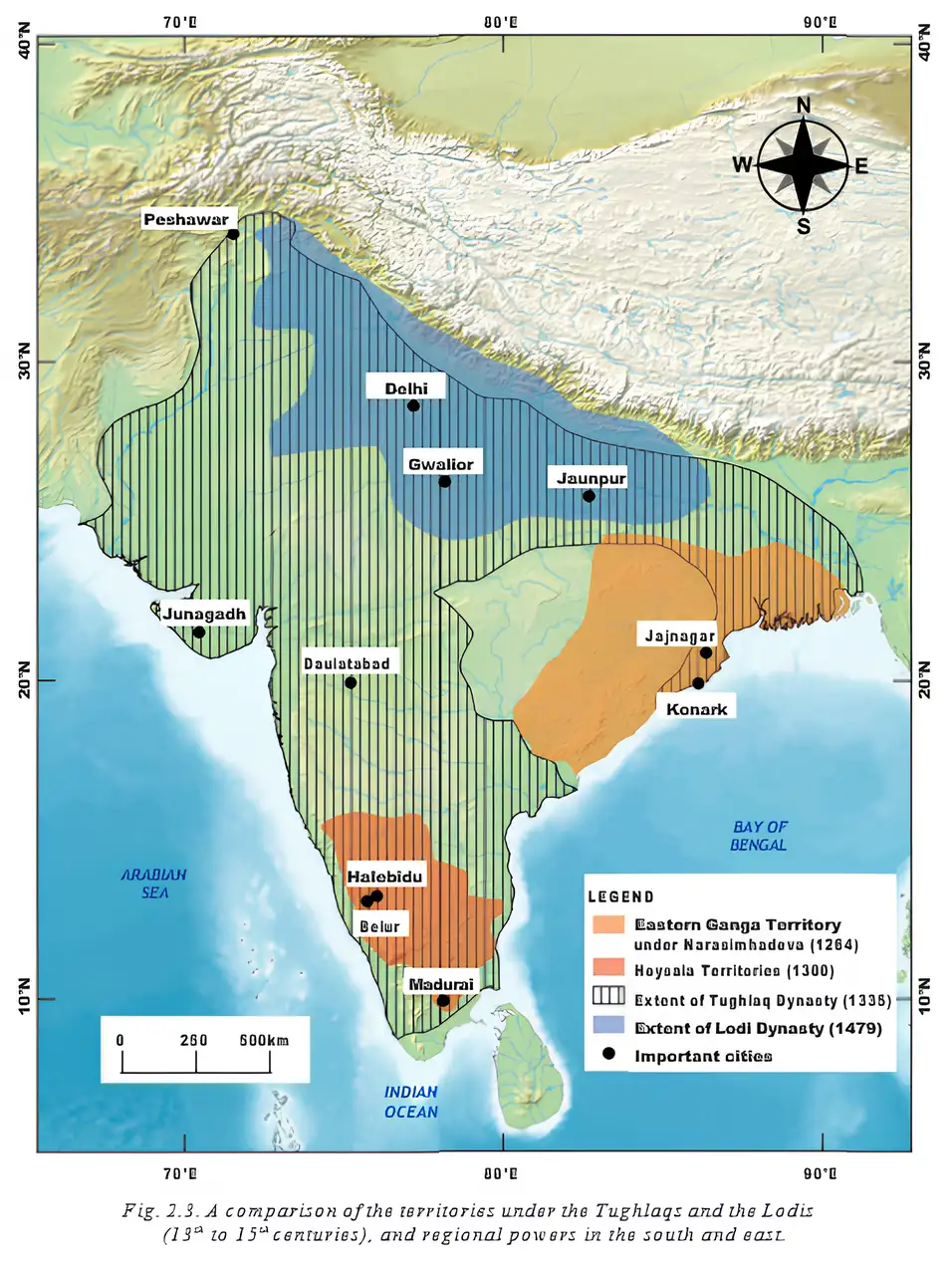
Political Instability and Ala-ud-din Khilji
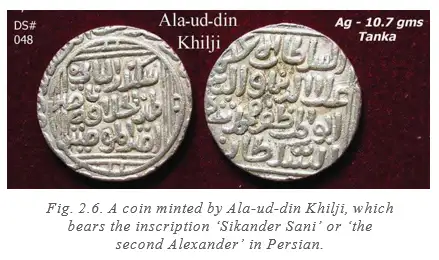
Ala-ud-din Khilji’s Campaigns
- North and central India: At the turn of the 14th century, Ala-ud-din campaigned widely and plundered many cities.
- Mongol invasions: He repelled several Mongol attacks aimed at expanding their empire into India.
- Southern campaigns: His slave-general Malik Kafur conquered kingdoms in the south and brought back plundered wealth.
- Military funding: The wealth helped pay for the Sultanate’s large army; campaigns also attacked Hindu centres including Srirangam, Madurai, Chidambaram and possibly Rameswaram.
Muhammad bin Tughlaq: Expansion and Policies
Tughlaq’s Capital Transfer and Token Currency
- A more central capital was intended to improve control → the court moved from Delhi to Daulatabad.
- The journey exceeded 1,000 km → people endured a costly, difficult transfer.
- The plan misfired → the capital was shifted back to Delhi, with reported loss of life.
- Cheap copper coins were assigned the value of silver or gold → confusion in trade and counterfeiting increased → the economy declined.
Wealth, Taxation and Iconoclasm
- Iconoclasm
- Rejection or destruction of religious images considered idolatrous.
- Token currency
- Money whose face value is greater than the value of the material it is made from.
- Jizya
- A tax imposed on non-Muslim subjects in return for protection and exemption from military service.
- Infidel
- A person regarded as not sharing a particular religion’s faith; its meaning depends on the religious viewpoint.
Jizya and Timur’s Invasion
- Jizya: Some sultans imposed this tax on non-Muslims. Depending on the ruler, it could be an economic burden and a source of public humiliation, as well as an incentive to convert.
- Timur: At the end of the 14th century, this Turkic-Mongol conqueror invaded northwestern India and devastated Delhi.
- Motives and impact: Timur sought both religious warfare and plunder. Many people were killed or enslaved; Delhi was left in ruins, and he withdrew with vast wealth.
- Aftermath: The invasion left political chaos. The Lodis established the Sultanate’s final dynasty, but its territory had shrunk amid resistance from other Indian states and kingdoms.
Key Developments
- 1192Prithviraj Chauhan was defeated; the Delhi Sultanate formed.
- Turn of the 14th centuryAla-ud-din Khilji campaigned across north and central India and repelled Mongol invasions.
- A few decades laterMuhammad bin Tughlaq expanded the Sultanate and introduced ambitious policies.
- End of the 14th centuryTimur invaded northwestern India and devastated Delhi.
Name the five dynasties of the Delhi Sultanate in sequence.
Why did Muhammad bin Tughlaq’s token currency cause economic problems?
What were the major effects of Timur’s invasion of Delhi?
Quick recap
- The Delhi Sultanate formed after Prithviraj Chauhan’s defeat in 1192 and was ruled by five successive dynasties.
- Expansion, raids and frequent violent successions made the Sultanate politically unstable.
- Ala-ud-din Khilji campaigned widely, resisted Mongol invasions and funded his army through southern conquests and plunder.
- Muhammad bin Tughlaq’s capital transfer and token currency plans were ambitious but badly disrupted people and trade.
- The Sultanate’s wealth came from plunder, taxes and the slave trade; campaigns also damaged trade and agriculture.
- Timur’s devastating invasion weakened Delhi, and the Lodis ruled the shrinking Sultanate as its final dynasty.
Resistance to the Delhi Sultanate
The Eastern Ganga Kingdom of Kalinga
- Kalinga The Eastern Ganga kingdom included present-day Odisha and parts of Bengal and Andhra Pradesh; the Delhi Sultanate failed to subdue it.
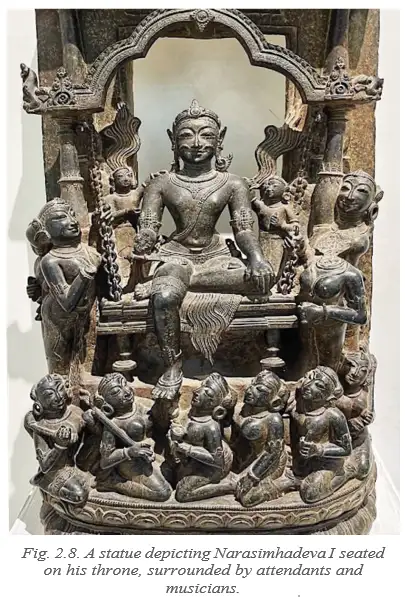
- Narasimhadeva I Also spelt Narasingha Deva I, he ruled in the mid-13th century and strengthened Kalinga militarily and culturally.
- Victories He repelled several Sultanate incursions and defeated the Delhi Sultanate’s governor of Bengal.
- Konark Sūrya temple He built this famed temple partly to commemorate his victories.
The Musunuri Nayakas
- Leaders The Musunuri Nayakas were Telugu chieftains who rallied more than 75 other regional chieftains into a confederacy.
- Success The confederacy defeated smaller provinces and Delhi Sultanate forces, expelling Muhammad bin Tughlaq’s army from Warangal, in present-day Telangana.
- Period This resistance took place around 1330–1336.
The Hoysalas and the Vijayanagara Empire
- Hoysala kingdom It ruled parts of southern India, mainly present-day Karnataka, and resisted several Delhi Sultanate attacks.
- Southern independence For a time, the Hoysalas remained the only independent kingdom in the south.
- Context Alauddin’s southward expansion was attracted by the region’s renowned wealth.
- Decline Sultanate attacks and internal conflicts weakened the Hoysala kingdom.
- Absorption In the mid-14th century, the kingdom was absorbed into the Vijayanagara Empire further south.
Independent Sultanates and Mewar
- Regional Sultanates Independent Sultanates emerged in the Deccan, Gujarat, Bengal and other regions.
- Bahmani Sultanate It arose in the mid-14th century and controlled much of the Deccan for a time.
- Political effects Powerful regional Sultanates created shifting alliances and frequent wars.
- Mewar Parts of Rajasthan remained beyond Delhi Sultanate control. In the 15th century, Rana Kumbha repelled invasions from later regional Sultanates.
- Rana A title often used for Rajput kings.
Kumbhalgarh Fort
- Builder and period Rana Kumbha built the fort in the 15th century in the Aravalli hills.
- Purpose It served as a stronghold for Mewar’s rulers, in the central and southern parts of present-day Rajasthan.
- Defences Forests and steep slopes surrounded the fort; its massive 36-kilometre-long wall is one of the world’s longest continuous walls.
Key Periods
- Mid-13th centuryNarasimhadeva I led Kalinga, repelled Sultanate incursions and built the Konark Sūrya temple partly to commemorate victories.
- Around 1330–1336The Musunuri Nayakas’ confederacy expelled Muhammad bin Tughlaq’s army from Warangal.
- Mid-14th centuryThe Bahmani Sultanate emerged; the Hoysala kingdom was absorbed into the Vijayanagara Empire.
- 15th centuryRana Kumbha resisted invasions by later Sultanates and built Kumbhalgarh Fort.
How Resistance Reshaped Political Power
- Delhi Sultanate expansion faced resistance from kingdoms and regional confederacies.
- Kalinga and the Musunuri Nayakas repelled Sultanate forces; Mewar remained beyond Delhi Sultanate control.
- The Hoysalas resisted attacks but weakened through conflict and were absorbed by Vijayanagara.
- Independent Sultanates emerged in the Deccan, Gujarat, Bengal and other regions.
- Competing powers formed shifting alliances and fought frequent wars.
- Confederacy
- An alliance of groups or rulers formed to act together.
- Regional Sultanate
- An independent Sultanate ruling a particular region.
- Stronghold
- A fortified place used as a defensive base.
- Rana
- A title often used for Rajput kings.
How did the Musunuri Nayakas resist the Delhi Sultanate?
How did Narasimhadeva I resist the Delhi Sultanate?
Quick recap
- Kalinga resisted the Delhi Sultanate; Narasimhadeva I defeated its Bengal governor and built the Konark Sūrya temple.
- The Musunuri Nayakas united more than 75 chieftains and drove Muhammad bin Tughlaq’s army out of Warangal.
- The Hoysalas resisted attacks but weakened through conflict and were absorbed into Vijayanagara in the mid-14th century.
- The Bahmani Sultanate and other regional Sultanates created competing powers, shifting alliances and wars.
- Rana Kumbha resisted invasions by later Sultanates and built Kumbhalgarh Fort as a stronghold for Mewar.
The Vijayanagara Empire
The Rise of Vijayanagara
Vijayanagara Empire — An independent kingdom founded in southern India in the 14th century that grew into a major political and military power.
Founding and Capital
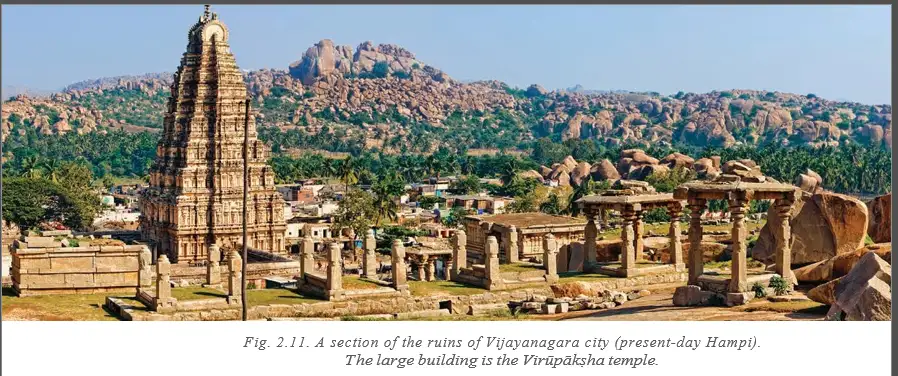
- Founders: Harihara and Bukka had served as governors under Muhammad bin Tughlaq before rejecting Delhi’s authority and establishing an independent kingdom.
- Capital tradition: Folklore says the brothers saw a hare chase hounds at Hampi, in present-day Karnataka. Their guru Vidyaranya interpreted it as a sign of courage and advised them to establish their capital there.
Rivals and Royal Titles
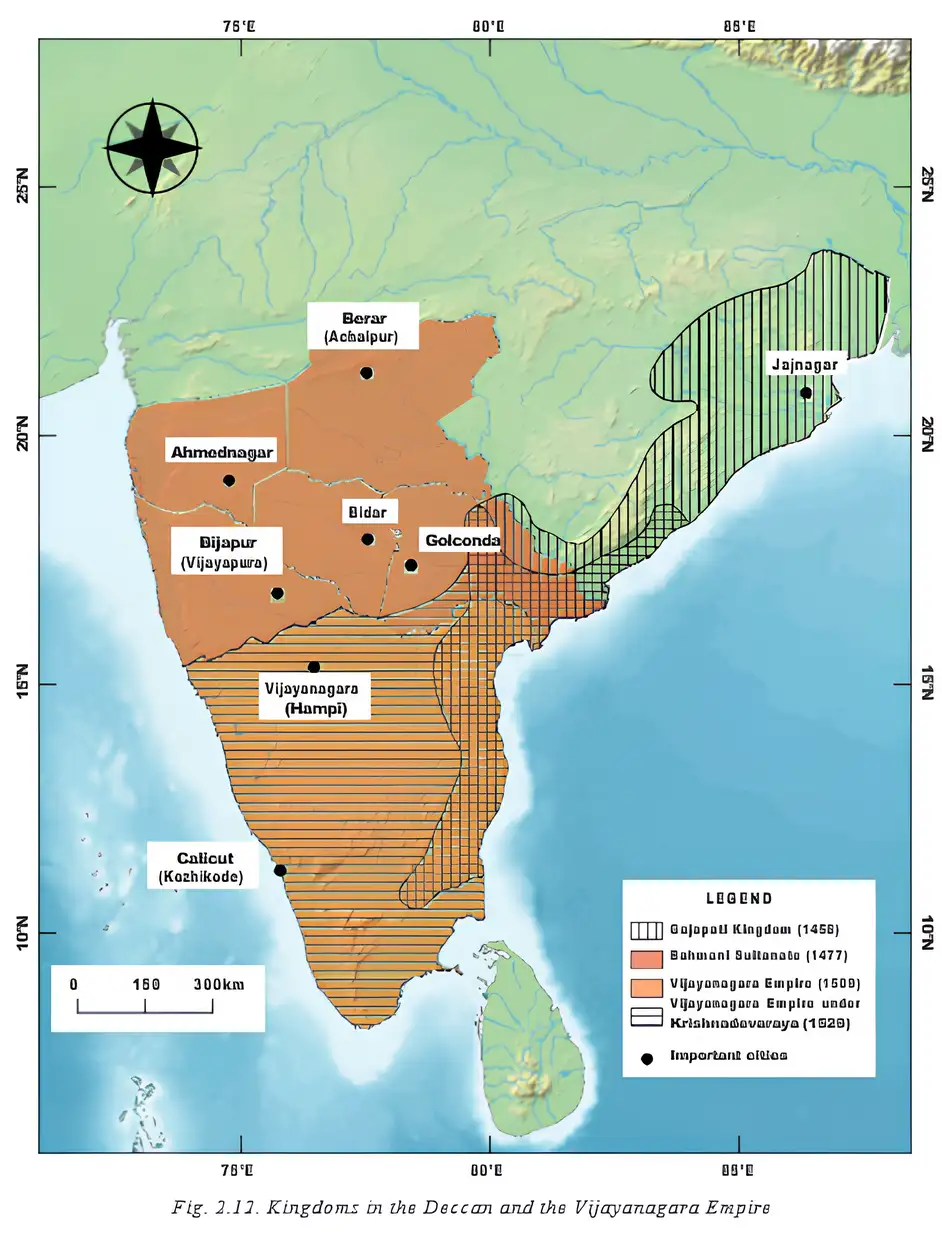
- Northern rival: The Bahmani Sultanate was a major rival to the north of Vijayanagara.
- Deccan Sultanates: The Bahmani Sultanate fragmented into five independent states: Bijapur, Golconda, Berar, Ahmednagar and Bidar. They were ruled by former governors, or tarafdars, who declared autonomy.
- Other rivals: Vijayanagara fought the rulers of Bijapur and Golconda, as well as the Gajapati rulers of Odisha to the east.
- Royal titles: Pati means “lord” or “master.” Vijayanagara kings were called Narapati, Bahmani rulers Ashwapati, and Maratha rulers Chhatrapati.
- Tarafdars
- Former governors who declared autonomy as the Bahmani Sultanate fragmented.
- Gajapati
- A royal title of the Odisha rulers; pati means lord or master.
- Narapati
- A title of Vijayanagara kings, meaning lord of men.
- Ashwapati
- A title of Bahmani rulers, meaning lord of horses.
- Chhatrapati
- A title of Maratha rulers, meaning lord of the umbrella.
Krishnadevaraya and the Empire’s Peak
Krishnadevaraya — The celebrated Vijayanagara ruler under whom the empire reached its peak in the 16th century.
| Aspect | Key points |
|---|---|
| Military | Expanded and secured the empire’s dominance over the Deccan. |
| Literature and learning | Patronised poets and scholars in Sanskrit, Telugu and Kannada; composed the Telugu epic Āmuktamālyada about the Tamil poet-saint Āṇḍāl. |
| Governance | A section of Āmuktamālyada, Rājanīti (“royal policy”), explains his ideas on good governance. |
| Temples and buildings | Granted support to temples including Tirupati and the Vitthala temple in the capital; Vijayanagara had grand temples, palaces and other buildings. |
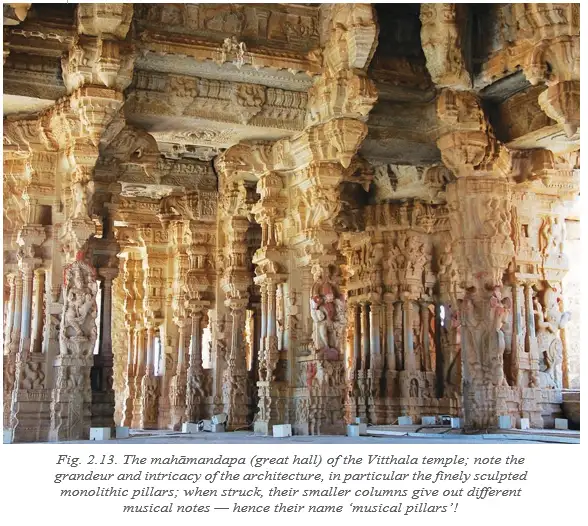
Trade and Accounts of Vijayanagara
- Portuguese traders: They came to sell horses. The king treated them well so they would not sell valuable horses to enemy kingdoms.
- Domingo Paes: This Portuguese traveller described Vijayanagara as vast and beautiful, with gardens, water channels, lakes, crowded streets and markets.
- Prosperity: Paes called it a well-provided city, noting abundant goods and laden oxen in the markets.
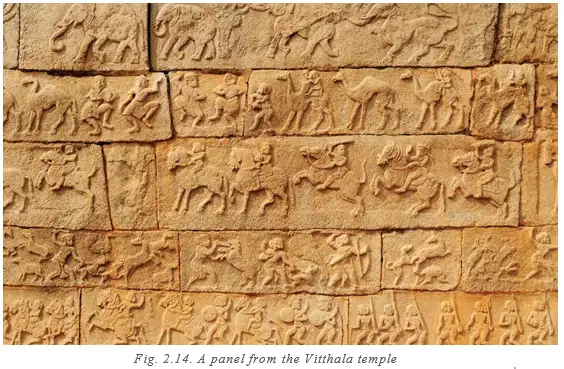
The Decline and End of the Empire
- 1529: Krishnadevaraya died of illness.
- Battle of Talikota: In 1565, the Deccan Sultanates formed a coalition and defeated Vijayanagara’s forces, led by Ramaraya, Krishnadevaraya’s son-in-law.
- Sack of the city: Over several months, houses, shops, buildings, palaces and most temples were destroyed; much of the civilian population was massacred.
- Aftermath: The empire fragmented into smaller regions ruled by Nayakas, former military governors, and came to an end in the mid-17th century.
Key Dates
- 14th centuryHarihara and Bukka established an independent kingdom that grew into the Vijayanagara Empire.
- 16th centuryThe empire reached its peak under Krishnadevaraya.
- 1529Krishnadevaraya died of illness.
- 1565The Deccan Sultanates defeated Vijayanagara at the Battle of Talikota; the city was sacked.
- Mid-17th centuryThe Vijayanagara Empire came to an end.
What were Krishnadevaraya’s main contributions?
What caused the destruction and fragmentation of Vijayanagara?
Quick recap
- Harihara and Bukka established the independent Vijayanagara kingdom in the 14th century.
- The Bahmani Sultanate fragmented into five Deccan Sultanates; Gajapati rulers of Odisha were also rivals.
- Krishnadevaraya brought the empire to its 16th-century peak and supported literature, temples and scholarship.
- Portuguese traders visited to sell horses, and Domingo Paes described the capital’s prosperity and size.
- The Deccan Sultanates defeated Vijayanagara at Talikota in 1565; the city was sacked and most temples were destroyed.
- The empire fragmented into Nayaka-ruled regions and ended in the mid-17th century.
The Mughals
Babur and the Foundation of Mughal Rule
Babur — A Turkic-Mongol ruler, military strategist and descendant of Timur who founded Mughal rule in India.
- Background: After being driven out of Samarkand in Central Asia, Babur turned his attention to India.
- First Battle of Panipat: In 1526, Babur defeated Ibrahim Lodi and took control of Delhi.
- Weapons: Babur relied on gunpowder, field artillery and matchlock guns, recently introduced in warfare in India.
- Outcome: Ibrahim Lodi’s defeat ended the Delhi Sultanate and laid the foundation of the Mughal Empire.
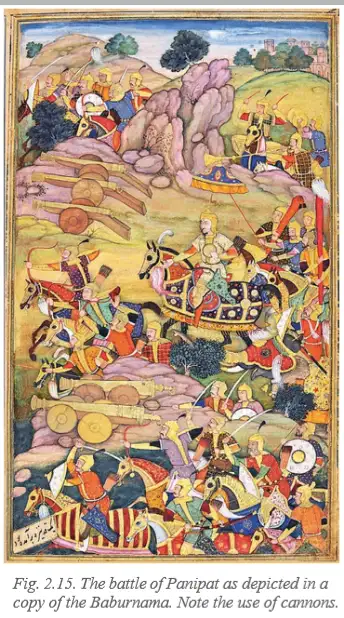
Early Mughal Rule
- 1526Babur defeated Ibrahim Lodi at the First Battle of Panipat and took control of Delhi.
- 1530Babur died; his son Humayun inherited the empire.
Babur and India
Baburnama — Babur’s autobiography, a valuable historical source that records his interests and impressions.
- Interests: Babur appreciated architecture, poetry, animals—especially birds—and plants, particularly fruit trees.
- Conqueror: He was also ruthless, ordering mass killings and enslavement, and taking pride in towers of skulls made from victims.
- Impressions of India: He felt nostalgic for Central Asia and considered India a country of few charms, yet noted its wealth in gold and silver, healthy rainy-season air and many skilled artisans.
- Decision to stay: India’s wealth and large workforce helped persuade Babur to build his empire there rather than return to Central Asia.
Humayun, Sher Shah Suri and Hemu
Changes in Power after Babur
- After Babur’s death, Humayun struggled to keep the empire together.
- Sher Shah Suri, a powerful Afghan leader, took advantage of this and established the Sur Empire over large parts of north India.
- Sher Shah introduced lasting reforms, but the Sur Empire was short-lived.
- Humayun later reconquered the territory he had lost.
Hemu and the Second Battle of Panipat
- Position: Himu, also called Hemu, was a skilled military commander and chief minister (wazir) under one of the last Suri rulers.
- Brief rule: He captured Delhi and ruled briefly under the royal name Hemchandra Vikramaditya.
- Battle and outcome: During the Second Battle of Panipat, Hemu was injured while facing Babur’s grandson Akbar; he was captured, brought to Akbar and beheaded.
- Mughal recovery: Akbar soon reclaimed Delhi for the Mughals.
- First Battle of Panipat
- The 1526 battle in which Babur defeated Ibrahim Lodi and took Delhi.
- Sur Empire
- The short-lived north Indian empire established by Sher Shah Suri.
- Hemchandra Vikramaditya
- The royal name used by Hemu during his brief rule in Delhi.
How did Babur establish Mughal rule in India?
What happened to Mughal power after Babur’s death?
Quick recap
- Babur defeated Ibrahim Lodi at Panipat in 1526 and established Mughal rule in Delhi.
- Gunpowder weapons, field artillery and matchlock guns contributed to Babur’s victory.
- Baburnama presents Babur’s cultural interests, his impressions of India and his brutality as a conqueror.
- Babur valued India’s wealth and skilled artisans, despite his nostalgia for Central Asia.
- After Babur’s death, Sher Shah Suri established the Sur Empire and introduced lasting reforms; Humayun later recovered lost territory.
- Hemu briefly ruled Delhi as Hemchandra Vikramaditya before being captured and beheaded after the Second Battle of Panipat.
Akbar
Akbar — The Mughal emperor who expanded the empire through military conquest as well as political alliances and policies of tolerance.
Akbar’s Reign
- Age 13Akbar became emperor after his father Humayun’s accidental death.
- 1556–1605Akbar ruled for almost 50 years; the middle period was relatively peaceful.
- Final 15 years of his reignAkbar led new campaigns in Kashmir, Sindh, the Deccan and Afghanistan.
Conquest and the Siege of Chittor
Chittor
- Siege: Akbar’s forces besieged Chittor (Chittorgarh, Rajasthan) for more than five months; Rajput soldiers resisted fiercely and caused heavy Mughal losses.
- Capture: After the fort was breached, many Rajput soldiers died fighting. Hundreds of women committed jauhar.
- Aftermath: Akbar ordered the massacre of about 30,000 civilians; surviving women and children were enslaved.
- Religious justification: Akbar’s victory message described the defeated population as infidels and claimed that temples had been destroyed.
Jauhar — The mass self-immolation of Rajput women to avoid capture, enslavement or abuse after a defeat.
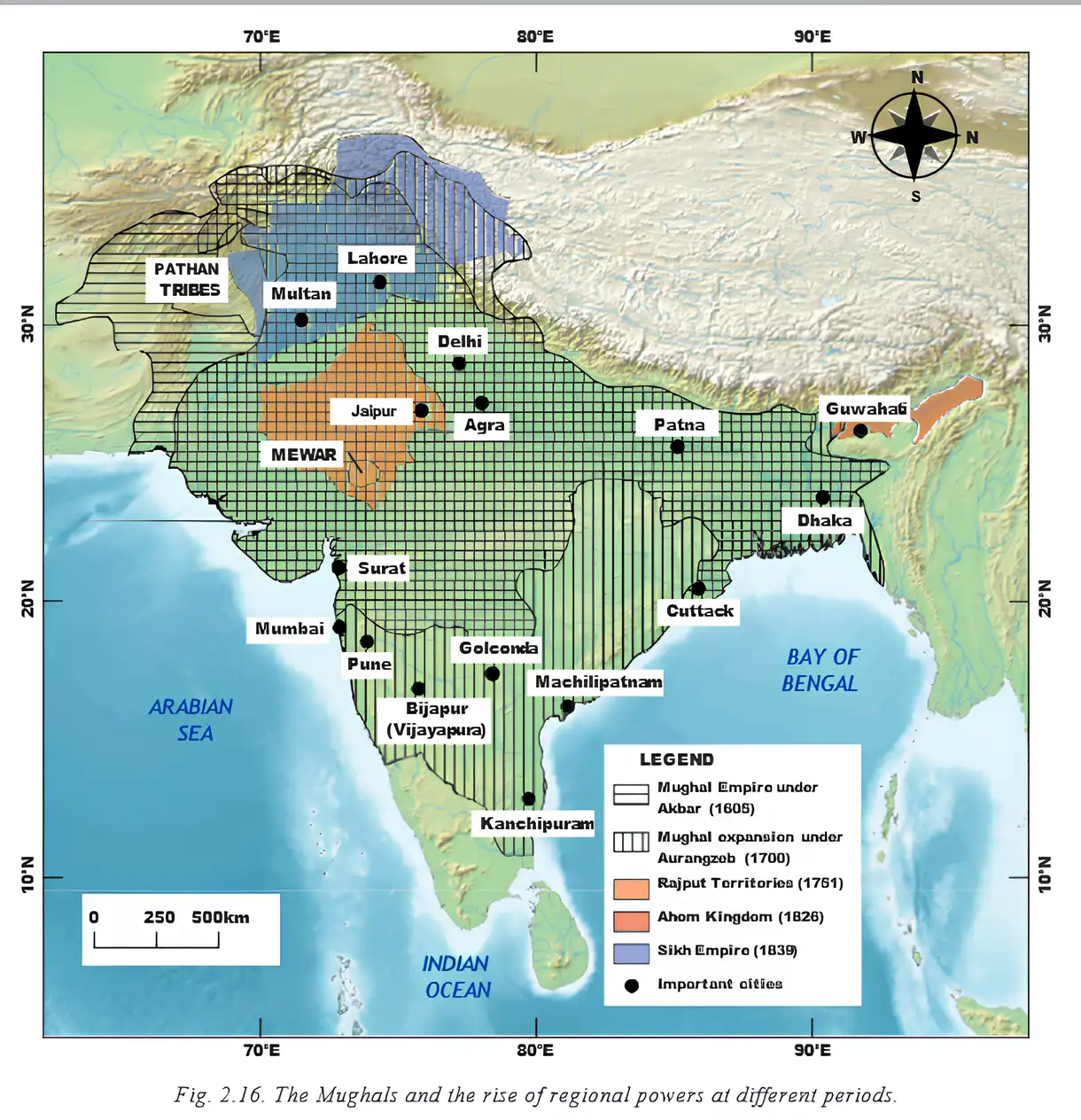
Expansion and Consolidation
From Conquest to Stability
- Ambition: Akbar believed a ruler should keep conquering, or enemies might rise against him.
- Alliances: He formed marriage alliances with neighbouring kingdoms and welcomed Rajput and regional leaders into his court.
- Religious policy: He abolished the jizya tax and promoted sulh-i-kul, meaning peace or tolerance towards all faiths.
- Administration: He appointed Hindu officials to high positions and encouraged interfaith dialogue.
- Result: These measures helped stabilise the expanding empire and gained the support of many Rajput rulers.
How Akbar Stabilised His Empire
- Empire expanded through conquest
- Akbar built marriage and political alliances
- Regional leaders and Hindu officials were included in government
- Religious tolerance and dialogue encouraged cooperation
- Support from local rulers helped consolidate Mughal control
| Approach | Main features | Purpose |
|---|---|---|
| Military conquest | Sieges and campaigns expanded Mughal territory. | To bring more regions under Mughal control. |
| Political consolidation | Alliances, appointments, tax reform and religious tolerance. | To secure cooperation and stabilise the growing empire. |
Learning, Translation and the Arts
Akbar’s Court and Translations
- Learning: Although illiterate, Akbar took a keen interest in Persian and Indian texts, classical Indian thought and scholarly discussion.
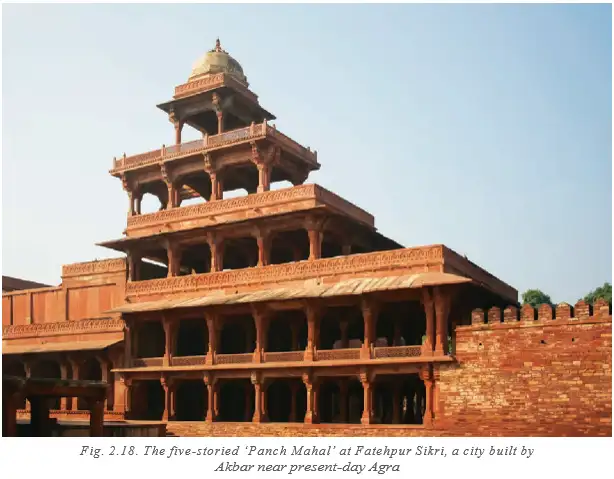
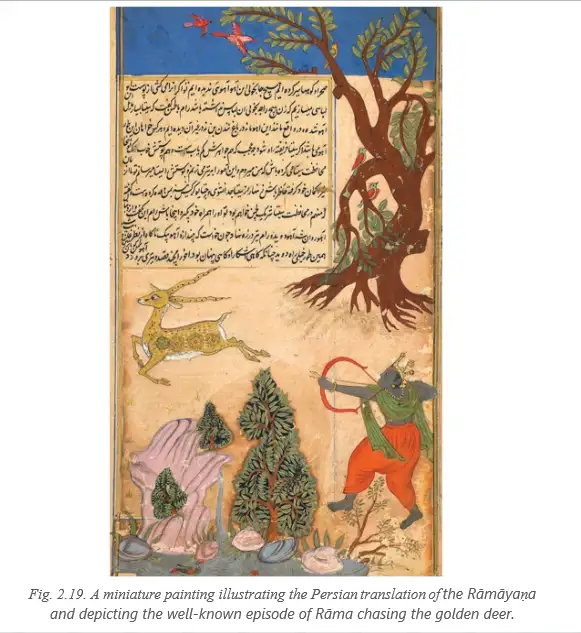
- Translation centre: He established a house of translation at Fatehpur Sikri, where major Sanskrit works were translated into Persian.
- Translated works: These included the Mahabharata (Razmnama, or “Book of War”), the Ramayana, the Bhagavad Gita and the Panchatantra.
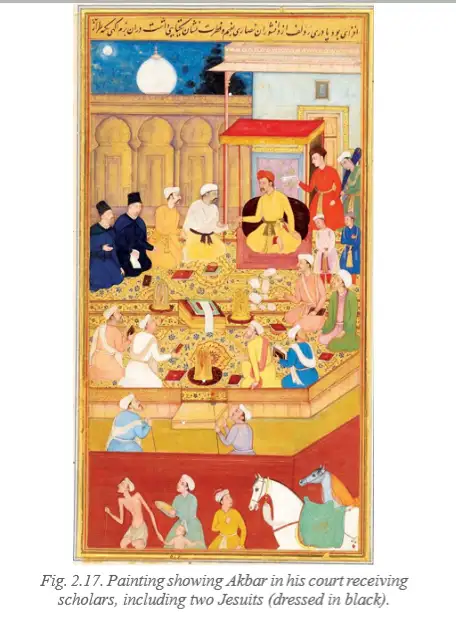
- Court culture: Scholars of different traditions, including Jesuits, were received at Akbar’s court.
Mughal Successors and Cultural Achievements
Later Mughal Rule
- Jahangir: Akbar’s son shared his love of art and architecture and tried to expand the empire into the Deccan.
- Shah Jahan: Akbar’s grandson fought several rebellions and is best known for building the Taj Mahal at Agra.
- Architecture: Major works of the period included Humayun’s Tomb in Delhi and the Red Forts in Delhi and Agra.
- Arts: Classical arts and music flourished, alongside calligraphy and miniature painting.
- Jauhar
- Mass self-immolation by women to avoid capture after a defeat.
- Jizya
- A tax abolished by Akbar as part of his policies of tolerance.
- Sulh-i-kul
- The principle of peace and tolerance towards all faiths.
- Razmnama
- The Persian translation of the Mahabharata, meaning “Book of War”.
How did Akbar combine expansion with the consolidation of his empire?
What was jauhar, and what happened at Chittor?
Name important Sanskrit works translated into Persian under Akbar.
Quick recap
- Akbar became emperor at 13 and ruled from 1556 to 1605.
- His conquest of Chittor involved a long siege, jauhar and the massacre of about 30,000 civilians.
- Akbar used both military campaigns and political measures to expand and stabilise his empire.
- His policies included alliances, high appointments for Hindu officials, abolition of jizya and sulh-i-kul.
- At Fatehpur Sikri, Sanskrit works were translated into Persian.
- Mughal rule saw major achievements in architecture, music, calligraphy and miniature painting.
Aurangzeb
Succession and accession
Aurangzeb’s rise to the throne
- Succession struggle: Shah Jahan fell ill in 1657 and wanted his eldest son, Dara Shikoh, to succeed him.
- Dara Shikoh: Aurangzeb defeated Dara in a series of battles, executed him, and presented his severed head to Shah Jahan.
- Other brothers: Aurangzeb had one brother arrested and executed and drove the other into exile.
- Shah Jahan: To prevent further challenges, Aurangzeb imprisoned his father in Agra Fort, where he remained until his death.
- Accession: Aurangzeb crowned himself emperor in 1658 and took the title Alamgir, meaning “conqueror of the world.” He ruled for almost 49 years.
| Rulers | Average reign |
|---|---|
| Delhi sultans | About 9 years |
| Mughal emperors up to Aurangzeb | 27 years |
| All Mughal rulers, through the empire’s end in the 19th century | 16 years |
Expansion and strain on the empire
- Expansion: Aurangzeb’s military campaigns, especially in the South, brought the Mughal Empire to its greatest territorial extent.
- Deccan wars: He spent the last 25 years of his life fighting repeated wars in the Deccan.
- Cost: Maintaining large armies drained the treasury and placed heavy pressure on the administration.
War expenses and Mughal decline
- Long campaigns in the Deccan → large armies had to be maintained
- Large military costs → the imperial treasury was depleted
- War demands → the administration came under great strain
- These pressures → are considered important factors in the rapid decline of Mughal power after Aurangzeb’s death in 1707
Religious policies and persecution
Beliefs, restrictions and taxes
- Beliefs: Aurangzeb belonged to Islam’s Sunni sect, was deeply religious and led an austere life. Unlike Akbar, he observed religious rituals and occasions.
- Restrictions: He gradually banned court music and dance, which he considered un-Islamic.
- Taxes: He reimposed jizya on non-Muslims and a pilgrimage tax on Hindus travelling to sacred places; Akbar had abolished both.
| Evidence | Interpretation | |
|---|---|---|
| Political motives | Aurangzeb gave grants and assurances of protection to some temples. | Some scholars argue that his actions were primarily intended to establish and strengthen imperial dominance. |
| Religious motives | His farmans (edicts) included a 1669 order to provincial governors to demolish schools and temples and suppress their teachings and religious practices. | His own edicts indicate that personal religious beliefs also shaped his policies. |
| Persecution | Temples at Banaras, Mathura and Somnath were destroyed, as were Jain temples and Sikh gurudwaras. He also persecuted Sufis and Muslims of other sects, and Zoroastrians. | Zoroastrianism is the religion of Parsis in India, whose origins are in Persia. |
- Sunni
- A major branch of Islam; Aurangzeb belonged to this sect.
- Jizya
- A tax on non-Muslims, reimposed by Aurangzeb after Akbar had abolished it.
- Farman
- An imperial order or edict.
- Deccan
- The region in southern India where Aurangzeb fought prolonged campaigns.
- Zoroastrianism
- The religion of Parsis in India; it originated in Persia.
Aurangzeb’s final reflections and historical memory
Final letters and remembering the past
- Final letters: Aurangzeb wrote that he had come into the world alone and was departing alone; he felt helpless and uncertain about what he had done.
- Self-assessment: He said he had not done well for the country and its people, and felt there was little hope for the future.
- Historical memory: Learn the facts of past atrocities and remember their victims with respect. People today are not responsible for actions committed by individuals centuries ago.
Key dates
- 1657Shah Jahan fell ill, beginning the succession struggle among his sons.
- 1658Aurangzeb crowned himself emperor and took the title Alamgir.
- 1669Aurangzeb ordered provincial governors to demolish schools and temples and suppress their teachings and religious practices.
- 1707Aurangzeb died; the rapid decline of Mughal power followed.
- 19th centuryThe Mughal Empire came to an end.
Why did Aurangzeb’s Deccan campaigns weaken the Mughal Empire?
What evidence suggests that Aurangzeb’s religious policies had both political and religious motives?
Quick recap
- Aurangzeb defeated Dara Shikoh, executed him and presented his severed head to Shah Jahan; he also removed his other brothers from the succession struggle.
- He imprisoned Shah Jahan, crowned himself emperor in 1658 and ruled for almost 49 years as Alamgir.
- His campaigns made the Mughal Empire largest in territory, but the long Deccan wars exhausted resources.
- Military costs and administrative strain contributed to Mughal decline after his death in 1707.
- His policies included reimposing taxes, restricting practices he viewed as un-Islamic, and persecution; political and religious motives both played a part.
- Zoroastrianism is the religion of Parsis in India and originated in Persia.
- Study past atrocities accurately, remember victims, and do not assign responsibility for historical actions to people today.
Resistance to the Mughals
Peasant and Tribal Resistance
Tribal resistance — Tribal communities resisted attempts to annex their territories or impose taxes on them.
Rani Durgavati
- Rani Durgavati: The Gond queen of Garha ruled wisely and made her kingdom prosperous.
- Resistance: In 1564, she fought Akbar’s invading forces and took her own life rather than be captured.
The Surge of the Rajputs
Guerrilla warfare — A style of fighting in which small groups use their knowledge of the terrain to launch surprise attacks and ambushes against larger armies.
Maharana Pratap and Mewar’s Resistance
| Point | Allied states | Resisting states |
|---|---|---|
| Approach | Some Rajput states allied with the Mughals through diplomacy and marriage alliances. | Mewar did not accept Mughal dominance. |
| Later resistance | — | During Aurangzeb’s reign, several Rajput nobles rebelled. Durga Das Rathore of Marwar fought to protect Jodhpur’s independence. |
| Result | — | Mughal authority remained limited in Rajasthan. |
Key Events
- Early 16th centuryRana Sanga united several Rajput clans and was eventually defeated by Babur at Khanwa.
- 1564Rani Durgavati fought Akbar’s general and died rather than be captured.
- 1576Maharana Pratap confronted the Mughal army at Haldighati and continued resistance from the Aravallis.
- 17th centuryJat peasants rebelled against harsh Mughal exploitation; the rebellion was eventually suppressed.
- Suzerainty
- A superior power’s authority over a ruler or state, while local rule may continue.
- Guerrilla warfare
- Small-group surprise attacks and ambushes that use terrain to challenge a larger army.
- Mewar
- A Rajput kingdom whose ruler Maharana Pratap resisted Mughal dominance.
- Marwar
- A Rajput region where Durga Das Rathore fought to protect Jodhpur’s independence.
How did the Bhils help Maharana Pratap?
Why did Mughal authority remain limited in Rajasthan?
Quick recap
- Jat peasants and several tribal communities resisted Mughal exploitation, annexation or taxation.
- Some tribal groups were subdued or integrated, while others retained a degree of independence.
- Rani Durgavati defended Garha against Akbar’s general in 1564 and became a symbol of resistance.
- Rajputs in northwest India drew on earlier resistance traditions; Rana Sanga united clans but was defeated by Babur at Khanwa.
- Maharana Pratap resisted Mughal suzerainty and continued the struggle after Haldighati in 1576.
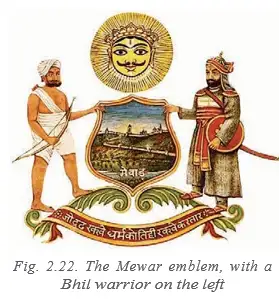
- The Bhils supported Mewar as archers and guides; Rajput alliances and rebellions kept Mughal authority limited in Rajasthan.
The Ahoms
The Ahom Kingdom and the Paik System
- Origins: The Ahoms migrated from present-day Myanmar to the Brahmaputra Valley in the 13th century and established a kingdom.
- Paik system: Able-bodied men served the state through labour or military duty in return for land rights, helping maintain public works and a large force.
Culture and Society
- Assimilation: Over time, the Ahoms adopted aspects of local culture and encouraged diverse faiths.
- Legacy: They promoted agriculture and contributed to Assam’s rich traditions.
Mughal Conflict and the Battle of Saraighat
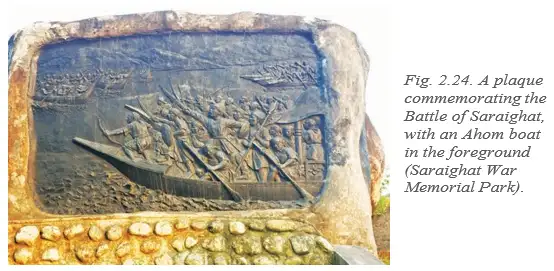
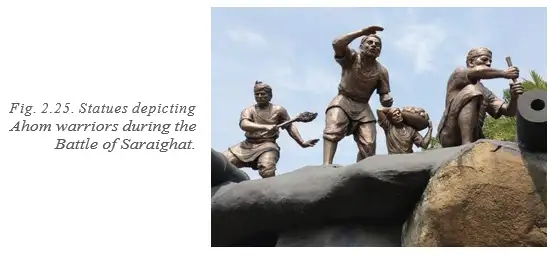
How Geography Helped the Ahoms
- Knowledge of forests, hills and rivers → the Ahoms could use terrain suited to defence.
- Difficult terrain and local knowledge → helped them resist a larger invading force.
- Guerrilla tactics combined with knowledge of the terrain → Mughal attacks were repulsed.
- Victory at Saraighat → Ahom independence was preserved.
Key Dates
- 13th centuryThe Ahoms migrated from present-day Myanmar and established a kingdom in the Brahmaputra Valley.
- 17th centuryAurangzeb’s forces briefly captured Garhgaon; the Ahoms resisted Mughal expansion.
- 1671The Ahoms defeated a Mughal force at the Battle of Saraighat.
- Paik system
- System requiring able-bodied men to provide labour or military service in return for land rights.
- Guerrilla tactics
- Fighting methods that use local terrain and persistent attacks to resist an enemy.
- Lachit Borphukan
- Ahom military commander who led the forces at the Battle of Saraighat.
What was the paik system, and how did it help the Ahom rulers?
Why was the Battle of Saraighat important?
Quick recap
- The Ahoms migrated from present-day Myanmar and established a kingdom in the Brahmaputra Valley in the 13th century.
- The paik system exchanged service for land rights and supported public works and military strength.
- The Ahoms assimilated local culture, promoted agriculture and encouraged diverse faiths.
- Ahom knowledge of forests, hills and rivers supported resistance to Mughal expansion.
- At Saraighat in 1671, Lachit Borphukan’s 10,000 men defeated a Mughal force of 30,000.
- The Ahoms ultimately preserved their independence.
The Rise of the Sikhs
Sikhism and the Early Gurus
Punjab — The vast region referred to in this chapter, now divided between India and Pakistan.
- Guru Nanak Spread the teachings of equality, compassion and one God; his followers came to be known as Sikhs.
- Changing conditions Growing intolerance and persecution under some Mughal rulers led later Sikh Gurus to defend their community.
- Guru Arjan Emperor Jahangir had him tortured to death after learning that he had supported Jahangir’s rebellious son.
- Guru Hargobind In response, he introduced martial training and formed a Sikh army, which fought several battles against Mughal forces.
| Stage | Main emphasis |
|---|---|
| Early movement | Spiritual teachings, equality and devotion to one God |
| Under later Gurus | Martial preparation and defence in response to persecution |
Guru Granth Sahib
Guru Granth Sahib — The sacred text of Sikhism, first compiled by Guru Arjan; hymns by Guru Tegh Bahadur were added later.
- Teachings It affirms one God for all, who established the earth as a home for Dharma.
- Values It calls for truthfulness, compassion, humility and self-control.
- Guiding idea Truth matters, but living truthfully is even more important: “Truth is high but higher still is truthful living.”
Guru Tegh Bahadur and the Khalsa
- Guru Tegh Bahadur In 1675, Kashmiri Pandits sought his protection from religious persecution; he chose to stand with them, accepting the risk of martyrdom.
- Martyrdom Aurangzeb ordered him to convert to Islam. Despite torture and witnessing two disciples tortured to death, he refused; he was publicly beheaded in Chandni Chowk, Delhi.
- Memorial Gurudwara Sis Gunj Sahib in Chandni Chowk marks the site of his execution.
- Guru Gobind Singh His son, the tenth and last Sikh Guru, established the Khalsa.
- Khalsa A martial brotherhood committed to justice, equality and defence of the faith; it frequently clashed with Mughal forces at great cost of life.
From Persecution to Sikh Resistance
- Religious persecution under some Mughal rulers → Guru Tegh Bahadur chose to protect the persecuted.
- Guru Tegh Bahadur refused to convert and was executed → his sacrifice became a powerful stand for faith and protection of others.
- Guru Gobind Singh established the Khalsa → Sikhs formed a martial brotherhood for justice, equality and defence of their faith.
Sikh Confederacies and the Sikh Empire
- Confederacies As Mughal power declined, especially under Maratha onslaughts, several Sikh confederacies emerged in Punjab.
- Unification Maharaja Ranjit Singh unified the confederacies at the turn of the 19th century.
- Empire His military skill, diplomacy and religious tolerance helped establish a strong, centralised Sikh Empire.
- Extent and resistance The empire covered much of the Northwest, including parts of Kashmir, and resisted Mughal remnants and later British expansion until the mid-19th century.
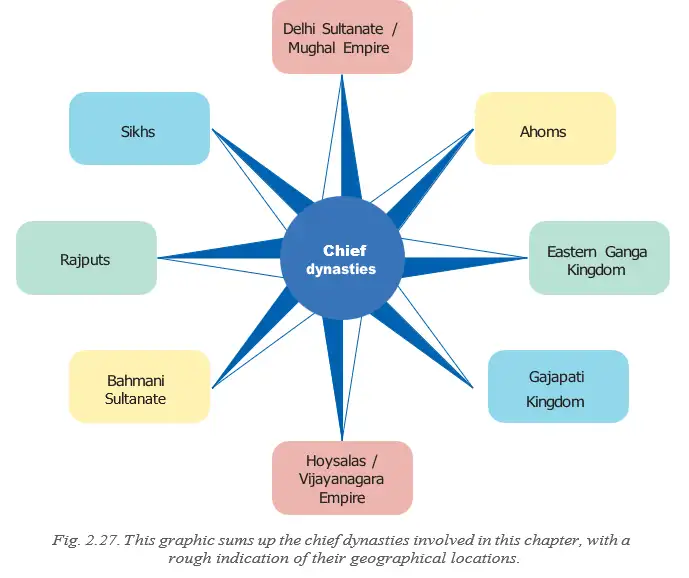
Key Periods
- 15th centuryGuru Nanak spread Sikh teachings in Punjab.
- 1675Guru Tegh Bahadur was executed in Chandni Chowk, Delhi.
- Turn of the 19th centuryMaharaja Ranjit Singh unified Sikh confederacies and established a centralised empire.
- Mid-19th centuryThe Sikh Empire’s resistance to Mughal remnants and British expansion lasted until this period.
- Ik Onkār
- The Sikh teaching that there is one God.
- Guru Granth Sahib
- Sikhism’s sacred text, first compiled by Guru Arjan.
- Khalsa
- The martial Sikh brotherhood established by Guru Gobind Singh.
- Sikh confederacies
- Sikh political groupings that emerged in Punjab as Mughal power declined.
Why did Guru Hargobind form a Sikh army?
What was the Khalsa, and what values did it uphold?
How did Maharaja Ranjit Singh establish the Sikh Empire?
Quick recap
- Guru Nanak spread teachings of equality, compassion and the oneness of God in 15th-century Punjab, the region now divided between India and Pakistan.
- Guru Arjan compiled the Guru Granth Sahib; Guru Tegh Bahadur’s hymns were added later. Its teachings include one God, Dharma and truthful living.
- After Guru Arjan’s execution, Guru Hargobind introduced martial training and formed a Sikh army.
- Guru Tegh Bahadur was executed in 1675 after refusing to convert; Guru Gobind Singh later established the Khalsa for justice, equality and defence of the faith.
- Sikh confederacies emerged in Punjab as Mughal power declined, especially under Maratha onslaughts, and were unified by Maharaja Ranjit Singh.
- The Sikh Empire covered much of the Northwest, including parts of Kashmir, and resisted Mughal remnants and British expansion until the mid-19th century.
Administering India
Administration under the Delhi Sultanate
Taxes and their impact
- Trade taxes: Taxes could be charged at every stage of trade.
- Peasants: The heaviest tax burden fell on the peasantry; some accounts describe harsh methods of collecting land revenue.
The Mughal administrative framework
Akbar’s central administration
- Reorganisation: Akbar reorganised administration to strengthen control and improve efficiency.
- Provinces: The empire had twelve provinces, called subahs; each subah was further subdivided.
- Checks and balances: Officials were checked against one another to make administration more accountable.
- Villages: Traditional village self-governance continued largely undisturbed.
| Official | Main responsibility |
|---|---|
| Diwan | Finances |
| Mir Bakhshi | Military matters |
| Khan-i-Saman | Public works, trade, industry, agriculture and the royal household |
| Sadr | Justice, religious affairs and education |
Mansabdari system — Akbar’s system in which officials called mansabdars held ranks that determined the numbers of troops and animals they had to maintain.
| Group | Position in the administration |
|---|---|
| Non-Muslims | They were a minority in the higher levels of administration. Across Akbar’s administration as a whole, non-Muslim officials rarely exceeded one-third and were often much fewer. |
| Muslim officials of foreign origin | Generally favoured over Muslim officials of Indian origin. |
Todar Mal’s revenue system
- Todar Mal: Akbar’s finance minister introduced a more systematic revenue system.
- Crop assessment: Detailed surveys recorded crop yields and prices; prices were determined for each crop using this information.
- Land survey: A systematic survey covered land across the empire.
- Result: More effective revenue collection increased state income and strengthened the state apparatus.
- Iqta
- A territory assigned to an iqtadar to collect revenue.
- Iqtadar
- A noble appointed to collect revenue from an assigned territory.
- Subah
- A province of the Mughal Empire.
- Mansab
- The rank that determined a mansabdar’s required duties and quotas.
- Jagir
- A land assignment generally used to pay a mansabdar.
How did the iqta system support the Delhi Sultanate?
How did the mansabdari system help Akbar maintain military strength?
How did Todar Mal’s revenue reforms strengthen the Mughal state?
Quick recap
- The Delhi Sultanate centred absolute political and military authority on the sultan, assisted by a council of ministers.
- Iqtadars collected revenue from assigned territories; their posts were not hereditary.
- Akbar organised Mughal administration through specialised officials, checks and balances, and twelve subdivided subahs.
- Mansabdars maintained troops and animals according to rank and were generally paid through jagirs.
- Non-Muslims were a minority in the higher levels of administration; across Akbar’s administration, their share rarely exceeded one-third.
- Todar Mal’s surveys improved revenue assessment and strengthened the Mughal state.
People’s Lives
A diverse economy
- Economic foundations: Agriculture, crafts, community- and temple-based economies, and extensive trade supported activity despite political changes.
- Decentralised systems: Shrenis (guilds), jatis (professionally defined communities) and credit networks helped economic life function beyond direct government control.
- Prosperity: These systems helped the Subcontinent remain one of the world’s wealthiest regions.
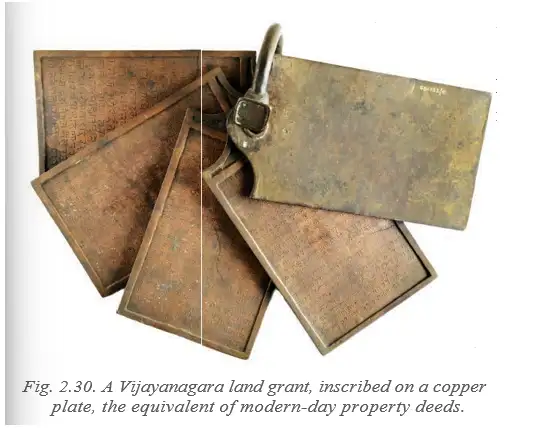
- Infrastructure: Sultanate rulers developed roads, bridges, canals, irrigation works and cities; these expanded considerably under the Mughals.
- Currency: Coins were issued in several metals and denominations. Mughal currency included the silver rupaya and copper dam.
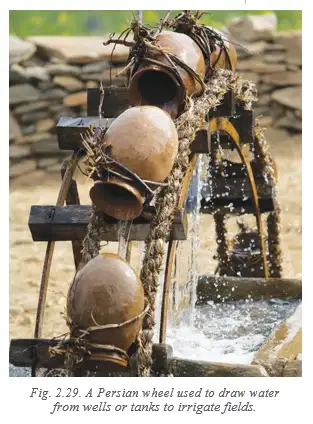
Agriculture and rural life
Agriculture
- Mainstay: Agriculture sustained the economy; rulers relied on land revenue to run their administration and maintain their armies.
- Land revenue: It was commonly about one-fifth of the produce, though some Sultans raised it as high as the entire produce.
- Irrigation: Expanding irrigation increased productivity and enabled multiple crops, although output differed by region and period.
- Peasant hardship: Famines occurred; relief depended on the particular ruler’s willingness to help.
| Category | Examples |
|---|---|
| Food crops | Rice, wheat, barley, pulses, sugarcane and spices |
| Non-food products | Cotton (used in textile production), silk, wool, dyes, timber and jute |
Irrigation and production
- Expansion of irrigation systems
- Higher agricultural productivity
- Production of multiple food and non-food crops
Crafts, trade and credit
Craft production and trade
- Crafts: Artisans produced textiles, weapons, utensils, ornaments and jewellery. Shipbuilding supported river and overseas trade.
- Export towns: Goods were shipped through coastal and riverside centres such as Calicut, Mangalore, Surat, Masulipatnam and Hooghly.
- Trade balance: India exported more than it imported. Imports included silk, horses, metals and luxury goods.
- Foreign merchants: Traders from Arabia, Persia (now Iran) and Central Asia settled in Indian ports and added to commercial activity.
Hundi — A written instruction to make payment to someone, allowing funds to be transferred without carrying currency.
Hundi and merchant networks
- Safer transfers: Hundis worked across political borders and reduced the danger of losing money to plunder.
- Independent networks: Merchants used credit and trust systems that operated without official structures or ruling-class participation.
- Trader communities: Marwari merchants became skilled at working across changing political regimes.
- Significance: The hundi system was a precursor to modern banking.
Temples as economic centres
Temple economies
- Beyond worship: Temples also supported learning, social interaction, performing arts and busy markets.
- Donations: Rulers gave land and wealth to temple deities; temple managers held these resources in trust.
- Community services: Temple resources supported irrigation, tanks and pilgrim accommodation, including dharmashalas and chhatrams.
- Commercial role: Temples provided credit to merchants and funded internal and maritime trade.
Economic strain and social conditions
Unequal prosperity
- Peasants: By the late 1600s, taxes and payments to intermediaries could leave peasants with very little produce; many lost their land and became bonded labourers.
- Workers: Craftspeople and labourers also often faced harsh economic conditions.
- Concentration of wealth: Despite India’s abundance, much wealth belonged to rulers, courtiers, high officials and merchants.
- Warfare: Frequent conflicts caused people to be forcibly displaced.
Peasant hardship
- Heavy taxes and payments to intermediaries
- Peasants retain only a small share of their produce
- Loss of land
- Some peasants become bonded labourers
Community life and cultural resilience
Communities and shared heritage
- Religious relations: Clashes sometimes occurred over sacred sites desecrated or destroyed with rulers’ approval, but different faiths and communities generally lived side by side.
- Interdependence: Communities relied on one another economically, helping everyday life continue across religious differences.
- Cultural traditions: Rulers patronised the arts, while communities maintained or revived traditions and adapted them to changing conditions.
- Shared heritage: Interaction among communities helped create a common cultural heritage.
- Resilience: Despite hardship and political instability, people sustained economic life and created new forms of art, literature and spirituality.
- Shreni
- A guild or organised association of people engaged in a craft or trade.
- Jati
- A community often associated with a particular profession.
- Hundi
- A written payment instruction used to transfer money across distances.
- Dana
- A donation of land or wealth to a temple deity.
- Dharmashala and chhatram
- Accommodation provided for pilgrims.
Economic changes and conditions
- 13th–17th centuriesEconomic activity continued amid changing political powers, supported by agriculture, crafts, temples and trade.
- Sultanate periodRoads, bridges, canals, irrigation works and new cities developed.
- Mughal periodInfrastructure expanded considerably; Mughal currency included the silver rupaya and copper dam.
- Late 1600sEconomic stress increased, and many peasants lost land or became bonded labourers.
How did temples contribute to economic life?
What was a hundi, and why was it useful?
What economic difficulties did peasants face by the late 1600s?
Quick recap
- Agriculture, crafts, temples and trade sustained economic activity through political change.
- Decentralised systems of guilds, professional communities and credit helped the Subcontinent remain one of the world’s wealthiest regions.
- Irrigation raised productivity; rulers commonly took about one-fifth of produce as land revenue.
- India exported more than it imported, and hundis made long-distance trade and payments safer.
- Temples acted as centres of worship, community services, credit and trade.
- Wealth was unequally distributed; taxes, famine and warfare caused hardship and displacement.
- Communities often lived interdependently, adapting traditions and contributing to a shared heritage.
Summary
Political Change and Invasions
Key points
- Invasions: Turkic, Afghan and Mughal forces led many foreign invasions, causing widespread destruction.
- Political impact: Warfare, alliances and conquests contributed to the fall of old dynasties and the rise and decline of kingdoms and empires.
- Changing boundaries: Repeated conflicts reshaped India’s political map.
How political boundaries changed
- Foreign invasions and rivalries
- Warfare, alliances and conquests
- Widespread destruction, the fall of dynasties, and the rise and decline of kingdoms
- Reshaping of political boundaries
Religious Experiences
Key points
- Intolerance: Religious persecution occurred at different times.
- Affected communities: Buddhists, Jains, Hindus, Sikhs, Zoroastrians and tribal communities faced severe persecution.
- Different rulers: Rulers did not all have the same outlook; some were more broad-minded than others.
Economy and Society
Key points
- Growth: Agriculture and trade expanded, increasing India’s wealth and links with the wider world.
- Common people: Despite this growth, ordinary subjects generally faced harsh economic conditions.
- Resilience: Society rebuilt towns, cities, temples and other parts of the economy after periods of disruption.
Cultural Continuity and Change
Key points
- Traditions: People preserved cultural traditions while adapting to changing circumstances.
- Cultural blending: Indigenous and foreign elements combined to create new cultural expressions.
- Flourishing arts: Architecture, music and painting developed and flourished.
- Political boundaries
- The borders separating kingdoms and empires, which changed through conflict and conquest.
- Religious persecution
- Severe or unfair treatment of people because of their religious community.
- Cultural blending
- The combining of indigenous and foreign elements to form new cultural expressions.
How did invasions and conflicts reshape India’s political map?
How did economic growth affect ordinary subjects?
How did society respond to political and cultural change?
Quick recap
- Turkic, Afghan and Mughal invasions caused widespread destruction and contributed to repeated political change.
- Warfare, alliances and conquests reshaped boundaries and led to the rise and fall of kingdoms and empires.
- Religious persecution affected several communities, while rulers differed in outlook.
- Agriculture and trade expanded, though ordinary subjects generally continued to face harsh economic conditions.
- Society showed resilience by rebuilding towns, cities, temples and economic life.
- Cultural traditions continued, while indigenous and foreign influences blended in the arts.