Class 10 . English . First Flight . A Letter to God
Chapter 1: A Letter To God
Ch 1
English
Class 10
A Letter To God - Part 1
Story Context
- Author: The story is written by G. L. Fuentes.
- Central question: The story asks what people should place their faith in.
- Premise: After hail destroys his crops, farmer Lencho writes to God asking for 100 pesos.
The Farm and the Coming Rain
The Rain and the Hailstorm
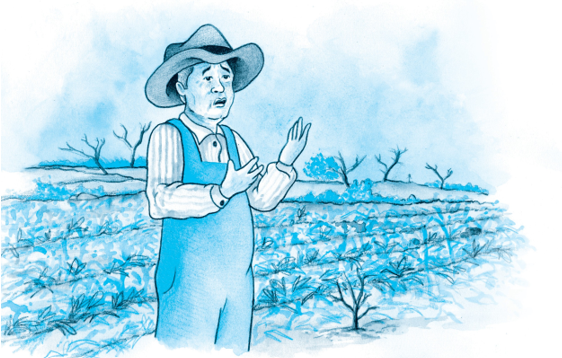
- Setting: Lencho’s house stands on a hill above a valley and a field of ripe corn; the crops need rain for a good harvest.
- Hope: Lencho watches the sky and predicts rain. When the first drops fall, he compares them to valuable coins because they promise a good crop.
- Disaster: The rain turns into a hailstorm. The hail falls for an hour, covering the fields and valley like salt.
- Loss: The hail destroys the corn and flowers, leaving the field bare. Lencho says even locusts would have left more behind.
- Family’s worry: Lencho and his family fear hunger and feel that their hard work has been wasted.
Lencho
- Hardworking: He knows his fields well and hopes for a successful harvest.
- Observant: He watches the sky and correctly expects rain.
- Hopeful: He welcomes the rain as a promise of a plentiful crop.
- Deeply distressed: After the hail destroys the harvest, he fears his family will go hungry.
Nature’s Unpredictability and Rural Hardship
A farmer’s livelihood depends on the weather: rain first raises hopes, but hail quickly destroys the crop and threatens the family with hunger.
- crest
- The top or highest part of a hill.
- draped
- Covered or spread over something.
- locusts
- Insects that travel in swarms and destroy crops.
Why did Lencho compare the raindrops to new coins?
How did the rain change, and what happened to Lencho’s fields?
How did Lencho feel after the hail stopped?
Quick recap
- G. L. Fuentes’s story raises the question of where people place their faith.
- The story’s premise is that Lencho writes to God for 100 pesos after hail ruins his crops.
- Lencho’s ripe cornfield needed rain for a good harvest.
- He welcomed the first raindrops as coins because they promised prosperity.
- The rain became a severe hailstorm that destroyed the crops, flowers and trees.
- Lencho and his family feared hunger after losing the harvest.
A Letter To God Part - 2
Lencho Writes to God
Lencho’s Letter and the Postmaster’s Response
- Lencho’s hope: After the hailstorm ruined the crop, Lencho believed God could see everything and would help his family.
- The request: He wrote to God asking for 100 pesos to sow the field again and support his family until the next crop.
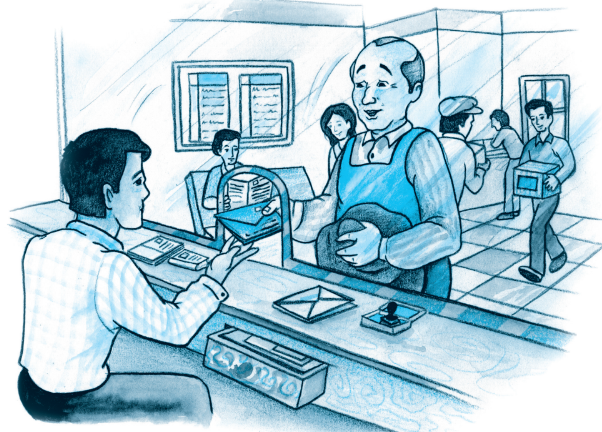
- The postmaster: He first laughed at the unusual address, but then admired Lencho’s faith and decided to reply so it would not be shaken.
- The collection: The postmaster and his employees, along with friends, gathered money; they could send only a little more than half of the requested amount.
- The reply: The postmaster sent the money in an envelope signed only “God.”
Lencho’s Second Letter
Lencho Misjudges the Post Office Employees
- No surprise: Lencho was confident God would answer, so he was not surprised to receive a letter containing money.
- Anger: He counted only 70 pesos and believed God could not have sent less than the 100 pesos he had requested.
- Accusation: Lencho wrote again, asking God to send the remaining money but not through the post office because he suspected its employees had kept the rest.
Lencho
- Deeply faithful: He trusts God completely and writes directly to Him for help.
- Hardworking and simple: He works like an animal in the fields and believes God will provide exactly what he needs.
- Unjustly suspicious: He accuses the post office employees of being crooks, unaware they collected and sent the money.
The Postmaster
- Kind and empathetic: He is moved by Lencho’s faith and wants to protect it.
- Generous and resourceful: He contributes his own salary and gathers donations from employees and friends.
Faith, Kindness and Irony
Lencho’s unwavering faith leads him to trust God, while the postmaster’s kindness makes him act as God’s helper. The irony is that Lencho trusts the unseen sender but suspects the very people who helped him.
““What faith! I wish I had the faith of the man who wrote this letter.””
The Postmaster
““the post office employees are a bunch of crooks.””
Lencho
- conscience
- An inner sense of right and wrong.
- peso
- The currency of several Latin American countries.
- amiable
- Friendly and pleasant.
- contentment
- A feeling of satisfaction.
What did Lencho do because of his faith in God?
Why did the postmaster send Lencho money?
Why did Lencho call the post office employees crooks?
Quick recap
- Lencho asks God for 100 pesos after the hailstorm destroys his crop.
- The postmaster admires Lencho’s faith and gathers money to help him.
- The postmaster’s reply contains only a little more than half the requested amount.
- Lencho receives 70 pesos and believes God sent less than he asked for.
- Irony: Lencho accuses the post office employees, though they were the ones who helped him.
Dust Of Snow (Poem )& Fire And Ice (Poem)
Dust of Snow — Robert Frost
Dust of Snow
- A crow shakes snow from a hemlock tree onto the speaker.
- This small, unexpected moment changes his gloomy mood and rescues part of a day he regretted.
| Device | Example | Effect |
|---|---|---|
| Symbolism | Crow and hemlock tree | Their traditionally gloomy associations contrast with the hopeful effect of the snow. |
| Imagery | “The dust of snow” | Creates a vivid picture of snow falling from a tree. |
| Rhyme scheme | ABCB DEFE | The rhymes give the short poem a gentle, connected rhythm. |
A Small Moment Can Change a Day
Even an ordinary, unexpected encounter with nature can lift sadness and give a troubled day a more positive turn.
Fire and Ice — Robert Frost
Fire and Ice
- The speaker associates fire with desire and supports the idea that it could destroy the world.
- He also sees hate, represented by ice, as powerful enough to destroy; either extreme could bring ruin.
| Device | Example | Effect |
|---|---|---|
| Symbolism | Fire and ice | Fire suggests desire and greed; ice suggests hatred, cruelty and emotional coldness. |
| Rhyme scheme | ABAABCBCB | The interlocking rhymes connect the opposing images and create a tight, memorable rhythm. |
| Contrast | Fire vs ice | Opposite forces are presented as equally capable of destruction. |
| Enjambment | “that for destruction ice / Is also great” | The thought continues across lines, helping the argument unfold. |
Destructive Human Emotions
Frost uses fire and ice to show that uncontrolled desire and hatred can each cause destruction.
- Hemlock
- A poisonous plant or tree with small white flowers.
- Rued
- Regretted; felt sorrow about.
- Perish
- Die or be destroyed.
- Suffice
- Be enough; be sufficient.
How does the crow and hemlock tree episode affect the speaker in “Dust of Snow”?
What do fire and ice symbolise in “Fire and Ice”?
What is the rhyme scheme of “Fire and Ice”?
Quick recap
- Both poems are by Robert Frost.
- In “Dust of Snow,” a crow shakes snow from a hemlock tree, unexpectedly improving the speaker’s mood.
- A small moment in nature can change a gloomy day.
- In “Fire and Ice,” fire represents desire, while ice represents hatred and coldness.
- Uncontrolled desire or hatred can each cause destruction.
- The rhyme schemes are ABCB DEFE for “Dust of Snow” and ABAABCBCB for “Fire and Ice.”
Exercise
Story Review
In whom does Lencho have complete faith, and what kind of person is he?
Why does the postmaster send Lencho money, and what is ironic about Lencho’s response?
How are the story’s two conflicts shown?
Storm Vocabulary
| Term | Meaning |
|---|---|
| Cyclone | A violent tropical storm with strong winds moving in a circle. |
| Gale | An extremely strong wind. |
| Typhoon | A violent tropical storm with very strong winds. |
| Tornado | A violent storm centred on a funnel-shaped cloud. |
| Hurricane | A violent storm with very strong winds, especially in the western Atlantic Ocean. |
| Whirlwind | A very strong, fast-spinning wind that can cause great damage. |
The Different Meanings of “Hope”
| Use or expression | Meaning | Example |
|---|---|---|
| Verb | To wish for something to happen, believing it is possible. | “I hope it passes quickly.” |
| Noun | A feeling or possibility that something good may happen. | “There was a single hope: help from God.” |
| “I hope so” | Thinking that something good may happen. | “Will you get the subjects you want? I hope so.” |
| “I hope you don’t mind…” | A polite way to show concern that a statement may offend. | “I hope you don’t mind my saying this…” |
| “Hope against hope” | To wish for an unlikely outcome. | They hoped the judges would not notice their mistakes. |
| “In the hope of” | Doing something because you wish for a particular outcome. | “I called early in the hope of speaking to her.” |
| “Give up hope” | Stop believing that the desired outcome will happen. | Everybody had given up hope. |
Relative Clauses
Relative clause — A clause that gives information about a noun, often beginning with a relative pronoun such as who, whom, whose or which.
Non-defining Relative Clauses
- Purpose: Add extra information about a person or thing already identified; the clause is not needed to identify it.
- Punctuation: Usually place commas around the clause; a dash may also mark it.
- Pronouns: Use who for people as subjects, whom for people as objects, whose for possession, and which for things.
- Example: Meena, who knows a lot about plants, loves gardening.
- Omission: A shortened clause can omit the relative pronoun and verb: “the house—the only one in the valley—” can be expanded to “the house—which was the only one in the valley—”.
Negatives for Emphasis
- Purpose: No, not and nothing can stress an idea as well as indicate absence or contradiction.
- “Nothing else but” means “only”; Lencho did nothing else but watch the sky.
- “No other reason than” means “only this reason”; the man went out only to enjoy feeling the rain.
- “Not the slightest” means “not at all”; Lencho showed no surprise.
- Emphatic story examples: “Not a leaf remained on the trees”; the letter was addressed “to God himself”; the postman saw the address “for the first time in his career.”
- Contrast: Calling raindrops “new coins” rather than raindrops highlights how valuable the rain seemed to the farmer.
Metaphors
Metaphor — A comparison that transfers a quality or feature from one thing to another without using “like” or “as.”
| Object | Metaphor | Quality transferred |
|---|---|---|
| Clouds | Huge mountains of clouds | Their great size and mass. |
| Raindrops | New coins | Their bright appearance and great value to the farmer. |
| Hailstones | Frozen pearls | Their roundness and pale, shining appearance. |
| Locusts | A plague of locusts | A destructive force that spreads and ruins crops. |
| Locusts | An epidemic | The rapid spread and devastation caused by disease. |
| A strong man | An ox of a man | Strength and hard-working nature. |
Listening and Writing
Listening Passage: Key Details
- Writer and reader: Jaya writes to Arti from Kanpur on 25 January 2006.
- Apology: Jaya has not written for a long time; her last message was a birthday card sent in September 2005.
- News: Jaya’s family has moved to a new home, and Sarah has just started going to school; she has been admitted to Little Feet, near their home.
- Memory: The drizzle reminds Jaya of the good times she and Arti spent together in Bangalore the previous year.
Water-Saving Poster: Key Message
- Core idea: Save water during dry periods and collect excess water when it is available.
- Useful measures: Repair leaks, avoid wasting water, reuse suitable water, and promote rainwater harvesting.
Quick recap
- Lencho trusts God completely; the postmaster helps him, but Lencho wrongly accuses the post-office workers.
- The story contrasts people’s struggle against nature with mistrust between people.
- “Hope” can express wishing, expectation, possibility, politeness or a hope that may be unlikely.
- Non-defining relative clauses add optional information and are usually set off by commas or dashes.
- Negative words can intensify an idea; metaphors transfer qualities between different things.
- Jaya writes to Arti from Kanpur; Sarah has just started going to school at Little Feet.
English — ALL CHAPTERS
1
A Letter To God
2
Nelson Mandela Long Walk To Freedom
3
Two Stories About Flying
4
From The Diary Of Anne Frank
5
Glimpses Of India
6
Mijbil The Otter: Gavin Maxwell
7
Madam Rides The Bus
8
The Sermons At Benares
9
The Proposal
1
A Triumph of Surgery
2
The Thief’s Story
3
The Midnight Visitor
4
A Question of Trust
5
Footprints without Feet
6
The Making of a Scientist
7
The Necklace
8
Bholi
9
The Book That Saved the Earth