Class 10 . English . Footprints Without Feet . Bholi
Chapter 8: Bholi
Ch 8
English
Class 10
A Tale of Resilience and Hope
Bholi’s Childhood and Family
- Sulekha, later called Bholi, was Ramlal’s fourth daughter and youngest child.
- A fall from a cot at ten months may have affected her brain. Smallpox at age two left her body marked with pockmarks.
- She began speaking at five and stammered. Other children mocked her, so she spoke very little.
- Ramlal’s family was prosperous. His sons were educated, while his older daughters were healthy, good-looking and being married.
Why Ramlal Was Worried
- Ramlal worried that Bholi’s appearance and learning difficulties would make it hard to find her a husband.
- Unlike his other daughters, Bholi did not meet the qualities valued for marriage in her community.
Why Bholi Was Sent to School
- When Bholi was seven, a girls’ primary school opened in the village. The Tehsildar urged Ramlal, as the government representative in the village, to set an example by educating his daughters.
- Ramlal’s wife objected because she feared that education would reduce the girls’ marriage prospects.
- Ramlal did not have the courage to disobey the Tehsildar. His wife eventually said to send Bholi, believing she had little chance of marriage and leaving her education to the teachers.
Bholi (Sulekha)
- She is vulnerable because of her speech difficulties and visible pockmarks.
- Mockery makes her quiet and hesitant to speak.
Ramlal
- He is worried about Bholi’s future and marriage prospects.
- He feels unable to disobey the Tehsildar and consults his wife; she suggests sending Bholi to school.
Education and Gender Expectations
The opening contrasts the Tehsildar’s call for girls’ education with the belief that schooling could harm their marriage prospects. Bholi is chosen for school because her family assumes she has little chance of marrying.
Why was Ramlal worried about Bholi?
Why was Bholi sent to school?
Quick recap
- Bholi’s given name was Sulekha; her family called her Bholi.
- A childhood fall and smallpox affected her learning, appearance and speech.
- Mockery from other children made her speak very little.
- Ramlal worried about Bholi’s marriage prospects.
- The Tehsildar urged Ramlal to set an example by educating his daughters.
- Ramlal’s wife suggested sending Bholi because she thought Bholi had little chance of marriage.
Bholi's First Day at School
Bholi Goes to School
- At home: Bholi is frightened when her father takes her to school. She fears being sent away, remembering that the family’s old cow, Lakshmi, was sold.
- A new experience: Her mother gives her a clean, altered dress and bathes her. At school, Bholi sees girls reading and writing and hopes to make a friend.
- The teacher’s kindness: Bholi cannot say her name without stammering and cries, thinking the girls are laughing at her. The teacher gently encourages her until she says her name and agrees to return.
- New hope: The teacher gives Bholi a picture book and promises that learning will help her speak confidently and earn respect. Bholi goes home feeling hopeful and excited.
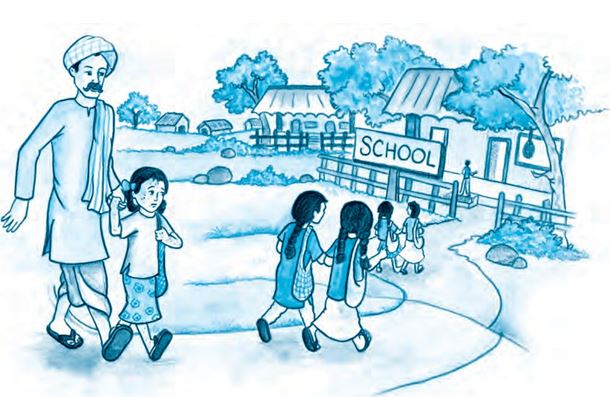
Bholi
- Initially fearful and shy: she resists going to school and is distressed by her stammer.
- Hopeful and willing to try: she makes an effort to say her name and agrees to return.
The teacher
- Kind and patient: she speaks softly and encourages Bholi instead of criticising her stammer.
- Supportive: she gives Bholi a book and helps her believe education can bring confidence and respect.
Education and Confidence
Education and a caring teacher begin to replace Bholi’s fear with confidence and hope for a more respectful future.
Does Bholi enjoy her first day at school?
How is Bholi’s teacher different from the people at home?
Quick recap
- Bholi is initially terrified of going to school.
- Her clean dress and bath make school seem like a better place than home.
- She hopes to find a friend among the girls at school.
- The teacher responds to her stammer with patience and encouragement.
- Bholi agrees to return and leaves school with new hope.
From a Small Town to a Grand Wedding
The Marriage Proposal
A changed town and a proposed marriage
- Over the years, the village grows into a small town, with a high school, cinema, cotton ginning mill and a train stop.
- Ramlal and his wife consider Bishamber Nath’s proposal. He is a wealthy grocer with a shop, a house and money in the bank, and initially asks for no dowry.
- Though Bishamber is much older, limps and has grown-up children from his first marriage, Bholi’s parents accept because they fear she may otherwise remain unmarried.
- They assume Bishamber does not know about Bholi’s pockmarks and lack of sense. They also dismiss her ability to choose for herself; Bholi overhears them.
Bholi Rejects the Wedding
The wedding and Bishamber’s demand
- Bishamber arrives with a large wedding party, a band and a decorated horse. Ramlal is delighted by the ceremony’s grandeur.
- When Bishamber sees Bholi’s pockmarked face, he demands Rs. 5,000 to continue the marriage. Ramlal pleads and offers Rs. 2,000, but Bishamber refuses.
- To avoid public humiliation, Ramlal gives Bishamber Rs. 5,000. Bishamber then prepares to place the garland around Bholi’s neck.
Bholi speaks up and chooses her future
- Bholi looks directly at Bishamber, strikes the garland into the sacred fire and refuses to marry him. She speaks clearly, without stammering.
- She condemns Bishamber’s greed and cowardice, rejecting the idea that family honour requires her to accept a cruel, exploitative marriage.
- Bishamber leaves with his party. Ramlal fears nobody will marry Bholi, but she calmly says she will care for her parents and teach at the school where she learnt.
- Bholi is also known as Sulekha; she uses this name when she answers her father at the end.
- Her teacher supports her decision; her satisfaction shows the success of the education that helped Bholi find her voice.
Bholi (Sulekha)
- Becomes confident and articulate, speaking clearly in front of the wedding guests.
- Shows self-respect by refusing a greedy, demeaning marriage despite social pressure.
- Chooses to support her parents and become a teacher.
Ramlal
- Accepts Bishamber’s proposal largely from fear that Bholi will remain unmarried.
- Is deeply concerned about family honour and gives in to Bishamber’s demand.
- Is shocked by Bholi’s refusal and worries about her future.
Bishamber Nath
- A wealthy grocer who is older than Bholi, limps and has grown-up children from his first marriage.
- Acts greedily by demanding Rs. 5,000 after seeing Bholi’s pockmarks.
- Treats marriage as a transaction and abandons the ceremony when Bholi refuses him.
The Teacher
- Stands by Bholi and supports her decision to build an independent future.
- Feels deep satisfaction at seeing Bholi’s confidence and growth.
Education and empowerment
Education helps Bholi overcome fear and speak for herself. Her decision to teach shows that she intends to pass this opportunity on to others.
Self-respect versus social pressure
Bholi refuses to sacrifice her dignity for family honour or fear of remaining unmarried. She chooses self-respect over an unjust marriage.
Greed and the dowry system
Bishamber’s sudden demand exposes the greed behind his apparent generosity. The episode criticises treating a woman’s marriage as a financial bargain.
Why do Bholi’s parents accept Bishamber’s proposal?
Why does the marriage not take place?
Quick recap
- Bholi’s parents accept Bishamber because he is wealthy and they fear she may not find another match.
- They think Bishamber does not know about her pockmarks and lack of sense.
- Bishamber demands Rs. 5,000 after seeing Bholi’s pockmarks.
- Ramlal pays the money to protect the family’s honour, but Bholi refuses the marriage.
- Bholi, also known as Sulekha, speaks clearly and shows her growth in confidence and independence.
- She chooses to care for her parents and become a teacher.
Glossary
- simpleton
- A foolish person who is easily tricked.
- numberdar
- An official responsible for collecting revenue.
- matted
- Tangled or knotted.
- squatted
- Sat on their heels.
- scurried
- Moved or ran hurriedly.
- ginning
- Separating raw cotton from its seeds.
- downcast
- Looking downward.
Quick recap
- A simpleton is easily fooled; a numberdar collects revenue.
- Matted means tangled; squatted means sat on one's heels.
- Scurried means moved hurriedly; ginning separates raw cotton from its seeds.
- Downcast means looking downward.
English — ALL CHAPTERS
1
A Letter To God
2
Nelson Mandela Long Walk To Freedom
3
Two Stories About Flying
4
From The Diary Of Anne Frank
5
Glimpses Of India
6
Mijbil The Otter: Gavin Maxwell
7
Madam Rides The Bus
8
The Sermons At Benares
9
The Proposal
1
A Triumph of Surgery
2
The Thief’s Story
3
The Midnight Visitor
4
A Question of Trust
5
Footprints without Feet
6
The Making of a Scientist
7
The Necklace
8
Bholi
9
The Book That Saved the Earth