Class 10 . English . Footprints Without Feet . The Making of a Scientist
Chapter 6: The Making of a Scientist
Ch 6
English
Class 10
The Early Life of Richard Ebright
Early Achievements and Childhood
- Early achievement: At twenty-two, Richard H. Ebright and his college roommate published a new theory about how cells work in the *Proceedings of the National Academy of Science*.
- First: It was the journal’s first publication of research by college students; Ebright was also a former Scout of the Year.
- Awards: He received the Searle Scholar Award and the Schering Plough Award for Biochemistry and Molecular Biology.
- Childhood: Growing up near Reading, Pennsylvania, he began collecting butterflies in kindergarten and also collected rocks, fossils and coins.
- Other interests: His curiosity led him to astronomy, and he sometimes stayed up all night observing stars. He earned top grades at school.
His Mother’s Support
- Encouragement: Ebright’s mother supported his interests by taking him on trips and providing equipment such as telescopes, microscopes and cameras.
- Learning together: After his father died when Ebright was in third grade, his mother became his close companion and spent evenings helping him learn.
- Guidance: She found educational activities for him, encouraged his curiosity and helped him meet other children.
The Book That Opened the World of Science
- Butterfly collection: By second grade, Ebright had collected all twenty-five butterfly species found around his hometown.
- Turning point: His mother gave him *The Travels of Monarch X*, a children’s book about monarch butterflies’ migration to Central America.
- Scientific opportunity: The book invited readers to help study migration by tagging butterflies for Dr Frederick A. Urquhart of the University of Toronto.
- Mother’s role: She wrote to Dr Urquhart, and Ebright began placing light adhesive tags on monarch butterflies’ wings.
Raising and Tagging Monarchs
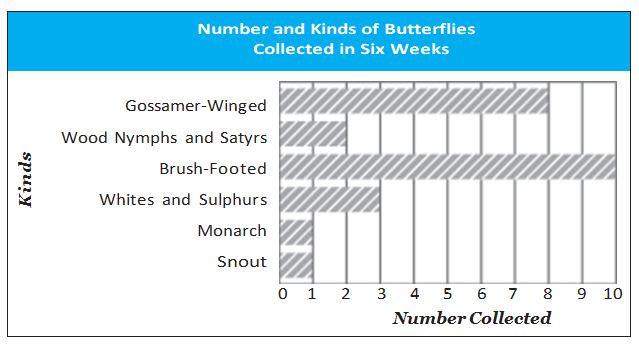
- Short season: The butterfly-collecting season near Reading lasted about six weeks in late summer.
- New approach: To study more butterflies, Ebright raised monarchs in his basement, following their life cycle from egg to caterpillar to pupa to adult.
- Release: He tagged the adult butterflies’ wings and released them; thousands of monarchs lived in his basement at different stages.
- Limitation: Tagging eventually lost its appeal because it was tedious and gave little feedback; only two of his tagged butterflies were recaptured, both within seventy-five miles.
Richard Ebright
- Curious: He explored butterflies, rocks, fossils, coins and astronomy.
- Determined: He collected every local butterfly species and raised monarchs to support migration research.
- Eager to learn: He welcomed educational opportunities and achieved top grades.
Ebright’s Mother
- Supportive: She provided equipment and took him on trips.
- Dedicated: She spent evenings learning with him and kept him engaged in educational activities.
- Resourceful: She contacted Dr Urquhart, helping Ebright take part in butterfly research.
Curiosity and Support in Learning
Ebright’s early scientific interest grew from curiosity, persistence and his mother’s encouragement. A book turned butterfly collecting into a chance to contribute to real scientific research.
How did *The Travels of Monarch X* become a turning point in Ebright’s life?
How did Ebright’s mother help him?
Quick recap
- Ebright’s scientific journey began with childhood curiosity and butterfly collecting.
- His mother actively supported his learning and interests.
- By second grade, he had collected all twenty-five local butterfly species.
- The Travels of Monarch X introduced him to monarch migration research.
- He tagged and raised monarchs, but found tagging tedious because few were recaptured.
- At twenty-two, he co-authored a new theory about how cells work, published in the Proceedings of the National Academy of Science; he also received two science awards.
The Competitive Spirit of Richard Ebright in Science
Learning from His First Science Fair
The Seventh-Grade Fair
- First entry: Ebright presented slides of frog tissues, but lost because his project showed specimens rather than a real experiment.
- Lesson learned: Science projects should investigate a question through experiments, not merely display information.
- Response: Determined to do better work, he asked Dr. Urquhart for ideas and focused on insects, which he had studied for years.
Early Experiments on Caterpillars and Butterflies
Eighth- and Ninth-Grade Projects
- Caterpillar disease: Ebright tested whether beetles carried a virus that periodically killed monarch caterpillars. The experiment gave no clear result, but he presented his genuine attempt and won.
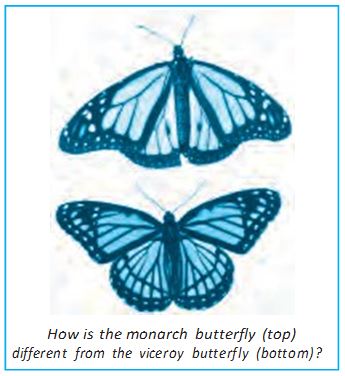
- Viceroy theory: He investigated whether viceroys resemble monarchs to avoid birds, since monarchs are distasteful to birds while viceroys are edible.
- Bird test: A starling ate monarchs rather than ordinary bird food. The project won first place in zoology and third place overall at the county fair.
- Later finding: Other researchers subsequently found that viceroys probably do imitate monarchs.
Research on Monarch Pupae and Cells
From Gold Spots to Cell Research
- Gold spots: In his second year of high school, Ebright asked what the twelve tiny gold spots on a monarch pupa were for. He and another student showed that they produced a hormone needed for the butterfly’s full development.
- Recognition: The project won first place at the county fair and third place in zoology at the International Science and Engineering Fair; it also earned him a summer laboratory opportunity.
- Further experiments: As a junior, he continued the monarch-pupa research and won first place at the International Science Fair.
- Cell growth: As a senior, he showed that monarch wing cells divided and developed into normal scales only when supplied with the hormone from the gold spots. This won first place for zoology at the International Fair.
- Hormone structure: The summer after his freshman year at Harvard, Ebright returned to the U.S. Department of Agriculture laboratory. Using its sophisticated instruments, he identified the hormone’s chemical structure.
A Theory About DNA and Cell Life
- New idea: During his junior year of college, while studying X-ray photographs of a hormone’s chemical structure, Ebright developed a theory about how a cell reads the blueprint in its DNA.
- Collaboration: Ebright and his college roommate, James R. Wong, worked through the night making drawings and plastic molecular models, then wrote a paper explaining the theory.
- DNA: DNA is the substance in a cell’s nucleus that controls heredity and determines the cell’s form and function.
- Next steps: Ebright graduated from Harvard with highest honours, second in a class of 1,510, and began testing his theory as a researcher at Harvard Medical School.
- Possible impact: If confirmed, the theory could deepen understanding of life and help inspire ways to prevent some cancers and other diseases.
The Qualities Behind Ebright’s Success
Curiosity, Effort and Balanced Interests
- Curiosity: Ebright’s interest in science began with collecting butterflies and grew through the book *The Travels of Monarch X*.
- Hard work: He regularly put in extra effort, balancing extensive butterfly research with debate preparation and other activities.
- Healthy competitiveness: He wanted to win by doing his best work, not simply to collect prizes.
- Wide abilities: He was a straight-A student, debater, public speaker, canoeist, outdoorsman and expert photographer.
- Influence: His social studies teacher and club adviser, Richard A. Weiherer, encouraged him to explore new ideas.
Richard Ebright
- Curious: He continually asked questions, from the purpose of monarch pupal spots to how cells use DNA.
- Persistent: An inconclusive experiment did not stop him; he learned from it and continued investigating.
- Diligent and competitive: He worked hard and aimed to do the best job for the right reasons.
- Versatile: He combined scientific research with debating, public speaking, outdoor pursuits and photography.
What Makes a Scientist
Scientific achievement grows from a first-rate mind, curiosity, sustained effort and the desire to do excellent work for the right reasons.
What did Ebright learn from losing at his first science fair?
How did Ebright’s monarch-pupa research lead to his theory about cell life?
What qualities does the chapter identify as essential to the making of a scientist?
Quick recap
- Ebright’s first science-fair loss taught him to conduct real experiments.
- His early projects investigated caterpillar disease and the relationship between monarchs and viceroys.
- Research into monarch pupal gold spots revealed a hormone necessary for butterfly development.
- At the U.S. Department of Agriculture laboratory, Ebright identified the hormone’s chemical structure; the research contributed to his theory about how cells read DNA.
- Curiosity, persistence, hard work and healthy competitiveness drove Ebright’s scientific progress.
- The chapter presents scientific success as a desire to do one’s best for the right reasons.
Glossary
- leagues
- Groups of sports clubs or teams that compete with one another.
- county
- A region or administrative area.
- starling
- A common European bird with black, brown-spotted plumage; it nests near buildings and can mimic sounds.
- entomology
- The scientific study of insects.
- eureka
- A cry of triumph made upon discovering something.
- canoeist
- A person who paddles a canoe, a light boat.
Quick recap
- A league is a group of sports teams or clubs that compete.
- A county is a region or administrative area.
- A starling is a European bird known for mimicking sounds.
- Entomology is the study of insects.
- “Eureka” expresses triumph at a discovery.
- A canoeist paddles a canoe.
English — ALL CHAPTERS
1
A Letter To God
2
Nelson Mandela Long Walk To Freedom
3
Two Stories About Flying
4
From The Diary Of Anne Frank
5
Glimpses Of India
6
Mijbil The Otter: Gavin Maxwell
7
Madam Rides The Bus
8
The Sermons At Benares
9
The Proposal
1
A Triumph of Surgery
2
The Thief’s Story
3
The Midnight Visitor
4
A Question of Trust
5
Footprints without Feet
6
The Making of a Scientist
7
The Necklace
8
Bholi
9
The Book That Saved the Earth