Class 10 . English . First Flight . Madam Rides the Bus
Chapter 7: Madam Rides The Bus
Ch 7
English
Class 10
Valli’s Favourite Pastime
Valli and Her Favourite Pastime
Valli’s everyday world
- Valliammai: Called Valli, she was an eight-year-old girl who was very curious.
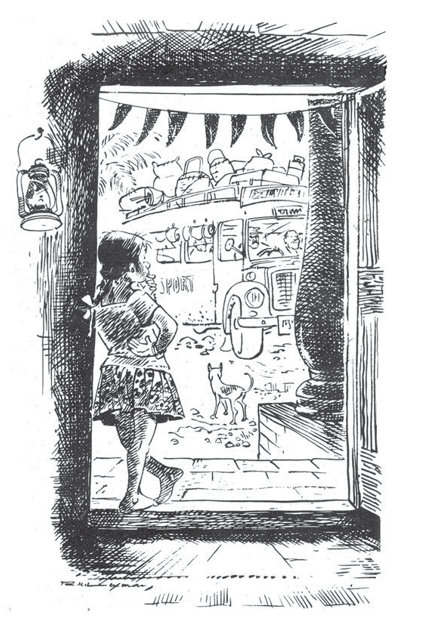
- Pastime: With no playmates her age nearby, she watched the street from her front doorway. This delighted her as much as games delighted other children.
- Bus: The bus between her village and the nearest town passed her street every hour, going in each direction. Its changing passengers fascinated her.
Valli’s Wish to Ride the Bus
A growing desire
- Wish: Watching the bus gradually made Valli long to ride on it, even once. Her wish grew into an overwhelming desire.
- Passengers: She watched people get on and off at the street corner, imagining the journey and the town.
- Jealousy: When friends described the town after travelling by bus, Valli called them “Proud! proud!” as an expression of disapproval; neither she nor her friends knew the word’s proper meaning.
How Valli Planned the Journey
Journey details and calculations
- How she learned: Valli listened to neighbours and regular bus travellers, and asked a few discreet questions.
- Distance and fare: The town was six miles away. A one-way ticket cost thirty paise, which seemed like a fortune to her.
- Travel time: The journey to town took forty-five minutes. She could return on the same bus by paying another thirty paise.
- Her plan: Take the 1 p.m. bus, reach town at 1:45 p.m., and return home at about 2:45 p.m.
- Preparation: She repeatedly calculated and reconsidered the details, showing that she was carefully planning the trip.
Valli
- Curious and observant: She eagerly watched the street and the bus passengers.
- Dreamy and determined: Her wish to ride the bus grew stronger over time.
- Resourceful and practical: She gathered information, considered the fare, and worked out a timetable.
Curiosity, independence, and life’s mysteries
Valli’s fascination with the bus becomes a personal goal, and her careful planning reflects growing independence. The story frames her journey as an introduction to the mystery of life and death: knowing that death exists is different from truly understanding it.
What was Valli’s favourite pastime, and why did she enjoy it?
What information did Valli gather about the bus journey, and how?
What was Valli planning to do?
Quick recap
- Valli is an eight-year-old girl whose favourite pastime is watching the street from her doorway.
- The village-town bus passing every hour becomes the focus of her fascination.
- Her wish to ride the bus grows into a strong desire.
- She learns the route, fare, and travel time by listening and asking discreet questions.
- Her planned round trip costs sixty paise and takes about one hour and forty-five minutes.
- The story’s framing distinguishes knowing that death exists from understanding it.
The Conductor Call Valli ‘Madam’
Valli boards the bus
- Boarding: Valli calls out for the bus to stop and insists that she can get on by herself.
- Fare: She shows the conductor her money and pays thirty paise for her ticket.
- Conductor’s joke: He playfully calls her “madam” and asks the passengers to make way. Their laughter makes Valli shy.
- The bus: Valli admires its gleaming white-and-green exterior, silver-like bars, clock and soft seats.
- View: A canvas blind blocks the lower window, so Valli stands on the seat to see the canal, palm trees, grassland, distant mountains, sky and wide green fields.
Valli asserts her independence
- The elderly man: He asks Valli to sit down for safety. She objects to being called a child and says she has paid the same fare as everyone else.
- The conductor: He teasingly calls her “madam,” gives her the ticket and warns that she could fall if she stands during a turn or bump.
- Valli’s age: She says she is eight years old and insists on standing; when passengers board, she sits to avoid losing her seat.
- The elderly woman: She asks if Valli is alone and questions her about her destination. Valli dislikes her appearance and betel-chewing, finds her questions intrusive and turns away, saying she can take care of herself.
Valli
- Independent: She boards alone, pays thirty paise and refuses help.
- Assertive: She objects when others call her a child and says she can look after herself.
- Curious: She eagerly watches the bus and the scenery outside.
- Proud and easily embarrassed: She dislikes being laughed at or questioned, though she eventually laughs with the conductor.
The conductor
- Jolly and playful: He calls Valli “madam” to tease her and amuse the passengers.
- Helpful and safety-conscious: He gives Valli her ticket and warns her about standing on the seat.
Independence and growing up
Valli wants to be treated as capable and grown-up, although the adults’ concern and her reactions show that she is still a child.
Why does the conductor call Valli “madam”?
Why does Valli stand on the seat, and what does she see?
Why does Valli not want to make friends with the elderly woman?
- Slack time
- A period when there is little activity.
- Haughtily
- In a proud or arrogant manner.
- Mimicking
- Copying someone’s speech or behaviour.
- Repulsive
- Causing strong dislike.
- Curtly
- In a brief, unfriendly manner.
- Drivel
- Silly or meaningless talk.
Quick recap
- Valli boards confidently, refuses help and pays thirty paise for her ticket.
- The conductor teasingly calls her “madam,” making the passengers laugh.
- She stands on the seat to see the scenery beyond the window blind.
- Although only eight, Valli insists that she is not a child and can travel alone.
- She rejects the elderly woman’s questions and says she can take care of herself.
Valli Thought Her Journey
Planning and Saving
Planning Her First Journey
- Saving: Valli carefully saved stray coins, resisting treats, toys and even the merry-go-round at the village fair, until she had 60 paise.
- Timing: She planned to travel while her mother napped, usually from about 1 to 4 p.m.—the same time she used for watching the road and exploring nearby.
The Outward Journey
What Valli Saw
- Roadside sights: The bus passed open land, a hamlet and shops; the moving trees seemed to run toward the bus and then rush away.
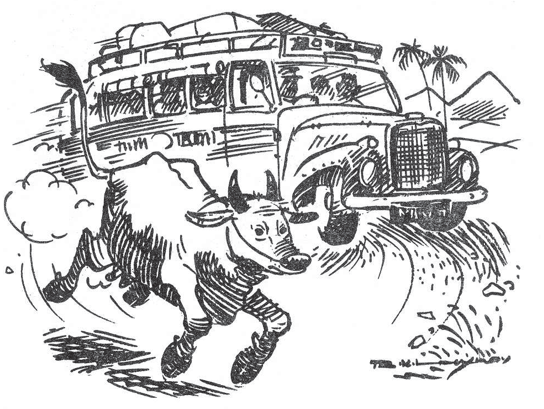
- The cow: A frightened young cow ran ahead of the bus. The driver’s repeated honking made it gallop faster, and Valli laughed until tears came to her eyes.
- The town: She watched a train roar past, then admired the busy shopping street, bright shops, displays and crowds.
The Return Journey
Valli Stays on the Bus
- Fare: At the bus station, Valli stayed aboard and paid another 30 paise for the return ride.
- Reason: She wanted the bus journey itself, not a visit to the town. She said she would be afraid to explore alone.
- Independence: Valli refused the conductor’s offer of a drink, explaining that she did not have enough money and asking only for her ticket.
Valli
- Careful and determined: She saved 60 paise by resisting tempting purchases.
- Curious: She delighted in observing the road, the cow, the train and the town.
- Independent and self-controlled: She planned the trip herself and firmly refused the conductor’s offer.
- Thriftily
- Carefully and economically with money.
- Resolutely stifled
- Controlled or suppressed with determination.
- Ventured out
- Went out cautiously or courageously.
- Thoroughfare
- A busy public road.
- Merchandise
- Goods offered for sale.
How did Valli save for her journey, and why was it difficult?
What made Valli laugh, and why did she stay on the bus at the town stop?
Why did Valli refuse the conductor’s offer of a drink? What does this show about her?
Quick recap
- Valli carefully saved 60 paise by resisting small pleasures.
- She planned her trip for the hours when her mother usually napped.
- The frightened cow running ahead of the bus made Valli laugh.
- She enjoyed the sights of the train, shops and crowds from the bus.
- She paid another 30 paise to return and did not get off to explore.
- Her refusal of the drink shows her independence and self-control.
Valli Visit The Town
Valli’s Return Journey
- The dead cow: On the return journey, Valli sees the young cow that had earlier run in front of the bus. Now it lies dead by the roadside, and the sight deeply saddens her.
- A changed mood: The memory of the cow stays with Valli, ending her excitement about the sights outside. She remains seated until the bus reaches her village at 3:40.
- Back home: Valli tells the conductor she hopes to see him again, then runs home. Her mother and aunt are awake, but they do not realise where she has been.
- A private understanding: When her mother says people cannot know or understand everything happening around them, Valli agrees. She smiles quietly, keeping her experience to herself.
Valli
- Observant: She recognises the cow from the outward journey.
- Sensitive: The cow’s death affects her so strongly that she stops enjoying the view.
- Self-contained: She keeps her bus trip and her understanding of her mother’s words to herself.
Experience and Understanding
Valli’s journey brings her face to face with both joy and death. Her private agreement with her mother suggests that people may experience things others around them do not know about.
- Spreadeagled
- Spread out.
- Haunted
- Kept returning to her mind; was difficult to forget.
- Pokes her nose
- Takes an interest in something that does not concern her.
Why does Valli stop looking out of the bus window?
What does Valli’s response to her mother’s words reveal?
Quick recap
- Valli sees the cow from her outward journey dead by the roadside.
- The sight changes her mood, and she no longer watches the passing scenery.
- The bus reaches her village at 3:40; Valli tells the conductor she hopes to see him again.
- At home, her mother and aunt do not know about her trip.
- Valli privately connects her experience with her mother’s thoughts about what people do not know.
The Tale Of Custard The Dragon (Poem)
Ogden Nash
- He wrote more than 400 pieces of comic verse.
- His best work appeared in 14 volumes published between 1931 and 1972.
- His style often combines conversational language, unusual rhythms and surprising rhymes.
What the poem is about
- Belinda and her pets mock Custard for wanting a safe cage, although they boast of being brave.
- When a pirate appears, the others flee or hide; Custard defeats the pirate, but everyone later returns to claiming greater bravery.
The Tale of Custard the Dragon
- Belinda lives with a kitten, a mouse, a dog and a pet dragon.
- The playful wording and rhymes establish the poem’s light, comic tone.
- The pets are named Ink, Blink, Mustard and Custard.
- Custard is called a coward because he often asks for a safe cage.
- Custard looks frightening, with sharp teeth, spikes, scales and claws.
- His nose and mouth are described through comic, exaggerated images.
- Belinda, Ink, Blink and Mustard are presented as fearless.
- Custard’s request for a cage contrasts with their claims of bravery.
- Belinda and the other pets tease Custard for being timid.
- The teasing makes their confidence seem boastful and unkind.
- The others continue laughing at Custard’s fear.
- The exaggerated giggling and mouse sound add to the humour.
- A pirate suddenly enters the house, creating real danger.
- The others react with alarm, despite having claimed to be brave.
- The pirate is armed with pistols and a cutlass.
- His threatening appearance signals that he intends harm.
- Belinda pales and cries for help; Mustard runs away, Ink retreats, and Blink hides.
- Their reactions contradict their earlier boasts of bravery.
- Custard is the only one who confronts the pirate.
- Similes and sound words make his attack vivid and energetic.
- The pirate is astonished and his shots miss Custard.
- Custard defeats and eats the pirate, proving brave in danger.
- The others celebrate Custard’s victory and show him affection.
- The pirate’s death is treated comically rather than sadly.
- Mustard, Ink and Blink make excuses and still claim they would have been brave.
- Custard remains modest, even after his courageous action.
- The poem returns to the familiar home and its inhabitants.
- The repeated opening description gives the ending a song-like feel.
- The others resume their exaggerated claims of bravery.
- Custard’s repeated request creates comic irony after his courageous deed.
| Character | Pet name / role | Key trait or action |
|---|---|---|
| Belinda | The owner | Boasts of bravery but pales and cries for help when the pirate arrives. |
| Black kitten | Ink | Flees to the bottom of the household. |
| Grey mouse | Blink | Hides from the pirate. |
| Yellow dog | Mustard | Runs away, then makes excuses. |
| Dragon | Custard | Seems timid but bravely defeats the pirate. |
| Pirate | Uninvited intruder | Armed and threatening; Custard defeats him. |
| Device | Example | Effect |
|---|---|---|
| Simile | “Mouth like a fireplace”; “snorting like an engine” | Creates vivid comparisons and exaggerates Custard’s appearance and action. |
| Onomatopoeia | “Meowch!”, “clatter”, “clank” | Recreates sounds to make events lively and comic. |
| Hyperbole | “Belinda giggled till she shook the house” | Uses exaggeration for humour. |
| Irony | The supposedly cowardly Custard fights while the boastful pets flee. | Reverses expectations and reveals who acts bravely. |
Real courage versus boasting
The poem humorously suggests that courage is shown through actions, not claims. Custard, who is mocked as a coward, is the only one who faces the danger.
Form, rhyme and tone
- Ballad: A narrative poem or song that tells a story; this one is a humorous ballad and a parody of heroic tales.
- Rhyme: Many stanzas use paired rhymes, such as house/mouse and wagon/dragon; the rhythm and rhymes are playful.
- Repetition: The repeated descriptions and the safe-cage refrain help create a song-like structure.
- Tone: Light-hearted and comic, with exaggerated descriptions, amusing sounds and an ironic ending.
- grog
- A drink traditionally associated with sailors.
- gyrate
- To move or turn around in circles.
- flustered
- Confused or upset, especially under pressure.
- cutlass
- A short, curved sword once used by sailors.
Why does Custard ask for a safe cage, and why is he called a coward?
How does the pirate’s arrival reveal the characters’ true courage?
Why is the ending humorous and ironic?
Quick recap
- Ogden Nash’s poem is a humorous ballad that parodies tales of heroism.
- Belinda cries for help, Mustard flees, Ink retreats, and Blink hides when a pirate appears.
- Custard’s frightening appearance contrasts with his requests for a safe cage.
- Custard alone confronts and defeats the pirate, revealing his real courage.
- The others make excuses afterward, while Custard remains modest.
- The poem uses playful rhymes, repetition, similes, sound words and irony.
Exercise
What was Valli’s deepest desire, and how did she prepare for her bus ride?
What kind of person is Valli, and why does the conductor call her ‘madam’?
Why does Valli avoid looking out of the window on the return journey, and what does her remark about things happening without our knowledge mean?
Quick recap
- Valli’s greatest wish was to ride the bus to town.
- She planned the journey and saved money for the fare.
- Her determination and independence shape her conversations with the conductor and passengers.
- The sight of a dead cow troubles Valli on the return journey.
- Valli’s curiosity and reactions show the journey from a child’s point of view.
English — ALL CHAPTERS
1
A Letter To God
2
Nelson Mandela Long Walk To Freedom
3
Two Stories About Flying
4
From The Diary Of Anne Frank
5
Glimpses Of India
6
Mijbil The Otter: Gavin Maxwell
7
Madam Rides The Bus
8
The Sermons At Benares
9
The Proposal
1
A Triumph of Surgery
2
The Thief’s Story
3
The Midnight Visitor
4
A Question of Trust
5
Footprints without Feet
6
The Making of a Scientist
7
The Necklace
8
Bholi
9
The Book That Saved the Earth