Class 9 . Social Science . Understanding Society India and Beyond Part I . Building Blocks in Economics the Problem of Choice
Chapter 8: Building Blocks in Economics: The Problem of Choice
Ch 8
Social Science
Class 9
Choices and Limited Resources
Economic Choices, Needs and Wants
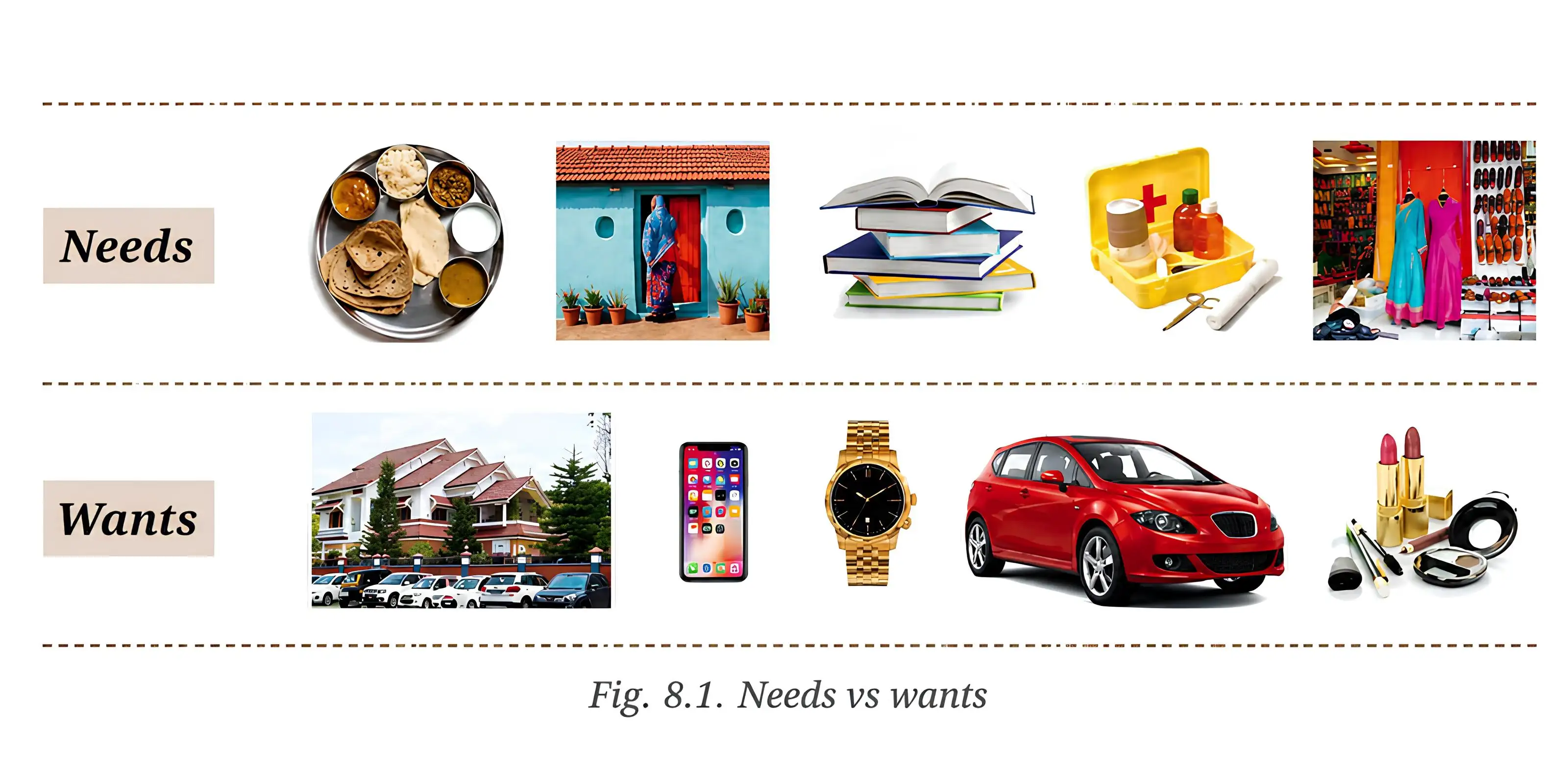
Needs and Wants
- Wants: Human wants are unlimited and change over time; for example, a person may want to move from a bicycle to a motorbike and then to a car.
Market — A physical or online place where people buy and sell goods and services.
Choices and Limited Resources
Resources — Factors used to produce goods and services; they may be natural or human-made.
Resource Scarcity and Alternative Uses
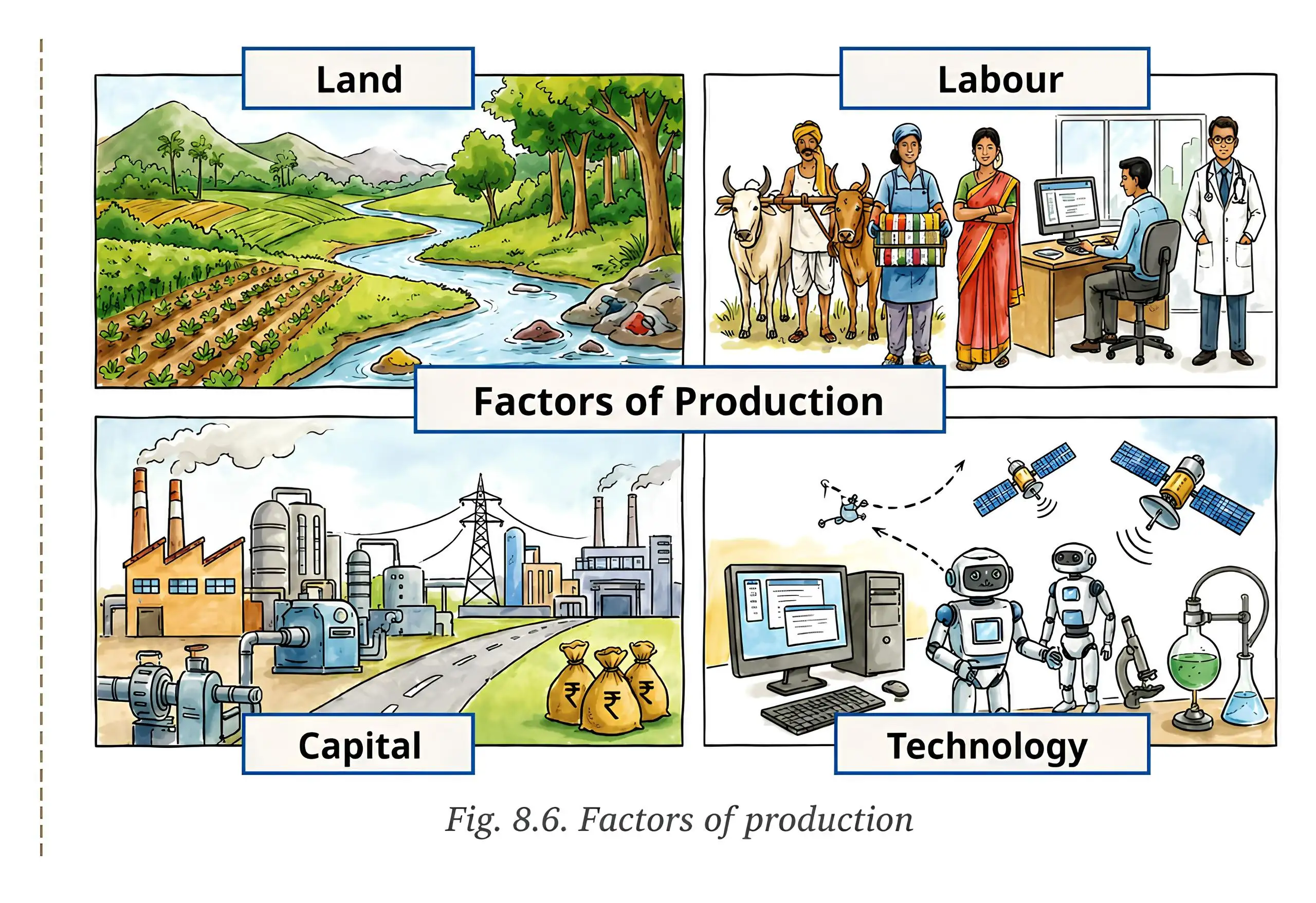
- Factors of production: Land, labour, capital and technology are used to produce goods and services.
- Limited supply: Natural and human-made resources are limited, while human wants are unlimited.
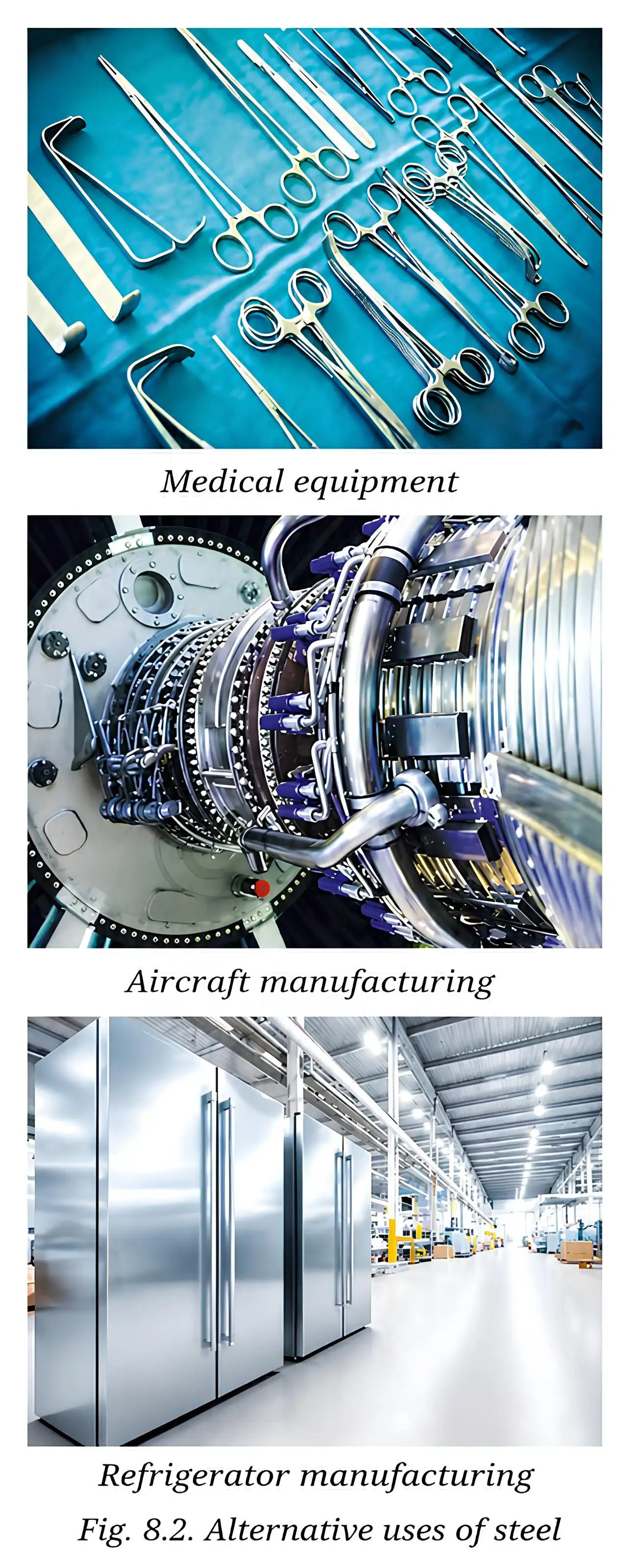
- Alternative uses: A resource can be used in different ways; for example, money can buy fruit or shoes, and steel can make medical equipment, aircraft or refrigerators.
- Economic problem: Households and whole economies must allocate scarce resources efficiently to satisfy wants and improve quality of life.
Opportunity Cost and the Production Possibility Curve
Opportunity cost — The value of the next-best alternative given up when a choice is made.
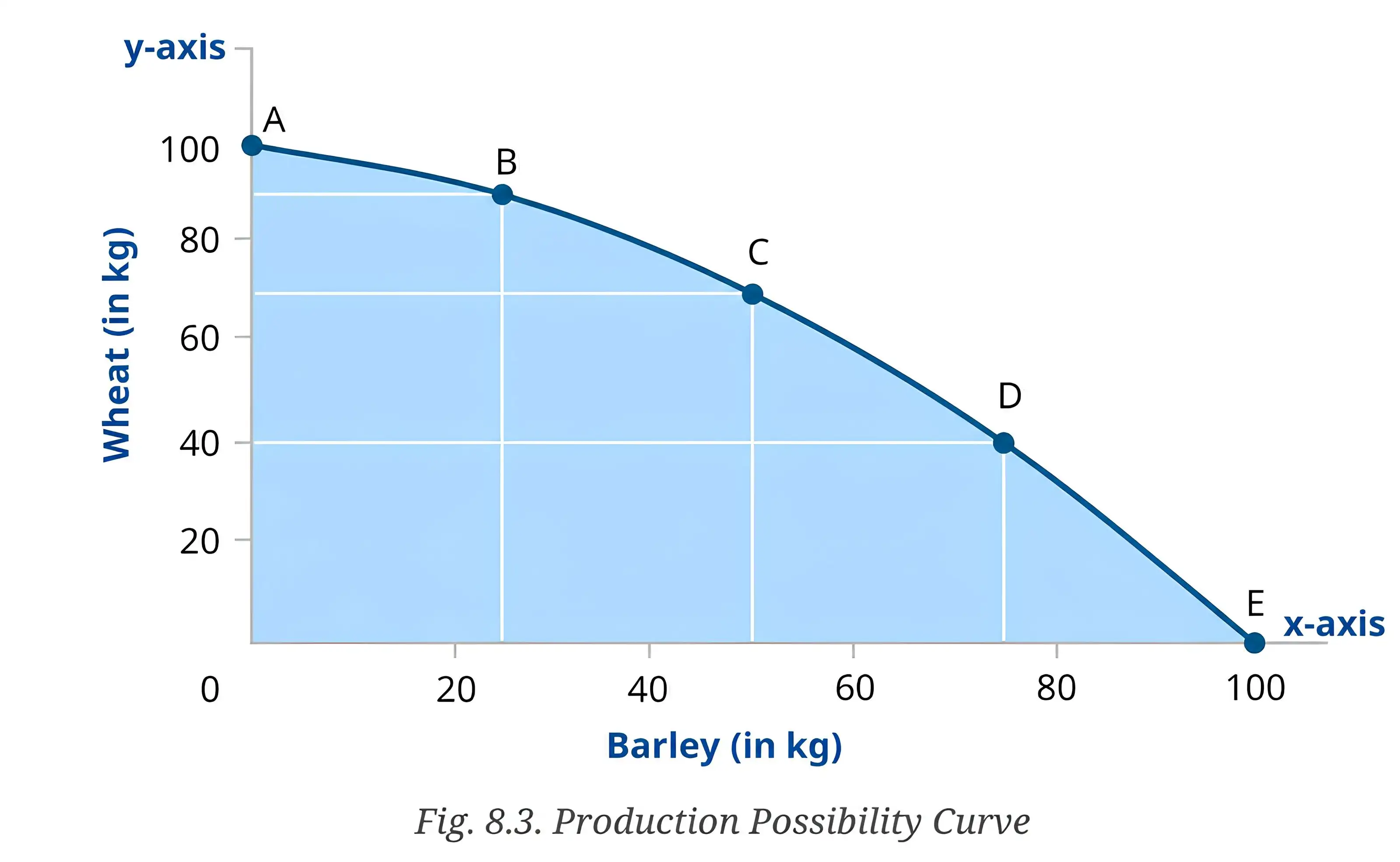
| Combination | Barley (kg) | Wheat (kg) |
|---|---|---|
| A | 0 | 100 |
| B | 25 | 90 |
| C | 50 | 70 |
| D | 75 | 40 |
| E | 100 | 0 |
Production Possibility Curve (PPC) — A curve showing different combinations of goods that can be produced using all available resources.
Reading the PPC
- Trade-off: Moving from A to E increases barley production but reduces wheat production; producing more barley means sacrificing some wheat.
- Axes: Barley quantity is shown on the horizontal axis and wheat quantity on the vertical axis.
- Efficiency: Points on the PPC show maximum output when resources are used efficiently without wastage.
- Use: PPC analysis helps enterprises and governments plan production and make decisions.
What Economics Deals With
Economics — The study of how people and societies make choices to use limited resources to satisfy needs and wants.
Scope of Economics
- Origin of the word: Economics comes from Greek *oikonomia* (household management), combining *oikos* (household) and *nemein* (management).
- Resource allocation: Individuals, enterprises and governments decide how to allocate resources among competing uses; these choices affect society’s well-being.
- Interactions studied: Economics examines consumers, producers, governments and financial institutions and how they interact.
- Examples of topics: Work and wages, distribution of wealth and resources, market prices, investment in education and technology, government policy, trade and employment.
Economic Decisions, Data and the Economic Survey
Using Evidence to Make Decisions
- Good decisions: Use data and analysis rather than guesswork; compare alternatives, opportunity costs and likely outcomes.
- Families: Allocate money among essentials such as food and medicines, non-essentials such as entertainment, and savings.
- Governments: Use tax revenue to plan spending on infrastructure and welfare programmes.
- Enterprises: Study market trends and innovations to serve customers and maximise profits.
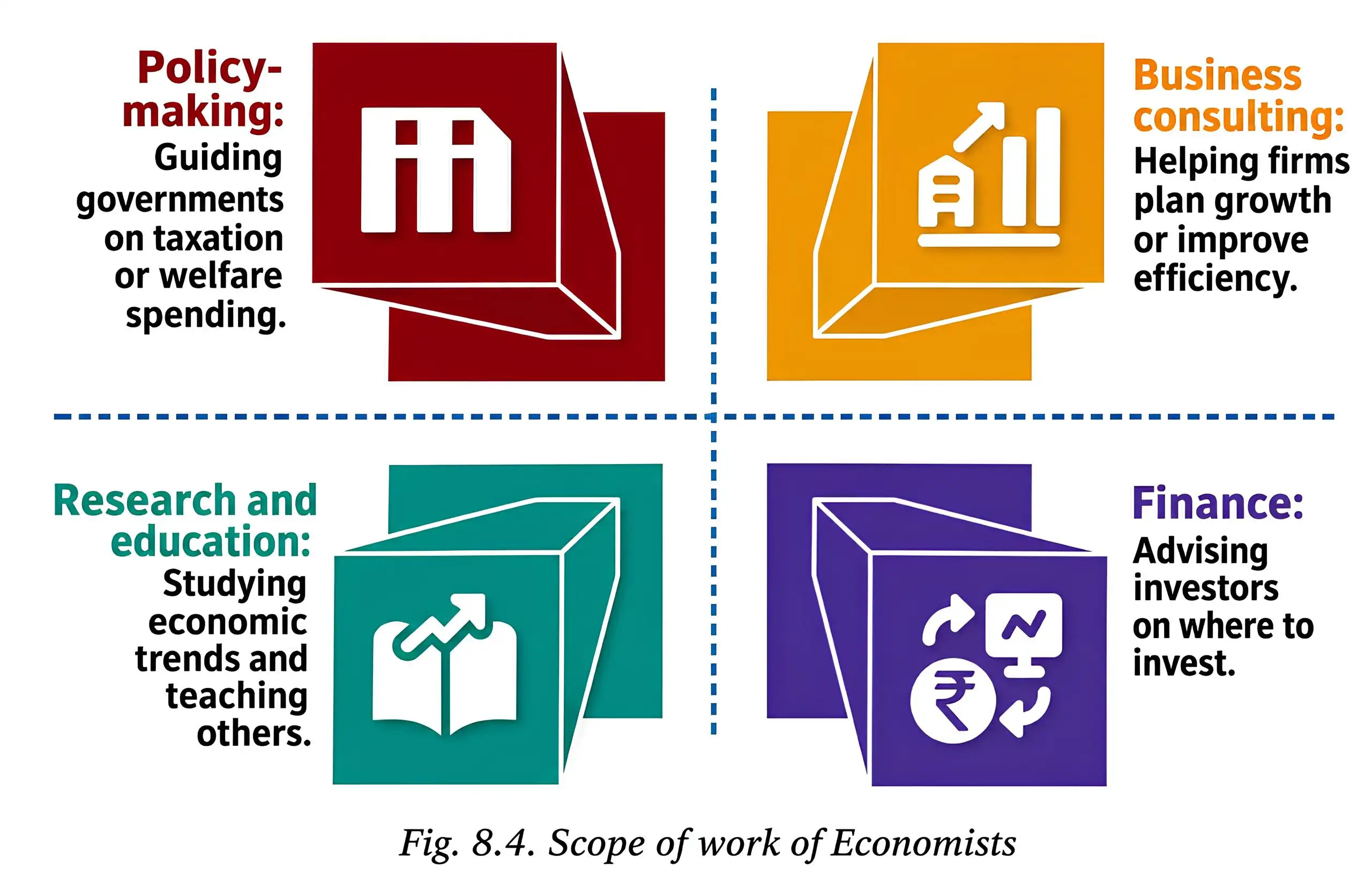
- Economists: Analyse government reports and company financial statements to assess potential risks and opportunities.
- Economy
- The production and consumption of goods and services and the flow of money in a country or region.
- Survey
- A systematic method of collecting and analysing information about economic conditions and people's behaviour.
- Data
- Facts and statistics collected for reference or analysis.
- Economic entity
- A participant in economic activity, such as a consumer, producer, government or enterprise.
- Policy
- A course or principle of action adopted or proposed by an organisation or individual.
- Economic Survey
- An annual review of India's economic performance, prepared by the Ministry of Finance and presented in Parliament before the Union Budget.
The Economic Survey of India
- Coverage: Reviews the past year's performance in agriculture, industry, services and areas such as employment, inflation, education, health and infrastructure.
- Purpose: Analyses economic challenges and opportunities and helps citizens understand the economy's performance.
- Policy role: Provides insights for policymakers and serves as a guide for preparing the upcoming Union Budget.
What is opportunity cost? Explain it using the farmer's crop choice.
What does the PPC show, and what do its points represent?
Quick recap
- Human wants are unlimited, but resources are limited and have alternative uses.
- Economic choices are made by individuals, enterprises and governments.
- Opportunity cost is the value of the next-best alternative that is given up.
- A PPC shows efficient production combinations and the trade-off between goods.
- Economics studies how scarce resources are allocated to satisfy needs and wants.
- Economic decisions are stronger when based on data, analysis and likely outcomes.
- India's Economic Survey reviews economic performance and informs policy and the Union Budget.
Key Questions in Economics
Scarcity and Economic Choices
Economics’ key questions — Unlimited wants and limited resources create scarcity, so people and societies must choose what to produce, how to produce it, and for whom.
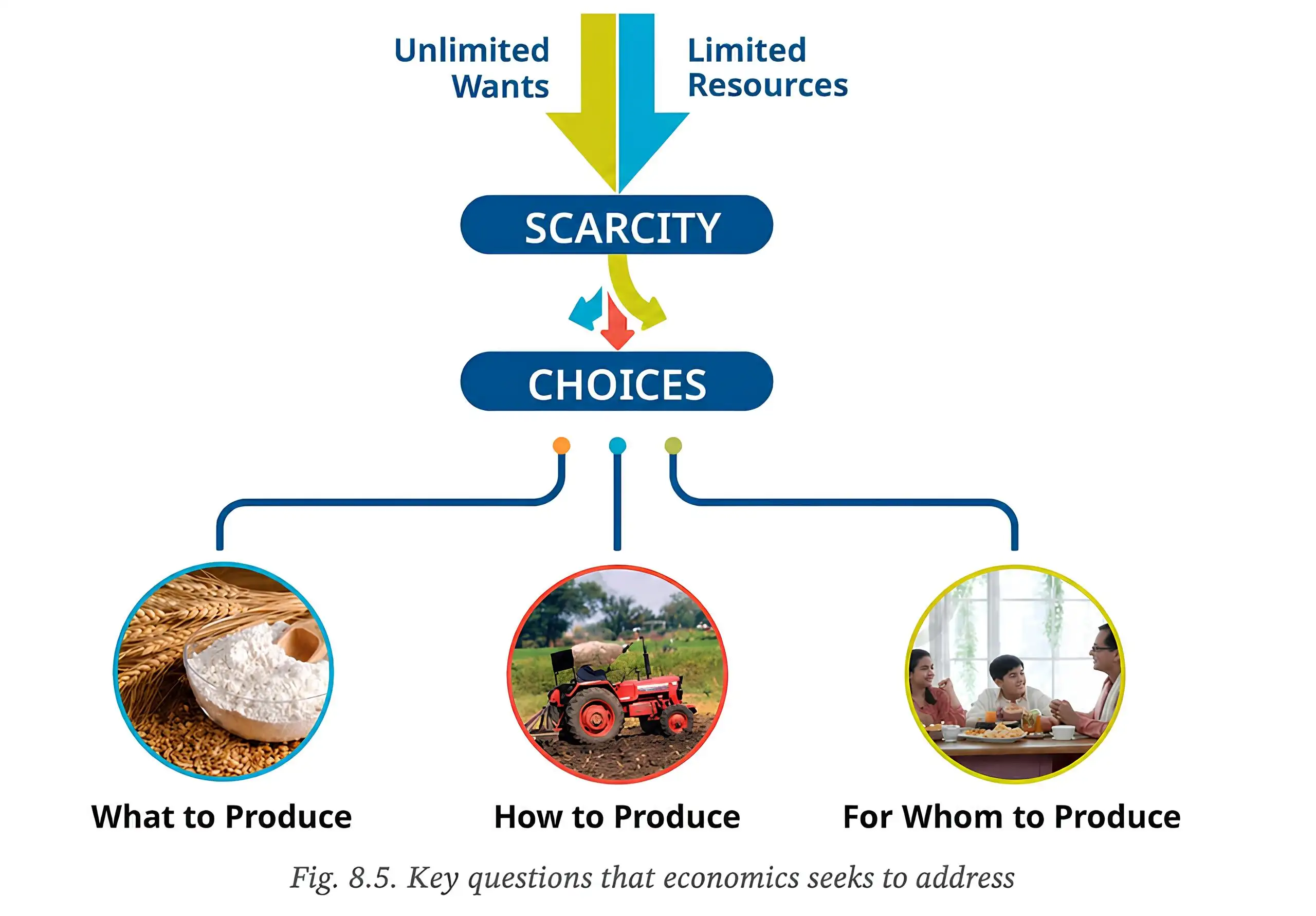
- Economy
- The system of producing, distributing, trading and consuming goods and services in an area such as a country.
- Opportunity cost
- The benefit of the next-best alternative given up when a choice is made.
- Factors of production
- The resources used to produce goods and services: land, labour, capital and technology.
What to Produce and for Whom?
What to produce — Deciding which goods and services to make, and in what quantities, over a given period.
Making the production choice
- Trade-offs: Producers compare alternatives and the benefits each could bring.
- Crop example: Sugarcane can yield high profits and support sugar industries; millets and pulses save water, improve soil health and support sustainable farming.
- Opportunity cost: Choosing sugarcane means giving up the gains from water conservation and improved soil health associated with the alternative crops.
- Decision-makers: Companies, governments and consumers all face trade-offs when resources are limited.
For whom to produce — Deciding who goods and services are meant for, how they are produced and distributed, and who benefits from them.
Choosing the target consumers
- Consumer differences: People have different needs, incomes, tastes and lifestyles.
- Producer decisions: Producers consider what consumers like, what they can afford and the level of demand before choosing what to make.
- Resource use: Matching products to consumers helps use scarce resources efficiently and avoid waste.
| Product | Target group | Typical features |
|---|---|---|
| School shoes | Students | Simple, durable and affordable |
| Office-wear shoes | Working professionals | Comfortable and formal; often leather or polished materials |
| Sports shoes | Athletes and fitness enthusiasts | Lightweight materials and special rubber soles for grip, flexibility and support |
| Casual shoes or slippers | People needing everyday footwear | Comfortable and affordable |
Materials also reflect the target market
- Leather footwear: Often aimed at office-goers and higher-income customers.
- Rubber or synthetic footwear: Often made for sports players, factory workers or consumers seeking affordable, durable shoes.
How to Produce?
How to produce — Choosing the methods, resources and technologies used to make goods and services.
Factors and production methods
- Factors of production: Land, labour, capital and technology are combined to produce goods and services.
- Labour-intensive production: Uses more workers and less machinery; common in activities such as agriculture and handicrafts.
- Capital-intensive production: Uses more machines and technology and fewer workers; common in steel and automobile manufacturing.
- Main choice: A producer may choose between employing more labour and automating production.
| Factor | Effect on the choice |
|---|---|
| Cost and availability of factors | Expensive machines or plentiful, low-cost labour can favour labour-intensive production; scarce or costly labour can make machines more attractive. |
| Technology | Advanced technology encourages machine use; limited technology may require manual production. |
| Nature of the product | Customised or designer garments may need skilled workers; mass-produced garments are suited to machines. |
| Laws and regulations | Labour laws and government incentives for machinery can influence the method chosen. |
Garment-production example
- Machines expensive: A garment manufacturer may rely more on workers.
- Machines affordable and technology advanced: The manufacturer may shift towards automation.
- Product type matters: Skilled labour can be important for customised designs, while machines suit mass production.
What are the three key questions in economics?
Explain the opportunity cost of choosing sugarcane over millets and pulses.
Name two factors that affect whether production is labour-intensive or capital-intensive.
Quick recap
- Scarcity arises because wants are unlimited but resources are limited.
- Economies must decide what to produce, how to produce it and for whom.
- The what-to-produce decision involves quantities, alternatives and their opportunity costs.
- The for-whom decision reflects differences in consumers’ needs, incomes, tastes and lifestyles.
- Production uses land, labour, capital and technology.
- Labour costs, machine costs, technology, product type and regulations influence production methods.
Economic Systems and How Choices are Made
Economic Systems and the Three Questions
- Economic system: The way a country organises production, consumption, and distribution of goods, services, and resources.
- Decision-making: Economic systems determine who controls resources and how the questions of what, how, and for whom to produce are answered.
Planned Economy
- Planned economy: A central government authority makes major decisions about what and how much to produce, how to produce it, and who will receive the output.
- Ownership and control: The government owns or controls most resources and sectors, while private enterprises have limited ownership and operate under strict regulation.
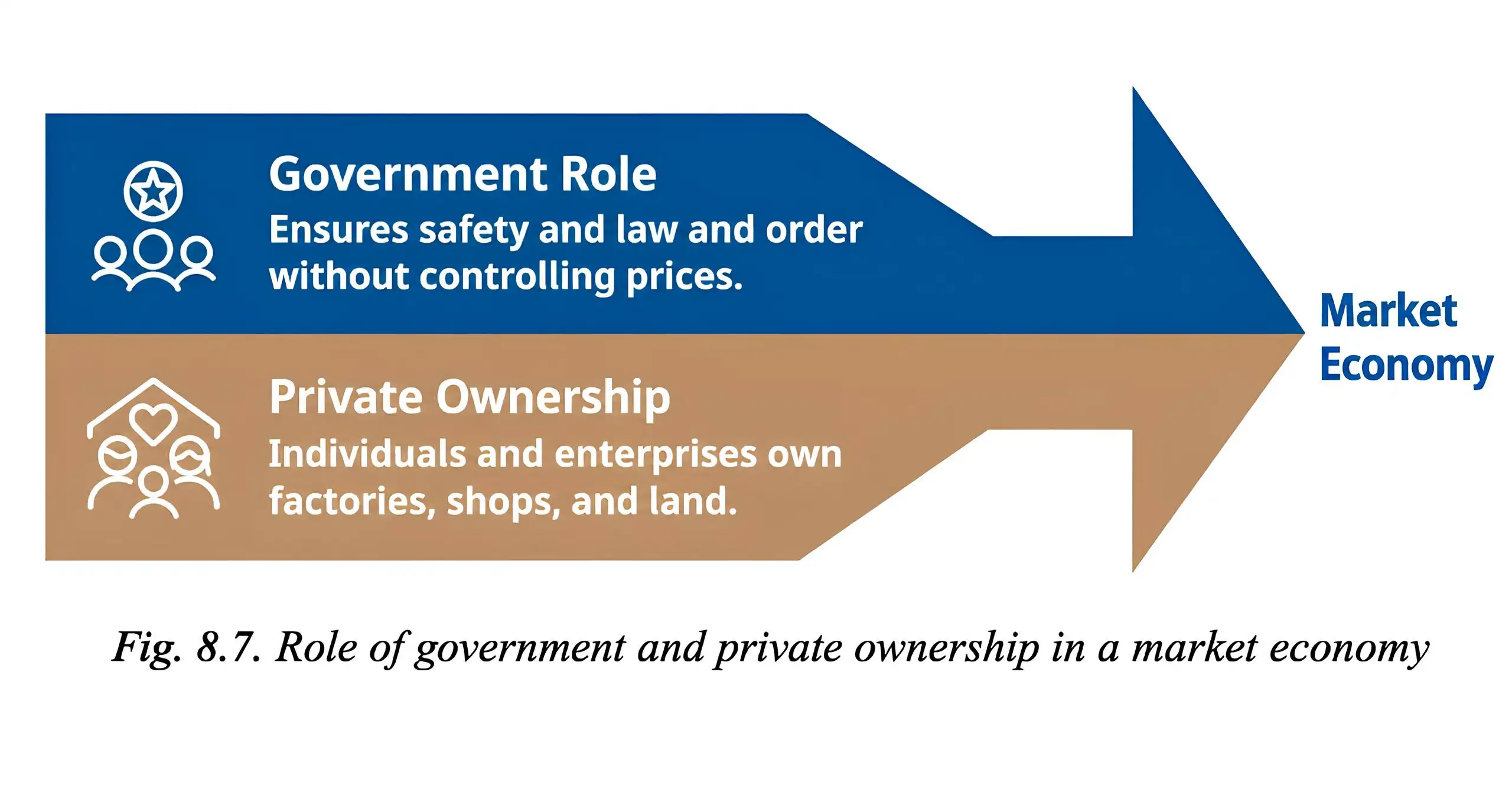
Market Economy
Mixed Economy
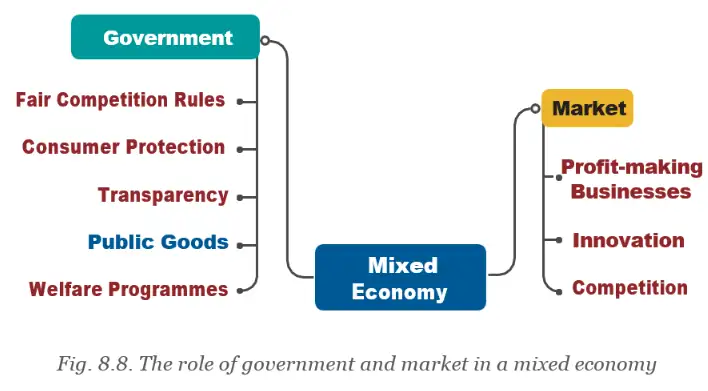
Public goods — Goods and services available to all, where one person’s use does not prevent others from using them.
| Point | Planned economy | Market economy | Mixed economy |
|---|---|---|---|
| Main decision-maker | Government authority | Consumers and producers through market forces | Government and private sector |
| Resource ownership | Mostly government-owned | Mostly privately owned | Both public and private ownership |
| Prices and production | Primarily determined by the government | Primarily shaped by demand and supply | Shaped by markets alongside government involvement |
| Examples | Former Soviet Union, North Korea, Cuba | United States, Japan, Hong Kong | India (post-1991), China (post-1978), Germany, Sweden |
How India’s Economic System Changed
India’s Shift Towards a Market-Oriented System
- Economic difficulties by 1991
- Reforms reduced excessive controls and licences
- Private enterprise and competition were encouraged
- Trade and investment links with the world expanded
- India became more market-oriented, while government remained important
- Economic system
- How an economy organises production, consumption and distribution, and who makes the decisions.
- Planned economy
- Government determines resource allocation and prices.
- Market economy
- Demand and supply primarily determine resource allocation and prices.
- Mixed economy
- Government and private-sector activity coexist and compete in the market; private players are regulated by government.
- Public goods
- Goods and services available to all, where one person’s use does not prevent others’ use.
What are the three central economic questions?
How do planned, market and mixed economies differ in making economic choices?
Quick recap
- Economic systems organise production, consumption and distribution, and determine who makes economic decisions.
- Every economy must decide what to produce, how to produce it and for whom.
- Planned economies rely on government control; this can limit competition and incentives to innovate.
- Market economies rely mainly on demand and supply, private ownership and competition, while government still has important roles.
- Mixed economies combine government and private-sector roles; they coexist and compete in the market, with private players regulated.
- India shifted towards a more market-oriented system after the 1991 reforms while retaining an important government role.
- Economic choices use scarce resources to meet unlimited wants, and every choice has an opportunity cost.
Social Science — ALL CHAPTERS
1
The French Revolution
2
Socialism In Europe And The Russian Revolution
3
Nazism And The Rise Of Hitler
4
Forest Society And Colonialism
5
Pastoralists In The Modern World
1
Understanding Social Science
2
Shaping of the Earth’s Surface
3
Atmosphere and Climate
4
Early Humans and Beginning of Civilisation
5
State and Society up to 1000 CE
6
Democracy
7
Elections
8
Building Blocks in Economics: The Problem of Choice
9
The Price Puzzle: What Drives the Market