Class 9 . Social Science . Understanding Society India and Beyond Part I . State and Society Up to 1000 Ce
Chapter 5: State and Society up to 1000 CE
Ch 5
Social Science
Class 9
Introduction
Questions guiding the chapter
- Social organisation: Explore how early communities and social groups organised themselves.
- Political change: Trace the growth of states across the subcontinent, from clans to kingdoms and empires.
- Shared ideas: Consider how social roles, values, and cultural traditions connected people across regions.
Sources and scope
Studying early India
- Time span: The chapter studies state and society in the Indian subcontinent up to the end of the first millennium CE.
- Sources: From at least the second millennium BCE, literary sources begin to supplement archaeological evidence.
- Earliest literary source noted: The Ṛig Veda provides insights into social, political, cultural and moral aspects of the past.
- What sources reveal: They help us understand political realities, ideas, ideologies, institutions and practices.
Changing political formations and enduring ideas
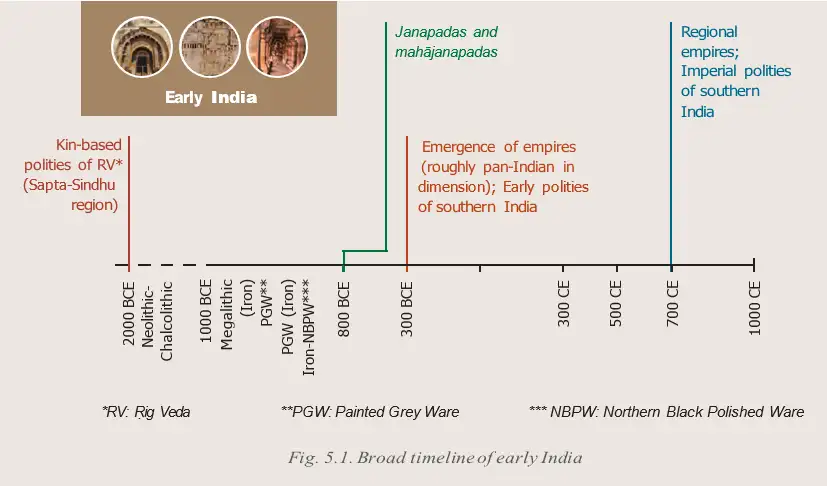
From kin-based groups to empires
- Kin-based social organisation, including jana and kula
- Early forms of polity
- Larger, territory-based janapadas and mahājanapadas
- Empires, including the Mauryas and Guptas in northern India and the Cholas in southern India
Continuities in political and social thought
- Pan-Indian monarch ideal: The idea of a ruler whose authority extended across the subcontinent persisted over time.
- Ritual and kingship: The aśhvamedha yajña was among the ritual practices associated with this political ideal.
- Chakravarti samrāṭ: This concept expressed the ideal of a paramount monarch.
- Dharma: This enduring socio-ethical principle also shaped ideas about society and governance.
A broad, regional history
- Change over time: The period saw many dynasties and regional powers rise and fall across the subcontinent.
- Chapter approach: Representative examples from different regions help explain the broad features of state and society.
- Historical understanding: Literary evidence alongside archaeology allows a more detailed understanding of this period.
- Jana
- A kin-based social group mentioned in early literary sources.
- Kula
- A kin-based unit of social organisation.
- Janapada
- A territory-based political unit that developed from earlier forms of organisation.
- Mahājanapada
- A larger territory-based political unit.
- Dharma
- An enduring socio-ethical principle important to social values and governance.
- Chakravarti samrāṭ
- The ideal of a paramount monarch associated with political unity across the subcontinent.
Quick recap
- The chapter examines state and society in the Indian subcontinent up to the end of the first millennium CE.
- Archaeological evidence is supplemented by literary sources from at least the second millennium BCE, including the Ṛig Veda.
- Political organisation developed from kin-based groups and early polities to janapadas, mahājanapadas and empires.
- The Mauryas and Guptas are examples of northern empires; the Cholas are an example from southern India.
- The aśhvamedha yajña, chakravarti samrāṭ ideal and dharma show important continuities in political and social thought.
- The period included many regional powers and dynasties, studied through examples from across the subcontinent.
Understanding Early Indian State and Society
Society and the State
Society — A system of social relationships among people sharing a territory, culture and sense of belonging.
How society is organised
- Units: Families and households, institutions such as marriage, and customs shape social life.
- Regulation: Customs and practices primarily guide society rather than formal laws.
- Shared norms: Rules and accepted practices help diverse groups live together and maintain order.
State — An organised political system based on rules and laws, with institutions and mechanisms of governance.
| Point | Society | State |
|---|---|---|
| Basis | Social relationships, common culture and belonging | Political organisation based on rules and laws |
| Main regulation | Customs and practices | Formal laws and institutions |
| Key features | Families, households, marriage and shared norms | Rulers’ and subjects’ rights and duties; governance and law enforcement |
How states developed
- Development: Political systems emerged gradually as societies grew larger and more complex.
- Historical study: Historians use early sources to trace changes in governance and political authority.
Vedic Beginnings
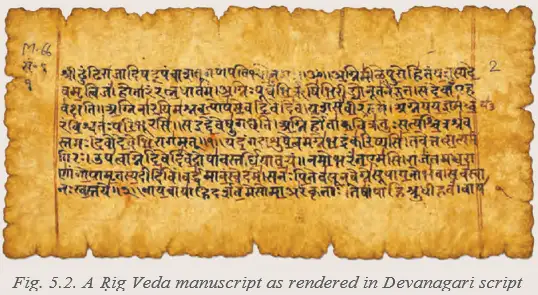
Vedas — The earliest known corpus of Indian literature, preserved orally for centuries before being written down.
The Rig Veda and its setting
- Date: Its composition is debated; estimates range from the fifth millennium BCE to the second millennium BCE.
- Region: It was composed in the northwestern part of the Indian subcontinent, where the Sindhu–Sarasvatī civilisation flourished.
- Writing: The Harappan script remains undeciphered; Vedic literature was transmitted orally for centuries.
- Material: Both the Rig Veda and the Sindhu–Sarasvatī civilisation were familiar with copper.
Debated dating of the Rig Veda
- Fifth millennium BCE to second millennium BCEHistorians’ estimates for the composition of the Rig Veda; its date remains debated.
The Four Vedas and Their Contents
| Veda | Main content or role |
|---|---|
| Rig Veda | Earliest Veda; contains 1,028 hymns (sūktas) praising deities and reflecting on creation, life and death. |
| Yajur Veda | Explains the performance of yajñas and the hymns used in them; includes prose explanations. |
| Sāma Veda | Arranges Rig Veda hymns for musical recitation; its chanting tradition is linked to the seven svaras (notes). |
| Atharva Veda | Includes hymns to ward off evil and material related to physical and mental ailments. |
| Part | Main focus |
|---|---|
| Samhitā | Hymns for invoking deities and offering oblations in a yajña. |
| Brāhmaṇa | Prose explanations of ritual performances. |
| Āraṇyaka | Philosophical speculations associated with sages living in forests; āraṇya means forest. |
| Upanishad | Questions concerning the Self (Ātman) and the Ultimate Universal Being (Brāhman). |
Do not confuse Brāhman (a concept), Brāhmaṇas (Vedic texts) and Brahmins/Brāhmaṇas (a varṇa category).
What Vedic Texts Tell Us
Sapta–Sindhu — The region of the earliest Rig Veda sections, including the Indus River, its five tributaries and the Sarasvatī.
Historical value of Vedic texts
- Evidence: Vedic texts help scholars study the times and regions in which they were composed.
- Insights: They provide evidence about people’s lives, social structures, political systems, economic activities and religious practices.
- Cultural importance: Their early origin and continuity of practices make them foundational to Indian culture and traditions.
- Yajña
- A ritual performance involving offerings, referenced in Vedic texts.
- Sūkta
- A hymn; the Rig Veda contains 1,028 sūktas.
- Ātman
- The Self, a subject explored in the Upanishads.
- Brāhman
- The Ultimate Universal Being discussed in the Upanishads.
How do society and a state differ in their main forms of regulation?
Name the four Vedas and state one key feature of each.
What are the four parts of each Veda?
Quick recap
- Society is held together mainly by shared relationships, customs and practices.
- A state is a political system with laws, governance and mechanisms to enforce order.
- The Vedas were transmitted orally for centuries; the Rig Veda’s date of composition remains debated.
- The four Vedas are Rig, Yajur, Sāma and Atharva, each with a distinct focus.
- Each Veda has four parts: Samhitā, Brāhmaṇa, Āraṇyaka and Upanishad.
- Vedic texts offer evidence about early regions, society, politics, economic life and religious practices.
Political Institutions in the Vedic Period
Janas and the Rājā
Jana — A clan: a group of people connected by kinship ties.
Early Vedic communities
- Janas: The Ṛig Veda mentions about thirty clans.
- Pañchajana: Five peoples—the Yadu, Turvaśha, Puru, Anu and Druhyu—were collectively known by this name.
- Bharata: The Ṛig Veda uses this name for a jana ruled by the Bharata family; community identity could be linked to its ruling clan.
- Rājā: Primarily a clan chief who led the people in warfare and protected the members of the jana.
Vedic Assemblies
- Sources: The Ṛig Veda and Atharva Veda refer to three assemblies: sabhā, samiti and vidhata.
- Role: These bodies provided forums for judicial matters, policy and political discussion, and community participation.
| Assembly | Composition | Main role |
|---|---|---|
| Sabhā | Smaller body of selected elites | Primarily served a judicial function |
| Samiti | Larger assembly representing the broader population | Focused on policy decisions and political affairs |
| Vidhata | Popular gathering attended by community members | Discussed warfare and other political matters |
| Point | Vedic period | Modern democracies |
|---|---|---|
| Participation | Assemblies offered forums for community and political discussion. | Representative bodies enable participation in governance. |
| Limits on rulers | The assemblies indicate that political activity was not confined to the rājā alone. | Constitutions and parliaments formally check the powers of government leaders. |
| Comparison | They suggest early institutional participation, but should not be treated as identical to modern democratic systems. | Modern systems have formal constitutional and representative structures. |
Changing Settlements and Material Culture
Developments in the Ganga region
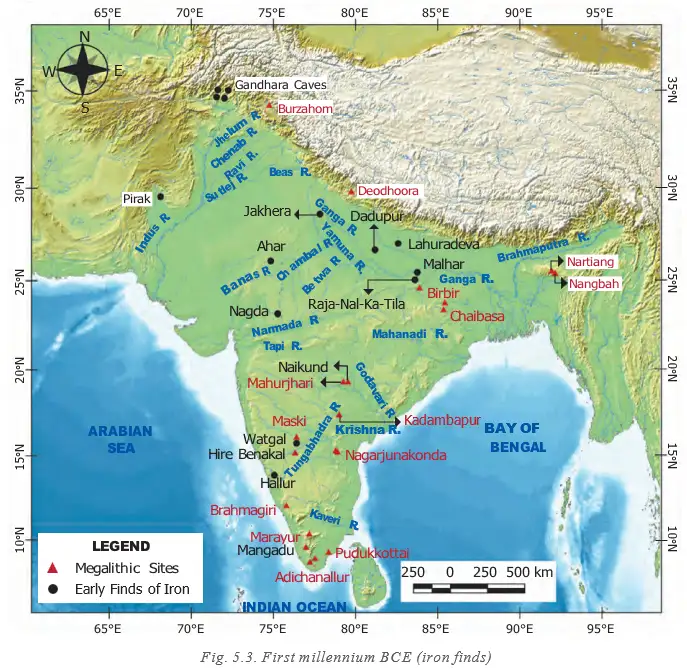
- Settlements: Maps of the second and first millennia BCE show a greater concentration of settlements in the Ganga region in the later period.
- Archaeological evidence: First-millennium BCE finds include iron implements, a wider variety of grains and Northern Black Polished Ware (NBPW).
- NBPW: A distinctive, fine ware with a smooth, glossy black surface.
- Literary evidence: Sources refer to expanding agriculture, increased grain output, more crop varieties—especially paddy—and the use of iron implements.
- Significance: Together, these sources indicate the emergence of a richer and more advanced material culture.
Factors Behind Material-Culture Change
- Use of iron implements and expanding agricultural activity
- Greater grain output and cultivation of a wider range of crops, especially paddy
- Increasing concentration of settlements in the Ganga region
- Evidence of a richer and more advanced material culture, including NBPW
- Jana
- A kinship-based clan or community.
- Pañchajana
- The collective name for the Yadu, Turvaśha, Puru, Anu and Druhyu peoples.
- Rājā
- A clan chief responsible for leading in warfare and protecting the jana.
- NBPW
- Northern Black Polished Ware, known for its smooth, glossy black surface.
What were the roles of the sabhā, samiti and vidhata?
What evidence points to changing material culture in the Ganga region during the first millennium BCE?
Quick recap
- Early Vedic society was organised into kinship-based janas.
- The rājā led the clan in warfare and protected its members.
- Sabhā, samiti and vidhata had distinct judicial, policy and community-discussion roles.
- Vedic assemblies suggest political participation, though they were not the same as modern democratic institutions.
- First-millennium BCE evidence shows more settlements in the Ganga region and the use of iron.
- Agricultural expansion, varied crops, greater grain output and NBPW point to a richer material culture.
Early Kingdoms and Republics
From Janapadas to Mahajanapadas
Magadha and the Growth of Political Power
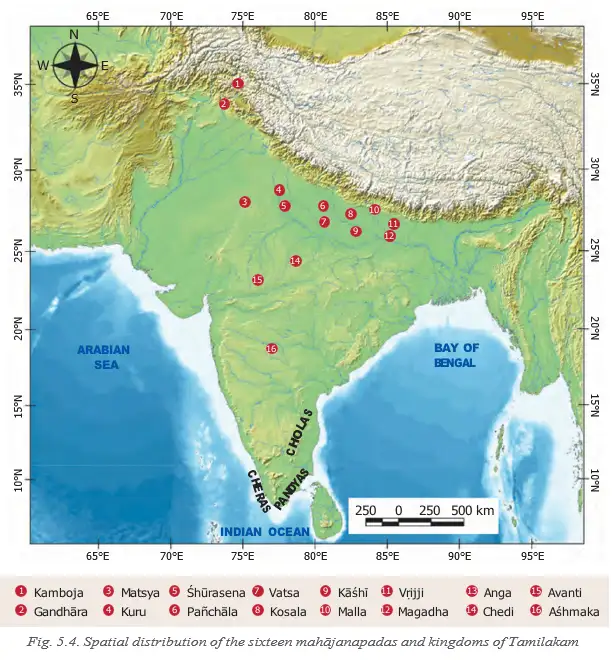
Changing Political Organisation
| Point | Monarchical states | Republican states |
|---|---|---|
| Term used | Rājya | Gaṇa or saṁgha |
| Political form | Monarchy | Republic |
Southern Polities
| Polity | Region |
|---|---|
| Satavāhanas | Deccan |
| Cholas | Lower Kaveri River valley |
| Pandyas | Tamraparni and Vaigai river valleys |
| Keralaputras (identified with the Cheras) | Kerala |
| Satiyaputras | Northern Tamil Nadu |
Early Tamil Kingdoms and Sangam Literature
| Kingdom | Royal emblem |
|---|---|
| Cholas | Tiger |
| Cheras | Bow |
| Pandyas | Fish |
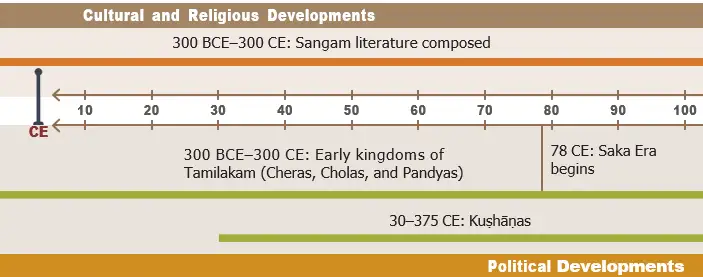
Key Periods
- c. 1000–600 BCEVedic political identity increasingly shifted from kinship to territorial belonging.
- c. 600 BCEAgriculture, larger political units and more complex social institutions had developed in the Ganga region.
- c. 600 BCE–300 CEMahājanapadas, or larger political formations, rose.
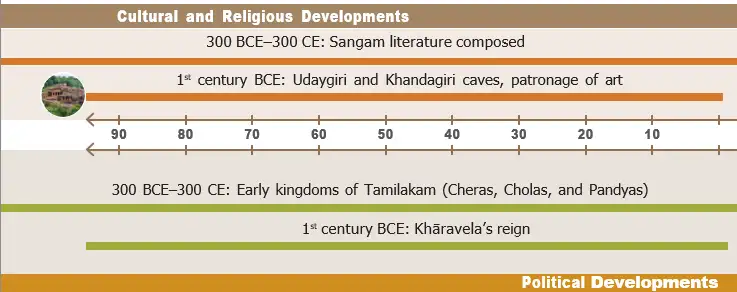
- 300 BCE–300 CESangam literature, the earliest Tamil literary tradition, dates to this period.
- 2nd century BCE–3rd century CEThe Satavāhana Empire ruled in the Deccan for nearly 500 years.
From Territorial Identity to Larger States
- Kinship-based Vedic identity broadened into belonging to a territory.
- Control of land, farming and trade routes became more important.
- Administration grew more complex.
- Larger political formations, the mahājanapadas, emerged.
- Janapada
- A territorial community associated with the land where its people settled.
- Mahājanapada
- A larger political formation; sources mention sixteen.
- Rājya
- A monarchical state.
- Gaṇa or saṁgha
- A republican state.
- Vendar
- The three crowned kings of Tamilakam: Cheras, Cholas and Pandyas.
- Sangam literature
- The earliest Tamil literary tradition, dating from 300 BCE to 300 CE.
What factors helped Magadha become powerful?
Name the political forms found in northern India and give their terms.
What were the emblems of the Cholas, Cheras and Pandyas?
Quick recap
- Between about 1000 and 600 BCE, Vedic identity shifted towards territorial belonging.
- Sixteen mahājanapadas are mentioned in historical sources; Magadha became the most powerful.
- Magadha’s expansion eventually led to the Mauryan Empire.
- Northern India had both monarchical rājyas and republican gaṇas or saṁghas.
- Southern polities included the Satavāhanas, Cholas, Pandyas, Keralaputras and Satiyaputras.
- The Cheras, Cholas and Pandyas were the Vendar; Sangam literature is a key source on their early kingdoms.
Duties and Ideals of the King
Kingship and the Duties of a Ruler
| Point | Usual practice | Exceptions |
|---|---|---|
| Succession | Kingship was generally hereditary. | Texts also refer to kings being elected or expelled. |
| Royal authority | The king held political power. | These exceptions show that authority was not always absolute and succession was not entirely hereditary in practice. |
Political Authority over the Subcontinent
Examples of Subcontinental Aspirations
- Chera king Nedunjeral Adan: In the early Sangam period, he was described as gaining the rank of adhirāja and extending his conquests north to the Himalayas.
- Chola ruler Rajendra I: In the 11th century CE, he adopted the title Gangaikonda to commemorate his conquest of regions along the Ganga.
- Continuing ideal: These examples show that claims to authority over the subcontinent recurred in different periods of Indian kingship.
Periods Mentioned
- From the 6th century BCERulers used titles such as rājā, mahārāja and samrāṭ.
- Early Sangam periodChera king Nedunjeral Adan was described as extending his conquests to the Himalayas.
- 11th century CERajendra I adopted the title Gangaikonda to mark his conquest of regions along the Ganga.
- Adhirāja
- A rank claimed by the Chera king Nedunjeral Adan.
- Gangaikonda
- Title adopted by Rajendra I to commemorate his conquest of regions along the Ganga.
- Chakravarti kśhetra
- The domain of a universal paramount ruler.
- Jambudvīpa
- A term used in the text to express a broad political and cultural realm.
What duties and ideals of a king are described in early Indian texts?
Quick recap
- Rulers used different titles, while early texts described ideals of energetic and fair kingship.
- A king was expected to protect subjects, administer justice and promote their welfare.
- Kingship was usually hereditary, but references to election and expulsion show it was not always absolute.
- Jambudvīpa, Bhāratavarṣha, Prithivi and chakravarti kśhetra expressed broad ideas of political authority.
- Nedunjeral Adan and Rajendra I illustrate recurring aspirations to rule across distant regions.
Council of Ministers
The State as a Seven-Part Whole
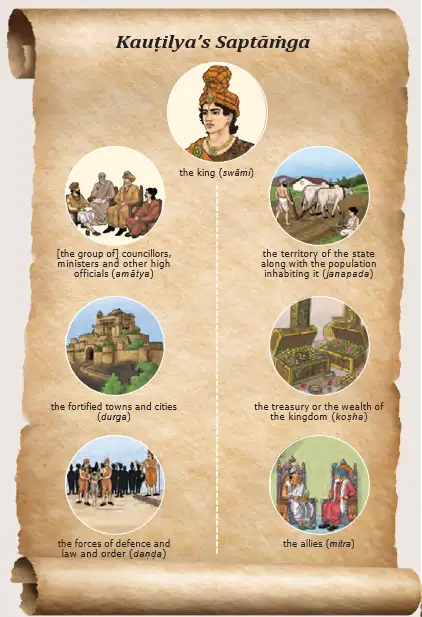
The Council of Ministers
- Ministers: The council of ministers advised and supported the king in governing the state.
- Composition: It generally included senior officials such as the treasurer, chief tax collector, chief legal adviser, and commander-in-chief.
- Public interest: In exceptional circumstances, the council could make decisions independently.
The Junagadh Rock Inscription
Records at Junagadh
- 3rd century BCEAśhoka’s Major Rock Edicts were engraved in Prakrit.
- c. 150 CERudradaman I added a Sanskrit record about his military achievements and the repair of Sudarshana Lake.
- 5th century CESkandagupta recorded the restoration of the damaged lake.
- Saptāṅga
- Kauṭilya’s seven constituents of a state.
- Mantri–pariṣhad
- The council of ministers that advised and supported the king.
- Arthaśāstra
- An early treatise on statecraft, administration and governance.
- Dhamma
- Aśhoka’s message associated with moral governance.
What was the role of the council of ministers?
Why is the Junagadh Rock Inscription historically important?
Quick recap
- Kauṭilya’s Saptāṅga comprises the king, ministers, territory, forts, treasury, army and allies.
- The state functioned effectively when its seven constituents were properly integrated.
- The council of ministers advised and supported the king as part of an organised administrative system.
- Its members generally included the treasurer, chief tax collector, chief legal advisor and commander-in-chief of the army.
- An Aśhoka-era inscription indicates that the council could make decisions in the emperor’s absence.
- The Junagadh rock preserves records of the Maurya, Western Satrap and Gupta dynasties, including accounts of Sudarshana Lake.
How Were Empires Administered Part-1
Administration in Early Kingdoms
- Administrative units: Kingdoms were divided into provinces, divisions, districts, and villages to manage their territories.
- Satavāhana system: Provinces called āhāras were administered by ministers (amātyas); villages were led by a headman called the grāmika.
- Officials: District officers, or pradeśhikas, handled judicial and administrative work, while city governors managed revenue and law and order.
- Consultation: District officers often consulted local residents such as bankers, caravan leaders, artisans, and scribes.
How Were Empires Administered Part-2
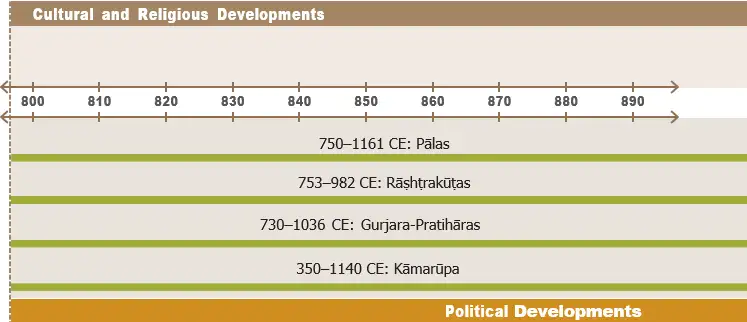
The Gurjara–Pratihāras, Pālas and Rāṣhṭrakūṭas
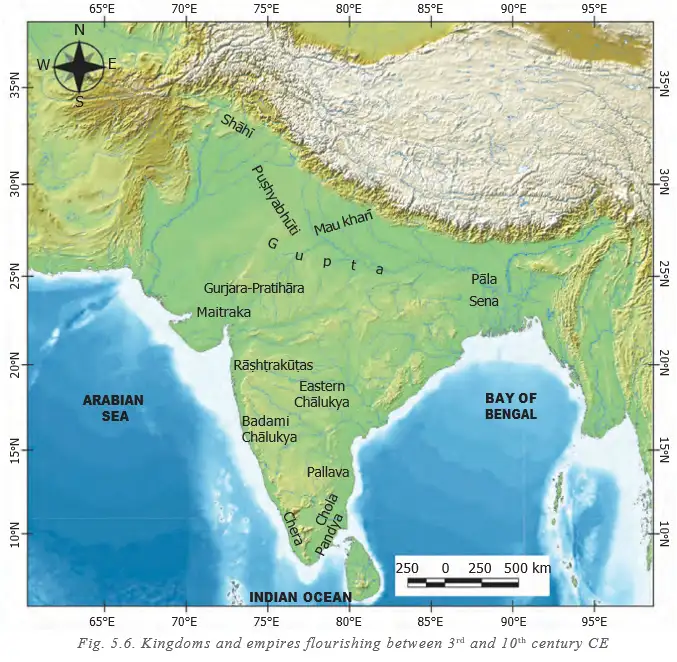
Kannauj and the tripartite struggle
- Gurjara–Pratihāras ruled large parts of Northern and Western India from about the 8th to 10th centuries CE.
- Kannauj, their main capital in present-day Uttar Pradesh, was coveted by rival kingdoms.
- Tripartite struggle refers to the contest for control of Kannauj among the Gurjara–Pratihāras, Pālas and Rāṣhṭrakūṭas.
- Administration in all three kingdoms combined monarchy with decentralised units: provinces, districts and villages.
- Villages were the smallest units and were largely self-reliant and autonomous in infrastructure, social welfare and education.
Periods mentioned in the lecture
- About 8th–10th centuries CEThe Gurjara–Pratihāras ruled large parts of Northern and Western India.
- 9th–11th centuries CEThe later or imperial Cholas flourished in southern India.
- 10th centuryParantaka I's Uttaramerur inscription described Chola village governance and elections.
The Imperial Chola Administration
Imperial Cholas — The later Chola dynasty, powerful in southern India from the 9th to 11th centuries CE, was noted for efficient administration and revenue systems.
| Unit | Level / meaning |
|---|---|
| Maṇḍalam | Province |
| Valanāḍu | District |
| Nāḍu | Group of villages |
| Ūr | Individual village; the smallest unit |
Village assemblies
- Role: Village councils or assemblies settled disputes and managed local affairs.
- Responsibilities: They handled revenue collection, land management, irrigation, road construction and record-keeping.
- Autonomy: Assemblies acted as self-reliant institutions and did not depend on government patronage.
Village Elections: The Kudavolai System
The Uttaramerur inscription
- Source: The 10th-century inscription of Chola ruler Parantaka I is at the Vaikunṭha Perumal Temple in Kanchipuram district, Tamil Nadu.
- What it records: These Tamil inscriptions describe how village assemblies worked, including the Kudavolai election system.
Kudavolai — A village election method in which candidates' names on palm leaves were drawn from a pot to select assembly representatives.
How Kudavolai elections worked
- Names of eligible candidates were written on palm leaves.
- The leaves were placed in a large pot.
- At a public gathering, a young child drew the leaves one by one to select representatives.
- The draw was held in full public view, often at a temple, to ensure fairness.
- Selected members served on specialised committees called variyams.
Village committees
- Variyams were specialised committees responsible for key village tasks.
- Examples: A tank committee managed irrigation; other committees administered justice and collected taxes.
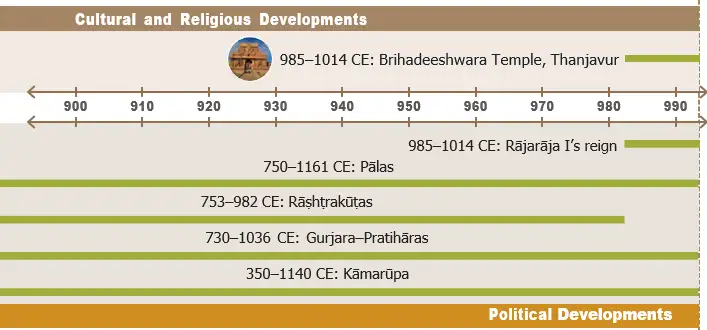
- Tripartite struggle
- The contest among the Gurjara–Pratihāras, Pālas and Rāṣhṭrakūṭas for control of Kannauj.
- Maṇḍalam
- A province in the Chola administrative hierarchy.
- Kudavolai
- The Chola village election method, also called the ballot-pot system.
- Variyam
- A specialised village committee.
What was the tripartite struggle?
List the Chola administrative units from largest to smallest.
How did the Kudavolai system select village representatives?
Quick recap
- Kannauj was the coveted capital at the centre of the tripartite struggle among three major powers.
- The Gurjara–Pratihāras, Pālas and Rāṣhṭrakūṭas combined monarchy with decentralised administration.
- Imperial Chola administration ran from provinces down to individual villages.
- Chola village assemblies managed local affairs, revenues, land, irrigation, roads and records.
- Kudavolai used a public draw of candidate names to select village representatives.
- Elected representatives served on variyams, including committees for irrigation, justice and taxes.
Ethics: The Foundation of Law and Life
Ethical Thought in Early Indian Texts
Foundations
- Ethics and law: Ethical principles form a foundation for law and life, helping guide both society and political authority.
- Early texts: The Vedas and epics explore reality, right conduct, the origins of things, and the nature of the universe.
- Vedic ideals: Vedic texts describe an ideal way of life; the Bhagavad Gita emphasises knowledge, faith, action, virtue, and ethical living.
Samatva: The Principle of Sameness
Samatva — The principle of sameness: all bodies are made of the same matter, and all consciousness manifests one supreme consciousness.
Ethical Meaning
- Vedic thought: The underlying consciousness is described as satya (real, true) and ṛita (right), and as the invisible origin of all things.
- Mahabharata: Characters from different varṇas uphold samatva despite their differences.
- Epics: They criticise discrimination and present goodness as non-discriminatory; a good person or ruler works for the welfare of all beings.
Ṛita: Cosmic Order and Balance
Ṛita — The all-pervading cosmic order in the Ṛig Veda that sustains harmony and balance in nature and human society.
What Ṛita Maintains
- Nature: Regulates natural forces and maintains universal balance.
- Society: Upholds moral values and harmony in human life.
Dharma: Duty, Justice, and Right Conduct
Dharma — A way of life centred on duty, obligation, righteousness, and moral conduct; here it does not mean religion.
Dharma in Practice
- Justice and duty: People are expected to fulfil duties according to their roles and responsibilities in society.
- Origin: Dharma comes from the Sanskrit root *dhri*, also found in *dharati* (the earth).
- Mahabharata: Bhishma says dharma is that which upholds beings; whatever upholds all beings is dharma.
- Law of existence: Dharma can describe an inherent nature—for example, iron sinks and wood floats.
- Buddhism: *Dhamma*, the Pāli equivalent of Sanskrit *dharma*, expresses similar ethical principles.
Ethics in Governance
Historical Examples
- Aśhoka’s edicts: Promoted dhamma through moral conduct, respect within families, ethical behaviour in everyday life, non-violence, and compassion.
- Uttaramerur inscription (10th century CE): Village assembly election candidates were expected to have honest earnings and a pure mind.
- Kāmandaka’s Nītisāra and Bāṇabhaṭa’s Kādambarī: These works discuss kingship and governance; Kādambarī is widely celebrated as one of the world’s first novels.
- Long-term pattern: Historical records from the Mauryas to the Cholas show ethics connected with public life and governance.
Ethics and Governance in Historical Records
- Mauryas to CholasHistorical records across these periods show ethical principles connected with governance.
- 10th century CEThe Uttaramerur inscription set ethical qualifications for village assembly candidates.
- Samatva
- Principle of sameness underlying bodies and consciousness.
- Satya
- Real or true.
- Ṛita
- Cosmic order that maintains harmony and balance.
- Dharma
- Duty, righteousness, and moral conduct that uphold beings and society.
- Dhamma
- Pāli equivalent of dharma, expressing similar ethical principles.
How are samatva and ṛita different?
How did ethical ideas influence governance in Indian history?
Why are ethics described as a foundation of law and life?
Quick recap
- Early Indian texts explored reality, right conduct, and ideal ways of life.
- Ethical principles form a foundation for law and life and have guided society and governance.
- Samatva teaches sameness in matter and consciousness and supports non-discrimination.
- Ṛita is the cosmic order that maintains harmony and balance in nature and society.
- Dharma means duty, righteousness, and conduct that upholds beings—not simply religion.
- Aśhoka’s edicts, the Uttaramerur inscription, and literary works show ethics shaping public life.
Social Structures and Everyday Life
Varṇa and Jāti
Early social identities
- Flexible identities: Early Vedic texts do not show social status as strictly fixed by birth; occupation could also change.
- Overlapping factors: Identity could reflect ethnicity, subgroup, region, village, gotra, language and occupation.
- Social connections: These distinctions existed alongside shared economic, cultural and social relationships.
Occupational flexibility — The ability of people to engage in different occupations, rather than inherit one fixed occupation by birth.
Evidence from the Rig Veda
- Rig Veda 9.112.3: A verse describes one family in which the speaker is a poet, the father a physician and the mother a grain grinder.
- What it suggests: Different occupations within a family are evidence of occupational diversity and challenge the idea that work was always inherited.
- Source limits: One verse offers a clue about some people; it cannot establish how every Vedic family lived.
| Evidence | Interpretation | |
|---|---|---|
| Rig Veda verse | The speaker is a poet; the father is a physician; the mother grinds grain. | Occupations could differ within a family, suggesting flexibility rather than a universal birth-based occupation system. |
| Limit | The verse describes one family. | It cannot by itself show how common this pattern was across society. |
The four varṇas
- Earliest reference: The four social categories understood as varṇas appear in the Puruṣasūkta, a hymn in Book 10 of the Rig Veda.
- Roles over time: The varṇas became associated with particular social functions, though these roles did not always describe actual work.
| Varṇa | Expected roles and activities |
|---|---|
| Brāhmaṇas | Study and teach sacred texts; perform or officiate at yajñas; give and receive dāna (gifts). |
| Rajanya / Kṣhatriyas | Warfare, protection, justice and administration; also study scriptures, sponsor yajñas, donate and uphold social order. |
| Vaiśhyas | Agriculture, pastoralism and trade; also scriptural study, sacrificial rituals and charity. |
| Śhūdras | Expected to assist the other varṇas; in practice also worked in agriculture, animal husbandry, trade and arts and crafts. |
Varṇa as a functional division
- Value order: The varṇa ideal placed knowledge highest, followed by political power and then wealth.
- Not simply birth: The Buddhist Sutta Nipāta says that a person is a brāhmaṇa or an outcaste by deeds, not birth.
- Change over time: Flexibility in social roles gradually declined.
Jāti — A social group that developed through factors such as intermarriage, migration and territorial differences; jātis were not limited to four.
Endogamy — The custom or expectation of marrying within one’s own social group, community, clan or tribe.
How jātis developed and grew
- Intermarriage among varṇas, migrating communities and territorial differences
- Some communities became endogamous
- Distinct jātis emerged
- New social groups and occupations formed, so the number of jātis continued to grow
| Point | Varṇa | Jāti |
|---|---|---|
| Number | Four broad categories | No fixed number; groups multiplied over time |
| Basis and change | Associated with a functional division and social values | Could arise through intermarriage, migration, territory and new occupations |
Social Mobility
Mobility across social groups
- Social mobility: Varṇa and jāti were not always rigid; movement within and across social categories occurred.
- Rulers from varied backgrounds: The Nandas, Mauryas, Śhuṅgas, Satavāhanas, Vākāṭakas, Guptas and Puṣhyabhūtis came from diverse social backgrounds.
Occupational mobility and inscriptions
- Silk-weavers’ guild: The Mandsaur Stone Inscription records weavers who migrated from Lata in Gujarat to Dashapura in Madhya Pradesh. They were also skilled in archery, astrology and other occupations.
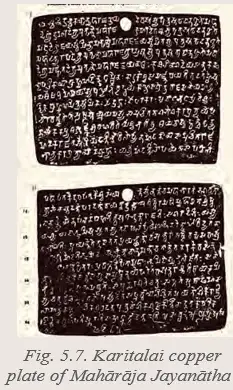
- Brāhmaṇas as land managers: Karitalai copper-plate inscriptions record brāhmaṇas managing land, showing that occupations could extend beyond expected roles.
Inscription evidence
- 473 CEThe Mandsaur Stone Inscription records the migrating guild of silk weavers and their varied skills.
- Late 5th century CEKaritalai copper-plate inscriptions record brāhmaṇas as land managers.
Society in Sangam literature
- Tolkappiyam: Refers to a fourfold division and groups such as Arasar (kings), Vanigar (traders or merchants), Velar (farmers) and Antanar (brāhmaṇas), who were often supported by rulers.
- Occupational basis: Its varṇa classification appears closely connected to occupation and remained fluid.
- Pattinappalai: Describes a prosperous, trade-oriented society where merchants, salt-makers, fishermen, artisans, agriculturists and warriors interacted.
- Implication: Economic functions and occupations could organise society more strongly than a rigid varṇa classification.
- Varṇa
- One of four broad social categories associated over time with particular roles.
- Jāti
- A social group; the number of jātis was not fixed and increased over time.
- Endogamy
- Marriage within one’s own social group or community.
- Social mobility
- Movement between social roles or groups.
What does the Rig Veda verse suggest about occupations in Vedic society?
How did jātis differ from varṇas?
Give two examples of occupational mobility.
Quick recap
- Early Vedic social identity involved several factors, and occupation was not always hereditary.
- The Puruṣasūkta in Book 10 of the Rig Veda is the earliest reference to the four varṇas.
- Varṇa roles were associated with a hierarchy of knowledge, political power and wealth.
- Jātis multiplied through processes including intermarriage, migration and the growth of new occupations.
- Inscriptions and literary sources show social and occupational mobility.
- Sangam texts describe society shaped strongly by occupations and economic interaction.
Family and Society
Family and Social Organisation
Kula — The family was the smallest and most basic social unit in Vedic society.
From Family to Jana
- Several families formed a grāma (village).
- A group of grāmas formed a viśha, headed by a viśhapati.
- Several viśhas formed a jana (people), whose chief protector was the rājā.
- The kula was connected to and inseparable from the larger jana.
Kinship and Duties
- Kula: In the later Vedic period, it could mean a household of several kin-related members.
- Gotra: A patrilineal lineage or clan traced to a common ancestor, traditionally a Vedic sage (ṛiṣhi); it often regulated marriage.
- Social duties: People were expected to follow duties associated with their varṇa and āśhrama.
Patrilineal — A social system in which family identity and inheritance pass down through the male line.
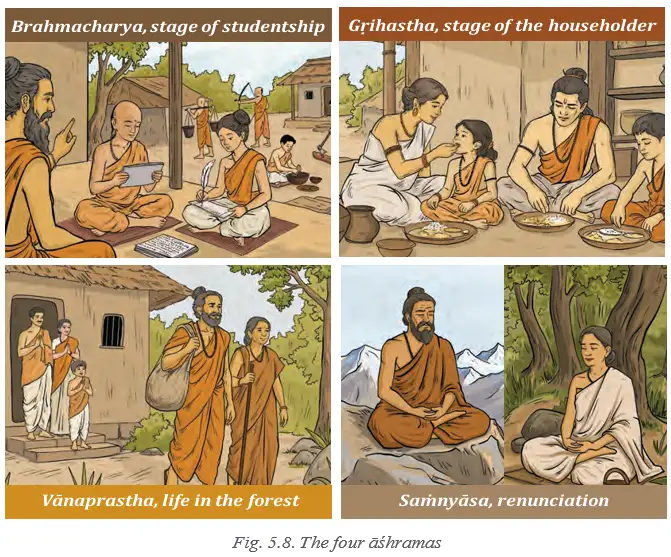
| Āśhrama | Stage of life |
|---|---|
| Brahmacharya | Student |
| Gṛhastha | Householder |
| Vānaprastha | Forest-dweller |
| Saṁnyāsa | Renunciant |
Rites of Passage
- Ṣhoḍaśha saṁskāras: The sixteen rites marked important stages of life, from birth and education to marriage and death.
- Examples: Initiation into and completion of education, engagement, marriage, childbirth, children’s marriages, parents’ death rites and memorials, and one’s own death rites.
- Purpose: The āśhramas and their dharmas were intended to support social, moral and spiritual fulfilment, promoting social harmony.
The Four Goals of Life
| Goal | Meaning |
|---|---|
| Dharma | Righteousness and ethical duty |
| Artha | Material well-being and wealth |
| Kāma | Fulfilment of desires |
| Mokṣha | Liberation from worldly ties |
How the Goals Worked Together
- Importance: The four goals were considered important for every human being.
- Dharma and mokṣha: Especially important ethically, as they gave human life direction and purpose.
- Artha and dharma: Pursuing wealth was desirable when guided by righteousness and society’s welfare.
Role of Women
Women in Vedic Society
- Learning and ritual: Women participated in scholarly learning and, in some contexts, performed rituals alongside men.
- Public life: Texts refer to women joining chariot races and social gatherings such as the sabhā.
- Women sages: Apālā, Viśhvavārā, Ghoṣhā and Lopāmudrā are traditionally credited with hymns in the Ṛig Veda.
- Goddesses: Uṣha, goddess of dawn, and Aditi, mother of the gods, held revered positions.
- Respect: Manu-smṛiti states that honouring women brings divine favour, while rites where women are not honoured are fruitless.
Women’s Roles Across Periods
- Changing position: Women’s status and roles fluctuated and sometimes declined as social and political conditions changed; many continued contributing to households, agriculture, crafts and religious life.
- Gupta–Vākāṭaka period: Literary works depict educated women skilled in the arts. Queens and royal women could influence governance and religious patronage.
- Prabhāvatī Gupta: Daughter of Chandragupta II, she ruled as a Vākāṭaka regent and issued land grants in her own name.
- Donors: Women are recorded as donors in several post-Maurya votive inscriptions.
- Sangam society: Women planted, weeded, husked and winnowed paddy; they also reared cattle, spun, fished, produced salt and sold garlands.
- Cultural contributions: Poetesses Avvaiyar and Vennikuyattiyar (a woman potter), as well as women bards and dancers, contributed to public and cultural life.
- Chola period: Inscriptions record royal women such as Sembiyan Mahādevī supporting temples and religious institutions.
Votive inscription — An inscription on stone, metal or another material dedicating a gift, sculpture or structure to a deity or sacred place.
Women’s Roles: Periods Mentioned
- Post-Maurya periodWomen appear as donors in votive inscriptions.
- Around the 4th–6th centuries CEGupta–Vākāṭaka literary works depict educated women; Prabhāvatī Gupta governed as a regent and issued grants.
- Chola periodInscriptions record royal women, including Sembiyan Mahādevī, supporting temples and religious institutions.
Religious Life and the Emergence of Bhakti
Vedic Religious Practices
- Deities: The Vedic pantheon had no rigid hierarchy; different hymns praised different deities as supreme.
- Worship: Deities were invoked through prayers and yajñas (sacrifices), commonly involving offerings to the sacred fire.
- Nature: Deities were associated with natural forces such as the sun, rain, fire, earth and dawn. Nature was seen as sacred and powerful, reflecting society’s dependence on it.
- Worldview: This understanding expressed respect for nature and a sense of responsibility towards it.
- Continuing examples: Sun worship in festivals such as Chhath and Makar Sankranti reflects enduring practices.
Renunciation
Renunciants and Ascetic Life
- Renunciants: They turned away from material comforts and social ties, living as ascetics and wanderers rather than householders.
- Names used: Parivrājaka (wanderer), bhikṣhu (one who lives by begging alms) and śhramaṇa (one who strives).
- Vedic connection: Renunciation was already present in Vedic thought; vānaprastha and saṁnyāsa are renunciatory stages of life.
- Influential thinkers: Gautama Buddha and Mahāvīra became influential during this wider development of renunciation.
Renunciation and Bhakti
- Around the middle of the first millennium BCERenunciants became a discernible social trend.
- 6th century, Tamil regionOrganised and widespread Bhakti practices gained prominence through the Āḻvārs and Nāyanmārs.
Bhakti Tradition
Bhakti — A devotional path offering a direct connection with a personal deity, without requiring elaborate Vedic rituals, and open to all classes and genders.
Bhakti’s Development
- Personal deities: Vedic traditions developed toward worship centred on deities such as Viṣhṇu, Śhiva and Śhakti.
- Early reference: Bhakti is mentioned in texts such as the Mahābhārata.
- Āḻvārs: Twelve saint-poets who composed Tamil hymns in praise of Viṣhṇu.
- Nāyanmārs: Sixty-three Śhaiva saint-poets who composed Tamil hymns in praise of Śhiva.
- Significance: Together, they produced a major body of Tamil devotional literature and helped spread organised Bhakti.
- Gotra
- Patrilineal clan traced to a common ancestor; often relevant to marriage rules.
- Āśhrama
- One of the four stages of life, each associated with duties.
- Puruṣhārthas
- The four goals of life: dharma, artha, kāma and mokṣha.
- Ṣhoḍaśha saṁskāras
- Sixteen rites marking important transitions throughout life.
- Votive inscription
- Inscription recording a dedication to a deity or sacred place.
- Bhakti
- Accessible devotional worship offering a direct connection with a deity.
What were the four puruṣhārthas, and how were artha and dharma related?
Who were the Āḻvārs and Nāyanmārs?
Quick recap
- Vedic social organisation linked the kula and grāma to the larger viśha and jana.
- Gotra was a patrilineal lineage, while the four āśhramas and life-cycle rites organised duties and transitions.
- The four goals of life were dharma, artha, kāma and mokṣha; dharma was meant to guide the pursuit of wealth.
- Women contributed to learning, ritual, economic work, governance and cultural life, though their status changed across periods.
- Vedic worship invoked nature-associated deities through prayers and yajñas and expressed respect and responsibility towards nature.
- Bhakti offered accessible personal devotion and grew in prominence in the Tamil region through the Āḻvārs and Nāyanmārs.
The Quest for Knowledge
Purpose and values of education
Education in early India
- Holistic purpose: Education aimed to shape a person’s character and way of life, not merely prepare them for a career.
- Inner values: Truth, patience, regularity, humility, self-control, purity of self (sattvaśhuddhi), and reverence for all beings were cultivated.
- Unity: Students were encouraged to recognise the underlying unity of life, nature, and the environment.
- Dharma: Students were expected to fulfil their duties towards parents, teachers, and the gods.
- Social foundation: Good character and moral conduct were considered essential to society.
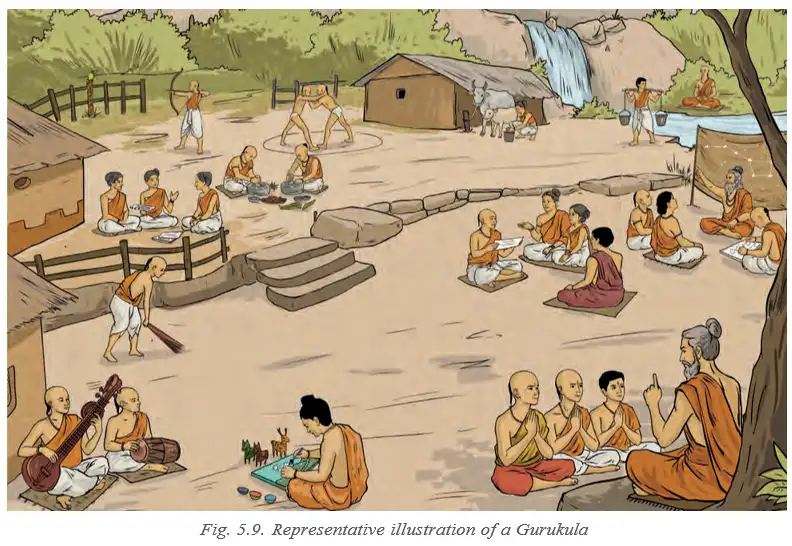
Learning and the gurukula
Subjects and training
- Texts and ideas: Students studied the Vedas, grammar, logic, philosophy, and ethics.
- Knowledge fields: Their studies also included mathematics, science, medicine, and astronomy.
- Arts and physical skills: Training included music, dance, painting, physical education, and martial arts such as archery.
- Daily practice: Yoga, meditation, and service to the guru formed part of students’ education.
- Preparation for life: Study combined intellectual learning, practical skills, discipline, and service.
Guru-shishya paramparā — The respected and close teacher–student tradition in which the guru guided the student’s learning and development.
Teacher, student, and gurukula life
- Guru or āchārya: The teacher was highly respected and guided students from ignorance towards knowledge.
- Gurukula: The teacher’s home served as the centre of learning; students lived there as members of the teacher’s family.
- Relationship: Teacher and student shared a close, supportive relationship.
- Discipline: Students’ lives were marked by self-control, obedience, and devotion.
Centres of learning
Higher learning in early India
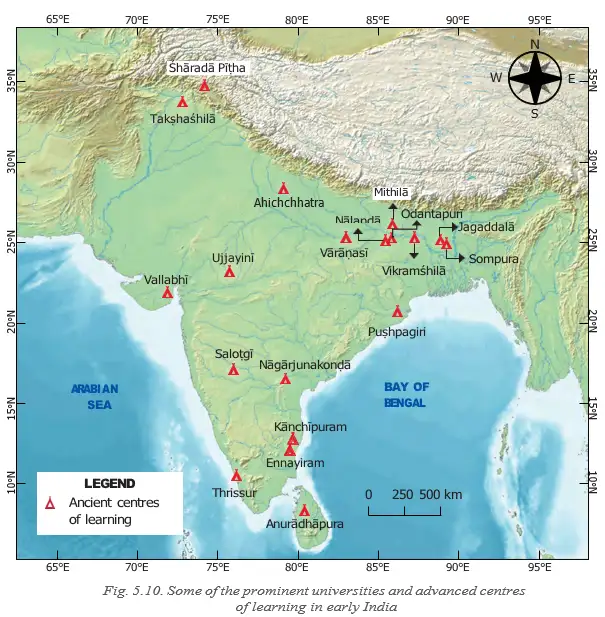
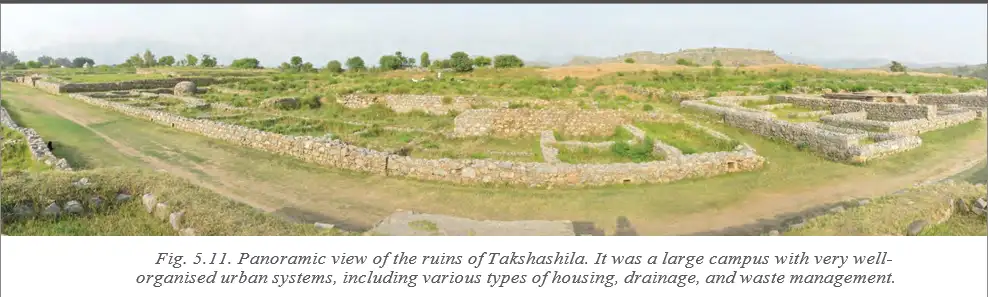
- Institutions: Several important centres of education had developed across the Indian subcontinent before the second millennium CE.
- Evidence: Historical and literary sources record the emergence of these institutions.
- Students: The centres attracted learners from India and other regions.
Literary and knowledge traditions
Range and continuity of knowledge
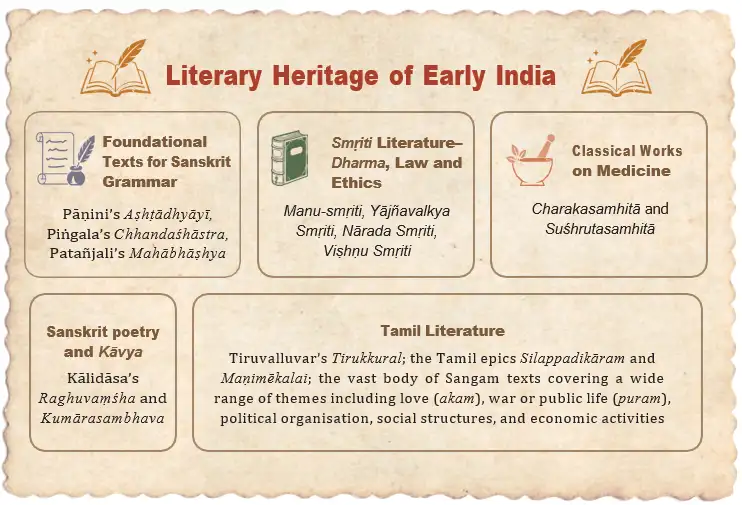
- Wide-ranging literature: Indian writings covered philosophy, grammar, medicine, astronomy, mathematics, culinary practices, agriculture, architecture, and everyday life.
- Diverse traditions: Literary heritage included Sanskrit grammar, Smṛti texts, medical works, Sanskrit poetry, and Tamil literature.
- Continuity: Many knowledge traditions and practices endured despite changes in kingdoms and political conditions.
- Dharma
- Guiding principle that shaped duties of individuals, families, and society.
- Sattvaśhuddhi
- Purity of self, an inner value cultivated through education.
- Gurukula
- A learning community centred on the teacher’s home, where students lived and studied.
- Guru-shishya paramparā
- The teacher–student tradition based on guidance, respect, and close support.
What was the purpose of education in early India?
What were the main features of gurukula education?
Quick recap
- Early Indian education aimed at holistic development, good character, and moral conduct.
- Dharma guided students’ duties towards parents, teachers, and the gods.
- Learning combined texts, sciences, arts, physical training, yoga, meditation, and service.
- The gurukula centred learning on a close, supportive guru–student relationship.
- Centres of higher learning attracted students from India and other regions.
- Indian knowledge traditions covered many fields and often continued despite political change.
Economy Part-1
Agriculture and Land Revenue
Crops and Agricultural Knowledge
- Crops: Regions cultivated rice varieties, pulses, wheat, linseed, mustard, saffron, sugarcane, vegetables, and fruits.
- Kauṭilya: His account describes several categories of village land.
- Post-Mauryan continuity: Agriculture remained the economic backbone, supporting rural livelihoods and state revenue.
- Milindapañho: This Buddhist text, traditionally attributed to Nāgasena, describes eight stages of farming, from field preparation and weeding to harvesting and winnowing.
- Deccan: Agricultural expansion likely encouraged cotton cultivation; the region’s black soil suited cotton.
- Amarakoṣha and Sangam literature: The Amarakoṣha has a chapter on forests, crops, plants, and manure. Sangam texts describe southern fertility, including Chera-region jackfruit, pepper, and turmeric, and the cultivation of ragi and sugarcane.
Irrigation
Irrigation Works
- Structures: Agriculture depended on reservoirs, canals, and dams, which stored and supplied water.
- Sudarshana Lake: The Junagadh inscription of Rudradaman I records that Puṣhyagupta, a governor appointed by Chandragupta Maurya, built a dam on the lake near Girnar in Saurāṣhṭra (Kathiawad, Gujarat).
- State role: Irrigation was a priority because agriculture was a major source of state revenue.
- Chola works: Chola irrigation systems included canals, lakes, and tanks linked by channels.
- Grand Anicut (Kallanai): Built by Karikala Chola, it stored and distributed water, supported farming and settlements, and continued to be repaired and used by later rulers; it remains in use today.
Why Irrigation Systems Mattered
- Dams, canals, lakes, and tanks stored or channelled water.
- Reliable water supported cultivation and agricultural expansion.
- Agricultural production sustained livelihoods and state revenue.
- Their importance led rulers to build, maintain, and record irrigation works.
Trade: Routes and Ports
Trade and State Regulation
- Growth: Well-structured states helped provide the conditions and infrastructure needed for trade and commerce to flourish.
- Arthaśāstra: It identifies trade as a major economic activity and lists Magadha’s trade in textiles, gems, coral, pearls, metals, and minerals with regions across India.
- Salt: Its production was an important activity regulated by the state.
- Trade protection: The state protected routes, prevented adulteration, and sought to guard consumers against unfair practices.
- Networks: Inland routes connected regions with coastal ports, linking overland trade to maritime commerce and enabling the movement of goods, people, and ideas.
Trade Network Development
- Around the 6th century BCETwo major land routes, Dakṣiṇāpatha and Uttarāpatha, had emerged.
- Early centuries of the Common EraTrade with Rome had expanded significantly, using sea routes and overland connections via Central Asia.
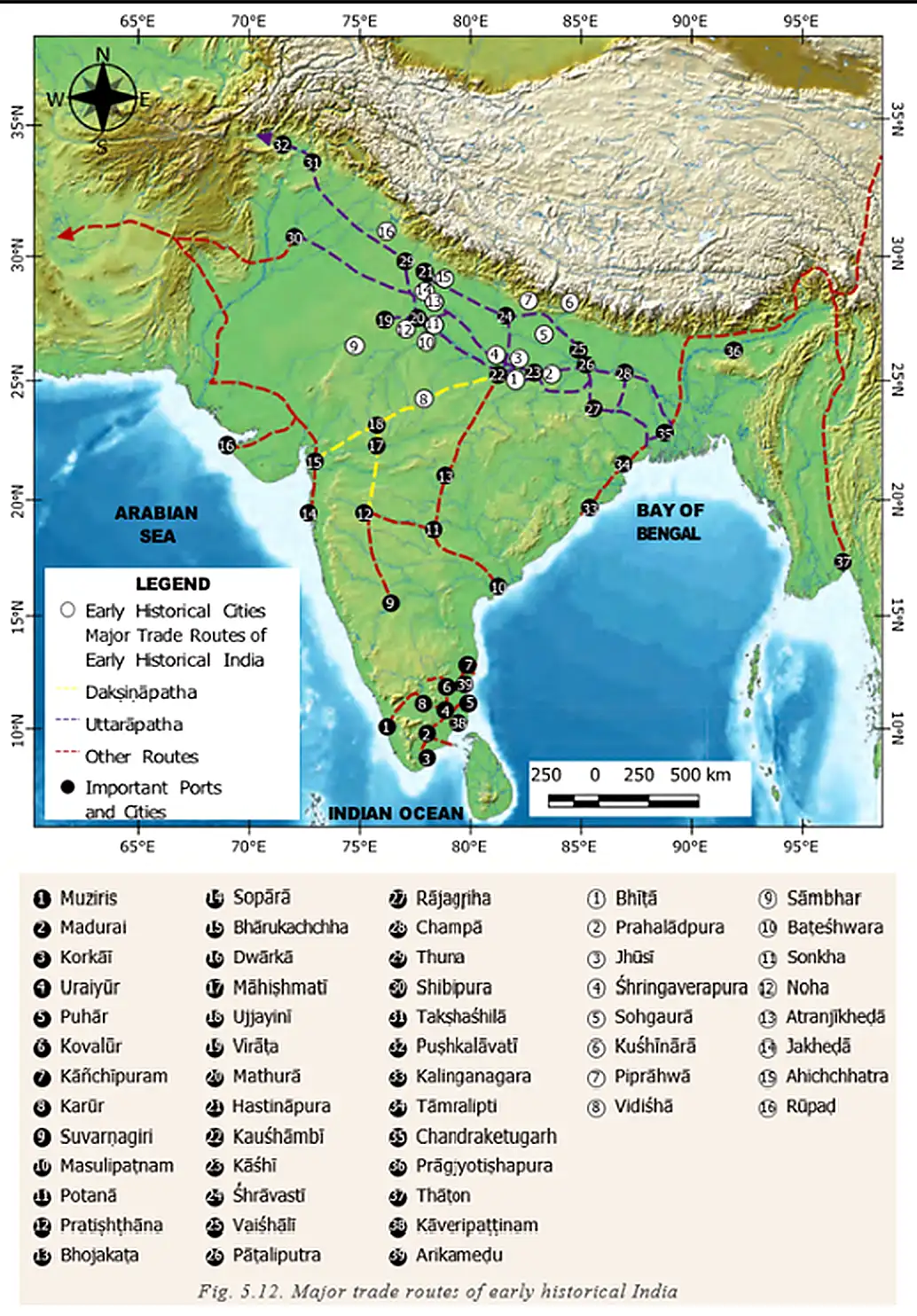
Ports and Maritime Trade
- Early links: Harappan trade connections with Mesopotamia involved ports on India’s western coast and around the Persian Gulf.
- Important ports: Muziris, Kāveripaṭṭinam, Arikameḍu, and Masulipaṭnam developed as trade centres.
- Sea routes: Maritime trade used both coastal routes and long-distance routes across the Indian Ocean.
- Long-distance trade: By the early centuries of the Common Era, India’s trade with Rome used sea routes as well as overland links through Central Asia.
How Routes Connected Trade
- Dakṣiṇāpatha and Uttarāpatha linked inland regions across the subcontinent.
- Land routes connected with coastal ports.
- Ports linked Indian coastal trade to overseas routes across the Indian Ocean.
- Goods, people, and ideas moved between regions and beyond India.
- Land revenue
- Tax collected from agricultural land, generally one-sixth of the produce under the Mauryan system.
- Dakṣiṇāpatha
- One of the major land routes that emerged by around the 6th century BCE.
- Uttarāpatha
- The other major land route that emerged by around the 6th century BCE.
- Grand Anicut (Kallanai)
- A Chola-built irrigation structure associated with Karikala Chola.
How did the Mauryan state support and regulate agriculture?
Why were irrigation structures important to states and communities?
Name the two major land routes and four important ports mentioned in the lecture.
Quick recap
- Agriculture sustained rural life and state revenue; Mauryan land tax was generally one-sixth of the produce.
- Village land included cultivated fields, fallow land, high and dry land, sown fields, and groves.
- Literary sources describe farming practices, regional crops, and agricultural fertility.
- Dams, canals, lakes, and tanks supported cultivation; the Grand Anicut is a lasting Chola example.
- States regulated trade, protected routes and consumers, and controlled salt production.
- Dakṣiṇāpatha and Uttarāpatha connected inland regions to ports and maritime networks.
Economy Part-2
Trade Routes in the Tamil Region
- Routes: Literary sources describe important routes that connected settlements and regions in the Tamil country.
- Connections: These routes linked Kanchipuram with the port of Poompuhar and with Kanyakumari.
Guilds and Their Economic Role
Guild (śhreṇī) — An association of people engaged in the same profession, craft or occupation.
What Guilds Did
- Growth: Guilds supported trade and commerce, especially after territorial states and mahājanapadas rose.
- Standards: They regulated the quality of goods and often fixed prices, protecting artisans and consumers.
- Discipline: Guild courts supervised members’ conduct and enforced professional standards.
- Finance: Guilds also worked as banks, financiers and trustees.
- Evidence of influence: Jātaka literature refers to 18 types of guilds.
Key Dates
- 6th century BCETerritorial states in the form of mahājanapadas rose; trade and guilds expanded, and silver punch-marked coins came into circulation.
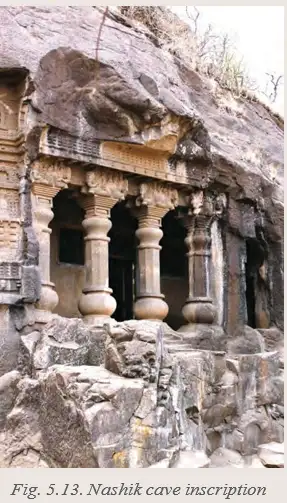
- 2nd century CEThe Nāśhik cave inscription recorded monetary endowments deposited with guilds.
Guilds as Financial Institutions
The Nāśhik Inscription
- Record: A 2nd-century CE Nāśhik cave inscription of Śhaka king Nahapāna and his son-in-law Uśhavadāta describes donations deposited with professional guilds.
- Interest: Guilds had to pay a fixed rate of interest on these endowments.
- Use of income: The interest helped maintain Buddhist monasteries and caves.
- Significance: Guilds could securely invest funds and provide a steady income, showing their role as banking and credit institutions.
Industries, Textiles and Trade
Economic Growth before the Gupta Period
- Industrial growth: Industries expanded with access to raw materials and the skill and enterprise of artisans and craftspersons.
- Textiles: Sources mention silk, cotton, wool and linen, made using varied weaving techniques.
- Production centres: Mathurā, Kāśhī and Kāmarūpa became important textile hubs.
- Organisation: References to silk-weaver guilds show that textile production was organised.
- Trade: Literary and inscriptional sources mention many categories of merchants, reflecting trade’s growing importance.
Craft Guilds and Religious Patronage
Ivory Workers of Vidiśhā
- Evidence: An inscription on the southern gateway of the Great Stupa at Sanchi refers to welfare activities by Vidiśhā’s ivory-workers’ guild.
- Artistic work: The guild’s ivory workers carved the stone sculptures on the stupa’s gateways and railings.
- Importance: Craft guilds contributed to artistic production as well as religious patronage.
Political and Cultural Continuity
Evolution of Political Organisation
- Clans (janas) led by a rājā → larger kingdoms and republics (gaṇas or saṁghas) → powerful empires, including the Mauryas, Guptas and Cholas.
Developments across Early India
- Administration: Powerful states such as Magadha and empires such as the Mauryas and Guptas developed structured systems of administration, taxation, military organisation and governance.
- Economy: Agriculture, supported by irrigation works, remained important; trade networks, ports and guilds fostered commerce and crafts.
- Continuity and change: Social, cultural and political life evolved from the Vedic period and took different forms across regions and time.
- Cultural life: Knowledge traditions, trade networks and devotional practices such as Bhakti continued to flourish across regions.
- Long-term influence: Early developments laid foundations for enduring traditions in the Indian subcontinent.
- Guild (śhreṇī)
- An association of people working in the same profession or craft.
- Mahājanapada
- A large territorial state; the mahājanapadas rose around the 6th century BCE.
- Punch-marked coin
- An early metallic coin, first circulated in silver during the period of the mahājanapadas.
- Guild court
- A guild body that supervised members and enforced professional discipline.
How did guilds contribute to the early Indian economy?
What does the Nāśhik inscription reveal about guilds?
How did political organisation develop, and what continued across regions?
Quick recap
- Silappadikāram mentions routes from Kanchipuram to Poompuhar and Kanyakumari.
- Guilds organised crafts and trade, regulated quality and prices, and provided financial services.
- Silver punch-marked coins circulated as mahājanapadas rose around the 6th century BCE; the Nāśhik inscription shows guilds paying interest on endowments.
- Textiles were produced at centres such as Mathurā, Kāśhī and Kāmarūpa; the Vidiśhā ivory-workers’ guild contributed to art and religious patronage at Sanchi.
- Political organisation evolved from janas led by a rājā to kingdoms and republics, then empires including the Mauryas, Guptas and Cholas.
- Magadha and major empires developed structured administration, taxation, military organisation and governance; agriculture and irrigation supported the economy.
- Despite change across time and regions, cultural traditions, knowledge, trade networks and Bhakti practices continued to flourish.
Social Science — ALL CHAPTERS
1
The French Revolution
2
Socialism In Europe And The Russian Revolution
3
Nazism And The Rise Of Hitler
4
Forest Society And Colonialism
5
Pastoralists In The Modern World
1
Understanding Social Science
2
Shaping of the Earth’s Surface
3
Atmosphere and Climate
4
Early Humans and Beginning of Civilisation
5
State and Society up to 1000 CE
6
Democracy
7
Elections
8
Building Blocks in Economics: The Problem of Choice
9
The Price Puzzle: What Drives the Market