NEET UG . NEET Zoology . Zoology . Microbes in Human Welfare
Chapter 10: Microbes in Human Welfare
Ch 10
NEET Zoology
NEET UG
Microbes in Household Products
Microbes: Definition and Diversity
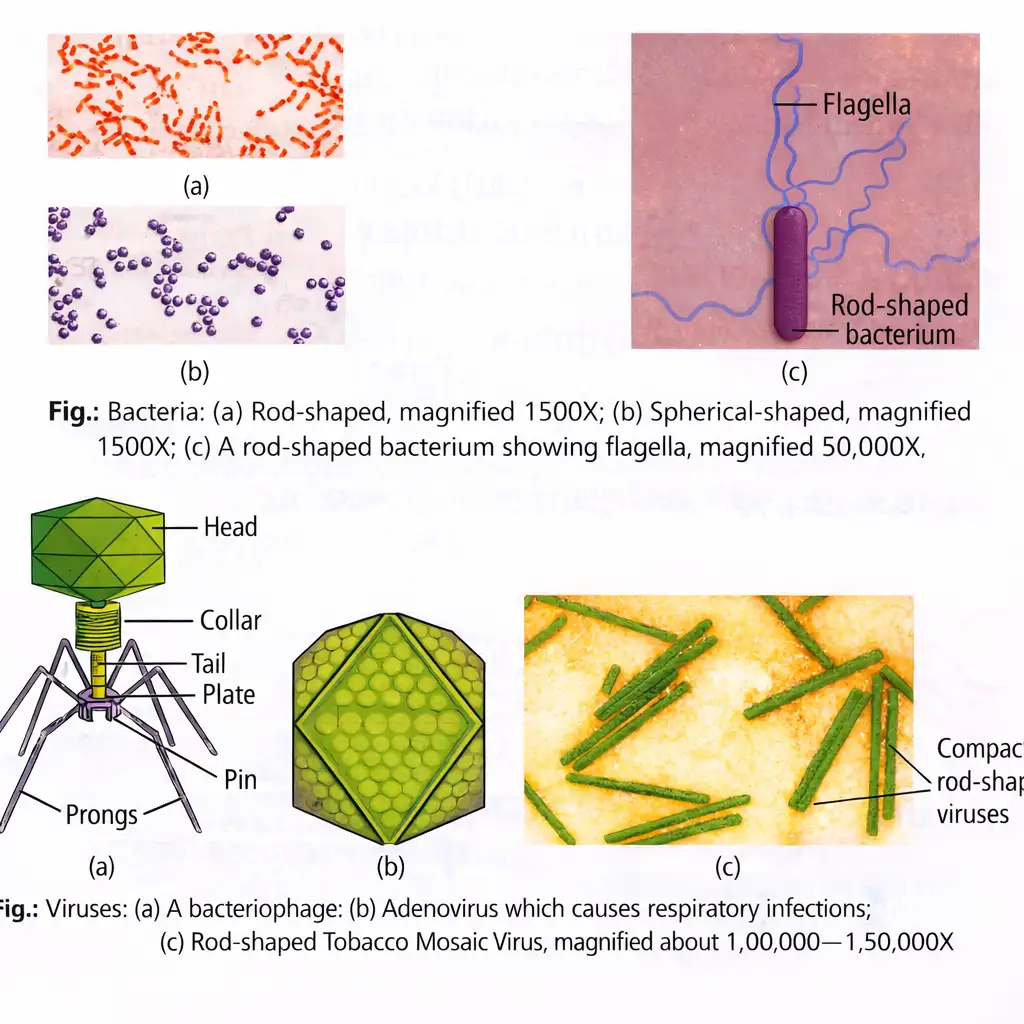
Microbial Cultures
Lactic Acid Bacteria in Dairy Products
| Product | Microbe or process | Key detail |
|---|---|---|
| Yogurt | Streptococcus thermophilus and Lactobacillus bulgaricus | Milk is curdled at about for 4–6 hours. |
| Buttermilk | Lactobacillus bulgaricus | Produces lactic acid and flavour compounds. |
| Butter | Lactic acid bacteria | Cream is soured with LAB and then churned. |
| Butter flavour | Streptococcus cremoris or S. lactis; Leuconostoc citrovorum | Streptococcus produces lactic acid rapidly; Leuconostoc converts milk citrate to diacetyl, giving butter its characteristic flavour and aroma. |
Cheese
| Cheese | Microbe | Characteristic |
|---|---|---|
| Swiss cheese | Propionibacterium shermanii | Produces CO₂, creating the characteristic large holes. |
| Roquefort | Penicillium roqueforti | Ripens the cheese. |
| Camembert | Penicillium camemberti | Ripens the cheese. |
Fermented Foods and Drinks
- Fermentation: Microbes are used to prepare household foods such as curd, idli, dosa and bread.
- Traditional products: Toddy is made by fermenting palm sap; microbes also ferment fish, soybean and bamboo shoots.
Single-Cell Protein and Probiotics
Probiotics — Living microorganisms taken orally that provide health benefits.
How do LAB improve the nutritional and health value of curd?
Name the microbes involved in the characteristic holes of Swiss cheese and the flavour of butter.
What are SCP and probiotics?
Quick recap
- Microbes are diverse, widespread, and can inhabit extreme environments, including thermal vents reaching up to .
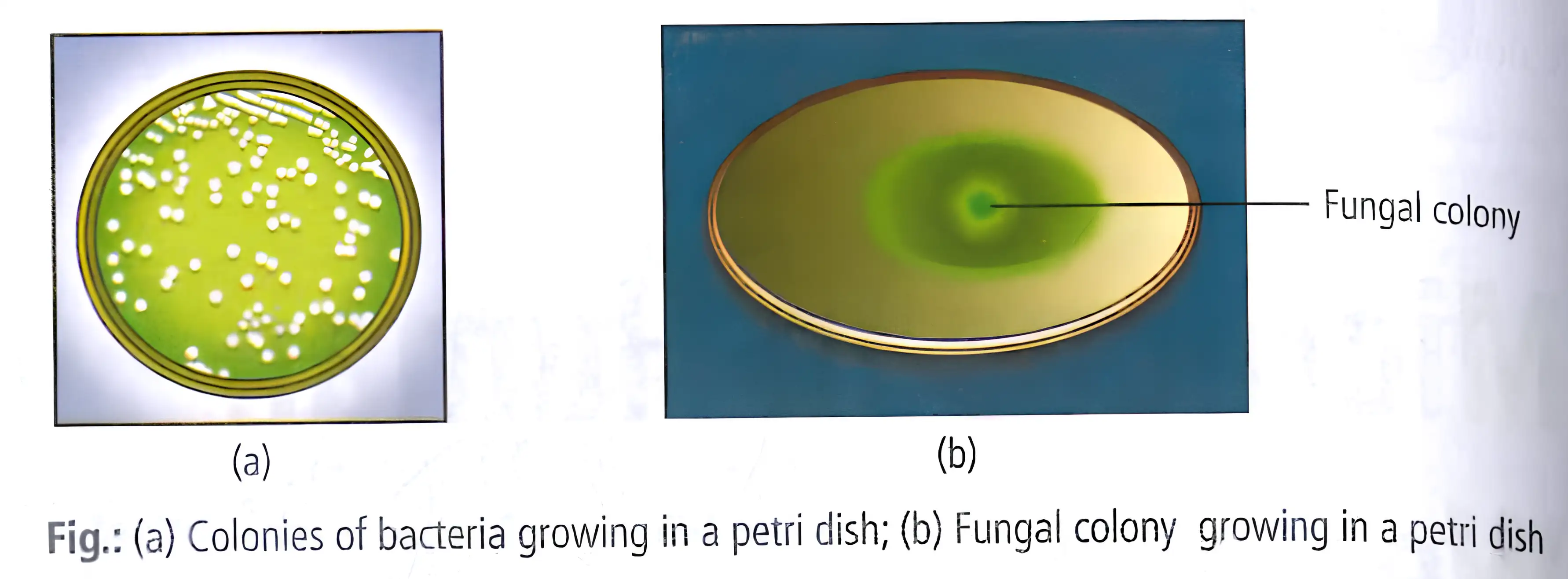
- Bacteria and many fungi can grow on nutrient media to form visible colonies.
- LAB ferment milk into curd, increase vitamin B₁₂, and are used in several dairy products.
- Different microbes make yogurt, butter flavour, and characteristic ripened cheeses.
- Microbial fermentation produces foods and drinks such as idli, dosa, bread, and toddy.
- SCP provides microbial biomass for food or feed; probiotics provide health benefits when consumed.
Microbes in Industrial Products
Microbes in Industry
Fermentor — A large vessel used to grow microbes on an industrial scale and obtain useful products.
Industrial products
- Uses: Microbes produce beverages, antibiotics, organic acids, enzymes and other bioactive molecules.
- Scale: Industrial production involves growing microbes in large fermentors.
Fermented Beverages
Alcoholic fermentation — Yeast and certain bacteria break down carbohydrates to produce ethanol and carbon dioxide.
| Yeast | Common name or use |
|---|---|
| Saccharomyces cerevisiae | Brewer's yeast |
| S. ellipsoideus | Wine yeast |
| S. sake | Sake yeast |
| S. pyriformis | Ginger beer |
| Beverage | Fermentation material |
|---|---|
| Beer | Barley malt |
| Gin | Fermented juniper berries |
| Sake | Fermented rice |
| Fenny | Cashew-apple |
| Vodka | Potato |
| Whisky | Fermented corn or rye |
| Rum | Fermented molasses |
| Wine and brandy | Fermented fruit juices |
| Point | Baker's yeast | Brewer's yeast |
|---|---|---|
| Use | Selected strains used in baking | Yeasts used to prepare alcoholic drinks |
| Effect or role | Helps produce desired flavour and texture in baked products | Used in brewing |
| Point | Undistilled | Distilled |
|---|---|---|
| Examples | Beer, wine | Whisky, rum, gin, brandy, vodka, fenny |
| Alcohol content | Lower than distilled drinks | Higher; called hard liquors |
| Method | How it works | System or feature |
|---|---|---|
| Batch culture | Conditions are set at the start; no more nutrients are added during fermentation. | Closed system |
| Continuous culture | Nutrients are added as fast as they are used, and overflow is harvested. | Can operate for many weeks |
| Fed-batch culture | Nutrients are added gradually at low concentrations during fermentation. | Extends the growth period |
Antibiotics
Antibiotic — A chemical produced by some microbes that kills or slows the growth of other microbes, especially pathogens.
Key facts and uses
- Word origin: “Anti” means against and “bio” means life; antibiotics act against disease-causing organisms but can benefit humans.
- Pathogens: Antibiotics can inhibit or kill microbes causing plague, whooping cough, leprosy and diphtheria.
- Penicillin: It was the first antibiotic to be discovered.
Discovery and development of penicillin
- DiscoveryAlexander Fleming noticed that Staphylococci could not grow around a mould on an unwashed culture plate; he named the chemical penicillin after Penicillium notatum.
- Commercial extractionErnst Chain and Howard Florey developed methods for commercial extraction of penicillin.
- World War IIPenicillin was widely used to treat wounded American soldiers.
- 1945Fleming, Chain and Florey received the Nobel Prize for this discovery.
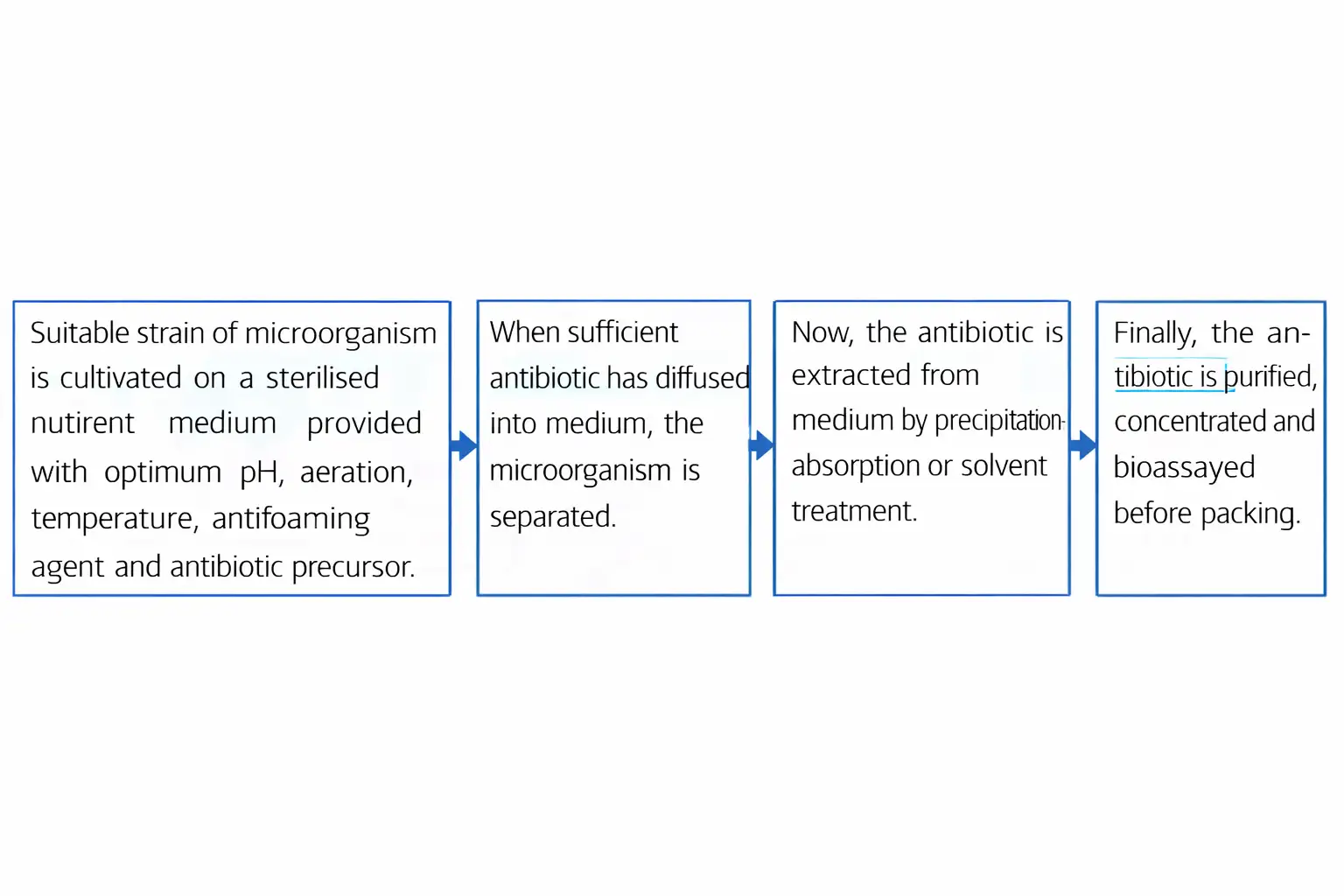
Characteristics of a good antibiotic
- Safe: Harmless to the host, with no side effects, and does not harm normal alimentary-canal microflora.
- Effective: Acts quickly, destroys the pathogen and works against all its strains.
Chemicals, Enzymes and Other Bioactive Molecules
- Microbial products: Microbes are used commercially to produce organic acids, enzymes and bioactive molecules.
- Uses: These products have applications in food processing, industry and medicine.
Organic Acids
| Acid | Microbe and production material | Uses or occurrence |
|---|---|---|
| Citric acid | Aspergillus niger ferments carbohydrates such as cane or beet molasses; Candida lipolytica produces it when the medium lacks iron and manganese. | Medicines, dyeing, flavouring, food preservation and candies |
| Acetic acid | Acetobacter aceti acts on fermented alcohol. | Vinegar, pharmaceuticals, colouring agents, insecticides and plastics |
| Lactic acid | Lactobacillus bulgaricus and L. delbrueckii ferment corn or potato starch, molasses and whey. | First organic acid produced by microbial fermentation |
| Butyric acid | Clostridium acetobutylicum produces it during fermentation. | Found in rancid butter |
Historical fact
- Lactic acid: Scheele reported it as the first organic acid produced through microbial fermentation in 1789.
Microbial Enzymes
- Lipases: Obtained from microbes such as Candida lipolytica; used in detergents to remove oily stains.
- Pectinases and proteases: Used to clarify bottled fruit juices.
- Streptokinase: A genetically modified microbial enzyme used to dissolve blood clots in patients with heart attacks.
Bioactive Molecules
How do batch, continuous and fed-batch cultures differ?
Name the four organic acids, their microbial sources and a use or key feature.
State the microbial source and use of cyclosporin A and statin.
Quick recap
- Industrial microbes produce beverages, antibiotics, organic acids, enzymes and bioactive molecules in fermentors.
- Alcoholic fermentation converts carbohydrates into ethanol and carbon dioxide; culture methods are batch, continuous and fed-batch.
- Beer and wine are undistilled; whisky, rum, gin, brandy, vodka and fenny are distilled hard liquors.
- Penicillin was the first antibiotic discovered; Fleming observed it, Chain and Florey enabled commercial extraction, and all three received the 1945 Nobel Prize.
- Microbial products include citric, acetic, lactic and butyric acids, along with useful enzymes.
- Streptokinase, also known as TPA, is used to dissolve blood clots; cyclosporin A suppresses immunity and statin lowers cholesterol.
Microbes in Sewage Treatment
Sewage and Its Treatment
Sewage — Municipal wastewater containing human excreta, other organic wastes and pathogenic microbes.
- Why treat sewage: It should not be discharged untreated into rivers, streams or other water bodies because it contains organic pollutants and pathogens.
- Main stages: Sewage treatment mainly involves primary and secondary treatment; tertiary treatment may also be used.
| Stage | Main process | Main outcome |
|---|---|---|
| Primary | Filtration and sedimentation | Removes floating and suspended solids |
| Secondary | Microbial treatment | Breaks down organic matter and lowers BOD |
| Tertiary | Precipitation | Removes nitrates and phosphates |
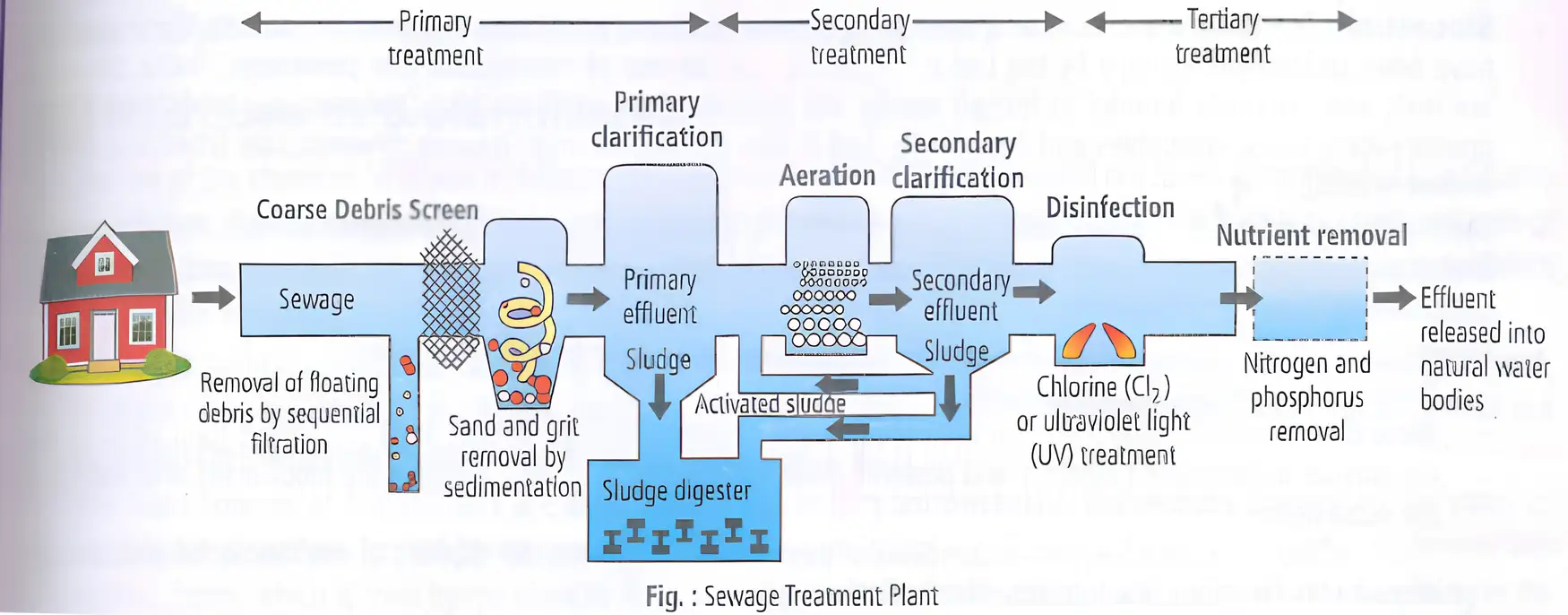
Primary Treatment
Primary treatment — Physical removal of floating and suspended solids from sewage by filtration and sedimentation.
Primary-treatment sequence
- Filtered sewage enters a grit chamber; sand, small pebbles and other coarse solids settle by gravity.
- Sewage enters a sedimentation tank, where most suspended solids settle.
- Settled solids form primary sludge; the supernatant liquid is the effluent.
- Primary sludge traps microbes and debris and is sent for composting on land; effluent proceeds to secondary treatment.
Secondary Treatment
Secondary treatment — Biological treatment in which microbes break down organic matter in primary effluent.
- Aeration tank: Primary effluent is mechanically agitated while air is passed through it, encouraging aerobic microbes to grow.
- Microbial action: Microbes digest organic matter, producing microbial biomass and releasing minerals.
- Flocs: Mesh-like masses of bacteria held together by slime and fungal filaments.
- BOD (Biochemical Oxygen Demand): The oxygen bacteria would consume to oxidise all organic matter in one litre of water.
- BOD reduction: After secondary treatment, wastewater BOD falls to 10–15% of the raw-sewage BOD.
Activated Sludge and Biogas
Sludge treatment
- Secondary effluent enters a sedimentation tank, where microbial flocs settle as activated sludge.
- A small portion of activated sludge is returned to the aeration tank as inoculum.
- The larger remaining portion enters an anaerobic sludge digester; anaerobic microbes digest organic matter and aerobic microbes present in the sludge.
- Digestion produces biogas containing , and ; it can be used as an energy source.
Tertiary Treatment
Tertiary treatment — An expensive further treatment that removes nitrates and phosphates by precipitation; the resulting water is described as pure enough to drink.
River Action Plans
- Before 1985Very few Indian cities and towns had sewage treatment plants; municipal wastewater was discharged directly into rivers, contributing to pollution and many water-borne diseases.
- Initiative: The Ministry of Environment and Forests initiated sewage-treatment plant development under the National River Conservation Authority to protect major Indian rivers.
- Examples: Ganga Action Plan (GAP), Yamuna Action Plan, Sutlej Action Plan and Gomti Action Plan.
Quick recap
- Sewage contains organic wastes and pathogens, so it must be treated before release into water bodies.
- Primary treatment uses filtration and sedimentation; its products are primary sludge and effluent.
- Aerobic microbes form flocs and digest organic matter during secondary treatment.
- Secondary treatment reduces wastewater BOD to 10–15% of raw-sewage BOD.
- Some activated sludge is recycled; the rest is anaerobically digested to produce usable biogas.
- Tertiary treatment removes nitrates and phosphates by precipitation; the flow diagram also includes disinfection.
- River Action Plans promoted sewage-treatment plants to reduce pollution of major Indian rivers.
Microbes in Production of Biogas
Biogas and Its Composition
- Biogas: A methane-rich fuel formed when microbes degrade biological matter under anaerobic conditions.
- Composition: It contains about 50–70% methane, 30–40% carbon dioxide and smaller amounts of hydrogen, oxygen, nitrogen and hydrogen sulphide.
Methanogens
- Methanogens: Anaerobic bacteria that produce methane along with carbon dioxide and hydrogen.
- Examples:Methanobacterium and Methanococcus.
- Habitats and role: They occur in anaerobic sewage sludge and the rumen of cattle, where they help break down cellulose.
Biogas Production in a Plant
Stages of Biogas Production
- Cattle dung + water → slurry
- Anaerobic bacterial digestion at about –
- Biogas forms, builds pressure and lifts the floating cover
- Biogas is supplied through a pipe; spent slurry is used as manure
Uses and Significance
What are methanogens, and where are they found?
State two uses of the products from a biogas plant.
Quick recap
- Biogas is produced by anaerobic microbial breakdown and is rich in methane.
- Methanogens include *Methanobacterium* and *Methanococcus*.
- Methanogens occur in sewage-treatment sludge and the cattle rumen; they help digest cellulose in cattle.
- Cattle dung mixed with water is digested at about – to produce mainly methane and carbon dioxide.
- Biogas supplies fuel, while spent slurry serves as manure.
- IARI and KVIC contributed mainly to the development of biogas technology in India.
Microbes as Biocontrol Agents
Biocontrol: meaning and importance
Biocontrol — The use of biological methods or organisms to control pests and plant diseases.
Why biological control is needed
- Chemical harm: Insecticides, pesticides and weedicides can harm humans and animals and pollute soil, groundwater, fruits, vegetables and crops.
- Biopesticides: Biological-origin pest controls include bioinsecticides and bioherbicides; they can replace or supplement chemical control.
- Safety: Biocontrol agents are generally non-persistent, non-toxic and biodegradable.
- Ecosystem balance: They keep pests manageable rather than eradicating them, helping beneficial predatory and parasitic insects survive.
- Overall benefit: Preserving food-web relationships supports biodiversity and ecosystem stability while reducing chemical pollution.
Biological control of insect pests
Bioinsecticide — A living organism used to control insect pests; examples include viruses, bacteria and fungi.
| Agent | Target or action | Key point |
|---|---|---|
| Coccinella (ladybird beetle) | Aphids | Predator of plant pests |
| Sympetrum (dragonfly) | Mosquitoes | Predator; also called mosquito hawk |
| Trichoderma | Several plant pathogens | Free-living soil fungus used as a biocontrol agent |
Viral biocontrol agents
Baculovirus — A pathogenic virus group that infects and kills many insect and other arthropod pests.
Important features and examples
- Nucleopolyhedrovirus: An important baculovirus used in biological control.
- Specificity: Baculoviruses have a narrow insecticidal spectrum and generally do not harm non-target organisms, including beneficial insects.
- Pests controlled: Examples include potato beetles, aphids and corn borers.
- Entomopox virus: It adversely affects grasshopper development and reduces the amount of food eaten.
Bacterial biocontrol: Bacillus thuringiensis
Bacillus thuringiensis (Bt) — A bacterium that produces insecticidal proteins used to control insect larvae.
How Bt kills insect larvae
- Bt produces a protein toxin called thurioside; its spores produce the insecticidal Cry protein.
- Insect larvae ingest the toxin.
- The toxin inhibits ion transport in the larval midgut, killing the insect.
Bt applications
- Spray preparation: Bt spores are supplied in sachets, dissolved in water and sprayed on vulnerable plants; commercial preparations combine spores, Cry protein and an inert carrier.
- Transgenic crops: Introducing the Bt toxin gene can make plants insect-resistant; the gene has been introduced into cotton and tobacco.
- Target group: Most strains of the Bt-toxin gene are toxic to lepidopteran larvae.
Fungal insect control
Beauveria bassiana — A fungus used as a bioinsecticide to control insect populations, including forestry pests.
Useful properties
- Host safety: B. bassiana does not grow on warm-blooded organisms.
- Limitation: It fails to survive in water.
Bioherbicides and weed control
Bioherbicide — A living organism used to control weeds.
| Approach | Example or use |
|---|---|
| Fungal bioherbicide | The first bioherbicide, developed in 1981, was a mycoherbicide from Phytophthora palmivora; it controls milkweed vines in citrus orchards. |
| Insect control | Cactoblastis cactorum (cochineal insect) was introduced in India and Australia to control excessive cactus growth. |
| Fungal-spore products | Devine and Collego are products used to control weeds. |
| Herbicide-resistant crops | Genetic engineering introduces herbicide-resistance genes into crops such as tomato and tobacco so they can tolerate a herbicide. |
Integrated Pest Management
Integrated Pest Management (IPM) — A combination of practices to reduce pest damage and agrochemical pollution while supporting agricultural productivity.
Recommended IPM practices
- Starvation: Some pests can be controlled by depriving them of food.
- Cultural controls: Follow recommended agricultural practices and minimise excessive synthetic pesticide use.
- Prevention: Use crop rotation and proper sanitation to help avoid pest infestation in crop fields.
- Biological control: Use biological methods while minimising chemical pesticides.
- Mixed planting: Grow a target weed with the crop if insect pests prefer that weed over the crop.
Why are baculoviruses useful as biocontrol agents?
How does Bt control insect larvae?
Name four practices used in IPM.
Quick recap
- Biocontrol uses biological methods to manage pests and plant diseases and reduce reliance on harmful chemicals.
- Benefits include biodegradability, lower toxicity, manageable pest populations and preservation of ecosystem balance.
- Agents include predatory insects, Trichoderma, baculoviruses, Bt and Beauveria bassiana.
- Bt produces thurioside and Cry insecticidal proteins; ingestion disrupts ion transport in larval midguts.
- Bioherbicides include Phytophthora palmivora, Cactoblastis cactorum, Devine and Collego; resistant crops are also used in weed management.
- IPM combines preventive, cultural and biological practices while minimising excessive synthetic pesticide use.
Microbes as Biofertilisers
Organic Farming and Biofertilisers: Overview
- Chemical fertilisers: Overuse pollutes water bodies and groundwater; residues may also accumulate in crop plants.
- Organic farming: Growing crops using biologically derived manures, fertilisers and pesticides, alongside practices such as resistant varieties, crop rotation and intercropping.
Biofertilisers — Organisms that enrich soil nutrient availability, helping supply crops with nutrients such as nitrogen and phosphorus.
Bacterial Biofertilisers
- Rhizobium: Forms root nodules in leguminous plants through a symbiotic association; fixes atmospheric nitrogen into organic forms used by the plant.
- Free-living bacteria: Fix atmospheric nitrogen in soil and enrich its nitrogen content; examples include *Azospirillum* and *Azotobacter*.
- Other listed examples: Free-living nitrogen-fixing bacteria include *Clostridium*, *Rhodospirillum* and *Chromatium*.
Mycorrhiza: Fungal Biofertilisers
Mycorrhiza — A symbiotic association between a fungus and the roots of a higher plant.
- Fungal partner: *Glomus* species are common mycorrhizal fungi.
- Nutrient transfer: The fungus absorbs phosphorus from the soil and passes it to the plant.
- Other benefits: Associated plants gain resistance to root-borne pathogens, tolerance to salinity and drought, and improved growth and development.
Cyanobacterial Biofertilisers
- Cyanobacteria: Autotrophic microbes found in aquatic and terrestrial environments; many fix atmospheric nitrogen.
- Examples: Nitrogen-fixing cyanobacteria include *Anabaena*, *Nostoc* and *Oscillatoria*; other listed examples include *Aulosira*.
- Paddy fields: Cyanobacteria are important biofertilisers; blue-green algae also add organic matter and improve soil fertility.
- Cost: Cyanobacteria are extremely low-cost biofertilisers.
- Rice-field example: *Aulosira fertilissima* was considered the most active nitrogen fixer of rice fields in India (Aiyer et al., 1972).
| Biofertiliser | Nutrition or association | Examples |
|---|---|---|
| Free-living nitrogen-fixing bacteria | Saprotrophic or photoautotrophic | *Azotobacter, Clostridium, Rhodospirillum, Chromatium* |
| Free-living nitrogen-fixing cyanobacteria | Photosynthetic | *Anabaena, Nostoc, Aulosira* |
| Symbiotic nitrogen-fixing bacteria | Mutual association with plants | *Rhizobium* |
| Symbiotic nitrogen-fixing cyanobacteria | Mutual association with many plants | *Anabaena* |
| Mycorrhiza | Fungus in symbiotic association with roots of higher plants | *Glomus* |
Use and Importance of Biofertilisers
- Availability and use: Biofertilisers are commercially available in India and are used by farmers to replenish soil nutrients and reduce reliance on chemical fertilisers.
- Crop yield: They can increase plant yield by 15–35% and remain effective under semi-arid conditions.
- Soil and plant health: They improve soil texture, discourage pathogens and produce vitamins and growth-promoting biochemicals.
- Environmental benefit: They are non-polluting.
How does *Rhizobium* benefit leguminous plants?
State two benefits of mycorrhiza to plants.
Quick recap
- Biofertilisers enrich soil nutrients and offer an alternative to polluting chemical-fertiliser overuse.
- *Rhizobium* fixes nitrogen symbiotically in legume root nodules; other nitrogen-fixing bacteria can live freely in soil.
- Mycorrhizal fungi, commonly *Glomus*, absorb phosphorus and pass it to plant roots.
- Nitrogen-fixing cyanobacteria benefit paddy fields and add organic matter to soil.
- Biofertilisers improve yield, soil texture and plant health while reducing pollution and dependence on chemical fertilisers.
NEET Zoology — ALL CHAPTERS
1
Structural Organisation in Animals
2
Breathing and Exchange of Gases
3
Body Fluids and Circulation
4
Excretory Products and their Elimination
5
Locomotion and Movement
6
Neural Control and Coordination
7
Human Reproduction
8
Reproductive Health
9
Evolution
10
Microbes in Human Welfare
11
Organism and Population
12
Ecosystem
13
Biodiversity and Conservation