NEET UG . NEET Zoology . Zoology . Reproductive Health
Chapter 8: Reproductive Health
Ch 8
NEET Zoology
NEET UG
Reproductive Health-Problems and Strategies
Meaning of Reproductive Health
- Meaning: Reproductive health is total well-being in the physical, emotional, behavioural and social aspects of reproduction.
- Reproductive well-being: It includes normally functioning reproductive organs and healthy behavioural and emotional interactions in sex-related aspects.
Reproductive and Child Health Care Programmes
- Purpose: Reproductive and Child Health (RCH) programmes aim to attain total reproductive health as a social goal.
- Approach: They create awareness about reproduction-related matters and provide facilities and support for a reproductively healthy society.
Problems Related to Reproductive Health
- Major problems: Overpopulation and early marriage are important reproductive-health concerns.
- Maternal health: Early marriage can lead to several diseases in mothers.
Strategies to Achieve Reproductive Health
Requirements for Effective Action
- Infrastructure: Good facilities are needed to provide reproductive health services.
- Expertise and resources: Professional knowledge and material support are essential for medical care.
- Improved care: Better techniques and new strategies help provide more effective reproductive health support.
Amniocentesis
What does reproductive health mean according to WHO?
State two aims or components of RCH programmes.
What is amniocentesis, and why is sex determination using it banned?
Quick recap
- Reproductive health includes physical, emotional, behavioural and social well-being.
- RCH programmes combine awareness with reproductive, maternal and child health services.
- Overpopulation, early marriage and harm to maternal health are key problems.
- Family planning in India began in 1951; education, contraception and care are important strategies.
- Effective services need infrastructure, expert knowledge, resources and improved techniques.
- Amniocentesis can detect certain genetic disorders, but its use for fetal sex determination is banned.
Population Stabilisation and Birth Control
Population Growth and Stabilisation
Population explosion — A rapid increase in population over a relatively short period.
Population — The total number of individuals of a species in a particular area at a given time.
Demography — The scientific study of human populations.
Population growth figures
- 1900World population was around 2 billion.
- 2000World population reached about 6 billion.
- 2011World population was about 7.2 billion; India's population crossed 1.2 billion in May.
- At independenceIndia's population was approximately 350 million.
Causes and concerns
- Main causes: Better health facilities and living conditions, falling death rate, lower maternal mortality rate (MMR) and infant mortality rate (IMR), and a larger reproductive-age population.
- RCH programmes: Reproductive and Child Health programmes brought the population growth rate down only marginally.
- 2011 census: The growth rate was below (about people per year), still high enough for rapid population increase.
- Risk: Continued growth can create shortages of basic needs such as food, shelter and clothing.
Measures to stabilise population
- Small-family norm: Promote contraception and smaller families; the message “Hum Do Hamare Do” encouraged a couple to have two children.
- One-child norm: Adopted by some couples, particularly young, urban and working couples.
- Legal measure: Marriageable age is set at years for females and years for males.
- Incentives: Couples with small families may receive incentives.
Birth Control or Contraception
Birth control / contraception — Regulation of conception using preventive methods or devices to limit the number of offspring; these methods mainly prevent fertilisation.
Ideal contraceptive and targets
- Ideal method: User-friendly, readily available, effective and reversible, with minimal or no side-effects.
- Sexual function: It should not interfere with sexual drive, desire or the sexual act.
- Possible targets: Prevent sperm transport to the ovum, ovulation, or implantation of the early embryo in the uterus.
- Broad groups: Contraceptives are temporary or permanent.
Temporary Methods of Birth Control
Use and general features
- Purpose: Commonly used to postpone or space births; protection lasts for a limited time.
- Regular use: Needed to maintain pregnancy prevention.
- Types: Natural, barrier, chemical, intrauterine devices, oral pills, and hormone injections or implants.
Natural Methods
| Method | How it works | Effectiveness / limitation |
|---|---|---|
| Periodic abstinence (rhythm method) | Avoid coitus during days – of the menstrual cycle, the period of highest fertility. | Limited effectiveness: cycles and ovulation timing are not reliably predictable. |
| Coitus interruptus (withdrawal) | Withdraw the penis before ejaculation so semen is not released into the vagina. | Moderately effective; pre-ejaculatory lubricating fluid can contain many sperms. |
| Lactational amenorrhea | Intense lactation after childbirth can suppress ovulation and menstruation. | Considered effective only up to a maximum of six months after parturition. |
Natural methods: key points
- Principle: Prevent the ovum and sperm from meeting.
- Advantage: No medicines or devices are used, so side-effects are nil.
- Limitation: Failure chances are relatively high.
Barrier Methods
Condoms
- Action: Thin rubber or latex sheaths cover the penis, or the vagina and cervix, to stop semen entering the female reproductive tract.
- Names: Nirodh is a popular male-condom brand; female condoms are called femidoms.
- Additional benefit: Condoms help protect against STIs, including AIDS.
- Use: Male and female condoms are disposable and can be self-inserted, offering privacy.
Diaphragms, cervical caps and vaults
- Action: Reusable rubber barriers inserted into the female reproductive tract cover the cervix and block sperm entry.
- Use: They are placed before coitus.
Chemical Methods
Spermicides
- Forms: Creams, jellies and foams are placed in the vagina before intercourse to prevent sperm from entering the uterus.
- Use with barriers: They are usually combined with barrier methods to improve contraceptive efficiency.
- Examples of spermicides: Lactic acid, citric acid, boric acid, zinc sulphate and potassium permanganate.
Spermicidal products
- Sponge: “Today” is a foam suppository or tablet containing the spermicide nonoxynol.
- Other product: Delfin is available as a cream.
- Limitation: These products are relatively unreliable; they should be used only by those not allergic to the spermicides.
Intrauterine Contraceptive Devices (IUCDs)
IUCD overview
- Definition: Plastic or metal devices inserted into the uterus through the vagina by a doctor.
- Use: Effective, widely accepted in India, and suitable for delaying pregnancy or spacing children.
| Type | Action | Examples |
|---|---|---|
| Non-medicated | A plastic loop increases phagocytosis of sperm in the uterus. | Lippes loop |
| Hormone-releasing | Makes the uterus unsuitable for implantation and the cervix hostile to sperm. | LNG-20, Progestasert |
| Copper-releasing | Copper ions suppress sperm motility and fertilising capacity. | CuT, Cu7, Multiload 375 |
IUCD risks
- Expulsion: In about – of women, a device may be expelled without their knowledge, creating a pregnancy risk.
- Other risks: Uterine perforation, infection, excessive menstrual bleeding and pain.
Oral Contraceptive Pills
Types and action
- Combined pills: Contain synthetic progesterone and estrogen; examples include Mala D and Mala N.
- Mini pills: Contain progestin only, without estrogen; Saheli is given as an example in the lecture.
- Action: Pills inhibit ovulation and implantation and alter cervical mucus to hinder sperm entry.
- Effectiveness: They are very effective, generally have fewer side-effects and are widely accepted.
Pill schedule and precautions
- Schedule: Take pills daily for days, preferably starting within the first five days of the menstrual cycle; pause for seven days, then repeat if contraception is still desired.
- Clotting risk: Pills can increase intravascular clotting risk and are not recommended for people with clotting disorders, cerebral blood-vessel damage, hypertension or heart disease.
- Possible side-effects: Acne, weight gain, depression, hypertension, leukorrhea, reduced menstrual flow, breast pain, nausea, vomiting and melasma.
Saheli
- Development: Introduced by the Central Drug Research Institute (CDRI), Lucknow, in 1991 as the first non-steroidal oral contraceptive pill.
- Active compound and action: Centchroman inhibits implantation; Saheli is taken once a week.
- Safety: It avoids steroid-related effects such as nausea, vomiting and weight gain; delayed menstruation occurs in about of women.
- Other reported benefits: It may help treat dysfunctional uterine bleeding, breast pain and benign breast tumours.
Hormone Injections and Subcutaneous Implants
Hormonal methods
- Hormones used: Progestogens alone or combined with estrogen can be given by injection or implanted under the skin.
- Action: Like oral contraceptives, they block ovulation and thicken cervical mucus, reducing sperm transport.
- Injectables: DMPA (depot medroxyprogesterone acetate) and NET-EN (norethisterone enanthate) are examples.
- Injections: Convenient and highly effective, with no serious side-effects reported in the lecture; occasional heavy menstrual bleeding may occur.
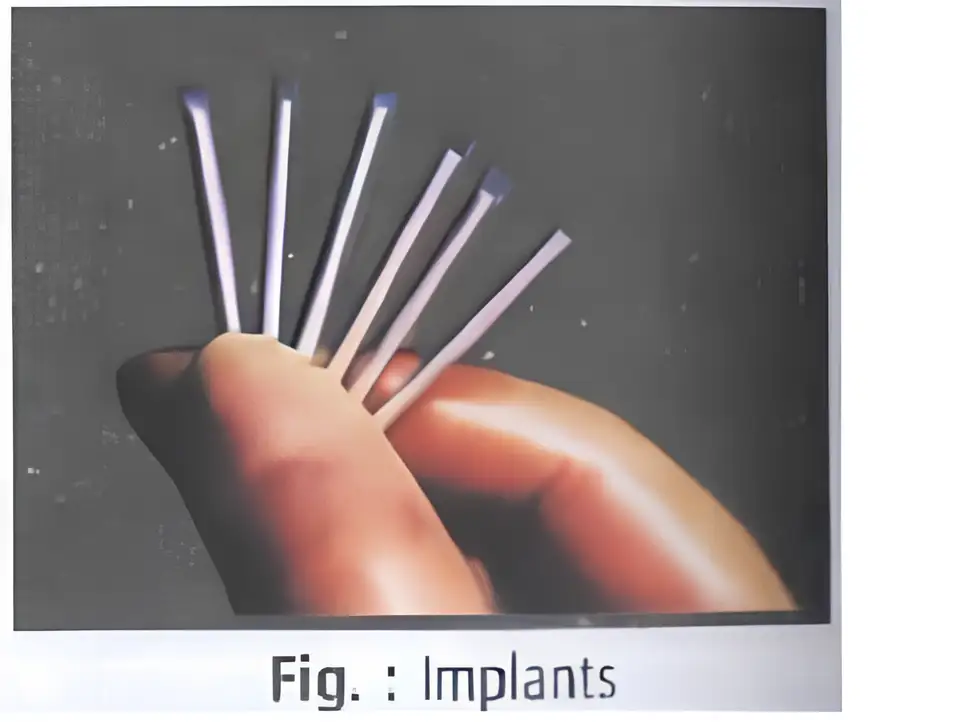
Implant features and emergency contraception
- Implants: Six matchstick-sized steroid capsules are inserted under the skin of the inner arm above the elbow and slowly release synthetic progesterone for about five years.
- Benefits: Implants are safe, convenient, effective and long-lasting.
- Emergency contraception: Progestogens, progestogen–estrogen combinations or IUCDs used within hours of coitus can help prevent pregnancy after rape or casual unprotected intercourse.
Permanent Methods of Birth Control
Sterilisation
- Purpose: Surgical methods, usually chosen as terminal contraception when no more pregnancies are desired.
- Action: Blocking gamete transport prevents conception.
- Reversibility: These methods are highly effective, but reversibility is very poor.
| Point | Vasectomy | Tubectomy |
|---|---|---|
| Partner | Male | Female |
| Procedure | A small part of the vas deferens is cut out or tied. | A small part of a Fallopian tube is cut out or tied. |
| Access | Small incision in the scrotum. | Small incision in the abdomen or access through the vagina. |
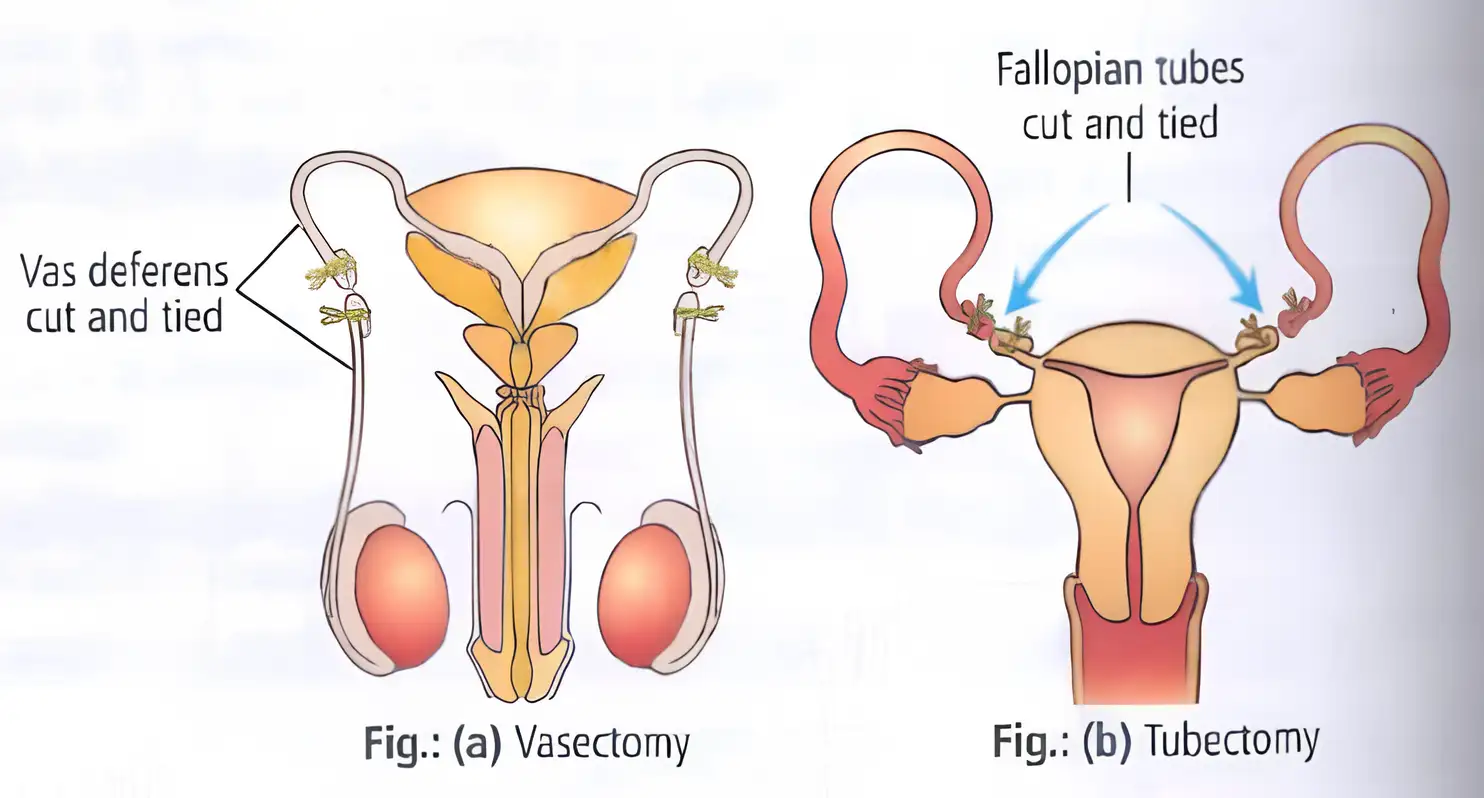
Contraceptive choice and use should be discussed with a qualified medical professional. Possible effects such as nausea, abdominal pain, breast pain, irregular menstrual bleeding or even breast cancer, though not very significant, should not be ignored.
How do copper-releasing IUCDs prevent conception?
State the difference between vasectomy and tubectomy.
What are the three natural contraceptive methods?
Quick recap
- Population explosion results from improved survival and a larger reproductive-age population; stabilisation promotes small families and contraception.
- Contraceptives may prevent sperm transport, ovulation or implantation, and are broadly temporary or permanent.
- Natural methods avoid gamete meeting but have relatively high failure rates.
- Barrier methods block sperm; condoms also reduce STI transmission risk.
- IUCDs include non-medicated, hormone-releasing and copper-releasing types.
- Pills, injections and implants use hormones or centchroman to prevent pregnancy; emergency contraception is used within hours.
- Vasectomy and tubectomy are effective sterilisation procedures with poor reversibility.
Medical Termination of Pregnancy (MTP)
Meaning and Scale of MTP
- Meaning: Medical termination of pregnancy (MTP), or induced abortion, is the intentional termination of pregnancy before full term.
- Scale: About 45–50 million MTPs are performed worldwide each year, accounting for roughly one-fifth of conceived pregnancies.
Legalisation and Reasons for MTP
- Legalisation: India legalised MTP in 1971, subject to strict conditions to prevent misuse.
- Reasons: MTP may be used for unwanted pregnancies due to unprotected intercourse, contraceptive failure or rape, or when pregnancy threatens the mother or fetus.
Safety and Risks
- First trimester: MTP is relatively safe up to 12 weeks of pregnancy.
- Risks: Second-trimester abortions are much riskier; abortions performed illegally by unqualified practitioners can be unsafe or fatal.
Misuse of Amniocentesis
When is MTP considered relatively safe, and when does its risk increase?
Why was MTP legalised in India subject to strict conditions?
Quick recap
- MTP is intentional termination of pregnancy before full term, also called induced abortion.
- The Government of India legalised MTP in 1971 with strict conditions to prevent misuse.
- Reasons include unwanted pregnancy, contraceptive failure, rape, or risk to the mother or fetus.
- MTP is relatively safe in the first trimester, up to 12 weeks; second-trimester abortion is riskier.
- The majority of MTPs are performed illegally by unqualified practitioners, risking serious harm or death.
- Sex determination by amniocentesis followed by termination of a female fetus is dangerous and should be avoided.
Sexually Transmitted Infections (STIs)
Meaning and Transmission
- Meaning: Sexually transmitted infections (STIs), also called venereal diseases or reproductive tract infections, are infections transmitted through sexual intercourse.
- Transmission: They can also spread through shared injection needles or surgical instruments, infected blood transfusion, and from an infected mother to the fetus.
Symptoms, Curability and Complications
- Symptoms: Early signs may include itching, swellings, fluid discharge and slight pain.
- Curability: Most STIs are curable if detected early and treated properly; HIV, hepatitis B and genital herpes are exceptions.
- Complications: Untreated infections can lead to abortions, stillbirths, ectopic pregnancies, infertility, reproductive-tract cancer or pelvic inflammatory disease.
Risk and Prevention
Which STIs in the lecture are not completely curable?
Name three measures to help prevent STIs.
Quick recap
- STIs are also called venereal diseases or reproductive tract infections.
- Transmission can occur through sex, shared needles or surgical instruments, infected blood, and from an infected mother to the fetus.
- Early signs can include itching, swelling, fluid discharge and slight pain.
- Most listed STIs are completely curable with early detection and proper treatment; HIV, hepatitis B and genital herpes are exceptions.
- Untreated infection can lead to reproductive and pregnancy-related complications.
- Prevention includes avoiding unknown or multiple partners, using condoms, and seeking qualified medical care early.
Infertility
Infertility and Assisted Reproductive Technologies
- Purpose: Assisted reproductive technologies (ART) help infertile couples have children when diagnosis and corrective treatment cannot resolve the problem.
- Methods: ART includes specialised techniques that assist fertilisation or the transfer of gametes and embryos.
Test-Tube Baby Programme (IVF–ET)
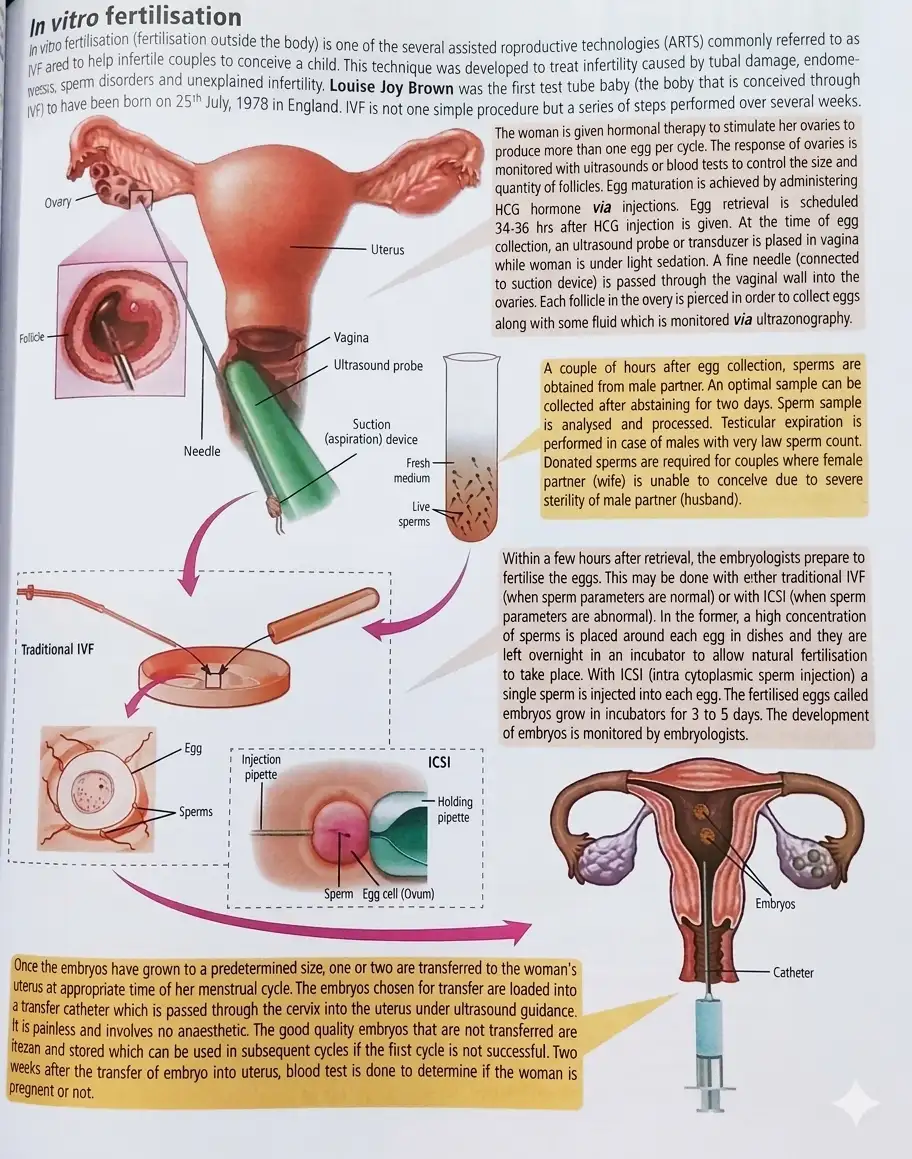
Other Assisted Reproductive Techniques
Intracytoplasmic sperm injection (ICSI) — A sperm is directly injected into the cytoplasm of an ovum in the laboratory; the resulting embryo is later transferred by ZIFT or IUT.
Artificial insemination (AI) — Semen is artificially introduced into the female reproductive tract when the husband cannot inseminate the female or has a very low sperm count in the ejaculate.
| Technique | Main feature / use |
|---|---|
| IVF–ET | Fertilisation occurs in the laboratory; embryo is transferred. |
| ZIFT | Embryo with up to 8 blastomeres is transferred into the Fallopian tube. |
| IUT | Embryo with more than 8 blastomeres is transferred into the uterus. |
| GIFT | Donor ovum and sperm are placed in the Fallopian tube; useful when the woman cannot produce ova. |
| ICSI | A sperm is injected directly into the ovum’s cytoplasm. |
| AI / IUI | Semen is artificially introduced into the vagina or uterus; IUI means uterine placement. |
Access to Parenthood and Prenatal Diagnosis
| Method | What is done / what it detects |
|---|---|
| Amniocentesis | Amniotic fluid is aspirated through the abdominal wall; chromosomal patterns in the fluid are examined for fetal sex and disorders. |
| Chorionic villi sampling (CVS) | A flexible tube is passed through the vagina and cervix into the uterus to collect placental chorionic villi; their cells are used for karyotyping. |
| Ultrasound imaging | A widely used non-invasive method to assess fetal condition. |
| Fetoscopy | A thin viewing tube is inserted into the uterus to give the physician a direct view of the fetus. |
Distinguish between ZIFT and IUT.
What is GIFT, and when is it used?
Name two prenatal diagnostic methods and state what each examines.
Quick recap
- Infertility may arise from physical, congenital, immunological or psychological causes.
- ART can help when infertility cannot be corrected; IVF fertilises gametes outside the body.
- ZIFT transfers embryos with up to 8 blastomeres to the Fallopian tube; IUT transfers later embryos to the uterus.
- GIFT transfers donor ovum and sperm to the Fallopian tube; ICSI injects sperm into an ovum.
- AI introduces semen into the vagina or uterus; uterine placement is called IUI.
- Amniocentesis, CVS, ultrasound and fetoscopy are methods used to assess fetal condition.
NEET Zoology — ALL CHAPTERS
1
Structural Organisation in Animals
2
Breathing and Exchange of Gases
3
Body Fluids and Circulation
4
Excretory Products and their Elimination
5
Locomotion and Movement
6
Neural Control and Coordination
7
Human Reproduction
8
Reproductive Health
9
Evolution
10
Microbes in Human Welfare
11
Organism and Population
12
Ecosystem
13
Biodiversity and Conservation