Class 12 Commerce . Business Studies . Business Studies Part II . Marketing
Chapter 10: Marketing
Ch 10
Business Studies
Class 12 Commerce
Introduction
Marketing, Society and Stakeholders
| Category | Focus | Examples |
|---|---|---|
| Immediate humanitarian concerns | Respond to urgent human needs | Child nutrition and care; old-age homes; hunger relief; aid after natural calamities |
| Long-term social concerns | Make society a better place to live | Health awareness and aid; education; environmental protection; women’s employment and empowerment |
| Long-term social concerns | Promote fairness and social development | Prevent discrimination based on caste, community, religion, ethnicity, race or sex; reduce poverty through employment |
| Long-term social concerns | Protect social and intellectual resources | Preserve culture, values and ethics; contribute to research |
Corporate Environmental Responsibility
- P&G’s approach: Procter & Gamble aimed to lead its industry in implementing a global environmental programme.
- Examples: P&G studied the environmental effects of consumer products and introduced concentrated products, recycled plastic bottles and refill packages.
- Purpose: These efforts address environmental and social issues linked to products and services and contribute to sustainable development.
Meaning and Scope of Marketing
Marketing — Traditionally, marketing means business activities that direct the flow of goods and services from producers to consumers; in the modern view, it is a social process of creating offerings and voluntarily exchanging value to satisfy needs and wants.
Marketing Is Broader Than Selling
- Not just shopping or selling: Shopping, merchandising, selling and distribution are components of marketing, not its full meaning.
- Before production: Identify customer needs, collect product-development information, design the product and package, and select a brand name.
- During distribution and sale: Activities include merchandising, packaging, warehousing, transportation, branding, selling, advertising and pricing.
- After the sale: Follow-up supports good customer relations and repeat purchases.
Understanding the Market
Market — In modern marketing, a market is the set of actual and potential buyers of a product or service.
| Basis | Examples |
|---|---|
| Traditional meaning | A place where buyers and sellers meet to exchange goods and services |
| Product | Cotton, gold or share market |
| Geography | National or international market |
| Type of buyer | Consumer or industrial market |
| Quantity transacted | Retail or wholesale market |
Core Features of Marketing
| Point | Need | Want |
|---|---|---|
| Meaning | A basic felt state of deprivation; if unsatisfied, it causes discomfort. | A culturally shaped form of a need, influenced by culture, personality and religion. |
| Example | Hunger or the basic need for food | The want for dosa and rice, or chapatti and vegetables |
Needs, Offerings and Customer Value
- Marketer’s role: Identify the needs of target customers and develop products or services to satisfy them.
- Market offering: A complete offer for a product or service, combining its features (such as size, quality or taste), price and availability at an outlet or location.
- Good offering: Developed after analysing potential buyers’ needs and preferences; for example, a phone may vary by memory, camera and other features, price and availability.
- Customer value: Buyers judge the perceived benefits of a product in relation to its cost and competing products.
- Marketer’s task: Add value so customers see the product as worthwhile and prefer it to alternatives.
Exchange — The process through which two or more parties obtain a desired product or service by giving something of value in return.
Exchange: The Essence of Marketing
- Value in return: A buyer may give money or another valued product or service for what they want.
- Distribution: Modern exchange can involve goods produced in different places and moved over wide areas through intermediaries and multiple distribution levels.
- Voluntary choice: Marketing persuades people to act, such as purchasing a product, rather than forcing them.
| Condition | What it requires |
|---|---|
| At least two parties | A buyer and a seller must be involved. |
| Something of value | Each party can offer something valuable to the other, such as a product for money. |
| Communication and delivery | Each party can communicate and deliver what it offers. |
| Freedom of choice | Each party can accept or reject the other party’s offer. |
| Willingness | Both parties enter the transaction voluntarily, without compulsion. |
When Exchange Takes Place
- Necessary conditions: The conditions above must be present for exchange to be possible.
- Suitability: Exchange actually occurs only when both parties consider it suitable and are better off or at least not worse off.
Marketing Beyond Business
- Non-profit organisations: Marketing also helps hospitals, schools, sports clubs, and social and religious organisations achieve their goals.
- Examples of goals: Spreading family-planning messages, improving literacy and providing medication to the sick.
- Need
- A basic felt state of deprivation.
- Want
- A culturally shaped form of a need.
- Market offering
- A complete product or service offer, including features, price and availability.
- Customer value
- The benefit a buyer perceives in relation to cost and alternatives.
- Exchange
- A voluntary process in which parties give something of value to obtain what they want.
How is marketing broader than selling?
State the modern meaning of market and list the conditions required for exchange.
Quick recap
- Marketing is a broad social process of creating offerings and facilitating voluntary exchange to satisfy needs and wants.
- Marketing begins before production and continues through distribution, selling and post-sale customer relations.
- A modern market is the set of actual and potential buyers; markets can also be classified by product, geography, buyer type or quantity transacted.
- Needs are basic felt deprivations; wants are culturally shaped ways of satisfying needs.
- A market offering combines product or service features, price and availability; customer value is judged against cost and alternatives.
- Exchange requires two willing parties, something of value, communication and delivery, and freedom to accept or reject; both should find it suitable.
- Marketing benefits businesses and non-profits, while social and environmental responsibility can strengthen a brand.
Marketing Management
Marketing management — The planning, organising, directing and controlling of marketing activities to facilitate exchanges between producers and customers and achieve desired outcomes in target markets.
What Can Be Marketed
| Offering | Examples |
|---|---|
| Physical products | Motorcycles, mobile phones, footwear, televisions and refrigerators |
| Services | Insurance, healthcare, business process outsourcing, security, financial services, computer education and online trading |
| Ideas | Polio vaccination, family planning, blood donation and donations on Flag Day |
| Persons | Candidates promoted for election to particular posts |
| Places | Agra as the City of Love; Udaipur as the City of Lakes; Mysore as the City of Gardens |
| Events | Olympics, cricket series, Diwali fairs, fashion shows, music concerts, film festivals and tourism events |
| Information | Information provided by universities, research organisations and marketing-research agencies, including technological and market information |
Focus and Process of Marketing Management
How marketing management creates customer relationships
- Choose a target market suited to the organisation’s offering.
- Create demand to get customers, satisfy them to keep customers, and attract more buyers to grow customers.
- Create, develop and communicate superior customer value to attract and persuade prospective buyers.
Management functions
- Analyse and plan marketing activities.
- Implement marketing plans and establish control mechanisms.
- Aim: achieve the organisation’s objectives at minimum cost.
Managing Demand
Demand management responds to market conditions
- Marketing management is not limited to creating demand; it manages demand to suit the organisation’s capacity and objectives.
- Overfull demand: demand exceeds what the company can or wants to handle. Reduce it temporarily, for example by cutting promotional spending or increasing prices.
- Historical context: before liberalisation and globalisation policies in the early 1990s, many consumer goods in India faced overfull demand.
- Irregular demand: demand varies by season, as with fans or woollen clothes. Shift its timing using short-term buyer incentives.
Marketing versus Selling
| Point | Marketing | Selling |
|---|---|---|
| Scope | Broad process covering planning, pricing, promotion and distribution to satisfy customer needs. | One part of marketing, focused on promoting and transferring the product to the buyer. |
| Activities | Includes decisions about what to produce, product models, prices and distribution outlets, as well as promotion. | Uses salesmanship, advertising, publicity and short-term incentives to secure a sale. |
| Main result | Creates exchanges that satisfy customer and organisational goals. | Transfers ownership (title) from seller to buyer and converts the product into cash. |
- Target market
- The group of customers an organisation chooses to serve.
- Customer value
- The value communicated and delivered to attract and satisfy customers.
- Overfull demand
- Demand greater than the organisation can or wants to handle.
- Irregular demand
- Demand that fluctuates over time, often because of seasonal patterns.
Why is marketing management broader than selling?
How can a marketer manage overfull and irregular demand?
Quick recap
- Marketing management plans and controls exchange-related activities in target markets.
- Goods, services, ideas, people, places, events and information can all be marketed.
- Marketers choose target markets, gain and retain customers, and grow customer relationships through superior value.
- Marketing management includes analysing, planning, implementing and controlling activities, while aiming to meet objectives at minimum cost.
- Demand must be managed according to conditions, including overfull or irregular demand.
- Selling is one part of marketing; marketing covers the broader process of satisfying customer needs.
Marketing Management Philosophies
Why Marketing Philosophies Matter
- Philosophy: The guiding approach an organisation uses to direct marketing efforts and achieve desired exchanges with target markets.
- Importance: It determines the emphasis placed on production, product quality, selling, customer needs and social concerns.
Evolution of Marketing Philosophies
- Limited supply and high demand → focus on production and product availability.
- Growing supply → focus on product quality and features.
- Greater competition → focus on aggressive selling.
- Customer-oriented approach → focus on satisfying customer needs.
- Social challenges → include long-term social welfare.
Production Concept
Production concept — A philosophy that prioritises large-scale, efficient production because consumers are expected to prefer products that are widely available and affordable.
- Context: In the early industrial period, producers were few and demand exceeded supply, so selling was relatively easy.
- Focus: Increase production on a large scale and improve production and distribution efficiency.
- Assumption: Consumers favour products that are available and affordable.
- Profit route: Large-scale production reduces average production cost; profit is pursued through production volume.
Product Concept
Product concept — A philosophy that seeks profit through continuous improvement in a product’s quality, performance and features.
- Context: As supply increased, mere availability and low price no longer ensured increased sales or business growth.
- Focus: Emphasis shifted from quantity of production to quality, performance and new product features.
- Product improvement: Continuous improvement was considered the key to profit maximisation.
- Selling support: Advertising, personal selling and sales promotion were also considered important for selling products.
Selling Concept
Selling concept — A philosophy that assumes customers will not buy enough unless the firm uses aggressive selling and promotional efforts.
- Context: Rising supply and competition meant quality and availability alone could not ensure a firm’s survival and growth.
- Focus: Push existing products through aggressive selling and promotion.
- Methods: Advertising, personal selling and sales promotion are used to persuade customers to buy.
- Limitation: Making sales by any means can overlook customer satisfaction, which matters most in the long run.
Marketing Concept
Marketing concept — A customer-oriented philosophy that achieves organisational objectives by identifying and satisfying target customers’ needs better than competitors do.
Five Pillars of the Marketing Concept
- 1. Identify: Choose the market or customers to target.
- 2. Understand: Find out the needs and wants of the target market.
- 3. Develop: Create products or services to satisfy those needs.
- 4. Outperform: Satisfy target customers better than competitors.
- 5. Earn profit: Meet customer needs while achieving the firm’s objectives.
- Decision-making: Product, features, price and availability are decided from the customer’s point of view.
- Customer value: Products are bought because they satisfy a specific need, not merely because of quality, packaging or brand name.
- Example: If customers want a double-door refrigerator or a separate water-cooler provision, the firm develops and prices a refrigerator with those features.
- Core role: Identify a need and fill it; when customer needs are satisfied, selling follows.
- Purpose of marketing: Generate customer value at a profit.
| Basis | Production | Product | Selling | Marketing | Societal marketing |
|---|---|---|---|---|---|
| Starting point | Factory | Factory | Factory | Market | Market and society |
| Main focus | Product quantity | Product quality, performance and features | Existing product | Customer needs | Customer needs and society’s well-being |
| Means | Availability and affordability | Product improvements | Selling and promotion | Integrated marketing | Integrated marketing |
| End | Profit through production volume | Profit through product quality | Profit through sales volume | Profit through customer satisfaction | Profit through customer satisfaction and social welfare |
Societal Marketing Concept
Societal marketing concept — A philosophy that satisfies target customers effectively and efficiently while protecting the long-term well-being of consumers and society.
- Extension: Builds on the marketing concept by adding concern for society’s long-term welfare.
- Balance: Considers customer satisfaction alongside social, ethical and ecological aspects of marketing.
- Reason: Meeting human needs is not justified if the activity harms society at large.
- Challenges: Environmental pollution, deforestation, resource shortages, population explosion and inflation.
Societal Marketing Logic
- Business activity aims to meet customer needs.
- Consider whether meeting those needs harms society.
- Include social, ethical and ecological concerns in marketing decisions.
- Pursue customer satisfaction while protecting long-term consumer and social welfare.
- Target market
- The selected group of customers at whom an organisation directs its marketing efforts.
- Integrated marketing
- Coordinated marketing decisions directed toward satisfying customer needs.
- Customer satisfaction
- Meeting customer needs and wants through products or services.
- Societal welfare
- The long-term well-being of society, including social, ethical and ecological concerns.
State the five pillars of the marketing concept.
How does the selling concept differ from the marketing concept?
Why is the societal marketing concept wider than the marketing concept?
Quick recap
- Production concept: prioritise large-scale output, efficiency, availability and affordability.
- Product concept: seek profit through improved quality, performance and features.
- Selling concept: use aggressive promotion to persuade customers to buy existing products.
- Marketing concept: identify target-customer needs and satisfy them better than competitors at a profit; its purpose is to generate customer value at a profit.
- Societal marketing concept: meet customer needs while protecting long-term consumer and social welfare.
Functions of Marketing
Marketing — Marketing manages the exchange of goods and services from producers to consumers in ways that maximise customer satisfaction.
1. Gathering and Analysing Market Information
- Purpose: Identify customer needs and support decisions for successful marketing.
- Analysis: Assess market opportunities and threats, alongside the organisation’s strengths and weaknesses, to choose where to compete or expand.
- Methods: Companies may use interactive websites, online feedback and other customer opinions to guide decisions.
- Example: A business considering growth in internet or mobile-phone markets should first assess its capabilities and the market.
2. Marketing Planning
Marketing planning — Developing plans and action programmes to achieve an organisation’s marketing objectives.
- Plan coverage: Set out the actions needed across areas such as production and promotion.
- Example: A colour-TV marketer with a 10% market share aiming for 20% in three years needs a coordinated marketing plan and specific action programmes.
3. Product Designing and Development
Product designing and development — Creating and improving products to meet customer needs and appeal to the target market.
- Benefits: Good design can make a product attractive, improve its performance and give it a competitive advantage.
- Example: A motorbike buyer may consider its cost and mileage as well as its shape and style.
4. Standardisation and Grading
| Point | Standardisation | Grading |
|---|---|---|
| Meaning | Producing goods to predetermined specifications for uniformity and consistency. | Classifying products into groups based on characteristics such as quality or size. |
| Best suited to | Goods that can be made to fixed specifications. | Products not produced to fixed specifications, such as wheat and oranges. |
| Benefit | Assures buyers of set quality, price and packaging; reduces the need for inspection and testing. | Identifies quality levels and can help high-quality products earn higher prices. |
5. Packaging and Labelling
| Point | Packaging | Labelling |
|---|---|---|
| Meaning | Designing and developing the product’s package. | Designing and developing the label placed on the package. |
| Role | Protects the product and can promote it; buyers may also judge quality by the packaging. | Provides product identification or information; it may range from a simple tag to complex graphics. |
- Importance: Packaging and labelling are key marketing tools; packaging has contributed to the success of brands such as Lays, Clinic Plus and Colgate.
6. Branding
Branding — Giving a product a distinct brand name rather than selling it only by its generic product-category name.
- Purpose: A brand differentiates a firm’s product from competitors’, helping build customer loyalty and promote sales.
- Decisions: Choose a branding strategy—separate names for different products or one brand extended across products—and select an effective brand name.
- Examples: Pollar Fan and Rottomac Pen use brand names instead of generic names such as fan and pen; Philips and Videocon use brand names across product ranges.
7. Customer Support Services
Customer support services — Services developed by marketing management to provide customer satisfaction.
- Examples: After-sales service, complaint handling and adjustments, credit, maintenance, technical help and consumer information.
- Value: Support helps achieve customer satisfaction, encourage repeat sales and build brand loyalty.
8. Pricing of Product
Price — The amount of money customers pay to obtain a product.
- Importance: Price can determine a product’s success or failure and affects its demand.
- General relationship: Lower prices generally correspond to higher demand, and higher prices to lower demand.
- Decisions: Set pricing objectives, choose pricing strategies, determine the price and decide when or how to change it.
9. Promotion
Promotion — Informing customers about a product and its features, and persuading them to buy it.
| Method |
|---|
| Advertising |
| Personal selling |
| Publicity |
| Sales promotion |
- Key decisions: Determine the promotion budget and the promotion mix—the combination of promotional methods to use.
10. Physical Distribution
Physical distribution — Managing how products move from production to the places where customers need them.
- Main decisions: Choose distribution channels or intermediaries, such as wholesalers and retailers, and manage the physical movement of goods.
- Related areas: Inventory levels, storage and warehousing, and transportation.
11. Transportation
Transportation — The physical movement of goods from one place to another for consumption or use.
- Need: Consumers are often far from production sites, so goods must be moved to target markets.
- Decisions: Choose the mode of transport after considering the product’s nature, transportation cost and the location of the target market.
- Example: Tea produced in Assam is transported to distant markets such as Tamil Nadu, Punjab and Jammu and Kashmir.
12. Storage or Warehousing
Storage or warehousing — Keeping goods safely until they are sold or needed, helping maintain a smooth flow of products in the market.
- Why needed: Production and sale may be separated by time because demand is irregular or supply is seasonal, as with raincoats or agricultural products.
- Stock purpose: Adequate inventories help manage delivery delays and unexpected demand.
- Who stores goods: Manufacturers, wholesalers and retailers all perform storage functions.
How do standardisation and grading differ?
Name the four main methods of promotion and explain the promotion mix.
What are the main areas involved in physical distribution?
Quick recap
- Marketing functions connect products with customer needs and support customer satisfaction.
- Market information and planning help a business choose opportunities and act on marketing objectives.
- Product design, standardisation, grading, packaging, labelling and branding shape product appeal and differentiation.
- Customer support, pricing and promotion influence satisfaction, demand and sales.
- Physical distribution uses channels, inventory, storage and transportation to make goods available to customers.
- Transportation bridges production and distant markets; warehousing balances seasonal supply, irregular demand and delays.
Marketing Mix
Marketing mix — The marketing mix is the combination of marketing elements a firm uses to offer value to customers and achieve its sales and profit objectives.
| Element | Meaning and key decisions |
|---|---|
| Product | Goods, services or anything of value offered for sale; decisions include product mix, quality, features, new products, design and development, packaging, labelling and branding. |
| Price | The money customers pay; decisions include price level, margins, pricing policy and strategies, price changes, discounts and credit terms. |
| Place | Activities that make products available to target customers; decisions include channel strategy and selection, channel conflict and cooperation, intermediaries, inventory, storage and transport. |
| Promotion | Activities that communicate product availability and benefits and persuade customers to buy; includes promotion mix, advertising, personal selling, sales promotion, publicity and public relations. |
Product
Product — A product is a good, service or anything of value offered to the market for sale.
What makes up a product?
- Physical product: The actual good or service offered, such as toothpaste, soap, vehicles or milk.
- Customer benefits: The needs or benefits the product fulfils; toothpaste, for example, may help whiten teeth and strengthen gums.
- Extended product: Supporting benefits such as after-sales service, complaint handling and spare-parts availability; especially important for durable goods.
- Product decisions: Include product mix, quality, features, new-product development, design, packaging, labelling and branding.
| Firm | Examples |
|---|---|
| Hindustan Lever | Close-Up toothpaste, Lifebuoy soap, Surf and Wheel detergents, refined vegetable oil |
| Tata | Steel, trucks and salt |
| LG Electronics | Televisions, refrigerators and colour monitors |
| Amul | Milk, ghee, butter, cheese and chocolates |
Price
Price — Price is the amount of money customers must pay to obtain a product.
Pricing decisions
- Demand: For most products, the price level affects the level of demand.
- Price setting: Marketers decide pricing objectives, analyse factors determining price and set the product's price.
- Pricing choices: Decisions include price level, margins, pricing policy and strategies, and price changes.
- Customer terms: Discounts for customers or traders and credit terms influence how customers judge price relative to value.
Place
Place (physical distribution) — Place covers the activities that make a firm's products available to its target customers.
Distribution decisions
- Channels: Decide channel strategy and select dealers or other intermediaries; support them with discounts or promotional campaigns.
- Channel relations: Manage possible channel conflict and encourage channel cooperation.
- Intermediaries' role: Hold inventory, demonstrate products, negotiate with buyers, complete sales and sometimes provide after-sales service.
- Physical distribution: Manage inventory, storage, warehousing and transport from production locations to buyers.
Promotion
Promotion — Promotion communicates a product's availability, features and merits to target customers and encourages them to buy.
| Tool | Examples or decisions |
|---|---|
| Advertising | Decide the message and media, such as newspapers or magazines. |
| Personal selling | Communicate with prospective buyers directly. |
| Sales promotion | Offer incentives such as price discounts or free samples. |
| Publicity and public relations | Other tools within the promotion mix. |
Choosing an effective marketing mix
- Coordination: Product, price, place and promotion must work together to create superior customer value.
- Objectives: The mix should help the firm achieve its sales and profit targets.
- Choice: Many combinations can meet a firm's objectives, so it must select the most effective combination.
Products from the customer's point of view
Product as a bundle of utilities — To a customer, a product is a bundle of benefits bought for its ability to satisfy a need.
| Benefit | Meaning | Motorcycle example |
|---|---|---|
| Functional | Practical use or performance | Provides transportation. |
| Psychological | Feelings or personal esteem | May provide prestige and esteem. |
| Social | Acceptance or standing within a group | Riding one may help a person feel accepted by a group. |
Classification of products
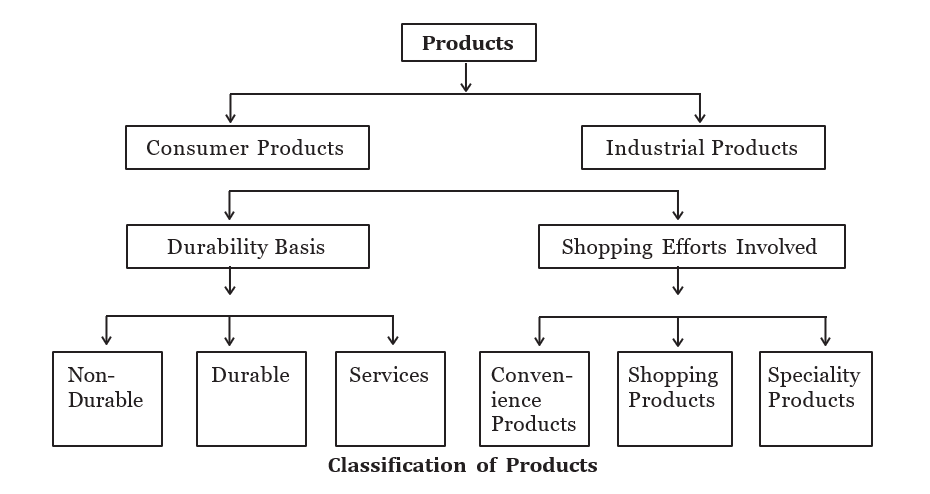
- Broad categories: Products are classified as consumer products or industrial products.
- Consumer products: These are further grouped by type, durability and the shopping effort involved.
- Marketing mix
- The coordinated set of product, price, place and promotion decisions.
- Extended product
- Additional customer support, such as after-sales service and spare-parts availability.
- Physical distribution
- Making products available through channels, inventory, storage and transport.
- Bundle of utilities
- The combined benefits a customer receives from a product.
What are the four elements of the marketing mix?
Why should marketers consider a product's benefits from the customer's point of view?
Quick recap
- The marketing mix combines the four Ps: product, price, place and promotion.
- Product decisions include product mix, quality, new-product development, design, packaging, labelling and branding.
- Price decisions cover price levels, margins, strategies, price changes, discounts and credit terms.
- Place includes channel strategy and selection, channel relations, and physical distribution.
- Promotion communicates product value through advertising, personal selling, sales promotion, publicity and public relations.
- An effective mix creates customer value while meeting sales and profit objectives.
- Customers may seek functional, psychological and social benefits from a product.
Consumer Products
Consumer products — Products bought by ultimate consumers for personal needs and desires, rather than for business use.
Classification by Buying Behaviour
| Type | Buying behaviour | Examples |
|---|---|---|
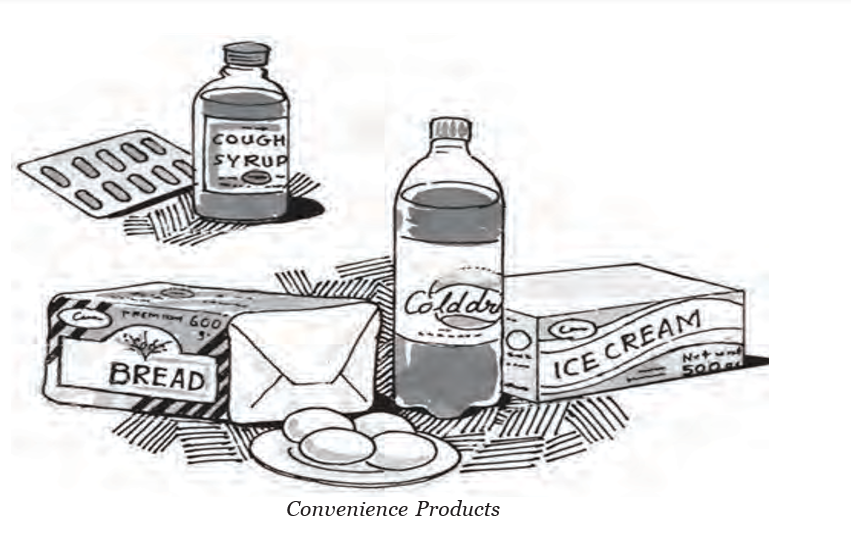
| Convenience products | Bought frequently, immediately and with little time or effort; usually low in unit value and purchased in small quantities. | Bread, ice cream, medicines, newspapers, stationery and toothpaste. |
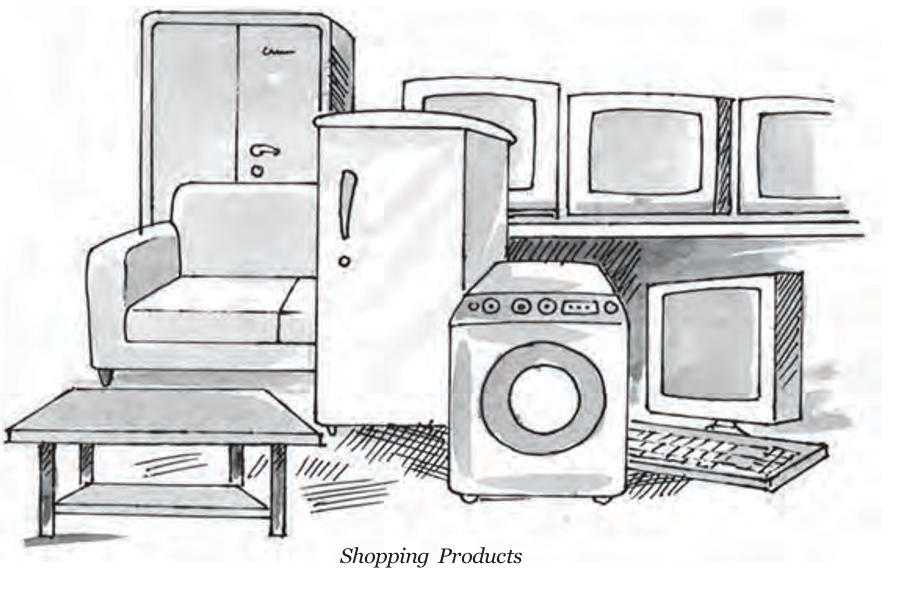
| Shopping products | Buyers spend time comparing quality, price, style and suitability across stores before choosing. | Clothes, shoes, jewellery, furniture, radios and televisions. |
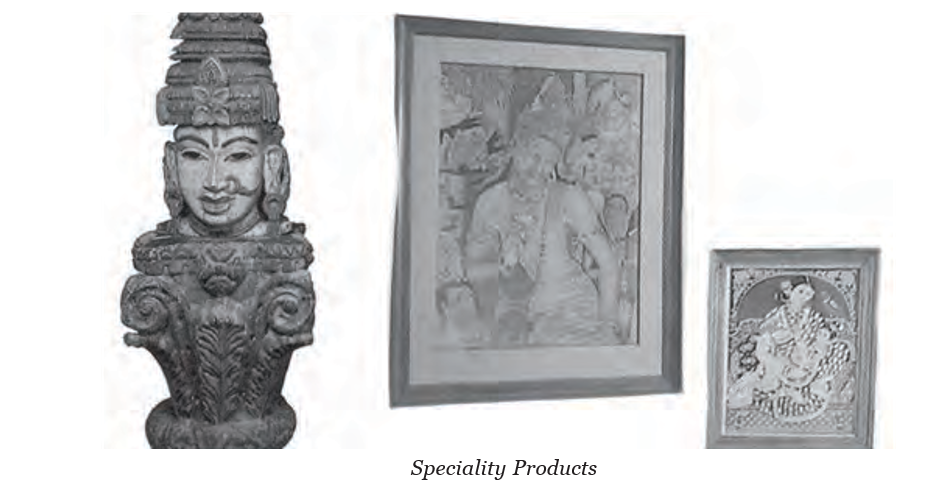
| Speciality products | Distinctive features and strong brand loyalty lead buyers to make special efforts, including travelling or spending considerable time. | Rare artwork or antiques; a preferred salon, restaurant or tailor. |
Speciality Products: Demand
- Demand: Relatively inelastic; a price rise does not greatly reduce demand.
Classification by Durability
| Type | Meaning | Examples | Marketing features |
|---|---|---|---|
| Non-durable products | Tangible products normally consumed in one or a few uses. | Toothpaste, detergents, bathing soap and stationery. | Generally have small margins; should be widely available and heavily advertised. |
| Durable products | Tangible products that normally last for many years. | Refrigerators, radios, bicycles, sewing machines and kitchen gadgets. | Generally have higher per-unit margins; need more personal selling, guarantees and after-sales service. |
| Services | Intangible activities or benefits offered for sale. | Dry cleaning, watch repairs, haircuts, postal services and professional services from doctors, architects or lawyers. | Intangible; no physical product is supplied. |
Differentiate between shopping products and speciality products.
State the marketing features of non-durable and durable products.
Quick recap
- Consumer products are bought by ultimate consumers for personal use.
- Convenience products are frequent, quick, low-effort purchases.
- Shopping products involve comparison of quality, price, style and suitability.
- Speciality products prompt extra buyer effort and usually have relatively inelastic demand.
- Non-durable products are consumed in one or a few uses; wide distribution and advertising are important.
- Durable products last for years; personal selling, guarantees and after-sales service matter.
- Services are intangible activities or benefits offered for sale.
Industrial Products
Industrial products — Products used as inputs to produce other products; they are intended for business and non-personal use.
Market for Industrial Products
- Buyers include manufacturers, transport agencies, banks and insurance companies, mining companies, and public utilities.
- Examples include raw materials, engines, lubricants, machines, and tools.
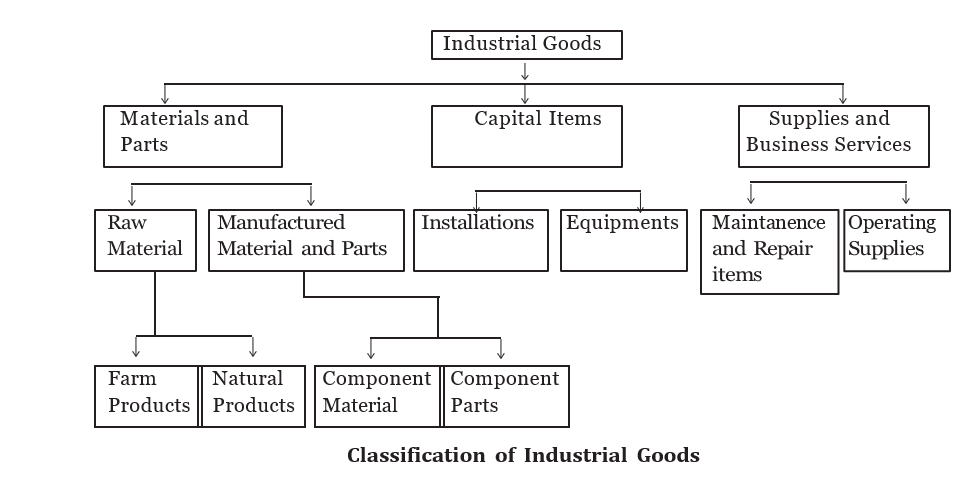
Classification of Industrial Goods
| Category | Subgroup | Meaning and examples |
|---|---|---|
| Materials and parts | Raw materials | Enter the manufacturer’s product completely. Farm products: cotton, sugar cane, oilseeds; natural products: minerals such as crude petroleum and iron ore, fish, and lumber. |
| Materials and parts | Manufactured materials and parts | Component materials such as glass, iron, and plastic; component parts such as tyres, electric bulbs, steering wheels, and batteries. |
| Capital items | Installations | Goods used in producing finished goods; examples include elevators and mainframe computers. |
| Capital items | Equipment | Goods used in production; examples include hand tools, personal computers, and fax machines. |
| Supplies and business services | Maintenance and repair items | Short-lasting goods that facilitate developing or managing the finished product; examples include paint and nails. |
| Supplies and business services | Operating supplies | Short-lasting goods that facilitate developing or managing the finished product; examples include lubricants, computer stationery, and writing paper. |
Quick recap
- Industrial products are business-use inputs for producing other products.
- Their market includes manufacturers, transport agencies, banks and insurers, mining companies, and public utilities.
- Materials and parts enter the manufactured product completely and include raw and manufactured materials and parts.
- Capital items support production of finished goods and include installations and equipment.
- Supplies and business services are short-lasting items or services that facilitate developing or managing finished products.
- Examples range from cotton, minerals, glass, and tyres to elevators, hand tools, paint, and writing paper.
Branding, Packaging and Labelling
Branding
Branding — The process of giving a product a name, sign or symbol to identify it and distinguish it from competitors.
- Generic name: Names the whole class of a product, such as a book, camera or wristwatch.
- Why brand products: Branding helps marketers distinguish their products from competitors’ products.
- Brand: A name, term, sign, symbol, design or combination used to identify a seller’s goods or services and differentiate them; examples include Bata, Lifebuoy, Dunlop and Parker.
- Brand components: A brand has two components: a brand name and a brand mark.
- Cost and value: Branding adds costs such as packaging, labelling, legal protection and promotion, but benefits sellers and consumers.
| Term | Meaning | Example or note |
|---|---|---|
| Brand name | The spoken, verbal component of a brand. | Bata |
| Brand mark | The component recognised visually but not spoken; it may be a symbol, design, colour scheme or lettering. | A distinctive symbol or design |
| Trade mark | A brand or part of a brand given legal protection against use by other firms. | Registration gives the firm exclusive use of the name or mark in the country. |
Choosing a Good Brand Name
- Easy to remember: Keep it short and easy to pronounce, spell and recognise; examples include Ponds, VIP, Rin and Vim.
- Meaningful: Suggest the product’s benefits or qualities and suit its function.
- Distinctive: Make it different from competing brand names.
- Adaptable: Ensure it works on packaging and labels, across advertising media and in different languages.
- Versatile: Choose a name that can accommodate new products added to the product line.
- Legally protectable: The name should be capable of registration and legal protection.
- Long-lasting: Choose a name with staying power that is unlikely to become outdated.
Packaging
Packaging — The act of designing and producing a product’s container or wrapper.
- Wide use: Products such as pulses, ghee, milk, salt and cold drinks are now packaged.
- Marketing role: Packaging can strongly affect the success of products, particularly consumer non-durables.
- Examples: Packaging contributed to the success of Maggi noodles, Uncle Chips and Crax wafers.
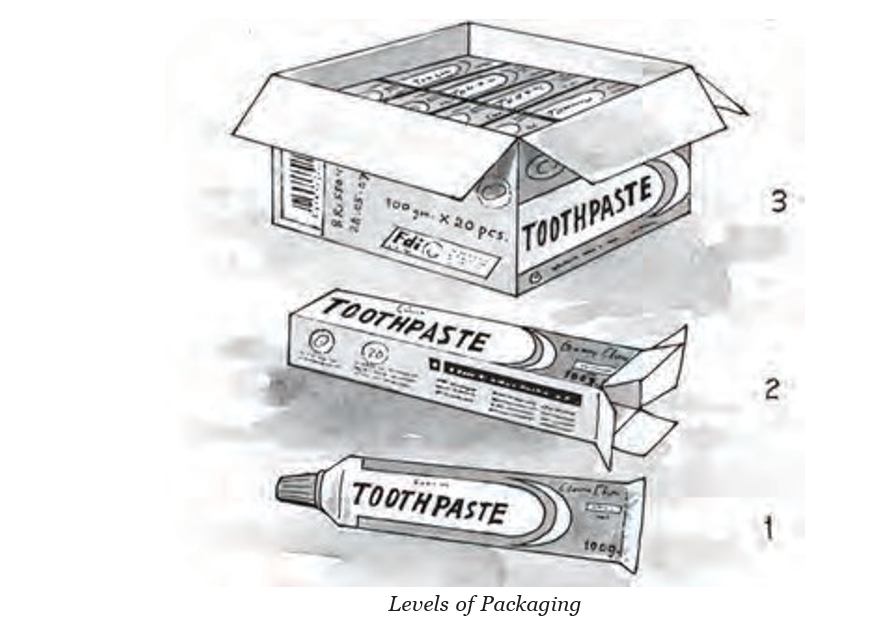
| Level | Meaning | Example |
|---|---|---|
| Primary package | The product’s immediate container; it may be kept until use or throughout the product’s life. | Toothpaste tube or matchbox; a packet for socks may be discarded before use. |
| Secondary packaging | An additional protective layer kept until the product is ready for use. | A cardboard box around a shaving-cream tube. |
| Transportation packaging | Outer packaging used for storage, identification or transportation. | Corrugated boxes carrying toothpaste units to retailers. |
Importance of Packaging
- Health and sanitation: Packed goods reduce the chances of adulteration, encouraging consumers to buy them.
- Self-service outlets: Packaging helps identify and promote products where sales staff are less involved in influencing buyers.
- Innovation: Improved packaging can extend storage and expand markets; some milk packaging keeps milk for 4–5 days without refrigeration.
- Product differentiation: Package colour, size and material influence customers’ perceptions of product quality.
Functions of Packaging
- Product identification: Distinctive packaging helps consumers recognise a product, such as Colgate’s red packaging or a Ponds cream jar.
- Product protection: Packaging guards against spoilage, breakage, leakage, pilferage, damage and climatic effects during storage, distribution and transport.
- Ease of use: Package size and shape should make a product convenient to open, handle and use; examples include cosmetics, medicines and toothpaste tubes.
- Product promotion: Colours, photographs and typefaces attract attention at the point of purchase, especially in self-service stores.
Labelling
Label — Information attached to a product or printed as part of its package; it can range from a simple tag to detailed graphics.
| Function | How the label helps | Examples or information |
|---|---|---|
| Describe the product and its contents | Explains the product, its contents, how to use it and any cautions. | Cooking instructions for ready-to-eat foods; warnings not to apply some products to cuts or wounds. |
| Identify the product or brand | Helps buyers distinguish the desired brand and find essential details. | Brand and manufacturer name and address, net weight, manufacturing date, maximum retail price and batch number. |
| Grade products | Indicates different categories or quality features. | Hair conditioner for different hair types; tea sold as Yellow, Red or Green Label. |
| Promote products | Attracts attention, encourages purchase and supports sales promotions. | “40% Extra Free”, “Free Toothbrush Inside” or “Save Rs. 15”. |
| Provide information required by law | Displays mandatory product details and safety warnings. | Packaged food ingredients, vegetarian or non-vegetarian declaration, food additives and manufacturing or packing date; required information also applies to processed foods, drugs and tobacco products. Hazardous materials need appropriate safety warnings. |
Distinguish between a brand name, brand mark and trade mark.
Name and explain the three levels of packaging.
State the main functions of a label.
Quick recap
- Branding identifies a seller’s product and differentiates it from competitors; a brand has both a brand name and a brand mark.
- A trade mark is a brand or part of a brand given legal protection.
- A good brand name is easy to remember, relevant, distinctive, adaptable, versatile, legally protectable and long-lasting.
- Packaging has three levels: primary, secondary and transportation packaging.
- Packaging supports product safety, differentiation, identification, convenience and promotion.
- Labels describe and identify products, grade them, promote sales and provide legally required information, including for processed foods, drugs and tobacco products.
Pricing
Price — The amount of money paid by a buyer, or received by a seller, in exchange for a product or service.
Role of Pricing
- Demand regulator: Generally, a price increase reduces demand, while a price decrease increases it.
- Competitive tool: Firms may compete through price, especially in highly competitive markets.
- Revenue and profit: Price is a major factor affecting a firm’s revenue and profits; a product needs a price or pricing guidelines before launch.
Factors Affecting Price Determination
- Price factors: The price of a product is influenced by its costs, the utility it offers and the intensity of demand.
- Market conditions: The degree of competition, government regulations and the firm’s pricing objectives also shape the price.
- Marketing methods: Distribution, promotion, packaging, credit and customer services can affect pricing decisions.
1. Product Cost
- What it includes: Costs of producing, distributing and selling the product.
- Floor price: Cost sets the lower limit of price. Firms generally need to cover all costs in the long run, then earn a profit margin.
- Short-term exception: A firm may initially sell below total cost when launching a product or entering a new market, but it cannot survive long-term without covering costs.
- Total cost: The sum of fixed, variable and semi-variable costs at a specific level of activity.
| Cost type | How it changes with activity | Example |
|---|---|---|
| Fixed | Does not change with production or sales volume. | Building rent; sales manager’s salary. |
| Variable | Changes in direct proportion to activity. | Raw materials, labour and power; wood for 10 chairs costs 10 times the wood for 1 chair. |
| Semi-variable | Changes with activity, but not in direct proportion. | Salesperson’s fixed salary plus a commission on sales. |
2. Utility and Demand
- Upper limit: Product utility and the buyer’s intensity of demand determine the maximum price the buyer is willing to pay.
- Buyer’s decision: A buyer is willing to pay while the utility received is at least equal to the sacrifice represented by the price.
- Law of demand: Consumers generally buy more units at a lower price than at a higher price.
- Price range: Costs set the lower limit; utility and demand set the upper limit. The price must take account of both buyer and seller interests.
3. Extent of Competition
| Market condition | Likely pricing effect |
|---|---|
| Less competition | Price can move closer to the upper limit. |
| Free or intense competition | Price tends towards the lower level. |
- Competitor analysis: Before setting a price, consider competitors’ prices and their likely reactions.
- Product comparison: Compare competitors’ quality and features as well as their prices.
4. Government and Legal Regulations
- Purpose: Government may regulate prices to protect the public from unfair pricing.
- Essential products: A product may be declared essential, allowing the government to control its price.
- Example: A monopolist might try to charge Rs. 200 for a drug that costs Rs. 20 per strip to produce. Price regulation can prevent such excessive charging.
5. Pricing Objectives
| Objective | Pricing approach |
|---|---|
| Maximise short-run profit | Charge a high price to maximise immediate profit. |
| Maximise long-run profit | Use a lower per-unit price to capture a larger market and increase sales. |
| Obtain market-share leadership | Keep prices relatively low to attract more buyers and gain market share. |
| Survive in a competitive market | Offer discounts or run promotions, such as to clear stock when competition or substitutes threaten sales. |
| Attain product-quality leadership | Charge higher prices to cover superior quality and high research and development costs. |
6. Marketing Methods Used
- Marketing mix factors: Distribution system, salesperson quality, advertising, sales promotion, packaging, product differentiation, credit and customer services all influence price decisions.
- Pricing flexibility: Free home delivery or another distinctive marketing feature may give a firm more flexibility in setting its price.
- Floor price
- The lower price limit set by the costs of producing, distributing and selling a product.
- Upper price limit
- The maximum price a buyer is willing to pay, shaped by product utility and demand.
- Total cost
- The sum of fixed, variable and semi-variable costs at a particular activity level.
- Market-share leadership
- A pricing objective that seeks a larger share of the market, often through relatively low prices.
How do product cost, utility and demand influence the limits of price?
Distinguish fixed, variable and semi-variable costs.
Name the main pricing objectives and explain how they affect price.
Quick recap
- Price is the money exchanged for a product or service and strongly affects demand, revenue and profit.
- Product costs set the lower price limit; utility and demand set the upper limit.
- Costs are fixed, variable or semi-variable; total cost is their sum at a given activity level.
- Competition, government regulation and a firm’s pricing objectives influence the price chosen.
- Marketing methods and distinctive services can affect a firm’s flexibility in setting prices.
Physical Distribution
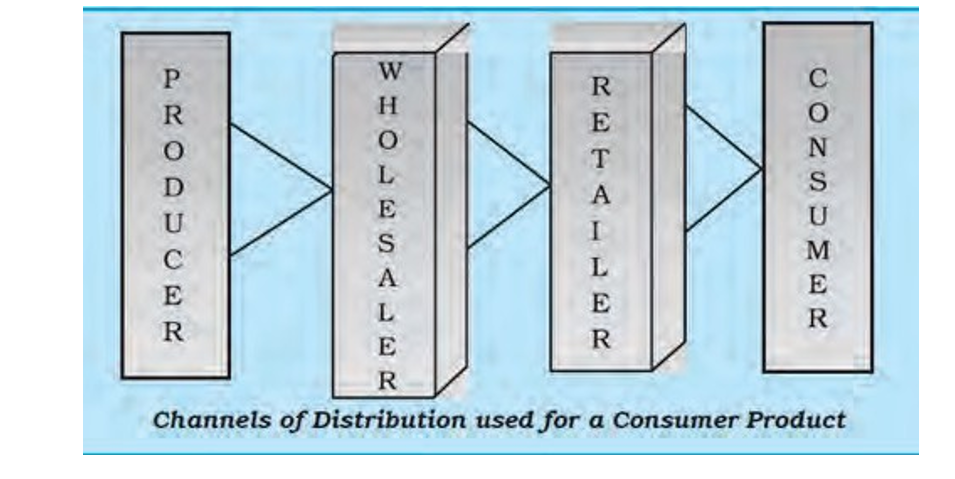
Physical distribution — The physical movement and handling of goods from production to customers so they are available at the right place, time and quantity, without change.
Role in the Marketing Mix
- Fourth element: Physical distribution is the fourth important element of the marketing mix.
- Purpose: It makes products available where and when customers want them, in the required quantity and condition.
- Importance: If a product is unavailable at a retail outlet, the customer may buy another brand, causing the firm to lose a sale.
Main Components
- Activities: Physical distribution includes order processing, transportation, warehousing, material handling and inventory control.
- Coordination: These activities help move goods efficiently from manufacturers to customers.
Components of Physical Distribution
Order Processing and Transportation
- Order processing: Customers' orders flow back toward manufacturers, while goods move toward customers through channel members.
- Accuracy and speed: Correct, prompt processing prevents late or incorrect deliveries, customer dissatisfaction, and loss of business or goodwill.
- Transportation: Carries goods and raw materials from production to the point of sale; sales cannot be completed unless goods are physically available.
Warehousing Decisions
Warehousing — Storing and assorting products to create time utility by making them available when they are needed.
- Need: Production and consumption may occur at different times, so products must be stored until they are needed.
- Location: Warehouse locations affect how efficiently a firm serves customers and delivers goods.
- More warehouses: Can reduce delivery time to different locations, but increase warehousing costs.
- Fewer warehouses: Reduce warehousing costs, but may increase the time needed to serve customers; firms must balance cost and service.
- Near production: Goods needing long-term storage, such as agricultural products, are often stored near production sites to reduce transportation charges.
- Near markets: Bulky or difficult-to-ship goods, such as machinery and automobiles, and perishable goods, such as bakery products, meat and vegetables, are kept near markets.
Inventory Control
- Inventory control: Inventory decisions determine the stock level; they are especially important for manufacturers of high per-unit-cost products.
- High inventory: Usually improves customer service by making products more readily available, but raises carrying costs and ties up capital in stock.
- Low inventory: Reduces the cost of holding stock, but may make it harder to meet customer demand.
- Decision: Choose a stock level that balances inventory costs with customer satisfaction.
Name the main components of physical distribution.
Why must a firm balance inventory levels?
Quick recap
- Physical distribution is the fourth element of the marketing mix and makes goods available at the right place and time.
- Its components are order processing, transportation, warehousing, material handling and inventory control.
- Accurate, speedy order processing helps prevent late or incorrect deliveries.
- Warehouse location and number affect both customer service and distribution costs.
- Long-term-storage goods are often stored near production; bulky, difficult-to-ship and perishable goods are kept near markets.
- Inventory decisions balance customer service against the cost of holding stock.
Promotion
Meaning and Role of Promotion
- Promotion: It uses communication to inform potential customers about a product and persuade them to buy it.
- Role: Promotion communicates a product’s availability, features and benefits, helping customers understand how it can satisfy their needs.
Promotion Mix
- Promotion mix: The combination of communication tools an organisation uses to achieve its promotional objectives.
- Selection: The mix depends on factors such as the nature of the market and product, the promotion budget and the organisation’s objectives.
Advertising
- Advertising: A paid, impersonal form of communication used by an identified sponsor to promote goods or services.
- Media: Common channels include newspapers, magazines, television and radio.
Merits of Advertising
- Mass reach: Advertising can reach many people across a wide geographical area.
- Confidence: It can enhance prospective buyers’ confidence and satisfaction by providing information about products.
- Expressiveness: Graphics and other creative techniques can make messages attractive and forceful.
- Economy: Reaching a large audience can lower the cost per person reached.
Objections to Advertising and Responses
What is advertising? State its main features.
Explain any four merits of advertising.
Quick recap
- Promotion informs potential customers and persuades them to buy.
- The promotion mix consists of advertising, personal selling, sales promotion and publicity.
- Advertising is paid, impersonal communication by an identified sponsor.
- Advertising can provide mass reach, confidence, expressiveness and economy.
- Criticisms include added cost, materialism, buyer confusion and promotion of inferior products.
- The effects of advertising depend on the circumstances; false product claims may lead to prosecution.
Personal Selling
Personal selling — A personal form of communication in which a salesperson speaks with prospective customers to make a sale, create product awareness and develop product preferences.
Features of Personal Selling
- Personal interaction: Seller and buyer communicate directly, usually face to face, allowing an interactive exchange.
- Relationship building: The salesperson can build personal relationships with prospective customers that may help complete a sale.
Merits of Personal Selling
- Flexibility: The sales presentation can be tailored to each customer's specific needs.
- Direct feedback: Face-to-face communication helps the salesperson learn customer needs and adjust the presentation immediately.
- Minimum wastage: The firm can select target customers before contact, reducing wasted promotional effort.
Importance of Personal Selling
- Business: Personal selling helps create demand, increase sales and build lasting customer relationships.
- Customers: It helps buyers identify needs, obtain product information and receive expert guidance.
- Society: It supports economic activity and creates employment and career opportunities.
Importance to Business
- Effective promotion: Persuades prospective customers of a product's merits and helps increase sales and demand.
- Flexible tool: Allows the business to adapt its offer to different purchasing situations; more adaptable than advertising and sales promotion.
- Economical effort: Targeted contact reduces the wastage of promotional effort compared with other promotional tools.
- Consumer attention: The salesperson can notice when a customer's interest is fading and respond to help complete the sale.
- Lasting relationships: Builds ongoing salesperson-customer relationships that support business objectives.
- Personal rapport: Strong personal connections with customers improve the organisation's competitive strength.
- New-product introduction: Helps persuade customers about a product's merits when it is first introduced.
- Link with customers: Salespeople connect the firm with customers through persuasive, service and informative roles.
Importance to Customers
- Particular value: Especially useful to rural and illiterate customers, who may have fewer other sources of product information.
- Identifying needs: Helps customers recognise their needs and understand how to satisfy them.
- Market information: Provides current information on prices, availability, shortages and new products for better purchase decisions.
- Expert guidance: Offers advice that helps customers make suitable purchases.
- New products and living standards: Encourages customers to consider products that may meet their needs better and improve their standard of living.
Importance to Society
- Demand and economic growth: Converts latent demand into effective demand, stimulating economic activity, jobs, incomes and the supply of goods and services.
- Employment: Creates income-earning opportunities, particularly for unemployed young people.
- Career development: Offers advancement and job satisfaction, as well as security, respect, variety, interest and independence.
- Mobility: Salespeople's travel can encourage tourism within the country.
- Standardisation: Promotes more standardised products and greater uniformity in consumption patterns across a diverse society.
State three merits of personal selling.
How does personal selling benefit society?
Quick recap
- Personal selling is oral, direct communication between a salesperson and prospective customers to make a sale, create awareness and develop product preferences.
- Its core features are personal interaction and the opportunity to build relationships.
- Flexibility, direct feedback and reduced promotional wastage are key merits.
- Businesses gain sales, customer links, rapport and support for introducing new products.
- Customers gain needs guidance, current market information and expert advice.
- Society benefits through effective demand, economic growth, jobs, careers, mobility and standardisation.
Sales Promotion
Meaning and Purpose
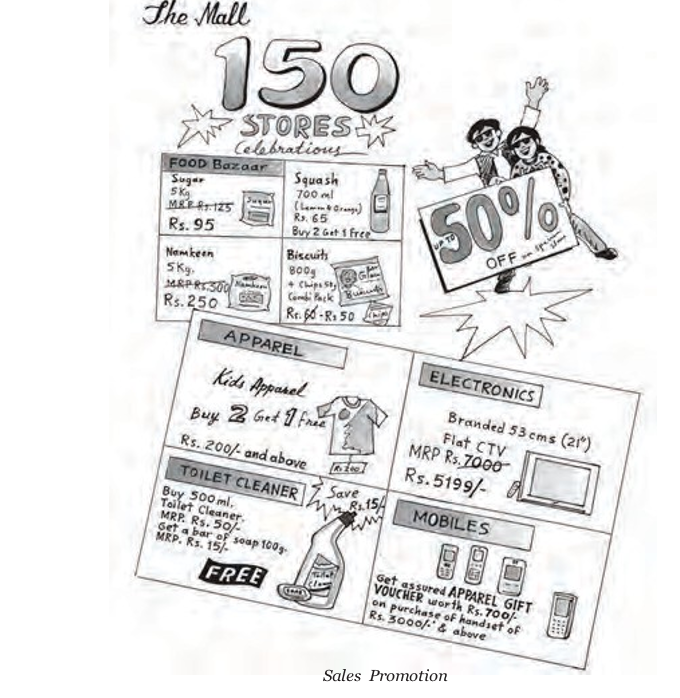
- Sales promotion: Short-term incentives are used to encourage customers to make an immediate purchase.
- Purpose: It boosts sales and supplements a firm’s advertising and personal-selling efforts.
Ways Sales Promotion Offers Work
| Point | Rebate | Discount | Refund |
|---|---|---|---|
| How the benefit is given | A special price, often for a limited period | Price reduced below the list price | Part of the paid price returned against proof of purchase |
| Typical purpose or example | Clear excess inventory; e.g. a limited-period car offer | Promote sales with offers such as “up to 50% off” | Encourage purchases by returning money for returned wrappers |
Merits and Limitations
Define sales promotion and state its purpose.
State two merits and two limitations of sales promotion.
Quick recap
- Sales promotion uses short-term incentives to encourage immediate purchases.
- Its tools can target customers, middlemen and salespersons.
- Promotional offers include price reductions, refunds, gifts, draws, financing, samples and contests.
- Sales promotion attracts attention, supports new-product launches and complements other promotional efforts.
- Frequent promotions may suggest weak sales or harm the product’s image.
Public Relations
Meaning and purpose
Managing public opinion
- Public support: Cooperation from intermediaries can help a firm survive in a competitive market.
- Activist groups: They may discourage customers from buying a firm’s products or encourage restrictions through laws.
- Negative publicity: Treat it as an urgent situation; take prompt, effective steps to control and minimise damage to the company’s image.
- Prevention: Public relations staff advise top management on programmes that strengthen public image and help prevent negative publicity.
Functions of the public relations department
| Function | What it involves |
|---|---|
| Publicity | Unpaid, non-personal communication presented as news by an independent source, such as the press. It has no identified sponsor and is often more credible than advertising. Example: media report a manufacturer’s water-powered car engine breakthrough. |
| Press release | Present accurate, positive information about the organisation to the press. PR staff develop and research stories and work to prevent facts from being distorted by other sources. |
| Corporate communication | Promote the organisation’s image to the public and employees through newsletters, annual reports, brochures, articles, audio-visual materials, executive speeches, interviews and media responses. |
| Lobbying | Work proactively with government officials and ministers on business and economic policies; communicate the organisation’s views on regulations that affect it. |
| Counselling | Advise management on public issues and the organisation’s position. Support causes such as the environment, wildlife, children’s rights and education to build goodwill. |
Publicity — Unpaid, non-personal communication about an organisation or product, usually carried by an independent media source as news.
| Point | Advertising | Personal Selling |
|---|---|---|
| Communication | Impersonal | Personal |
| Message | Standardised message sent to customers in a market segment | Sales talk adjusted to the customer’s background and needs |
| Flexibility | Inflexible; the message cannot be tailored to each buyer | Highly flexible; the message can be adjusted |
| Reach | Can reach a large number of people | Reaches fewer people because of time and cost |
| Cost per person reached | Low | High |
| Market coverage | Can cover a market quickly | Takes longer to cover the entire market |
| Medium | Mass media such as television, radio, newspapers and magazines | Sales staff with limited reach |
| Feedback | No direct feedback; research is needed to judge customer reactions | Direct and immediate feedback from customers |
| Main contribution | Useful for creating and building consumer interest | Important in the awareness stage of decision-making |
| Best suited to | Large numbers of ultimate consumers | Relatively few industrial buyers and intermediaries, such as dealers and retailers |
How public relations supports marketing objectives
| Objective | How public relations helps |
|---|---|
| Building awareness | Media stories can create excitement and a favourable impression before a product reaches the market or advertising begins. |
| Building credibility | Media coverage can make people more likely to believe in the product because it appears as news. |
| Stimulating the sales force | Pre-launch news makes it easier for sales staff to approach retailers and convince dealers; retailers may also find the product easier to sell. |
| Lowering promotion costs | Public relations can cost less than advertising and direct mail, but requires strong communication and interpersonal skills to gain media coverage. |
- Public relations
- Programmes that promote or protect an organisation’s image and relationships with the public.
- Publicity
- Unpaid media communication about an organisation or product, without an identified sponsor.
- Press release
- Information prepared for the press to present accurate facts about an organisation.
- Lobbying
- Engaging with government officials to communicate views on policies and regulations affecting the organisation.
State the two main features that distinguish publicity from advertising.
Name the five functions of a public relations department.
How does public relations help achieve marketing objectives?
Quick recap
- Public relations manages public opinion and builds or protects an organisation’s image and goodwill.
- It engages with groups such as customers, suppliers, shareholders, intermediaries, activist groups and government.
- Its five functions are publicity, press releases, corporate communication, lobbying and counselling.
- Publicity is unpaid, has no identified sponsor and is often more credible than advertising.
- Good public relations builds awareness and credibility, supports sales efforts and may reduce promotion costs.
Key Terms and Summary
Key Terms
Terms listed in this lecture
- Marketing; Marketing Management; Channels of Distribution; Consumer Product; Convenience Product.
- Public Relations; Trade Mark; Marketing Mix; Physical Distribution; Sales Promotion; Shopping Product.
- Brand; Labelling; Advertising; Publicity; Promotion Mix; Personal Selling.
Market and Marketing
| Point | Traditional meaning | Modern marketing meaning |
|---|---|---|
| Market | A place where buyers and sellers meet to exchange goods and services. | A set of actual and potential buyers of a product or service. |
Marketing — Business activities that direct the flow of goods and services from producers to consumers.
Scope and Role of Marketing
- Scope: Marketing is not only a post-production activity; it begins before production and continues after goods are sold.
- Organisations: A marketing orientation helps profit-making and non-profit organisations achieve their goals effectively.
- Economy: Marketing supports economic development and helps raise people’s standards of living.
Functions of Marketing
- Information and planning: Gather and analyse market information; prepare marketing plans.
- Product decisions: Design and develop products; standardise and grade them; package, label and brand them.
- Customer and price: Provide customer support services and determine product prices.
- Promotion and delivery: Promote goods, arrange physical distribution and transportation, and store them in warehouses.
Marketing Mix
Marketing mix — The set of marketing tools a firm uses to pursue its objectives in a target market.
| Element | Focus |
|---|---|
| Product | The offering that satisfies a want or need. |
| Price | The amount paid for the offering. |
| Place | Distribution and availability to customers. |
| Promotion | Communication used to inform and persuade customers. |
Product
Product — A mixture of tangible and intangible attributes offered for exchange that can satisfy customer needs; it is anything offered to a market to satisfy a want or need.
| Classification basis | Types | Meaning or example |
|---|---|---|
| Products by user | Consumer products | Bought by ultimate consumers or users for personal needs and desires. |
| Consumer products by shopping effort | Convenience; shopping; speciality products | Classified according to the shopping effort involved. |
| Consumer products by durability | Durable; non-durable; services | Services include dry cleaning, watch repairs and hair cutting. |
| Products by business use | Industrial products | Used as inputs in producing other products. |
| Industrial product types | Materials and parts; capital items; supplies and business services | Broad categories of industrial products. |
Packaging and Labelling
Packaging — The act of designing and producing a product’s container or wrapper.
Packaging
- Levels: Primary package, secondary package and transport package.
- Functions: Identifies and protects the product, facilitates its use, and promotes goods and services.
Labelling — Designing the label attached to a product or included as graphics on its package.
Functions of Labels
- Description and identification: Labels describe the product and help identify the product or brand.
- Grading and promotion: Labels help classify products into grades and promote them.
Pricing
Price — The amount of money paid by a buyer or received by a seller in exchange for a product or service.
Price and Price Determination
- Demand relationship: Generally, a higher price lowers demand and a lower price raises it.
- Business importance: Price is a competitive weapon and the single most important factor affecting a firm’s revenue and profits.
- Determinants: Product cost; utility and demand; competition; government and legal regulations; marketing methods used.
Physical Distribution
Physical distribution — All activities required to move goods physically from manufacturers to customers.
Decisions and Components
- Two decisions: How goods will move physically and which channels will be used.
- Order processing: Handling customer orders.
- Transportation: Moving goods between locations.
- Warehousing: Storing goods until needed.
- Inventory control: Managing stock, including just-in-time inventory.
Promotion and Promotion Mix
Promotion — Communication used to inform potential customers about a product and persuade them to buy it.
| Tool | Meaning |
|---|---|
| Advertising | Paid, impersonal communication sponsored by marketers to promote goods or services. |
| Personal selling | Oral presentation through conversation with one or more prospective customers to make sales. |
| Sales promotion | Short-term incentives designed to encourage immediate purchase. |
| Publicity | Unpaid, non-personal communication in which information is disseminated by an independent source. |
Advertising
Merits, Limitations and Objections
- Merits: Mass reach; can enhance customer satisfaction and confidence; expressive presentation; economical.
- Limitations: Less forceful; lacks feedback; inflexible; may have low effectiveness.
- Objections: Adds to costs, undermines social values, confuses buyers and encourages sales of inferior products.
- Overall view: The criticisms are not fully true; advertising remains an essential marketing function.
Personal Selling
- Meaning: Oral sales communication with one or more prospective customers through conversation.
- Importance: Personal selling plays an important role for businesspersons as well as for society.
Sales Promotion
Sales promotion — Short-term incentives, apart from advertising, personal selling and publicity, used to encourage buyers to purchase a product or service immediately.
Sales Promotion Incentives
- Examples: Rebates, discounts, refunds, product combinations, quantity gifts, instant draws, assigned gifts, lucky draws, usable benefits, full finance at 0%, sampling and contests.
Publicity and Public Relations
| Point | Advertising | Publicity |
|---|---|---|
| Payment | Paid for by the marketer. | Unpaid. |
| Source | Sponsored by the marketer. | Information comes from an independent source. |
| Control | The marketer pays for the communication. | The marketing firm does not control how the independent source disseminates information. |
Public relations — Managing an organisation’s image in the eyes of all stakeholders.
Components of Public Relations
- Components: Publicity, public relations, corporate communication, lobbying and counselling.
What are the four elements of the marketing mix?
Name the main components of physical distribution.
How do advertising and publicity differ?
Quick recap
- Marketing directs the flow of goods and services and includes work before production and after sales.
- Its functions cover market information, planning, product decisions, support, pricing, promotion and delivery.
- The marketing mix combines Product, Price, Place and Promotion.
- Products include consumer and industrial products; packaging and labels identify, protect, describe and promote.
- Price affects demand and is determined by costs, utility and demand, competition, regulation and marketing methods.
- Physical distribution includes order processing, transportation, warehousing and inventory control.
- The promotion mix comprises advertising, personal selling, sales promotion and publicity.