Class 8 . Science . Curiosity . Electricity Magnetic and Heating Effects
Chapter 4: Electricity: Magnetic and Heating Effects
Ch 4
Science
Class 8
Introduction
Electric Current and Magnetism
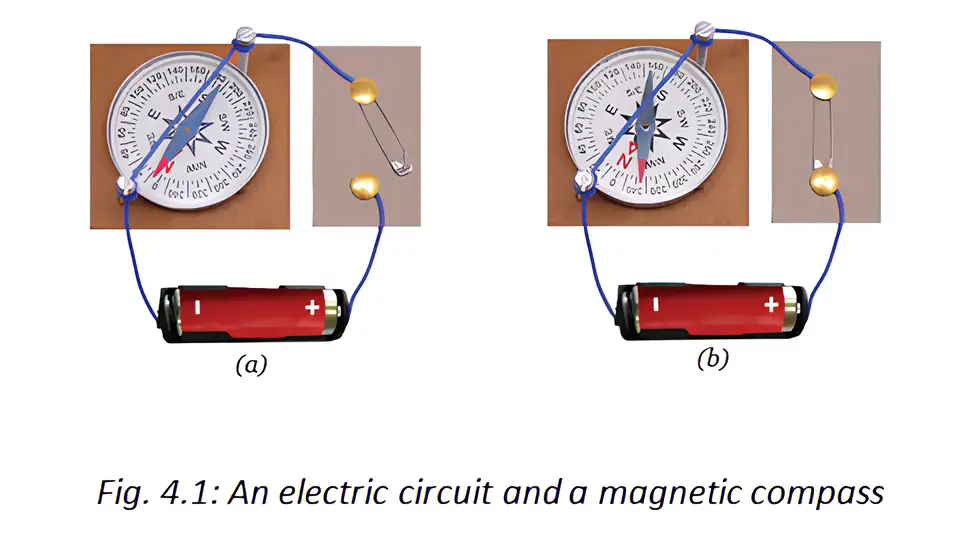
Oersted’s Discovery and Applications
What does a compass needle’s deflection near a current-carrying wire show?
Quick recap
- A current-carrying conductor produces a magnetic field around it.
- A nearby compass needle deflects while current flows.
- When current stops, the magnetic effect disappears and the needle returns to its original direction.
- The region where magnetic effects can be detected is called a magnetic field.
- Hans Christian Oersted discovered the link between electricity and magnetism in 1820.
- Electromagnets, bells, motors, fans and loudspeakers use this effect.
Electromagnets
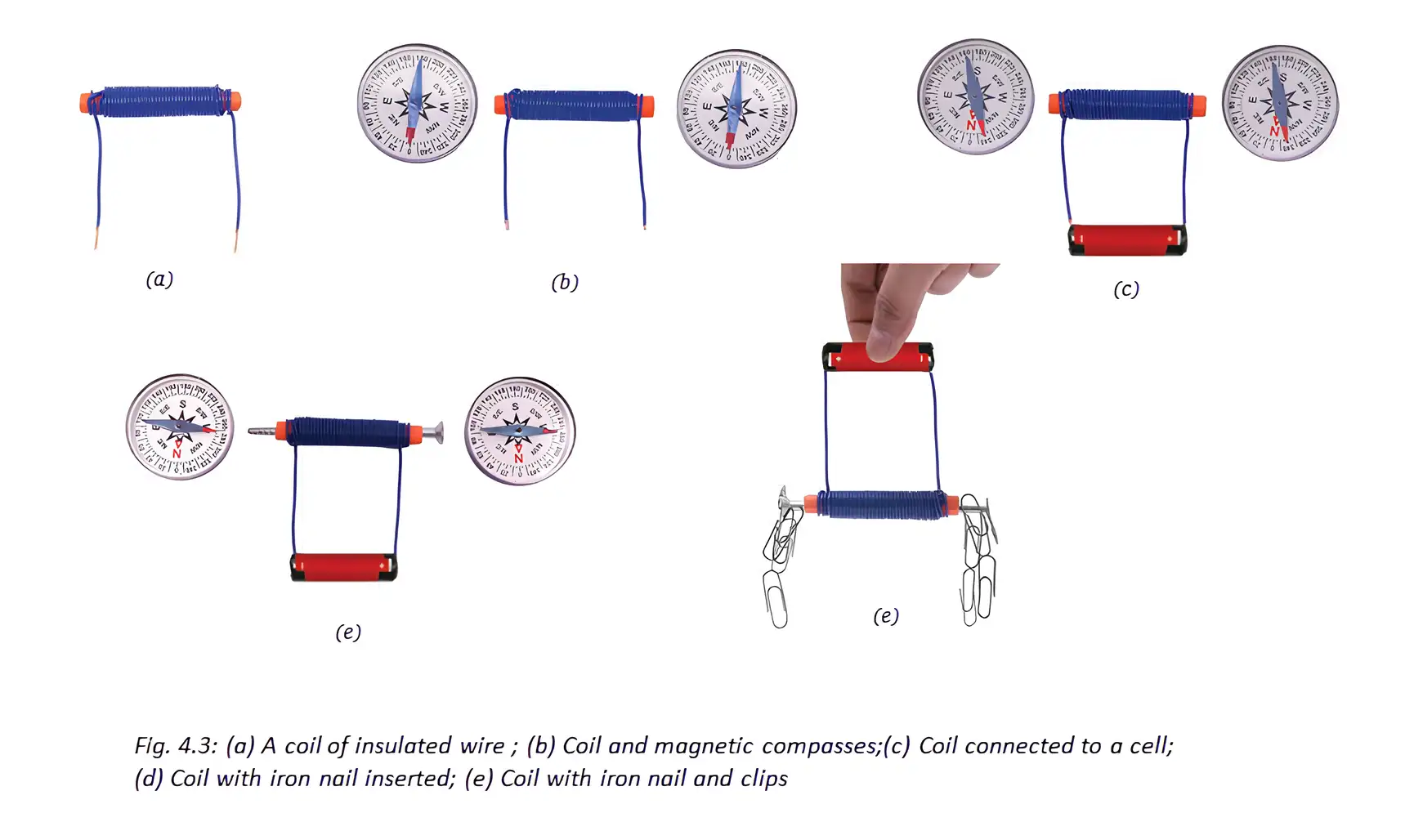
A Current-Carrying Coil Acts as a Magnet
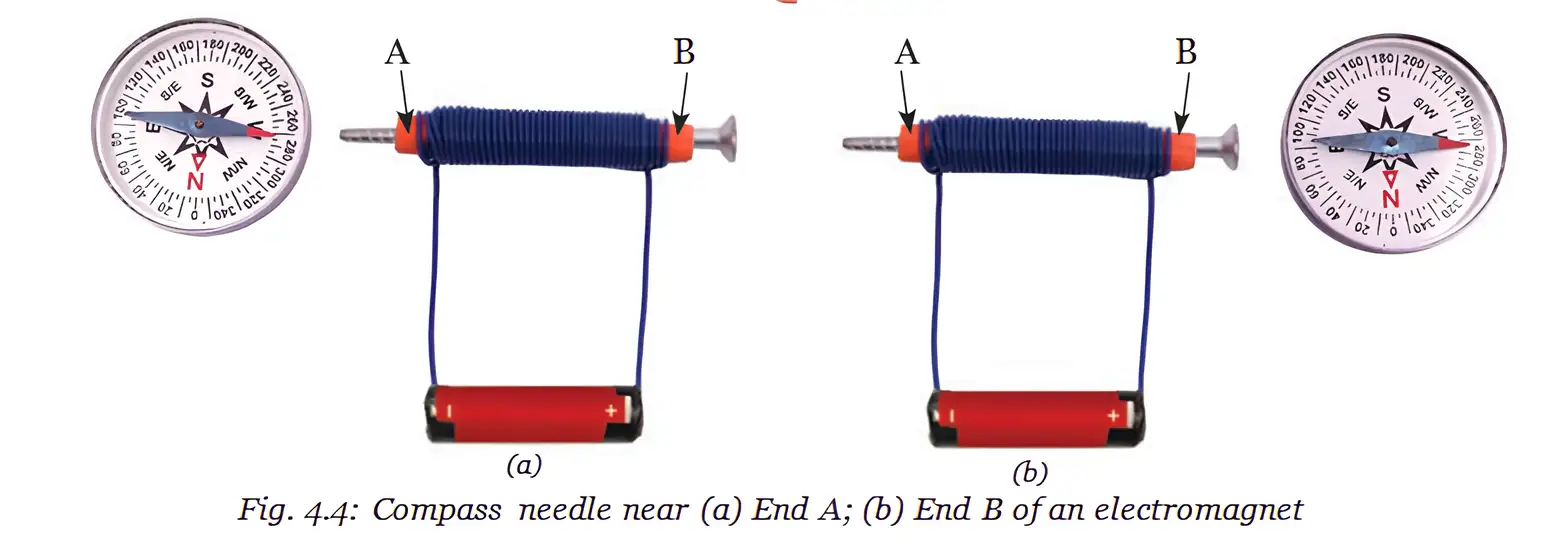
Poles of an Electromagnet
Changing Electromagnet Strength
- Strength: An electromagnet becomes stronger when the current or the number of turns in its coil is increased.
- Polarity: Reversing the current reverses the electromagnet’s poles.
Earth’s Magnetic Field
- Cause: Movement of liquid iron deep inside Earth’s core creates electric currents, which generate Earth’s magnetic field.
- Navigation: Many migratory birds, fish and other animals use this magnetic field to navigate.
- Protection: Earth’s magnetic field blocks harmful particles from space and helps protect life.
- Compass: Earth behaves like a giant magnet, which is why a freely suspended magnet aligns roughly north–south.
Quick recap
- A current-carrying coil acts like a magnet and can attract iron or deflect a compass.
- Stopping the current removes the coil’s magnetic effect; an iron core strengthens it.
- An electromagnet has two opposite poles, which reverse when current direction is reversed.
- More current or more turns in the coil increases electromagnet strength.
- Movement of liquid iron inside Earth generates electric currents and Earth’s magnetic field.
- Earth’s magnetic field helps animals navigate and blocks harmful particles from space.
Lifting Electromagnets
How Lifting Electromagnets Work
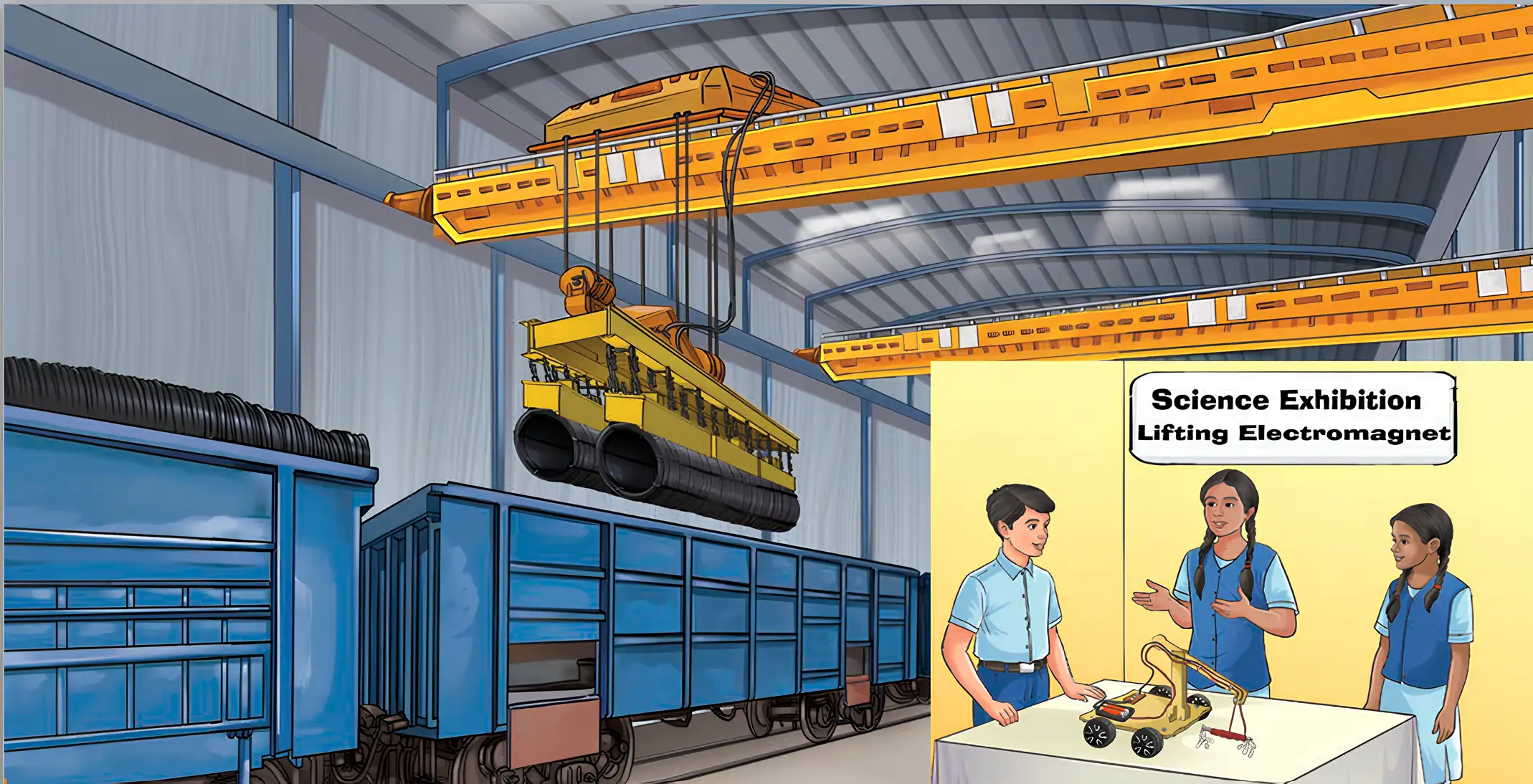
Lifting electromagnet — A strong electromagnet, often suspended from a crane, used to lift and move iron or steel objects.
- Current ON: The electromagnet produces a magnetic field and lifts iron or steel objects.
- Current OFF: The magnetic field disappears, releasing the objects.
- Uses: Factories and scrap yards use these cranes to move, lift and sort heavy metal items.
- Principle: An electric current flowing through a conductor produces a magnetic field around it.
The Link Between Electricity and Magnetism
- Current to magnetism: Electric current produces a magnetic field around a conductor.
- Moving magnet to electricity: A moving magnet can produce an electric current.
- Applications: This connection is important in devices such as electric motors and power generators.
Heating Effect of Electric Current
Heating effect of electric current — The heating of a conductor when electric current flows through it.
- Resistance: A conductor opposes the flow of current; different materials offer different amounts of resistance.
- Energy conversion: Resistance converts some electrical energy into heat energy.
- Nichrome: A nichrome wire has greater resistance than a copper wire of the same length and thickness, so it heats when current passes through it.
- Current: For the same wire and duration, a larger current produces more heat; two cells caused more heating than one cell.
- Other factors: Heating depends on the wire’s material, thickness, length and the duration of current flow.
Heating Elements and Their Uses
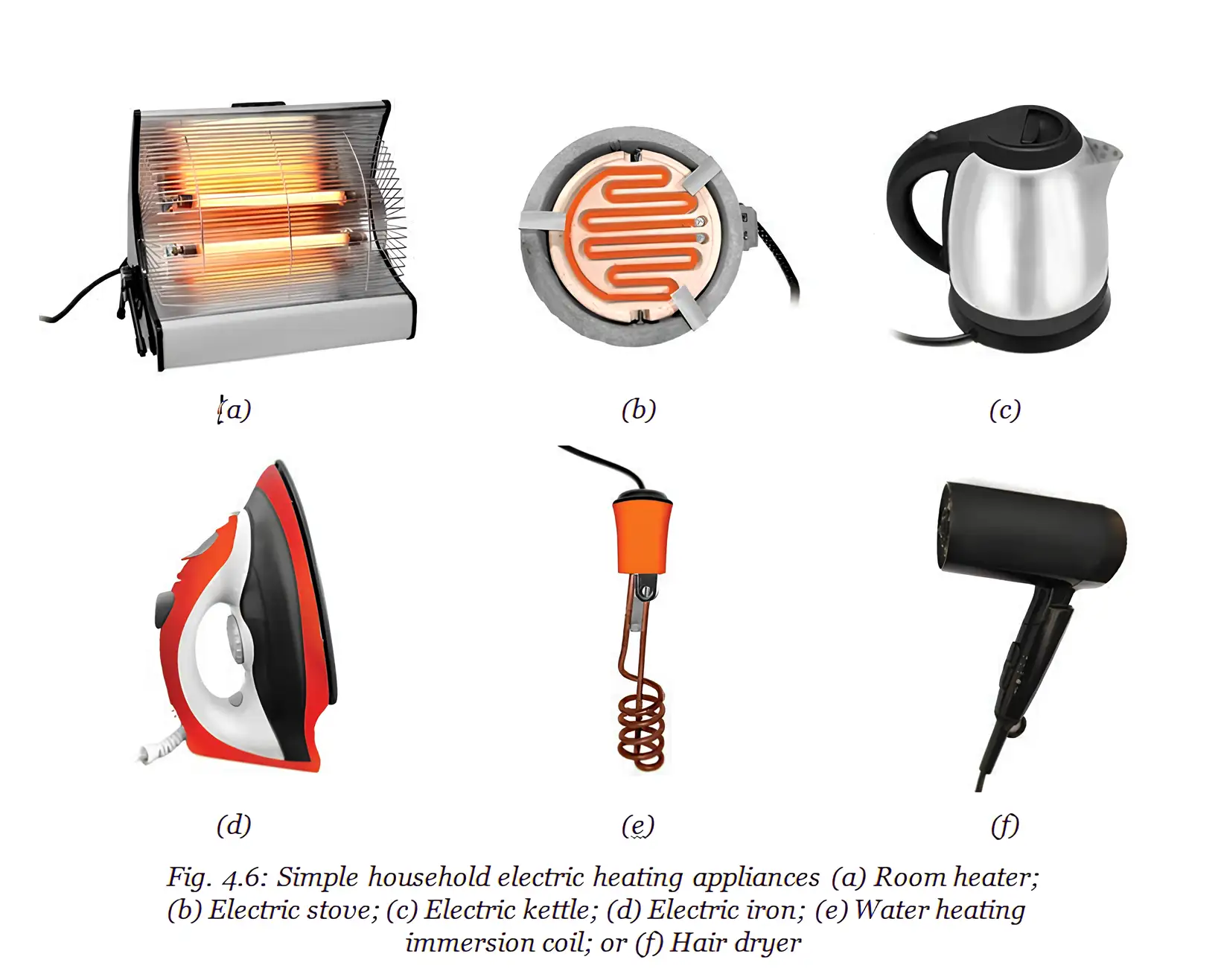
- Heating element: A rod or coil of wire in an appliance that produces heat when current passes through it.
- Appliances: Room heaters, stoves, irons, immersion rods, water heaters, kettles and hair dryers use this effect.
- Incandescent lamp: Its filament becomes hot and glows when current passes through it; the lamp may also feel warm.
- Visible elements: A heating element may glow red hot when it becomes very hot.
- Industrial use: Electric furnaces use current-generated heat to melt scrap steel for recycling into usable steel.
Unwanted Heating and Safety
- Energy loss: Unwanted heating in wires wastes energy during electricity transmission.
- Overheating risks: Excess heat can damage plugs and sockets, melt plastic parts or cause fires.
- Prevention: Use wires, plugs and sockets rated for the current they carry; household circuits also use safety devices to reduce hazards.
How does a lifting electromagnet control the release of heavy metal objects?
What is the heating effect of electric current, and what factors affect the heat produced?
Quick recap
- A lifting electromagnet lifts iron or steel when current is on and releases it when current is off.
- Electric current produces magnetism, and a moving magnet can produce electric current.
- Resistance converts some electrical energy into heat: this is the heating effect of current.
- Heating depends on current, material, thickness, length and duration of current flow.
- Heating elements are used in household appliances and electric furnaces.
- Unwanted heating can waste energy or cause damage and fires; use correctly rated electrical fittings.
How Does a Battery Generate Electricity
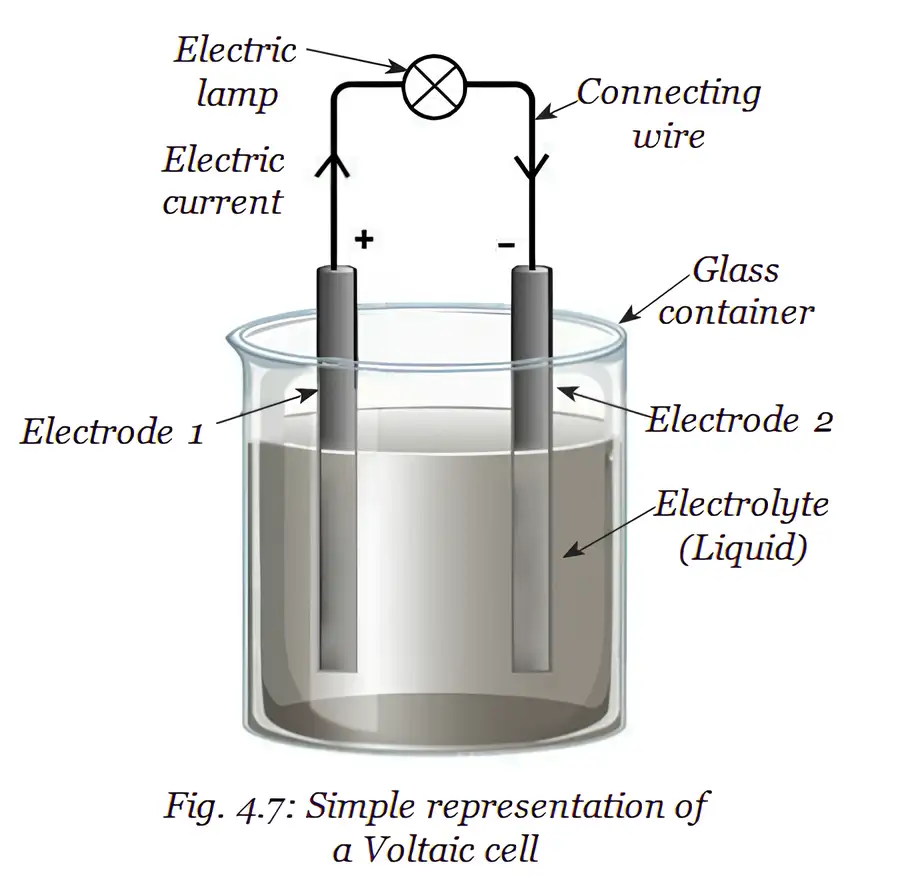
How a Voltaic Cell Produces Electricity
Lemon Cells and Metal Pairs
Examples
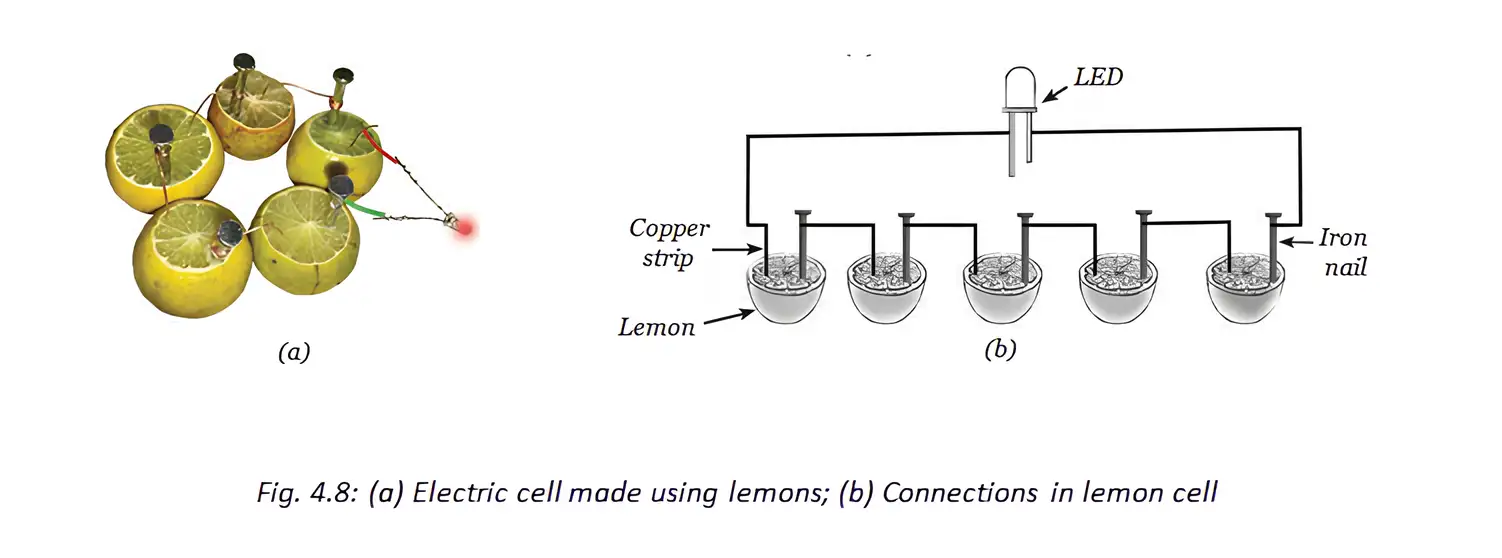
- Lemon cell: Copper and iron act as the electrodes; lemon juice is the electrolyte. Salt solution can also be used.
- Multiple cells: Several lemon cells can be connected together to provide enough electricity to light an LED.
- LED connection: The LED glows only when its longer lead is connected to the positive terminal and its shorter lead to the negative terminal; reverse the connections if it does not glow.
- Common metal pairs: Zinc/copper, zinc/silver, aluminium/copper, iron/copper, magnesium/copper, and lead/copper.
- Polarity: Which metal acts as the positive or negative electrode depends on its chemical properties; copper can be positive while zinc can be negative.
Dry Cells
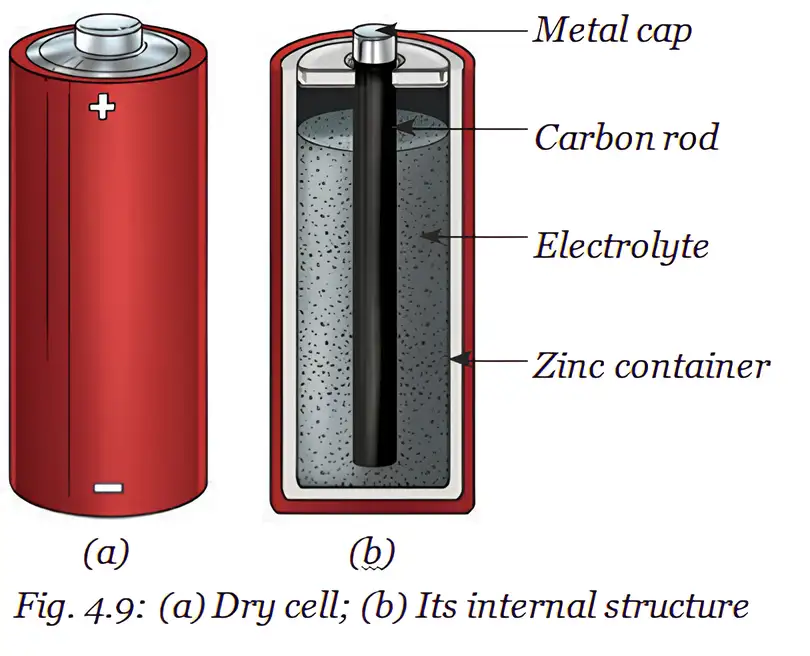
Dry cell — A commonly used cell whose electrolyte is a thick, moist paste rather than a free-flowing liquid.
| Part | Function |
|---|---|
| Zinc container | Acts as the negative terminal. |
| Carbon rod with metal cap | The rod is at the centre; the metal cap acts as the positive terminal. |
| Paste-like electrolyte | Surrounds the carbon rod and enables the cell’s chemical action. |
Use and disposal
- Everyday use: Dry cells are widely used because they are more convenient than liquid-electrolyte voltaic cells.
- Single-use: Once its chemicals are used up, a dry cell cannot be reused and must be disposed of.
- Alternative: Rechargeable batteries can be reused and are increasingly used in many applications.
Rechargeable Batteries
Rechargeable battery — A battery that can be charged and used repeatedly, reducing waste and saving money over time.
Uses, limits and developments
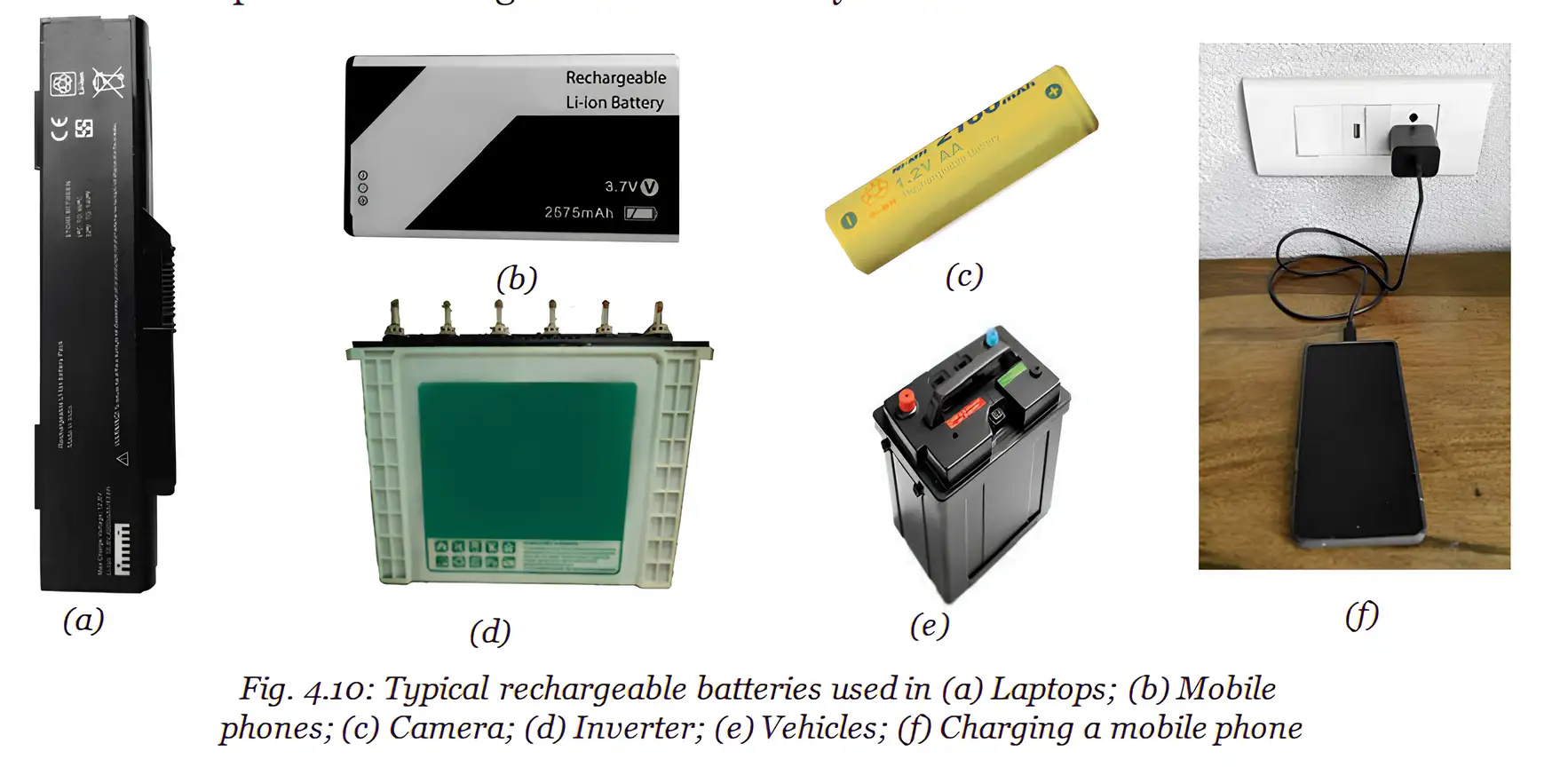
- Applications: Rechargeable batteries power watches, phones, laptops, tablets, inverters and electric vehicles.
- Wear: Repeated charging and use gradually reduce battery performance; rechargeable batteries do not last forever.
- Lithium-ion batteries: Li-ion batteries are currently the most common type of rechargeable battery and are found in almost all battery-powered devices.
- Materials and supply: Li-ion batteries rely on metals such as lithium and cobalt, mined and processed in limited parts of the world; countries seek secure supplies and recycle old batteries.
- Solid-state batteries: These developing batteries replace liquid or paste-like electrolytes with solid materials and may be safer, charge faster and last longer.
- Importance: Improved rechargeable batteries support the development of environmentally friendly sources of electrical power.
How does a voltaic cell generate electricity?
How is a dry cell different from a rechargeable battery?
Quick recap
- A voltaic cell, also called a galvanic cell, produces electricity through a chemical reaction involving two different electrodes and an electrolyte.
- When the chemicals are used up, the cell becomes dead and cannot supply electricity.
- A lemon cell uses copper and iron electrodes with lemon juice as the electrolyte.
- A dry cell has a paste electrolyte, a zinc negative terminal and a carbon-rod positive terminal.
- Rechargeable batteries can be reused but gradually wear out.
- Lithium-ion batteries are currently the most common rechargeable batteries; solid-state batteries are being developed as a potential improvement.
Snapshots
Magnetic Effect of Electric Current
- Magnetic field: Electric current flowing through a conductor produces a magnetic field around it.
- Applications: This effect is used in electromagnets, electric bells, motors, fans and loudspeakers.
Heating Effect of Electric Current
- Heating effect: A conductor heats up when electric current flows through it because its resistance converts electrical energy into heat.
- Applications: Heating elements in appliances such as irons, heaters and kettles use this effect.
Cells and Batteries
- Electric cells: Chemical reactions inside a cell generate electric current; when the chemicals are used up, the cell becomes dead.
- Dry cells: A dry cell has a thick, moist paste electrolyte, a zinc container as the negative terminal and a carbon rod with a metal cap as the positive terminal.
- Single-use cells: Ordinary dry cells cannot be recharged and must be disposed of once used up.
- Rechargeable batteries: These can be recharged and reused many times, but gradually wear out.
Quick recap
- A current-carrying conductor produces a magnetic field around it.
- A current-carrying coil that acts as a magnet is an electromagnet.
- An iron core makes a practical electromagnet stronger.
- Current flowing through a conductor can generate heat.
- Cells and batteries generate current through internal chemical reactions.
- Rechargeable batteries can be recharged and reused multiple times.
Science — ALL CHAPTERS
1
Exploring the Investigative World of Science
2
The Invisible Living World: Beyond Our Naked Eye
3
Health: The Ultimate Treasure
4
Electricity: Magnetic and Heating Effects
5
Exploring Forces
6
Pressure, Winds, Storms, and Cyclones
7
Particulate Nature of Matter
8
Nature of Matter: Elements, Compounds, and Mixtures
9
The Amazing World of Solutes, Solvents, and Solutions
10
Light: Mirrors and Lenses
11
Keeping Time with the Skies
12
How Nature Works in Harmony
13
Our Home: Earth, a Unique Life Sustaining Planet