Class 8 . Science . Curiosity . Our Home Earth a Unique Life Sustaining Planet
Chapter 13: Our Home: Earth, a Unique Life Sustaining Planet
Ch 13
Science
Class 8
Introduction
Earth as a Life-Sustaining Planet
Earth — Earth is a planet that orbits the Sun and supports a wide variety of life.
Earth's varied landscapes
- Living home: Earth has diverse landscapes, including mountains, oceans, deserts and forests.
- Unique planet: Earth is more than a planet orbiting the Sun; it is a home for living beings.
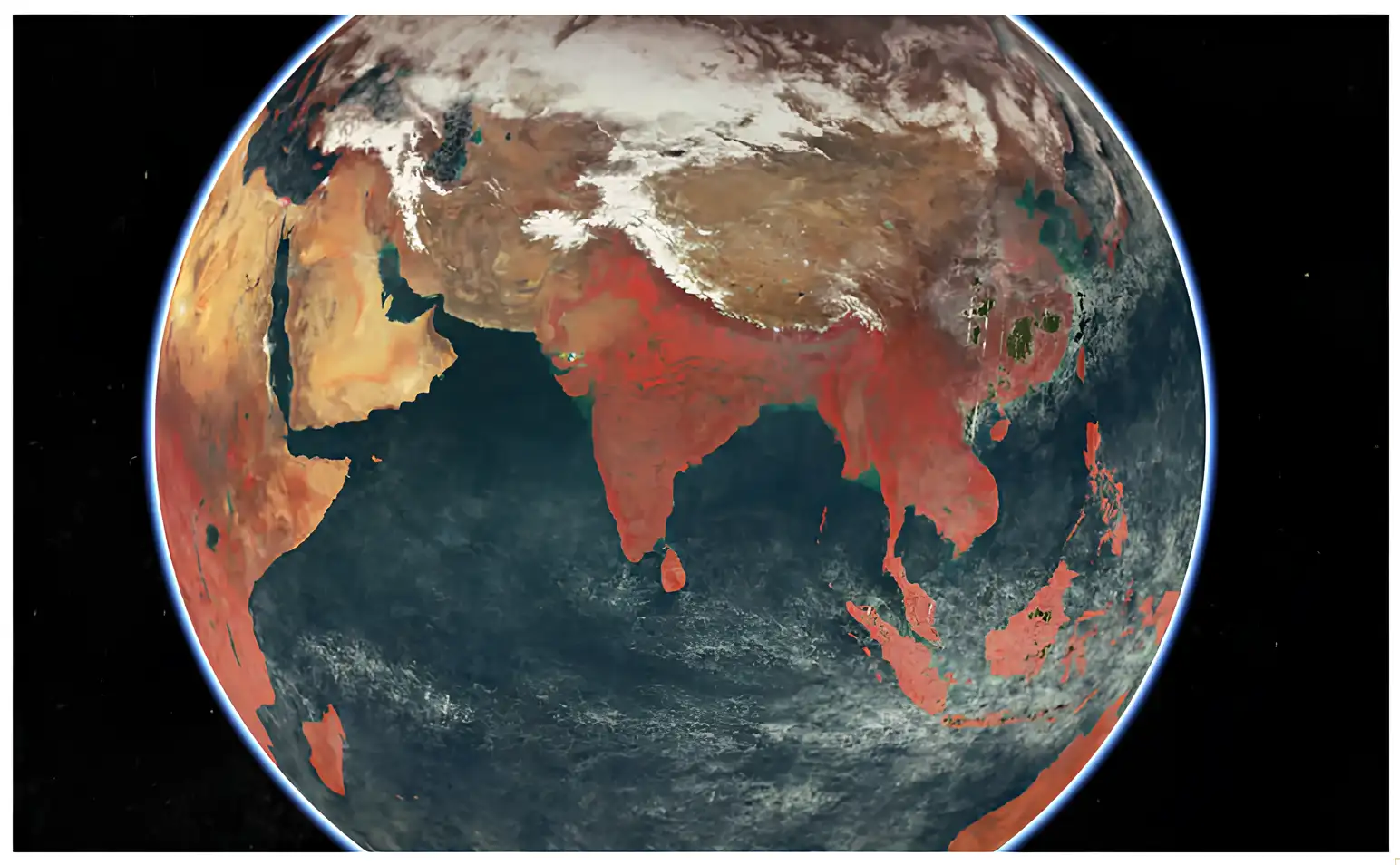
Studying Earth from Satellites
- Image source: The introductory image was taken by an Indian Space Research Organisation (ISRO) Earth Observation Satellite and made by combining nearly 3,000 smaller images like a mosaic.
- False-colour image: Scientists use colours to represent different kinds of information; the colours may not show Earth as it looks naturally.
- Uses: Satellite images help study plants on land and tiny ocean organisms, and detect ocean temperature, oil spills and wind direction.
Quick recap
- Earth orbits the Sun and supports life.
- Earth has varied landscapes, including mountains, oceans, deserts and forests.
- The introductory satellite image was taken by an ISRO Earth Observation Satellite and combined nearly 3,000 smaller images.
- False-colour images use colours to show information, not necessarily Earth's natural appearance.
- Satellites help study land plants, ocean organisms, ocean temperature, oil spills and wind direction.
Why Is Earth a Unique Planet
Earth’s Life-Supporting Surface
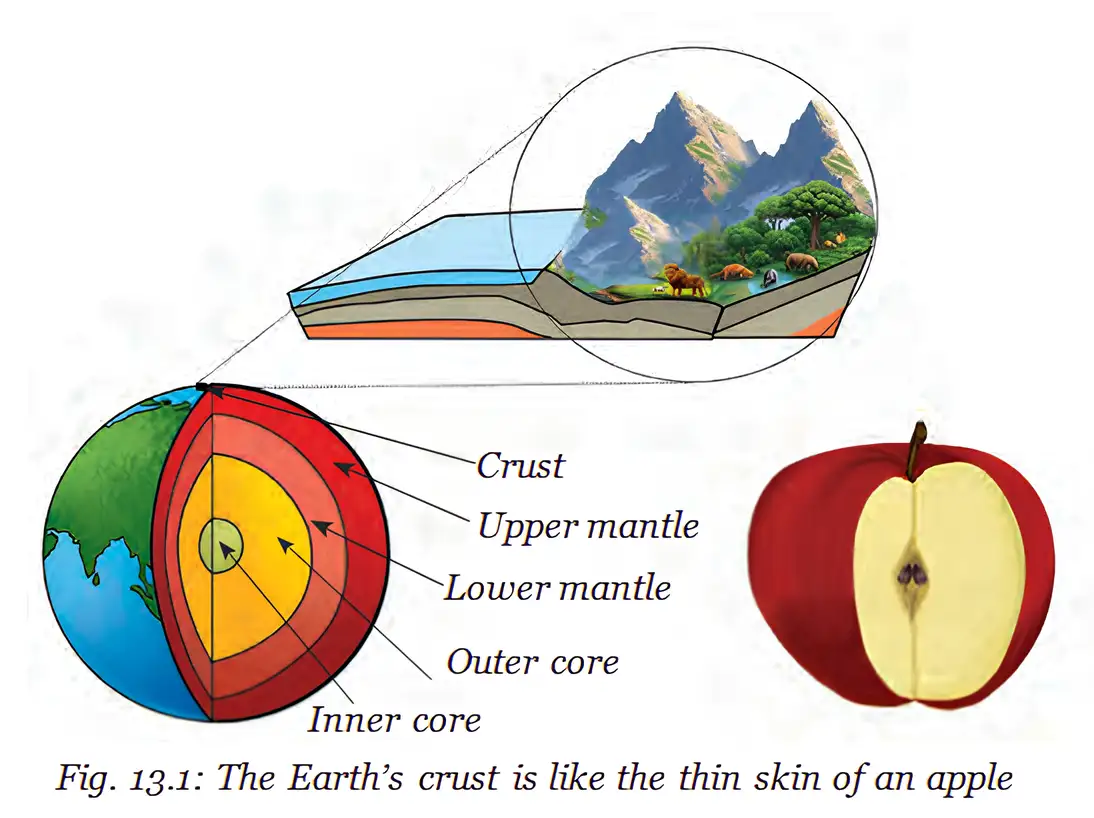
Life-supporting layer — Earth’s thin outer crust is the layer where life as we know it exists.
- Known life: Earth is the only planet known to have life as we know it, thriving in all its forms.
- Crust: From the highest mountains to the deepest ocean trenches, life is found on or near this thin outer layer.
- Comparison: If Earth were the size of an apple, its crust would be as thin as the apple’s skin.
- Resources: Earth provides air, water and soil, as well as materials such as rock and timber.
- Gravity: Gravity holds us on the ground and helps keep the air around Earth rather than letting it escape into space.
The Planets of the Solar System
- Solar system: Its eight planets orbit the Sun in nearly circular paths.
- Order from the Sun: Mercury → Venus → Earth → Mars → Jupiter → Saturn → Uranus → Neptune.
- Energy source: All planets in the solar system get their energy from the Sun.
| Planet group | Planets | Main feature |
|---|---|---|
| Small, rocky planets | Mercury, Venus, Earth, Mars | Relatively small and rocky |
| Large planets | Jupiter, Saturn, Uranus, Neptune | Large and mostly made of gases |
| Planet | Average temperature | Radius compared with Earth | Atmosphere? |
|---|---|---|---|
| Mercury | 0.38 | No | |
| Venus | Earth radii | Yes | |
| Earth | Earth radius | Yes |
Temperature and the Greenhouse Effect
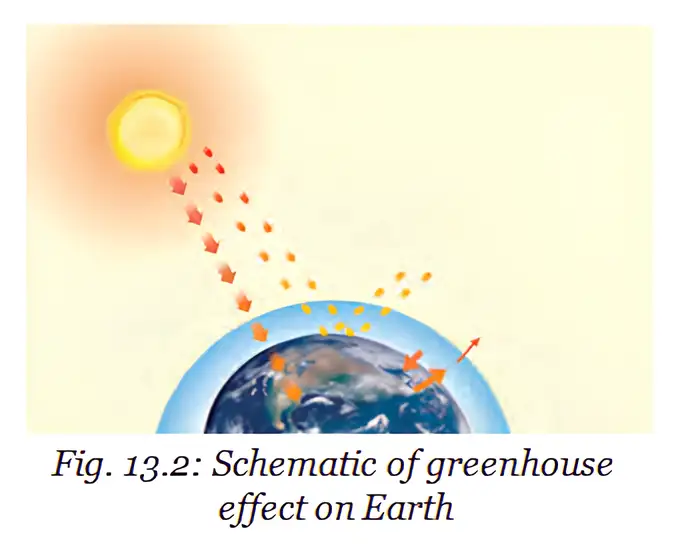
Greenhouse effect — The greenhouse effect occurs when atmospheric gases absorb radiation emitted by a planet’s warmed surface, trapping heat in its atmosphere.
- Distance and temperature: Planets generally get colder as their distance from the Sun increases.
- Venus: It is the hottest planet, with an average temperature of about , even though Mercury is closer to the Sun.
- Cause: Venus has a thick atmosphere made almost entirely of carbon dioxide, which traps heat.
- Earth: Carbon dioxide and other atmospheric gases trap some heat, helping maintain a suitable temperature for life.
Atmospheric Greenhouse Effect
- The Sun warms the planet’s surface.
- The warmed surface emits radiation.
- Atmospheric gases absorb some of this radiation and trap heat.
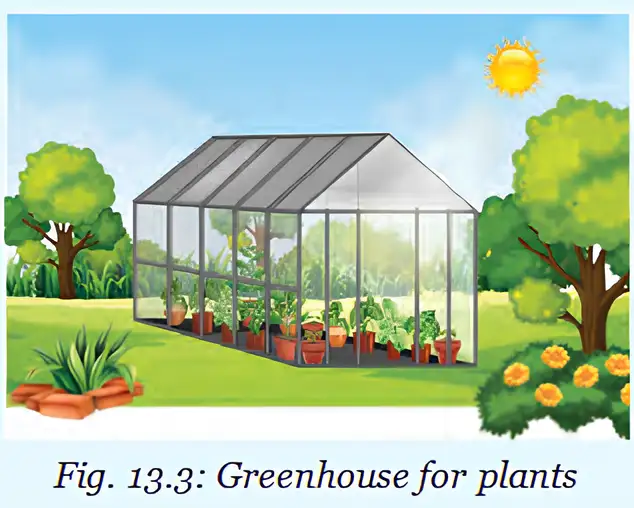
| Point | Atmospheric greenhouse effect | Plant greenhouse |
|---|---|---|
| How warmth is retained | Atmospheric gases such as carbon dioxide absorb radiation emitted by the warmed planet. | A closed space, usually with glass walls, keeps warmed air from escaping easily. |
| Example | Heat trapping on Earth and Venus | A protected space used for growing plants in a cool climate |
Why is Venus hotter than Mercury?
How does the atmospheric greenhouse effect help Earth?
Quick recap
- Earth is the only planet known to have life as we know it, thriving in all its forms.
- Life exists on or near Earth’s very thin crust, and the planet provides essential resources.
- The eight planets orbit the Sun in order, and all get their energy from it.
- The four inner planets are small and rocky; the four outer planets are large and mostly gaseous.
- Planets generally get colder farther from the Sun, but Venus is hottest because its thick atmosphere traps heat.
- The atmospheric greenhouse effect traps radiation; a plant greenhouse retains warmth by keeping warmed air inside.
What Makes the Earth Suitable for Life to Exist
Earth’s Position and Liquid Water
Mars and the Habitable Zone
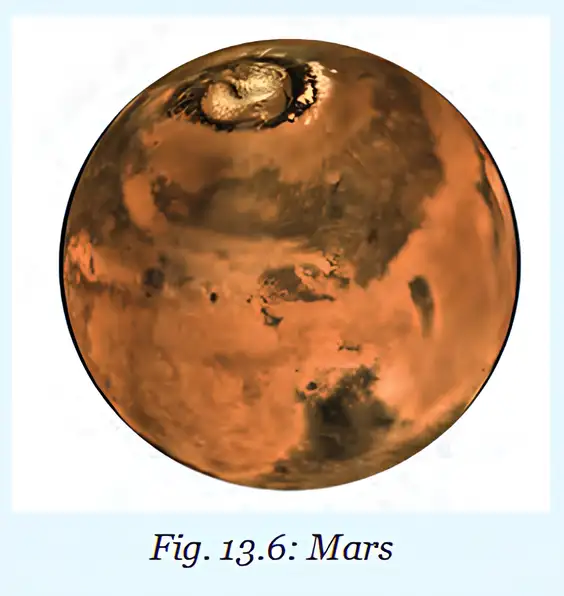
- Mars: It lies at the edge of the Sun’s habitable zone. No proof of life has been found there so far.
- Possible past conditions: Mars may once have had liquid water, perhaps lakes, and conditions that could support simple life forms.
- Scientific understanding: New evidence from exploration may change what scientists know; the possibility of past life on Mars remains an open question.
Earth’s Size, Atmosphere, and Protection
Orbit and temperature
- Nearly circular orbits: Most planets, including Earth, follow almost circular orbits, keeping the amount of sunlight and heat relatively steady through the year.
- Effect: This steadiness helps prevent extreme seasonal temperatures in most places.
Atmosphere — The atmosphere is the layer of gases surrounding Earth.
| Planet size | Effect of gravity | Result |
|---|---|---|
| Much smaller than Earth, assuming the same average density | Gravity would be too weak to hold atmospheric gases | Gases could escape into space. |
| Earth’s size | Strong enough to retain gases | Supports an atmosphere essential for life. |
| Much larger than Earth | Potentially much stronger | Gravity could pull down with a force dangerous to living bodies, possibly crushing bones. |
Examples of thin or absent atmospheres
- Mars: Its atmosphere is about 100 times thinner than Earth’s.
- Mercury: It has no atmosphere.
Oxygen and the ozone layer
- Oxygen: Atmospheric oxygen allows humans to breathe and is needed by almost all forms of life on Earth.
- Ozone: Some atmospheric oxygen changes into ozone, a molecule made of three oxygen atoms.
- Ozone layer: This part of the atmosphere acts as a shield by blocking harmful ultraviolet (UV) rays from the Sun, which can damage living cells.
India’s Mars exploration
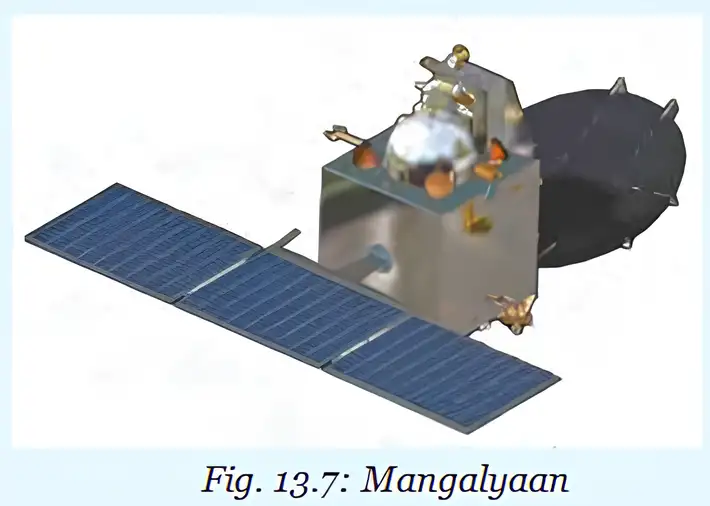
- Mangalyaan: India’s Mars Orbiter Mission was launched by the Indian Space Research Organisation (ISRO) in 2013.
- Purpose: Its instruments studied Mars’s atmosphere and surface and looked for signs of past water.
- Significance: The mission demonstrated India’s ability to carry out space science using smart, low-cost technology.
Earth’s Magnetic Field
Magnetic field — Earth’s magnetic field is the region around Earth where its magnetic effect acts; Earth behaves like a giant magnet.
How it protects life
- Possible origin: The movement of molten iron in Earth’s core is believed to generate the magnetic field.
- Cosmic rays: High-energy particles arriving from distant parts of the universe.
- Solar wind: High-energy particles coming from the Sun.
- Threat: These particles can harm the atmosphere and reduce the ozone layer, allowing more harmful UV rays to reach Earth.
- Shielding: Earth’s magnetic field pushes many harmful particles away, helping protect the atmosphere and life.
- Earth’s suitable position allows liquid water; its size and gravity help retain the atmosphere.
- Oxygen supports life, ozone blocks harmful UV rays, and the magnetic field deflects many harmful particles.
- Earth’s position, size, atmosphere, and magnetic field together make it suitable for life to emerge and thrive.
How do Earth’s size and atmosphere help make it suitable for life?
How does Earth’s magnetic field protect life?
Quick recap
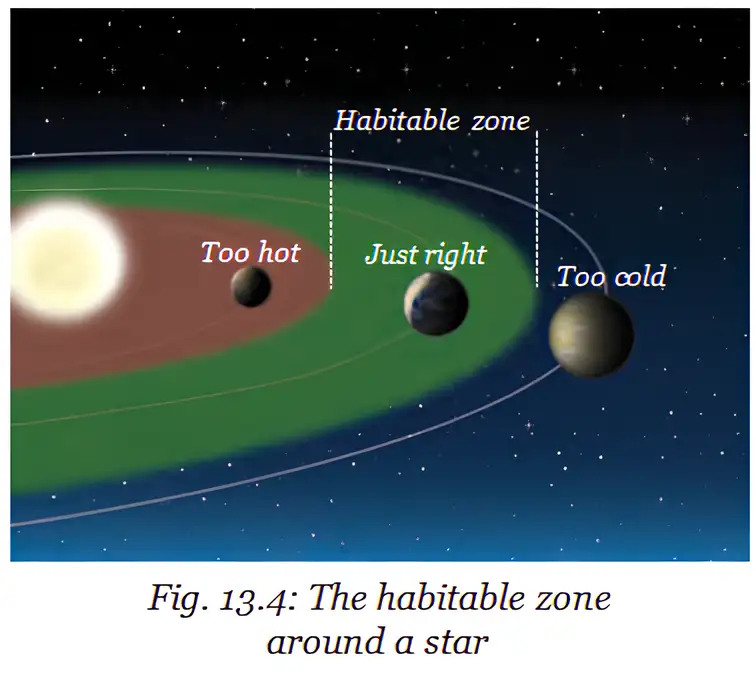
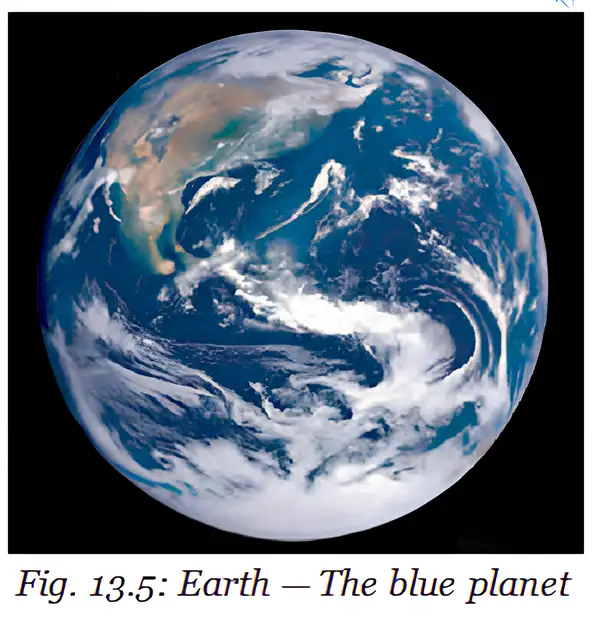
- Earth lies in the Sun’s habitable zone, where liquid water can exist; its water-rich surface makes it the Blue Planet.
- Mars is at the edge of the habitable zone; it has no confirmed life, but may once have had liquid water and life-supporting conditions.
- Nearly circular planetary orbits help keep sunlight and heat relatively steady through the year.
- If Earth were much smaller at the same average density, its gravity would be too weak to retain atmospheric gases; a much larger planet could have dangerously strong gravity.
- Oxygen supports life, and ozone in the atmosphere blocks harmful UV rays.
- Earth’s magnetic field, possibly generated by moving molten iron in the core, deflects many harmful particles from space.
What Allows Life to Be Sustained on Earth
Air, Water, and Sunlight
How air and sunlight support life
- Respiration: Humans, animals, and plants use oxygen from the atmosphere.
- Photosynthesis: In sunlight, plants use carbon dioxide from the air and water from the soil to make food; oxygen is released.
- Greenhouse effect: The atmosphere traps some heat from the Sun, keeping Earth warm enough for liquid water.
- Without the atmosphere: Earth would lose heat to space and become too cold for life as we know it.
Hydrosphere — All the water on Earth, including water in oceans, seas, rivers, lakes, ponds, springs, and underground.
Why water and moving air matter
- Coverage: Water covers about of Earth’s surface and supports life in many habitats.
- In plants: Water dissolves and transports nutrients from soil to leaves.
- In animals: Water supports hydration, digestion, and body-temperature regulation.
- Aquatic habitats: Oceans, lakes, and rivers support life ranging from tiny plankton to giant whales.
- Freshwater: It is essential for growing crops and supporting people.
- Rain and snow: Water vapour forms clouds and precipitation, replenishing rivers, lakes, and underground water.
- Weather: Moving air affects weather and rainfall, which influence farming, water supplies, and life on land.
Soil, Rocks, and Minerals
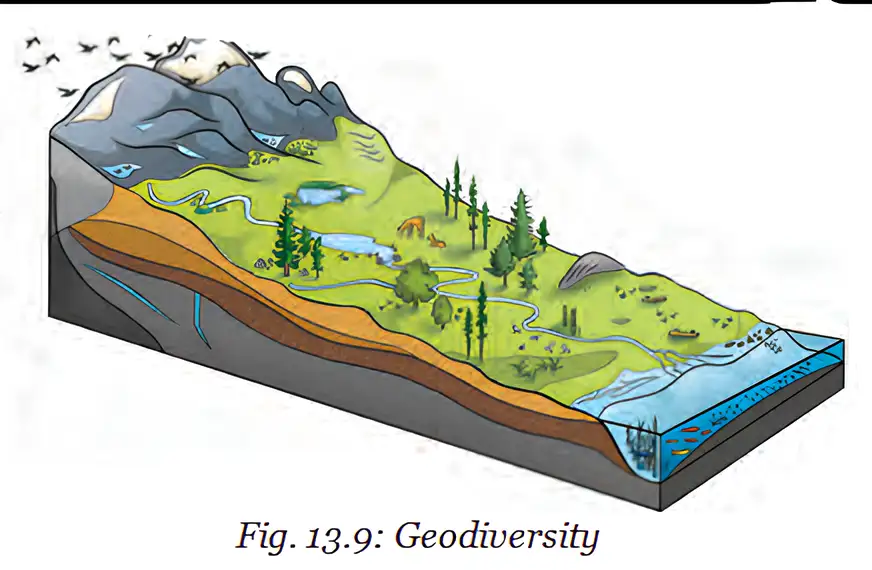
Geosphere — The solid parts of Earth, including rocks, soils, and minerals.
How the geosphere supports life
- Earth’s crust: Rocks, soil, and minerals provide resources for ecosystems and people.
- Soil nutrients: Soil contains nutrients such as nitrogen and potassium that plants need to grow.
- Nutrient sources: Nutrients enter soil through the slow breakdown of rocks and the remains of plants and animals.
- Mineral resources: The geosphere provides materials such as salt, coal, oil, iron, and copper.
- Habitats: Landforms, rocks, and soils help create different habitats for living things.
Geodiversity — The variety of landforms, rocks, and soils, along with the processes that shape and change them.
Plants, Animals, and Microorganisms
Biosphere — All living beings and the places where they live, across land, water, and air.
How living things depend on one another
- Plants make food through photosynthesis.
- Animals eat plants or other animals.
- Decomposers break down dead matter and return nutrients to the soil.
- Nutrient-rich soil supports plant growth, continuing the cycle.
The Importance of Balance
Earth as an interconnected system
- Interdependence: Land, air, water, weather, and living things support and affect one another.
- Small changes, wide effects: Cutting down a forest can affect rainfall, soil, air quality, and animals.
- Habitability: Earth remains suitable for life because its natural systems work together in balance.
- Protection: Keeping air, water, and soil clean and protecting all forms of life helps maintain Earth’s health.
How does the atmosphere help make Earth suitable for life?
How do living things help cycle nutrients through an ecosystem?
Quick recap
- Air, water, sunlight, soil, and minerals provide essential conditions and resources for life.
- The atmosphere supplies oxygen and helps keep Earth warm through the greenhouse effect.
- The hydrosphere supports aquatic life, living processes, agriculture, and rainfall-driven water replenishment.
- The geosphere provides soil, nutrients, minerals, and diverse habitats.
- The biosphere includes living things and the places where they interact.
- Earth stays habitable through balance and interdependence among its natural systems.
What Keeps Life from Disappearing
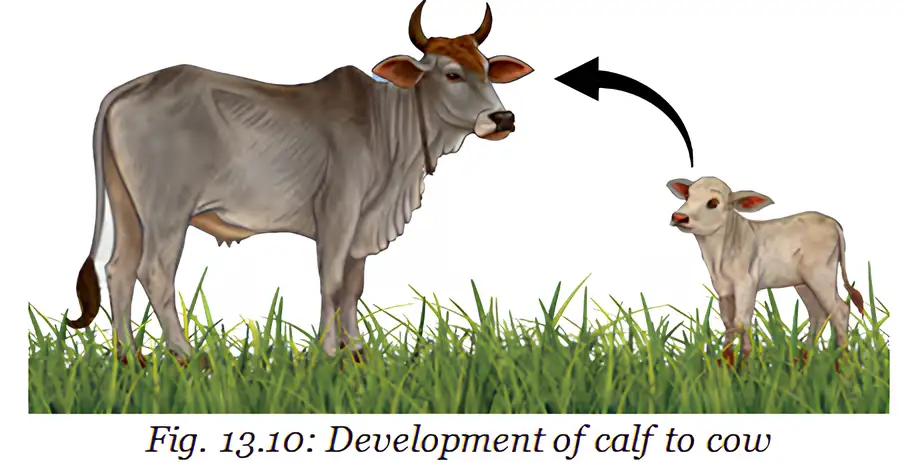
Reproduction, Inheritance and Variation
Why Variation Matters
- Variation: Small changes may occur in instructions passed from parents to offspring.
- Adaptation: Some differences help organisms survive better in a new environment.
- Examples: Camel humps store fat and help camels survive in deserts; some bacteria have become resistant to antibiotics.
- Over generations: Small differences can accumulate, producing new features and even new forms of life.
| Type | How offspring are formed | Result |
|---|---|---|
| Asexual reproduction | One parent produces offspring with the same cellular instructions. | Offspring are almost exact copies of the parent. |
| Sexual reproduction | Instructions from two parents combine. | Offspring share traits with both parents but also show differences. |
Asexual Reproduction
| Organism or process | How new individuals form | Examples |
|---|---|---|
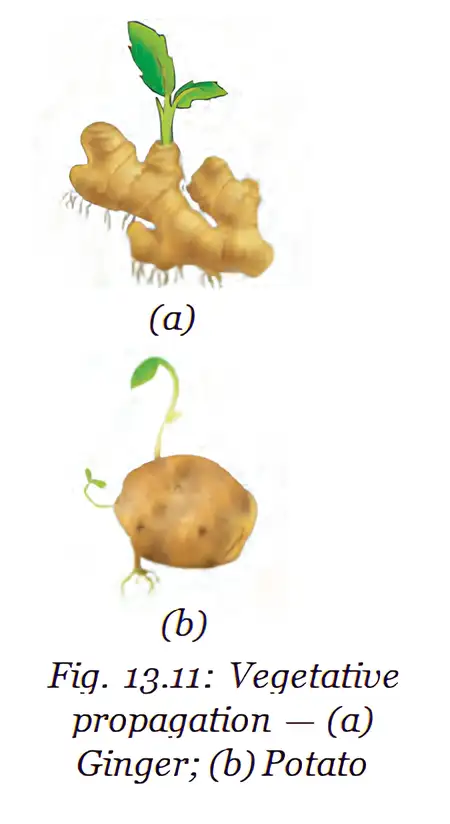
| Vegetative propagation | A planted part of the parent plant grows into a new plant. | Money-plant stem cuttings, potato eyes, ginger |
| Cell division | A single-celled organism divides into two individuals. | Bacteria, amoebae |
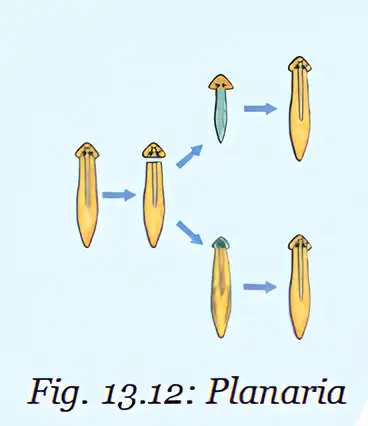
| Regrowth from fragments | Small pieces can regrow into organisms. | Some algae; Planaria can regenerate from a body fragment |
| Budding | A small bud grows on the parent and separates to form a new individual. | Hydra |
How does reproduction help both continuity and change in life?
What is vegetative propagation? Give two examples.
Quick recap
- Reproduction maintains the continuity of life by producing offspring.
- Genes carry instructions for how an organism develops.
- Asexual reproduction uses one parent; sexual reproduction combines instructions from two parents.
- Variation may help organisms survive and can build up over generations.
- Vegetative propagation grows new plants from planted parts such as stems, roots or leaves.
- Asexual reproduction also occurs through cell division, budding and regrowth from fragments.
Sexual reproduction
Sexual Reproduction and Gametes
- Sexual reproduction: Genetic material from two parents combines to form offspring.
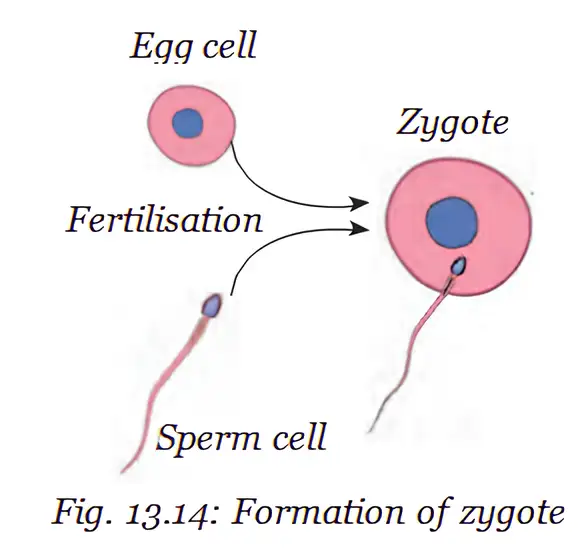
- Gametes: Special reproductive cells carry half the genetic material; their joining forms a zygote and creates variation among offspring.
Sexual Reproduction in Plants
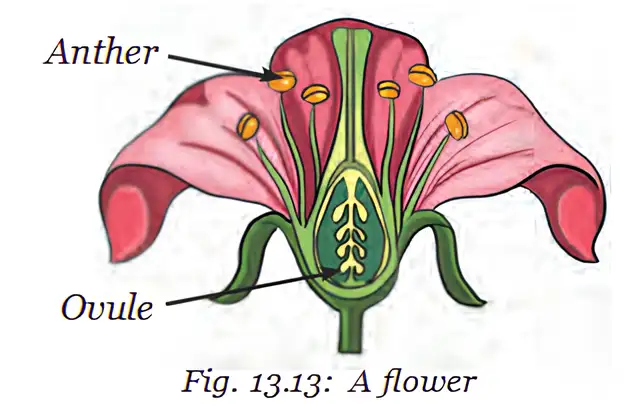
Sexual Reproduction in Animals
Birds and Mammals: Embryo Development
Why does sexual reproduction not double the genetic material in each generation?
Distinguish between pollination and fertilisation.
How do birds and most mammals provide nutrition to a developing embryo?
Quick recap
- Sexual reproduction usually involves two parents and the joining of male and female gametes.
- Each gamete carries half of a parent’s genetic material; fertilisation forms a zygote.
- Different combinations of parental genetic information make offspring unique.
- In flowering plants, pollination carries pollen; fertilisation forms a zygote, and the fleshy part of the flower around the ovule develops into a fruit.
- Fish and frogs commonly fertilise eggs in water; birds and mammals fertilise eggs inside the female.
- Bird embryos use food stored in the egg; most mammal embryos develop inside the mother and receive food and oxygen from her.
What Are the Threats to Life on Earth
Earth’s Delicate Balance
Triple planetary crisis — The three major environmental challenges facing Earth are climate change, biodiversity loss and pollution.
Interdependent life systems
- Balance: Life depends on living and non-living things working together; even small changes in temperature, oxygen or ozone can endanger it.
- Connected systems: The atmosphere, hydrosphere, biosphere and geosphere interact, so damage to one can affect the others.
Climate Change and Global Warming
Climate change — Long-term changes in temperature, rainfall and weather patterns.
How fossil fuels contribute to climate change
- Burning coal and oil releases greenhouse gases such as carbon dioxide and methane.
- These gases trap heat in the atmosphere, causing global warming.
- Trees, plants and ocean plankton absorb carbon dioxide, but cannot absorb the extra carbon released from fossil fuels fast enough.
- Heat builds up, changing climate patterns and increasing risks to life.
Effects of climate change
- Rising temperatures: Can melt ice caps and raise sea levels, threatening coastal cities with flooding.
- Extreme weather: Changing climate patterns can lead to more extreme weather conditions.
- Living things: Changing conditions can cause plants and animals to disappear; climate change also affects crops, water supply, habitats and human health.
Biodiversity Loss
Biodiversity loss — The disappearance of plants and animals, often when their natural habitats are destroyed.
How habitat loss can weaken an ecosystem
- Habitats are destroyed, causing grasses or other plants to disappear.
- Herbivores such as deer and grasshoppers lose food and struggle to survive.
- Predators such as tigers and foxes lose their herbivore food source.
- The weakened food chain reduces nature’s ability to support life.
Why biodiversity matters
- Ecosystem roles: Every kind of living thing has a role; losing even a few types weakens the ecosystem.
- Resilience: Diverse ecosystems are stronger and more balanced.
Pollution
| Type | Sources | Effects |
|---|---|---|
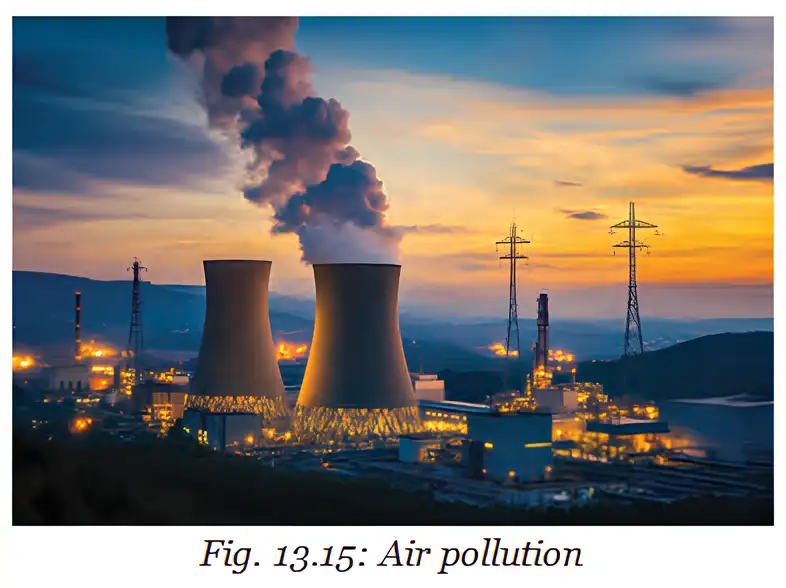
| Air pollution | Factories, vehicles and burning fuels | Breathing problems, crop damage, smog and acid rain |
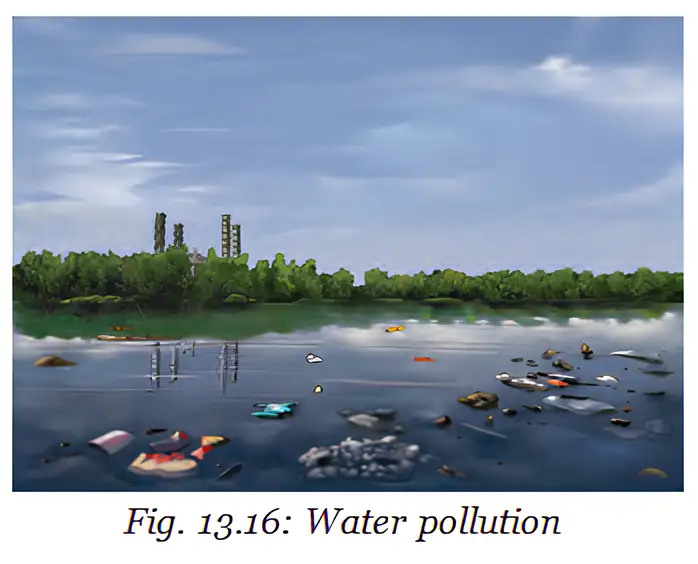
| Water pollution | Factory, farm and plastic waste | Harms aquatic life and makes water unsafe |
| Soil pollution | Excess fertilisers and poor waste disposal | Reduces crop yield and spreads harmful substances through the food chain |
Global Environmental Agreements
International efforts to protect the environment
- 1987The Montreal Protocol helped reduce ozone-harming chemicals such as chlorofluorocarbons (CFCs), allowing the ozone layer to slowly recover.
- 1992The Earth Summit led to international efforts on climate change and biodiversity.
- 2005The Kyoto Protocol committed countries to reduce greenhouse gas emissions.
- 2015The Paris Agreement committed countries to reduce greenhouse gas emissions and set a goal of limiting global warming to below .
- As of 2025The world was not on track to meet the Paris Agreement’s temperature goal; much more action was needed.
Protecting Life on Earth
Actions at different levels
- Climate: Reduce greenhouse gas emissions by using renewable energy such as solar and wind, improving energy use and choosing environmentally friendly travel.
- Nature: Preserve biodiversity and use natural resources sustainably, with local communities playing an important role.
- Daily choices: Reuse, repair and recycle items such as clothes and plastic; save energy and water.
- Shared effort: Learn, share ideas and encourage others; protecting Earth requires action from communities and global leaders.
What is the triple planetary crisis?
How can the loss of plants affect predators in an ecosystem?
Quick recap
- The triple planetary crisis consists of climate change, biodiversity loss and pollution.
- Greenhouse gases trap heat; excess emissions contribute to global warming and climate change.
- Habitat destruction can disrupt food chains and weaken ecosystems.
- Air, water and soil pollution harm people, wildlife, crops and food chains.
- Environmental agreements include the Montreal Protocol, Earth Summit, Kyoto Protocol and Paris Agreement.
- Renewable energy, sustainable resource use and responsible daily choices help protect Earth.
Snapshots
Why Earth Supports Life
Earth as a life-sustaining planet — Earth is unique in the solar system because it supports life.
Habitable zone (Goldilocks zone) — The region around a star where conditions allow liquid water to exist.
Conditions that protect life
- Right distance: Earth orbits the Sun where temperatures allow water to remain liquid.
- Nearly circular orbit: It helps prevent extreme heat or cold during different parts of the year.
- Suitable gravity: Earth’s gravity holds the atmosphere without being so strong that creatures would be crushed by their own weight.
- Ozone: Ozone in the atmosphere prevents harmful ultraviolet rays from reaching Earth’s surface.
- Magnetic field: Earth’s magnetic field shields it from high-energy particles that could harm life.
| Sphere | What it includes |
|---|---|
| Atmosphere | Air |
| Hydrosphere | Water |
| Geosphere | Earth’s solid part |
| Biosphere | Life |
- Interaction: The atmosphere, hydrosphere, geosphere and biosphere interact and together sustain life on Earth.
Reproduction and Continuity of Life
Reproduction — The process by which living things produce offspring; it is essential for the continuity of life.
| Type | Key feature |
|---|---|
| Asexual | A single parent produces new individuals that are exact copies of itself. |
| Sexual | Makes it possible for new features to appear in the following generation. |
- Development: In different animals, a zygote develops into an embryo either inside or outside the body.
Threats to Life on Earth
Triple planetary crisis — The combined threats of climate change, biodiversity loss and pollution to life on Earth.
Quick recap
- Earth is unique in the solar system because it supports life.
- Earth’s position in the habitable zone allows liquid water to exist.
- Earth’s orbit, gravity, ozone and magnetic field help protect conditions needed for life.
- The atmosphere, hydrosphere, geosphere and biosphere interact to sustain life.
- Reproduction ensures continuity of life and may be asexual or sexual.
- Asexual reproduction produces exact copies; sexual reproduction can lead to new features in the next generation.
- Climate change, biodiversity loss and pollution form the triple planetary crisis.
Science — ALL CHAPTERS
1
Exploring the Investigative World of Science
2
The Invisible Living World: Beyond Our Naked Eye
3
Health: The Ultimate Treasure
4
Electricity: Magnetic and Heating Effects
5
Exploring Forces
6
Pressure, Winds, Storms, and Cyclones
7
Particulate Nature of Matter
8
Nature of Matter: Elements, Compounds, and Mixtures
9
The Amazing World of Solutes, Solvents, and Solutions
10
Light: Mirrors and Lenses
11
Keeping Time with the Skies
12
How Nature Works in Harmony
13
Our Home: Earth, a Unique Life Sustaining Planet