Class 8 . Science . Curiosity . Health the Ultimate Treasure
Chapter 3: Health: The Ultimate Treasure
Ch 3
Science
Class 8
Health: Is It More Than Not Falling Sick
What Health Means
Health concerns highlighted in the bulletin
- Diabetes and obesity: The bulletin reports that 11.4% of India’s population—more than 100 million people—is diabetic, and 28.6% of Indians are obese.
- Regional pattern: WHO reports diabetes and heart attacks are more prevalent in South-east Asia.
- Diet: The bulletin advises reducing oil and sugar; it identifies fast food as one of the leading causes of diabetes and suggests reducing oil in the diet by 10%.
- Environment and disease: Air pollution is described as a major health risk and public health emergency; monsoon arrival is linked with increased malaria and dengue cases.
- Prevention: The bulletin reports that regular handwashing reduces infection by 50%; safe drinking water helps reduce water- and vector-borne diseases.
- Screens and well-being: Excessive screen time in children is linked to dry-eye disease, obesity, sleep disorders and anxiety; immersion in social media is associated with loneliness.
- Well-being practices: The bulletin notes that yoga may reduce anxiety and improve concentration, and refers to the Fit India Movement.
How the aspects of health are connected
- Example: A student who moved to a new school felt lonely and spent more time on social media to cope. He later had headaches, lost weight and slept poorly; the account does not establish that screen use caused these symptoms.
- Support: A doctor advised less screen time and meeting a counsellor. The school counsellor arranged support to help him make friends and improve his health.
- Benefit: A healthy person can perform tasks more efficiently and cope better with difficult situations.
A traditional view of well-being
- Ayurveda: True health involves balance between the body, mind and surroundings.
- Dinacharya: A daily routine; ritucharya: a seasonal routine.
- Prakriti: A person’s body constitution; food choices should suit it.
- Balance is supported by: Fresh wholesome food, exercise, cleanliness, restful sleep, a calm mind, yoga, meditation and mindfulness.
Ways to Stay Healthy
| Healthy habits | Habits to avoid or limit |
|---|---|
| Maintain personal hygiene; eat a balanced diet; exercise regularly; relax or meditate. | Excessive screen time; frequent fast or junk food; sleeping too late or too little; skipping meals, especially breakfast. |
Maintain a healthy lifestyle
- Diet: Eat a balanced diet with fruits, vegetables and whole grains; limit processed, fatty and sugary foods and drinks.
- Activity: Stay active through outdoor play, walking, running, cycling or exercise.
- Rest and recreation: Get enough sleep, limit screen time and spend time in nature.
- Mind: Practise yoga or simple breathing exercises such as pranayama.
- Avoid harmful substances: Say no to tobacco, alcohol and addictive drugs.
Keep the Environment Clean
Environment and health
- Clean surroundings: Clean, well-maintained places support health; dirty, unhygienic areas with flies and mosquitoes can increase the risk of illness.
- Clean air and water: Smoke, dust and air pollution can cause breathing problems such as coughing or asthma. Safe drinking water helps prevent water-borne disease.
- Air Quality Index (AQI): A measure used to indicate how clean or polluted the air is.
- Infection prevention: Regular handwashing is reported in the bulletin to reduce infection by 50%.
- Public health examples: Monsoon conditions may be followed by more malaria and dengue cases; pollution, diabetes, heart problems and obesity are also health concerns.
Relationships are part of health
- Social and emotional support: Spending time with family and friends, talking, laughing and enjoying activities supports mental well-being.
- Remember: Nutritious food and a clean environment matter, but loneliness or distress can still affect how healthy a person feels.
How to Recognise Illness
| Point | Symptom | Sign |
|---|---|---|
| Meaning | What a person feels or experiences. | Something observable or measurable that indicates illness. |
| Examples | Pain, tiredness or dizziness. | Fever, rash, high blood pressure or swelling. |
- Why they matter: Symptoms and signs help doctors understand what may be causing a person’s illness.
Is health simply the absence of disease?
How are a symptom and a sign different?
Quick recap
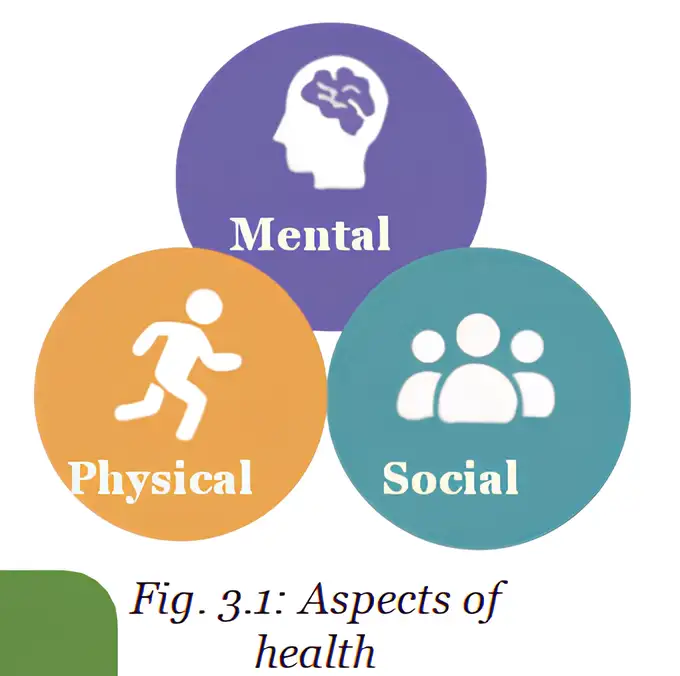
- Health includes physical, mental and social well-being—not just being free of disease.
- Lifestyle, surroundings and relationships all influence health.
- Balanced food, activity, sleep, hygiene and stress management support a healthy lifestyle.
- Clean air, safe water and clean surroundings help reduce health risks.
- Symptoms are felt; signs are observable or measurable.
- The bulletin highlights diabetes, obesity, pollution, infection prevention and screen-time risks.
Diseases: What Are the Causes and Types
Diseases and Their Types
Pathogen — A disease-causing organism, such as a bacterium, virus, fungus, worm, or protozoan.
| Point | Non-communicable | Communicable |
|---|---|---|
| Cause | Not caused by pathogens; often linked to lifestyle, diet, or environment | Caused by pathogens |
| Spread | Do not spread from one person to another | Can spread from one person to another |
| Examples | Cancer, diabetes, asthma, heart disease | Typhoid, dengue, flu, chickenpox, COVID-19 |
Non-communicable Diseases in India
- Growing prevalence: Non-communicable diseases (NCDs), including diabetes, heart disease, and cancer, have become more common in India.
- Contributing changes: More processed food, less exercise, and longer life expectancy are linked to this increase.
- Impact: Most deaths in India are now caused by NCDs.
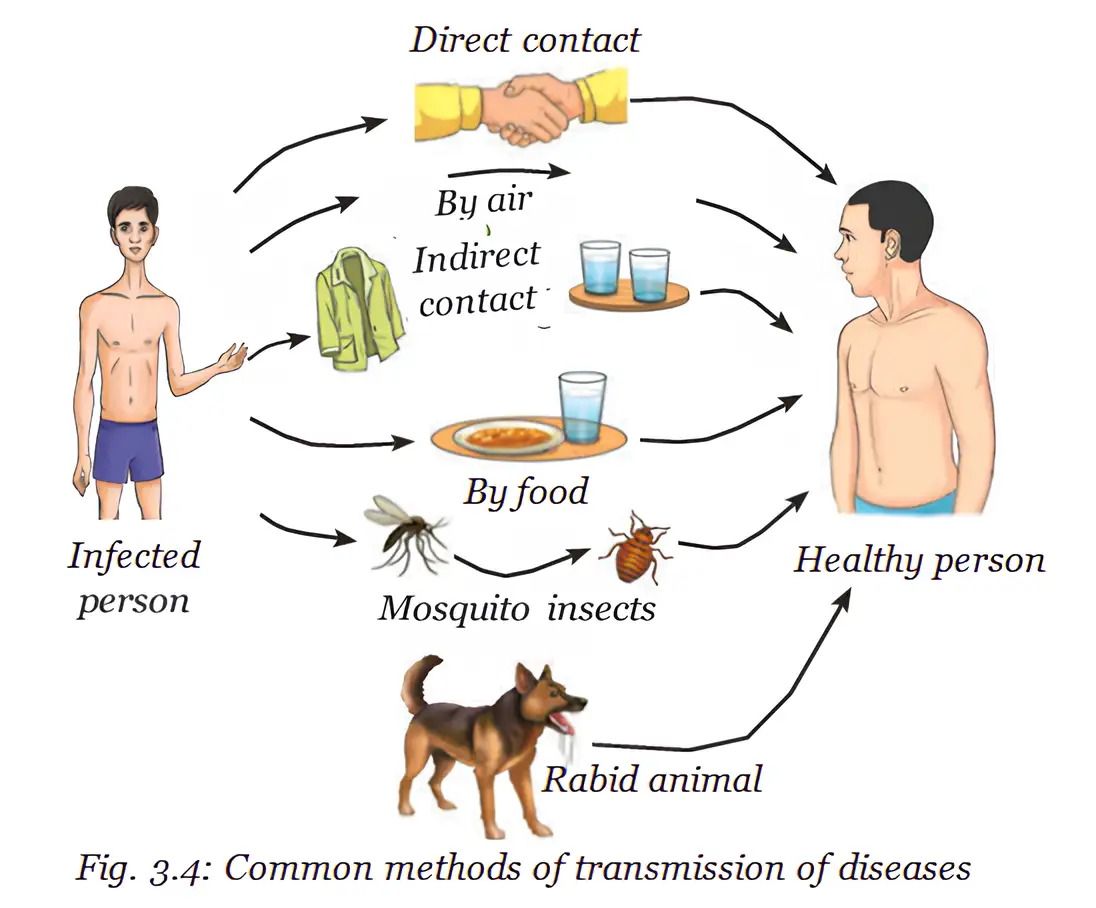
How Communicable Diseases Spread
Routes of Infection
- Air: Pathogens may spread when an infected person coughs or sneezes.
- Direct contact: Infection can pass through contact such as shaking hands.
- Indirect contact: Sharing an infected person’s personal items can spread pathogens.
- Food and water: Contaminated food or drinking water can transmit disease.
- Vectors: Insects such as mosquitoes and houseflies can carry pathogens between people.
| Disease | Causal agent | Site affected | Main symptoms | Prevention |
|---|---|---|---|---|
| Common cold and influenza | Virus | Respiratory tract | Nasal congestion or discharge, sore throat, fever, cough, body ache | Wash hands often; avoid sharing personal items; cover mouth and nose |
| Chickenpox | Virus | Respiratory tract and skin | Mild fever, itchy skin, rashes, blisters | Isolate the patient; cover mouth and nose; vaccination |
| Measles | Virus | Skin and respiratory tract | Fever, sore throat, reddish rashes on the neck, ears, and other skin areas | Isolate the patient; cover mouth and nose; maintain hygiene; vaccination |
| Tuberculosis (TB) | Bacteria | Lungs | Cough, fever, fatigue, loss of appetite, night sweats | Avoid close contact with infected people; cover mouth and nose; maintain hygiene; vaccination |
| Disease | Cause | Affected organ | Main symptoms | Prevention |
|---|---|---|---|---|
| Hepatitis A | Virus | Liver | Fatigue, fever, loss of appetite, nausea, vomiting, jaundice, pain in the upper-right abdomen | Drink boiled water; vaccination |
| Cholera | Bacteria | Intestine | Diarrhoea and dehydration | Good personal hygiene and sanitation; properly cooked food and boiled water; vaccination |
| Typhoid | Bacteria | Intestine | Headache, abdominal discomfort, fever, diarrhoea | Good personal hygiene and sanitation; properly cooked food and boiled water; vaccination |
| Ascariasis (roundworms) | Worms | Intestine | Worms in stool, loss of appetite, poor growth, diarrhoea, weight loss, anaemia | Good personal hygiene and sanitation; properly cooked food and boiled water |
| Disease | Cause | Site listed | Main symptoms | Prevention |
|---|---|---|---|---|
| Malaria | Protozoa | Skin and blood | High fever, profuse sweating, periodic chills | Use mosquito nets and repellents; wear long sleeves; control mosquito breeding around the home |
| Dengue fever (break-bone fever) | Virus | Skin and blood | Fever, headache, muscle and joint pain, nausea | Use mosquito nets and repellents; wear long sleeves; control mosquito breeding; avoid areas with still water |
Vector — An insect that carries and spreads pathogens, such as a mosquito or housefly.
Preventing the Spread of Infection
Everyday Precautions
- Cleanliness: Keep yourself and your surroundings clean; maintain good personal hygiene.
- Handwashing: Wash hands with soap and water to remove pathogens.
- Cough and sneeze etiquette: Cover the mouth and nose; wear a mask in crowded places.
- Personal items: Do not share items such as towels and handkerchiefs.
- Safe surroundings: Keep the home, food, and water clean.
- When unwell: Stay home and rest to support recovery and reduce transmission.
Parasite — An organism that lives in or on another living being and obtains nourishment from it.
Worm Infections
- How they live: Some infectious diseases are caused by worms that live inside the body, especially in the digestive system.
- Effect: These worms act as parasites and feed on the body's nutrients.
- Spread: Worms can spread through contaminated food, water, or soil, and through contact with infected people or animals.
Differentiate between communicable and non-communicable diseases.
Name four common routes by which communicable diseases spread.
Quick recap
- A disease disrupts normal body or mind function; pathogens include bacteria, viruses, fungi, worms, and protozoa.
- Communicable diseases are pathogen-caused and spread; non-communicable diseases do not spread person to person.
- Communicable infections pass through air, contact, contaminated food or water, and vectors.
- NCDs such as diabetes, heart disease, and cancer are increasing in India alongside lifestyle changes.
- Hygiene, clean food and water, vaccination where applicable, and avoiding infection routes help prevent disease.
- Parasitic worms can infect the digestive system and spread through contaminated food, water, soil, or contact.
How are non-communicable diseases caused
Non-Communicable Diseases and Their Causes/PREVENTION ? No.
- Causes: Non-communicable diseases are linked to lifestyle, diet, and environmental factors, not pathogens.
- Examples: Diabetes, heart disease, cancer, and asthma are non-communicable diseases.
- Risk factors: Unhealthy eating, lack of physical activity, being overweight, and exposure to pollution can increase risk.
- Prevention: Eat a balanced diet, exercise regularly, avoid tobacco and other harmful substances, and maintain healthy habits.
- Care: Early diagnosis and ongoing treatment help manage chronic diseases and prevent complications.
How to Prevent and Control Diseases
Preventing the Spread of Disease
Sanitation and disease prevention
- Good sanitation helps reduce the spread of communicable diseases.
- Bhadrak, Odisha: A community campaign increased toilet building and use, and significantly reduced open defecation.
- Health impact: Improved sanitation was linked with fewer cases of diarrhoea and infections among children.
Immunity and Vaccines
Immunity — The body's natural ability to fight diseases.
How immunity works
- Immune system is the body's system for recognising and fighting disease-causing germs.
- Acquired immunity develops after exposure to a pathogen or a vaccine.
- Vaccines train the immune system to recognise and attack particular harmful germs.
| Vaccine material | How it helps |
|---|---|
| Weakened or dead pathogen | Allows the immune system to learn to recognise the germ. |
| Inactive or harmless parts of a pathogen | Trains the immune system without causing the disease. |
| Instructions for making a harmless germ part | Body cells make the part, which the immune system learns to fight. |
Examples of vaccines
- Childhood vaccines protect against diseases such as polio, measles, tetanus and hepatitis.
- Tetanus shot: Often given after an injury, it protects against infection by tetanus-causing bacteria.
- Tetanus vaccine: It contains an inactivated bacterial toxin, helping the body develop protection without causing the disease.
Smallpox Vaccination: Discovery and Early Methods
Edward Jenner and the first vaccine
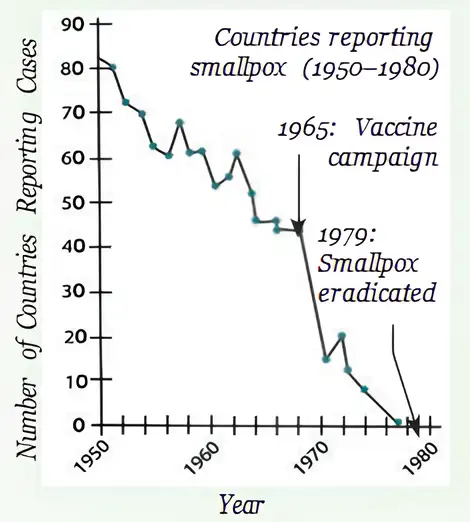
- Smallpox was a deadly disease that caused blisters and killed millions.
- Observation: In the late 1700s, English doctor Edward Jenner noticed that milkmaids who had cowpox did not catch smallpox.
- Test and finding: Jenner used cowpox material on a boy, who later showed no illness when exposed to smallpox; cowpox infection protected against smallpox.
- Outcome: This discovery led to the first vaccine and helped protect people from smallpox.
Variolation in India
- Variolation was a traditional Indian method of protection against smallpox, used before modern vaccines.
- How it worked: Material from a smallpox sore was used to scratch the skin, causing a mild infection that could build immunity.
- Teekedaars were the people who practised variolation.
Importance and Limits of Vaccination
Why vaccines matter
- Protection: Vaccines help protect people of all ages—from infants to the elderly—against serious diseases.
- Community benefit: They reduce the spread of infections, protect people around those vaccinated and save millions of lives every year.
- Safety: Scientists and doctors carefully test vaccines for safety.
- Important limit: Vaccines are preventive, not curative; they help prevent or minimise disease before it develops, but do not treat someone who is already sick.
India's Role in Vaccine Production
Vaccine production in India
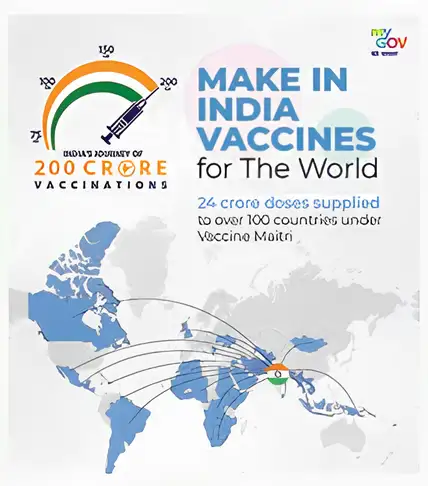
- Large-scale production: India is one of the world's largest vaccine producers and supplies vaccines to many countries.
- COVID-19 response: Indian vaccine companies played an important role during the pandemic and continue to support global health.
Dr. Maharaj Kishan Bhan
- Contribution: Indian doctor and scientist Dr. Maharaj Kishan Bhan played a key role in developing the rotavirus vaccine, which protects children from diarrhoea.
- Public-health focus: As Secretary of the Department of Biotechnology, he promoted science and innovation and supported research for affordable healthcare in India.
How does a vaccine provide protection?
Why are vaccines called preventive, not curative?
Quick recap
- Immunity is the body's ability to fight disease, supported by the immune system.
- Vaccines build acquired immunity by training the immune system to recognise pathogens; childhood examples include polio, measles, tetanus and hepatitis vaccines.
- Good sanitation, such as the Bhadrak campaign, can reduce the spread of communicable diseases.
- Edward Jenner's cowpox observation led to the first vaccine against smallpox; variolation was an earlier Indian method.
- Vaccines prevent or minimise disease and reduce its spread, but do not cure an illness once someone is sick.
- India is a major vaccine producer, and Dr. M. K. Bhan helped develop a rotavirus vaccine.
Treatment of Disease
Antibiotics
Antibiotics — Medicines that kill bacteria or stop them from growing, and are used to treat bacterial infections.
What antibiotics treat
- Target: Antibiotics act on parts of bacterial cells that differ from human and other animal cells.
- Limits: They do not work against viruses or diseases caused by protozoa.
Discovery of Penicillin
- 1928: Alexander Fleming, a bacteriologist from London, discovered penicillin—the first antibiotic used to treat bacterial infections.
- Observation: Mould on a discarded dish stopped nearby harmful bacteria from growing; the mould released a bacteria-killing substance.
Antibiotic Resistance
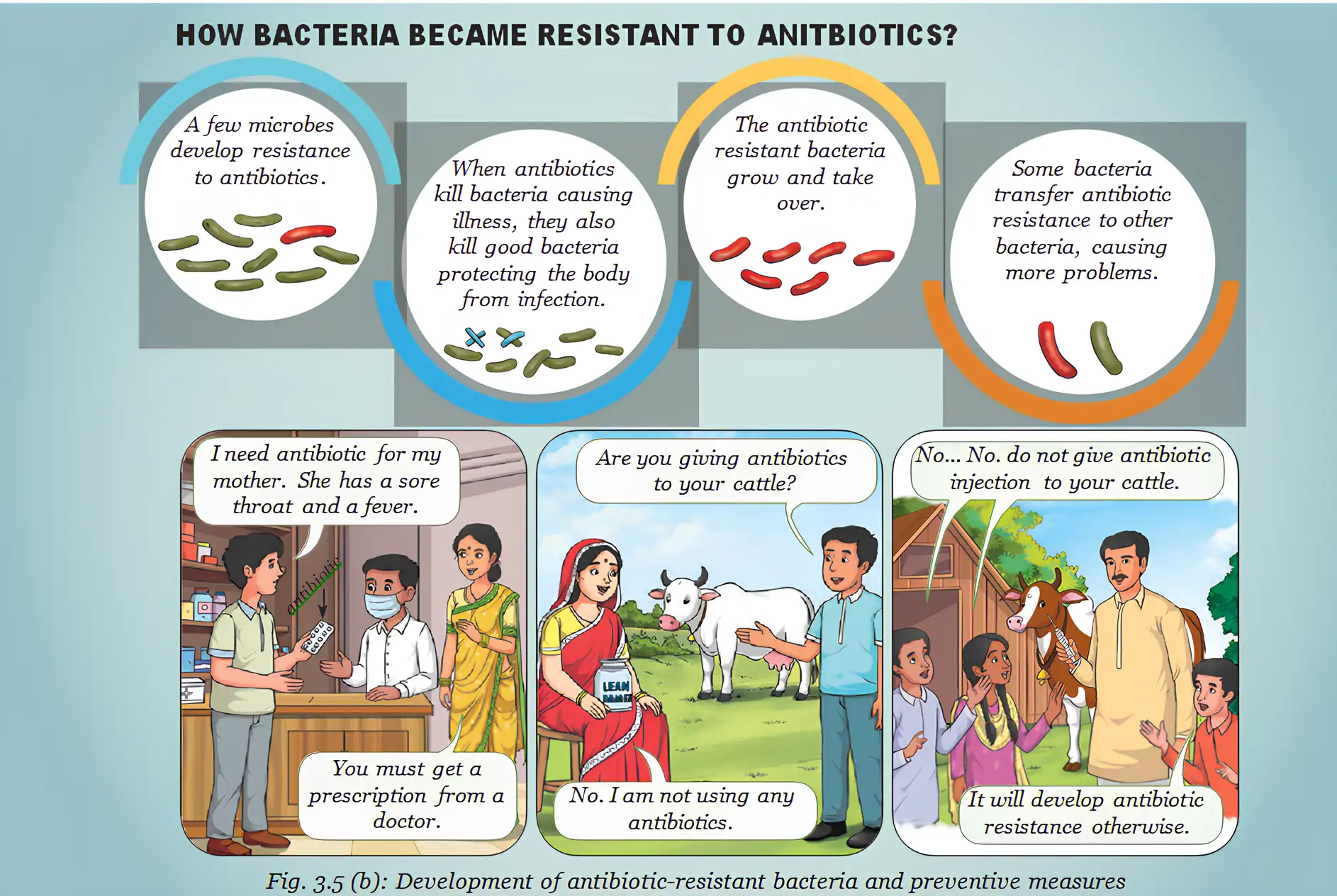
Antibiotic resistance — When bacteria that were once killed by an antibiotic survive and multiply despite treatment with it.
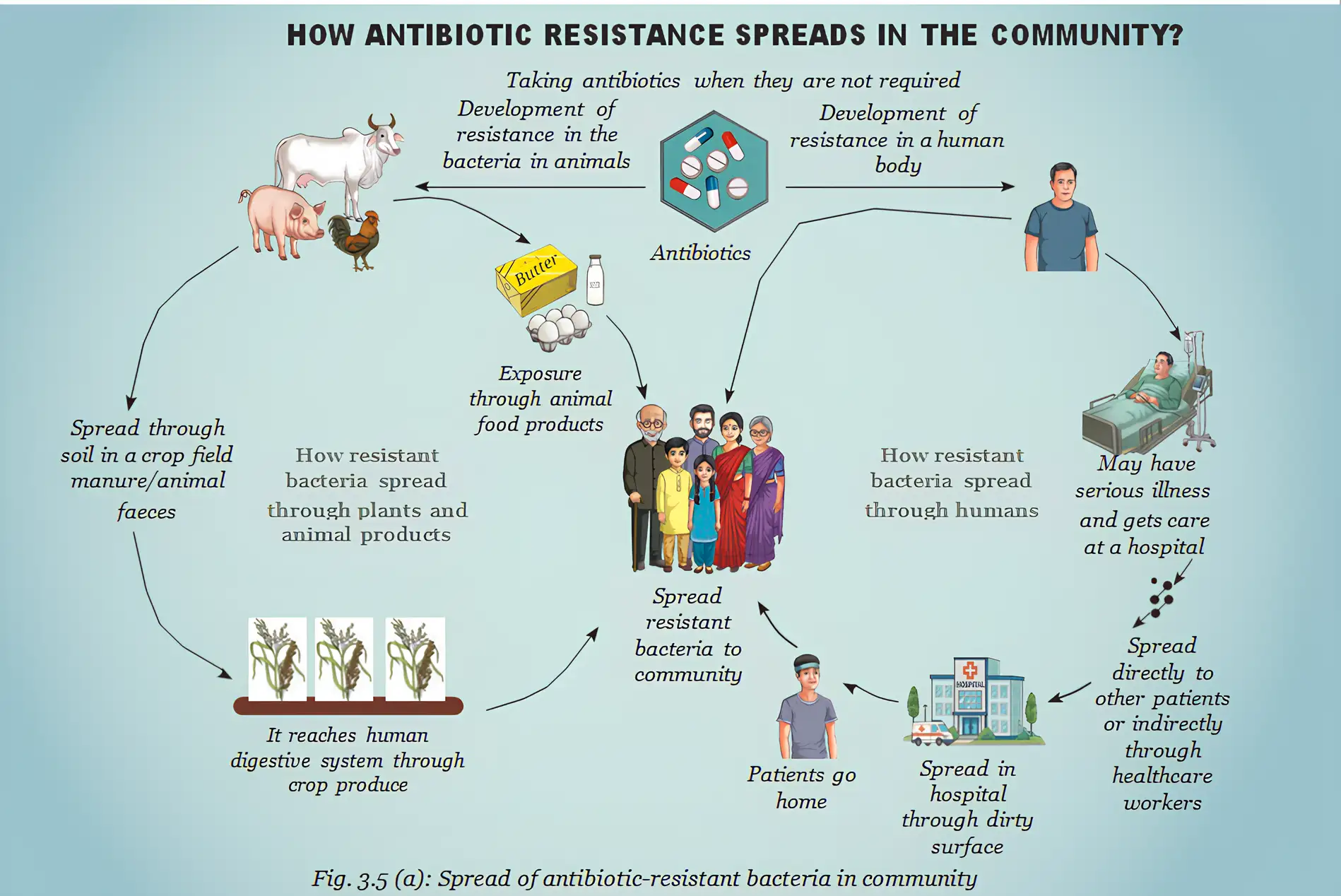
- Cause: Indiscriminate or unnecessary antibiotic use encourages the rise of resistant bacteria.
- Impact: Resistance makes common infections harder to treat and raises the risk of complications, prolonged illness and death.
- Spread: Resistant bacteria can spread through animals, food, people and hospitals.
Using antibiotics wisely
- Use only when prescribed by a doctor.
- Follow the correct dose and duration of treatment.
- Avoid unnecessary use to help keep antibiotics effective for future generations.
Traditional Medicine Systems
- Examples: Ayurveda, Siddha and Unani have long been used in India to manage common health problems.
- Approach: They use natural substances such as herbs, oils and minerals, and emphasise a healthy lifestyle and balanced diet.
- Limit: They can support well-being and help with some conditions, but may not be effective for every disease or at every stage.
Treatment of Non-communicable Diseases
- Aim: Manage symptoms and improve quality of life.
- Care: May involve medication, lifestyle changes and rehabilitation.
- Key to control: Early diagnosis and continuous care help slow disease progression and prevent complications.
Why do antibiotics not work against viral infections?
What is antibiotic resistance, and how can its rise be reduced?
Quick recap
- Antibiotics treat bacterial infections, not viral or protozoan diseases.
- Alexander Fleming discovered penicillin in 1928; it was the first antibiotic used against bacterial infections.
- Antibiotic resistance occurs when bacteria survive and multiply despite treatment with an antibiotic.
- Use antibiotics only as prescribed, and follow the correct dose and duration.
- Ayurveda, Siddha and Unani use natural substances and promote healthy living, but are not effective for every disease or stage.
- Non-communicable diseases are managed with medication, lifestyle changes and rehabilitation; early, continuous care helps prevent complications.
Snapshots
Health and Happiness
Health — A state of complete physical, mental, and social well-being, not merely the absence of disease.
Health and happiness
- Happiness can help us stay active and healthy.
- Good health can improve our mood; health and happiness are closely connected.
Disease, Symptoms, and Signs
Disease — A condition that affects the normal functioning of the body or mind.
| Point | Symptoms | Signs |
|---|---|---|
| Meaning | What a person feels | What can be observed or measured |
| Examples | Pain, tiredness | Fever, rash |
Types of Diseases
| Type | Cause | Examples | Prevention or control |
|---|---|---|---|
| Non-communicable | Lifestyle and environmental factors; not germs | Diabetes, heart disease | Healthy habits, lifestyle changes, and regular exercise can often help prevent them |
| Infectious | Pathogens such as bacteria, viruses, or worms | Diseases caused by these pathogens | The immune system helps protect the body |
Pathogen — A disease-causing organism or agent, such as a bacterium, virus, or worm.
Immunity and Vaccines
- Immune system: Helps protect the body from harmful pathogens.
- Vaccine: Trains the immune system to prevent disease using dead or weakened germs, or harmless parts of a germ.
Diagnosis and Treatment
- Diagnosis and treatment are important for managing and curing diseases.
How do symptoms differ from signs?
What is the role of a vaccine?
Quick recap
- Health includes physical, mental, and social well-being.
- Happiness and good health are closely related.
- Disease affects normal body or mind functioning; symptoms are felt, while signs are observed or measured.
- Non-communicable diseases are not caused by germs; healthy habits and exercise can help prevent them.
- Infectious diseases are caused by pathogens, and the immune system helps protect us.
- Vaccines train the immune system; diagnosis and treatment help manage or cure disease.
Science — ALL CHAPTERS
1
Exploring the Investigative World of Science
2
The Invisible Living World: Beyond Our Naked Eye
3
Health: The Ultimate Treasure
4
Electricity: Magnetic and Heating Effects
5
Exploring Forces
6
Pressure, Winds, Storms, and Cyclones
7
Particulate Nature of Matter
8
Nature of Matter: Elements, Compounds, and Mixtures
9
The Amazing World of Solutes, Solvents, and Solutions
10
Light: Mirrors and Lenses
11
Keeping Time with the Skies
12
How Nature Works in Harmony
13
Our Home: Earth, a Unique Life Sustaining Planet