Class 8 . Science . Curiosity . Nature of Matter Elements Compounds and Mixtures
Chapter 8: Nature of Matter: Elements, Compounds, and Mixtures
Ch 8
Science
Class 8
Introduction
Matter Around Us
- Examples: Air, water, food, clothes, books, trees, and balls are examples of matter.
- Particles: Matter is made up of tiny particles.
- Mixtures: Many things around us contain two or more substances mixed together.
Mixture — A mixture consists of two or more substances mixed together.
Quick recap
- Matter includes familiar things around us, such as air, water, food, and books.
- Matter is made up of tiny particles.
- Many things around us contain more than one substance.
- A mixture consists of two or more substances mixed together.
What Are Mixtures
Meaning of a mixture
Mixture — A mixture contains two or more substances that do not chemically react with one another, and each substance retains its properties.
- Components are the individual substances that make up a mixture.
- Scientific meaning: in science, all components of a mixture must be pure substances.
- Everyday examples: poha, sprout salad, sugar dissolved in water, soup and lemonade.
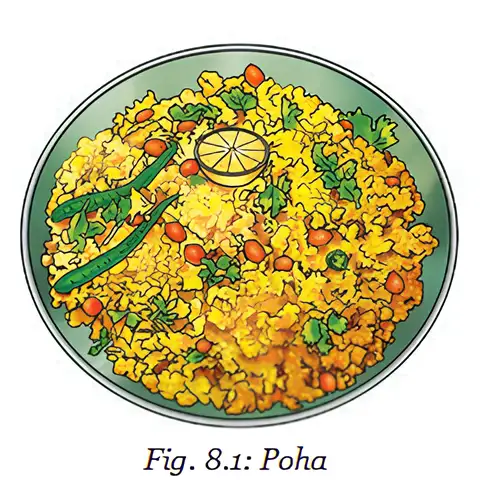
Uniform and non-uniform mixtures
Non-uniform mixture — A mixture whose components are generally distinguishable by eye or with a magnifying device.
- Example: green gram, chickpeas, onion and tomato can be seen separately in a sprout salad.
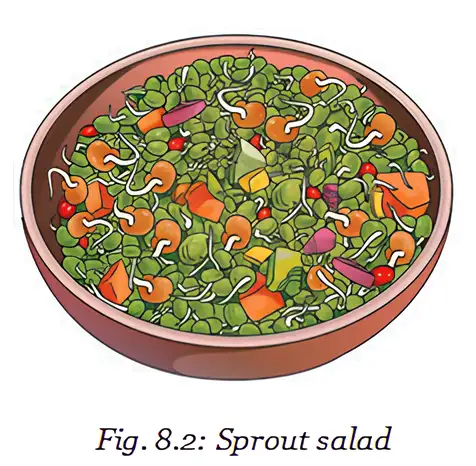
Uniform mixture — A mixture in which the components are evenly distributed and cannot be distinguished separately, even with a microscope.
- Example: sugar and water particles cannot be seen separately in a sugar-water mixture.
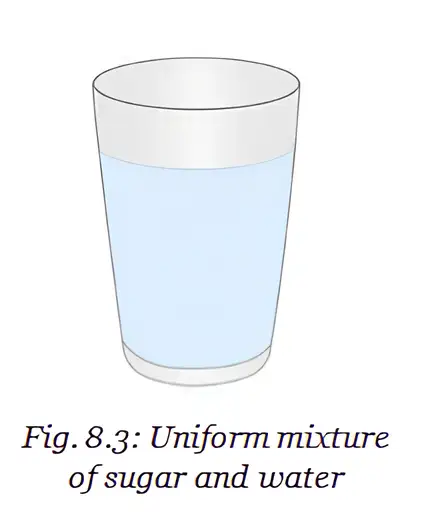
Alloys
Alloy — An alloy is a uniform mixture of metals or of a metal with another substance.
- Stainless steel contains iron, nickel, chromium and a small amount of carbon.
- Brass is copper mixed with zinc; bronze is copper mixed with tin.
- Mishraloha was an ancient term for mixtures of two or more metals with properties distinct from their constituent metals.
- Bronze (Kamsya) was described as 4 parts copper (Tamra) and 1 part tin (Vanga); it was used for medicinal purposes, including improving digestion and boosting immunity.
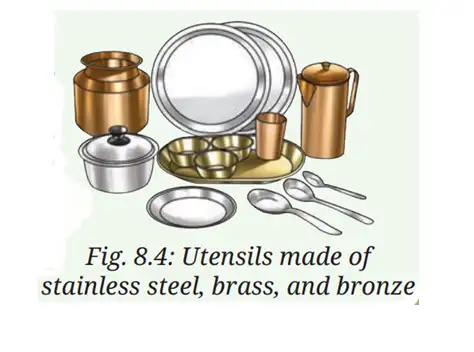
Is air a mixture?
Air — Air is a uniform mixture made mainly of nitrogen, oxygen, argon, carbon dioxide and water vapour.
Air composition and properties
- Nitrogen makes up about 78% of air and does not take part in combustion.
- Oxygen is required by most living beings and helps in combustion.
- Water vapour in warm air condenses into tiny water droplets when it touches a cool surface.
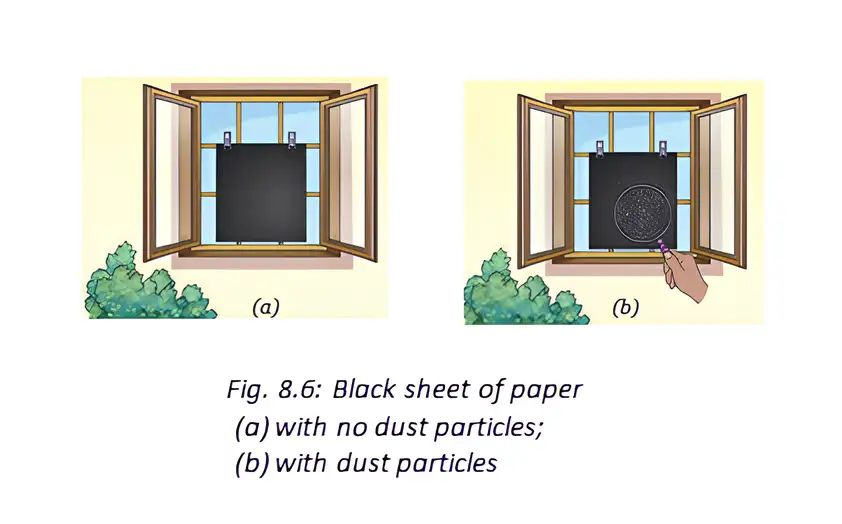
- Dust is suspended in air, is not an integral part of air, and is considered a pollutant; its amount varies by place and time.
Carbon dioxide and air pollution
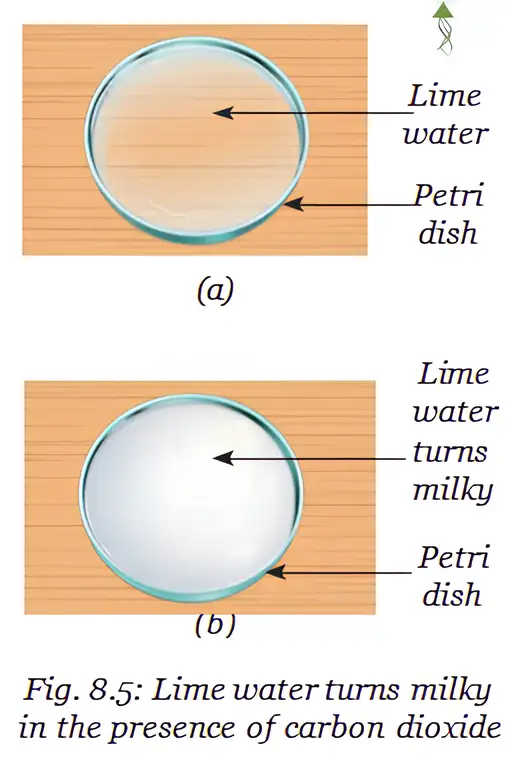
- Limewater test: carbon dioxide reacts with calcium hydroxide to form insoluble calcium carbonate, turning limewater milky.
- Limewater preparation: calcium oxide (quicklime) reacts vigorously with water to form calcium hydroxide and release heat.
- Major air pollutants include particulate matter such as dust and soot, and gases such as carbon monoxide, ozone, nitrogen dioxide and sulfur dioxide.
- Air Quality Index (AQI) is a tool used to describe air quality.
Dust in air
- Suspended particles: dust can settle from air onto a surface over time; its nature and amount can vary from place to place and over time.
Types of mixtures
- Components in everyday mixtures such as poha and sprout salad may themselves be mixtures; components may also be pure substances, such as sugar or salt dissolved in water.
- Scientific rule: all components of a mixture must be pure substances.
- Classification: mixtures may be grouped by the physical states of their components.
| Component states | Examples | Uniform or non-uniform (source) |
|---|---|---|
| Gas and gas | Air | Uniform |
| Gas and liquid | Aerated water (soda water); oxygen dissolved in water | Uniform |
| Solid and gas | Carbon particles in air | Non-uniform |
| Liquid and liquid | Acetic acid in water (vinegar); oil and water | Uniform; non-uniform |
| Solid and liquid | Sand and water; seawater | Non-uniform; uniform |
| Solid and solid | Baking powder (baking soda and tartaric acid); alloys | Non-uniform; uniform |
Separating mixtures
- Everyday purpose: obtain a component of interest and discard the unwanted components.
- Scientific purpose: separate a mixture to obtain pure substances.
How can you show that air contains carbon dioxide?
What is the difference between a uniform and a non-uniform mixture?
Quick recap
- Mixtures contain two or more substances that do not chemically react and retain their properties.
- Uniform mixtures have evenly distributed, indistinguishable components; non-uniform mixtures have distinguishable components.
- Alloys are uniform mixtures; examples include stainless steel, brass and bronze.
- Air is a uniform mixture of gases and water vapour; nitrogen makes up about 78% of it.
- Carbon dioxide turns limewater milky; dust in air is a pollutant, not an integral part of air.
- Mixture types can be grouped by component states, and scientific separation aims to obtain pure substances.
What Are Pure Substances Part-1
Meaning of Pure
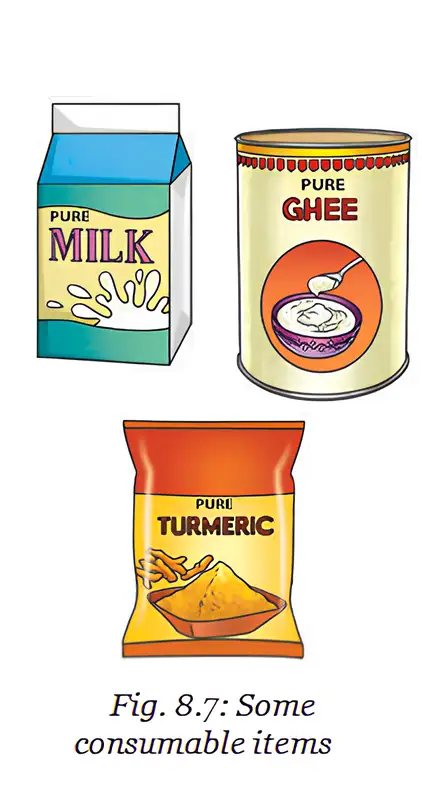
| Point | Common usage | Science |
|---|---|---|
| Meaning of pure | Unadulterated product | Matter consisting of one kind of substance and the same type of particles |
| Examples | Packaged milk or spices may be called pure if unadulterated | Milk and fruit juice are mixtures; baking soda and sugar are pure substances when present as those substances |
Water and the Types of Pure Substances
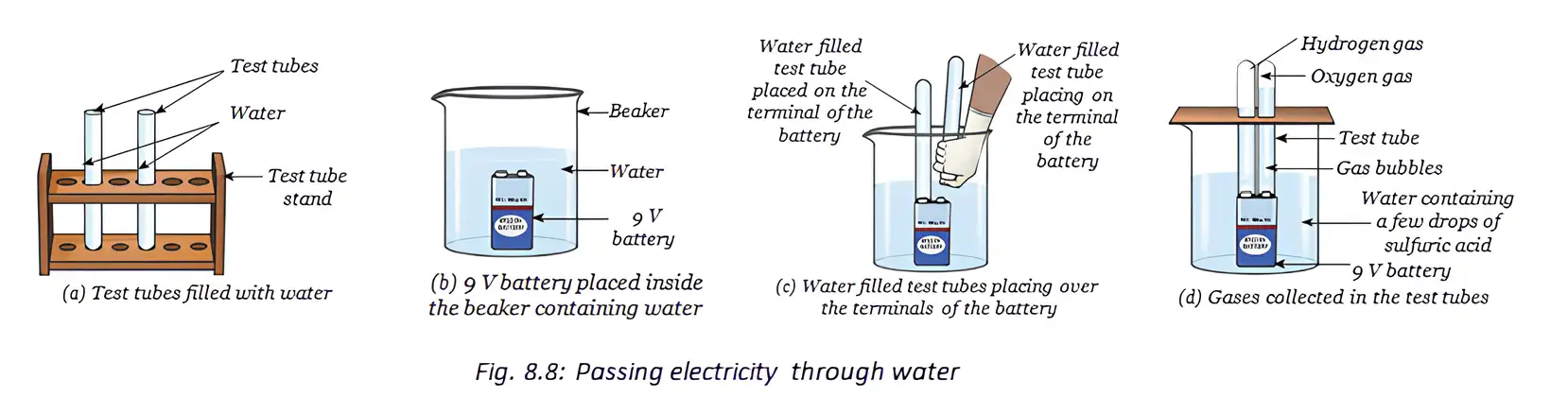
Identifying the Gases
- Hydrogen: A burning candle near the gas produces a pop sound.
- Oxygen: A burning candle flame glows brighter in the gas.
- Conclusion: Water is composed of hydrogen and oxygen; its breakdown by electric current is a chemical change.
Elements
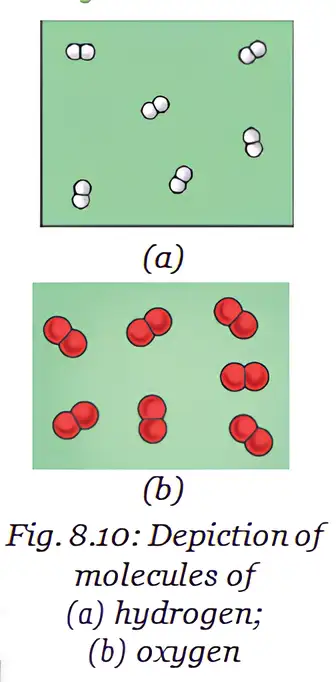
| Type | Examples / properties |
|---|---|
| Metals | Gold, silver, magnesium, iron and aluminium |
| Non-metals | Carbon, sulfur, hydrogen and oxygen |
| Metalloids | Silicon and boron; have intermediate properties between metals and non-metals |
| State | Number / examples | Note |
|---|---|---|
| Solid | Most of the 118 known elements | Most elements exist as solids. |
| Gas | 11 elements, including oxygen, helium and nitrogen | All are non-metals. |
| Liquid | Mercury and bromine | Mercury is a metal; bromine is a non-metal. |
Elements That Melt Near Room Temperature
- Gallium and caesium: They are solid elements but become liquid at around ().
Do not confuse a change of state with decomposition: heating or cooling changes water’s state physically, while electric current chemically breaks water into hydrogen and oxygen.
What is an element? Give examples.
How can hydrogen and oxygen be identified in the products of water decomposition?
Quick recap
- Pure in science: A pure substance contains one kind of substance and the same type of particles; it cannot be separated physically.
- Water: Changes of state are physical, but electric current decomposes water chemically into hydrogen and oxygen.
- Elements: Elements are pure substances made of atoms and cannot be broken down into simpler substances.
- Element types: Elements are classified as metals, non-metals or metalloids.
- States: Of 118 known elements, most are solid; 11 are gases and only mercury and bromine are liquids at room temperature.
What Are Pure Substances Part-2
Compounds
- Compounds: They form when different elements combine chemically in fixed ratios.
- Properties: A compound has properties different from those of its constituent elements.
- Separation: Its elements cannot be separated by physical methods.
Sugar Is a Compound
- Decomposition: Heating sugar turns it brown and then black, leaving carbon and producing water.
- Composition: Since sugar produces carbon and water, it contains carbon, hydrogen, and oxygen.
- Conclusion: Sugar is a compound, not an element.
Iron and Sulfur: Mixture and Compound
- Sample A: Iron and sulfur form a mixture; they retain their properties and can be separated.
- Sample B: Heating iron and sulfur forms iron sulfide, a new compound with different properties.
- Key difference: Iron sulfide is not attracted to a magnet, unlike the iron in Sample A.
Reactions with Dilute Hydrochloric Acid
Do not confuse separating a compound from a mixture with separating its elements: salt can be separated from water by evaporation, but sodium and chlorine cannot be separated from salt by physical methods.
Quick recap
- A compound forms when different elements combine chemically in a fixed ratio.
- A compound has properties different from its elements and cannot be separated into them by physical methods.
- Water has hydrogen and oxygen in a atom ratio; sodium chloride has sodium and chlorine in a particle ratio.
- Heating sugar produces carbon and water, revealing that sugar contains carbon, hydrogen and oxygen.
- Iron and sulfur form a mixture in Sample A; heating them forms iron sulfide, a compound, in Sample B.
- Iron reacts with dilute hydrochloric acid to release hydrogen; iron sulfide releases hydrogen sulfide.
How Do We Use Elements, Compounds, and Mixtures
Everyday Uses and Innovation
- Everyday materials: Air is a mixture, water is a compound, and iron and aluminium are used in buildings and vehicles.
- Innovation: Knowledge of elements and compounds helps develop medicines, vaccines, and fertilisers.
- Material design: Scientists use compounds and mixtures to create materials with useful properties, such as durable alloys.
Graphene Aerogel
- Composition: Graphene aerogel is made from carbon and is described as the lightest material on Earth.
- Properties: It is highly porous, very light, and has a high absorbing capacity.
- Uses: It may help clean oil spills and be used in energy-saving devices and special building coatings.
Minerals
| Mineral category | Examples | Key point |
|---|---|---|
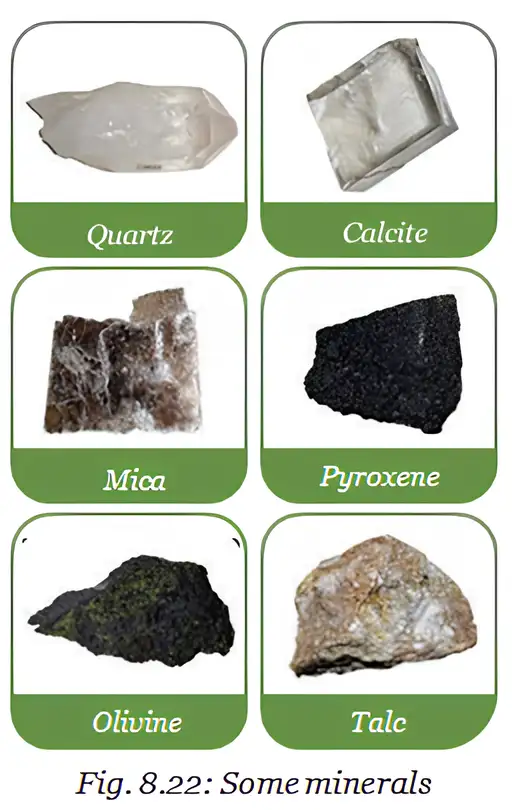
| Native minerals | Gold, silver, copper; sulfur, carbon | Pure elements, not compounds |
| Other common minerals | Quartz, calcite, mica, pyroxene, olivine, talc | Most minerals are compounds |
Elements, Compounds, and Mixtures in Indian Art
- Dhokra art: This traditional craft from Bihar and Odisha uses metals to make figures inspired by nature.
- Process: A beeswax design is covered with clay; when the wax is melted out, the hollow mould is filled with molten brass or bronze.
- Result: The metal gives the figures strength and a shiny golden colour.
Matter and Non-Matter
What are native minerals? Give examples.
How is Dhokra metalwork made?
How is matter distinguished from non-matter?
Quick recap
- Air is a mixture; water is a compound of hydrogen and oxygen.
- Elements, compounds, and mixtures are used in construction, medicines, vaccines, fertilisers, and engineered materials.
- Graphene aerogel is a very light, porous carbon-based material with potential cleaning and energy-saving uses.
- Rocks are usually mixtures of minerals; most minerals are compounds.
- Native minerals are pure elements, such as gold, copper, sulfur, and carbon.
- Dhokra craft uses a clay mould and molten brass or bronze.
- Matter has mass and occupies space; light, heat, and electricity are examples of non-matter.
Snapshots
Mixtures
- Mixture: It contains two or more substances that retain their individual properties and do not react chemically.
- Components: The substances that make up a mixture are called its components.
- Types: Mixtures may be uniform, with evenly distributed components, or non-uniform, with distinguishable components.
Pure Substances
- Pure substance: It consists of only one kind of substance, with the same type of particles throughout.
- Physical separation: A pure substance cannot be separated into other kinds of matter by physical processes.
- Types: Pure substances are classified as elements or compounds.
Elements and Compounds
- Elements: These are pure substances made of one type of atom and cannot be broken down into simpler substances.
- Compounds: These form when two or more elements combine chemically in a fixed ratio.
- Different properties: A compound’s properties differ from those of its constituent elements.
Minerals
- Minerals: They are natural, solid substances found on Earth and have a fixed chemical composition.
- Rocks: Most rocks are mixtures of minerals.
- Uses: Minerals and materials obtained from them are used in everyday products; cement contains mineral materials, and talcum powder is made from talc.
Quick recap
- A mixture contains two or more substances that do not chemically react; its components retain their properties.
- The substances that make up a mixture are called its components.
- A pure substance has one type of particle, and its particles behave identically.
- Pure substances are elements or compounds.
- Elements are the simplest substances and are the building blocks of matter.
- Compounds contain elements chemically combined in a fixed ratio and have properties different from those elements.
- Minerals are natural solids with fixed chemical compositions; most are compounds, while a few are pure elements.
Science — ALL CHAPTERS
1
Exploring the Investigative World of Science
2
The Invisible Living World: Beyond Our Naked Eye
3
Health: The Ultimate Treasure
4
Electricity: Magnetic and Heating Effects
5
Exploring Forces
6
Pressure, Winds, Storms, and Cyclones
7
Particulate Nature of Matter
8
Nature of Matter: Elements, Compounds, and Mixtures
9
The Amazing World of Solutes, Solvents, and Solutions
10
Light: Mirrors and Lenses
11
Keeping Time with the Skies
12
How Nature Works in Harmony
13
Our Home: Earth, a Unique Life Sustaining Planet