Class 8 . Science . Curiosity . Pressure Winds Storms and Cyclones
Chapter 6: Pressure, Winds, Storms, and Cyclones
Ch 6
Science
Class 8
Introduction
Wind Force and Wind Pressure
Wind pressure — The pressure produced when moving air exerts force on objects.
Effects of wind
- Moving air exerts force on objects it encounters; this force creates wind pressure.
- Light objects, such as fallen leaves, can be lifted and swirled by wind.
- Strong winds can make trees bend, slam doors, rattle windows and flutter clothes.
- Storms and cyclones involve powerful winds; this chapter explores how pressure and wind shape these events.
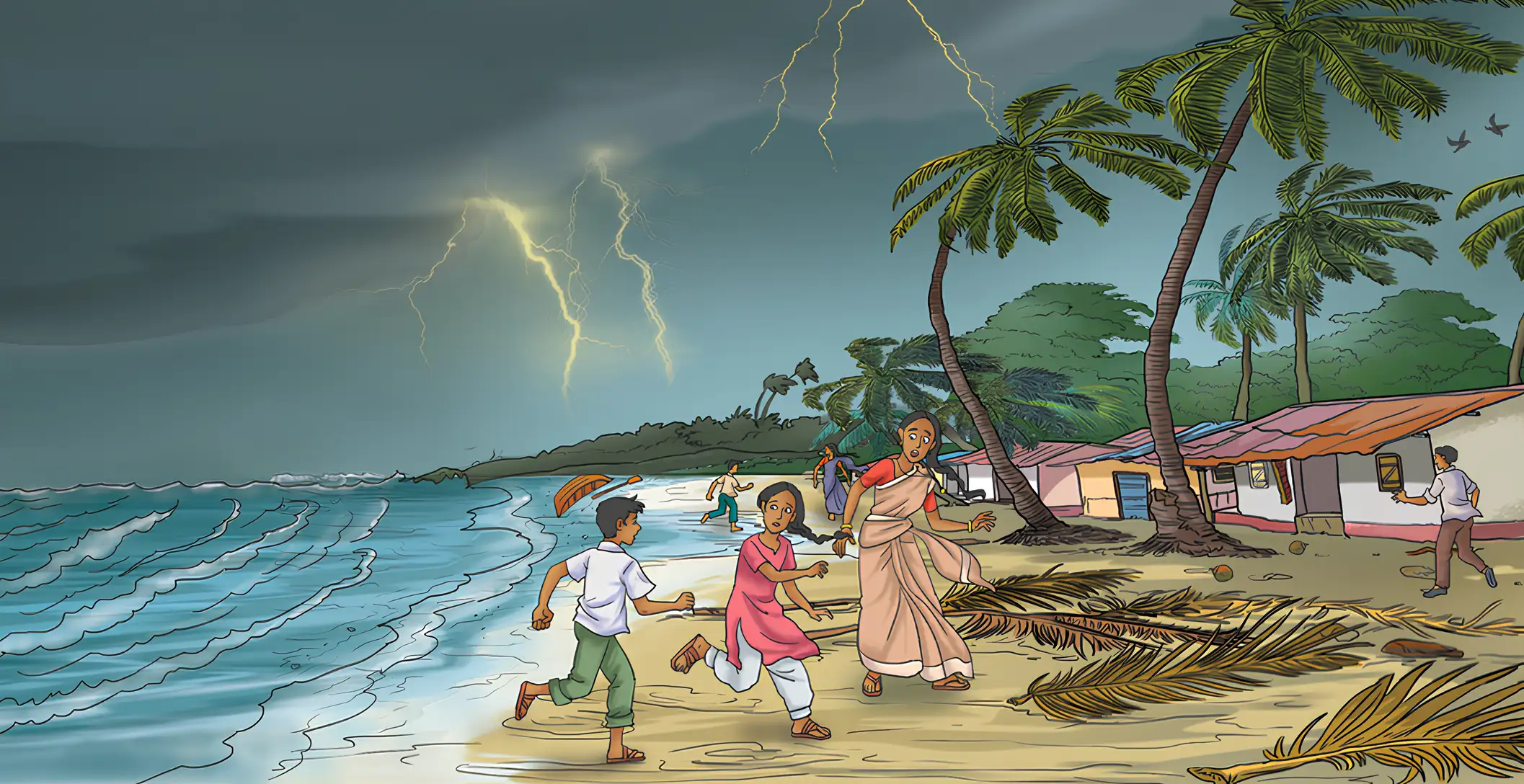
- Wind is moving air, and it can exert force on objects.
- Wind pressure explains familiar effects such as bending trees and rattling windows.
Quick recap
- Moving air exerts force on objects.
- The force exerted by wind creates wind pressure.
- Wind pressure can lift leaves and bend trees.
- Wind can slam doors, rattle windows and flutter clothes.
- Storms and cyclones are powerful natural events involving strong winds.
Pressure Part-1
Pressure
Pressure — Pressure is the force acting per unit area of a surface.
- Force direction: For pressure calculations here, consider forces acting perpendicular to the surface.
- Area matters: For the same force, a smaller area produces greater pressure.
- Bag straps: Broad straps spread the bag’s weight over a larger area, reducing pressure on the shoulders.
Use this relationship to calculate pressure from force and area.
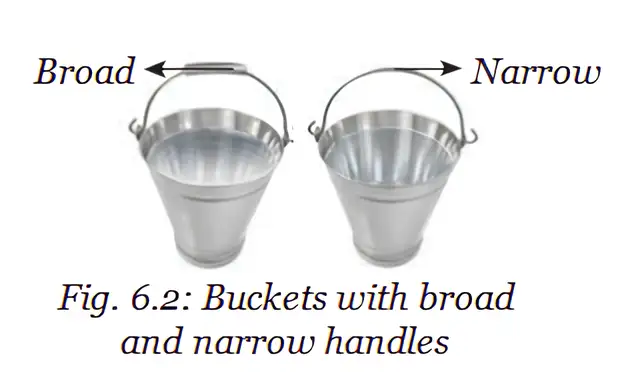
Reducing and Increasing Pressure
- Broad handles: A broad bucket handle spreads the weight over more area, reducing pressure on the hand.
- Cloth padding: A round piece of cloth under a head load increases the contact area and reduces pressure.
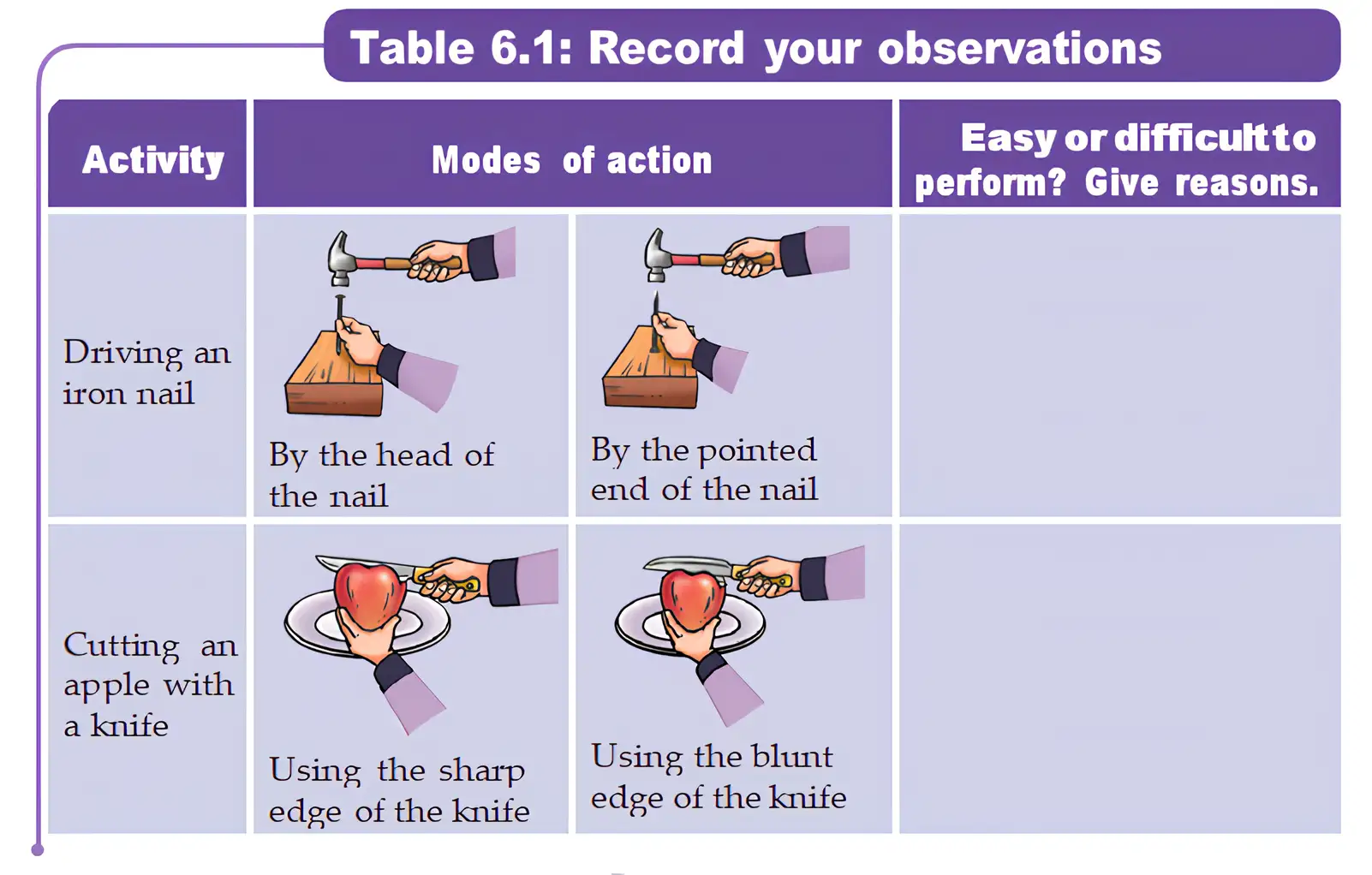
- Pointed nail: Its small tip area produces high pressure, helping it penetrate a surface.
- Sharp knife: Its thin edge concentrates force over a small area, making cutting easier.
Units and Calculation
- SI units: Force is measured in newtons () and area in square metres ().
- Pressure unit: Pressure is measured in newtons per square metre (), also called the pascal ().
- Example: A force of on an area of gives .
Overhead Water Tanks
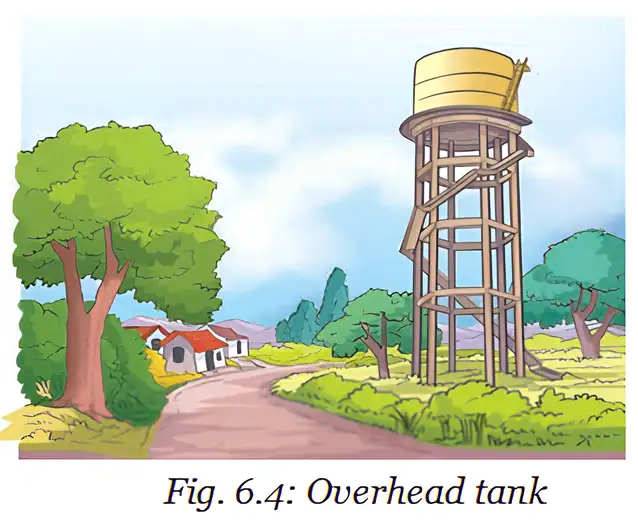
- Overhead tanks: Water tanks are placed at a height; the lecture raises the question of why but does not explain it here.
For the same force, do not assume that a larger contact area gives greater pressure: increasing area reduces pressure.
Why are broad bag straps more comfortable than narrow straps?
Calculate the pressure when a force of acts on an area of .
Quick recap
- Pressure is force per unit area: .
- Pressure calculations here use forces acting perpendicular to the surface.
- For the same force, a smaller area produces greater pressure.
- Broad straps, handles, and cloth padding reduce pressure by increasing contact area.
- Pointed nails and sharp knife edges increase pressure by concentrating force over a small area.
- Pressure is measured in pascals; .
Pressure Part-2
Pressure exerted by liquids
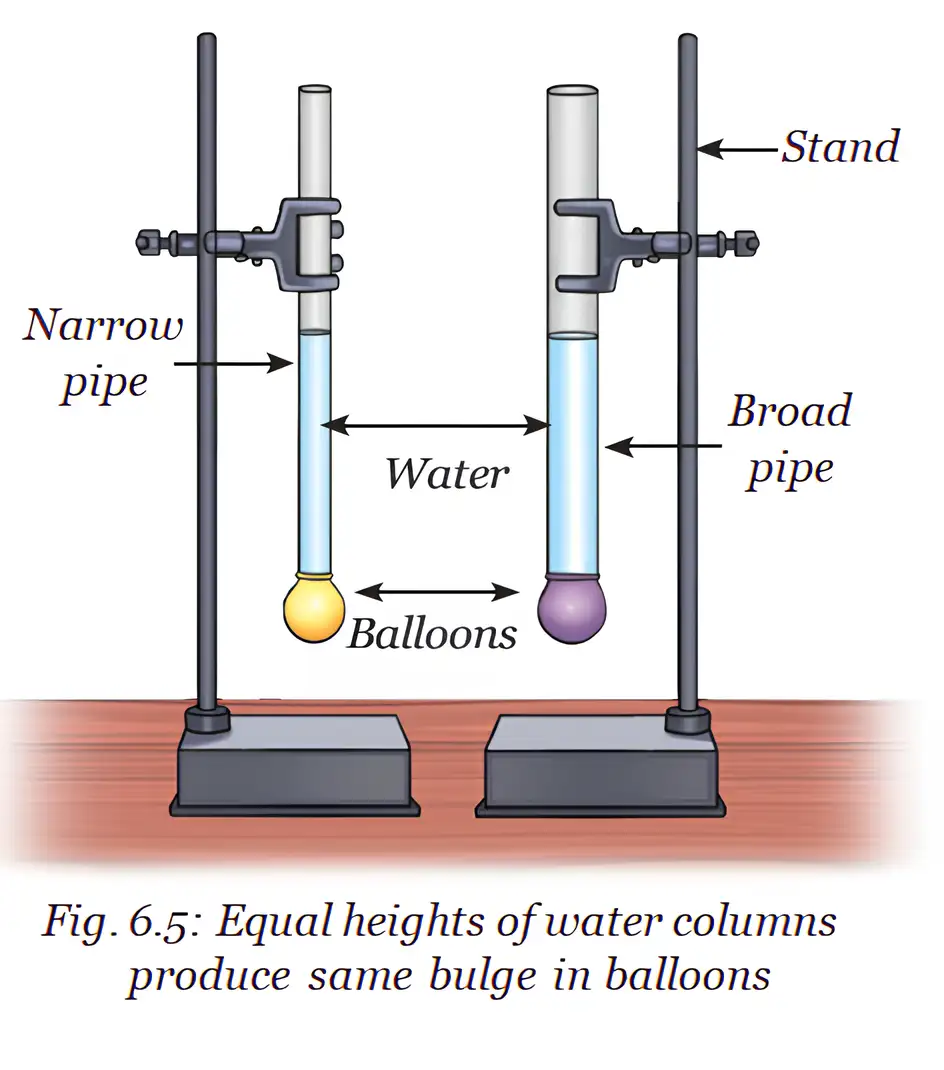
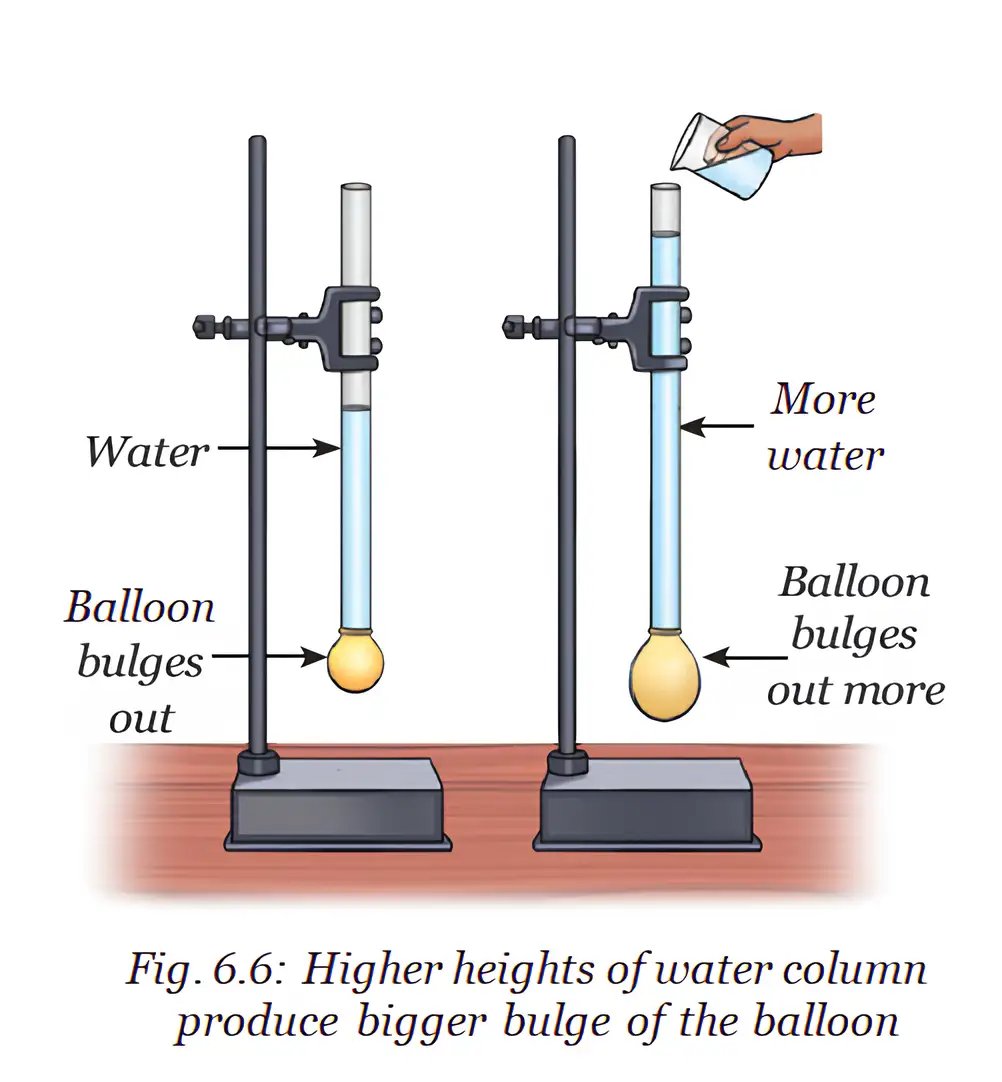
Who receives a more powerful stream of water: a person on the first or second floor when the tank is on the top floor?
Pressure in all directions
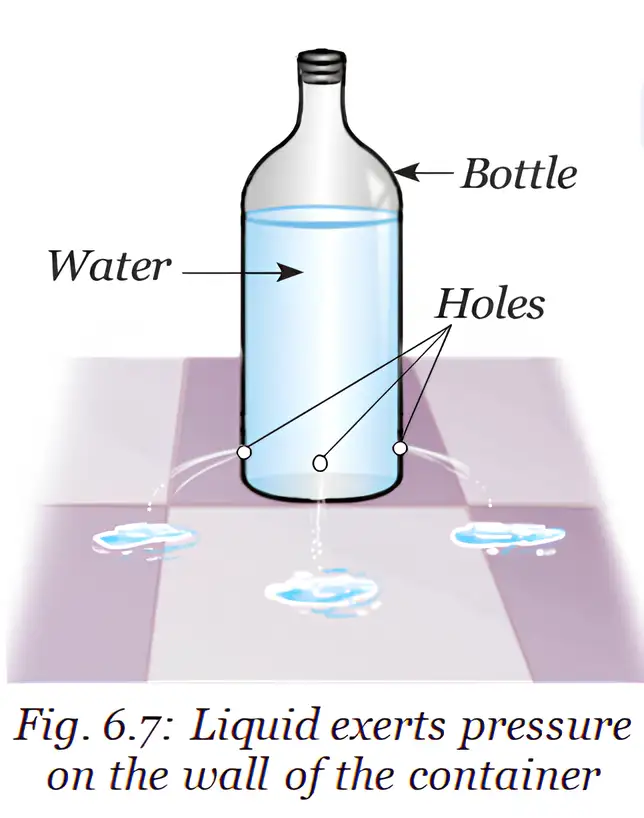
Water pressure and dams
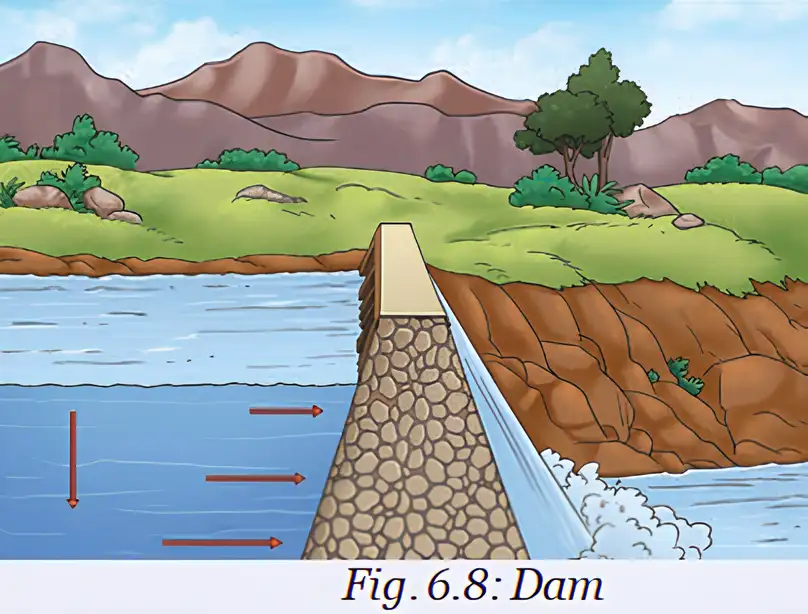
Why is the base of a dam broader than its top?
Quick recap
- Equal-height liquid columns exert equal pressure at the bottom, regardless of their width.
- Liquid pressure at the bottom increases as the height of the liquid column increases.
- Liquids exert pressure on container sides as well as the bottom—in all directions.
- Taps lower than an overhead tank receive greater pressure because the water column above them is taller.
- Water pressure on a dam’s side is greatest near the bottom, so the dam is built with a broader base.
Pressure Exerted by Air
Atmosphere and Atmospheric Pressure
Atmosphere — The atmosphere is the envelope of air surrounding Earth; it extends many kilometres above the surface.
Air and Pressure
- Composition: Atmospheric air contains nitrogen, oxygen, argon, carbon dioxide, and small quantities of other gases.
- Atmospheric pressure: Air exerts pressure on objects around us; this pressure is called atmospheric pressure.
- Covering-sheet example: A plate is harder to lift with an unfolded sheet than with a folded sheet, even though the sheet's weight is unchanged.
- Inference: The larger covering area experiences a greater total force from air. Pressure is force per unit area.
Pressure is the force exerted per unit area.
Air Pressure Acts in All Directions
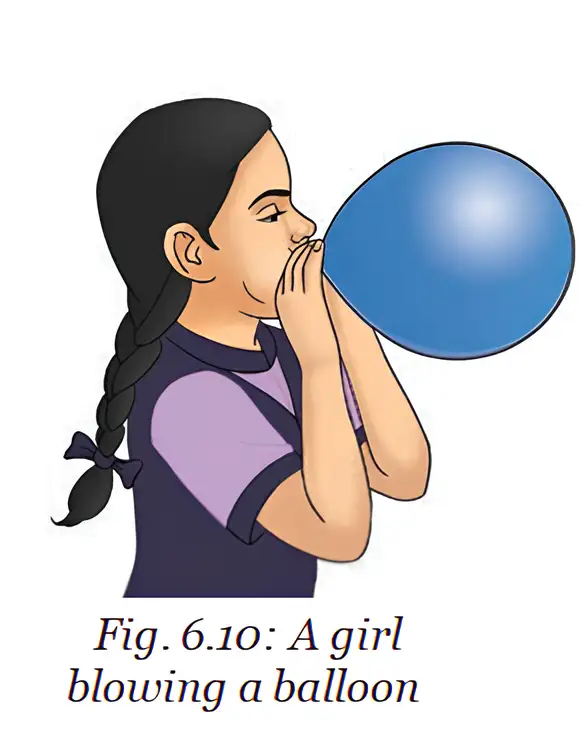
Air Inside a Balloon
- Inflation: Air filled into a balloon presses on its walls, causing it to expand.
- Direction: The balloon expands in all directions, showing that air exerts pressure in all directions.
- Open balloon: When an inflated balloon is left with its mouth open, air escapes.
Atmospheric Pressure and a Rubber Sucker
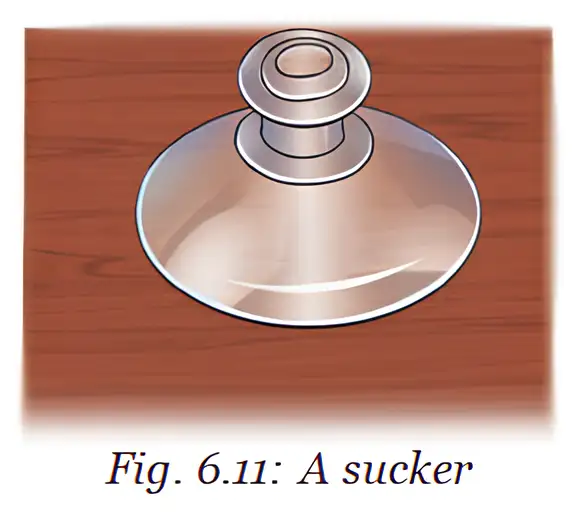
Why a Sucker Sticks
- Inside pressure: Pressing a rubber sucker against a smooth surface pushes out most of the air beneath it, reducing the pressure inside.
- Outside pressure: The surrounding air pressure is greater than the pressure beneath the sucker, so the sucker sticks to the surface.
- Removing it: Pulling the sucker off requires enough force to overcome the pressure difference.
Magnitude and Units of Atmospheric Pressure
Atmospheric Pressure on Us
- Large force: Air over an area of exerts a force of about , nearly equal to the weight of a object.
- Why we are not crushed: Pressure inside the body balances atmospheric pressure outside. It is caused by the movement of fluids and gases in body tissues and organs.
| Unit | Use or equivalence |
|---|---|
| Pascal (Pa) | SI unit; |
| Millibar (mb) | Practical unit of air pressure; |
| Hectopascal (hPa) |
Why does a rubber sucker stick to a smooth surface?
Why are we not crushed by atmospheric pressure?
Quick recap
- The atmosphere is the envelope of air surrounding Earth.
- Air exerts pressure on objects; this is atmospheric pressure.
- Air pressure acts in all directions, as shown by a balloon expanding in all directions.
- A sucker sticks because the air pressure outside it exceeds the reduced pressure beneath it.
- Pressure inside the body balances atmospheric pressure outside.
- Pressure is measured in pascals (Pa); .
Formation of Wind
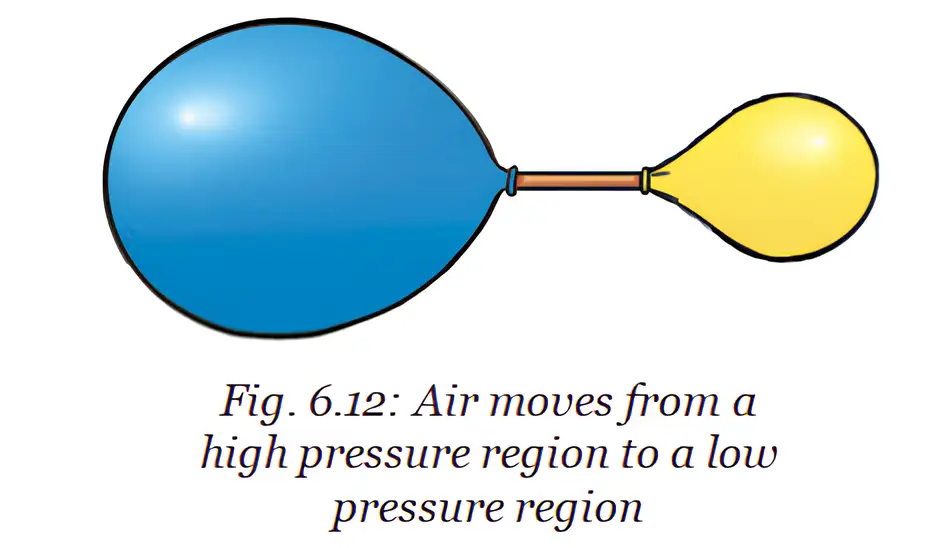
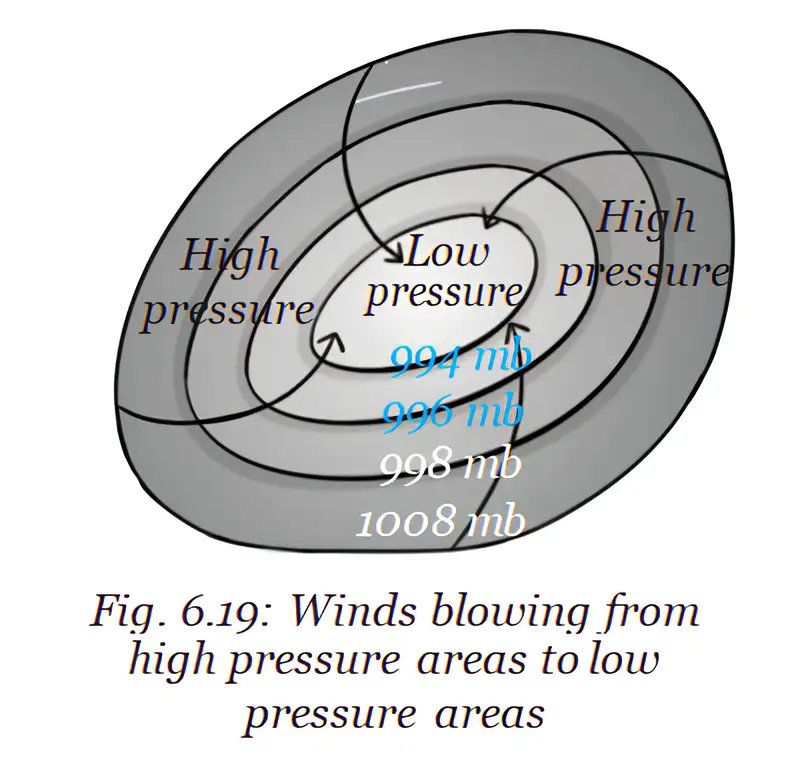
Air Moves from High to Low Pressure
Sea Breeze and Land Breeze
| Point | Sea breeze | Land breeze |
|---|---|---|
| When | Day | Night |
| Warmer surface | Land | Water |
| Wind direction | Sea to land | Land to sea |
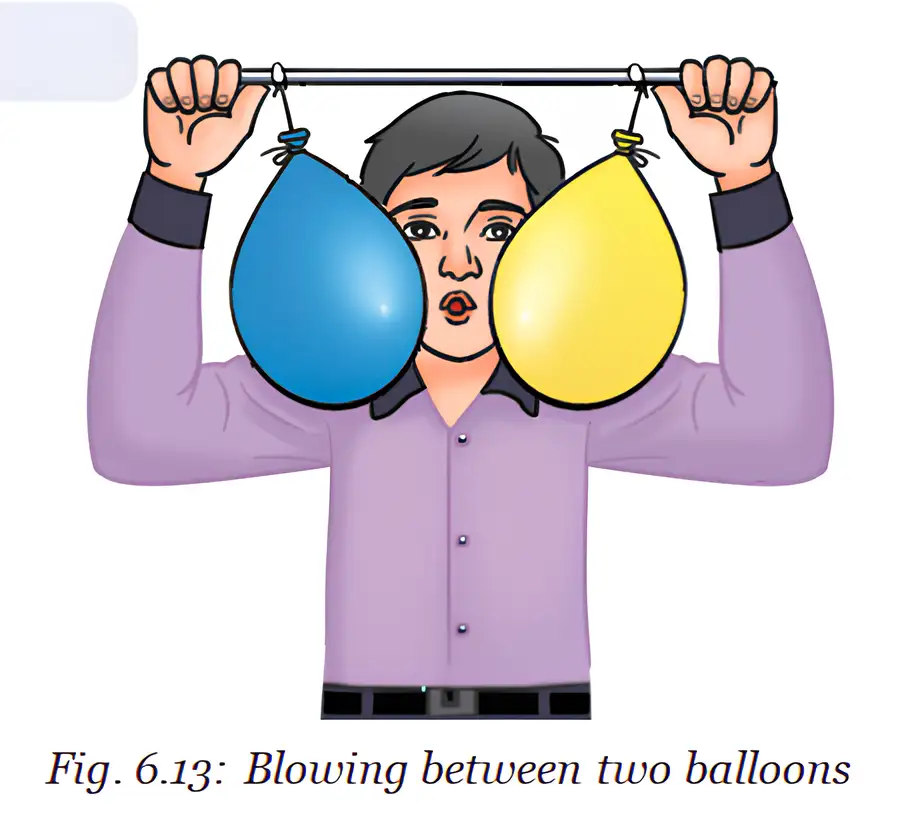
High-Speed Winds Lower Air Pressure
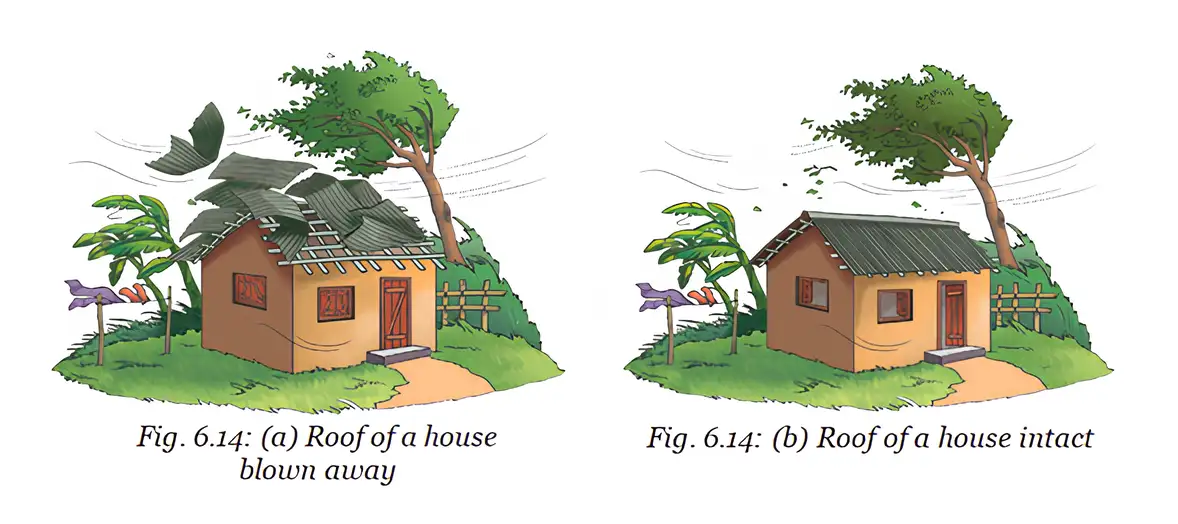
Strong Winds and House Roofs
How does a sea breeze form during the day?
Why can strong winds blow off house roofs, and how can the risk be reduced?
Quick recap
- Air flows from higher pressure to lower pressure and stops when pressures become equal.
- A larger pressure difference causes faster airflow.
- Daytime sea breeze blows from sea to land; nighttime land breeze blows from land to sea.
- High-speed air is associated with lower pressure.
- Fast wind over a roof can create a pressure difference that lifts it; open doors and windows help reduce the difference.
Storms, Thunderstorms, and Lightning
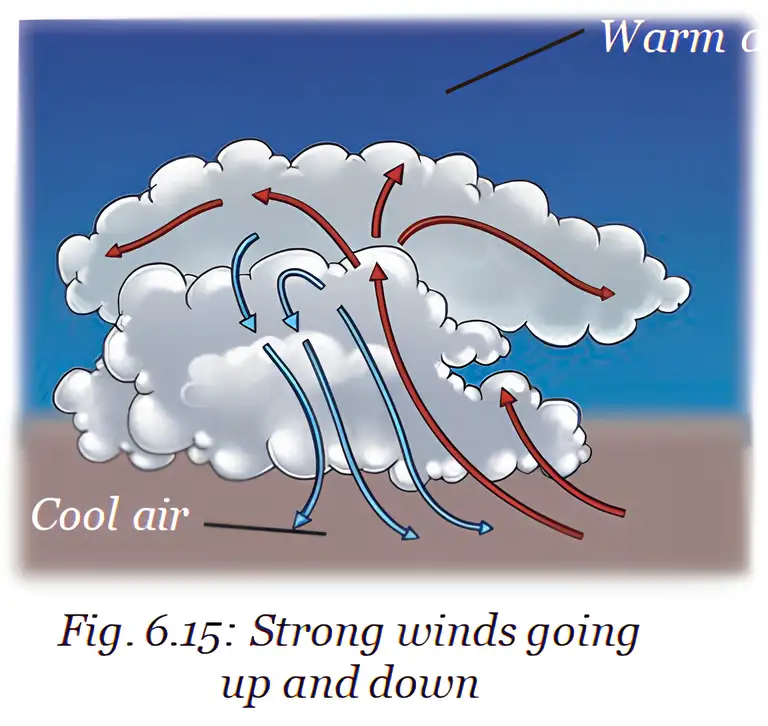
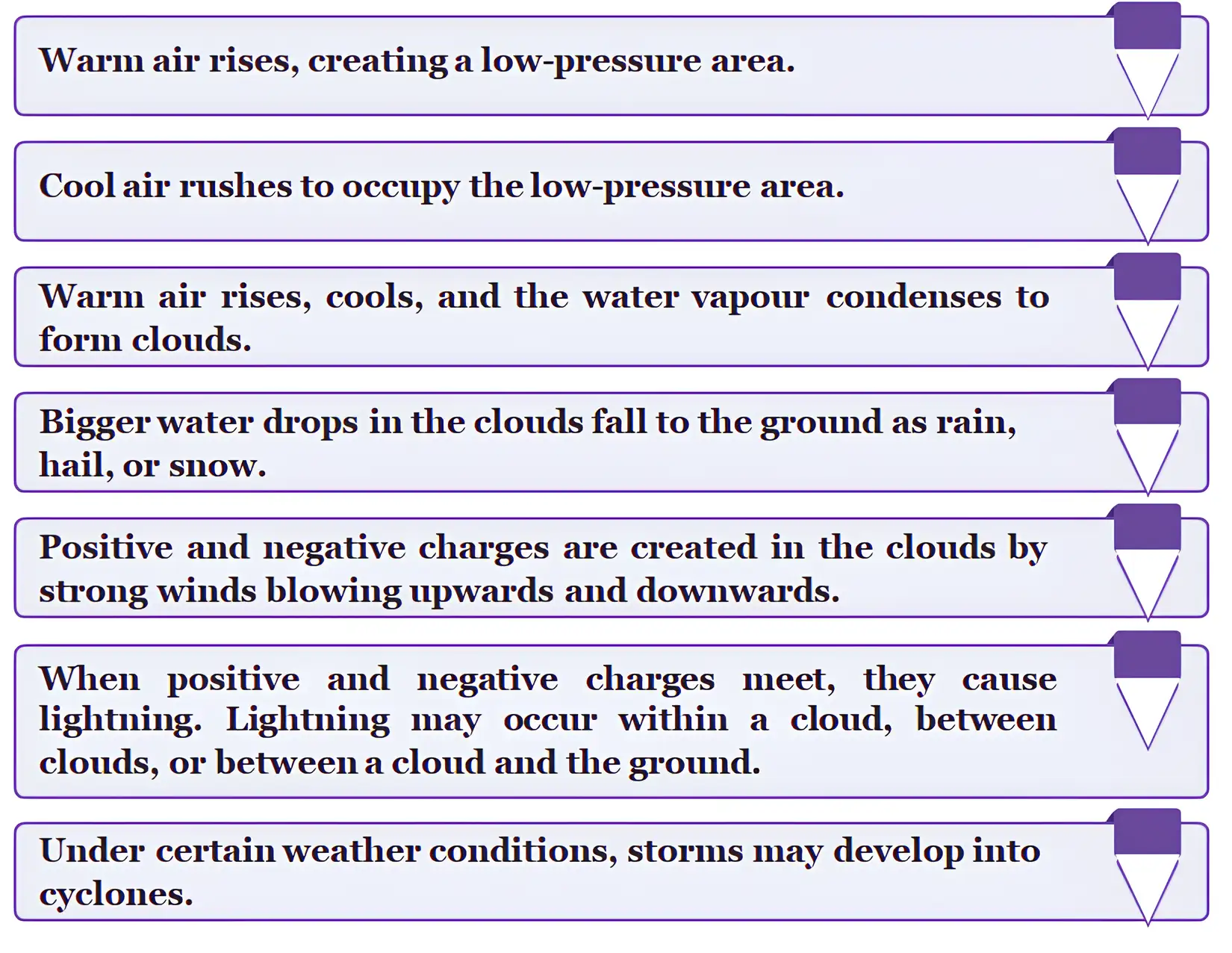
How storms form
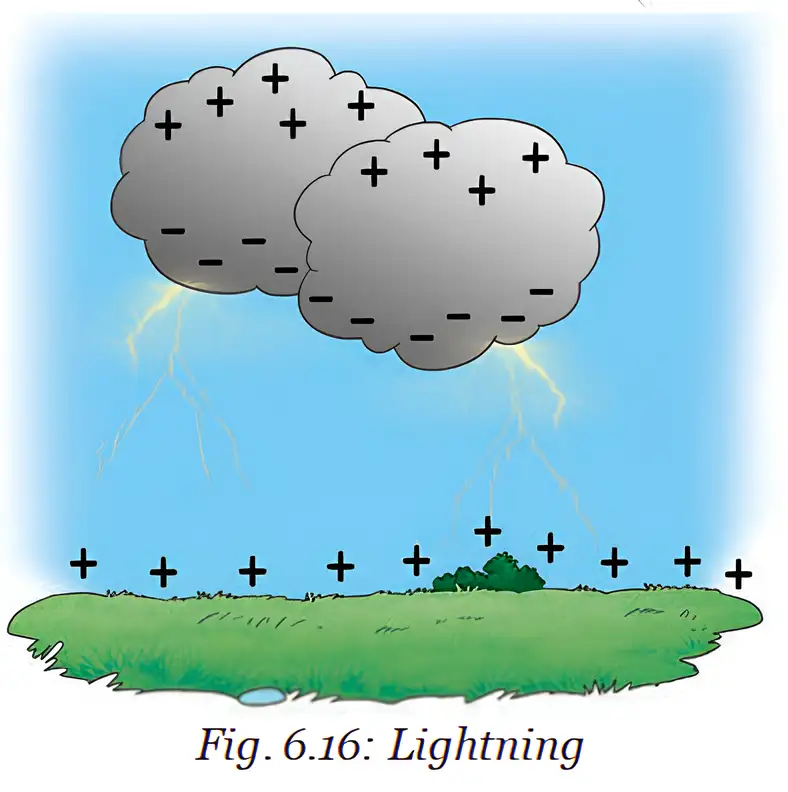
Charge separation and lightning
Thunder — Thunder is the loud sound produced when lightning rapidly heats the surrounding air, causing it to expand.
Thunderstorm — A storm accompanied by lightning and thunder is called a thunderstorm.
Local thunderstorms in India
- Frequency: Storms are more frequent in hot, humid, tropical regions such as India.
- Effects: Strong winds and heavy rain can accompany these storms.
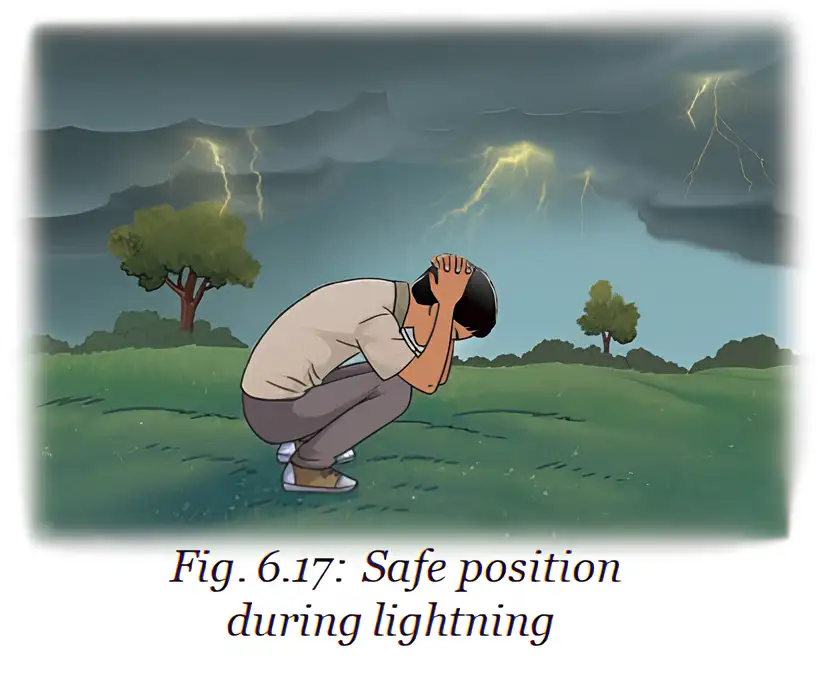
Lightning safety
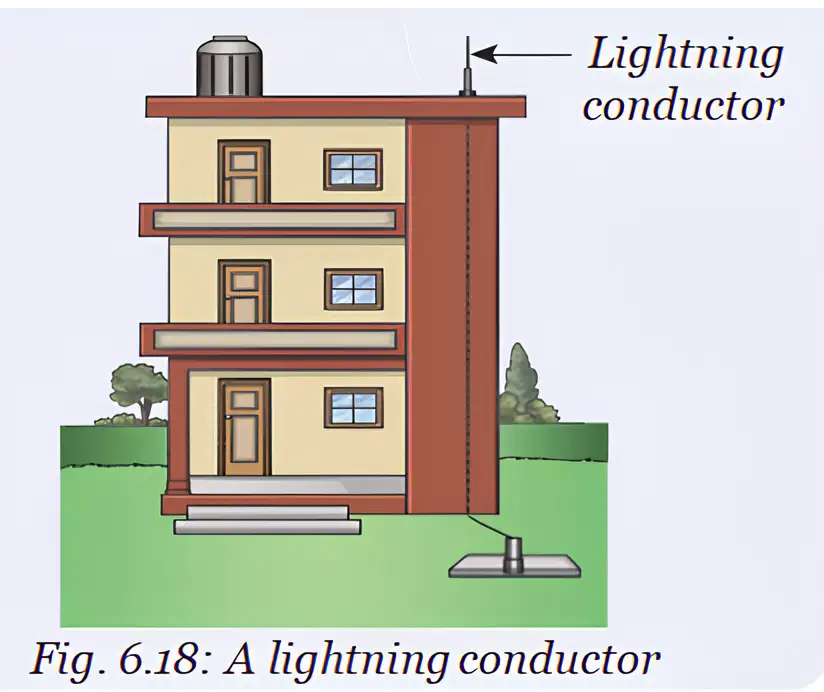
Lightning conductor
How does lightning produce thunder?
How do charges become separated in a storm cloud?
Quick recap
- Heated, moist air rises, cools, forms clouds, and contributes to storms with rain, hail, or snow.
- Rubbing between ice particles and water droplets creates static charges that separate within clouds.
- A sudden flow of charges produces lightning; rapidly heated, expanding air produces thunder.
- Indian local thunderstorms include Kalboishakhi, Bordoisila, and mango showers.
- During lightning, crouch in a low-lying open area outdoors; a bus or car is comparatively safer.
- A lightning conductor directs electric charges from above a building into the ground.
Cyclone
Formation of a Cyclone
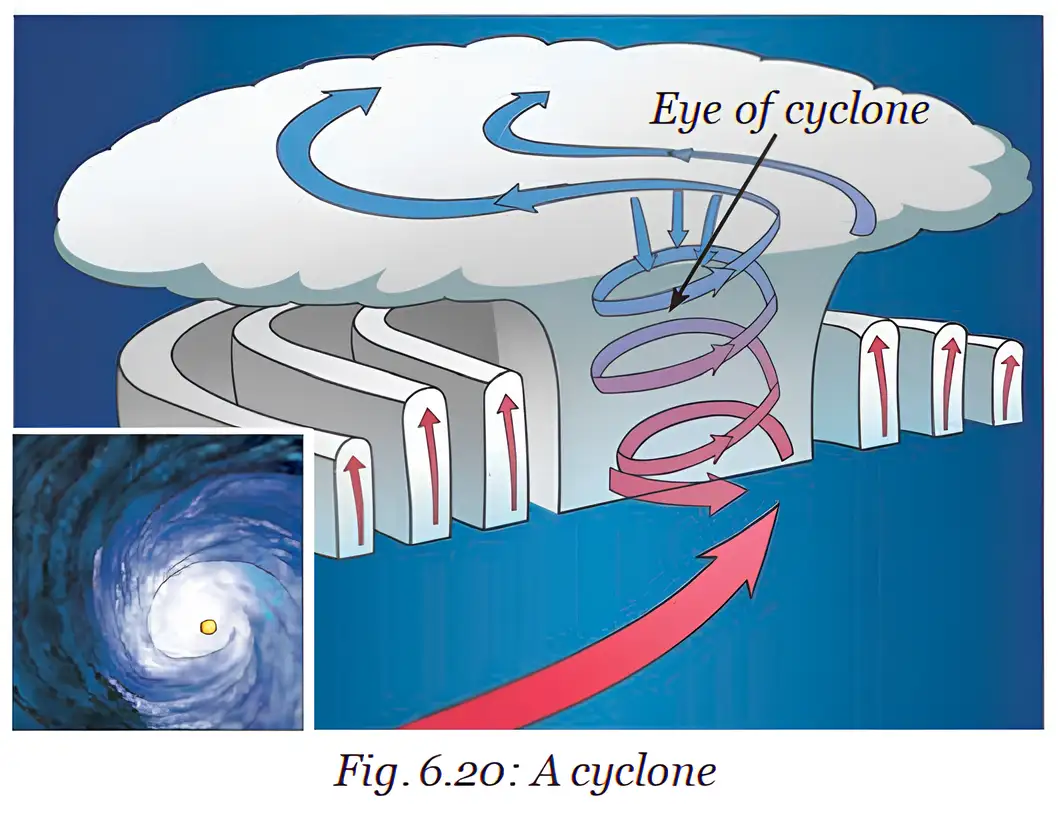
Cyclone — A cyclone is a spinning system of clouds, winds, and rain around a very low-pressure area.
How a cyclone forms
- Warm ocean water heats the moist air above it, which rises.
- Evaporation absorbs heat from the ocean as water changes into vapour.
- Condensation turns rising water vapour into raindrops and releases heat into the atmosphere; this further warms and lifts the air.
- Low pressure forms as air rises; surrounding air rushes in and rises too.
- Earth’s rotation makes the moving air spin. Repeated uplift and inflow create a very low-pressure centre with high-speed winds.
Cyclone Structure and Movement
- Eye: The lowest-pressure region at the centre of a cyclone, where winds are calm.
- Around the eye: Strong winds and heavy rainfall occur.
- Wind speed: As a cyclone moves from ocean towards land, it can produce higher wind speeds than regular thunderstorms.
- Over land: The cyclone gradually weakens when it loses its supply of moist air.
- Example: Cyclone Amphan had peak wind speeds of 270 km/h in 2020.
Cyclone Hazards and Damage
- Storm surge: Strong winds push seawater towards the shore, forming a wall of water about 3–12 metres high; flooding can reach inland areas.
- Heavy rain: Rivers may overflow, and landslides may occur.
- Saltwater flooding: Seawater can contaminate drinking-water sources and make farmland less fertile, harming crops.
- Disruption: Fallen trees and debris can block roads; power outages may disrupt emergency services and daily life.
- Long-lasting impact: Cyclone destruction can take months or years to repair.
Safety During Cyclones
- Stay informed: Follow weather reports and alerts and warnings issued by the India Meteorological Department (IMD).
- Forecasting: Weather-monitoring satellites help track cyclones and predict their paths, reducing risks to life and property.
- Prepare: People in cyclone-prone areas should keep an emergency kit with essential items.
- Take shelter: During a cyclone, move quickly to a nearby designated cyclone shelter.
- Coordination: National and international organisations work together to monitor cyclone-related disasters.
How does a cyclone form?
What is a storm surge, and what damage can it cause?
State two ways to reduce the danger from cyclones.
Quick recap
- Cyclones form over warm oceans as moist air rises and condensation releases heat, driving further uplift.
- Air rushes from high-pressure areas towards low pressure and spins due to Earth’s rotation.
- The eye is calm; strong winds and heavy rain occur around it, and cyclones weaken over land when moist air is cut off.
- Cyclone Amphan (2020) had peak winds of 270 km/h.
- Storm surges of 3–12 metres, flooding, landslides, saltwater damage, and infrastructure disruption are major hazards.
- Follow IMD warnings, use forecasts, prepare an emergency kit, and reach a designated cyclone shelter.
Snapshots
Pressure
Use this formula to calculate pressure from force and area.
Pressure in fluids
- Fluids: Both liquids and gases exert pressure on the walls of their containers.
- Atmospheric pressure: The pressure exerted by the air around us.
Air Pressure and Winds
How winds form
- Uneven air pressure develops in different areas.
- Warm air rises, leaving a low-pressure area.
- Cooler air moves in from surrounding higher-pressure areas.
- Moving air is wind; differences in air pressure cause winds to blow.
Thunderstorms and Lightning
Thunderstorm formation
- Requirements: Moisture and strong winds are important for thunderstorm formation.
- Charge formation: Strong upward and downward air movements make ice particles rub against water droplets, developing electric charges in clouds.
- Lightning: A discharge occurs when charges collide within a cloud, between clouds, or between a cloud and the ground.
- Danger: Lightning strikes can cause loss of life and damage to property.
Protection and monitoring
- Lightning conductor: Protects buildings from the effects of lightning.
- Monitoring: The India Meteorological Department (IMD) constantly monitors cyclones and thunderstorms in India.
How do differences in air pressure produce winds?
How does lightning develop in clouds?
Quick recap
- Pressure is force per unit area; its SI unit is the pascal (Pa), equal to N/m².
- Liquids and gases exert pressure on container walls; air exerts atmospheric pressure.
- Differences in air pressure cause winds: warm air rises and cooler air moves into the low-pressure area.
- Thunderstorms require moisture and strong winds.
- Rubbing between ice particles and water droplets produces charges; their discharge causes lightning.
- Lightning can harm life and property; lightning conductors protect buildings.
- The IMD monitors cyclones and thunderstorms in India.
Science — ALL CHAPTERS
1
Exploring the Investigative World of Science
2
The Invisible Living World: Beyond Our Naked Eye
3
Health: The Ultimate Treasure
4
Electricity: Magnetic and Heating Effects
5
Exploring Forces
6
Pressure, Winds, Storms, and Cyclones
7
Particulate Nature of Matter
8
Nature of Matter: Elements, Compounds, and Mixtures
9
The Amazing World of Solutes, Solvents, and Solutions
10
Light: Mirrors and Lenses
11
Keeping Time with the Skies
12
How Nature Works in Harmony
13
Our Home: Earth, a Unique Life Sustaining Planet