Class 12 Humanities . History . Themes In Indian History Part II . Bhakti Sufi Traditions Changes in Religious Beliefs and Devotional Texts C Eighth to Eighteenth Century
Chapter 2: BHAKTI- SUFI TRADITIONS CHANGES IN RELIGIOUS BELIEFS AND DEVOTIONAL TEXTS (C. EIGHTH TO EIGHTEENTH CENTURY)
Ch 2
History
Class 12 Humanities
Introduction & a Mosaic of Religious Beliefs and Practices
Sources for Reconstructing Religious Traditions
A changing religious landscape
- Material evidence: By the mid-first millennium CE, stupas, monasteries and temples marked a varied religious landscape.
- Textual evidence: Puranas and other texts preserve beliefs and practices; many Puranas took their present form around this period.
- Poet-saints’ compositions: Often created orally in regional languages, set to music and later collected by disciples or devotees.
- Fluid traditions: Later devotees could expand, alter or abandon ideas as political, social and cultural circumstances changed.
- Historians’ challenge: These changing texts cannot always be treated as fixed records of an original teaching.
| Source | What it contains | How historians use it |
|---|---|---|
| Poet-saints’ compositions | Oral, often musical works in regional languages, usually compiled after the saint’s death | Reveal devotional ideas, while their changing transmission must be considered |
| Hagiographies | Accounts of saints written by followers or members of their religious sect | May not be literally accurate, but show how devotees understood the saints’ lives |
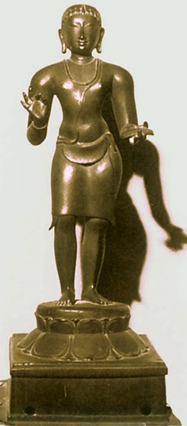
A Mosaic of Religious Beliefs and Practices
Deities and Changing Forms of Worship
- Growing visibility: A wide range of gods and goddesses appeared in sculpture and texts.
- Major deities: Vishnu, Shiva and the goddess continued to be worshipped and were represented in many forms.
- Religious diversity: Beliefs and practices developed through interaction between different communities and traditions.
Integration of Cults
Two Processes Shaping Religious Traditions
- Dissemination: Brahmanical ideas spread through Puranas in accessible Sanskrit verse, including to women and Shudras generally excluded from Vedic learning.
- Incorporation: Brahmanas accepted and reworked beliefs and practices of these and other social groups.
- Interaction: Sanskritic Puranic traditions and local traditions influenced one another over time.
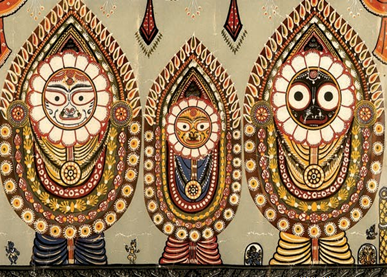
Jagannatha at Puri
- Local deity: At Puri in Odisha, a local deity made of wood by local tribal specialists was worshipped in a distinctive form.
- Integration: By the twelfth century, the deity was identified as Jagannatha—“Lord of the World”—a form of Vishnu.
- Two-way change: The local deity entered a Puranic framework, while Vishnu was represented in a form distinctive to the region.
| Point | “Great” tradition | “Little” tradition |
|---|---|---|
| Meaning | Practices and customs associated with dominant groups, including priests and rulers | Local practices followed by peasants that might differ from dominant customs |
| Relationship | Influenced local religious life | Interacted with and could change the wider tradition |
How to Understand the Terms
- Origin: Sociologist Robert Redfield coined these terms in the twentieth century to describe cultural practices in peasant societies.
- Change: Both traditions changed through interaction; neither remained fixed.
- Caution: The labels can imply a hierarchy, so scholars often put “great” and “little” in quotation marks.
Goddess Cults and Integration
- Local worship: Goddess worship was widespread; a goddess might be represented simply by a stone smeared with ochre.
- Puranic integration: Local goddesses were incorporated by identifying them as wives of major male deities.
- Examples: A local goddess could be equated with Lakshmi, Vishnu’s wife, or Parvati, Shiva’s wife.
Difference and Conflict
Tantric Practices
- Association: Tantric forms of worship were often connected with goddess cults and were practised across several regions of the subcontinent.
- Participation: Women and men could take part; practitioners often set aside caste and class distinctions within the ritual context.
- Influence: Tantric ideas affected Shaivism and Buddhism, especially in eastern, northern and southern parts of the subcontinent.
| Point | Vedic traditions | Puranic traditions |
|---|---|---|
| Prominent deities | Agni, Indra and Soma were prominent in the Vedic pantheon, but by this period they had become marginal and were rarely visible in texts or visual representations. Vishnu, Shiva and the goddess appeared in Vedic mantras, but in forms unlike their elaborate Puranic forms. | Vishnu, Shiva and the goddess became prominent, with elaborate myths and many forms. |
| Authority and practice | The Vedas continued to be revered as authoritative; worship often stressed regulated sacrifices and precisely chanted mantras. | Included diverse devotional and other practices, some beyond Vedic ritual rules. |
Sources of Religious Tension and Classification
- Different ritual views: Vedic authorities sometimes condemned practices outside regulated sacrifices and mantra recitation.
- Different authority claims: Tantric practitioners often disregarded Vedic authority.
- Competing devotion: Devotees could present Vishnu or Shiva as supreme.
- Inter-religious tension: Relations with Buddhists and Jains could involve tension or open conflict.
- Later classification: Over the following millennium, these diverse and sometimes conflicting beliefs and practices came to be classified as “Hindu”.
Bhakti in Context
- Long history: Devotional worship had existed for nearly a thousand years before the period under study.
- Range: Bhakti included routine temple worship as well as ecstatic devotion that could bring devotees into a trance-like state.
- Expression: Singing and chanting devotional compositions formed part of worship, especially in Vaishnava and Shaiva traditions.
Key Context and Examples
- Mid-first millennium CEThe subcontinent had varied religious structures, and many Puranas acquired their present form around this time.
- c. Eighth–eighteenth centuriesThe period covered by the chapter’s study of Bhakti–Sufi traditions.
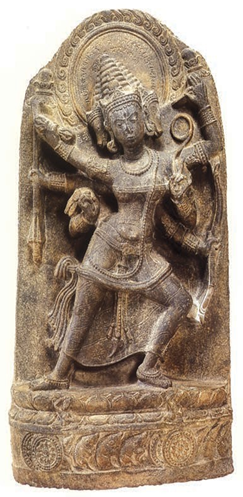
- c. Tenth centuryThe Buddhist goddess Marichi sculpture from Bihar illustrates religious integration.
- By the twelfth centuryThe local deity at Puri was identified as Jagannatha, a form of Vishnu.
- Hagiography
- A saint’s life account written by followers or members of the saint’s religious community.
- “Great” and “little” traditions
- Terms for dominant customs and local practices that interacted and changed over time.
- Tantric practices
- Ritual practices often associated with goddess worship and open across gender and social divisions.
- Bhakti
- Devotional worship ranging from temple rituals to ecstatic devotion.
What processes contributed to the integration of local and Puranic traditions?
Explain the integration of the local deity at Puri into the Puranic tradition.
How did Vedic and Puranic traditions differ, and why did tensions arise?
Quick recap
- Religious history is reconstructed from monuments, texts, devotional compositions and hagiographies, each with limitations.
- Local and Sanskritic Puranic traditions interacted, as shown by the integration of Jagannatha at Puri.
- “Great” and “little” traditions describe interacting cultural practices, not fixed or neutral ranks.
- Local goddesses and Tantric practices formed part of varied religious traditions.
- Vedic, Puranic, Tantric, Buddhist and Jain traditions could influence one another and also come into conflict.
- Over the following millennium, diverse beliefs and practices came to be classified as “Hindu”; Bhakti ranged from temple worship to ecstatic devotion, often expressed through song and chanting.
Poems of Prayer Early Traditions of Bhakti
Bhakti: Diverse Forms of Devotion
Key features
- Poet-saints often became leaders around whom communities of devotees formed.
- Intermediaries: Brahmanas remained important in some forms of bhakti, but other traditions also included women and groups excluded from orthodox ideas of liberation.
- Diversity: Bhakti traditions differed in their deities, practices and understandings of God.
| Form | Understanding of God | Examples |
|---|---|---|
| Saguna | God has attributes and is often represented in human-like form. | Shiva, Vishnu and his avatars, and forms of the goddess. |
| Nirguna | God is worshipped as an abstract, attribute-less form. | Worship of an abstract form of God. |
The Alvars and Nayanars of Tamil Nadu
Alvars and Nayanars — Early Tamil poet-saints devoted respectively to Vishnu and Shiva; Alvars means those immersed in devotion, while Nayanars means leaders or devotees of Shiva.
Origins and practices
- Period: Some of the earliest bhakti movements, led by these saints, emerged around the sixth century.
- Devotional practice: They travelled from place to place singing Tamil hymns in praise of their chosen deities.
- Sacred places: They identified shrines as the abodes of their deities; many later became large temples and pilgrimage centres.
- Temple worship: The saints’ hymns became part of temple rituals, alongside worship of their images.
Early Bhakti traditions
- c. sixth centuryAlvar and Nayanar bhakti movements developed in Tamil Nadu.
- Tenth centuryThe Alvar compositions were compiled as the Nalayira Divyaprabandham; the Tevaram was compiled and classified by the music of its songs.
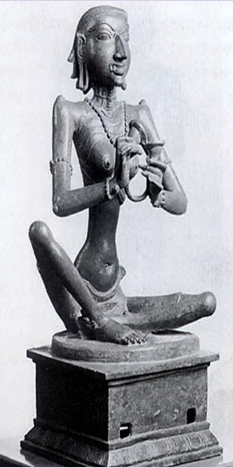
- Twelfth centuryA bronze image of Karaikkal Ammaiyar dates to this period.
Attitudes towards Caste
Social backgrounds and reform
- Historical interpretation: Some historians see the Alvars and Nayanars as protesting against caste hierarchy and Brahmana dominance, or as attempting to reform the system.
- Diverse devotees: Bhaktas came from Brahmana, artisan and cultivator backgrounds, as well as communities regarded as “untouchable”.
- Caution: Diverse participation and criticism of caste status suggest challenges to hierarchy, but do not by themselves prove that every saint rejected the entire caste system.
| Point | Tondaradippodi | Appar |
|---|---|---|
| Tradition | Alvar; a Brahmana devotee of Vishnu. | Nayanar; a devotee of Shiva. |
| Main argument | Vishnu favours loving servants, even those born “outcastes”, over Chaturvedins who lack devotion. | Questions the value of gotra, kula and law books; urges people to take Shiva as their sole refuge. |
| Shared emphasis | Devotion can matter more than birth or Vedic learning. | Devotion can matter more than inherited status or scriptural authority. |
Nalayira Divyaprabandham — An anthology of the compositions of the twelve Alvars, compiled by the tenth century and known as the “Four Thousand Sacred Compositions”.
The Tamil Veda and the Tevaram
- Tamil Veda: The Nalayira Divyaprabandham was described as the Tamil Veda, asserting its significance alongside the four Sanskrit Vedas valued by Brahmanas.
- Tevaram: The hymns of Appar, Sambandar and Sundarar were compiled and classified in the tenth century according to the music of the songs.
Women Devotees
| Devotee | Tradition and devotion | Significance |
|---|---|---|
| Andal | A woman Alvar who imagined herself as Vishnu’s beloved; her verses express love for the deity. | Her compositions were widely sung and continue to be sung. |
| Karaikkal Ammaiyar | A woman devotee of Shiva who chose extreme asceticism; her compositions were preserved in the Nayanar tradition. | Her self-description as a female demoness rejects conventional ideals of feminine beauty. |
Women and social norms
- Renunciation: These women left their social obligations but did not enter another religious order or become nuns.
- Challenge to patriarchy: Their lives and devotional compositions questioned expectations of women’s roles.
- Karaikkal Ammaiyar’s contrast: She depicts herself with bulging veins, protruding eyes and teeth, a shrunken stomach, red hair and long shins—far from conventional feminine beauty.
- Saguna
- Bhakti focused on God with attributes, often represented in human-like form.
- Nirguna
- Bhakti focused on God as an abstract, attribute-less form.
- Chaturvedin
- A Brahmana learned in the four Vedas.
- Gotra and kula
- Terms for lineage or clan and family/community background, respectively.
- Nalayira Divyaprabandham
- The anthology of the twelve Alvars’ compositions, also called the Tamil Veda.
What were the Alvars and Nayanars, and how did they shape Tamil religious life?
Why was the Nalayira Divyaprabandham called the Tamil Veda?
How did Andal and Karaikkal Ammaiyar challenge patriarchal norms?
Quick recap
- Saguna bhakti worships God with attributes; nirguna bhakti worships an abstract, attribute-less God.
- Alvars devoted themselves to Vishnu and Nayanars to Shiva; their Tamil hymns shaped temple and pilgrimage traditions.
- Bhaktas came from varied social backgrounds, and some compositions placed devotion above caste or Vedic status.
- The Nalayira Divyaprabandham was called the Tamil Veda; the Tevaram contains compositions by Appar, Sambandar and Sundarar.
- Andal and Karaikkal Ammaiyar show women’s important presence in bhakti and their challenge to patriarchal expectations.
Relations with the State & the Virashaiva Tradition in Karnataka
Bhakti Traditions and Royal Patronage
Political and Religious Setting
- Early first millennium CESeveral important chiefdoms existed in the Tamil region.
- Second half of the first millennium CEStates including the Pallavas and Pandyas emerged; they ruled around the sixth to ninth centuries.
- Ninth to thirteenth centuriesChola rulers supported Brahmanical and bhakti traditions.
- Around 945Parantaka I consecrated metal images of Appar, Sambandar and Sundarar in a Shiva temple.
Tamil Bhakti and Chola Rule
- Earlier traditions: Buddhism and Jainism had long been prevalent in the Tamil region, drawing support from merchant and artisan communities and receiving occasional royal patronage.
- Nayanar opposition: Tamil bhakti hymns, especially those of the Nayanars, criticised Buddhism and Jainism; historians suggest this hostility may have reflected competition for royal patronage.
- Chola patronage: Chola rulers gave land grants and built temples for Vishnu and Shiva, supporting Brahmanical and bhakti traditions.
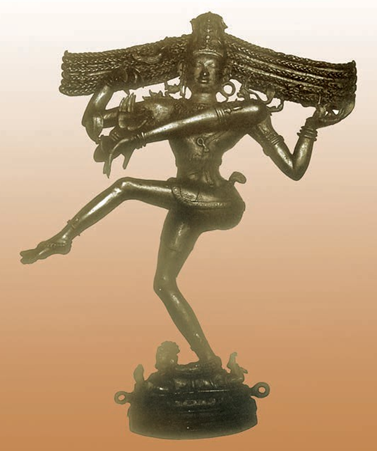
- Major temples: Chola-sponsored Shiva temples included those at Chidambaram, Thanjavur and Gangaikondacholapuram.
- Art and worship: Spectacular bronze images of Shiva were produced; the visions of the Nayanars inspired artists.
Saints, Temples and Royal Power
- Popular support: Vellala peasants revered both Nayanars and Alvars, so rulers tried to win their support.
- Royal claims: Chola kings built splendid temples decorated with stone and metal sculpture, presenting their power and status as divinely supported.
- Temple hymns: Rulers introduced the singing of Tamil Shaiva hymns in temples and organised them into the text called the Tevaram.
- Processions: Around 945, Parantaka I consecrated metal images of Appar, Sambandar and Sundarar; the images were carried in festivals celebrating these saints.
Why were kings interested in proclaiming connections with bhaktas?
The Virashaiva Tradition in Karnataka
Virashaivas / Lingayats — A Shaiva movement whose followers worship Shiva as a linga; Virashaiva means “hero of Shiva,” while Lingayat means “wearer of the linga.”
Origins
- Twelfth centuryThe Virashaiva movement emerged in Karnataka under Basavanna.
- 1106–68Basavanna, a Brahmana and minister at the court of a Kalachuri ruler, led the movement.
Beliefs and Social Practices
- Linga worship: Lingayats worship Shiva in the form of a linga; men commonly wear a small linga in a silver case, suspended over the left shoulder.
- Jangamas: Wandering monks, called jangamas, are among those revered by Lingayats.
- After death: They believe devotees unite with Shiva and do not return to the world; therefore, they ceremonially bury the dead rather than cremate them as prescribed in the Dharmashastras.
- Social challenge: They challenged the idea of caste and the “pollution” attributed by Brahmanas to certain groups, and they questioned rebirth.
- Following: These challenges attracted followers among people marginalised within the Brahmanical social order.
- Marriage practices: They encouraged post-puberty marriage and widow remarriage, practices disapproved of in the Dharmashastras.
- Sources: The movement is known through vachanas—“sayings” composed in Kannada by women and men who joined it.
What attitude towards rituals does Basavanna express in his vachana?
New Religious Developments
- Sanskritic tradition: Many Tamil bhakti ideas, especially Vaishnava ideas, entered the Sanskritic tradition; this development culminated in the Bhagavata Purana.
- Maharashtra: Bhakti traditions also developed there in the thirteenth century.
Religious Ferment in North India
| Point | Tamil region | North India |
|---|---|---|
| Evidence of devotional compositions | Alvar and Nayanar compositions are known from the earlier bhakti traditions. | Comparable compositions are not evidenced until the fourteenth century. |
| Political and religious setting | Chola rulers supported Brahmanical and bhakti traditions. | Rajput states emerged; Brahmanas held important secular and ritual roles, with little direct challenge to their position. |
New Religious Leaders and Changing Society
- Naths, Jogis and Siddhas: These leaders gained ground outside the orthodox Brahmanical framework.
- Social base: Many came from artisan groups, including weavers, whose work became more important as craft production expanded.
- Economic change: Growing urban centres and long-distance trade with Central Asia and West Asia increased demand for craft production.
- Ideas and language: Many questioned Vedic authority and spoke in languages used by ordinary people, which developed over time into languages used today.
- Limited elite support: Despite their popularity, these leaders did not gain the support of ruling elites.
Political Change
- Thirteenth centuryThe coming of the Turks culminated in the establishment of the Delhi Sultanate.
Political Change and Religious Developments
- The Turks established the Delhi Sultanate
- The power of many Rajput states was undermined
- The influence of Brahmanas associated with those kingdoms was also weakened
- Significant cultural and religious changes followed, including the coming of the Sufis
- Tevaram
- Collection of Tamil Shaiva hymns organised for singing in temples.
- Vachana
- A Kannada saying composed by women and men associated with the Virashaiva movement.
- Jangama
- A wandering monk revered in the Lingayat tradition.
- Dharmashastras
- Texts prescribing social and ritual rules, including cremation.
Quick recap
- Pallava and Pandya states emerged in the Tamil region; Chola rulers later supported bhakti through grants, temples and hymns.
- Chola temples and bronze images honoured Shiva; the Tevaram and saint processions brought bhakti into public worship.
- Basavanna’s Lingayat movement worshipped Shiva as a linga and challenged caste ideas, the notion of rebirth and some Dharmashastra practices.
- These challenges attracted people marginalised within the Brahmanical social order; the movement's ideas are preserved in Kannada vachanas.
- Tamil bhakti ideas entered the Sanskritic tradition, and bhakti also developed in Maharashtra in the thirteenth century.
- North Indian Naths, Jogis and Siddhas questioned Vedic authority but lacked ruling-elite support; the Delhi Sultanate’s rise accompanied major religious change.
New Strands in the Fabric Islamic Traditions
Connections with the Islamic World
- Long-standing contacts: The subcontinent had connections with lands beyond its seas and mountains through trade and migration.
- Islamic world: From the seventh century, the advent of Islam linked these regions to the wider Islamic world.
Faiths of Rulers and Subjects
Zimmis and Flexible Rule
- Originally, zimmi status applied to people such as Jews and Christians, who followed revealed scriptures; in India, it was extended to Hindus.
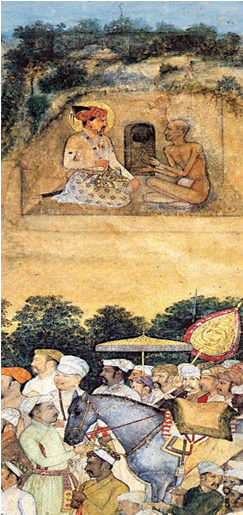
- Rulers’ approach was often flexible: they made land grants, gave tax exemptions to religious institutions and showed respect to non-Muslim religious leaders.
- Recipients included Hindu, Jaina, Zoroastrian, Christian and Jewish institutions; Mughal rulers including Akbar and Aurangzeb made such grants.
- Mughal ideal of rule could encompass all peoples, not only Muslims.
Shari‘a and Its Sources
- Shari‘a: The law governing the Muslim community, based on the Qur’an and hadis.
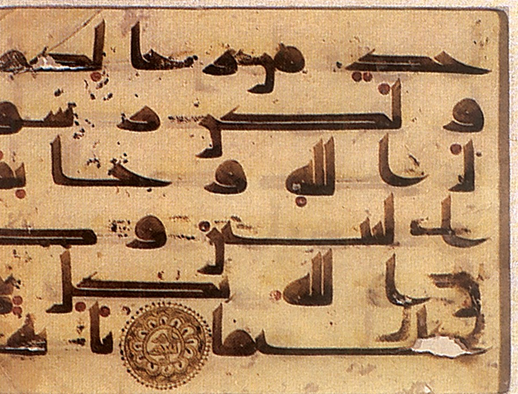
- Further sources: Qiyas (reasoning by analogy) and ijma (community consensus) also shaped legislation as Islamic rule expanded.
Examples of Imperial Relations with Other Faiths
- Akbar’s order: In 1598, he directed officials in Khambat to allow Jesuit priests to build a church and worship there.
- Aurangzeb’s letter: In 1661–62, he addressed a Shaiva Jogi respectfully and sent him cloth and twenty-five rupees as an offering.
The Popular Practice of Islam
- Spread: Islam took root among diverse groups, including peasants, artisans, warriors and merchants.
- Shared foundations: Muslims accepted the five pillars: faith, prayer, almsgiving, fasting in Ramadan and pilgrimage to Mecca.
- Varied practice: Sectarian affiliations and local customs shaped religious life; mosques combined features shared across Islam with regional designs and materials.
Khojahs, Ginans and Local Traditions
Muslim Traders on the Malabar Coast
- Arab Muslim traders who settled on the Malabar coast (Kerala) adopted Malayalam.
- Local customs included matriliny and matrilocal residence.
- Matrilocal residence means that after marriage, a woman stays in her natal home with her children; her husband may come to live with them.
Mosques: Shared Features and Local Variation
What were the four sources of the shari‘a?
Name the five pillars of Islam.
How did Islamic practice reflect both shared beliefs and local traditions?
- Zimmi
- A protected non-Muslim living under Muslim rule.
- Jizya
- Tax paid by zimmis in return for protection.
- Ulama
- Islamic scholars with religious, legal and teaching roles.
- Shari‘a
- Law governing the Muslim community.
- Ginan
- A devotional poem used by Khojahs to communicate religious ideas.
- Matrilocal residence
- A post-marriage arrangement in which a woman stays with her children in her natal home.
Quick recap
- Trade and migration connected the subcontinent with the wider Islamic world.
- Muslim rulers governed diverse populations; zimmi status and flexible policies helped accommodate non-Muslim communities.
- The shari‘a drew on the Qur’an, hadis, qiyas and ijma.
- Muslims shared the five pillars, while sectarian and local influences shaped practice.
- Khojah ginans and Malabar customs show how Islamic traditions adapted to local languages and ways of life.
- Mosques shared religious features such as orientation towards Mecca but varied in roofs and materials.
Names for Communities & the Growth of Sufism
Names for Communities
Community labels in Sanskrit sources
- Muslim: Sanskrit texts and inscriptions from the eighth to fourteenth centuries rarely used the terms *musalman* or *Muslim*.
- Regional names: Migrants could be identified by origin: *Turushka* for Turks, *Tajika* for people from Tajikistan and *Parashika* for people from Persia.
- Older labels: Turks and Afghans were also called *Shakas* or *Yavanas*; *Yavana* had earlier referred to Greeks.
- Mlechchha: A broad label for people viewed as outside caste norms and speakers of languages not derived from Sanskrit; it could be derogatory.
- Hindu: The term was used in different ways and was not always a religious label. These names rarely set Muslims apart from Hindus as two distinct religious communities.
The Growth of Sufism
Sufism — A devotional and mystical tradition within Islam that seeks closeness to God through intense devotion, love and spiritual discipline.
Beliefs and approach
- Early sufis: Turned to asceticism and mysticism in protest against growing materialism in the Caliphate as a religious and political institution.
- Critique: Questioned theologians’ rigid definitions and scholarly methods of interpreting the Qur’an and sunna (the Prophet’s traditions).
- Devotion: Sought salvation by loving and obeying God and following Prophet Muhammad, whom they regarded as the perfect human being.
- Personal experience: Sufis interpreted the Qur’an through their own spiritual experience.
- Tasawwuf: The term used for Sufism in Islamic texts. “Sufism” was coined as an English word in the nineteenth century.
| Suggested source | Meaning or association |
|---|---|
| *Suf* | Wool; refers to the coarse woollen clothes worn by sufis. |
| *Safa* | Purity. |
| *Suffa* | The platform outside the Prophet’s mosque where close followers gathered to learn about the faith. |
Khanqahs and Silsilas
Organisation and spiritual lineage
- Khanqah: A Persian term for a Sufi hospice where a community gathered around a teaching master.
- Master and disciples: The master was called a *shaikh* (Arabic), *pir* or *murshid* (Persian); disciples were *murids*. The master appointed a successor, or *khalifa*.
- Community rules: The shaikh set rules for spiritual conduct and for relations among residents, visitors and the master.
- Silsila: A spiritual chain linking master to disciple and tracing an unbroken lineage back to Prophet Muhammad; it was believed to transmit spiritual power and blessings.
- Initiation: Could include an oath of allegiance, wearing a patched garment and shaving the initiate’s hair.
- Naming orders: Many silsilas took their name from a founder, such as the Qadiri order from Shaikh Abd’ul Qadir Jilani. The Chishti order took its name from Chisht in central Afghanistan.
From Sufi master to shrine devotion
- A shaikh teaches disciples and establishes a spiritual lineage.
- The shaikh dies; his tomb-shrine, or *dargah*, becomes a place of devotion.
- Followers undertake *ziyarat* (pilgrimage), especially on the saint’s death anniversary, called *urs*.
- Belief that the saint is united with God leads devotees to seek blessings for material and spiritual needs.
Wali — A Sufi regarded as a friend of God, close to Allah and possessing divine grace (*barakat*) that could enable miracles (*karamat*); plural: *auliya*.
Mystics Outside the Khanqah
| Point | Ba-shari‘a sufis | Be-shari‘a mystics |
|---|---|---|
| Relationship to shari‘a | Complied with the shari‘a (Islamic law). | Deliberately defied the shari‘a. |
| Practices | Followed established Sufi discipline. | Some rejected khanqahs and rituals, lived by mendicancy, observed celibacy and practised extreme asceticism. |
| Groups | Sufis who observed the shari‘a. | Known by names such as Qalandars, Madaris, Malangs and Haidaris. |
The Chishtis in the Subcontinent
Chishti influence
- Migration: Chishtis were among the Sufi groups who migrated to India in the late twelfth century.
- Influence: They became especially influential by adapting to local conditions and incorporating features of Indian devotional traditions.
Life in the Chishti Khanqah
Nizamuddin Auliya’s hospice
- Location and layout: Shaikh Nizamuddin’s fourteenth-century hospice stood at Ghiyaspur, on the Yamuna’s banks outside Delhi. It had small rooms, a large prayer-and-residential hall (*jama’at khana*), a veranda, courtyard and boundary wall.
- Residents: The shaikh’s family, attendants and disciples lived there. He met visitors in a small room on the hall’s roof, morning and evening.
- Refuge: During fear of a Mongol invasion, people from nearby areas gathered at the khanqah for safety.
- Langar: The open kitchen served people using *futuh*—unasked-for charity.
- Visitors: Soldiers, slaves, singers, merchants, poets, travellers, rich and poor, Hindu jogis and qalandars came for discipleship, healing amulets or the shaikh’s intercession.
- Cultural exchange: Bowing before the shaikh, offering water, shaving initiates’ heads and yogic exercises reflected the adoption of local traditions.
- Spread: Nizamuddin appointed spiritual successors and sent them to establish hospices across the subcontinent. His teachings spread, drawing pilgrims to his shrine and those of his spiritual ancestors.
| Sufi teacher | Year of death | Dargah location |
|---|---|---|
| Shaikh Muinuddin Sijzi | 1235 | Ajmer, Rajasthan |
| Khwaja Qutbuddin Bakhtiyar Kaki | 1235 | Delhi |
| Shaikh Fariduddin Ganj-i Shakar | 1265 | Ajodhan, Pakistan |
| Shaikh Nizamuddin Auliya | 1325 | Delhi |
| Shaikh Nasiruddin Chiragh-i Delhi | 1356 | Delhi |
Visitors and records
- Writers among visitors: Amir Hasan Sijzi and Amir Khusrau were poets; Ziyauddin Barani was a court historian. They wrote about the shaikh.
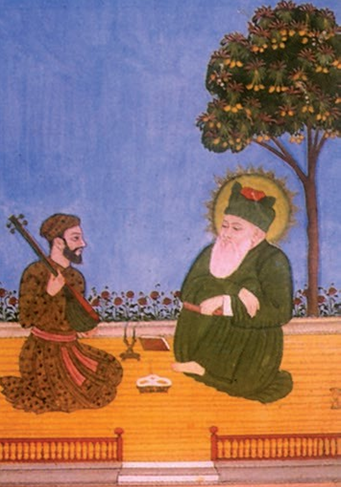
- Painting: A seventeenth-century painting depicts Shaikh Nizamuddin Auliya with his disciple Amir Khusrau.
Data Ganj Bakhsh
Abu’l Hasan al-Hujwiri and his shrine
- Journey to India: In 1039, Abu’l Hasan al-Hujwiri, from Hujwir near Ghazni, was taken captive by an invading Turkish army and forced across the Indus. He settled in Lahore.
- Writing: He wrote *Kashful-Mahjub* (“Unveiling of the Veiled”) in Persian to explain *tasawwuf* and its practitioners, the sufis.
- Shrine: Hujwiri died in 1073 and was buried in Lahore. A grandson of Sultan Mahmud of Ghazni built a tomb over his grave, which became a pilgrimage site, especially on his death anniversary.
- Continuing devotion: He is revered as Data Ganj Bakhsh (“Giver who bestows treasures”); his mausoleum is called Data Darbar (“Court of the Giver”).
Key dates and periods
- Eighth–fourteenth centuriesSanskrit texts and inscriptions rarely used “musalman” or “Muslim” as community labels.
- Eleventh centurySufism developed into an organised movement with literature on Qur’anic studies and Sufi practices.
- 1039Al-Hujwiri was taken across the Indus and settled in Lahore.
- 1073Al-Hujwiri died and was buried in Lahore.
- Twelfth centurySufi silsilas crystallised in different parts of the Islamic world.
- Late twelfth centuryChishtis migrated to India.
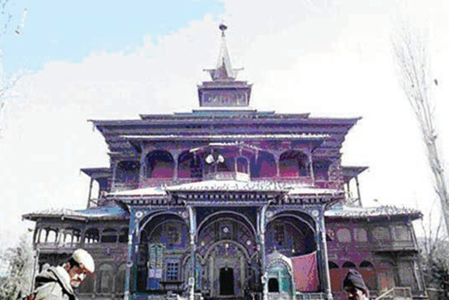
- 1395Shah Hamadan Mosque in Srinagar was built.
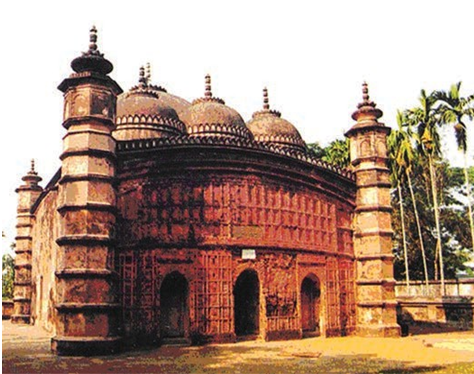
- 1609Atiya Mosque in Bangladesh was built.
- Khanqah
- A Sufi hospice and community centre led by a teaching master.
- Silsila
- A spiritual chain connecting masters and disciples back to Prophet Muhammad.
- Dargah
- A tomb-shrine of a Sufi saint.
- Ziyarat
- Pilgrimage to a saint’s tomb-shrine.
- Urs
- A saint’s death anniversary, understood as the union of the saint’s soul with God.
- Futuh
- Unasked-for charity that supported the Chishti langar.
What did a Sufi silsila represent, and how did it shape devotion?
Why did the Chishtis become influential in the subcontinent?
How did religious community labels vary in early Sanskrit sources?
Quick recap
- Early Sanskrit sources used varied regional and social labels; “Muslim” was rarely used as a community name.
- Sufis emphasised personal devotion, love of God and spiritual experience over rigid interpretation.
- Khanqahs organised Sufi communities; silsilas linked teachers and disciples in spiritual lineages.
- Saints’ dargahs became pilgrimage centres, and devotees sought blessings through ziyarat.
- Chishtis adapted to local traditions; Nizamuddin Auliya’s khanqah combined teaching, hospitality and charity.
- Al-Hujwiri’s Lahore shrine became a major site of devotion, known as Data Darbar.
Chishti Devotionalism: Ziyarat and Qawwali
Ziyarat and Chishti Shrines
- Ziyarat
- Pilgrimage to a Sufi saint’s tomb, seeking spiritual grace.
- Barakat
- Spiritual grace or blessing associated with a Sufi saint.
- Dargah
- A shrine built around the tomb of a revered Sufi.
- Zikr
- Remembrance of God, including recitation of the Divine Names.
- Sama‘
- Listening to mystical music to evoke awareness of God and spiritual ecstasy.
- Qaul
- A hymn, introduced by Amir Khusrau, sung at the beginning or end of qawwali.
The Shrine of Khwaja Muinuddin Chishti
- Ziyarat was practised throughout the Muslim world; for over seven centuries, people of varied faiths and backgrounds visited the five great Chishti shrines.
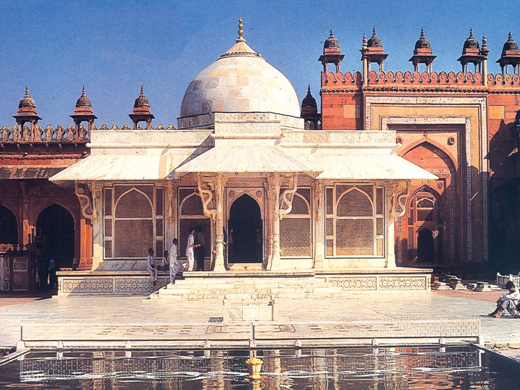
- Khwaja Muinuddin Chishti’s dargah at Ajmer was the most revered. He was popularly called Gharib Nawaz (“comforter of the poor”).
- Popularity grew through the Shaikh’s austerity and piety, the reputation of his successors, royal patronage, and the shrine’s position on the Delhi–Gujarat trade route.
Growth and Patronage of the Ajmer Shrine
- 1253–1325Amir Khusrau, poet, musician and disciple of Nizamuddin Auliya, lived during this period.
- 1324–1351Muhammad bin Tughlaq ruled and became the first Sultan to visit Muinuddin’s shrine.
- Fourteenth centuryThe earliest textual references to Muinuddin’s dargah date from this century.
- Late fifteenth centurySultan Ghiyasuddin Khalji of Malwa funded the earliest structure built to house the tomb.
- 1568Akbar donated a large cooking cauldron, or degh, for pilgrims.
- Until 1580Akbar made fourteen pilgrimages to the shrine, sometimes two or three times a year.
- c. 1615An artist named Manohar depicted Shaikhs greeting Jahangir on pilgrimage to Ajmer.
- 1643Mughal princess Jahanara made a pilgrimage to Muinuddin’s tomb.
- Eighteenth centuryDargah Quli Khan described crowds of Muslims and Hindus visiting Nasiruddin Chiragh-i Dehli’s shrine.
Akbar’s Pilgrimages
- Reason for visiting: The singing of pilgrims travelling to Ajmer inspired Akbar to visit the tomb; he sought blessings for conquests, fulfilment of vows and the birth of sons.
- Royal gifts: Akbar’s visits were marked by generous offerings recorded in imperial documents. Besides the degh, he built a mosque within the dargah compound.
Pilgrimage, Shrines and Devotional Music
Jahanara’s Pilgrimage to Ajmer
- Source: In her biography of Muinuddin Chishti, *Munis al Arwah*, Jahanara described travelling from Agra with her father, Shah Jahan, in 1643.
- Gestures of devotion: She prayed daily, went barefoot from the doorway to the tomb, kissed the ground, circled the tomb seven times, applied itar (perfume) and placed her rose scarf on the tomb.
- Reverence for the shrine: She said she did not sleep on a leopard skin at night. Separately, she avoided extending her feet towards the shrine or turning her back to it, and touched her face to the threshold’s dust.
Nasiruddin Chiragh-i Dehli’s Shrine
- Dargah Quli Khan’s account: An eighteenth-century visitor called the Shaikh “the lamp” of the whole country, not merely Delhi.
- Shared devotion: Muslims and Hindus visited, especially on Sundays and during Diwali; visitors camped, bathed in the spring tank seeking cures, and gathered beneath trees.
| Practice | Meaning and form | Chishti devotional role |
|---|---|---|
| Zikr | Remembering God by reciting the Divine Names. | A form of devotional remembrance. |
| Sama‘ | Listening to mystical music, often with chants and dance performed by trained qawwals. | Integral to Chishti practice; music could evoke divine presence and spiritual ecstasy. |
Languages, Poetry and Qawwali
Sufi Communication in Local Languages
- Hindavi: Chishtis in Delhi used the language spoken by local people. Baba Farid’s verses in a local language were later included in the *Guru Granth Sahib*.
- Masnavi and prem-akhyan: Long poems used human love as an allegory for divine love. Malik Muhammad Jayasi’s *Padmavat* tells of Padmini and Ratansen; their trials represent the soul’s journey towards God.
- Dakhani poetry: Chishti Sufis around Bijapur composed short poems in Dakhani, a variant of Urdu, during the seventeenth and eighteenth centuries.
- Everyday performance: Women probably sang these poems while grinding grain or spinning. Other forms included *lurinama* (lullabies) and *shadinama* (wedding songs).
- Cultural exchange: Dakhani Sufi poetry likely drew on Kannada Lingayat *vachanas* and Marathi *abhangs* of the Pandharpur sants; it helped Islam gradually gain a place in Deccan villages.
Amir Khusrau and the Qaul
- Amir Khusrau (1253–1325): A poet and musician, and a disciple of Shaikh Nizamuddin Auliya, he gave Chishti *sama‘* a distinctive form by introducing the *qaul*.
- Qawwali recital: The *qaul* is a hymn sung at the opening or closing of qawwali. It is followed by Sufi poetry in Persian, Hindavi or Urdu, sometimes mixing these languages.
- Continuing practice: Qawwals at Nizamuddin Auliya’s shrine begin their recital with the *qaul*; qawwali is performed at shrines across the subcontinent.
The Charkhanama
- Work and remembrance: This song links spinning-wheel tasks with forms of zikr: *zikr-i jali* while taking cotton, *zikr-i qalbi* while separating it, and *zikr-i aini* while spooling the thread.
- Daily devotion: It describes zikr as moving through the body, counting breaths up to twenty-four thousand, and offering the practice to one’s pir day and night.
Sufis and the State
Chishtis and Political Power
- Austerity and engagement: Chishtis valued austerity and distance from worldly power, but were not completely isolated from politics; they accepted unsolicited elite gifts and donations.
- State support: Sultans established charitable trusts called *auqaf* for hospices and granted tax-free land called *inam*.
- Use of donations: Chishtis accepted cash and goods but generally spent them on immediate needs—food, clothing, lodgings and rituals such as *sama‘*—rather than accumulating wealth.
- Mutual advantage: Their piety, learning and reputed miraculous powers strengthened their moral authority and popular support; rulers sought association with Sufis and the support of their followers.
- Legitimacy: The Delhi Sultans, founded by Turks, resisted the ulama’s demand to impose shari‘a as state law, anticipating opposition from a largely non-Muslim population. They sought Sufi authority, understood as deriving directly from God rather than jurists’ interpretation.
- Intercession and burial: People believed *auliya* could intercede with God for human welfare; this helps explain why rulers wanted tombs near Sufi shrines and hospices.
- Tensions: Rulers and Sufi leaders could both expect gestures such as prostration or kissing the feet. Nizamuddin Auliya’s disciples called him *sultan-ul-mashaikh* (“Sultan among Shaikhs”).
Why Rulers Sought Sufi Support
- Sufi piety, scholarship and reputed miracles → strong moral authority and popular devotion.
- Popular devotion → rulers sought Sufi association and public support.
- Sufi authority was believed to come directly from God → rulers could seek religious legitimacy beyond the ulama and jurists.
Refusing a Royal Gift
- Nizamuddin Auliya’s hospice, 1313: A local ruler offered the Shaikh ownership deeds to gardens and land, with resources for their upkeep; the Shaikh refused the property.
- Fariduddin’s example: In a story Nizamuddin related, Shaikh Fariduddin accepted money to distribute to dervishes but rejected deeds to four villages.
- Lesson and communication: The account presents Sufi reluctance to own land while allowing charitable money to support disciples. The Shaikh taught through stories, and disciples recorded his conversations and teachings.
| Point | Chishtis | Other orders |
|---|---|---|
| Relationship with power | Emphasised austerity and distance from worldly power, while accepting some donations. | Suhrawardis under the Delhi Sultans and Naqshbandis under the Mughals were also linked to the state. |
| Forms of association | Generally avoided accumulating donations and used them for immediate needs. | Their modes of association differed; some Sufis accepted court offices. |
What practices showed Jahanara’s devotion during her pilgrimage to Ajmer?
How did Chishti Sufis combine devotional practice with local cultures?
Why did Sufi shrines matter to rulers, and what could cause tension between rulers and Sufis?
Quick recap
- Ziyarat at Chishti dargahs drew people of diverse communities seeking a saint’s barakat.
- Muinuddin Chishti’s Ajmer shrine grew through its reputation, location and royal patronage.
- Chishti devotion included zikr and sama‘; qawwali uses the qaul introduced by Amir Khusrau.
- Sufi poetry in local languages connected Islamic devotion with regional cultures and everyday life.
- Chishti Sufis valued austerity but interacted with rulers, who sought their popularity and legitimacy.
- Sufi attitudes to gifts varied: Nizamuddin Auliya and Fariduddin rejected land while accepting or distributing money.
New Devotional Paths Dialogue and Dissent in Northern India
Kabir and the Sources for His Life
Kabir — A poet-saint of about the fourteenth–fifteenth centuries whose verses questioned religious and social divisions.
Reconstructing Kabir’s Life
- Sources: Historians study compositions attributed to Kabir and later hagiographies, but both present challenges.
- Authorship: Scholars compare language, style and content, yet cannot identify every verse as Kabir’s with certainty.
- Legacy: Kabir’s verses inspired people questioning entrenched religious and social institutions, ideas and practices.
- Context: Kabir’s ideas probably crystallised through dialogue and debate with Sufis and yogis in Awadh, in present-day Uttar Pradesh.
| Collection | Association |
|---|---|
| Kabir Bijak | Preserved by the Kabirpanth in Varanasi and elsewhere in Uttar Pradesh. |
| Kabir Granthavali | Associated with the Dadupanth in Rajasthan. |
| Adi Granth Sahib | Contains many compositions attributed to Kabir. |
Transmission and Language
- Manuscripts: These overlapping collections were compiled long after Kabir’s death.
- Print: By the nineteenth century, printed anthologies of attributed verses circulated in Bengal, Gujarat and Maharashtra.
- Languages: Kabir’s poems survive in several languages and dialects; some use the distinctive sant bhasha of nirguna poets.
- Ulatbansi: These “upside-down” sayings invert everyday meanings to suggest how difficult it is to describe Ultimate Reality.
- Images: Phrases such as “the lotus which blooms without flower” and “the fire raging in the ocean” evoke mystical experience.
Kabir’s Ideas about the Divine
| Tradition | Terms used |
|---|---|
| Islamic | Allah, Khuda, Hazrat, Pir |
| Vedantic | Alakh (unseen), nirakar (formless), Brahman, Atman |
| Yogic | Shabda (sound), shunya (emptiness) |
| Approach | Ideas and purpose |
|---|---|
| Islamic concepts | Some poems use monotheism and iconoclasm to attack Hindu polytheism and idol worship. |
| Sufi and bhakti concepts | Other poems use Sufi zikr and ishq (love) to express the Hindu practice of nam-simaran, remembrance of God’s name. |
One Divine Reality, Many Names
- Central argument: Allah, Ram, Karim, Keshav, Hari and Hazrat are different names for one Lord, not separate gods.
- Gold analogy: Gold remains the same substance whether shaped into rings or bangles; likewise, names do not divide the Divine.
- Criticism: Religious distinctions and arguments over God’s identity are mistaken; disputants waste their lives and may commit violence in the name of their beliefs.
What was Kabir’s argument against distinguishing the gods of different communities?
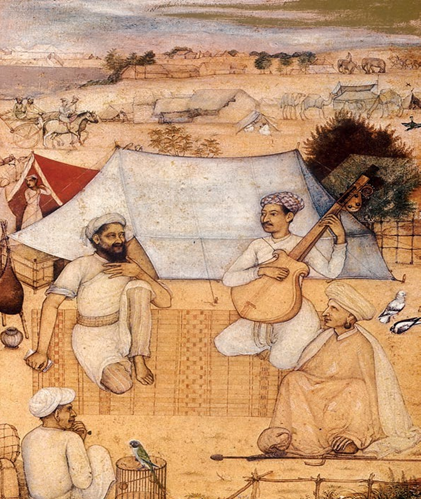
Kabir’s Legacy and Later Accounts
Hagiographies and Kabir’s Identity
- Later claims: Different communities claimed Kabir’s legacy; debates about whether he was Hindu or Muslim are reflected in hagiographies.
- Vaishnava account: These hagiographies said he was born Hindu as Kabirdas—Kabir is an Arabic word meaning “great”—then raised by a poor Muslim family of julaha (weaver) converts.
- Initiation: The same tradition said a guru initiated Kabir into bhakti, perhaps Ramananda.
- Caution: Kabir’s verses mention a guru or satguru but name no specific teacher. Ramananda and Kabir’s contemporaneity is difficult to establish without assigning improbably long lives to one or both.
- Historical value: The Ramananda connection cannot be accepted at face value, but it shows the importance of Kabir’s legacy to later generations.
Kabir and the Transmission of His Legacy
- c. fourteenth–fifteenth centuriesKabir lived and composed verses.
- Seventeenth century onwardsHagiographies about Kabir were composed, roughly 200 years after his lifetime.
- By the nineteenth centuryPrinted collections of verses attributed to Kabir circulated in Bengal, Gujarat and Maharashtra.
- Hagiography
- An account of a religious figure’s life, often shaped by the beliefs of those preserving it.
- Kabirpanth
- The path or sect associated with Kabir.
- Julaha
- A weaver; Vaishnava hagiographies described Kabir’s Muslim foster family as julahas.
- Sant bhasha
- A distinctive language used by nirguna poet-saints.
- Ulatbansi
- “Upside-down” sayings that invert ordinary meanings.
Quick recap
- Kabir’s life and the authorship of verses attributed to him remain uncertain.
- His verses survive in overlapping collections, including the Bijak, Granthavali and Adi Granth Sahib.
- His ideas probably developed through dialogue and debate with Sufis and yogis in Awadh.
- He drew on Islamic, Vedantic and yogic vocabularies to express the difficulty of describing the Divine.
- Kabir argued that different names refer to one God and criticised religious disputes and violence.
- Later Vaishnava accounts linked Kabir to Ramananda, but that connection is not historically certain.
Baba Guru Nanak and the Sacred Word
Baba Guru Nanak: Life and Teachings
Nanak’s Life
- 1469Baba Guru Nanak was born at Nankana Sahib, near the Ravi River in Punjab.
- 1539Baba Guru Nanak died.
Life and Devotional Message
- Background: Nanak was born into a Hindu merchant family in predominantly Muslim Punjab; he trained as an accountant and studied Persian.
- Religious life: Married young, he spent much time with Sufis and bhaktas and travelled widely.
- Nirguna bhakti: He rejected sacrifices, ritual baths, image worship, austerities and the scriptures of both Hindus and Muslims.
- Divine: The Absolute, or rab, had no gender or form; people could connect with it by remembering and repeating the Divine Name.
- Shabad: Nanak taught through Punjabi hymns called shabad, sung in different ragas while his attendant Mardana played the rabab.
Community, Scripture and the Khalsa
From Nanak’s Teachings to a Consolidated Community
- Nanak organised followers into a community and established sangat: congregational worship with collective recitation.
- He appointed his disciple Angad as successor or guru; this succession practice continued for nearly 200 years.
- Nanak apparently did not intend to establish a new religion, but after his death followers consolidated distinct practices.
- The fifth guru, Arjan, compiled Nanak’s hymns, those of four successors and works by poets including Baba Farid, Ravidas and Kabir in the Adi Granth Sahib.
- These hymns, called gurbani, use several languages; in the late seventeenth century Guru Gobind Singh added the compositions of the ninth guru, Tegh Bahadur, and the scripture became the Guru Granth Sahib.
| Symbol | Description |
|---|---|
| Uncut hair | Hair left uncut |
| Dagger | A dagger carried as a symbol |
| Shorts | A pair of shorts |
| Comb | A comb |
| Steel bangle | A bangle made of steel |
Khalsa Panth
- Guru Gobind Singh: Laid the foundation of the Khalsa Panth, meaning the “army of the pure,” and defined its five symbols.
- Consequence: Under him, the community consolidated as a socio-religious and military force.
Mirabai: The Devotee Princess
Mirabai — A celebrated woman poet of the bhakti tradition, remembered for songs expressing intense devotion to Krishna.
Life, Devotion and Defiance
- Sources and period: Her life, around the fifteenth–sixteenth centuries, is reconstructed mainly from bhajans attributed to her and transmitted orally for centuries.
- Background: Traditions describe her as a Rajput princess from Merta in Marwar, married against her wishes to a Sisodia prince of Mewar, Rajasthan.
- Devotion: She rejected the expected roles of wife and mother and regarded Krishna, an avatar of Vishnu, as her lover.
- Defiance: Accounts say her in-laws tried to poison her; she left the palace and lived as a wandering saint, composing emotionally intense songs.
- Caste and renunciation: Some traditions name Raidas, a leather worker, as her preceptor, indicating defiance of caste norms. She is said to have worn widow’s white or a renouncer’s saffron robes.
- Legacy: She attracted no sect of followers, but her songs continue to inspire women and men, especially poor and lower-caste communities in Gujarat and Rajasthan.
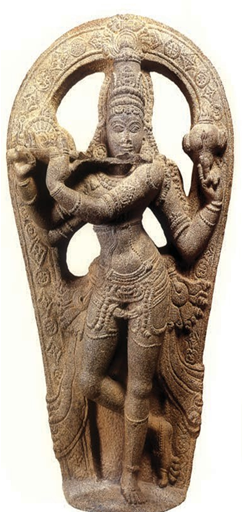
What does Mirabai’s song about the Rana indicate about her attitude towards political authority?
Reconstructing Histories of Religious Traditions
Sources and Historical Method
- Sources: Historians use sculpture, architecture, stories about religious teachers, and compositions by women and men seeking to understand the Divine.
- Context: Images and buildings must be understood through the beliefs and practices of the people who made and used them.
- Texts: Religious texts vary in language and style; interpreting them requires familiarity with languages and attention to genre.
- Transmission: Oral and written traditions may be preserved, altered during transmission or lost.
Shankaradeva and Vaishnavism in Assam
Teachings and Institutions
- Shankaradeva: A leading Vaishnava teacher who emerged in Assam in the late fifteenth century.
- Bhagavati dharma: Based on the Bhagavad Gita and Bhagavata Purana, it stressed complete surrender to Vishnu.
- Worship: He promoted naam kirtan—reciting the Lord’s names—in sat sanga, congregations of pious devotees.
- Institutions: He encouraged satras (monasteries) to transmit spiritual knowledge and naam ghars (prayer halls); these institutions and practices continue in the region.
- Major composition: Kirtana-ghosha.
Sources for the History of Sufi Traditions
| Source type | What it contains | Example | Historical value or limitation |
|---|---|---|---|
| Treatises or manuals | Explanations of Sufi thought and practices | Kashf-ul-Mahjub by Ali bin Usman Hujwiri (died c. 1071) | Shows how traditions from outside the subcontinent influenced Indian Sufism. |
| Malfuzat | Recorded conversations of Sufi saints, compiled with the shaikhs’ permission | Fawa’id-al-Fu’ad: conversations of Shaikh Nizamuddin Auliya, compiled by Persian poet Amir Hasan Sijzi Dehlavi | Often served didactic purposes; examples from across the subcontinent, including the Deccan, were compiled over several centuries. |
| Maktubat | Collections of letters from Sufi masters to disciples and associates | Maktubat-i Imam Rabbani: letters of Naqshbandi Shaikh Ahmad Sirhindi (d. 1624) | Reveal the shaikh’s religious ideas and recipients’ spiritual and everyday concerns. Sirhindi’s ideology is often contrasted with Akbar’s liberal, non-sectarian views. |
| Tazkiras | Biographical accounts that mention and memorialise saints | Siyar-ul-Auliya by Mir Khwurd Kirmani; Akhbar-ul-Akhyar by Abdul Haqq Muhaddis Dehlavi (d. 1642) | May promote an order’s precedence and glorify its spiritual genealogy; fantastic details need caution, but the accounts remain valuable. |
Key Examples of Sufi Biographical Writing
- Siyar-ul-Auliya: The first Sufi tazkira written in India; this fourteenth-century work dealt mainly with Chishti saints.
- Akhbar-ul-Akhyar: The best-known tazkira, written by Abdul Haqq Muhaddis Dehlavi.
Continuity and Change in Religious Traditions
Using Living Traditions as Historical Evidence
- Continuity: Living traditions let historians compare current practices with old texts and paintings and trace change over time.
- Caution: Believers may not accept that traditions have changed over time.
- Historical approach: Investigate religious traditions sensitively while recognising that they, like other traditions, are dynamic.
- Nirguna bhakti
- Devotion to a formless, attributeless Divine.
- Shabad
- A hymn expressing Nanak’s teachings.
- Sangat
- A congregation for worship and collective recitation.
- Gurbani
- Hymns included in the Sikh scripture.
- Malfuzat
- Collections of conversations of Sufi saints.
- Tazkira
- A biographical account of saints.
Name the four main types of written sources produced in and around Sufi khanqahs.
Quick recap
- Nanak (1469–1539) taught formless devotion through remembrance of the Divine Name and Punjabi shabad hymns.
- Sangat, guru succession and evolving scripture helped consolidate the Sikh community; Guru Gobind Singh laid the foundation of the Khalsa Panth.
- Mirabai’s devotion to Krishna challenged expected gender and caste norms, and her songs continue to inspire followers.
- Historians reconstruct religious traditions from material remains, texts and oral accounts, interpreted in context.
- Shankaradeva promoted surrender to Vishnu, naam kirtan, satras and naam ghars in Assam.
- Sufi histories draw on manuals, malfuzat, maktubat and tazkiras, each with particular value and limitations.
- Living traditions help historians compare past and present, but must be studied sensitively as dynamic practices.
History — ALL CHAPTERS
1
BRICKS, BEADS AND BONES THE HARAPPAN CIVILISATION
2
KINGS, FARMERS AND TOWNS EARLY STATES AND ECONOMIES (C. 600 BCE-600 CE)
3
KINSHIP, CASTE AND CLASS EARLY SOCIETIES (C. 600 BCE-600 CE)
4
THINKERS, BELIEFS AND BUILDINGS CULTURAL DEVELOPMENTS (C. 600 BCE - 600 CE)
1
THROUGH THE EYES OF TRAVELLERS PERCEPTIONS OF SOCIETY (C. TENTH TO SEVENTEENTH CENTURY)
2
BHAKTI- SUFI TRADITIONS CHANGES IN RELIGIOUS BELIEFS AND DEVOTIONAL TEXTS (C. EIGHTH TO EIGHTEENTH CENTURY)
3
AN IMPERIAL CAPITAL VIJAYANAGARA (C. FOURTEENTH TO SIXTEENTH CENTURY)
4
PEASANTS, ZAMINDARS AND THE STATE AGRARIAN SOCIETY AND THE MUGHAL EMPIRE (C. SIXTEENTH- SEVENTEENTH CENTURY)
1
COLONIALISM AND THE COUNTRYSIDE EXPLORING OFFICIAL ARCHIVES
2
REBELS AND THE RAJ THE REVOLT OF 1857 AND ITS REPRESENTATIONS
3
MAHATMA GANDHI AND THE NATIONALIST MOVEMENT CIVIL DISOBEDIENCE AND BEYOND
4
FRAMING THE CONSTITUTION THE BEGINNING OF A NEW ERA