Class 12 Humanities . History . Themes In Indian History Part I . Thinkers Beliefs and Buildings Cultural Developments C 600 Bce 600 Ce
Chapter 4: THINKERS, BELIEFS AND BUILDINGS CULTURAL DEVELOPMENTS (C. 600 BCE - 600 CE)
Ch 4
History
Class 12 Humanities
Introduction & a Glimpse of Sanchi
Ideas, Beliefs and Historical Sources
What the chapter explores
- Focus: Philosophers’ attempts to understand the world, existence and the relationship between humans and the cosmic order.
- Expressions of ideas: Thinkers’ ideas were preserved in oral and written texts, and expressed through architecture and sculpture.
- Many traditions: Buddhism developed alongside other traditions, engaging in debates and dialogue with them.
- Historical sources: Historians use Buddhist, Jaina and Brahmanical texts, as well as monuments and inscriptions.
A Glimpse of Sanchi
Sanchi in the nineteenth century
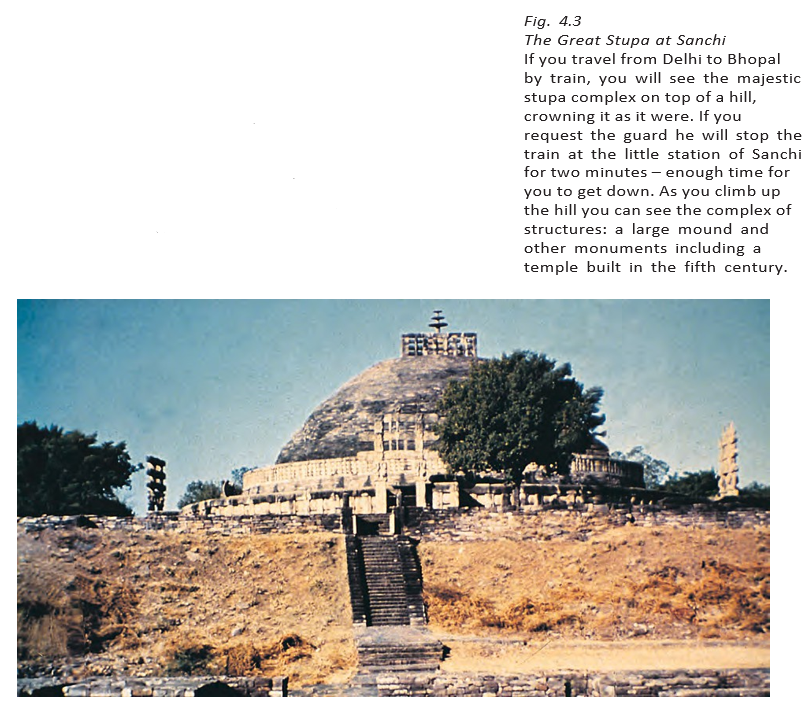
- Location: Sanchi, also called Sanchi Kanakhera in the account, is a small village on a hill about 20 miles north-east of Bhopal.
- Monument: Its ancient complex includes a major Buddhist stupa, stone sculptures and gateways; it became one of the best-preserved monuments of its time.
- European interest: European visitors studied the site. French visitors sought permission to take the eastern gateway to a museum in France; Englishmen also considered removing it.
- Preservation: Both groups eventually accepted plaster-cast copies, leaving the original gateway at Sanchi in the Bhopal state.
- Bhopal patronage: Shahjehan Begum and Sultan Jehan Begum funded preservation. Sultan Jehan also supported the museum, guesthouse and publication of John Marshall’s volumes on Sanchi.
- Historical importance: Sanchi’s discovery and study transformed understanding of early Buddhism. Its survival also depended on avoiding removal by railway contractors, builders and collectors.
- Modern preservation: The Archaeological Survey of India successfully restored and preserved the site.
What Sanchi can reveal
- Questions for historians: Why was the mound built, what did it contain, why was it surrounded by a stone railing, and who paid for its construction?
- Reconstructing the past: Sanchi’s story is investigated by combining texts, sculpture, architecture and inscriptions.
- Key point: The account raises questions about the stupa’s origins and contents; this lecture has not yet answered them.
The Background: Sacrifices and Debates
A turning point in the mid-first millennium BCE
- New thinkers: This period saw thinkers such as Zarathustra in Iran; Kong Zi in China; Socrates, Plato and Aristotle in Greece; and Mahavira and Gautama Buddha in India.
- Questions explored: They considered the mysteries of existence and how human beings related to the cosmic order.
- Changing society: New kingdoms and cities emerged, while social and economic life changed in the Ganga valley.
- Debate and change: Thinkers also tried to make sense of these wider social and political developments.
The Sacrificial Tradition
Rigveda — An early Vedic collection of hymns in praise of deities, compiled between c. 1500 and 1000 BCE.
Vedic hymns and offerings
- Deities: The Rigveda praises many deities, especially Agni, Indra and Soma.
- Purpose of hymns: Hymns were often chanted during sacrifices, in which offerings were made to deities.
- Prayers: People sought cattle, sons, good health and long life through these rituals.
- Agni: The fire god was associated with the sacrificial fire, through which offerings were believed to reach other deities.
- Transmission: Verses were composed in Vedic Sanskrit and taught orally to men from priestly families.
| Type | Who performed it | Purpose or feature |
|---|---|---|
| Collective sacrifices | Communities | An early form of sacrifice |
| Household sacrifices | Heads of households | Sought the wellbeing of the domestic unit |
| Elaborate royal sacrifices, such as rajasuya and ashvamedha | Chiefs and kings, with Brahmana priests conducting the rituals | Large-scale rituals performed by rulers |
Key dates and periods
- c. 1500–1000 BCEThe Rigveda was compiled.
- c. 1000–500 BCE onwardsSome sacrifices were performed by household heads for the wellbeing of their families.
- Mid-first millennium BCEA period of influential thinkers, new kingdoms and cities, and social and economic change.
- 1868–1901Shahjehan Begum ruled Bhopal and supported the preservation of Sanchi.
- 1876H. D. Barstow’s translation of Shahjehan Begum’s history of Bhopal was published.
- Stupa
- A Buddhist monument at Sanchi; the Great Stupa is a major focus of the chapter.
- Vedic Sanskrit
- The special form of Sanskrit in which Rigvedic verses were composed.
- Brahmana priests
- Priests who conducted elaborate sacrifices for chiefs and kings.
- Ashvamedha
- An elaborate royal sacrifice mentioned alongside the rajasuya.
What sources do historians use to study early beliefs and traditions?
How did sacrifices change over time?
Quick recap
- Historians study beliefs through texts, monuments, sculpture, architecture and inscriptions.
- Sanchi is a major Buddhist site whose preservation benefited from Bhopal rulers’ support and later restoration by the Archaeological Survey of India.
- The mid-first millennium BCE saw influential thinkers and major social and economic change.
- The Rigveda contains hymns to deities, including Agni, and was compiled c. 1500–1000 BCE.
- Sacrifices shifted from collective rituals to household and elaborate royal forms.
Upanishads & Beyond Worldly Pleasures & the Spread of Jainism
New Questions in the Upanishads
Questions about Life and Reality
- Upanishadic thinkers explored the meaning of life, life after death, rebirth, and whether past actions shaped rebirth.
- Ultimate reality was debated: some thinkers sought to understand it, while others questioned whether a single ultimate reality existed.
- Sacrifice was also reconsidered, including its meaning and significance.
Texts and Dates
- c. sixth century BCE onwardsMany of the ideas discussed in the Upanishads took shape.
- c. sixth century BCEThe Chhandogya Upanishad was composed in Sanskrit.
Ideas in the Chhandogya Upanishad
- The self: One verse describes the self within the heart as smaller than tiny grains, yet greater than the earth, sky, and worlds.
- The true sacrifice: Another verse identifies the wind that blows as a sacrifice because, as it moves, it sanctifies everything.
Debates and Discussions
How Teachers Debated
- Many viewpoints: Buddhist texts mention as many as 64 sects or schools of thought.
- Travelling teachers argued for their ideas with rival teachers and laypeople; debates took place in pointed-roof huts called kutagarashalas or in groves where mendicants stayed.
- Changing support: If a teacher convinced a rival, the rival’s followers might become disciples, so a sect’s following could grow or decline.
- Individual agency: Mahavira, the Buddha, and other teachers questioned Vedic authority and taught that people could strive for liberation.
- Contrast: This differed from the Brahmanical view described in the text, where existence was shaped by birth into a particular caste or gender.
| Point | Ajivikas | Lokayatas |
|---|---|---|
| Teacher described | Makkhali Gosala | Ajita Kesakambalin |
| Main idea | Everything is predetermined; effort, virtue, and penance cannot change the course of samsara. | Materialism: no afterlife; a person is made of four elements that return to nature at death. |
| Gifts and sacrifice | The excerpt focuses on destiny and the unalterable course of pleasure and pain. | Alms, sacrifice, and offerings are rejected as having no lasting effect. |
| Survival after death | Wise and foolish alike complete their predetermined course and end their sorrow. | The dead do not survive; the senses pass into space. |
Evidence about Ajivikas and Lokayatas
- Sources: Texts from these traditions have not survived; their ideas are known through accounts written by other traditions.
- Samsara means the cycle of transmigration or rebirth.
Mahavira and the Jain Path
Mahavira and Jain Tradition
- Before the sixth century BCEJain philosophy already existed in north India.
- Sixth century BCEVardhamana, later known as Mahavira, lived; Jain tradition counts 23 tirthankaras before him.
- Tirthankara
- A guide who helps people cross the river of existence; Jain tradition recognises 24, including Mahavira.
- Ahimsa
- Non-injury to living beings; a central Jain principle that influenced Indian thought more broadly.
- Karma
- In Jain teaching, actions shape the cycle of birth and rebirth.
- Asceticism and penance
- Renunciation and disciplined hardship used to free oneself from karma and rebirth.
Jain Teachings and Monastic Life
- Living world: The whole world is animated; even stones, rocks, and water are considered to have life.
- Non-injury: Avoiding harm is especially important in relation to humans, animals, plants, and insects.
- Liberation: Karma sustains rebirth; asceticism, penance, and renouncing the world are needed to escape this cycle.
- Monastic life: Renunciation is a necessary condition of salvation in Jain teaching.
- Five vows: Jain monks and nuns vowed to avoid killing, stealing, and lying; observe celibacy; and possess no property.
Renunciation in the Story of Queen Kamalavati
- Source: The Uttaradhyayana Sutta is a Prakrit text containing stories that conveyed Mahavira’s teachings to ordinary people.
- Kamalavati’s message: Wealth and possessions cannot satisfy or save a person at death; dhamma alone can.
- Renunciation: The queen compares attachment to a cage and urges leaving sense pleasures, property, and worldly power to practise severe penance.
- Ideal: A renouncer should be without desire, hatred, and attachment, and should live freely like a bird or the wind.
The Spread of Jainism
How Jainism Spread and Was Preserved
- Jainism gradually spread to many parts of India.
- Jain scholars composed literature in Prakrit, Sanskrit, and Tamil.
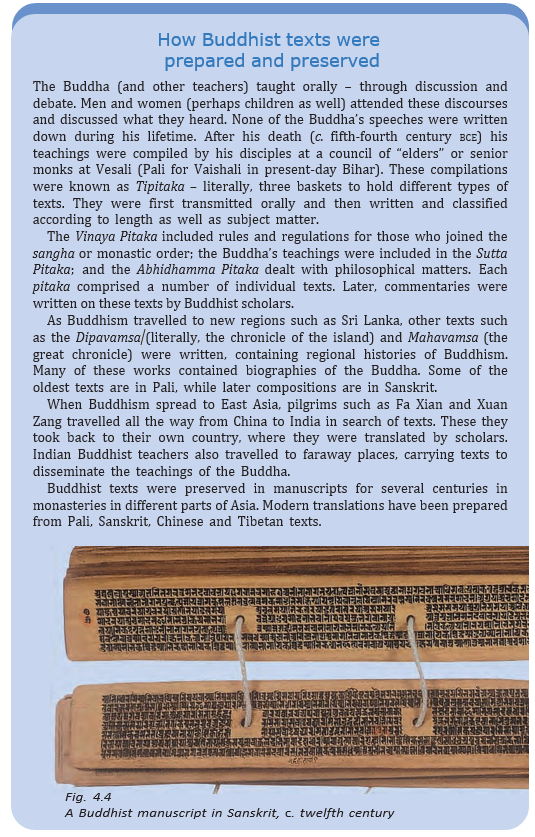
- Manuscripts were carefully preserved for centuries in libraries attached to temples.
- Jain devotees produced early stone sculptures associated with the tirthankaras; examples have been found at sites across the subcontinent.
Jain Manuscript Evidence
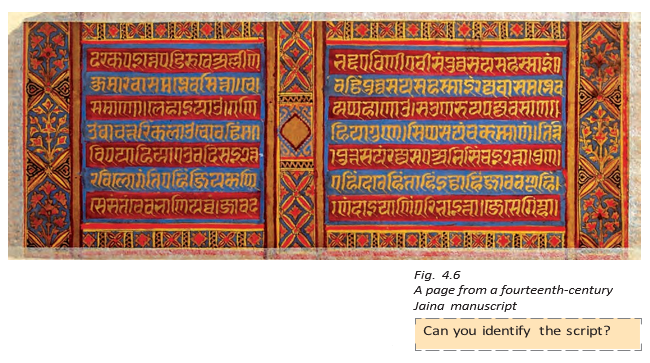
- Fourteenth centuryAn illuminated Jain manuscript page shows the script and decoration used in manuscript culture.
What were the key Jain teachings about life, karma, and liberation?
How did Jainism spread and preserve its teachings?
Quick recap
- Upanishadic thinkers debated life, rebirth, ultimate reality, and the meaning of sacrifice.
- Debates between travelling teachers could change a sect’s following; many stressed individual effort toward liberation.
- Ajivikas taught predestination, while Lokayatas rejected an afterlife and explained death through the four elements.
- Jainism taught ahimsa, universal life, and release from karma through renunciation, asceticism, and penance.
- Jain monks and nuns followed five vows: no killing, stealing, or lying; celibacy; and no property.
- Jain literature, temple libraries, and tirthankara sculptures helped preserve and spread the tradition.
The Buddha and the Quest for Enlightenment
Reconstructing the Buddha’s Life and Message
Sources, life and spread
- Sources: Historians reconstruct the Buddha’s teachings by editing, translating and analysing Buddhist texts; stories about his life are also drawn from hagiographies.
- Hagiographies: Many were written down at least a century after the Buddha’s time to preserve memories of him.
- Birth and family: Siddhartha, the Buddha’s birth name, was the son of a chief of the Sakya clan and grew up sheltered in a palace.
- Encounters: Seeing an old man, a sick man and a corpse made him realise that bodily decay and death are inevitable.
- Mendicant: Siddhartha also saw a homeless mendicant who seemed at peace with old age, disease and death; this inspired him to seek the same path.
- Renunciation: He left the palace to seek truth, tried paths including severe bodily mortification, and nearly died.
- Enlightenment: Siddhartha abandoned extreme methods, meditated for several days and attained enlightenment; he was thereafter called the Buddha, or “Enlightened One.”
- Teaching: For the rest of his life, the Buddha taught dhamma—the path of righteous living.
- Spread: His message travelled across the subcontinent and beyond, reaching Central Asia, China, Korea, Japan, Sri Lanka, Myanmar, Thailand and Indonesia.
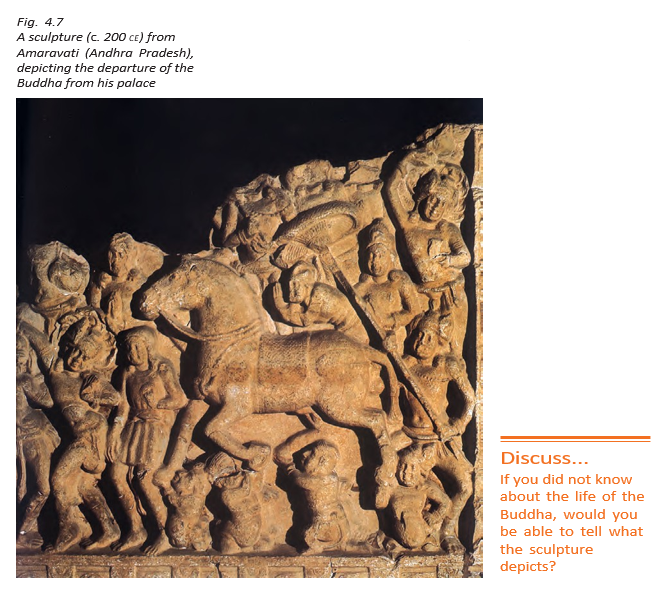
The Teachings of the Buddha
Sources and method of teaching
- Main source: Stories about the Buddha’s teachings are found mainly in the Sutta Pitaka.
- Reason and persuasion: Though some stories describe miraculous powers, others show the Buddha persuading people through reason rather than supernatural displays.
- Example: When a grieving woman asked for her dead child to be restored, the Buddha helped her accept that death is inevitable instead of bringing the child back to life.
- Accessible language: Stories were told in the language of ordinary people so they could understand them.
- Anicca
- The world is transient and constantly changing.
- Anatta
- The world is soulless; nothing in it is permanent or eternal.
- Dukkha
- Sorrow or suffering is intrinsic to human existence.
- Dhamma
- The path of righteous living taught by the Buddha.
- Nibbana
- The extinguishing of ego and desire, ending the cycle of suffering.
The path to liberation and social ethics
- Moderation: People can rise above worldly troubles by following a middle path between severe penance and self-indulgence.
- Gods: In the earliest forms of Buddhism, whether or not a god existed was considered irrelevant.
- Society: The Buddha viewed the social world as a human creation, not as divinely ordained.
- Ethical conduct: He advised kings and gahapatis to act humanely and ethically; individual effort could transform social relations.
- Liberation: Individual agency and righteous action were presented as ways to escape rebirth, attain self-realisation and reach nibbana; renouncing the world could end the cycle of suffering.
- Personal responsibility: The Buddha’s final instruction, according to Buddhist tradition, was that followers should be “lamps unto yourselves” and work out their own liberation.
Three marks of existence
Remember A-A-D: Anicca (change), Anatta (no permanent self), Dukkha (sorrow).
Quick recap
- Siddhartha left his sheltered palace life after confronting old age, illness and death, and seeing a peaceful homeless mendicant.
- He abandoned severe bodily mortification, meditated and attained enlightenment; he then taught dhamma, the path of righteous living.
- Buddhist teachings describe existence as changing (anicca), soulless (anatta) and marked by sorrow (dukkha).
- The middle path is moderation between severe penance and self-indulgence; in early Buddhism, the existence of a god was irrelevant.
- The Buddha viewed society as human-made and urged kings and gahapatis to act ethically.
- Individual effort and righteous action can lead to self-realisation and nibbana, the extinguishing of ego and desire.
Followers of the Buddha & Stupas
Buddhist Teachings in Everyday Life
Advice to the Householder Sigala
- Masters and workers: Assign work according to workers’ strength, provide food and wages, care for them when ill, share delicacies and grant leave.
- Householders and renouncers: Treat samanas and Brahmanas kindly in thought, speech and action; welcome them and provide for their worldly needs.
- Family responsibilities: The Buddha also advised Sigala on conduct towards parents, teachers and his wife.
Followers of the Buddha
Sangha — The Buddhist organisation of monks, who lived simply and taught the dhamma.
Membership and Organisation
- Bhikkhus: Monks depended on alms and owned only essential items, including a bowl for receiving food once a day.
- Women in the sangha: Ananda persuaded the Buddha to admit women. Mahapajapati Gotami, the Buddha’s foster mother, was the first woman ordained as a bhikkhuni.
- Theris: Some bhikkhunis became teachers; those who attained liberation and were respected were known as theris.
- Social backgrounds: Followers included kings, wealthy men and gahapatis, as well as workers, slaves and craftspeople. Within the sangha, members were regarded as equals, leaving prior social identities behind.
- Decision-making: Sangha traditions relied on discussion and consensus; if agreement failed, decisions were made by vote.
Why Buddhism Attracted Followers
- Dissatisfaction with existing religious practices and uncertainty amid rapid social change
- Emphasis on conduct and values rather than superiority based on birth
- Teachings of metta (fellow feeling) and karuna (compassion), especially towards the young and vulnerable
- These ideas appealed to men and women, helping Buddhism grow during the Buddha’s lifetime and after his death
- Bhikkhu / bhikkhuni
- A Buddhist monk / nun who belongs to the sangha.
- Gahapati
- A householder, often a prosperous landowner.
- Metta / karuna
- Fellow feeling / compassion.
- Theri
- A respected woman who had attained liberation.
Women’s Voices in the Therigatha
Punna’s Challenge to Ritual Bathing
- Therigatha: A part of the Sutta Pitaka containing verses composed by bhikkhunis; it reveals women’s social and spiritual experiences.
- Punna: A dasi (slave woman) who carried water daily challenged a Brahmana who believed bathing could remove wrongdoing.
- Punna’s argument: If bathing purified people, frogs, turtles, water snakes and crocodiles would also be freed from evil.
- Teaching: Punna rejected ritual washing as a route to moral purity and urged the Brahmana to stop the practice.
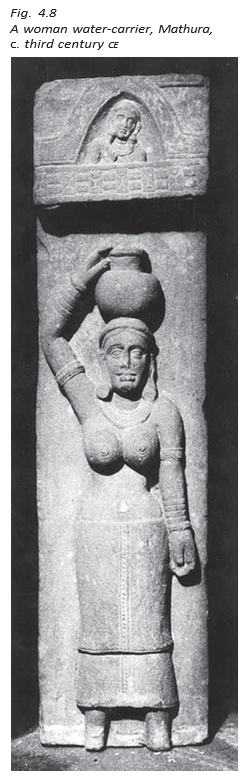
Rules for Monks and Nuns
Vinaya Pitaka Rules
- Possessions: A bhikkhu had to keep a newly made felt blanket or rug for at least six years before getting another, unless authorised. A violation meant forfeiture of the new felt and confession of the offence.
- Food: At a family residence, a monk could accept two or three bowlfuls of cakes or cooked grain. Accepting more required confession; the permitted food was to be shared with other monks.
- Shared lodging: A monk leaving sangha lodging had to put away the bedding or arrange for it to be put away; leaving without doing so or without taking leave required confession.
Sacred Places and Stupas
Chaitya — A sacred site, sometimes with a small shrine, associated with features such as a special tree, unusual rock or striking natural beauty.
Places Associated with the Buddha
- Lumbini: Birthplace of the Buddha.
- Bodh Gaya: Place where he attained enlightenment.
- Sarnath: Place where he gave his first sermon.
- Kusinagara: Place where he attained nibbana.
- Sacred geography: Buddhist ideas and practices developed through interaction with Brahmanas, Jainas and other traditions; sacred places reflected these encounters.
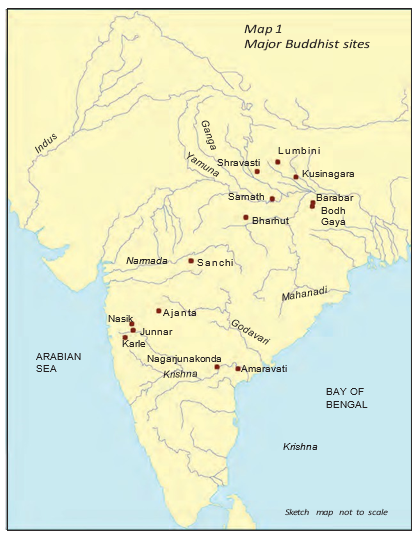
Sacred Sites and Stupas
- About 200 years after the BuddhaAsoka erected a pillar at Lumbini to mark his visit.
- By the second century BCEStupas had been built at sites including Bharhut, Sanchi and Sarnath.
Why Were Stupas Built?
Stupa — A mound built over relics, such as the Buddha’s bodily remains or objects associated with him.
Meaning and Growth of Stupas
- Origins: The practice of raising stupas may pre-date Buddhism, but stupas became closely associated with Buddhism.
- Veneration: Because stupas housed sacred relics, the whole structure was revered as an emblem of the Buddha and Buddhism.
- Asoka’s role: The Ashokavadana says Asoka distributed portions of the Buddha’s relics among important towns and ordered stupas built over them.
- Major examples: Bharhut, Sanchi and Sarnath had stupas by the second century BCE.
The Buddha’s Advice on Relics
- Ananda’s question: As the Buddha was dying, Ananda asked what should be done with his remains.
- Initial response: The Buddha told Ananda not to be distracted by honouring the remains, but to focus on personal spiritual welfare.
- Stupas and worship: When asked again, the Buddha said stupas should be erected at the four crossroads. Offerings or respectful visits there could bring people lasting benefit and joy.
Who could join the Buddhist sangha, and how were its decisions made?
What does Punna’s story reveal about Buddhist ideas and women’s experiences?
Why were stupas built and venerated?
Quick recap
- The sangha included monks and, later, nuns; its members came from varied social backgrounds and made decisions through consensus or voting.
- Buddhism appealed through its focus on conduct, equality beyond birth, metta and karuna.
- The Therigatha preserves bhikkhunis’ verses; Punna challenged the belief that ritual bathing removes wrongdoing.
- Vinaya Pitaka rules regulated monks’ possessions, food and duties in shared lodging.
- Chaityas and sites linked to the Buddha became sacred places.
- Stupas housed relics and were venerated as symbols of the Buddha and Buddhism.
How Were Stupas Built? & Discovering Stupas
How Stupas Were Built
- Support: Stupas were built and decorated through donations from kings, guilds, women and men, and Buddhist monks and nuns.
- Evidence: Inscriptions on railings and pillars record donors’ names, occupations, places of origin and family connections.
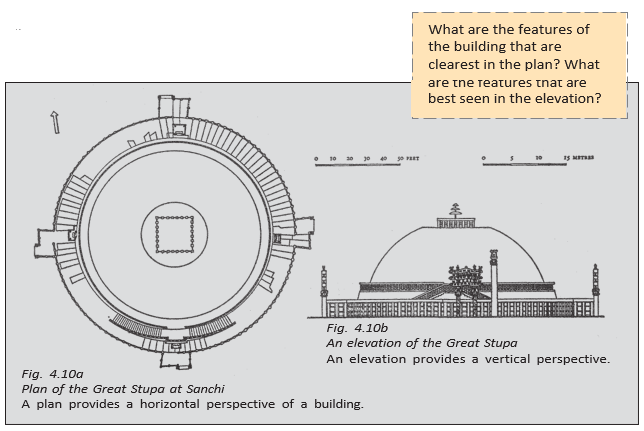
The Structure and Worship of a Stupa
| Part | Structure or meaning |
|---|---|
| Anda | The semi-circular mound; the original central form of the stupa. |
| Harmika | A balcony-like structure above the anda, representing the abode of the gods. |
| Yashti and chhatri | A mast rising from the harmika, often topped by an umbrella (chhatri). |
| Railing | Surrounded the mound and separated sacred space from the secular world. |
Design and Worship
- Development: Stupas evolved from simple mounds into more complex structures balancing round and square shapes.
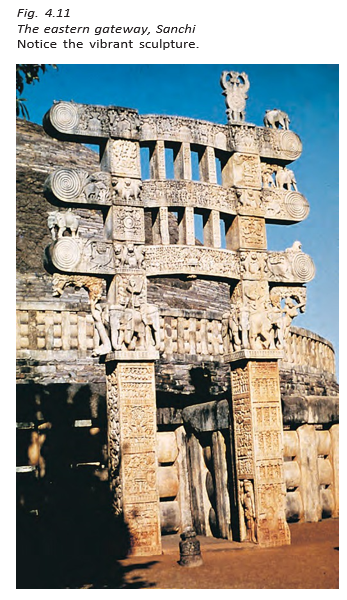
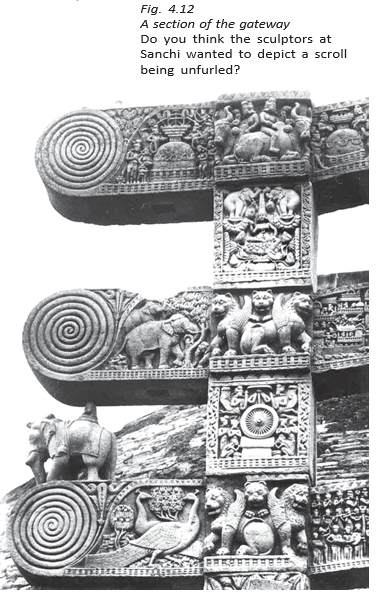
- Early examples: Sanchi and Bharhut had plain mounds, stone railings resembling fences, and richly carved gateways at the four cardinal points.
- Worship: Devotees entered through the eastern gateway and walked clockwise around the mound, keeping it on their right.
- Meaning: Circumambulation imitated the sun’s course through the sky.
- Later decoration: Stupas at Amaravati and Shahji-ki-Dheri had elaborately carved mounds, niches and sculptures.
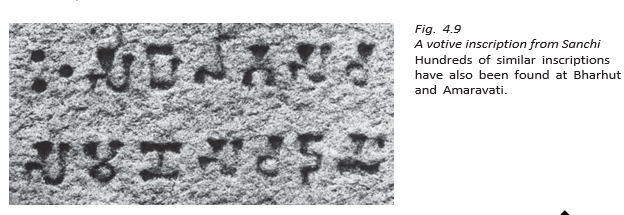
Discovering Stupas: Amaravati and Sanchi
Discoveries and the Removal of Amaravati Sculptures
- 1796A local raja came upon Amaravati’s stupa ruins while seeking stone for a temple and thinking treasure might be buried there.
- Some years after 1796British official Colin Mackenzie visited Amaravati, found sculptures and made detailed drawings, but his reports were never published.
- 1818Sanchi was discovered; three of its four gateways were standing, the fourth had fallen nearby, and the mound was in good condition.
- 1854Walter Elliot collected sculpture panels and took them to Madras; they became known as the Elliot marbles. He also found the western gateway.
- By the 1850sAmaravati slabs had been dispersed to Calcutta, Madras and London; some sculptures also adorned British administrators’ gardens.
Preservation and Loss
- Elliot’s assessment: He considered Amaravati one of the largest and most magnificent Buddhist stupas ever built.
- Removal of sculptures: Officials continued taking sculptures from Amaravati, sometimes following the precedent set by earlier officials.
- H.H. Cole’s view: He opposed removing original artworks; he argued that originals should stay at their findspots while museums displayed plaster casts.
- Different outcomes: Cole’s plea was not followed at Amaravati, which was stripped of its former glory; his call for in situ preservation was adopted at Sanchi.
| Point | Amaravati | Sanchi |
|---|---|---|
| Discovery and condition | A local raja came upon the ruins in 1796; sculptures were later removed. | Discovered in 1818; the mound was in good condition, with three gateways standing and one fallen nearby. |
| Outcome | Sculptures were dispersed to several places; the mahachaitya was reduced to an insignificant mound. | The site was preserved in situ and still stands. |
| Possible explanation | It may have been discovered before the importance of preserving finds at their original sites was understood. | Growing recognition of in situ preservation may have helped protect the site. |
Who contributed to the construction and decoration of stupas?
What was H.H. Cole’s view on preserving sculptures?
Why might Sanchi have survived better than Amaravati?
Quick recap
- Stupa inscriptions record donations from rulers, guilds, individuals and Buddhist monastics.
- The stupa developed from an anda mound and included a harmika, yashti, chhatri and surrounding railing.
- Worshippers entered from the east and circumambulated clockwise, keeping the stupa on their right.
- Amaravati sculptures were dispersed, while Sanchi was preserved in situ.
- H.H. Cole advocated keeping original sculptures at their findspots and displaying plaster casts in museums.
- The reason for the different preservation outcomes is suggested as a possibility, not stated as certain.
Sculpture & Stories in Stone
Stories in Stone
Reading sculpted stories
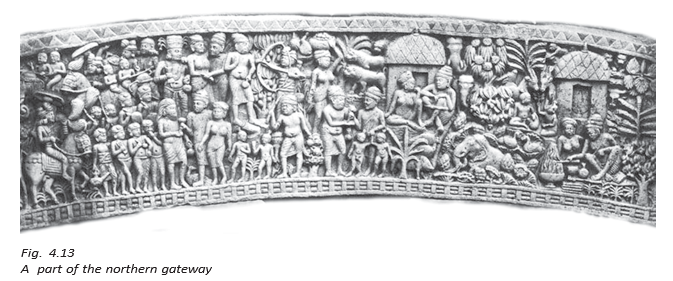
- Textual evidence: Historians compare sculptures with written traditions to identify scenes and understand their meaning.
- Sanchi relief: A carving that might look like a rural scene has been identified as an episode from the Vessantara Jataka.
- Vessantara Jataka: The generous prince gives away everything to a Brahmana, then lives in the forest with his wife and children.
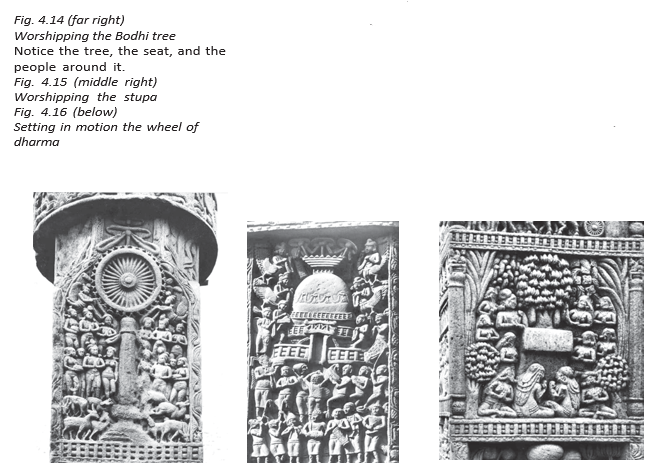
Symbols of Worship
Buddhist aniconic representation — An early way of representing the Buddha through symbols rather than showing him in human form.
| Symbol | Meaning |
|---|---|
| Empty seat | The Buddha’s meditation |
| Stupa | The Buddha’s mahaparinibbana |
| Wheel | The Buddha’s first sermon at Sarnath |
| Tree | The Buddha’s enlightenment while meditating under a tree |
Understanding religious symbols
- Not literal: A tree or other image may represent an event in the Buddha’s life, not merely an object.
- Context matters: Historians need knowledge of Buddhist hagiographies and the traditions of the people who created the sculptures.
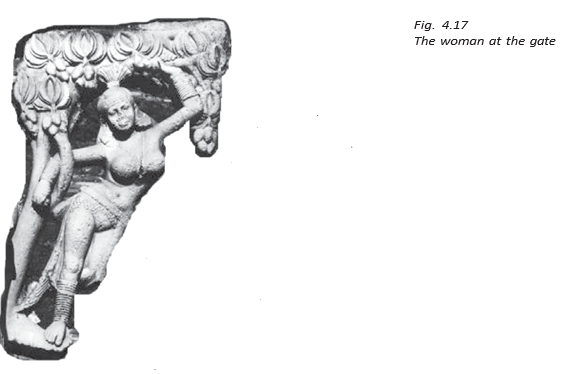
Popular Traditions
Shalabhanjika — A woman in popular belief whose touch made trees flower and bear fruit; her image was regarded as auspicious.
Popular imagery at Sanchi
- Shalabhanjika motif: A woman holding a tree appears on a gateway; its presence suggests that popular, non-Buddhist beliefs were incorporated into stupa decoration.
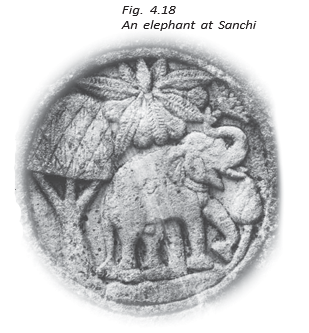
- Animals: Sanchi reliefs include elephants, horses, monkeys and cattle. Some scenes draw on Jataka stories; animals could also make scenes lively or represent human qualities.
- Elephant symbolism: Elephants could signify strength and wisdom.
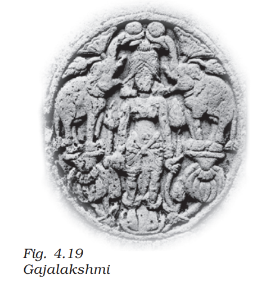
| Interpretation | Basis | |
|---|---|---|
| Maya | The Buddha’s mother | Identified by some historians |
| Gajalakshmi | A popular goddess of good fortune associated with elephants | Identified by other historians |
| Both | Devotees may have understood the figure as both Maya and Gajalakshmi | Possible overlapping identification |
Serpent imagery and interpretation
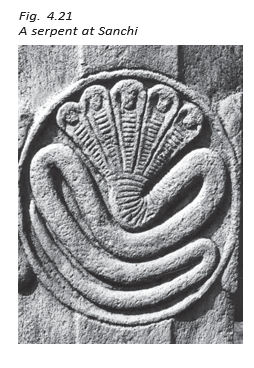
- Serpents: Serpent carvings on Sanchi pillars likely drew on popular traditions, some of which were not recorded in texts.
- James Fergusson: This early modern art historian interpreted Sanchi as a centre of tree and serpent worship by studying its images.
- Limit of his interpretation: He was unfamiliar with Buddhist literature, much of which had not yet been translated; this shows how an interpretation can be shaped by the evidence available.
- Jataka
- A story from the collection of tales about the Buddha’s former births.
- Hagiography
- A religious account of the life and deeds of a sacred figure.
- Mahaparinibbana
- The Buddha’s final passing, represented by the stupa in early sculpture.
- Abhisheka
- A ritual consecration or ceremonial anointing.
- Gajalakshmi
- A popular goddess of good fortune associated with elephants.
How did early Buddhist sculptors represent the Buddha without showing him in human form?
What does the shalabhanjika motif suggest about Buddhist art at Sanchi?
Quick recap
- Historians use textual traditions alongside sculptures to identify narrative scenes such as the Vessantara Jataka.
- Early Buddhist artists often represented the Buddha through symbols rather than a human figure.
- The empty seat, stupa, wheel and tree signified key events or aspects of the Buddha’s life.
- Sanchi’s shalabhanjika, animal and serpent motifs reflect popular traditions and symbolic meanings.
- The woman with elephants may be read as Maya, Gajalakshmi, or both; interpretations depend on available evidence.
New Religious Traditions ,the Development of Mahayana Buddhism & the Growth of Puranic Hinduism
The Development of Mahayana Buddhism
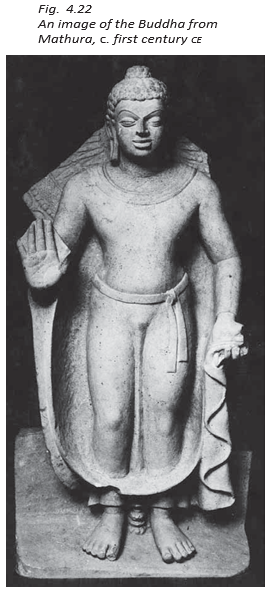
Mahayana Buddhism — A Buddhist tradition emphasising the Buddha as a saviour, compassionate Bodhisattas, and the worship of their images.
Key ideas
- Earlier teaching: Reaching nibbana depended greatly on self-effort; the Buddha was understood as a human who attained enlightenment through his own efforts.
- Saviour: By the first century CE, the Buddha was increasingly regarded as one who could ensure salvation.
- Bodhisattas: Deeply compassionate beings who accumulated merit but used it to help others rather than attain nibbana and leave the world.
- Worship: Images of the Buddha and Bodhisattas became important in this tradition.
- Names: Mahayana means “great vehicle”; its followers described the older tradition as Hinayana, or “lesser vehicle”.
| Point | Earlier Buddhist tradition | Mahayana |
|---|---|---|
| Path to salvation | Emphasis on individual self-effort to attain nibbana | The Buddha could act as a saviour and ensure salvation |
| Bodhisattas | Not a central feature in this account | Compassionate beings who help others rather than leave the world |
| Worship | The account emphasises the Buddha's own effort | Images of the Buddha and Bodhisattas were worshipped |
The Growth of Puranic Hinduism
Deities, devotion and avatars
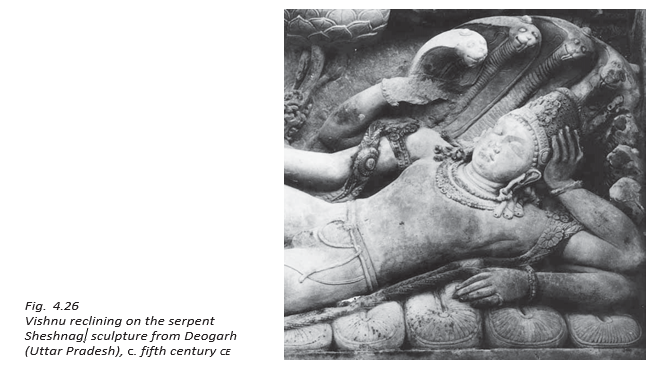
- Vaishnavism: A Hindu tradition in which Vishnu was worshipped as the principal deity.
- Shaivism: A tradition in which Shiva was regarded as the chief god.
- Bhakti: The bond between a devotee and a chosen god, understood as one of love and devotion.
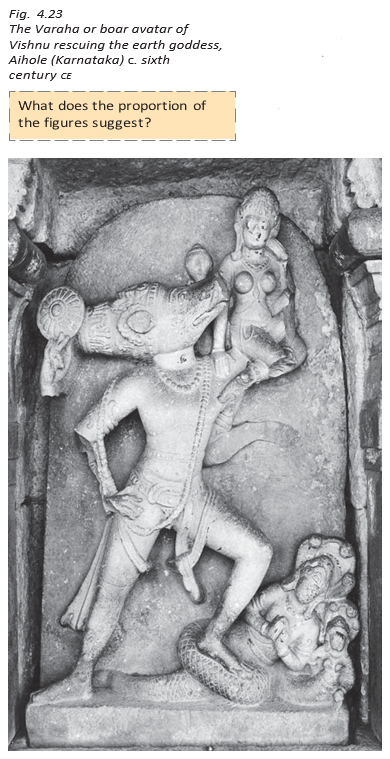
- Avatars: Vaishnava tradition recognised ten forms or incarnations of Vishnu, believed to appear to save the world when evil brought disorder and threatened destruction.
- Religious unity: Different local deities could be recognised as forms of Vishnu, helping unite diverse worship traditions.
- Example: Varaha, Vishnu's boar avatar, is shown rescuing the Earth goddess.
Images and Puranas
- Representations: Deities appeared in sculptures; Shiva was often symbolised by the linga, though he was sometimes shown in human form.
- Visual symbols: Headdresses, ornaments, ayudhas (weapons or auspicious objects), and seated postures conveyed ideas about deities and their attributes.
- Puranas: Compiled by Brahmanas by about the middle of the first millennium CE, they included stories about gods and goddesses that had circulated for centuries.
- Access: Generally written in simple Sanskrit verse, the Puranas were meant to be read aloud to broad audiences, including women and Shudras who lacked access to Vedic learning.
- Circulation of ideas: Priests, merchants, and ordinary people shared beliefs as they travelled, helping Puranic traditions develop.
- Example: Vasudeva-Krishna was an important deity in the Mathura region; his worship spread to other parts of the country over centuries.
Puranic traditions
- By about the middle of the first millennium CEBrahmanas had compiled the Puranas, which collected stories and beliefs that had circulated for centuries.
Building Temples
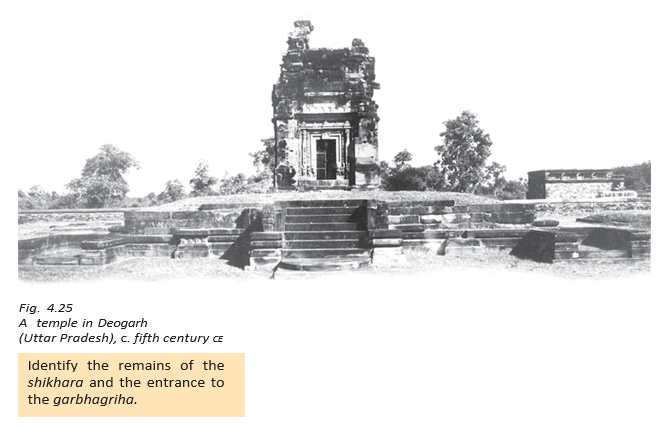
Garbhagriha — The small, square central shrine of an early temple, housing the deity's image and entered through a single doorway.
Shikhara — The tall structure gradually built above the temple's central shrine.
Temple forms and development
- Early temples: Built to house images of gods and goddesses; their central shrine was a small square garbhagriha with one entrance.
- Development: A shikhara rose above the shrine, and temple walls were often decorated with sculpture.
- Later temples: Became more elaborate, adding assembly halls, large walls and gateways, and arrangements for supplying water.
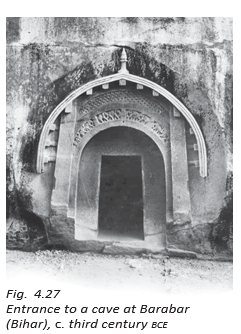
- Rock-cut structures: Some early temples were hollowed out of huge rocks to form artificial caves; this continued an older cave-building tradition.
Caves and rock-cut temples
- Third century BCEAshoka commissioned some of the earliest artificial caves for renouncers of the Ajivika sect.
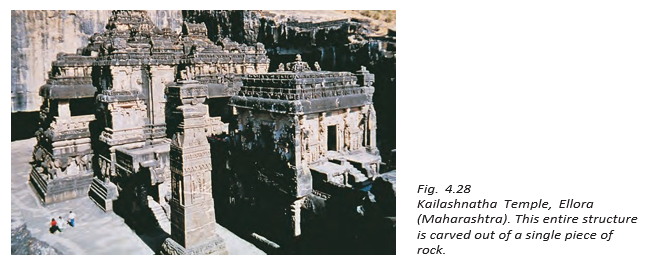
- Eighth century CEThe Kailashnatha temple at Ellora, dedicated to Shiva, was carved out as an entire temple from a single rock.
Key evidence
- Temple carving: A copperplate inscription records the chief sculptor's amazement after completing the Kailashnatha temple at Ellora.
Quick recap
- Mahayana Buddhism developed by the first century CE, emphasising the Buddha as saviour, Bodhisattas' compassion, and image worship.
- Vaishnavism and Shaivism centred on Vishnu and Shiva; bhakti expressed loving devotion to a chosen deity.
- Vishnu's ten avatars were understood as rescuers of the world; recognising local gods as avatars helped unify traditions.
- Puranas shared deity stories in accessible Sanskrit verse and were read aloud to audiences including women and Shudras.
- Early temples centred on the garbhagriha, later topped by a shikhara and expanded with halls and gateways.
- Rock-cut architecture ranged from Ashoka's third-century BCE Ajivika caves to the eighth-century CE Kailashnatha temple at Ellora.
Can We 'see' Everything & Grappling with the Unfamiliar
Interpreting visual evidence — Surviving buildings, sculptures and paintings offer clues to the past, but their meanings and creators’ intentions are not always clear.
- What survives: Much of the visual art of the past has been destroyed or lost.
- What remains: Preserved works reveal something of the vision of their artists, sculptors, masons and architects.
- Key question: We cannot assume that modern viewers understand what an image meant to people who saw and venerated it around 2,000 years ago.
Grappling with the Unfamiliar
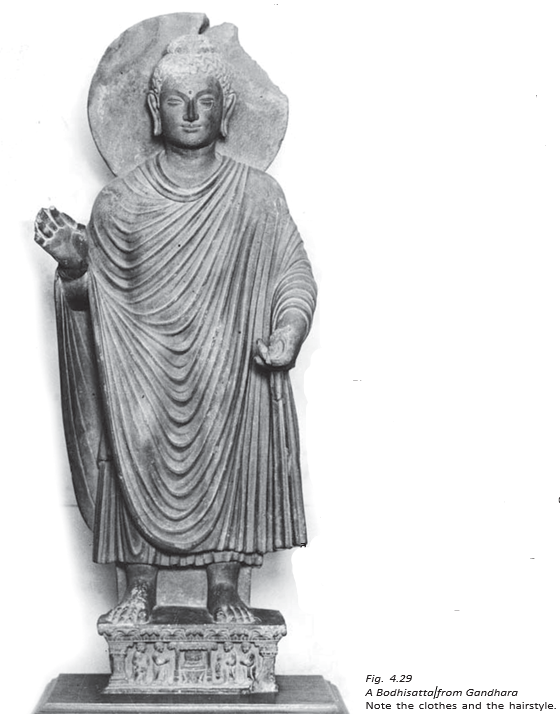
- European scholars: In the nineteenth century, some scholars found Indian gods and goddesses with multiple arms or heads, or human-animal forms, strange and even grotesque.
- Familiar yardsticks: To interpret unfamiliar Indian images, they compared them with ancient Greek sculpture they already knew.
- Biased judgement: Many regarded early Indian sculpture as inferior to Greek art.
- Buddha and Bodhisattas: Images that appeared based on Greek models were considered the best examples of early Indian art by these scholars.
- Gandhara: Such images were often found in the northwest, including Taxila and Peshawar, where Indo-Greek rulers established kingdoms in the second century BCE.
- General lesson: Comparing the unfamiliar with the familiar can help interpretation, but can also lead to biased judgements.
When Text and Image Do Not Match
- Using texts: Art historians often consult textual traditions to interpret sculptures. This can be more useful than comparing Indian images with Greek statues, but it does not always settle the meaning.
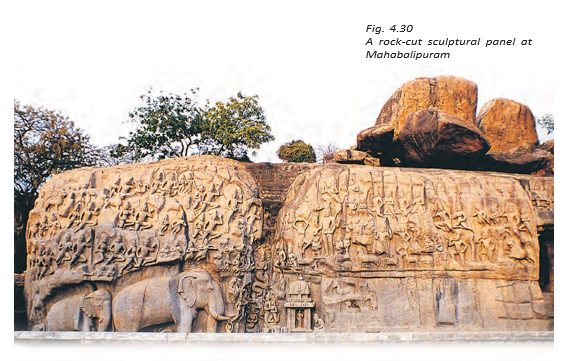
- Mahabalipuram relief: A large sculptural panel carved into a rock surface in Tamil Nadu clearly depicts a story, yet scholars disagree about which story it represents.
| Interpretation | Story and supporting clue |
|---|---|
| Descent of the Ganga | The natural cleft down the rock may represent the river; the story appears in the Puranas and epics. |
| Arjuna’s penance | The relief may show Arjuna performing penance on a riverbank to obtain weapons, as told in the Mahabharata; the central ascetic is cited as a clue. |
Major Religious Developments
- c. 1500–1000 BCEEarly Vedic traditions.
- c. 1000–500 BCELater Vedic traditions.
- c. sixth century BCEEarly Upanishads; Jainism and Buddhism.
- c. third century BCEFirst stupas.
- c. second century BCE onwardsDevelopment of Mahayana Buddhism, Vaishnavism, Shaivism and goddess cults.
- c. third century CEEarliest temples.
Discovery and Preservation of Early Monuments and Sculpture
- 1814The Indian Museum was founded in Calcutta.
- 1834Ram Raj published *Essay on the Architecture of the Hindus*; Cunningham explored the stupa at Sarnath.
- 1835–1842James Fergusson surveyed major archaeological sites.
- 1851The Government Museum was established in Madras.
- 1854Alexander Cunningham published *Bhilsa Topes*, one of the earliest works on Sanchi.
- 1878Rajendra Lala Mitra published *Buddha Gaya: The Heritage of Sakya Muni*.
- 1880H. H. Cole was appointed Curator of Ancient Monuments.
- 1888The Treasure Trove Act gave the government the right to acquire all objects of archaeological interest.
- 1914John Marshall and Alfred Foucher published *The Monuments of Sanchi*.
- 1923John Marshall published the *Conservation Manual*.
- 1955Prime Minister Jawaharlal Nehru laid the foundation stone of the National Museum, New Delhi.
- 1989Sanchi was declared a World Heritage Site.
- Visual traditions
- Artistic forms such as architecture, sculpture and painting that survive as evidence of the past.
- Yardstick
- A familiar standard used to judge or interpret something unfamiliar.
- Textual traditions
- Written sources, such as epics and Puranas, consulted to interpret images.
- Gandhara
- Northwestern region associated with Buddha and Bodhisatta images that scholars compared with Greek sculpture.
Why did nineteenth-century European scholars judge some early Indian sculptures by comparison with Greek art?
What are the two proposed identifications of the Mahabalipuram rock relief?
Quick recap
- Surviving visual works preserve evidence, but their meanings are not always obvious.
- Nineteenth-century European scholars often interpreted Indian images through Greek artistic standards.
- Buddha and Bodhisatta images from Gandhara that resembled Greek models were considered the best examples of early Indian art by these scholars.
- Textual sources can help explain sculptures, but may not resolve disagreements.
- The Mahabalipuram relief is interpreted as either the descent of the Ganga or Arjuna’s penance.
- The timelines record major religious developments and milestones in the study and preservation of monuments.
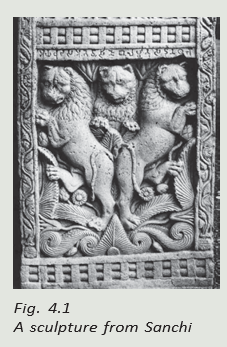
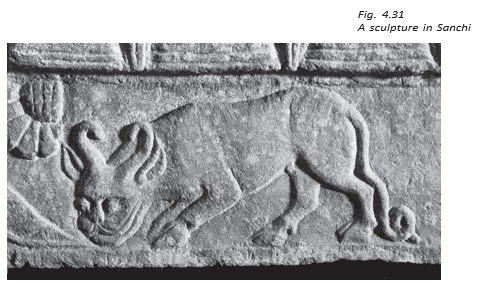
- A Sanchi stone relief depicts an animal figure.
History — ALL CHAPTERS
1
BRICKS, BEADS AND BONES THE HARAPPAN CIVILISATION
2
KINGS, FARMERS AND TOWNS EARLY STATES AND ECONOMIES (C. 600 BCE-600 CE)
3
KINSHIP, CASTE AND CLASS EARLY SOCIETIES (C. 600 BCE-600 CE)
4
THINKERS, BELIEFS AND BUILDINGS CULTURAL DEVELOPMENTS (C. 600 BCE - 600 CE)
1
THROUGH THE EYES OF TRAVELLERS PERCEPTIONS OF SOCIETY (C. TENTH TO SEVENTEENTH CENTURY)
2
BHAKTI- SUFI TRADITIONS CHANGES IN RELIGIOUS BELIEFS AND DEVOTIONAL TEXTS (C. EIGHTH TO EIGHTEENTH CENTURY)
3
AN IMPERIAL CAPITAL VIJAYANAGARA (C. FOURTEENTH TO SIXTEENTH CENTURY)
4
PEASANTS, ZAMINDARS AND THE STATE AGRARIAN SOCIETY AND THE MUGHAL EMPIRE (C. SIXTEENTH- SEVENTEENTH CENTURY)
1
COLONIALISM AND THE COUNTRYSIDE EXPLORING OFFICIAL ARCHIVES
2
REBELS AND THE RAJ THE REVOLT OF 1857 AND ITS REPRESENTATIONS
3
MAHATMA GANDHI AND THE NATIONALIST MOVEMENT CIVIL DISOBEDIENCE AND BEYOND
4
FRAMING THE CONSTITUTION THE BEGINNING OF A NEW ERA