Class 12 Humanities . History . Themes In Indian History Part III . Colonialism and the Countryside Exploring Official Archives
Chapter 1: COLONIALISM AND THE COUNTRYSIDE EXPLORING OFFICIAL ARCHIVES
Ch 1
History
Class 12 Humanities
Introduction & Bengal and the Zamindars
Colonial rule and rural society
- Colonial rule: Company policies reshaped land rights, revenue collection and everyday life in the countryside.
- Rural response: People were affected by these laws but also resisted them, influencing how the laws worked in practice.
- Historical sources: Revenue records, surveys, travel accounts and official enquiries help historians study these changes.
Bengal and the zamindars
- Early Company rule: Bengal was the first region where the Company tried to reorganise rural society and establish new land rights and revenue arrangements.
- Permanent Settlement: Introduced in 1793, it fixed the revenue demand on zamindars in perpetuity.
- Zamindars: They collected rent from villages, paid the Company’s revenue demand and retained the difference as income.
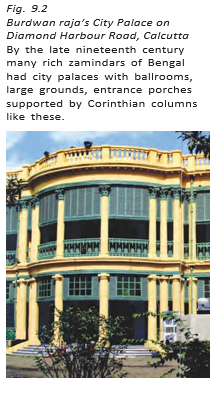
The Burdwan auction
Why the Burdwan estates were auctioned
- The Raja accumulated revenue arrears.
- The Company’s rules allowed defaulting estates to be auctioned.
- The Raja’s estates were publicly put up for sale.
- His agents and servants bought many estates on his behalf, allowing him to retain control.
The problem of unpaid revenue
The reasoning behind the Permanent Settlement
- Famine and declining agricultural output created concern about Bengal’s rural economy.
- Officials believed investment could improve agriculture, trade and state revenue.
- A fixed revenue demand was intended to give the Company regular income and investors confidence that their profits would not be reduced by higher state claims.
- Officials hoped investment would produce prosperous landholders who improved agriculture and supported Company rule.
How the Permanent Settlement worked
| Party | Role |
|---|---|
| Company | Fixed the total revenue demand for each estate and received payment. |
| Zamindar | Collected village rents, paid the Company and kept the difference. |
| Villages in a zamindari | Counted together as one revenue estate for Company calculations. |
Key dates and periods
- By the 1770sBengal’s rural economy faced recurrent famines and declining agricultural output.
- 1793The Permanent Settlement came into operation.
- 1797The Raja of Burdwan’s estates were auctioned amid large revenue arrears.
- Permanent Settlement
- The system that fixed zamindars’ revenue payments to the Company in perpetuity.
- Zamindar
- In the Company’s revenue system, the state’s collector of revenue from an estate.
- Mahal
- An estate; the Burdwan Raja’s mahals were put up for auction.
- Revenue estate
- The group of villages treated by the Company as one unit for fixing revenue.
Why did the Company auction zamindari estates?
What did the Burdwan auction reveal?
What was the zamindar’s role under the Permanent Settlement?
Quick recap
- Permanent Settlement: Introduced in 1793, it fixed zamindars’ revenue payments to the Company in perpetuity.
- Bengal’s crisis: Recurrent famines and declining agricultural output by the 1770s shaped officials’ plans to encourage investment.
- Zamindars: They collected village rents, paid the Company and kept the difference; default could lead to auction.
- Burdwan, 1797: The Raja’s agents and servants bought many estates on his behalf, making over 95% of the sale fictitious.
- Transfers: More than 75% of zamindaris changed hands after the Permanent Settlement.
- Sources and resistance: Historians interpret official records, while rural people could resist laws and influence their effects.
Why Zamindars Defaulted on Payments
Why zamindars defaulted on revenue
The Permanent Settlement’s revenue pressure
- Purpose: Company officials expected a fixed demand to reassure zamindars and encourage them to improve their estates.
- Outcome: In the early decades of the Permanent Settlement, zamindars often failed to pay; unpaid balances accumulated.
- High initial demand: The Company feared it would lose a share of future gains from rising prices and expanded cultivation, so it set revenue high.
- Expected change: The Company assumed that increased production and prices would gradually make the fixed demand less burdensome.
Main causes of default
- High revenue demand was imposed in the 1790s.
- Agricultural prices were depressed, making it harder for ryots to pay rent.
- When zamindars could not collect rent, they struggled to pay the Company.
- Revenue stayed fixed regardless of the harvest and had to be paid punctually.
- Under the Sunset Law, missing the specified payment deadline meant the zamindari could be auctioned.
Company restrictions on zamindars
- Reduced autonomy: The Company recognised zamindars but sought to control them and restrict their authority.
- Disbanded forces: Zamindars’ troops were disbanded and customs duties abolished.
- Courts supervised: Zamindari cutcheries (courts) came under a Company-appointed Collector.
- Authority shifted: Zamindars lost local justice and police powers; the Collectorate became an alternative centre of authority.
- Company intervention: If a raja defaulted, officials could take charge of his district and seek to destroy his influence and authority.
Rent collection and village power
Why collecting rent was difficult
- Collection: A zamindar’s officer, usually an amlah, visited villages to collect rent.
- Ryots’ difficulties: Bad harvests and low prices could prevent payment; some ryots also deliberately delayed their dues.
- Local resistance: Rich ryots and village headmen, including jotedars and mandals, could benefit when the zamindar was weakened.
- Limited enforcement: Zamindars could prosecute defaulters, but court cases took a long time.
- Example: Burdwan had over 30,000 pending suits for rent arrears in 1798.
- Ryot
- The British-record spelling of raiyat, meaning a peasant; Bengal ryots could lease land to under-ryots rather than cultivate it themselves.
- Taluq
- A territorial unit; taluqdar literally means a holder of a taluq or connection.
- Jama
- The revenue demand fixed for a village or estate.
- Kist
- An instalment of revenue.
- Adhiyars or bargadars
- Sharecroppers who cultivated jotedar land and gave half the produce after harvest.
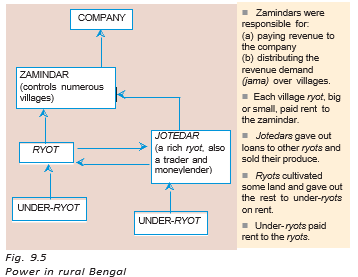
The rise of the jotedars
Jotedars’ wealth and influence
- Growth: While many zamindars faced crisis in the late eighteenth century, rich peasants consolidated their position in villages.
- Scale: By the early nineteenth century, jotedars could control thousands of acres, local trade and moneylending.
- Cultivation: Much of their land was farmed by adhiyars or bargadars, who supplied their own ploughs and labour and handed over half the harvest.
- Local advantage: Jotedars lived in villages and directly influenced poorer cultivators; zamindars often lived in towns.
- Resistance: Jotedars opposed increases in village jama, obstructed zamindari officers, mobilised dependent ryots and delayed payments to zamindars.
- Takeovers: Jotedars sometimes bought zamindari estates at auction, further weakening zamindari authority.
| Point | Zamindars | Jotedars |
|---|---|---|
| Location | Often lived in urban areas. | Lived within the villages. |
| Influence | Held formal estate authority, but faced Company restrictions and difficulties collecting rent. | Had direct influence over cultivators through land, trade and moneylending. |
| Relationship to revenue | Had to pay the Company’s fixed demand. | Could delay payments and obstruct collection. |
| Outcome | Many faced default and possible auction. | Some purchased estates at auction; their power grew as zamindari authority weakened. |
Regional names and evidence
- Region: Jotedars were especially powerful in North Bengal; similar rich peasants and headmen gained influence elsewhere in Bengal.
- Other names: They were called haoladars, gantidars or mandals in different places.
- Buchanan’s survey: Francis Buchanan described Dinajpur jotedars as powerful cultivators who resisted zamindar control and used legal complaints to hinder zamindari officers.
- Power shift: Their village-level influence could be stronger in practice than the authority of a distant zamindar.
How zamindars resisted displacement
Fictitious sales
- Purpose: Zamindars used fictitious sales to prevent their estates from being permanently lost at auction.
- Burdwan strategy: The Raja of Burdwan transferred some property to his mother, protected because the Company had ruled that women’s property would not be taken over.
- Repeated auctions: The Raja’s agents withheld revenue so part of the estate would be auctioned, then bought it on his behalf.
- Stalling payment: The agents refused to pay the purchase money, forcing the estate to be auctioned again; repeated cycles exhausted the authorities and rival bidders.
- Result: The estate could eventually be sold back to the zamindar at a low price, while the Company often failed to recover the arrears.
Scale of fictitious purchases
- 1793–1801Four major Bengal zamindaris, including Burdwan, made benami purchases worth a total of up to Rs. 30 lakh; over 15% of auction sales were fictitious.
Other forms of resistance and recovery
- Blocking outsiders: Buyers from outside the zamindari could struggle to take possession of an estate.
- Force and resistance: Former zamindars’ lathyals (armed retainers) sometimes attacked outsiders’ agents; ryots could also resist their entry.
- Loyalty: Ryots saw the zamindar as an authority figure and themselves as his proja (subjects); an estate sale challenged their identity and pride.
- Recovery: By the beginning of the nineteenth century, prices had recovered and revenue-payment rules had become somewhat more flexible.
- Long-term shift: Surviving zamindars strengthened their village power; during the Great Depression of the 1930s, zamindars finally collapsed and jotedars consolidated their power.
Why did zamindars default on revenue payments?
How did jotedars weaken zamindari authority?
What was a fictitious sale?
Quick recap
- High fixed demands, depressed prices and weak rent collection caused frequent zamindari defaults.
- The Sunset Law made punctual payment essential: a missed deadline could lead to auction.
- Jotedars gained village power through landholding, trade, moneylending and influence over ryots.
- Fictitious sales, resistance to outsiders and ryot loyalty helped zamindars retain estates.
- Prices recovered and payment rules eased in the early nineteenth century; the Great Depression of the 1930s later marked zamindari collapse.
The Fifth Report & the Hoe and the Plough
The Fifth Report
Purpose and contents
- Fifth Report: The fifth in a series of reports on the East India Company’s administration and activities in India; it was submitted to the British Parliament in 1813.
- Length: It had 1,002 pages; more than 800 pages were appendices containing petitions, district reports, revenue statistics and official notes.
- Coverage: Its material included revenue and judicial administration in Bengal and Madras.
- Benami
- A transaction made in a fictitious or insignificant person’s name while the real beneficiary remains unnamed.
- Lathyal
- A zamindar’s strongman; literally, someone who wields a lathi.
Why Company rule was debated in Britain
- Opposition to monopoly: British groups challenged the Company’s monopoly over trade with India and China and sought the revocation of its Royal Charter.
- Commercial interests: Private traders wanted access to India’s trade, while British industrialists sought markets for manufactured goods.
- Political criticism: Critics argued that the conquest of Bengal benefited the Company rather than Britain as a whole.
- Public concern: Reports of Company misrule, maladministration, greed and corruption circulated widely.
- Parliamentary response: Parliament passed Acts in the late eighteenth century to regulate and control Company rule.
| Point | Fifth Report | Later archival research |
|---|---|---|
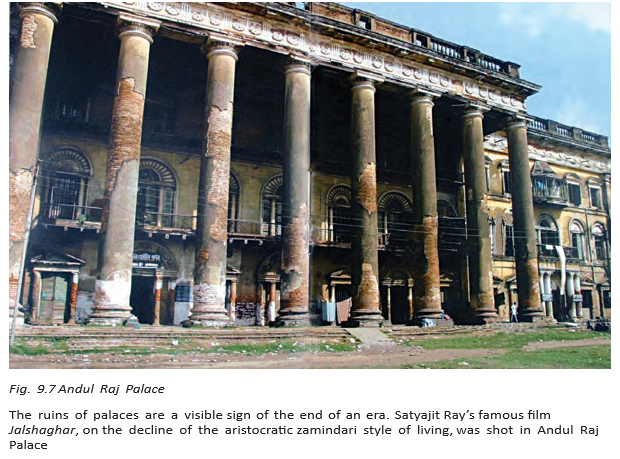
| Zamindari power | Presented traditional zamindari power as collapsing. | Found that the report exaggerated the extent of the collapse. |
| Land auctions | Emphasised zamindars losing land and estates being dismembered. | Showed that zamindars were not always displaced; some used ingenious methods to retain their zamindaris. |
| Evidence | A valuable official source, but written with a critical purpose. | Zamindar archives and district records help test its claims. |
Reading the auction figures critically
- Jumma: The assessment attached to land advertised or sold; the report gives amounts in sicca rupees.
- Report’s message: The figures and examples of old families suggested that revenue defaults and repeated auctions threatened zamindars with ruin.
- Caution: Figures from only two years cannot establish a long-term trend or prove that zamindars were generally dispossessed.
| Native year (equivalent) | Land advertised: jumma | Land sold: jumma | Purchase money |
|---|---|---|---|
| 1203 (1796–97) | Sicca rupees 28,70,061 | Sicca rupees 14,18,756 | Sicca rupees 17,90,416 |
| 1204 (1797–98) | Sicca rupees 26,66,191 | Sicca rupees 22,74,076 | Sicca rupees 21,47,580 |
Distinguish what the Fifth Report records from the interpretation it promotes; check its claims against local and zamindari records.
The Hoe and the Plough
- Changing landscape: The chapter shifts from Bengal’s settled cultivation to the Rajmahal hills, where shifting cultivation and forest-based livelihoods were important.
- Expanding frontier: Colonial efforts to extend settled agriculture transformed forests and pastures into cultivated land.
- Conflict: The expansion of cultivation brought hill communities and settled cultivators into conflict over land and resources.
Life in the Rajmahal Hills
Paharias and their environment
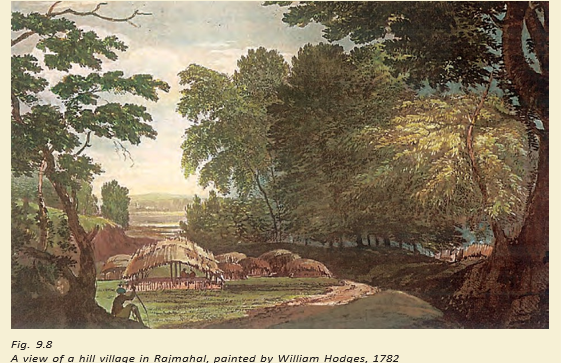
- Paharias: Hill people who lived around the Rajmahal Hills, relied on forests and practised shifting cultivation.
- Cultivation: They cut bushes, burned undergrowth and grew pulses and millets on ash-enriched clearings, scratching the soil lightly with hoes.
- Fallow cycle: After cultivating a patch for a few years, they left it fallow to recover fertility and moved to another area.
- Forest resources: They gathered mahua flowers, silk cocoons and resin, produced charcoal from wood, and used forest undergrowth and fallow grasslands as cattle pasture.
- Livelihoods: Paharias were hunters, shifting cultivators, food gatherers, charcoal producers and silkworm rearers.
- Community life: They lived in huts among tamarind groves and rested under mango trees. The region was central to their identity and survival.
Leadership, raids and negotiated relations
- Chiefs: Paharia chiefs held the group together, settled disputes and led conflicts with other tribes and plainspeople.
- Raids: Raids on settled plains villages supported survival, especially during scarcity, and asserted power and negotiated relations with outsiders.
- Tribute and tolls: Plains zamindars paid regular tribute for peace; traders paid to use passes controlled by hill communities.
- Protection: After a toll was paid, Paharia chiefs protected traders and their goods. This negotiated peace was fragile.
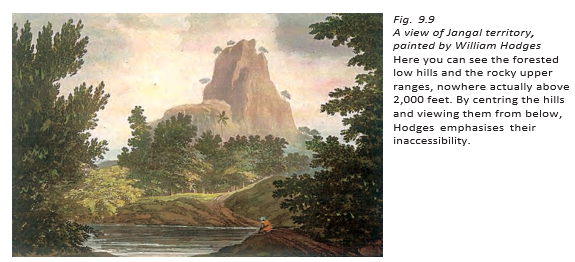
Expansion of settled agriculture and conflict
- British revenue and export aims encouraged forest clearance and settled cultivation.
- Zamindars and jotedars turned uncultivated land into rice fields.
- Forests and pastures contracted, restricting Paharia access to land and resources.
- Conflict intensified; Paharias raided settled villages more regularly, carrying away grain and cattle.
- Colonial officials tried to control and subdue the Paharias.
| Point | Colonial view | Paharia relationship |
|---|---|---|
| Forests | Associated with wildness and considered obstacles to settled order. | A source of food, materials, pasture and livelihood. |
| Forest people | Often labelled savage, unruly, primitive and difficult to govern. | Saw the region as their land and resisted outsiders’ intrusion. |
| Desired way of life | Clear forests, expand plough agriculture and make people settled. | Maintain forest-based livelihoods and shifting cultivation. |
Colonial policies and changing control of the hills
- 1770sThe British pursued a brutal policy of extermination, hunting down and killing Paharias.
- 1780sAugustus Cleveland, Collector of Bhagalpur, proposed pacification: chiefs received annual allowances and were made responsible for order.
- Late eighteenth centuryExpansion of settled agriculture weakened the fragile arrangements between hill communities and plainspeople.
- Winter 1810–11Buchanan travelled through the hills; Paharias viewed him with suspicion because of earlier repression and colonial intrusion.
Buchanan’s journal and the Paharias’ response
- Buchanan’s account: His journal records places, people and practices he encountered, but offers glimpses of a moment in time rather than the longer history of the people and region.
- Historical evidence: Historians use other records, including late-eighteenth-century revenue records, to establish the longer history of the Paharias.
- Pacification: Chiefs were expected to maintain local order and discipline their people.
- Resistance: Many chiefs refused allowances; those who accepted often lost authority and were seen as government-paid subordinate or stipendiary chiefs.
- Withdrawal and suspicion: Paharias retreated deeper into the mountains. Memories of repression and loss of control over forests made white visitors appear to threaten their land and livelihood.
Santhals and the Hoe–Plough Conflict
A new pressure on Paharia land
- Santhal settlers: They moved into the area, cleared forests, cut timber, ploughed land and cultivated rice and cotton.
- Displacement: As Santhals occupied the lower hills, Paharias retreated farther into the Rajmahal Hills.
- Hoe and plough: The hoe symbolised Paharia shifting cultivation; the plough represented the settlers’ expanding settled agriculture.
- Conflict: The “battle between the hoe and the plough” expressed the prolonged struggle over land, forests and ways of life.
Why must historians read the Fifth Report critically?
How did the expansion of settled agriculture affect the Paharias?
What does the contrast between the hoe and the plough represent?
Quick recap
- The Fifth Report was submitted in 1813 as the fifth in a series on the Company’s administration and activities in India; its claims need critical evaluation.
- Later research found that the report overstated the collapse of zamindari power and the extent of land loss.
- Paharia life depended on shifting cultivation, hunting, forest produce, pasture and negotiated relations with plainspeople.
- Buchanan’s journal offers glimpses of a moment, so historians use other records to understand longer histories.
- British forest clearance and settled agriculture reduced Paharia access to land and sharpened conflict.
- Santhal settlement in the lower hills pushed Paharias deeper into the Rajmahal Hills; the hoe–plough contrast symbolises their struggle over land and livelihood.
The Santhals: Pioneer Settlers
Santhal Settlement in the Rajmahal Hills
Why the Santhals were encouraged to settle
- Migration: Santhals began coming into Bengal around the 1780s; zamindars hired them to reclaim land and expand cultivation.
- British policy: After failing to subdue the Paharias and make them settled cultivators, British officials invited Santhals to settle in the Jangal Mahals.
- Different farming practices: Paharias resisted forest clearance and plough agriculture, while Santhals cleared forests and cultivated vigorously.
- Rajmahal settlement: Santhals moved into the area around 1800, cleared forest, settled the land, and displaced Paharia communities from the lower slopes.
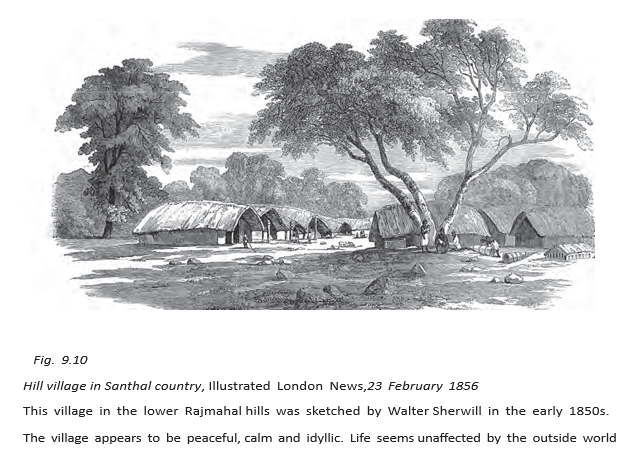
Damin-i-Koh and the Expansion of Cultivation
Damin-i-Koh — A large area demarcated in 1832 as Santhal land, where they were expected to settle and practise plough agriculture.
Terms and effects of demarcation
- Land grant: Santhals were to clear and cultivate at least one-tenth of the area within the first ten years.
- Boundaries: The territory was surveyed, mapped, and marked with boundary pillars; it separated settled plains agriculturists from Paharias of the hills.
- Settlement growth: Santhal villages increased from 40 in 1838 to 1,473 in 1851; population rose from about 3,000 to over 82,000.
- Company revenue: Expanding cultivation brought increased revenue to the East India Company.
- Santhal memory: Nineteenth-century myths and songs recalled a long history of travel and searching for a place to settle; Damin-i-Koh seemed to end that journey.
| Year | Villages | Population |
|---|---|---|
| 1838 | 40 | About 3,000 |
| 1851 | 1,473 | Over 82,000 |
Effects on the Paharias and Santhals
| Point | Paharias | Santhals |
|---|---|---|
| Land and livelihood | Practised shifting agriculture and hunting; depended on moving to fresh land and using naturally fertile soil. | Settled, practised plough agriculture, and cultivated commercial crops for markets. |
| Effect of settlement | Were pushed into dry interiors and barren, rocky upper hills; loss of fertile land weakened their farming and impoverished them. | Cleared forests and expanded cultivation, but later faced taxes, debt, and loss of land. |
| Economic relations | Forest clearance also created difficulties for Paharia hunters. | Traded with merchants and moneylenders. |
How Santhal Land Was Lost
- Heavy state taxes on cleared land
- Moneylenders (dikus) charged high interest
- Unpaid debts led to land being taken over
- Zamindars asserted control over Damin-i-Koh
Santhal Revolt and Santhal Pargana
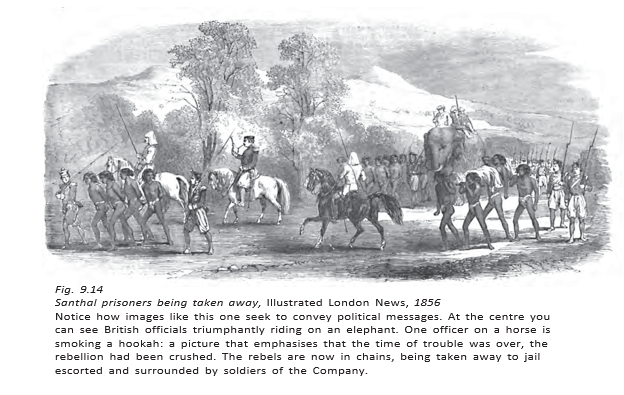
Revolt and colonial response
- Causes: By the 1850s, Santhals opposed zamindars, moneylenders, and the colonial state, seeking an independent ideal world under their own rule.
- Revolt: The Santhal Revolt took place in 1855–56.
- Aftermath: The colonial state created Santhal Pargana, carving out 5,500 square miles from Bhagalpur and Birbhum districts.
- Purpose of the new territory: Special laws and a separate territory were intended to conciliate the Santhals.
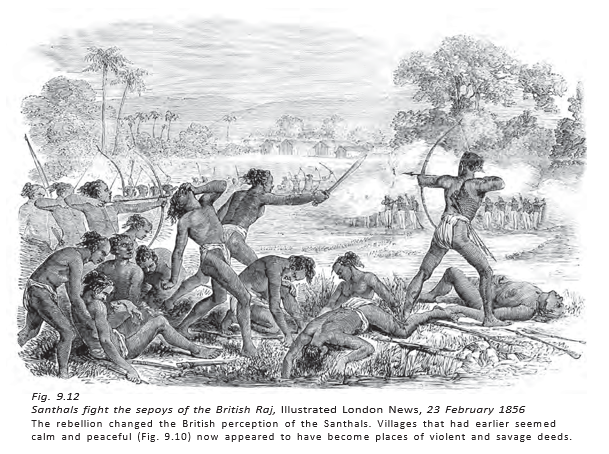
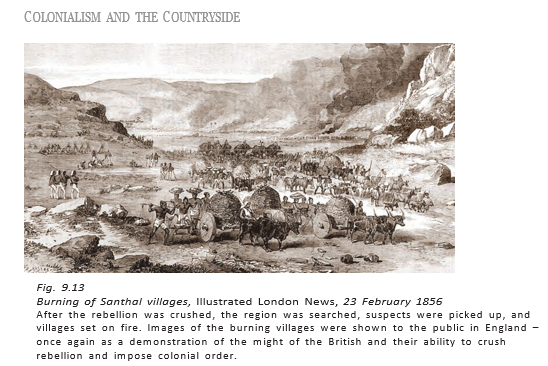
Reading Buchanan’s Accounts
Buchanan as an official observer
- Company employee: Buchanan's journeys were funded by the East India Company, which needed information to consolidate power and expand commerce.
- Survey team: He travelled with draughtsmen, surveyors, palanquin bearers, and labourers; villagers could see him as an agent of the Sarkar.
- Instructions: He was directed to record landscapes, resources, and revenue sources—not simply to explore for personal interest.
- Resource survey: He noted minerals and commercially valuable materials such as iron ore, mica, granite, and saltpetre, as well as salt-making and iron mining.
- Development outlook: He judged landscapes by their potential for increased cultivation and productivity, shaped by Company commercial interests and Western ideas of progress.
- Bias: He was critical of forest-dweller lifestyles and favoured converting forests into agricultural land; his priorities differed from those of local people.
| Account | What it reveals |
|---|---|
| Gunjuriya, end of 1810 | He praised the fertile soil and cultivation, imagining the region could become exceptionally rich through human labour. |
| Santhal houses | He described Santhals as skilled at clearing land but called their huts small and slovenly—showing his judgement of local living conditions. |
| Rocks near Kaduya | His detailed notes on granite, feldspar, quartz, and mica show his interest in geology and potentially valuable resources. |
| Lower Rajmahal hills | He wanted more cultivation and proposed replacing much woodland with Asan and Palas plantations for Tassar silk and lac, and with crops or trees such as palmyra and mahua. |
| Point | Company vision | Forest-dweller perspective |
|---|---|---|
| Land use | Clear forests and expand settled, productive agriculture. | Forests and mobility supported livelihoods, including shifting cultivation and hunting. |
| Meaning of progress | More cultivation and commercially useful crops meant improvement. | Such changes could restrict access to land and forests and threaten existing livelihoods. |
Key Dates
- Around the 1780sSanthals began coming into Bengal.
- Around 1800Santhals moved into the Rajmahal area and began clearing and settling the land.
- End of 1810Buchanan crossed Ganjuria Pahar and recorded the transformed landscape.
- 1832Damin-i-Koh was demarcated as Santhal land.
- 1838There were 40 Santhal villages and about 3,000 Santhals in the area.
- 1851The area had 1,473 Santhal villages and over 82,000 Santhals.
- 1855–56The Santhal Revolt took place; Santhal Pargana was created after the revolt.
- Damin-i-Koh
- The demarcated territory assigned to Santhals in 1832.
- Dikus
- Moneylenders who charged Santhals high interest and could take land when debts remained unpaid.
- Paharias
- Hill communities whose shifting cultivation and forest-based livelihoods were disrupted by the expansion of settled cultivation.
- Santhal Pargana
- A 5,500-square-mile territory carved from Bhagalpur and Birbhum after the Santhal Revolt.
Why did the British encourage Santhal settlement in the Rajmahal hills?
How did the creation of Damin-i-Koh affect the Paharias?
Why should Buchanan’s descriptions be read critically?
Quick recap
- Santhals were encouraged to clear forests and cultivate land in the Rajmahal hills.
- Damin-i-Koh was demarcated for Santhals in 1832, and settlement expanded rapidly.
- The expansion of cultivation displaced Paharias and disrupted their shifting agriculture and hunting.
- Taxes, moneylender debt, and zamindar control led Santhals to rebel in 1855–56.
- After the revolt, the colonial state created Santhal Pargana and imposed special laws.
- Buchanan’s accounts are valuable but reflect Company interests and colonial ideas of progress.
A Revolt in the Countryside the Bombay Deccan
Account Books Are Burnt
Course of the Revolt and the Official Response
- Ryots resented debts and the power of creditors → they attacked sahukars and destroyed debt records.
- Revolt spread across villages → British officials feared a recurrence of the 1857 uprising.
- Police posts were established and troops called in → 951 people were arrested and many convicted.
- The countryside took several months to bring under control.
- Ryot
- A peasant cultivator.
- Sahukar
- A person who acted as both a moneylender and a trader.
- Bahi khata
- An account book recording financial dealings.
- Debt bond
- A document recording a debt or the debtor’s obligation.
- Rentier
- A person who lives on rental income from property.
- Ryotwari settlement
- A revenue system in which the colonial state settled land revenue directly with the ryot.
A New Revenue System
- Revenue policy: Outside Bengal, the Company generally used temporary settlements rather than permanently fixing land revenue.
- State income: Temporary settlements allowed the colonial government to revise demands and claim a share of rising agricultural income.
- Deccan system: In the Bombay Deccan, revenue was settled directly with ryots under the ryotwari system.
Ricardian Ideas and Revenue Policy
| Point | Permanent Settlement | Ryotwari settlement |
|---|---|---|
| Revenue settled with | Zamindar | Ryot, directly |
| Revenue demand | Fixed permanently | Not permanent; rates could rise after reassessment |
| Assessment | The state could not claim extra revenue when agricultural incomes rose | Average income by soil type and the ryot’s revenue-paying capacity were assessed; a share was fixed for the state |
| Revision | No periodic revision of the fixed demand | Land resurveyed every 30 years and revenue rates increased |
Key Dates and Periods
- After 1810Rising agricultural prices increased the value of harvests and Bengal zamindars’ incomes.
- 1820sBritish officials in Maharashtra framed early revenue settlements under the influence of Ricardian ideas.
- 12 May 1875Ryots attacked shopkeepers and moneylenders at Supa and destroyed debt records.
- 15 May 1875The Poona District Magistrate arrived at Supa and learnt of the disturbance.
- 16 May 1875The magistrate wrote to the Police Commissioner about the damage and arrests at Supa.
- 6 June 1876Native Opinion published a report describing the ryots’ tactics.
Why did the ryots burn account books and debt bonds?
What were the main features of the ryotwari settlement?
Quick recap
- The Deccan revolt began at Supa in May 1875 and spread across more than 30 villages.
- Ryots targeted sahukars, account books and debt bonds; many creditors fled.
- The British responded with police posts, troops, arrests and convictions.
- Rising agricultural prices made the fixed Permanent Settlement less profitable for the colonial state.
- Ricardian ideas encouraged officials to tax surplus land income and avoid rentier landowners.
- Under ryotwari, revenue was settled directly with ryots and reassessed every 30 years.
Revenue Demand and Peasant Debt
Revenue Demand and Peasant Debt
Borrowing and the mid-1840s recovery
- Why borrow? Cultivators needed loans to pay revenue, buy food and other necessities, obtain ploughs and cattle, and meet costs such as children’s marriages.
- Debt trap: A loan might cover revenue, but falling income made repayment difficult. Rising debt pushed peasants to borrow again for everyday consumption and production.
- By the 1840s: Officials found evidence of alarming peasant indebtedness across the countryside.
- Revenue moderation: By the mid-1840s, British officials recognised that earlier settlements were exorbitant and rigid, leaving the peasant economy near collapse. Revenue demand was moderated to encourage cultivation.
- Recovery after 1845: Agricultural prices steadily recovered. Cultivators expanded acreage, entered new areas and turned pastureland into fields.
- Borrowing continued: Expansion required seeds, land, ploughs and cattle, so cultivators again needed moneylender loans.
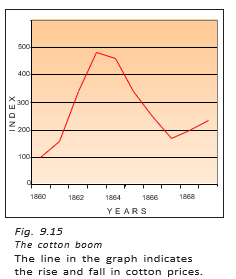
The Cotton Boom
From the American Civil War to cotton expansion in India
- The American Civil War began in 1861.
- American raw cotton imports to Britain plunged—from over 2,000,000 bales in 1861 to 55,000 in 1862, less than 3% of the normal supply.
- British buyers urgently sought cotton elsewhere; Bombay merchants visited cotton districts to assess supplies and encourage cultivation.
- Export merchants gave advances to urban sahukars, who extended credit to rural moneylenders promising to secure cotton.
- Cotton prices soared and credit flowed easily because lenders expected repayment; Deccan ryots gained access to large advances.
Effects of the boom in the Deccan
- Advances: Ryots could receive Rs. 100 for every acre planted with cotton; sahukars were willing to give long-term loans.
- Expansion: Between 1860 and 1864, cotton acreage in the Bombay Deccan doubled. By 1862, India supplied over 90% of Britain’s cotton imports.
- Unequal gains: Some rich peasants profited, but for most cotton producers expansion brought heavier debt.
- Market credit: During a boom, lenders were more willing to advance money because they expected to recover it from profitable sales.
Credit Dries Up
How the end of the boom deepened peasant hardship
- American cotton production recovered after the Civil War.
- Demand for Indian cotton and cotton prices fell.
- Merchants and sahukars cut off advances and pressed for repayment.
- The new revenue demand rose by 50–100% while cultivation and prices declined.
- Ryots faced high revenue, existing debt and little access to further credit.
A Ryot’s Petition: Evidence of Moneylender Practices
- Source: A ryot from Mirajgaon, in Karjat taluka, petitioned the Collector of Ahmednagar for the Deccan Riots Commission.
- Hard conditions: Unable to cover household expenses, ryots had to ask sahukars for money, clothes and grain, often under harsh bond conditions.
- Higher prices: Goods supplied on credit cost 25% or 50% more than the cash prices charged to ready-money customers.
- Produce and accounts: Sahukars took the field produce, promised to credit its value to the ryot’s account, but allegedly failed to record it or provide receipts.
- What the petition shows: It records the ryots’ claims of debt-related pressure and unfair transactions; it is a petitioner’s account of their experience.
- Ryot
- A peasant cultivator.
- Sahukar (sowkar)
- A moneylender or financier who provided credit.
- Revenue settlement
- The assessment and collection arrangement for land revenue.
- Advance
- Money given beforehand, often against future cotton production or sale.
How did the cotton boom affect Deccan peasants?
What factors intensified peasant indebtedness in the Deccan?
Quick recap
- The high and rigid revenue demand of the 1820s, combined with poor harvests and famine, drove peasants into debt.
- Revenue was moderated in the mid-1840s, and recovering prices encouraged cultivation to expand—but expansion still required loans.
- The American Civil War cut cotton supplies to Britain and triggered a cotton-export boom that expanded credit and cotton acreage in the Deccan.
- Most cotton producers did not prosper equally; many became more heavily indebted.
- After American cotton production revived, Indian cotton prices and credit fell while revenue demand rose by 50–100%.
- The Mirajgaon ryot’s petition alleged harsh loan conditions, inflated prices, uncredited produce and missing receipts.
The Experience of Injustice & the Deccan Riots Commission
Customary rules and peasant grievances
- Customary limit: A widely observed norm held that interest should not exceed the principal, limiting moneylenders’ demands.
- Changing practices: Under colonial rule, this customary restraint weakened, and some moneylenders charged extremely high interest.
- Peasant grievance: Ryots resented these exactions and the violation of customary ideas of fair dealing.
Deeds of hire and loss of ownership
Commitments in the 1873 deed
- Sale: The peasant sold two iron-axle carriages, their appurtenances and four bullocks to the moneylender against the debt.
- Hire: The peasant hired those same carriages and bullocks back from the lender.
- Monthly payment: The peasant agreed to pay Rs. 4 each month as hire.
- Receipt: The peasant agreed to obtain a receipt in the lender’s handwriting.
- Proof of payment: Without a receipt, the peasant agreed not to claim that the hire had been paid.
- Changed relationship: The bullocks were no longer the peasant’s property; they became hired assets with a continuing cost.
Bonds, the Limitation Law and rising debt
- Limitation Law: The 1859 law limited the validity of loan bonds to three years, aiming to check the accumulation of interest.
- Renewed bonds: Moneylenders often made ryots sign a new bond when the old one expired, adding unpaid interest to the principal.
- Rising debt: Repeated renewals allowed fresh interest to accumulate on the enlarged principal, deepening peasant indebtedness.
Interest rate and repeated bonds
The quoted charge was 3.125% per month, equivalent to a nominal 37.5% per year before accounting for debt rollover.
Multiply the monthly rate by 12; repeated addition of interest to principal could make the actual debt grow faster.
Written contracts and peasant experience
- Legal contracts: Colonial authorities expected transactions to be recorded in written deeds and bonds that could be enforced in court.
- Peasant experience: Many ryots did not understand the documents they signed or the clauses moneylenders inserted.
- Fear and dependence: Peasants came to associate written contracts with hardship, yet needed loans and often had little choice but to sign.
The Deccan Riots Commission
| Evidence | Interpretation | |
|---|---|---|
| What the report contains | Statements, eyewitness accounts, statistics and district reports. | The commission’s explanation of the causes of the riots. |
| What to consider | These records are valuable for reconstructing events. | They reflect official concerns and may avoid blaming government action. |
| How to use them | Study what different sources record. | Read official reports critically and compare them with newspapers, unofficial accounts, legal records and oral sources where available. |
- Ryot
- A peasant cultivator.
- Sowkar
- A moneylender or creditor.
- Bond
- A written loan agreement stating the debt and its terms.
- Deed of hire
- A document recording the hiring of property, including goods once owned by the peasant.
How did the Limitation Law fail to stop debts from increasing?
What did the 1873 deed of hire reveal about the peasant’s position?
Why must historians read the Deccan Riots Report critically?
Quick recap
- Custom: The weakening of customary limits on interest intensified ryots’ sense of injustice.
- Debt: Renewed bonds rolled unpaid interest into principal, allowing debts to grow.
- Hire deeds: Peasants could lose property and pay to hire back the same farming resources.
- Rate: The petition’s monthly charge was 3.125%, or 37.5% nominally per year.
- Commission: Appointed after the revolt, it presented its report to Parliament in 1878.
- Sources: Official records are useful but should be read critically and compared with other evidence.
History — ALL CHAPTERS
1
BRICKS, BEADS AND BONES THE HARAPPAN CIVILISATION
2
KINGS, FARMERS AND TOWNS EARLY STATES AND ECONOMIES (C. 600 BCE-600 CE)
3
KINSHIP, CASTE AND CLASS EARLY SOCIETIES (C. 600 BCE-600 CE)
4
THINKERS, BELIEFS AND BUILDINGS CULTURAL DEVELOPMENTS (C. 600 BCE - 600 CE)
1
THROUGH THE EYES OF TRAVELLERS PERCEPTIONS OF SOCIETY (C. TENTH TO SEVENTEENTH CENTURY)
2
BHAKTI- SUFI TRADITIONS CHANGES IN RELIGIOUS BELIEFS AND DEVOTIONAL TEXTS (C. EIGHTH TO EIGHTEENTH CENTURY)
3
AN IMPERIAL CAPITAL VIJAYANAGARA (C. FOURTEENTH TO SIXTEENTH CENTURY)
4
PEASANTS, ZAMINDARS AND THE STATE AGRARIAN SOCIETY AND THE MUGHAL EMPIRE (C. SIXTEENTH- SEVENTEENTH CENTURY)
1
COLONIALISM AND THE COUNTRYSIDE EXPLORING OFFICIAL ARCHIVES
2
REBELS AND THE RAJ THE REVOLT OF 1857 AND ITS REPRESENTATIONS
3
MAHATMA GANDHI AND THE NATIONALIST MOVEMENT CIVIL DISOBEDIENCE AND BEYOND
4
FRAMING THE CONSTITUTION THE BEGINNING OF A NEW ERA