Class 12 Humanities . History . Themes In Indian History Part II . Peasants Zamindars and the State Agrarian Society and the Mughal Empire C Sixteenth Seventeenth Century
Chapter 4: PEASANTS, ZAMINDARS AND THE STATE AGRARIAN SOCIETY AND THE MUGHAL EMPIRE (C. SIXTEENTH- SEVENTEENTH CENTURY)
Ch 4
History
Class 12 Humanities
Introduction & Peasants and Agricultural Production
Agrarian Society and the Mughal State
Rural society in the sixteenth and seventeenth centuries
- Population: About 85% of India’s population lived in villages.
- Agrarian relationships: Peasants and landed elites both took part in production and claimed shares of the produce; their relations involved cooperation, competition and conflict.
- State involvement: The Mughal state depended chiefly on agricultural revenue. Its assessors, collectors and record keepers sought to secure cultivation and collect taxes.
- Markets: Crops grown for sale brought trade and money into villages and linked agricultural areas with towns.
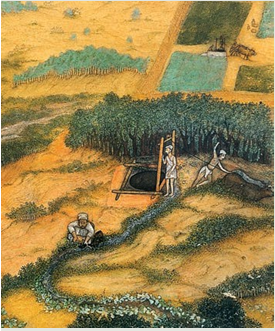
Peasants and Agricultural Production
Agricultural production — The seasonal work of cultivating crops and producing goods made from agricultural produce.
Village work and varied landscapes
- Village: The basic unit of agricultural society, where peasants performed seasonal tasks throughout the year.
- Crop cycle: Peasants tilled the soil, sowed seeds and harvested ripe crops.
- Agro-based goods: Peasant labour also helped produce goods such as sugar and oil.
- Varied terrain: Dry lands and hills were not cultivated like fertile tracts; forests also covered a substantial area. Rural life therefore differed across regions.
Sources for Agrarian History
Main sources
- Limited peasant voices: Peasants generally did not write about themselves, so much of what is known comes from official and other written records.
- Mughal court sources: Chronicles and documents are major sources for the sixteenth and early seventeenth centuries.
- Ain-i Akbari: Written by Akbar’s court historian Abu’l Fazl, it records state arrangements for cultivation, revenue collection and relations with zamindars.
- Other sources: Regional revenue records from Gujarat, Maharashtra and Rajasthan, and East India Company records for eastern India, add accounts of agrarian relations and conflicts.
| Evidence | Interpretation | |
|---|---|---|
| Ain-i Akbari | Records state arrangements for cultivation, revenue collection and the regulation of zamindars. | Presents Akbar’s empire as a harmonious order under a strong ruler; it treats revolt or autonomous power as destined to fail. |
| Limit of the source | Its account supplies information about peasants and state policy. | It is a view from the top, not a direct account of peasant experience. |
| Additional records | Regional records and East India Company accounts describe conflicts among peasants, zamindars and the state. | They help reveal peasant perceptions and expectations of fairness from the state. |
Periods represented by the sources
- Sixteenth and early seventeenth centuriesMughal court chronicles and documents are major sources for agrarian history.
- Seventeenth and eighteenth centuriesRegional revenue records from Gujarat, Maharashtra and Rajasthan document agrarian relations.
- Nineteenth centuryA description of peasant field boundaries in the Delhi-Agra region was considered applicable to the seventeenth century.
Peasants and Their Lands
- Raiyat (riaya)
- A common Indo-Persian term for a peasant; muzarian, kisan and asami were also used.
- Khud-kashta
- A resident cultivator who farmed land in their own village.
- Pahi-kashta
- A non-resident cultivator who farmed land in another village on a contractual basis.
- Zamindar
- A rural magnate whose relationship with the state was regulated, in part, through revenue arrangements.
| Type | Residence and cultivation | Why they cultivated elsewhere |
|---|---|---|
| Khud-kashta | Resident of the village where they held and cultivated land. | — |
| Pahi-kashta | Belonged to another village but cultivated land elsewhere under contract. | Choice: better revenue terms in a distant village; compulsion: economic distress, such as after a famine. |
Farm size, ownership and field boundaries
- Typical resources: An average north Indian peasant seldom had more than a pair of bullocks and two ploughs; most had even less.
- Regional differences: In Gujarat, about six acres could indicate an affluent peasant. In Bengal, five acres was the upper limit of an average farm; ten acres made an asami rich.
- Individual ownership: Cultivated land could be bought and sold like other property.
- Field boundaries: Cultivators marked individual fields with raised earth, brick or thorn borders, making it possible to identify and demarcate many fields within a village.
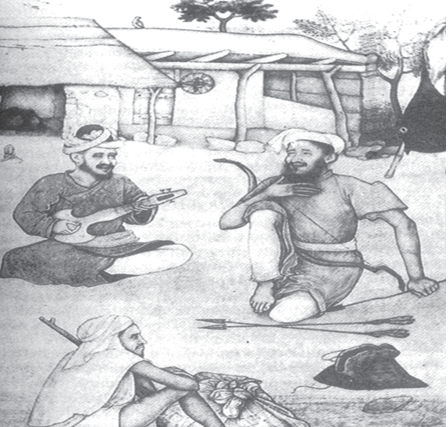
Peasants on the Move: Babur’s Account
What struck Babur about northern India
- Rapid settlement changes: In the Babur Nama, Babur described villages and even towns as being abandoned or established very quickly.
- Easy departure: When people left a settlement, they could do so rapidly, leaving little or no trace.
- Rain-fed crops: Settlers did not need to dig watercourses because crops depended on rainfall.
- Quick resettlement: Babur linked the region’s large population and abundant khas grass and wood with the rapid construction of huts and the re-creation of villages or towns.
- Water sources: Settlers could make a tank or well without needing to build houses or walls first.
What aspects of agricultural life in northern India struck Babur?
Quick recap
- About 85% of India’s population lived in villages, where agrarian relations involved cooperation, competition and conflict.
- The Mughal state depended on agricultural revenue and used officials to encourage cultivation and collect taxes.
- Peasant work included seasonal crop tasks and producing agro-based goods; terrain and cultivable land varied by region.
- The Ain-i Akbari is a major court source, but presents a top-down view; regional and Company records add evidence of conflict and peasant expectations.
- Khud-kashta were resident cultivators; pahi-kashta cultivated land in another village, by choice or necessity.
- Peasant holdings differed across regions, land could be bought and sold, and Babur described settlement as rapid and rain-fed.
Irrigation and Technology
Agriculture and water
Conditions supporting agricultural expansion
- Expansion: Abundant land, available labour and peasants’ mobility helped agriculture continually expand.
- Staples: Rice, wheat and millets were the most frequently cultivated crops because they fed the population.
- Rainfall: Areas receiving 40 inches or more of annual rainfall generally grew rice; wheat and millets were associated with progressively lower rainfall.
- Monsoon: Rainfall from the monsoon remained the backbone of Indian agriculture, but some crops and orchards needed additional water.
Irrigation devices and state support
Water-lifting devices described by Babur
- Persian wheel: In Lahore, Dipalpur and nearby areas, pitchers attached to a rope-and-wood chain were turned by a wheel powered by a bullock.
- Water delivery: As the pitchers rose, they emptied into a trough, which carried water to fields and orchards.
- Bucket lift: In Agra, Chandwar, Bayana and nearby areas, a bullock pulled a rope over a roller to raise a large bucket from a well.
- Labour: The bucket system required one person to guide the bullock and another to empty the bucket.
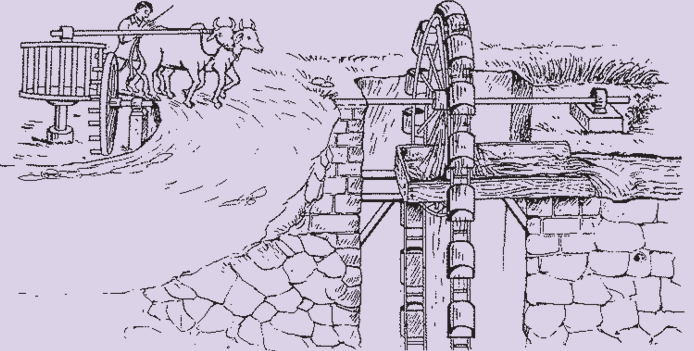
| System | Resources needed | Scale and participation |
|---|---|---|
| Persian wheel | A well, pitchers, ropes, wooden strips, wheels, a bullock and a trough | Could serve nearby fields; animal power and local materials made it usable at a smaller scale. |
| Bucket lift | A well, large bucket, rope, wooden support and roller, a bullock and two workers | A relatively simple system that could be operated by peasants. |
| Vijayanagara tanks, dams and canals | Water storage or diversion works, construction labour, and often organised investment and maintenance | Larger works could involve rulers, local authorities and communities; smaller local works could enable peasant participation. |
| State canals | Large-scale excavation or repair, substantial labour and state organisation | The state could coordinate works beyond the capacity of an individual peasant. |
| Point | Local devices | Large works |
|---|---|---|
| Examples | Persian wheel and bullock-operated bucket lift | Canals, dams and tanks, including systems associated with Vijayanagara |
| Main resources | Wells, animal power, simple equipment and a small labour force | Construction labour, water management and coordinated investment |
| Peasant role | Peasants could operate, maintain or improve these devices locally. | Peasants could contribute labour and maintenance, but large projects generally required wider organisation and support. |
State-supported irrigation
- Canals: The state dug new canals, called *nahr* or *nala*, and repaired existing ones.
- Shahnahr: During Shah Jahan’s reign, the state repaired the shahnahr in Punjab.
- Purpose: State projects extended or restored water supply beyond what individual cultivators could provide on their own.
Agricultural tools and practices
| Tool or practice | Use and features |
|---|---|
| Wooden plough | Light and easy to assemble, with an iron tip or coulter; made shallow furrows that helped preserve moisture during hot months. |
| Seed drill | Pulled by a pair of large oxen to plant seeds. |
| Broadcasting | Scattering seeds was the most common sowing method. |
| Hoe | A narrow iron blade with a small wooden handle was used for hoeing and weeding. |
The spread of tobacco
Tobacco in Mughal India
- Spread: Tobacco arrived first in the Deccan and reached northern India in the early seventeenth century.
- 1604: Akbar and his nobles encountered tobacco; smoking it in hookahs or chillums became popular.
- Ban: Jahangir tried to prohibit tobacco because he was concerned about addiction, but the ban was ineffective.
- By the late seventeenth century: Tobacco had become an important item of consumption, cultivation and trade across India.
- Ain: Tobacco does not appear in the Ain’s lists of crops for northern India.
Crop seasons and agricultural variety
| Term or pattern | Meaning and significance |
|---|---|
| Kharif | Autumn crop season. |
| Rabi | Spring crop season. |
| Do-fasla | Two crops a year; common in most regions except the most arid or inhospitable areas. |
| Three crops | Possible where rainfall or irrigation provided a continuous water supply. |
Variety and commercial production
- Crop diversity: The Ain records 39 varieties of crops in Agra and 43 in Delhi across the two seasons; Bengal produced 50 varieties of rice.
- Jins-i kamil: Literally “perfect crops”; the Mughal state encouraged these high-revenue crops.
- Cash crops: Cotton and sugarcane were especially important *jins-i kamil*. Cotton was widespread in central India and the Deccan; Bengal was known for sugar.
- Other commercial crops: Oilseeds such as mustard and lentils were also grown.
- Mixed production: Subsistence crops and commercial crops were often cultivated together in a peasant’s holding.
| Crop | Origin or route noted in the text |
|---|---|
| Maize (makka) | Introduced via Africa and Spain; by the seventeenth century it was a major crop in western India. |
| Tomatoes, potatoes and chillies | Introduced from the New World. |
| Pineapple and papaya | New World fruits introduced during this period. |
Agricultural prosperity and population growth
Population change
- Growth: Economic historians estimate that India’s population increased by about 50 million between 1600 and 1800—around 33% over 200 years.
- Despite crises: This growth occurred despite periodic famines and epidemics.
- Connection: Varied and flexible agricultural production supported population growth.
Key developments
- 1604Akbar and his nobles encountered tobacco; smoking it began to catch on.
- Early seventeenth centuryTobacco spread from the Deccan to northern India.
- Seventeenth centuryMaize and several New World crops were cultivated in parts of India.
- Late seventeenth centuryTobacco was widely consumed, cultivated and traded across India.
- 1600–1800India’s population grew by an estimated 50 million, or about 33%.
- Kharif
- The autumn crop season.
- Rabi
- The spring crop season.
- Do-fasla
- A pattern of producing two crops in a year.
- Jins-i kamil
- “Perfect crops” encouraged by the Mughal state for their higher revenue.
How did Mughal irrigation systems differ in scale, and what resources did they require?
What were *jins-i kamil*, and why did the state encourage their cultivation?
How did tobacco become established in India?
Quick recap
- Land, labour, peasant mobility and monsoon rainfall supported agricultural expansion.
- Persian wheels and bucket lifts raised well water using animal power; the state also built and repaired canals.
- Peasants used wooden ploughs, seed drills, broadcasting and hoes; broadcasting was the most common sowing method.
- Kharif and rabi seasons commonly enabled two crops a year, with three possible where water was plentiful.
- Staples, cash crops and newer crops were cultivated together, making agriculture varied and commercially connected.
- Despite famines and epidemics, India’s population grew by an estimated 50 million between 1600 and 1800.
The Village Community
Village Community and Rural Society
- Village community: Peasants held individual lands but also belonged to a collective village community.
- Constituents: The community included cultivators, the panchayat and the village headman, called the muqaddam or mandal.
Caste and the Rural Milieu
Caste, Occupation and Status
- Unequal cultivators: Caste and caste-like distinctions made the cultivating population highly diverse; many land workers were menials or agricultural labourers (*majur*).
- Marginalisation: Some caste groups were assigned menial work despite abundant cultivable land, leaving them with few resources and low social status—comparable in some respects to Dalits today.
- Other communities: Muslim *halalkhoran* (scavengers) lived outside village boundaries; Bihar’s *mallahzadas* (“sons of boatmen”) were described as comparable to slaves.
- Status and poverty: Caste, poverty and low status were closely linked among the poorest, but the link was less clear at intermediate levels.
- Changing status: Rajputs and Jats both cultivated in Marwar despite their different caste ranking; Vrindavan’s Gauravas sought Rajput status in the seventeenth century.
- Economic mobility: Ahirs, Gujars and Malis rose in status through cattle-rearing and horticulture; eastern pastoral and fishing groups such as Sadgops and Kaivartas became peasants.
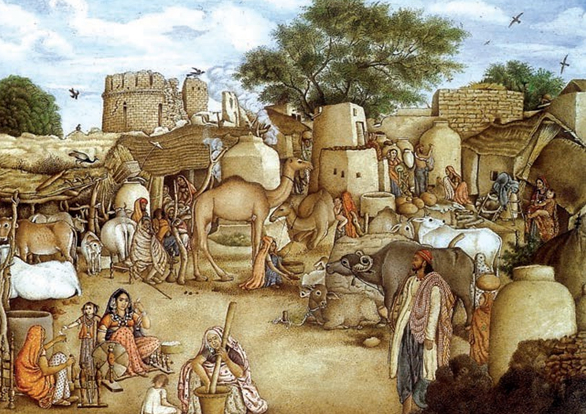
Panchayats and Headmen
Village panchayat — An assembly of village elders, usually influential people with hereditary rights over their property, whose decisions bound the community.
Composition and Leadership
- Oligarchic body: In mixed-caste villages, the panchayat represented several castes and communities, but menial-cum-agricultural workers were unlikely to be included.
- Headman: The *muqaddam* or *mandal* led the panchayat; village elders might choose him by consensus, subject to the zamindar’s ratification.
- Accountability: A headman remained in office while he had the elders’ confidence and could be dismissed if he lost it.
- Main duty: The headman supervised village accounts with help from the panchayat accountant, the *patwari*.
Abuse of the Headman’s Position
- Some *mandals* colluded with the *patwari* to falsify village accounts.
- They understated the revenue due on their own lands.
- The resulting extra burden could be shifted to smaller cultivators.
Panchayat Funds and Responsibilities
- Funding: Individuals contributed to a common pool used for village needs.
- Shared expenses: The pool paid for entertaining visiting revenue officials and for relief during calamities such as floods.
- Public works: Funds could build bunds or dig canals—projects individual peasants often could not afford.
- Caste regulation: Panchayats enforced caste boundaries; in eastern India, marriages took place in the mandal’s presence.
- Punishments: Panchayats could impose fines or expel people from the community, usually for a limited period.
- Effect of expulsion: The expelled person became an outcaste, left the village and lost the right to practise their profession; the punishment discouraged breaches of caste rules.
Jati panchayat — A caste-based council that regulated matters concerning members of its jati and exercised considerable authority in rural society.
Jati Panchayats and Petitions
- Disputes: In Rajasthan, jati panchayats arbitrated civil disputes across castes, land claims, marriage rules and ritual precedence at village functions.
- State and custom: The state usually respected jati-panchayat decisions except in criminal justice.
- Petitions: Records from Rajasthan and Maharashtra include complaints against excessive taxation and unpaid labour (*begar*) demanded by dominant castes or state officials.
- Collective appeals: Low-status villagers, castes or communities could petition against demands they considered morally illegitimate, especially when taxes threatened subsistence during droughts or disasters.
- Customary right: Petitioners held that custom guaranteed a basic minimum for survival and expected the village panchayat to press the state to uphold its moral obligations.
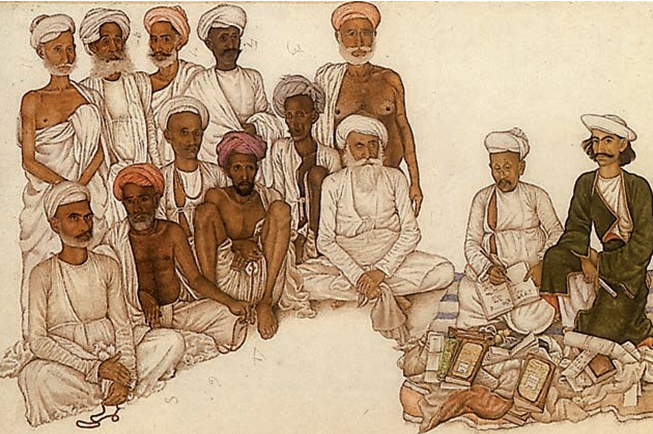
Revenue Disputes and Peasant Resistance
- Panchayat decisions on disputes involving lower-caste peasants, officials or zamindars varied by case.
- For excessive revenue demands, the panchayat might propose a compromise.
- If reconciliation failed, peasants might desert the village.
- Available uncultivated land and competition for labour made departure an effective form of resistance.
Village Artisans
Artisans, Peasants and Exchange
- Artisan households: Marathi documents and village surveys from the early years of British rule show that artisans could make up as much as 25 per cent of village households.
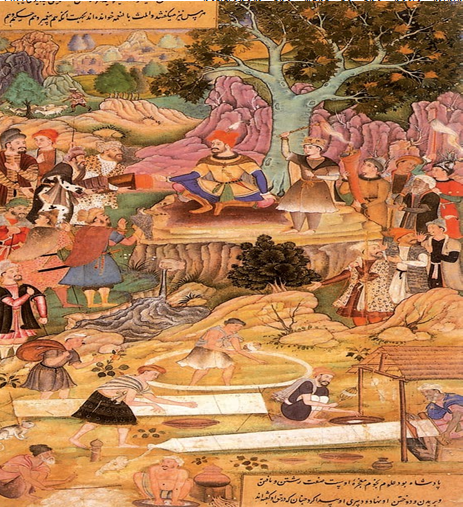
- Overlapping work: The boundary between artisan and peasant was flexible; cultivators and their families also dyed and printed textiles, baked and fired pottery, and made or repaired farm tools.
- Seasonal production: Peasants could take up craft work during quieter intervals in the agricultural calendar, such as between sowing and weeding or between weeding and harvesting.
- Specialists: Potters, blacksmiths, carpenters, barbers and goldsmiths provided services to village households.
- Payment in kind or land: Artisans commonly received a share of the harvest or an allotment of land, sometimes cultivable waste, with arrangements likely decided by the panchayat.
- Miras or watan: In Maharashtra, hereditary land held by artisans was known as *miras* or *watan*.
- Negotiated payment: Artisans and peasant households could agree on goods for services; eighteenth-century Bengal records mention zamindars paying blacksmiths, carpenters and goldsmiths a small daily allowance and diet money.
- Jajmani system: This later name was applied to such service-and-payment arrangements, but the term was not used in the sixteenth and seventeenth centuries.
- Cash: Cash payment was also known, showing that village exchange was not limited to harvest shares, land or goods.
Periods Mentioned in the Lecture
- Sixteenth–seventeenth centuriesThe period of Mughal agrarian society discussed; the term *jajmani* was not then in use.
- Seventeenth centuryGauravas near Vrindavan sought Rajput status; a Marwar manual also described Rajputs and Jats as cultivators.
- Eighteenth centuryBengal records describe zamindars paying artisans daily allowances and diet money.
- Early years of British ruleMarathi documents and village surveys recorded substantial artisan populations.
- Early nineteenth centuryThe village and village-meeting paintings referenced in the lecture were produced.
- Muqaddam / mandal
- Village headman who led the panchayat and supervised village accounts.
- Patwari
- Accountant who assisted the headman with village accounts.
- Begar
- Unpaid labour demanded from villagers.
- Miras / watan
- Hereditary landholding allotted to artisans in Maharashtra.
- Jajmani system
- Later term for negotiated village arrangements in which artisans received payment for services.
What were the main functions and powers of village panchayats?
How were village artisans remunerated?
Quick recap
- Peasants held land individually but participated in a collective village community.
- Caste shaped work, resources and status, though some occupational groups improved their standing.
- Panchayats were influential, caste-diverse bodies, but the poorest workers were often excluded.
- Headmen supervised accounts; panchayats raised funds, upheld caste rules and settled disputes.
- When compromise over excessive demands failed, cultivators could resist by leaving the village.
- Artisans and peasants exchanged skills, goods, harvest shares, land and sometimes cash.
A Little Republic? & Women in Agrarian Society
The Village Community: A “Little Republic”?
Cash nexus — The growing use of money in exchanges linking villages, towns, agricultural production and trade.
Women in Agrarian Society
Work, Restrictions and Commercial Production
- Gendered restrictions: Beliefs about women’s biological functions continued; menstruating women in western India could be barred from touching a plough or potter’s wheel.
- Regional example: In Bengal, menstruating women could be barred from entering betel-leaf groves.
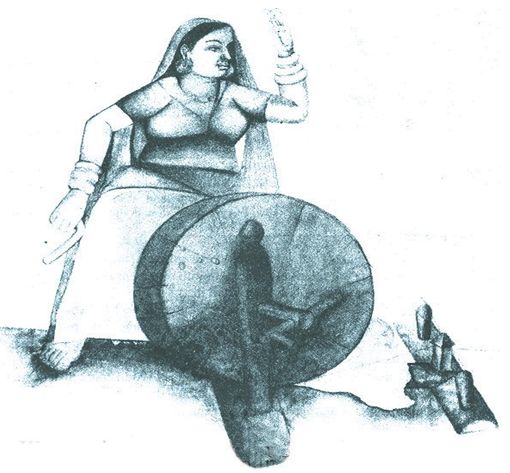
- Commercial demand: The more commercialised a product was, the greater the demand for women’s labour in its production.
- Work beyond home: Peasant and artisan women sometimes went to employers’ houses or markets for work.
Women, Labour and Marriage Customs
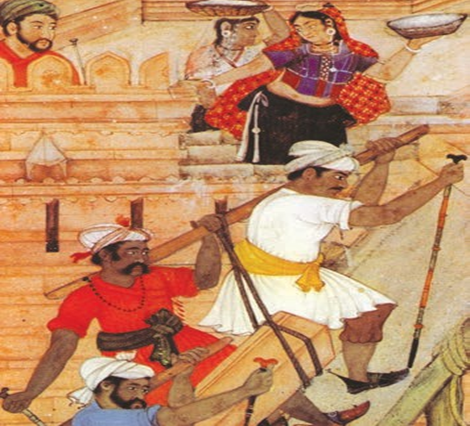
- Agrarian society depended on labour → women were valued as workers and child bearers.
- High mortality among women from malnutrition, frequent pregnancies and childbirth → shortages of wives in some communities.
- Distinct rural customs → many peasant and artisan marriages involved bride-price paid to the bride’s family rather than dowry.
- Remarriage was accepted for divorced and widowed women in many such communities.
Control, Petitions and Redress
- Male authority: The household was generally headed by a man, and male relatives and the community exercised strict control over women.
- Punishment: Women could face severe punishments if suspected of infidelity.
- Petitions: Records from Rajasthan, Gujarat and Maharashtra include women’s petitions to village panchayats for justice.
- Complaints: Wives protested against husbands’ infidelity and against neglect of wives and children by the male household head, or grihasthi.
- Unequal enforcement: Male infidelity was not always punished, but the state and “superior” caste groups sometimes intervened to ensure families were provided for.
- Visibility in records: Petitions often named a woman only as the male household head’s mother, sister or wife.
Women and Landed Property
- Inheritance: Women among the landed gentry could inherit property.
- Punjab: Women, including widows, participated in the rural land market by selling inherited property.
- Zamindaris: Hindu and Muslim women inherited zamindaris and could sell or mortgage them.
- Bengal: Women zamindars were known; Rajshahi, one of the largest and most famous zamindaris of the eighteenth century, was headed by a woman.
Money in the Village
Periods Mentioned
- Seventeenth centuryJean-Baptiste Tavernier described the presence and services of shroffs in Indian villages.
- Eighteenth centuryWomen zamindars were known in Bengal; a woman headed the Rajshahi zamindari.
- Cash nexus
- The use of money in exchanges linking villages, towns and production.
- Bride-price
- Payment made to the bride’s family in some rural marriage customs.
- Grihasthi
- The male head of a household referred to in petitions.
- Shroff
- A village money changer who could also provide banking and remittance services.
Why was the village not truly a “little republic” of equals?
What roles did women perform in agrarian production?
What evidence shows that some women had property rights?
Quick recap
- The village was not egalitarian: ownership, caste and gender shaped power and access.
- Cash linked village production and revenue collection with trade and markets.
- Women worked in fields and artisanal production, with labour demand rising for commercial products.
- Bride-price and remarriage were accepted in many peasant and artisan communities.
- Women could petition panchayats, though control and unequal treatment remained common.
- Some women inherited, sold or mortgaged landed property and zamindaris.
- Shroffs served villages as money changers and providers of banking and remittance services.
Forests and Tribes
Forests beyond settled villages
Forest environments and livelihoods
- Forest cover: Forests and scrublands existed across eastern, central, northern and peninsular India; informed estimates suggest they covered about 40% of the land.
- Types of landscape: Dense forest was called *jangal*; scrubland was called *kharbandi*.
- Forest dwellers: Contemporary texts called them *jangli*. The term described a livelihood based on gathering, hunting and shifting cultivation—not a lack of civilisation.
- Seasonal mobility: Bhils gathered forest produce in spring, fished in summer, cultivated during the monsoon, and hunted in autumn and winter.
Forests and the state
- State perspective: Forests could serve as places of refuge, or *mawas*, for people resisting authority.
- Tax resistance: Babur observed that forests helped people in a *pargana* resist the state and avoid paying taxes.
Inroads into forests
Imperial authority and the hunt
- Elephants: The Mughal army needed elephants, so tribute (*peshkash*) demanded from forest people could include a supply of them.
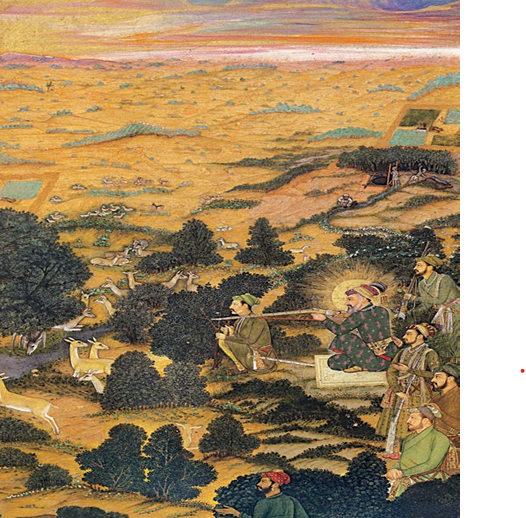
- Royal hunt: Mughal political ideology presented hunting expeditions as a way for the emperor to travel through his territories and hear the grievances of subjects, rich and poor.
- Hunt in paintings: Court artists often painted hunts. A small scene within a painting could symbolise a harmonious reign and the ruler’s ideal justice.
Pargana — An administrative subdivision of a Mughal province.
Peshkash — A form of tribute collected by the Mughal state.
Forest clearance and settlement
- Chandimangala: In this sixteenth-century Bengali poem by Mukundaram Chakrabarti, Kalaketu clears forest to establish a kingdom.
- Intrusion: People arrive from different regions with tools and weapons; forest is cleared, markets are established, and new communities settle.
- Forest dwellers’ perspective: The newcomers are called “foreigners” because they are outsiders to the forest communities, even though they come from other parts of the region.
What does the poem Chandimangala suggest about the expansion of settled life into forests?
Trade and economic change
| Direction | Goods | Likely uses |
|---|---|---|
| Hills to plains | Gold, metals, musk, honey, yak tails, spices, dye plants, wax, woollens, wooden goods and birds of prey | Valuable materials, foodstuffs, textiles and goods for hunting or trade |
| Plains to hills | White and coloured cloth, amber, salt, asafoetida, ornaments, glassware and earthenware | Cloth for clothing; salt for diet and preservation; asafoetida for seasoning; ornaments and amber for decoration; vessels for storage and use |
Trade, transport and commercial agriculture
- Transport: Goods travelled from the northern mountains on people’s backs and on sturdy ponies and goats—practical means of carrying loads over difficult mountain routes.
- Exchange: Hill and plain communities exchanged goods, often through barter.
- Forest products: Honey, beeswax and gum lac were in demand; gum lac became a major Indian export overseas in the seventeenth century.
- Other trade: Elephants were captured and sold. The Lohanis of Punjab engaged in overland trade between India and Afghanistan and in town–country trade within Punjab.
Tribal chiefs, kingdoms and cultural change
Political and social change
- Tribal leadership: Tribes had chieftains, like the “big men” of village communities. Some chiefs became zamindars or kings and built armies.
- Recruitment: Chiefs drew soldiers from their lineage groups or required members of their fraternity to provide military service.
- Examples: Tribes in Sind had armies of 6,000 cavalry and 7,000 infantry. Ahom kings used *paiks*, who owed military service in return for land.
- Ahom control: The capture of wild elephants was a royal monopoly under the Ahom kings.
- War and state formation: By the sixteenth century, tribal-to-monarchical transitions were well developed in some regions. The *Ain* records tribal kingdoms in the north-east; Koch kings fought and subjugated neighbouring tribes through the sixteenth and seventeenth centuries.
- Religious influence: Some historians suggest that Sufi saints, or *pirs*, helped Islam gain gradual acceptance among agricultural communities in newly colonised areas.
Paik — An Ahom subject obliged to provide military service in exchange for land.
Key periods
- Sixteenth centuryTribal-to-monarchical transitions were well developed in some regions; the Chandimangala describes forest clearance and settlement.
- c. 1595Abu’l Fazl described trade between hill tribes and the plains in Awadh.
- Sixteenth–seventeenth centuriesKoch kings fought and subjugated neighbouring tribes; gum lac became a major overseas export in the seventeenth century.
How did outside forces change the lives of forest communities?
Describe the main changes in tribal political organisation.
- Jangli
- A term for forest dwellers whose livelihoods included gathering, hunting and shifting cultivation.
- Mawas
- A forest refuge from which people could resist state authority.
- Peshkash
- Tribute collected by the Mughal state.
- Paik
- An Ahom subject who performed military service in return for land.
Quick recap
- Forests covered large areas of Mughal India; forest livelihoods were seasonal and often mobile.
- Forests could shelter tax resisters, while the state sought resources such as elephants.
- Royal hunts represented imperial travel, attention to subjects and ideal justice.
- Clearance, settlement, trade and demand for forest products brought economic change.
- Some tribal chiefs became zamindars or kings and built military power.
- Ahom paiks served militarily for land, while Sufi pirs could influence new agricultural communities.
The Zamindars & Land Revenue System
The Zamindars
Zamindar Composition and Social Position
- Abu’l Fazl’s account: A prominent Brahmana–Rajput upper-caste group had firm control over rural society.
- Other groups: Intermediate castes had substantial representation, alongside some Muslim zamindaris.
How Zamindaris Developed and Expanded
- Origins: Some zamindaris grew through conquest, while others developed gradually through colonisation of new lands.
- Expansion: Zamindari rights could be transferred by the state or acquired through purchase, allowing new groups to rise.
- Lineages: Rajputs, Jats and groups such as the Sadgops consolidated clan- or lineage-based zamindaris.
Zamindars and Cultivators
- Role: Zamindars held private milkiyat lands and could help bring land under cultivation by settling cultivators and providing loans.
- Relationship: Though exploitative, relations with peasants could also involve reciprocity, patronage and protection.
- Support: Peasants sometimes supported zamindars in struggles against the state.
The Mughal Land Revenue Administration
- Purpose: Land revenue was the Mughal Empire’s main source of income, so officials gathered information, assessed dues and collected them.
- Administration: The diwan supervised the fiscal system; revenue officials and record keepers worked across the countryside.
- Revenue terms: The jama was the amount assessed, while the hasil was the amount actually collected; payment could be in cash or kind.
Land Measurement and Classification
How Revenue Was Assessed
- Quality grades: Polaj and parauti lands were each divided into good, middling and bad classes.
- Medium produce: The produce of the three classes was added; one-third of this total represented the medium produce.
- Royal dues: One-third of the medium produce was taken as the state’s share.
- Amin: An official responsible for ensuring that imperial regulations were carried out in the provinces.
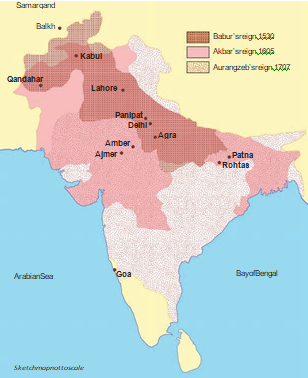
Empire Expansion and Revenue Collection
- Administrative challenge: Expansion brought more land, cultivators and crops within the revenue system, increasing the need for surveys and officials.
- Collection impact: A wider empire made revenue administration more extensive and complex, while differing local conditions affected assessment and collection.
Mansabdars and Revenue Assignments
- Mansabdari: The mansabdari apparatus managed the Mughal state’s civil and military affairs.
- Payment: Some mansabdars received cash (naqdi), while most were assigned revenue from jagirs.
- Transfers: Jagir-holding mansabdars were periodically transferred between regions.
Ways of Assessing and Collecting Revenue
- Assessment: Revenue could be assessed in cash or through estimates and divisions of the crop.
- Kankut: The crop was estimated, sometimes by comparing samples of good, middling and inferior produce.
- Batai: The harvested crop or sown fields were divided by agreement between cultivator and state representatives.
Detailed Surveys and Flexibility
- Milkiyat
- A zamindar’s personal, privately held land.
- Sanad
- An imperial order confirming a right or control.
- Jama
- Revenue assessed by the state.
- Hasil
- Revenue actually collected.
- Jagir
- A revenue assignment given to a mansabdar.
- Haat
- A rural market where peasants could sell produce.
Dates and Periods
- 1530The map shows the extent of the Mughal Empire under Babur.
- 1605The map shows the empire’s expanded extent under Akbar.
- Seventeenth centuryMany north Indian agrarian uprisings received support from peasants and zamindars against the state.
- 1665Aurangzeb ordered detailed village- and peasant-wise records of actual cultivation before jama was assessed.
- 1707The map shows the empire’s extent under Aurangzeb.
Describe the main sources of zamindar power and the ways zamindaris expanded.
How were Mughal lands classified and revenue assessed?
Was the Mughal land revenue system flexible?
Quick recap
- Zamindar power: It rested on milkiyat, social standing, revenue work and military resources; their social composition included Brahmana–Rajput, intermediate-caste and Muslim groups.
- Zamindari growth: Conquest, colonisation, rights transfers, state orders, purchase and lineage consolidation expanded zamindaris.
- Peasant relations: These could be exploitative yet include patronage; peasants sometimes backed zamindars against the state.
- Revenue administration: The diwan supervised the system; jama was assessed revenue and hasil was collected revenue.
- Land and assessment: Land was classified by cultivation and fallow patterns; one-third of medium produce was taken as royal dues.
- Collection: Revenue could be paid in cash or kind through methods including kankut and different forms of batai.
The Flow of Silver
Trade and the Mughal Economy
Expanding trade and silver
- Major empires: The Mughal, Ming, Safavid and Ottoman empires consolidated power and resources in the sixteenth and seventeenth centuries.
- Trade networks: Political stability supported active overland trade linking China with the Mediterranean.
- Overseas trade: Voyages of discovery and the opening of the New World widened India’s trade with Europe and expanded the range of traded goods.
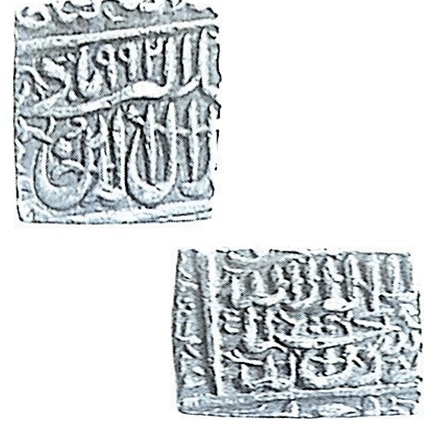
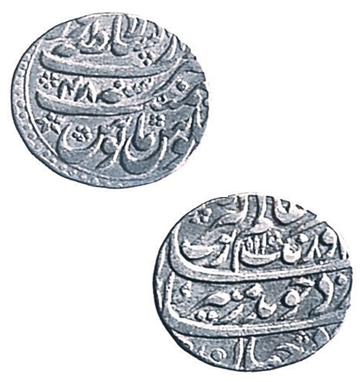
- Silver inflow: Asian buyers paid for Indian goods with large quantities of silver bullion; much of it flowed into India, which lacked natural silver resources.
- Economic impact: A steady silver supply supported coin minting, wider money circulation and the Mughal state’s collection of taxes and revenue in cash.
How Silver Reached India
Silver bullion — Silver in bulk form, which entered India through international trade and helped supply metal for currency.
Careri’s account
- Witness: Italian traveller Giovanni Careri passed through India around 1690; his account, based on Bernier’s, describes the movement of wealth into the Mughal Empire.
- From the Americas: Silver travelled through European kingdoms, with some going to Turkey and some to Persia via Smyrna, in exchange for commodities such as silk.
- Via West Asia: Turkey, Persia and Arabia sent money through Mocha on the Red Sea and Basra on the Persian Gulf; ships then carried it to India to buy Indian goods.
- From other regions: Trade with Pegu, Tanasserri, Siam, Ceylon, the Maldives and Mozambique also brought gold and silver to India.
- From Japan and Europe: Dutch silver from Japanese mines eventually reached India. European buyers paid ready money for Indian goods, and that money remained in India.
Main routes of silver into India
- American silver → European trade → Turkey and Persia → West Asian ports → India
- Dutch silver from Japanese mines → trade networks → India
- Indian exports to Asian and European markets → payment in gold and silver → metal flows into India
Currency and State Revenue
Effects of the silver inflow
- India’s limited natural silver resources + expanding overseas trade → large silver inflows
- Large inflows → stable availability of metal currency, especially the silver rupya
- Currency stability → increased coin minting and wider circulation of money
- Wider cash economy → Mughal state could collect taxes and revenue in cash
Period and testimony
- Sixteenth–seventeenth centuriesMajor Asian empires consolidated power; trade networks expanded and silver flowed into India.
- Sixteenth–eighteenth centuriesIndia experienced remarkable stability in the availability of metal currency, particularly the silver rupya.
- c. 1690Giovanni Careri travelled through India and described international routes bringing wealth to the Mughal Empire.
- Silver rupya
- A silver coin that formed an important part of India’s metal currency.
- Bullion
- Precious metal in bulk form, brought into India through trade.
- Cash revenue
- Taxes and state income collected as money rather than only in kind.
- Giovanni Careri
- Italian traveller whose account describes silver routes into India around 1690.
Why did large amounts of silver flow into India?
How did the silver inflow benefit the Mughal state?
Quick recap
- The Mughal Empire was connected to expanding overland and overseas trade networks.
- Silver from the Americas, Japan and other trading regions reached India through multiple routes.
- Indian goods were often bought with ready money, so much of the silver remained in India.
- Silver inflows helped sustain the silver rupya and stable metal currency.
- More coins and wider money circulation supported cash-based taxation and revenue collection.
The Ain-i Akbari of Abu’l Fazl Allami
The Ain-i Akbari and the Akbar Nama
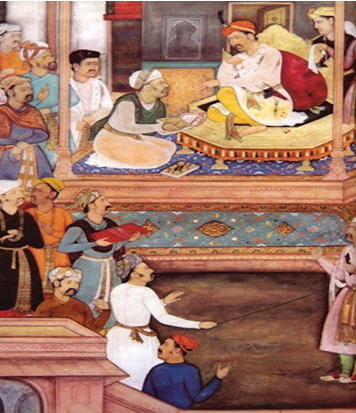
- Commission: Akbar commissioned Abu’l Fazl to compile a major history and administrative account of his empire.
- Completion: The Ain-i Akbari was completed in 1598, after five revisions.
- Purpose: It combined imperial regulations with a gazetteer documenting the empire and its people.
Organisation and contents of the Ain
- Structure: The Ain-i Akbari was organised into five books, or daftars.
- Administration: The first three books covered the imperial household, civil and military administration, and the empire’s fiscal system.
- Culture: The fourth and fifth books described India’s religious, literary and cultural traditions and included Akbar’s sayings.
Provincial and agrarian information
Sources and compilation of the imperial history
Imperial commission and the work’s perspective
- Akbar commissioned a history and administrative record
- Abu’l Fazl gathered documents, official reports and oral testimony
- The information was checked, organised and revised
- The resulting account served imperial knowledge and governance
- Its court-centred purpose shaped which details were collected and how the empire was represented
Reliability and limitations
Do not treat the Ain as a uniform census of the whole empire: its provincial information is uneven, and much of its detailed price and wage data is specific to the Agra region.
Historical importance and translations
Key dates
- 1598The Ain-i Akbari was completed in Akbar’s 42nd regnal year, after five revisions.
- 1873Henry Blochmann’s translation of Volume 1 was published in Calcutta.
- 1891 and 1894H.S. Jarrett’s translations of Volumes 2 and 3 were published in Calcutta.
- Suba
- A province of the Mughal Empire.
- Sarkar, pargana, mahal
- Administrative divisions recorded beneath a suba.
- Jama
- Assessed revenue.
- Naqdi and suyurghal
- Cash-assessed revenue and charitable revenue grants, respectively.
- Sawar, piyada, fil
- Horsemen, foot-soldiers and elephants listed among zamindar troops.
What kinds of sources did Abu’l Fazl use, and which were most useful for studying agrarian relations?
How might Abu’l Fazl’s relationship with Akbar have influenced the work?
Why is the Ain-i Akbari valuable, and what are two limitations of its evidence?
Quick recap
- The Ain-i Akbari was the third book of the Akbar Nama, completed in 1598 after five revisions.
- Its five books covered administration, provincial revenue, and India’s religious, literary and cultural traditions.
- Mulk-abadi records provincial profiles, measured areas, assessed revenues, zamindars and their troops.
- Abu’l Fazl compiled oral testimony, official documents, provincial memoranda and reports, with checks and revisions.
- The Ain is rich but uneven: provincial coverage varies, and detailed prices and wages mainly describe the Agra region.
- Its quantitative and social information makes it a key source for studying Mughal India and agrarian relations.
History — ALL CHAPTERS
1
BRICKS, BEADS AND BONES THE HARAPPAN CIVILISATION
2
KINGS, FARMERS AND TOWNS EARLY STATES AND ECONOMIES (C. 600 BCE-600 CE)
3
KINSHIP, CASTE AND CLASS EARLY SOCIETIES (C. 600 BCE-600 CE)
4
THINKERS, BELIEFS AND BUILDINGS CULTURAL DEVELOPMENTS (C. 600 BCE - 600 CE)
1
THROUGH THE EYES OF TRAVELLERS PERCEPTIONS OF SOCIETY (C. TENTH TO SEVENTEENTH CENTURY)
2
BHAKTI- SUFI TRADITIONS CHANGES IN RELIGIOUS BELIEFS AND DEVOTIONAL TEXTS (C. EIGHTH TO EIGHTEENTH CENTURY)
3
AN IMPERIAL CAPITAL VIJAYANAGARA (C. FOURTEENTH TO SIXTEENTH CENTURY)
4
PEASANTS, ZAMINDARS AND THE STATE AGRARIAN SOCIETY AND THE MUGHAL EMPIRE (C. SIXTEENTH- SEVENTEENTH CENTURY)
1
COLONIALISM AND THE COUNTRYSIDE EXPLORING OFFICIAL ARCHIVES
2
REBELS AND THE RAJ THE REVOLT OF 1857 AND ITS REPRESENTATIONS
3
MAHATMA GANDHI AND THE NATIONALIST MOVEMENT CIVIL DISOBEDIENCE AND BEYOND
4
FRAMING THE CONSTITUTION THE BEGINNING OF A NEW ERA