Class 12 Humanities . History . Themes In Indian History Part I . Kings Farmers and Towns Early States and Economies C 600 Bce 600 Ce
Chapter 2: KINGS, FARMERS AND TOWNS EARLY STATES AND ECONOMIES (C. 600 BCE-600 CE)
Ch 2
History
Class 12 Humanities
Introduction & Prinsep and Piyadassi
Developments after the Harappan Civilisation
Changes across the subcontinent
- Long period: The developments described followed the end of the Harappan civilisation over a span of about 1,500 years.
- Agriculture: Settlements developed across north India, the Deccan Plateau and parts of Karnataka; pastoral communities also lived in the Deccan and farther south.
- Vedic composition: The Rigveda was composed by people living along the Indus and its tributaries.
- Burial practices: From the first millennium BCE, elaborate stone burial structures called megaliths appeared in central and south India; some burials contained iron tools and weapons.
- From c. sixth century BCE: Early states, kingdoms and empires emerged alongside changes in farming and the growth of towns.
- Historical sources: Historians reconstruct early Indian history using inscriptions, texts, coins and visual material.
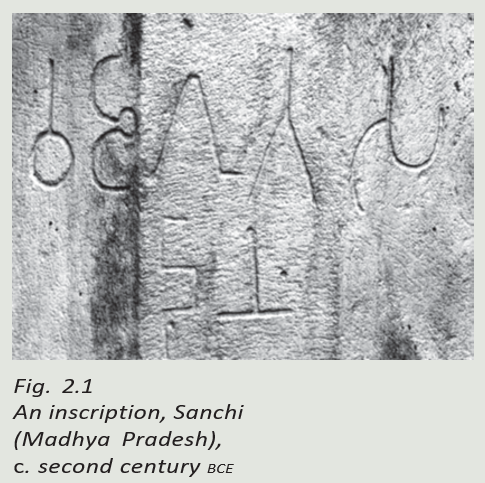
Prinsep and Piyadassi
Epigraphy — The study of inscriptions.
Deciphering early inscriptions and reconstructing history
- 1830sJames Prinsep, an East India Company mint officer, deciphered Brahmi and Kharosthi, scripts used on early inscriptions and coins.
- Early decades of the 20th centuryThe broad contours of early Indian political history had been reconstructed using inscriptions and texts.
Piyadassi and Asoka
- Piyadassi: Many inscriptions referred to a king by this name, meaning “pleasant to behold.”
- Asoka: A few inscriptions also named the king Asoka, a well-known ruler from Buddhist texts.
- Impact: Decipherment enabled European and Indian scholars to use inscriptions and texts in different languages to reconstruct the lineages of major dynasties.
- Later focus: Scholars investigated links between political changes and economic and social developments; these connections were not always simple or direct.
The Earliest States
- Emergence: From around the sixth century BCE, early states, kingdoms and empires arose across the subcontinent.
- Economic and urban change: These political developments accompanied changes in agricultural production, the growing use of iron and coinage, and the emergence of towns.
The Sixteen Mahajanapadas
A turning point in the sixth century BCE
- Major developments: Early states and cities grew; iron use and coinage expanded, and diverse systems of thought—including Buddhism and Jainism—developed.
- Mahajanapadas: Early Buddhist and Jaina texts mention sixteen states. Lists differ, but Vajji, Magadha, Koshala, Kuru, Panchala, Gandhara and Avanti occur frequently.
- Duration: Some states lasted for nearly a thousand years, though limited sources make their histories difficult to reconstruct.
| Point | Monarchies | Ganas or sanghas |
|---|---|---|
| Ruling arrangement | Most mahajanapadas were ruled by kings. | Oligarchies where power was shared by a group of men, often called rajas. |
| Examples and resources | — | Mahavira and the Buddha belonged to such groups; in Vajji, rajas probably controlled land collectively. |
Cities, resources and rulers
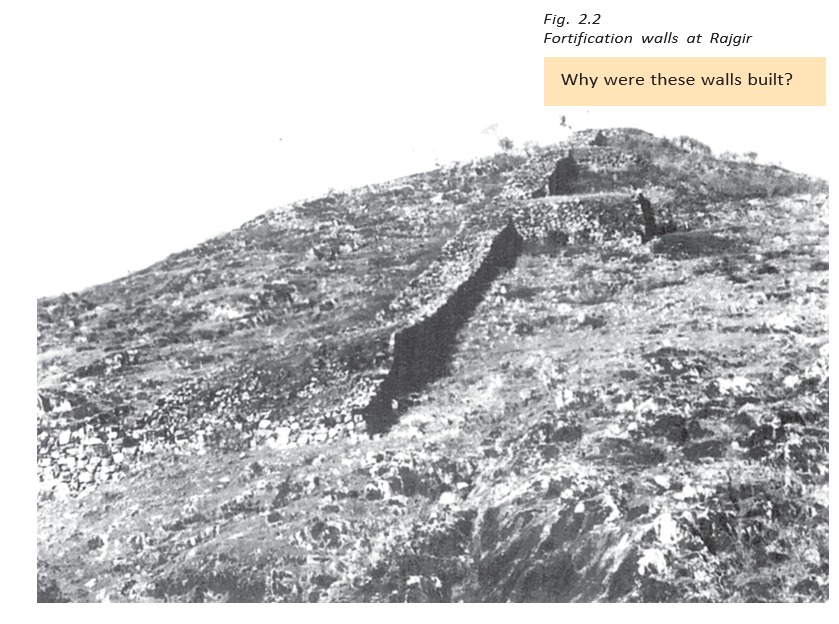
- Capitals: Each mahajanapada had a capital, often protected by fortifications.
- Costs: Fortified cities, early armies and bureaucracies required resources.
- Ruler ideals: From about the sixth century BCE, Brahmanas composed Sanskrit Dharmasutras, which set out norms for rulers and other social groups. Rulers were ideally Kshatriyas.
- Revenue: Rulers were advised to collect taxes and tribute from cultivators, traders and artisans; whether they also obtained resources from pastoralists and forest peoples is uncertain.
- Expansion: Raiding neighbouring states was accepted as a legitimate way to acquire wealth.
- Military and administration: Some states developed standing armies and regular bureaucracies; others relied on militias, often recruited from peasants.
Inscriptions and Historical Evidence
What inscriptions can tell us
- Definition: Inscriptions are writings engraved on hard surfaces such as stone, metal or pottery.
- Content: They may record the achievements, activities or ideas of their commissioners, including royal exploits and donations to religious institutions.
- Dating: Some inscriptions carry dates; others are dated by palaeography—the study of writing styles.
- Changing scripts: The form of the letter “a” differed between c. 250 BCE and c. 500 CE, helping scholars estimate when inscriptions were made.
- Languages: The earliest inscriptions were in Prakrit, a name for languages used by ordinary people. Inscriptions and texts also used Pali, Tamil and Sanskrit; spoken languages may have included others.
- Names: Rulers known through Prakrit texts and inscriptions are given in their Prakrit forms, such as Ajatasattu and Asoka.
- Janapada
- The land where a jana—a people, clan or tribe—settles.
- Oligarchy
- A form of government in which power is exercised by a group of men; the Roman Republic is an example.
- Mahajanapada
- One of the major states mentioned in early Buddhist and Jaina texts.
- Palaeography
- Dating inscriptions by studying the style and form of their writing.
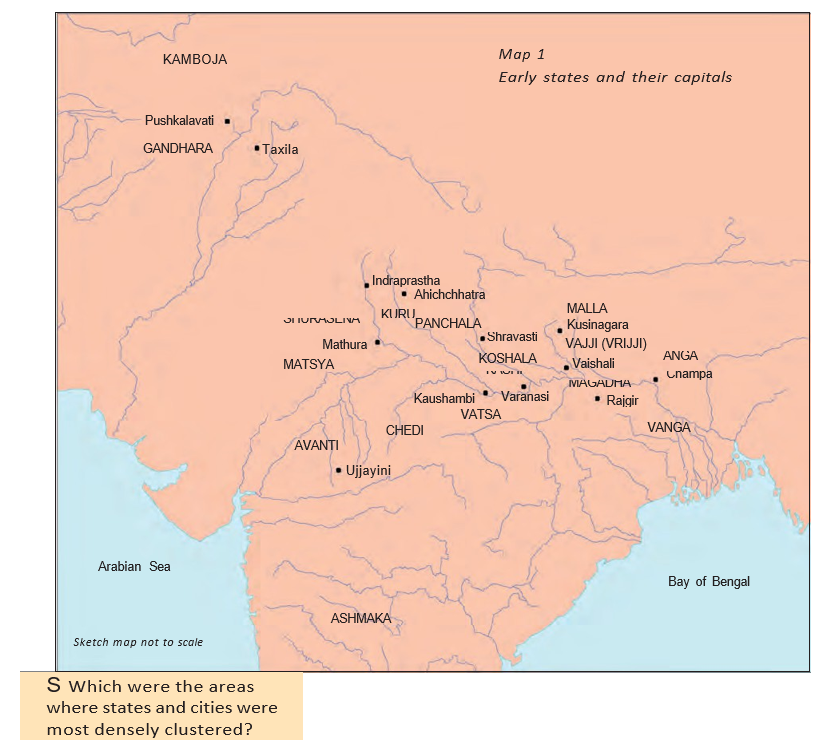
Who was Piyadassi, and how was the name connected with Asoka?
What distinguished ganas or sanghas from monarchies?
Quick recap
- Developments following the Harappan civilisation unfolded over about 1,500 years and included agricultural and pastoral settlements and new burial practices.
- From c. sixth century BCE, states, cities, coinage and iron use expanded alongside new systems of thought.
- James Prinsep deciphered Brahmi and Kharosthi in the 1830s, helping scholars reconstruct early political history.
- The broad contours of political history had been reconstructed by the early decades of the 20th century.
- The sixteen mahajanapadas included both monarchies and oligarchic ganas or sanghas.
- Fortified capitals, armies and bureaucracies required revenue; rulers collected taxes and tribute and sometimes raided neighbours.
- Inscriptions preserve evidence of rulers and donations; languages, dates and writing styles help historians interpret them.
First Amongst the Sixteen: Magadha & an Early Empire
Magadha: Rise to Power
Magadha — A mahajanapada in present-day Bihar that became the most powerful between the sixth and fourth centuries BCE.
| Perspective | Explanation |
|---|---|
| Modern historians | Productive agriculture, accessible iron mines in present-day Jharkhand, elephants for the army, and river routes for convenient communication. |
| Early Buddhist and Jaina writers | Magadha’s power came from ambitious rulers—Bimbisara, Ajatasattu and Mahapadma Nanda—and ministers who carried out their policies. |
Capitals of Magadha
- Rajagaha: The initial capital; its Prakrit name means “house of the king.” It is present-day Rajgir in Bihar.
- Location: Rajagaha was a fortified settlement among hills.
- Pataliputra: In the fourth century BCE, the capital shifted to present-day Patna, which commanded communication routes along the Ganga.
The Mauryan Empire
From Magadha to Empire
- Chandragupta Maurya: Founded the Mauryan Empire around 321 BCE and extended its control northwest to Afghanistan and Baluchistan.
- Asoka: Chandragupta’s grandson; he conquered Kalinga, in present-day coastal Odisha (Orissa).
Sources for Mauryan History
| Source | What it contributes |
|---|---|
| Archaeological finds | Includes sculpture and other material evidence. |
| Megasthenes’ account | Fragments of the account by the Greek ambassador at Chandragupta Maurya’s court survive. |
| Arthashastra | Parts were probably composed by Kautilya (Chanakya), traditionally regarded as Chandragupta’s minister. |
| Later literature | Buddhist, Jaina and Puranic texts, as well as Sanskrit literary works, refer to the Mauryas. |
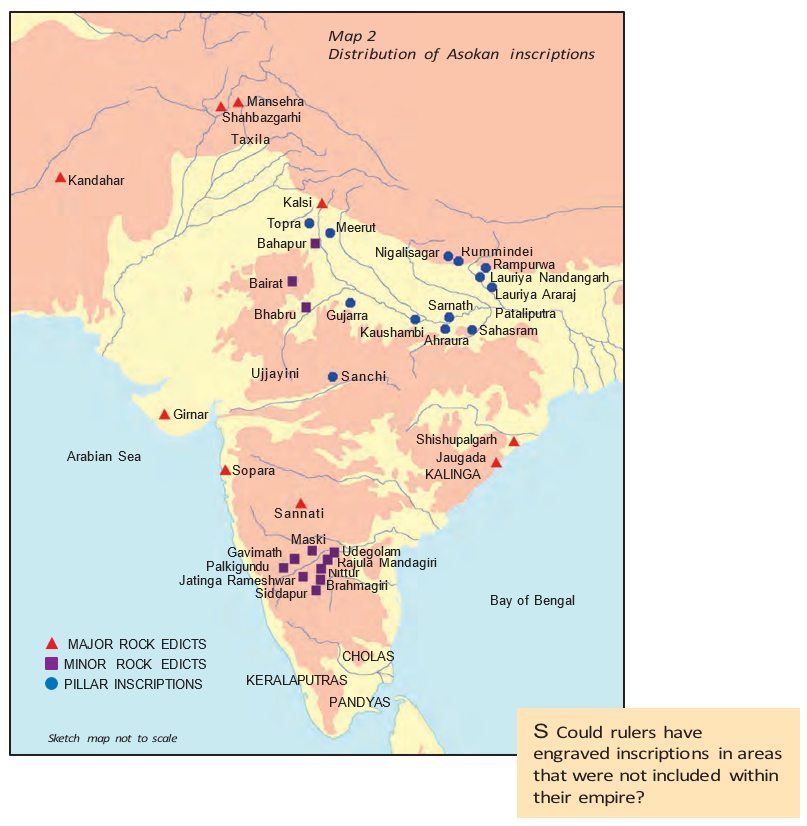
| Asoka’s inscriptions | Rock and pillar inscriptions are among the most valuable sources for Mauryan history. |
Asoka’s Inscriptions and Dhamma
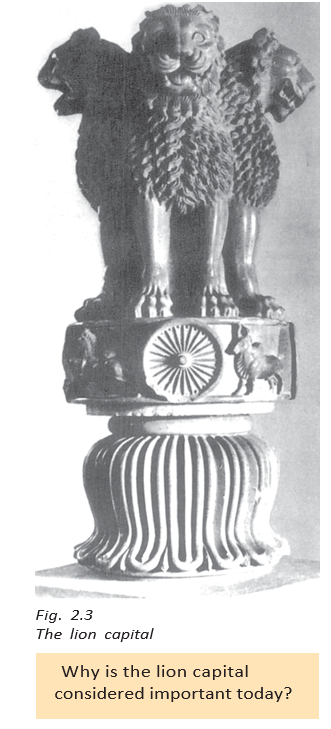
- Inscriptions: Asoka was the first ruler to inscribe messages for subjects and officials on natural rocks and polished pillars.
- Dhamma: His inscriptions proclaimed principles including respect for elders, generosity to Brahmanas and renouncers, kindness to slaves and servants, and respect for other religions and traditions.
Administering the Empire
| Centre | Role or significance |
|---|---|
| Pataliputra | Imperial capital. |
| Taxila | Provincial centre on an important long-distance trade route. |
| Ujjayini | Provincial centre on an important long-distance trade route. |
| Tosali | Provincial centre. |
| Suvarnagiri | Provincial centre; its name means “golden mountain” and it was possibly important for access to Karnataka’s gold mines. |
Regional Control and Communication
- Uneven administration: A uniform system across the vast, diverse empire is unlikely; the terrain ranged from Afghanistan’s hills to the coast of Orissa.
- Strongest control: Likely concentrated around the capital and provincial centres.
- Communication: Land and river routes were essential. Journeys between the centre and provinces could take weeks or months, requiring provisions and protection.
- Army: A major means of protecting people travelling through the empire.
| Subcommittee | Responsibility |
|---|---|
| Navy | Managed naval forces. |
| Transport and provisions | Arranged bullock carts for equipment, food for soldiers, fodder for animals, and servants and artisans to support soldiers. |
| Foot-soldiers | Managed the infantry. |
| Horses | Managed the cavalry. |
| Chariots | Managed chariot forces. |
| Elephants | Managed the elephant corps. |
Dhamma as a Means of Unity
- Purpose: Asoka promoted dhamma to help hold the empire together; he believed it supported people’s well-being in this world and the next.
- Dhamma mahamatta: Special officers appointed to spread the message of dhamma.
Key Dates and Periods
- Sixth–fourth centuries BCEMagadha became the most powerful mahajanapada.
- Fourth century BCEThe capital shifted from Rajagaha to Pataliputra.
- c. 321 BCEChandragupta Maurya founded the Mauryan Empire.
- c. 272/268–231 BCEAsoka ruled; his inscriptions are a major source for the empire.
- Mahajanapada
- A major territorial state; Magadha became the most powerful one in this period.
- Dhamma
- Asoka’s ethical principles, including respect, generosity, kindness and religious tolerance.
- Dhamma mahamatta
- Special officers appointed by Asoka to spread dhamma.
- Suvarnagiri
- A provincial centre whose name means “golden mountain”; possibly linked to Karnataka’s gold mines.
Why did Magadha become the most powerful mahajanapada?
Why are Asoka’s inscriptions important sources?
Why is a uniform administration across the Mauryan Empire considered unlikely?
Quick recap
- Magadha’s agriculture, iron, elephants, rivers and rulers helped it rise to power.
- Rajagaha was Magadha’s first capital; Pataliputra became the capital in the fourth century BCE.
- Chandragupta founded the Mauryan Empire around 321 BCE; Asoka later conquered Kalinga.
- Mauryan history is reconstructed from archaeological, literary and inscriptional evidence.
- The empire had five major political centres, but administration was likely uneven across diverse regions.
- The army supported travel and protection; Megasthenes describes six military subcommittees.
- Asoka promoted dhamma and appointed dhamma mahamattas to spread it.
How Important Was the Empire? & New Notions of Kingship
Officials and the Work of the State
Officials described by Megasthenes
- Water and land: Officials supervised rivers, measured land and inspected canal sluices to help distribute water fairly.
- Huntsmen: Officials supervised huntsmen and could reward or punish them according to their conduct.
- Occupations and taxes: They collected taxes and supervised land-related work, including woodcutting, carpentry, blacksmithing and mining.
- Why appoint officials? Supervision helped manage water and land, organise important occupations, collect revenue and oversee hunting.
How Important Was the Mauryan Empire?
Why historians and nationalists viewed it as a landmark
- Historical context: In the nineteenth and early twentieth centuries, historians treated the Mauryan Empire as a major landmark while India was under the British Empire.
- Art: Mauryan archaeological finds, including stone sculpture, were seen as spectacular examples of imperial art.
- Ashoka’s inscriptions: Historians saw their message as unusual compared with that of most rulers. They suggested Ashoka was more powerful and industrious, yet more humble than later rulers who used grandiose titles.
- Nationalist view: Twentieth-century Indian nationalist leaders regarded Ashoka as an inspiring figure.
| Aspect | Key point |
|---|---|
| Duration | The empire lasted about 150 years—a relatively short period in the subcontinent’s long history. |
| Territorial reach | It did not encompass the entire subcontinent. |
| Control | Control was not uniform even within the empire’s frontiers. |
| After the empire | By the second century BCE, new chiefdoms and kingdoms had emerged in several regions. |
Military Organisation and Resources
Elephant capture and army estimates
- Arthashastra: It gives detailed descriptions of administrative and military organisation, including the capture of elephants.
- Capture teams: Forest guards worked with elephant rearers, leg-chainers, boundary guards, forest-dwellers and elephant nurses; five or seven female elephants helped tether wild ones.
- Tracking: Teams followed signs such as elephant urine and dung to locate herds.
- Greek accounts: They report a standing army of 600,000 foot-soldiers, 30,000 cavalry and 9,000 elephants; some historians consider these figures exaggerated.
| Force | Reported number |
|---|---|
| Foot-soldiers | 600,000 |
| Cavalry | 30,000 |
| Elephants | 9,000 |
Resources needed for a very large army
- A large standing force → substantial revenue and administrative organisation.
- Many soldiers and cavalry → regular food, water, clothing, training, weapons and equipment.
- Thousands of elephants → forest resources, fodder, transport, handlers and specialised care.
Chiefs and Kings in the South
Chief — A powerful leader whose position might be hereditary or not, and whose support usually came from kinfolk.
Chiefdoms and their sources
- Functions: Chiefs could perform special rituals, lead in warfare and arbitrate disputes.
- Resources: They received gifts from subordinates and often redistributed them among supporters; kings usually collected taxes.
- Organisation: Chiefdoms generally had no regular armies or officials.
- Evidence: Early Tamil Sangam poems describe chiefs and how they acquired and distributed resources.
| Point | Chiefs | Kings |
|---|---|---|
| Position and support | Position might be hereditary or not; support commonly came from kin. | Not specified in this account. |
| Resources | Received gifts from subordinates and often redistributed them. | Usually collected taxes. |
| Organisation | Chiefdoms generally lacked regular armies and officials. | No general comparison is given here. |
Southern polities and claims to status
- Cholas, Cheras and Pandyas: Their chiefdoms in Tamilakam were described as stable and prosperous.
- Tamilakam: The ancient Tamil country included parts of present-day Andhra Pradesh and Kerala, as well as Tamil Nadu.
- Satavahanas: They ruled parts of western and central India from about the second century BCE to the second century CE.
- Shakas: A people of Central Asian origin who established kingdoms in the north-western and western parts of the subcontinent.
- Trade and status: Many chiefs and kings, including Satavahanas and Shakas, gained revenue from long-distance trade. Some had obscure social origins and later sought to claim social status in different ways.
Periods mentioned
- By the second century BCENew chiefdoms and kingdoms had emerged in several parts of the subcontinent.
- c. second century BCE–second century CEThe Satavahanas ruled parts of western and central India.
- Chiefdom
- A political community led by a chief, generally without regular armies and officials.
- Tamilakam
- The ancient Tamil country, including parts of present-day Andhra Pradesh, Kerala and Tamil Nadu.
- Sangam texts
- Early Tamil poems that describe chiefs and the acquisition and distribution of resources.
- Long-distance trade
- Trade over extended routes that provided revenue to many chiefs and kings.
Why should the Mauryan Empire’s importance be assessed with qualification?
How did chiefs differ from kings in obtaining resources?
What resources would the very large Mauryan army reported by Greek sources have needed?
Quick recap
- Mauryan officials supervised water, land, taxes, occupations and huntsmen; they could reward or punish huntsmen.
- Ashoka’s inscriptions were interpreted as showing a powerful, industrious and unusually humble ruler.
- The Mauryan Empire was influential but limited in duration, reach and uniformity of control.
- Greek accounts describe a huge Mauryan army, though historians question the reported figures.
- Chiefs usually received and redistributed gifts; kings generally collected taxes.
- Tamilakam’s Chola, Chera and Pandya chiefdoms were stable and prosperous; trade supported many rulers.
Divine Kings & a Changing Countryside
Divine Kings and Royal Authority
Kushana kingship
- Kushanas ruled a vast kingdom from Central Asia to north-western India around the first century BCE–first century CE.
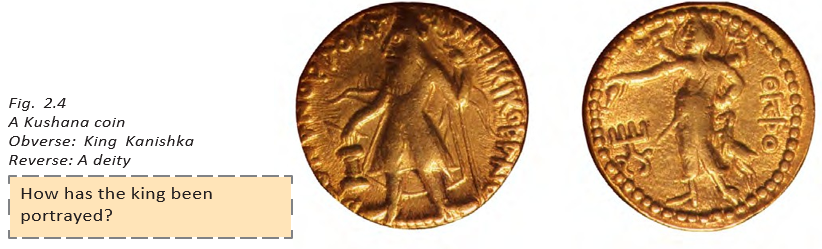
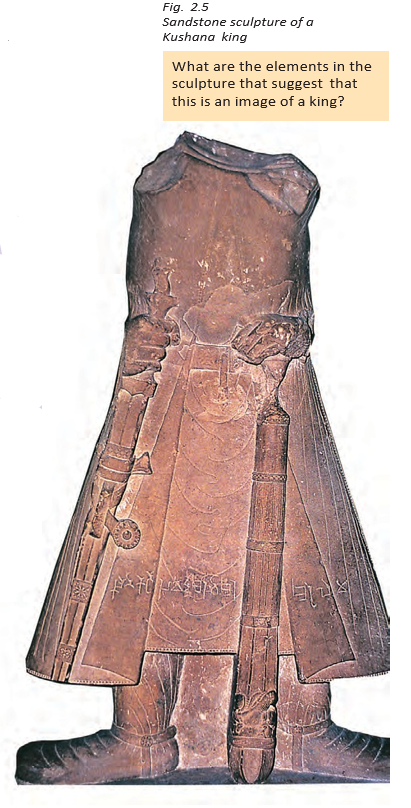
- Royal image: Coins and sculptures reveal the kind of kingship Kushana rulers wanted to project.
- Divine association: Colossal Kushana ruler statues were installed in shrines at Mat near Mathura and in Afghanistan; some historians see this as evidence of godlike status.
- Devaputra: Many Kushana rulers used this title, meaning “son of god”; it may have been inspired by Chinese rulers’ title “sons of heaven.”
Samantas and Gupta Prashastis
Samantas and changing power
- Larger states existed by the fourth century CE, including the Gupta Empire.
- Samantas were subordinate rulers or powerful men who sustained themselves with local resources, including control over land.
- Service to rulers: Samantas offered homage and military support.
- Shifting status: Powerful samantas could become kings, while weak kings could be reduced to subordinate positions.
Prashasti — A formal composition praising a king or patron, often written by a poet.
The Prayaga Prashasti
- Sources for Gupta history include literature, coins and inscriptions, especially prashastis.
- Author and patron: Harishena, court poet of Samudragupta, composed the Sanskrit Prayaga Prashasti, also called the Allahabad Pillar Inscription.
- Praise and evidence: It presents Samudragupta as unconquered, generous, compassionate and comparable to gods such as Kubera, Varuna, Indra and Yama.
- How to read it: Prashastis can provide historical information, but their authors and audiences also valued them as poetry—not necessarily literal accounts.
Literary evidence of royal gifts
- Silappadikaram: This Tamil epic describes people bringing gifts to the Pandya chief Senguttuvan during his forest visit.
- Gifts included forest produce, spices, fruits, animals and other goods—evidence of the resources and offerings associated with a chief’s visit.
Popular Perceptions of Kings
Stories as evidence
- Limits of inscriptions: Ordinary people rarely recorded their thoughts, so inscriptions do not reveal every subject’s experience.
- Oral traditions: Stories in collections such as the Jatakas and Panchatantra may have begun as popular oral tales before being written down.
- Jatakas: Written in Pali around the middle of the first millennium CE; the Gandatindu Jataka portrays the suffering of subjects under a wicked king.
The Gandatindu Jataka: oppressive rule and escape
- A wicked king demanded high taxes and failed to protect subjects from robbers.
- Cultivators, herders, elders, village children and even animals suffered.
- Subjects complained of robbers at night and tax collectors by day.
- People abandoned the village and escaped to the forest.
Royal irrigation works: Sudarshana Lake
- Sudarshana Lake was an artificial reservoir in Gujarat, with embankments and water channels.
- Maurya period: A local governor built the lake; a severe storm later broke its embankments.
- Rudradaman: A second-century CE Sanskrit rock inscription records that the Shaka ruler repaired it using his own resources, without taxing his subjects.
- Gupta period: A fifth-century inscription on the same rock records another repair by a Gupta ruler.
Strategies for Increasing Production
| Method | Where / conditions | Key effect or note |
|---|---|---|
| Iron-tipped ploughshare | Fertile alluvial valleys such as the Ganga and Kaveri; high-rainfall areas | Turned alluvial soil and increased productivity; spread from c. sixth century BCE. |
| Paddy transplantation | Some parts of the Ganga valley | Dramatically increased paddy production but required back-breaking labour. |
| Hoe agriculture | Hilly areas of the north-eastern and central subcontinent | Better suited to the terrain. |
| Irrigation | Wells and tanks; canals were less common | Organised by communities and individuals, often powerful men such as kings. |
Limits and organisation of plough agriculture
- Uneven adoption: Semi-arid parts of Punjab and Rajasthan did not adopt the iron ploughshare until the twentieth century.
- Irrigation works were built collectively by communities or by individuals; powerful builders sometimes recorded them in inscriptions.
- Why rulers supported irrigation: Water works helped increase agricultural production, a key response to rising demands on the countryside.
Boundaries and royal responsibility
- Manusmrti: A Sanskrit legal text compiled between c. second century BCE and c. second century CE.
- Boundary disputes: The text advised kings to place hidden markers at boundary intersections to help settle disputes.
- Markers: Suggested materials included stones, bones, cow’s hair, chaff, ashes, potsherds, bricks, coal, pebbles and sand; they were to be substances that would not decay in soil.
- Devaputra
- A title adopted by many Kushana rulers, meaning “son of god.”
- Samanta
- A powerful subordinate who held local resources and offered homage and military support.
- Prashasti
- A poetic composition praising a king or patron.
- Jataka
- A Pali story collection that preserves popular tales, including accounts of kings and subjects.
- Transplantation
- A method of growing paddy that increased production in parts of the Ganga valley but demanded hard labour.
- Irrigation
- Supplying water to land through works such as wells, tanks and canals.
Dates and periods
- c. sixth century BCEPlough agriculture spread in fertile alluvial river valleys.
- c. second century BCE–second century CEThe Manusmrti was compiled.
- c. first century BCE–first century CEThe Kushanas ruled a vast kingdom extending from Central Asia to north-western India.
- Fourth century CELarger states, including the Gupta Empire, are evidenced; Samudragupta ruled around this period.
- Around the middle of the first millennium CEThe Jatakas were written in Pali.
- Second century CERudradaman’s inscription recorded the repair of Sudarshana Lake.
- Fifth century CEA Gupta ruler’s inscription recorded another repair of Sudarshana Lake.
What does the title devaputra suggest about Kushana kingship?
Why should historians read prashastis critically?
Name two strategies used to increase agricultural production and explain one limitation.
Quick recap
- Kushana rulers used divine associations, titles and royal imagery to claim high status.
- Samantas provided homage and military support, but could rise to kingship as royal power shifted.
- Prashastis praise rulers; they are valuable sources but not always literal accounts.
- Stories such as the Gandatindu Jataka portray taxation, insecurity and flight from oppressive rule.
- Ploughs, transplantation and irrigation increased production, but methods varied with local terrain and climate.
- Inscriptions record irrigation repairs, while the Manusmrti advised kings to mark boundaries to prevent disputes.
Differences in Rural Societ & Towns and Trade
Differences in Rural Society
Unequal access to land and resources
- Differentiation: Agricultural communities included landless labourers, small peasants and large landholders; gains from new technologies were uneven.
- Gahapati: In Pali texts, this term often referred to small peasants and large landholders.
- Power: Large landholders and often hereditary village headmen could exercise control over other cultivators.
- Sangam society: Early Tamil texts identify vellalar (large landowners), uzhavar (ploughmen) and adimai (slaves).
- Likely basis: Differences reflected unequal access to land, labour and new technologies; control over land became an important legal issue.
Land Grants and New Rural Elites
Records and recipients of grants
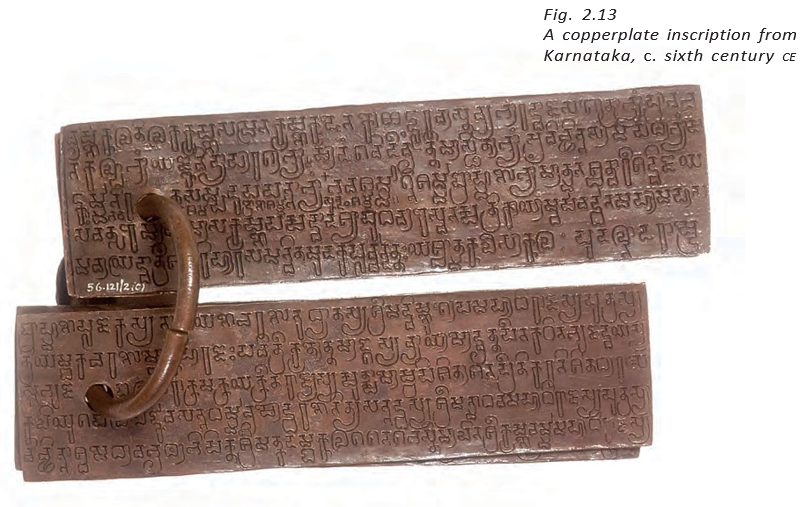
- Records: From the early centuries CE, land grants were recorded in inscriptions, mostly on copper plates that could serve as records for recipients.
- Recipients: Surviving records generally describe grants to religious institutions or Brahmanas.
- Languages: Most inscriptions were in Sanskrit; from the seventh century CE, some combined Sanskrit with a regional language such as Tamil or Telugu.
- Variation: Grants ranged from small plots to extensive uncultivated lands, and the rights given to recipients differed by region.
Prabhavati Gupta’s grant
- Prabhavati Gupta: Daughter of Chandragupta II (c. 375–415 CE), she married into the powerful Vakataka ruling family of the Deccan.
- Significance: Her inscription shows she had access to land and granted it, although Sanskrit legal texts generally did not envisage women’s independent access to land.
- Possible explanations: Her status as a queen may have made her an exceptional case; alternatively, legal rules may not have been applied uniformly.
- Village obligations: The inscription indicates that villagers, including Brahmanas and peasants, had to provide produce or dues and obey the new village lord.
The Danguna agrahara grant
- Grant: Prabhavati Gupta donated the village of Danguna to the teacher (acharya) Chanalasvamin to increase her religious merit; the transfer was made by pouring water.
- Recipients and date: The charter names village householders/peasants, Brahmanas and others, and is dated to Prabhavati’s thirteenth regnal year.
- Authority: Villagers were ordered to obey Chanalasvamin’s commands; the grant transferred village dues and important rights to him.
- Protection: Soldiers and policemen were forbidden to enter the village; it was exempt from supplying grass, hides for seats and charcoal to touring royal officers.
- Royal claims exempted: The recipient was exempt from specified royal claims concerning the purchase of fermenting liquor, digging salt, mines and khadira trees.
- Other rights and dues: The village was exempt from supplying flowers and milk; the grant also transferred hidden treasures, deposits, and major and minor taxes to the recipient.
- Record: The inscription says it was engraved by Chakradasa.
| Evidence | Interpretation | |
|---|---|---|
| Granting land | Kings gave land and rights to recipients; grants could include uncultivated land. | Some historians see grants as a way to extend agriculture into new areas. |
| Changing political control | Grants transferred rights and could require villagers to obey a new lord. | Others view grants as evidence of weakening royal control over samantas, with kings seeking allies through land gifts and projecting an appearance of power. |
Limits of state reach
- Beyond officials’ reach: Pastoralists, fisherfolk, hunter-gatherers, mobile or semi-settled artisans and shifting cultivators could remain outside the direct control of officials or samantas.
- Limited records: Such communities generally did not keep detailed records of their lives and transactions.
A small village in the Vindhyas
- Source: The Harshacharita, a Sanskrit biography of Harshavardhana by court poet Banabhatta, describes a settlement near a forest in the Vindhyas (c. seventh century CE).
- Farming: Small farmers divided rice fields, threshing grounds and arable plots; cultivation relied mainly on spades.
- Environment: Sparse clearings, grassy fields and hard black soil made ploughing difficult.
- Livelihoods and exchange: People gathered and carried forest produce and goods such as honey, flowers, flax, hemp, wax, timber and grass; village women carried forest fruits to sell in neighbouring villages.
Towns and Trade
- Urban life: Towns supported diverse populations, including rulers, craftspersons, merchants and religious teachers; guilds organised craft production and trade.
- Exchange: Inland and overseas trade connected regions across the subcontinent and beyond, while coins facilitated transactions.
New Cities
Cities on routes of communication
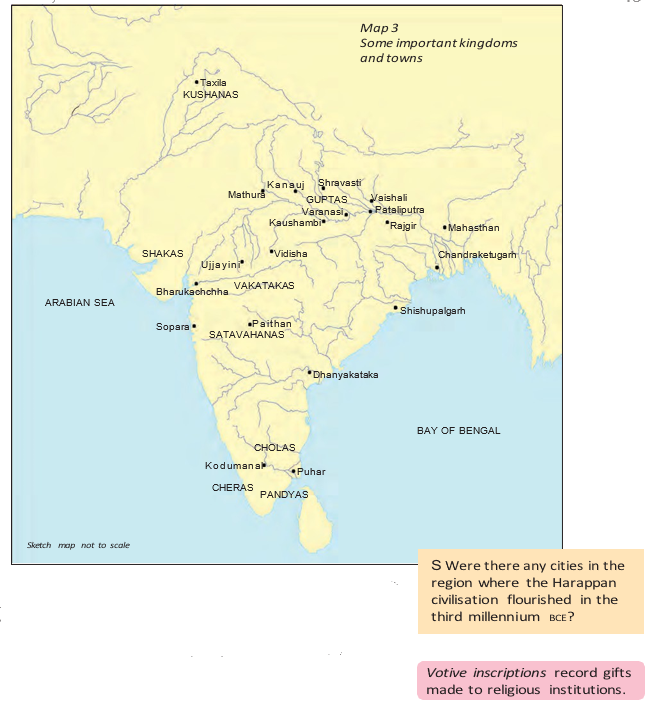
- Growth: Urban centres appeared in several parts of the subcontinent from about the sixth century BCE; many were capitals of mahajanapadas.
- Locations: Major towns were commonly situated along communication routes.
- River routes: Pataliputra was located on a riverine route.
- Land and sea routes: Ujjayini lay along land routes; coastal Puhar was near the beginning of sea routes.
- Urban roles: Towns such as Mathura were centres of commercial, cultural and political activity.
Urban Populations: Elites and Craftspersons
Evidence for urban life
- Urban elites: Kings and ruling groups lived in fortified cities.
- Artefacts: Finds include fine glossy Northern Black Polished Ware, likely used by wealthy people, and ornaments, tools, weapons, vessels and figurines.
- Materials: Objects were made from gold, silver, copper, bronze, ivory, glass, shell and terracotta.
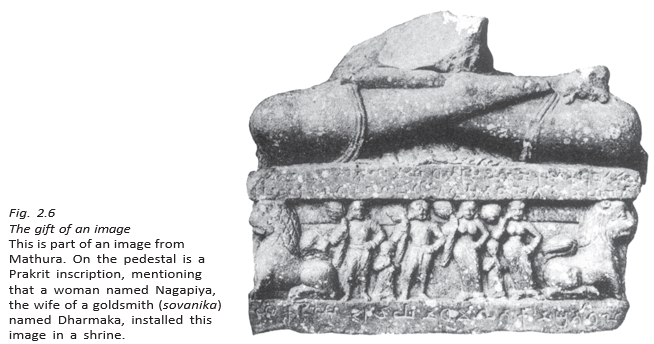
- Votive inscriptions: From the second century BCE, short inscriptions in cities named donors and sometimes their occupations.
- Occupations: Town residents included washers, weavers, scribes, carpenters, potters, goldsmiths, blacksmiths, officials, religious teachers, merchants and kings.
Guilds and production
- Shrenis: Guilds organised craft producers and merchants.
- Functions: Guilds probably obtained raw materials, regulated production and marketed finished goods.
- Tools: Craftspersons likely used a range of iron tools to meet growing demand from urban elites.
- Gahapati
- A Pali term often used for small peasants and large landholders.
- Vellalar
- Large landowners mentioned in Sangam literature.
- Agrahara
- A village grant, often to a Brahmana, carrying exemptions and transferred rights.
- Shreni
- A guild or organisation of craft producers and merchants.
What does Prabhavati Gupta’s land grant reveal about rural authority?
How did towns support craft and trade?
Quick recap
- Rural society was differentiated by access to land, labour and technology.
- Land grants transferred land, village dues and rights; their political impact is debated by historians.
- The Danguna grant transferred major and minor taxes to the recipient; specified village supplies and royal claims were exempted.
- Small forest-edge settlements combined difficult farming with gathering and selling forest produce.
- Towns grew along river, land and sea routes and served as political, cultural and commercial centres.
- Urban inscriptions, artefacts and shrenis reveal diverse occupations and organised craft production.
Trade in the Subcontinent and Beyond
Trade Routes, Merchants and Goods
Trade across regions
- Routes: From the sixth century BCE, land and river routes crossed the subcontinent and linked it with Central Asia.
- Sea routes: Ports connected the Arabian Sea with West Asia and East and North Africa, and the Bay of Bengal with Southeast Asia and China.
- Rulers: Rulers sometimes tried to control routes, possibly by charging for protection.
- Travellers: Peddlers often travelled on foot; merchants used bullock-cart caravans and pack animals; seafarers took risky but potentially very profitable journeys.
- Merchant titles: Successful merchants were called *masattuvan* in Tamil and *setthis* or *satthavahas* in Prakrit.
- Goods: Trade included salt, grain, cloth, metal ores and finished goods, stone, timber and medicinal plants.
- High-demand exports: Pepper, textiles and medicinal plants were carried across the Arabian Sea towards the Mediterranean, where they were in demand in the Roman Empire.
Coins and Kings
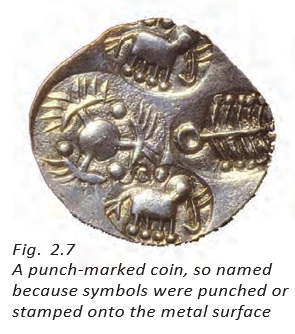
Punch-marked coins — Early silver and copper coins, marked by symbols stamped into their metal, that helped facilitate exchange.
The use and issue of coins
- Evidence: Punch-marked coins, used from about the sixth century BCE, have been found at many subcontinental sites.
- Study of coins: Numismatists use coins to help reconstruct possible commercial networks.
- Issuers: Some punch-marked coins may have been issued by kings; merchants, bankers and townspeople may also have issued some.
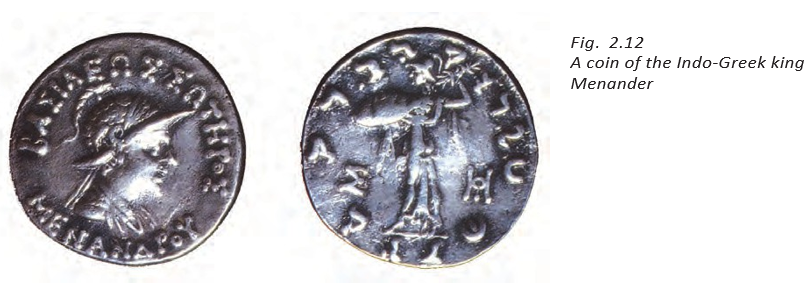
- Ruler portraits and names: Indo-Greek rulers of the north-west issued the first coins bearing rulers’ names and images, around the second century BCE.
| Coin issuer or type | Date and material | Significance and evidence |
|---|---|---|
| Indo-Greek rulers | c. second century BCE | First coins in the subcontinent bearing rulers’ names and images. |
| Kushanas | First gold coins c. first century CE | Issued large hoards of gold coins, similar in weight to contemporary Roman and Parthian coins; finds extend across north India and Central Asia. |
| Roman coins in south India | Date not specified here | Their discovery shows close trade connections, even though south India was outside the Roman Empire. |
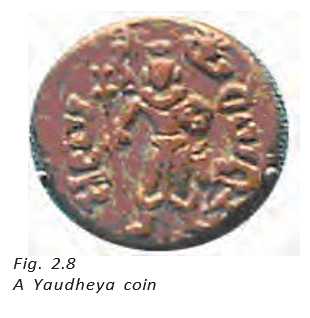
| Yaudheyas | Copper coins, c. first century CE | This tribal republic of Punjab and Haryana issued thousands of coins, showing its participation in economic exchange. |
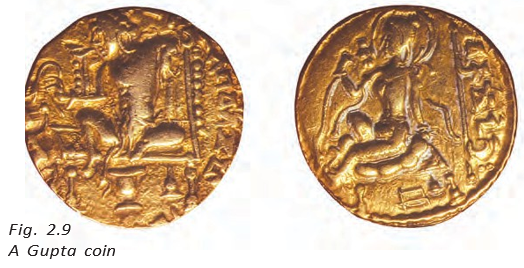
| Gupta rulers | Gold coins; earliest issues noted for purity | Their coins supported long-distance transactions from which rulers also benefited. |
Key developments in coinage
- c. sixth century BCE onwardsSilver and copper punch-marked coins were among the earliest coins used in the subcontinent.
- c. second century BCEIndo-Greek rulers issued coins bearing rulers’ names and images.
- c. first century CEKushana gold coinage began; Yaudheya copper coins also indicate active economic exchange.
- c. sixth century CE onwardsFinds of gold coins become less common, prompting debate about the state of the economy and trade.
| Economic decline interpretation | Continuing trade interpretation | |
|---|---|---|
| Argument | The collapse of the Western Roman Empire reduced long-distance trade and harmed states, communities and regions that had benefited from it. | New towns and trade networks began to emerge around this time. |
| How fewer coin finds are explained | Fewer finds may reflect reduced trade and prosperity. | Coins may have remained in circulation rather than being buried or hoarded; coins are still mentioned in inscriptions and texts. |
Deciphering Brahmi and Kharosthi
Reading Brahmi
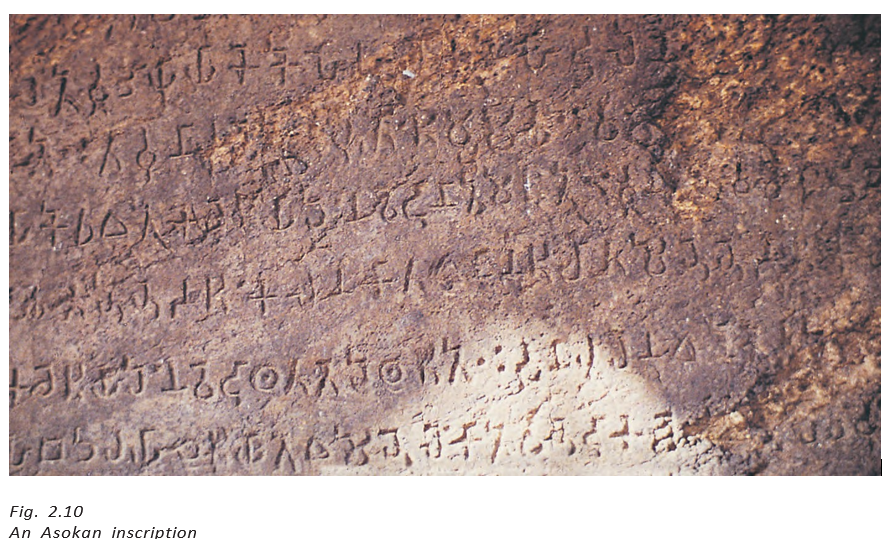
- Brahmi: The script used in most Asokan inscriptions; most scripts used for modern Indian languages derive from it.
- How it was deciphered: From the late eighteenth century, European scholars, aided by Indian pandits, compared contemporary Bengali and Devanagari manuscripts with older writing.
- Language clue: Scholars initially assumed some early inscriptions were in Sanskrit, but the earliest inscriptions were actually in Prakrit.
- Key achievement: After decades of work by epigraphists, James Prinsep deciphered Asokan Brahmi in 1838.
| Asokan Brahmi | Devanagari equivalent |
|---|---|
| 𑀓 | क |
| 𑀘 | च |
| 𑀝 | ट |
| 𑀤 | द |
| 𑀫 | म |
| 𑀭 | र |
Reading Kharosthi
- Kharosthi: A script used in inscriptions in the north-western subcontinent.
- Key evidence: Indo-Greek coins from around the second–first centuries BCE gave scholars rulers’ names written in both Greek and Kharosthi.
- Comparison: Scholars who could read Greek matched letters across the scripts; the name Apollodotus, for example, helped identify the symbol for “a”.
- Further progress: Once Prinsep identified the language of Kharosthi inscriptions as Prakrit, longer inscriptions could also be read.
Using Inscriptions as Historical Evidence
Identifying the ruler behind an inscription
- Titles: Some inscriptions do not name Asoka directly; they use titles such as *devanampiya* (“beloved of the gods”) and *piyadassi* (“pleasant to behold”).
- Identification: Other inscriptions name Asoka and use these titles. Matching content, style, language and palaeography helped epigraphists conclude that the inscriptions came from the same ruler.
- Asoka’s claim: He said earlier rulers had no arrangements to receive reports; historians assess this claim against the political history before Asoka rather than accepting it automatically.
- Claims must be assessed: Historians examine statements in inscriptions to judge whether they are true, plausible or exaggerated.
- Editorial additions: Words in brackets may be added by epigraphists to clarify meaning; additions must not alter the author’s intended sense.
Questions historians ask about inscriptions
- Audience: Rock inscriptions were placed near cities and important routes, but many people may not have been literate.
- Language: It is uncertain whether people across the subcontinent understood the Prakrit used at Pataliputra.
- Impact: Historians cannot always tell whether people heard, understood or followed a ruler’s orders.
- Interpretation: An inscription may be read as expressing Asoka’s anguish and a change in his attitude to warfare, but evidence must be checked beyond the wording alone.
- Missing evidence: An inscription expressing anguish has not been found in present-day Odisha, the region that had been conquered; this absence complicates interpretation and does not by itself explain why it is missing.
- Numismatist
- A specialist who studies coins.
- Epigraphist
- A specialist who studies and deciphers inscriptions.
- Palaeography
- The study of ancient scripts and forms of writing.
- Prakrit
- The language used in the earliest inscriptions discussed here.
What evidence shows that trade crossed political boundaries?
How were Brahmi and Kharosthi deciphered?
Why must historians assess inscriptions rather than accept them at face value?
Quick recap
- Land, river and sea routes linked the subcontinent with Central Asia, West Asia, Africa, Southeast Asia and China.
- Merchants moved many goods; pepper, textiles and medicinal plants were important exports to the Roman Empire.
- Coins—from punch-marked issues to Indo-Greek, Kushana, Yaudheya and Gupta coins—reveal trade and economic activity.
- The decline in gold-coin finds after c. sixth century CE has competing explanations, including reduced long-distance trade and continued circulation.
- James Prinsep deciphered Asokan Brahmi in 1838; bilingual Indo-Greek coins helped scholars read Kharosthi.
- Historians test inscription claims—including Asoka’s statement about earlier rulers’ reporting arrangements—and consider audience, reach and missing evidence.
The Limitations of Inscriptional Evidence
Epigraphy — The study of inscriptions, including their reading, dating and interpretation.
What royal inscriptions tell us
Examples from Ashokan inscriptions
- Administrative claim: Devanampiya Piyadassi says that pativedakas were to report people’s affairs to him at all times and wherever he was.
- Kalinga conquest: The inscription says Kalinga was conquered in the eighth year of the king’s rule; 150,000 people were deported, 100,000 killed, and many more died.
- Royal response: The king expresses regret over the suffering and says he turned to the study, love and teaching of Dhamma.
- Use with care: These accounts reveal how the king presented his administration and response; they do not provide every perspective on events.
Limits of inscriptional evidence
| Limitation | Why it matters |
|---|---|
| Physical damage | Faintly engraved letters, damage or missing sections make readings and reconstructions uncertain. |
| Uncertain meaning | Words may have meanings specific to a place or period, so scholars can disagree about how to read them. |
| Incomplete corpus | Many inscriptions remain undeciphered, unpublished or untranslated; others have not survived. |
| Selective recording | Inscriptions often describe grand or unusual events, not routine farming or the joys and sorrows of everyday life. |
| Commissioner’s viewpoint | The content usually reflects the perspective of the person or group who ordered the inscription. |
How to use inscriptions responsibly
- Read the inscription, allowing for damage and uncertain wording.
- Consider who commissioned it and what perspective it presents.
- Compare it with other evidence and viewpoints to build a fuller understanding of the past.
Major political and economic developments
- c. 600–500 BCEPaddy transplantation, urbanisation in the Ganga valley, mahajanapadas and punch-marked coins.
- c. 500–400 BCERulers of Magadha consolidated power.
- c. 327–325 BCEAlexander of Macedon invaded the northwest.
- c. 321 BCEChandragupta Maurya came to the throne.
- c. 272/268–231 BCEReign of Asoka.
- c. 185 BCEEnd of the Mauryan empire.
- c. 200–100 BCEIndo-Greek rule in the northwest; Cholas, Cheras and Pandyas in south India; Satavahanas in the Deccan.
- c. 100 BCE–200 CEShaka rulers from Central Asia in the northwest; Roman trade and gold coinage.
- c. 78 CE?Accession of Kanishka; the date is uncertain.
- c. 100–200 CEEarliest inscriptional evidence of land grants by Satavahana and Shaka rulers.
- c. 320 CEBeginning of Gupta rule.
- c. 335–375 CEReign of Samudragupta.
- c. 375–415 CEReign of Chandragupta II; Vakatakas ruled in the Deccan.
- c. 500–600 CERise of the Chalukyas in Karnataka and Pallavas in Tamil Nadu.
- c. 606–647 CEHarshavardhana ruled from Kanauj; Chinese pilgrim Xuan Zang came seeking Buddhist texts.
- 712 CEArabs conquered Sind.
Reading the chronology
- Dating caution: Economic developments are difficult to date precisely, and developments varied greatly across the subcontinent.
- Earliest dates: The timeline gives only the earliest dates assigned to particular developments; Kanishka’s accession date remains uncertain.
Major advances in epigraphy
- 1784The Asiatic Society was founded in Bengal.
- 1810sColin Mackenzie collected over 8,000 inscriptions in Sanskrit and Dravidian languages.
- 1838James Prinsep deciphered Asokan Brahmi.
- 1877Alexander Cunningham published a set of Asokan inscriptions.
- 1886The first issue of Epigraphia Carnatica, a journal of south Indian inscriptions, appeared.
- 1888The first issue of Epigraphia Indica appeared.
- 1965–66D.C. Sircar published Indian Epigraphy and Indian Epigraphical Glossary.
- Epigraphy
- The study and interpretation of inscriptions.
- Pativedakas
- Officials described in the inscription as reporting the people’s affairs to the king.
- Dhamma
- The principle or teaching the king says he studied and promoted after the Kalinga conquest.
Explain the main limitations of inscriptions as historical evidence.
Why should inscriptions be compared with other sources?
Quick recap
- Inscriptions are valuable historical sources, but their evidence is limited by damage, uncertain readings and incomplete survival.
- Not all discovered inscriptions have been deciphered, published or translated.
- Inscriptions often record exceptional events rather than daily routines and ordinary experiences.
- Their content generally reflects the perspective of the person or group who commissioned them.
- Compare inscriptions with other evidence to develop a more balanced understanding of the past.
- Dates in political and economic timelines can be approximate; Kanishka’s accession date is uncertain.
History — ALL CHAPTERS
1
BRICKS, BEADS AND BONES THE HARAPPAN CIVILISATION
2
KINGS, FARMERS AND TOWNS EARLY STATES AND ECONOMIES (C. 600 BCE-600 CE)
3
KINSHIP, CASTE AND CLASS EARLY SOCIETIES (C. 600 BCE-600 CE)
4
THINKERS, BELIEFS AND BUILDINGS CULTURAL DEVELOPMENTS (C. 600 BCE - 600 CE)
1
THROUGH THE EYES OF TRAVELLERS PERCEPTIONS OF SOCIETY (C. TENTH TO SEVENTEENTH CENTURY)
2
BHAKTI- SUFI TRADITIONS CHANGES IN RELIGIOUS BELIEFS AND DEVOTIONAL TEXTS (C. EIGHTH TO EIGHTEENTH CENTURY)
3
AN IMPERIAL CAPITAL VIJAYANAGARA (C. FOURTEENTH TO SIXTEENTH CENTURY)
4
PEASANTS, ZAMINDARS AND THE STATE AGRARIAN SOCIETY AND THE MUGHAL EMPIRE (C. SIXTEENTH- SEVENTEENTH CENTURY)
1
COLONIALISM AND THE COUNTRYSIDE EXPLORING OFFICIAL ARCHIVES
2
REBELS AND THE RAJ THE REVOLT OF 1857 AND ITS REPRESENTATIONS
3
MAHATMA GANDHI AND THE NATIONALIST MOVEMENT CIVIL DISOBEDIENCE AND BEYOND
4
FRAMING THE CONSTITUTION THE BEGINNING OF A NEW ERA