Class 12 Humanities . Political Science . Contemporary World Politics . Contemporary Centres of Power
Chapter 2: CONTEMPORARY CENTRES OF POWER
Ch 2
Political Science
Class 12 Humanities
European Union
Post-war origins and integration
Why European integration began
- Post-war challenge: In 1945, Europe faced ruined economies and the breakdown of old political arrangements. Leaders had to choose between renewed rivalries and cooperation through shared institutions.
- Cold War setting: The Cold War encouraged Western European cooperation. The United States supported recovery through the Marshall Plan and created a collective security framework through NATO.
- Economic cooperation: The Organisation for European Economic Cooperation (OEEC), established in 1948, channelled Marshall Plan aid and provided a forum for trade and economic cooperation.
- Political cooperation: The Council of Europe, founded in 1949, was another step towards political cooperation.
- Integration path: Economic integration developed gradually, leading to the European Economic Community (EEC) in 1957. The European Parliament added a political dimension; the 1992 creation of the EU advanced cooperation on foreign policy, security, justice and home affairs, and a single currency.
Growth of European integration
- Marshall Plan aid and NATO security framework
- OEEC and Council of Europe encourage economic and political cooperation
- EEC advances economic integration
- European Parliament adds a political dimension
- European Union creates a wider framework for political, economic and security cooperation
The EU as an evolving union
European Union (EU) — A regional organisation that has developed from economic integration into an increasingly political union, while its member states retain significant national powers.
Features and tensions
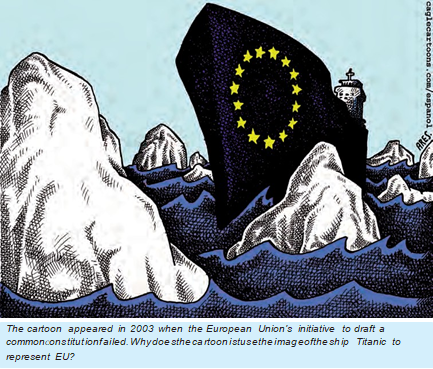
- Shared identity: The EU has a flag, anthem, founding date and common currency, and conducts some common foreign and security policy.
- EU flag: Its circle of 12 gold stars symbolises solidarity and harmony; the number 12 represents perfection, completeness and unity.
- Supranational role: The EU can intervene in economic, political and social areas, and has sought to expand cooperation and membership, including among former Soviet-bloc countries.
- Limits on integration: Some citizens and governments resist transferring national powers to EU institutions; there are also disagreements over admitting new members.
- Constitution: Attempts to create an EU Constitution failed, including the 2003 initiative.
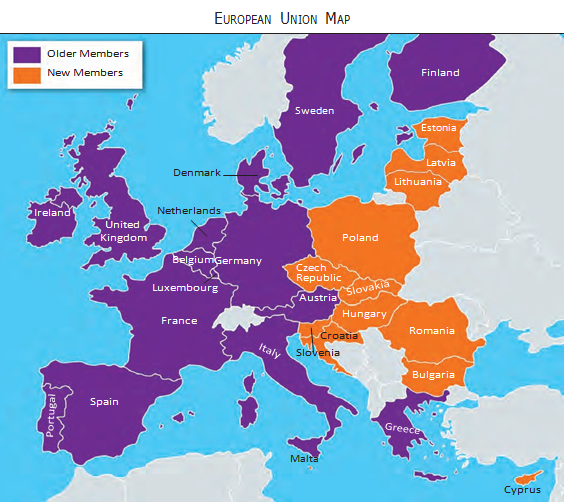
Schengen Agreement
- Purpose: The 1985 Schengen Agreement removed border controls among participating EEC members.
- Travel: A Schengen visa generally permits entry across participating Schengen countries, rather than requiring a separate visa for each.
European integration milestones
- April 1951France, West Germany, Italy, Belgium, the Netherlands and Luxembourg sign the Treaty of Paris, establishing the European Coal and Steel Community (ECSC).
- 25 March 1957The six ECSC countries sign the Treaties of Rome, establishing the EEC and Euratom.
- January 1973Denmark, Ireland and the United Kingdom join the EEC.
- June 1979The first direct elections to the European Parliament are held.
- January 1981Greece joins the EEC.
- June 1985The Schengen Agreement abolishes border controls among participating EEC members.
- January 1986Spain and Portugal join the EEC.
- October 1990Germany is unified.
- 7 February 1992The Treaty of Maastricht is signed, establishing the European Union.
- January 1993The EEC is renamed the European Community (EC).
- January 1995Austria, Finland and Sweden join the EU.
- January 2002The euro is introduced in 12 EU member states.
- May 2004Cyprus, the Czech Republic, Estonia, Hungary, Latvia, Lithuania, Malta, Poland, Slovakia and Slovenia join the EU.
- January 2007Bulgaria and Romania join the EU; Slovenia adopts the euro.
- December 2009The Lisbon Treaty comes into force.
- 2012The EU is awarded the Nobel Peace Prize.
- 2013Croatia becomes the EU's 28th member.
- 2016In the UK referendum, 51.9% vote for the UK to leave the EU (Brexit).
The EU as a centre of power
| Area | Key sources of influence |
|---|---|
| Economic | The EU's GDP was projected at approximately 19.35 trillion US dollars for 2024. The euro can challenge the US dollar's dominance; the EU's share of world trade is larger than that of the United States. Its economic weight supports influence over neighbours and countries in Asia and Africa, and makes it an important bloc in bodies such as the WTO. |
| Political and diplomatic | France holds a permanent seat on the UN Security Council, and EU countries also include non-permanent members. The EU has influenced some US policies, including its position on Iran's nuclear programme. It often uses diplomacy, investment and negotiation rather than coercion, including in dialogue with China on human rights and environmental degradation. |
| Military and technological | The EU's combined armed forces are described as the world's second largest, and its total defence spending is second only to the United States. France has approximately 335 nuclear warheads. The EU is also a major source of space and communications technology. |
Limits to EU power and unity
| Point | Shared EU aims | National differences |
|---|---|---|
| Foreign policy | The EU has a common foreign and security policy framework. | Member states retain their own foreign relations and may disagree with one another. |
| Iraq invasion | Some EU members joined the US-led coalition of the willing. | Tony Blair's Britain supported the US invasion, while France and Germany opposed US policy. |
| Integration and currency | The EU seeks closer integration and a common currency. | Euroskepticism challenges integration. Margaret Thatcher kept the UK out of the European Market; Denmark and Sweden resisted the Maastricht Treaty and adoption of the euro. |
Why these limits matter
- Divergent national policies: Disagreement among member states, especially on foreign affairs and defence, weakens the EU's ability to act as one power.
- Euroskepticism: Public and political resistance to transferring authority to EU institutions restricts further integration.
- Supranational organisation
- An organisation with authority to act in certain areas beyond individual member-state governments.
- Euroskepticism
- Doubt or opposition towards the EU and its programme of closer integration.
- Schengen Agreement
- Agreement that removes border controls among participating European states.
- EEC
- European Economic Community, established by the Treaties of Rome to promote economic integration.
How did European integration develop after the Second World War?
Why is the EU an important centre of power, and what limits its influence?
Quick recap
- European integration grew from post-war recovery and Cold War cooperation.
- The EEC advanced economic integration; the EU, established in 1992, extended cooperation into political and security areas.
- The EU has shared symbols, a common currency and some supranational authority, but member states retain important powers.
- The Schengen Agreement removed border controls among participating states.
- The EU's economic, diplomatic, military and technological resources make it a significant global power.
- Different national policies and Euroskepticism constrain EU unity and influence.
Association of South East Asian Nations (asean)
Why ASEAN Was Formed
ASEAN — A regional organisation established to encourage cooperation among Southeast Asian countries.
Conditions behind regional cooperation
- Colonial rule: European and Japanese colonialism left economic and political difficulties.
- Post-war challenges: Newly independent states faced nation-building, poverty and economic backwardness.
- Cold War pressure: Countries were pressed to align with competing great powers, raising the risk of conflict.
- Need: Earlier Asian and Third World unity efforts did not establish effective informal cooperation, encouraging a Southeast Asian initiative.
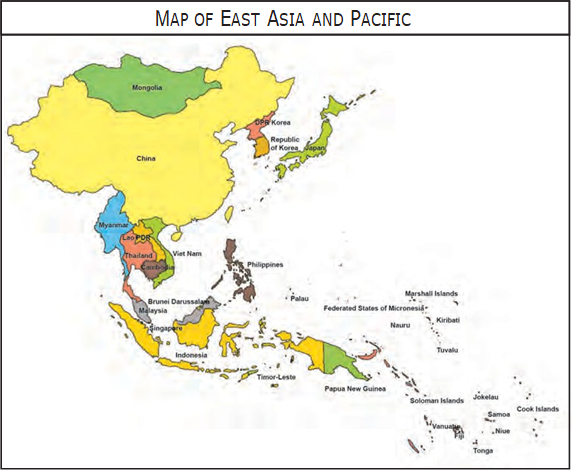
Formation, Membership and Principles
| Group | Countries |
|---|---|
| Founding members (1967) | Indonesia, Malaysia, the Philippines, Singapore and Thailand |
| Members that joined later | Brunei Darussalam, Vietnam, Lao PDR, Myanmar (Burma) and Cambodia |
| Total | 10 member states |
Aims and working style
- Founding document: The five founding states established ASEAN by signing the Bangkok Declaration.
- Main aim: Accelerate economic growth and, through it, social progress and cultural development.
- Additional aim: Promote regional peace and stability through the rule of law and the principles of the UN Charter.
- ASEAN Way: A style of informal, cooperative and non-confrontational interaction.
- Sovereignty: Respect for each member’s national sovereignty is central; ASEAN has little desire for EU-style supranational institutions.
The ASEAN Community
Three pillars agreed in 2003
- ASEAN Security Community: Promotes peace and prevents disputes from escalating into armed conflict.
- ASEAN Economic Community: Seeks deeper economic integration and development.
- ASEAN Socio-Cultural Community: Supports cooperation in social and cultural matters.
ASEAN logo and security cooperation
- Logo: Ten paddy (rice) stalks represent the ten Southeast Asian countries united in friendship and solidarity; the circle symbolises ASEAN’s unity.
- Security principle: Outstanding territorial disputes should not become armed confrontations.
- Agreements: By 2003, members had agreed to uphold peace, neutrality, cooperation, non-interference, respect for national differences and sovereign rights.
- ASEAN Regional Forum (ARF): Established in 1994 to coordinate security and foreign-policy discussions.
Economic Role and Regional Influence
ASEAN Economic Community
- Character: ASEAN remains principally an economic association.
- Purpose: Create a common market and production base among member states and support regional social and economic development.
- Dispute resolution: Improve the ASEAN Dispute Settlement Mechanism for resolving economic disputes.
- Free Trade Area: ASEAN has focused on creating an FTA for investment, labour and services.
- External interest: The United States and China have moved quickly to negotiate FTAs with ASEAN.
| Point | ASEAN | United States, European Union and Japan |
|---|---|---|
| Overall economic size | Smaller as a region | Larger |
| Growth | Growing faster, contributing to its increasing influence | Growing more slowly than ASEAN, according to the text |
Regional and international role
- Vision 2020: Defines an outward-looking role for ASEAN in the international community, building on negotiation as a way to address regional conflicts.
- Conflict resolution: ASEAN mediated the end of the Cambodian conflict and the East Timor crisis.
- Regional dialogue: ASEAN holds annual meetings to discuss East Asian cooperation.
- Consultation: ASEAN’s strength lies in interaction and consultation with member states, dialogue partners and other non-regional organisations.
- Political forum: It is the only regional association in Asia providing a political forum where Asian countries and major powers can discuss political and security concerns.
India and ASEAN
Growing engagement
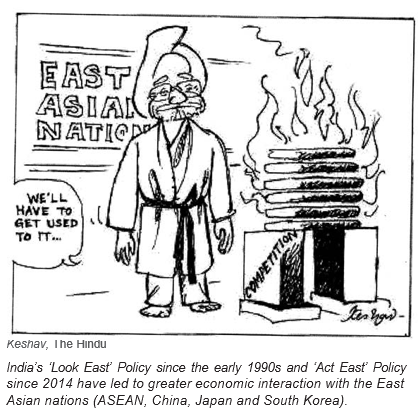
- Economic importance: ASEAN is an important trading and investment partner for growing Asian economies, including India and China.
- Earlier gap: During the Cold War, Indian foreign policy gave ASEAN insufficient attention.
- Trade links: India later signed trade agreements with Malaysia, Singapore and Thailand.
- ASEAN–India FTA: Came into effect in 2010.
- Engagement policies: India’s Look East and Act East policies reflect its growing engagement with East Asian countries.
- ASEAN Way
- Informal, cooperative and non-confrontational interaction among members.
- Sovereignty
- A state’s authority over its own affairs; respecting it is central to ASEAN’s functioning.
- ASEAN Regional Forum (ARF)
- The forum established in 1994 for coordination on security and foreign policy.
- Free Trade Area (FTA)
- An ASEAN initiative focused on investment, labour and services.
Key dates
- 1967Five Southeast Asian countries founded ASEAN by signing the Bangkok Declaration.
- 1994The ASEAN Regional Forum was established.
- 2003ASEAN agreed to establish a community with security, economic and socio-cultural pillars.
- 2010The ASEAN–India Free Trade Agreement came into effect.
What were the aims of ASEAN when it was established?
What are the three pillars of the ASEAN Community?
Quick recap
- ASEAN was founded in 1967 by Indonesia, Malaysia, the Philippines, Singapore and Thailand; it later grew to ten members.
- Its original priorities were economic growth, social and cultural development, peace and regional stability.
- The ASEAN Way emphasises informal cooperation, non-confrontation and respect for national sovereignty.
- ASEAN remains principally an economic association; its 2003 Community has security, economic and socio-cultural pillars.
- The ASEAN logo’s ten rice stalks represent its ten countries bound in friendship and solidarity; the circle represents unity.
- ASEAN’s influence rests on its fast-growing economy and consultation with members and partners; India’s ASEAN–India FTA took effect in 2010.
The Rises of the Chinese Economy
China’s rise as an economic power
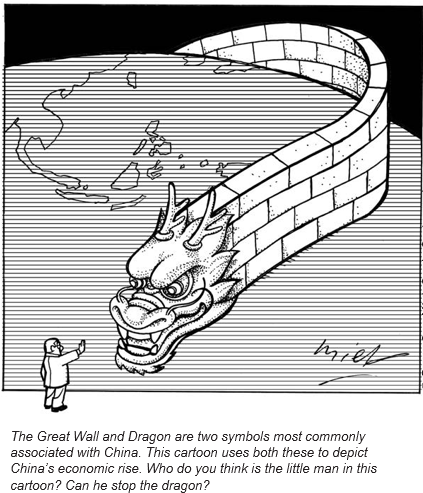
- Fast growth: China has been the fastest-growing economy since reforms first began in 1978.
- Regional influence: Economic integration has made China a major driver of East Asian growth.
- Sources of power: Economic strength combines with its population, land area, resources, regional location and political influence.
- Global projection: The lecture cites a projection that China could overtake the US as the world’s largest economy by 2040.
The early state-led economy
- Model: After the 1949 Communist Revolution, China adopted a Soviet-style, state-controlled economic model under Mao.
- Industrialisation: Capital generated from agriculture was directed into state-owned heavy industry.
- Import substitution: With little foreign exchange and limited links to capitalist economies, China aimed to produce domestically what it could not afford to import.
- Achievements: The system built an industrial base, provided employment and social welfare, and improved education and health for citizens.
- Limits: Growth of about 5–6% a year was offset by population growth of 2–3%; agriculture generated too little surplus for industry.
- Crisis: Slow industrial growth, minimal international trade and very low per-capita income exposed the limits of state control.
Policy shifts and the opening of China
- End of isolation: China established relations with the United States in 1972, beginning to reconnect with the outside world.
- Four Modernisations: Zhou Enlai proposed modernising agriculture, industry, science and technology, and the military in 1973.
- Open Door policy: In 1978, Deng Xiaoping announced reforms to raise productivity through foreign capital and technology.
- Gradual reform: China opened its economy step by step rather than adopting rapid ‘shock therapy’.
| Area | Change | Significance |
|---|---|---|
| Agriculture | Privatised in 1982 | Production and rural incomes rose markedly. |
| Industry | Privatised in 1998 | Expanded alongside the growing market economy. |
| Foreign investment and trade | Special Economic Zones (SEZs) allowed foreign enterprises; trade barriers were removed there. | Brought foreign capital, technology and expanded trade. |
| State’s role | The state continued to guide the creation of a market economy. | Reform did not mean the state withdrew from economic direction. |
Key dates and developments
- 1949The People’s Republic of China was established after the Communist Revolution.
- 1972China established relations with the United States, ending its political and economic isolation.
- 1973Zhou Enlai proposed the Four Modernisations.
- 1978Deng Xiaoping announced the Open Door policy and economic reforms.
- 1982Agriculture was privatised.
- 1997The Asian financial crisis occurred; China’s contribution to stability in ASEAN economies helped ease fears about its rise.
- 1998Industry was privatised.
- 2001China joined the World Trade Organization (WTO), deepening its opening to the world economy.
- By 2040 (projection cited)China was projected to overtake the US as the world’s largest economy.
Results of economic reforms
How reforms accelerated growth
- Agricultural privatisation → higher farm output and rural incomes
- High rural savings → rapid growth of rural industries
- SEZs and new trading laws → sharp expansion in foreign trade
- Foreign investment and technology → faster growth in industry and agriculture
- WTO membership and global integration → greater participation in the world economy
- Foreign investment: China became the most important destination for foreign direct investment (FDI).
- Financial reach: Large foreign-exchange reserves enabled China to make substantial investments in other countries.
- Future direction: China aims to deepen its integration into the global economy and influence the future world economic order.
Costs and uneven benefits
- Unemployment: Nearly 100 million people were looking for jobs.
- Work conditions: Female employment and working conditions were described as being as bad as in Europe in the eighteenth and nineteenth centuries.
- Social and regional inequality: Gaps widened between rural and urban residents and between coastal and inland provinces.
- Other problems: Environmental degradation and corruption increased.
China’s regional and global influence
- Interdependence: Trade and investment ties give China considerable influence over its economic partners.
- Diplomatic effect: Economic interests have tempered disputes with Japan, the US, ASEAN and Russia.
- Taiwan: China regards Taiwan as a renegade province and hopes to resolve differences through closer economic integration.
- Global role: China’s contribution to ASEAN’s stability after the 1997 financial crisis, and its investment and aid policies in Latin America and Africa, project it as a global player alongside developing economies.
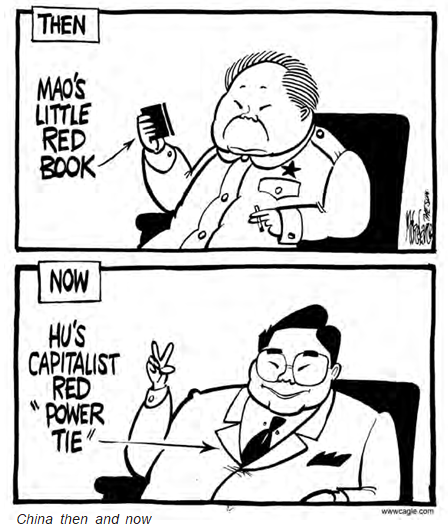
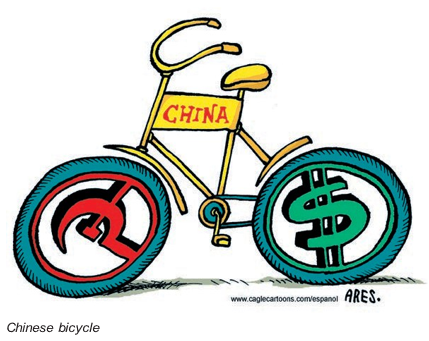
| Point | State-led socialist features | Market-oriented features |
|---|---|---|
| Political-economic structure | The state remains central in directing the economy. | Market mechanisms and private enterprise have expanded. |
| External links | China began with limited links to the capitalist world. | Foreign investment, trade and global integration have grown. |
- Import substitution
- Replacing imports with domestically produced goods.
- Four Modernisations
- Modernisation of agriculture, industry, science and technology, and the military.
- Open Door policy
- Reforms that opened China to foreign capital, technology and trade.
- Special Economic Zones (SEZs)
- Areas where foreign investors could establish enterprises under more open trade arrangements.
- Foreign direct investment (FDI)
- Investment by foreign entities in businesses or productive activity within a country.
- World Trade Organization (WTO)
- International organisation China joined in 2001 as part of its deeper integration into world trade.
What were the main features and limitations of China’s early economic model?
How did China’s reforms promote economic growth?
Why is modern China described as having an economic duality?
Quick recap
- China’s post-1949 state-led model built industry but faced limits in growth, agriculture and trade.
- The 1978 Open Door reforms brought gradual market changes and foreign investment.
- Agricultural and industrial privatisation, SEZs and WTO membership accelerated economic integration.
- Growth increased China’s trade influence, investment capacity and role in regional and global affairs.
- Reforms also brought unemployment, poor work conditions, inequality, environmental damage and corruption.
- Modern China combines market-oriented activity with continued central state direction.
India-china Relations
Tributary system — A system through which China extended influence over neighbouring regions that accepted its authority.
Historical background
- Earlier influence: Before Western imperialism, India and China were major Asian powers with political, economic and cultural influence beyond their borders.
- Chinese influence: At different times, Mongolia, Korea, parts of Indo-China and Tibet accepted China’s authority.
- Limited contact: Their spheres of influence rarely overlapped, so interaction was limited and each country knew relatively little about the other.
- Early hope: After India’s independence and China’s expulsion of foreign powers, both hoped to shape Asia and the developing world; “Hindi-Chini bhai-bhai” expressed this optimism.
Key developments in India–China relations
- 1950China took control of Tibet, adding to disagreements between the two countries.
- 1962A border conflict over competing claims, principally in Arunachal Pradesh and Aksai Chin, ended in military reverses for India.
- Until 1976Diplomatic relations were downgraded after the 1962 conflict.
- Mid-to-late 1970sChina’s leadership adopted a more pragmatic, less ideological approach and was willing to defer contentious issues.
- 1981Talks to resolve the border issue began.
- December 1988Prime Minister Rajiv Gandhi’s visit to China gave fresh impetus to improving relations.
- 1992Bilateral trade was valued at 338 million US dollars.
- 1998India’s nuclear tests were justified partly by citing a threat from China.
- Since 1999India–China trade grew at about 30 per cent per year, according to the lecture.
- 2017Bilateral trade had risen to more than 84 billion US dollars.
- 2018Prime Minister Narendra Modi visited China.
- 2019Chinese President Xi Jinping visited India.
From border conflict to cautious engagement
- China’s takeover of Tibet and unresolved border claims
- → Border conflict in 1962, mainly over Arunachal Pradesh and Aksai Chin
- → India’s military reverses and downgraded diplomatic relations until 1976
- → Gradual improvement, renewed talks and measures to maintain peace on the border
Changing relationship
- Strategic and economic ties: Since the Cold War ended, both countries have viewed themselves as rising powers seeking a major role in Asian and global affairs.
- Border management: Measures aim to contain conflict and maintain “peace and tranquillity” along the border; talks to resolve the boundary question have continued.
- Cooperation: The countries have agreements on cultural exchange, science and technology, opened four border posts for trade, and increased military-to-military cooperation.
- Economic links: Trade expanded sharply; the countries have also cooperated on overseas energy bids and adopted similar positions in international economic institutions such as the WTO.
- Sources of tension: Border disputes, China’s support for Pakistan’s nuclear programme, its military ties with Bangladesh and Myanmar, the China–Pakistan Economic Corridor, and its support for Pakistan at the UN against India’s counter-terrorism moves have strained relations.
- Outlook: Despite tensions, growing transport and communication links, shared economic interests and global concerns may support a more stable relationship.
Japan
Japan’s economic and global position
- Economic development: Despite few natural resources and reliance on imported raw materials, Japan developed rapidly after the Second World War.
- Technology and industry: Japanese companies such as Sony, Panasonic, Canon, Suzuki, Honda, Toyota and Mazda became known for high-technology products.
- Global standing: Japan is the only Asian member of the G-7 and is the second-largest contributor to the UN regular budget, providing almost 10 per cent.
- Security: Japan has had a security alliance with the US since 1951. Its military spending is about 1 per cent of GDP, yet ranks seventh in the world.
- Constitution: Article 9 renounces war as a sovereign right and the threat or use of force to settle international disputes.
- Nuclear history: Japan is the only nation to have suffered the destruction caused by nuclear bombs.
| Measure | Position / detail |
|---|---|
| OECD membership | Joined in 1964 |
| Economy (2017) | Third largest in the world |
| Population | Eleventh largest nation |
| Military expenditure | Seventh largest in the world; about 1 per cent of GDP |
Japan: key dates
- 1951Japan’s security alliance with the United States began.
- 1964Japan joined the Organisation for Economic Cooperation and Development (OECD).
- 2017Japan was the world’s third-largest economy.
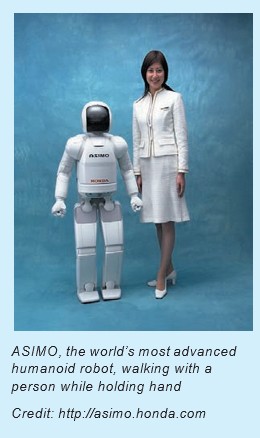
When assessing Japan as an alternative centre of power, balance its economic, technological and international influence against its limited natural resources and constitutional renunciation of war.
South Korea
South Korea: key developments
- End of the Second World WarThe Korean peninsula was divided along the 38th Parallel into South Korea and North Korea.
- 1950–1953The Korean War and Cold War rivalry further intensified tensions between the two Koreas.
- 1960s–1980sSouth Korea developed rapidly in what became known as the “Miracle on the Han River”.
- 17 September 1991North and South Korea became members of the United Nations.
- 1996South Korea joined the OECD.
- 2016The Human Development Report ranked South Korea 18th on the HDI.
- 2017South Korea had the world’s eleventh-largest economy and tenth-largest military expenditure.
| Area | Key points |
|---|---|
| Economic growth | Rapid development from the 1960s to the 1980s; known as the “Miracle on the Han River” |
| Human development | HDI rank of 18 in the Human Development Report 2016 |
| Development factors | Land reforms, rural development, human-resource development and rapid, equitable growth |
| Supporting policies | Export orientation, redistribution, public infrastructure, effective institutions and governance |
| International profile | OECD member; in 2017, eleventh-largest economy and tenth-largest military expenditure |
| Commercial and cultural links | South Korean brands such as Samsung, LG and Hyundai are well known in India; agreements reflect growing ties |
- Aksai Chin
- A region in Ladakh central to competing India–China territorial claims.
- Article 9
- A provision of Japan’s Constitution renouncing war and the use or threat of force to settle international disputes.
- Miracle on the Han River
- The rapid economic development of South Korea, especially from the 1960s to the 1980s.
- HDI
- Human Development Index, used to report South Korea’s human-development rank.
What were the main consequences of the 1962 India–China conflict?
How did India–China relations develop after Rajiv Gandhi’s 1988 visit?
What factors contributed to South Korea’s high human development?
Quick recap
- India and China had limited early contact because their areas of influence rarely overlapped.
- Tibet and unresolved border claims contributed to the 1962 conflict; relations improved gradually after 1976.
- India–China ties combine trade and cooperation with continuing border and regional tensions.
- Japan is a technology-driven economic power with a US security alliance and a constitution that renounces war.
- South Korea’s rapid growth, strong social policies and effective institutions supported its high human development.
- South Korea became a major Asian economic and military power and developed growing commercial and cultural ties with India.
Political Science — ALL CHAPTERS
1
THE END OF BIPOLARITY
2
CONTEMPORARY CENTRES OF POWER
3
CONTEMPORARY SOUTH ASIA
4
INTERNATIONAL ORGANISATIONS
5
SECURITY IN THE CONTEMPORARY WORLD
6
ENVIRONMENT AND NATURAL RESOURCES
7
GLOBALISATION
1
Challenges of Nation Building
2
Era of one-party dominance
3
Politics Of Planned Development
4
India’s external relations
5
Challenges to and Restoration of the Congress System
6
The Crisis of Democratic Order
7
Regional Aspirations
8
Recent Developments in Indian Politics