Class 12 Humanities . Political Science . Politics In India Since Independence . Regional Aspirations
Chapter 7: Regional Aspirations
Ch 7
Political Science
Class 12 Humanities
Chapter Overview
Nation-Building and Regional Aspirations
The challenge of regional aspirations
- Nation-building is an ongoing process; new challenges emerged after Independence, while some earlier problems remained unresolved.
- Regional aspirations grew as people in different regions sought greater autonomy through India’s democratic process.
- Forms of assertion sometimes went beyond the framework of the Indian Union and involved long struggles, including aggressive or armed movements.
- Chapter questions include the causes of regional tensions, the Indian state’s responses, balancing democratic rights with national unity, and lessons for achieving unity with diversity in a democracy.
Regional challenges in the 1980s
- 1980sRegional challenges became prominent as the Janata experiment ended and political stability at the Centre improved; major conflicts and accords occurred in Assam, Punjab and Mizoram, alongside developments in Jammu and Kashmir.
Regional Aspirations and National Unity
| Point | Common pattern | Uttarakhand movement poster |
|---|---|---|
| Language and audience | Usually expressed in the regional language and addressed to local people or rulers. | Appealed in seven languages to citizens across India. |
| Message and significance | Presents the concerns and aspirations of a region. | Sought support for Uttarakhand’s creation against injustice, exploitation and oppression, showing that regional aspirations can align with nationalist sentiment. |
- Nation-building
- The continuing process of building and sustaining a united nation.
- Regional aspiration
- A region’s expressed desire for autonomy or recognition of its concerns.
- National unity
- The shared political unity of the country, which must be balanced with democratic rights and regional diversity.
Quick recap
- Nation-building continues as new challenges arise and older problems may remain unresolved.
- Regional aspirations often seek autonomy and may sometimes be asserted beyond the framework of the Indian Union.
- The 1980s saw major regional conflicts and accords, especially in Assam, Punjab and Mizoram, and developments in Jammu and Kashmir.
- The chapter examines state responses and the challenge of balancing democratic rights with national unity.
- It also asks what these cases teach about achieving unity with diversity in a democracy.
- Regional aspirations can support national unity: the Uttarakhand poster appealed to citizens across India in several languages.
Region and the Nation
Regional Aspirations and Settlements
A common path from conflict to accord
- Regional demand for autonomy → conflict and disruption
- Dialogue between the Central Government and movement leaders → negotiated accord
- Accord → attempt to settle disputed issues within the constitutional framework
The Indian Approach to Diversity
Do not assume every regional demand is anti-national: India’s democratic approach allows regional aspirations to be expressed while seeking to preserve national unity.
Balancing Regional and National Needs
- Competing priorities: Tensions arise when national unity overshadows regional needs, or regional interests take precedence over the wider nation.
- Political challenge: Balancing regional rights with national unity is an ongoing task in a diverse democracy.
Areas of Tension
- Unresolved challenges: Early nation-building did not settle every regional aspiration; complex issues persisted in Kashmir and Nagaland.
- New tensions: Further challenges emerged in Punjab, Assam and Mizoram, testing the country’s ability to accommodate diversity.
Linguistic States and Language Agitations
Key developments
- Immediately after IndependenceIndia faced Partition, displacement, princely-state integration, and state reorganisation.
- From the late 1950sPunjabi-speaking people agitated for a separate state.
- 1966Punjab and Haryana were created after the separate-state demand was accepted.
- 1980sRegional aspirations for autonomy rose; many struggles eventually led to negotiated accords.
Unresolved and New Challenges
Responding to linguistic diversity
- Regional and linguistic identities → demands for statehood and language recognition
- Mass agitations and political pressure → reorganisation of internal state boundaries
- Reorganisation → accommodation of diversity within India
- Unresolved issues and new demands → continuing regional challenges
- Regional aspiration
- A demand for recognition, autonomy, rights, or political identity for a region or its people.
- Accord
- A negotiated settlement intended to resolve disputed issues, often within the constitutional framework.
- Linguistic state
- A state formed or reorganised with regard to the language spoken by its people.
- Regionalism
- A political focus on a region’s identity, needs, rights, or interests.
What is distinctive about the Indian approach to regional diversity?
How did India address demands linked to linguistic diversity?
Which challenges remained unresolved in the first phase of nation-building, and where did later challenges arise?
Quick recap
- India’s approach seeks national unity while preserving regional and linguistic cultures.
- Democracy gives regional aspirations political expression and can bring regional issues into policymaking.
- Balancing national unity with regional needs can create tensions and conflicts.
- Movements in Kashmir, Nagaland, Mizoram, and among some Dravidian groups raised questions of political identity and separation.
- Linguistic state demands and language agitations helped reshape India’s internal boundaries.
- Kashmir and Nagaland remained difficult challenges in the first phase; later challenges emerged in Punjab, Assam, and Mizoram.
- Many autonomy movements ended in negotiated accords, although the path could be prolonged and violent.
Jammu and Kashmir
Jammu and Kashmir: Regions and People
Background
- Special status: Jammu and Kashmir had special status under Article 370 of the Indian Constitution.
- Challenges: The State experienced violence, cross-border terrorism and political instability, with internal and external effects.
- Human impact: Many civilians, security personnel and militants lost their lives; many Kashmiri Pandits were displaced from the Kashmir Valley.
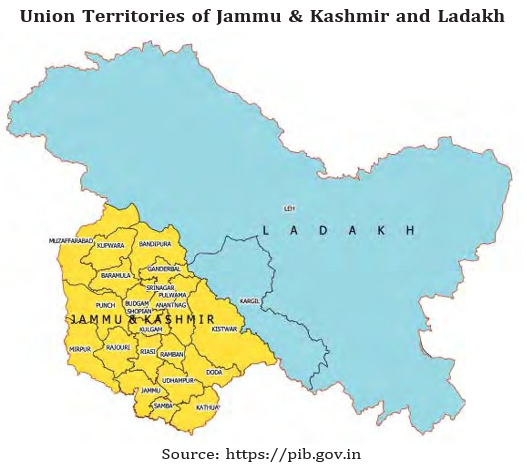
| Region | Physical features | Population |
|---|---|---|
| Jammu | Foothills and plains | Predominantly Hindu; also Muslims, Sikhs and others |
| Kashmir | Mainly the Kashmir Valley | Mostly Kashmiri Muslims; also Hindus, Sikhs, Buddhists and others |
| Ladakh | Mainly mountainous, with a small population | Population divided almost equally between Buddhists and Muslims |
Roots of the Kashmir Problem
Different Aspirations before Accession
- Princely State: Before 1947, Jammu and Kashmir was ruled by Maharaja Hari Singh, who wanted independence rather than accession to either India or Pakistan.
- Pakistan’s claim: Pakistani leaders argued that Kashmir belonged to Pakistan because the State had a Muslim-majority population.
- Kashmiriyat: Many people of the State identified first as Kashmiris, expressing a shared regional identity.
- National Conference: Led by Sheikh Abdullah, the popular movement opposed the Maharaja but also opposed joining Pakistan.
- Secular politics: The National Conference was secular, had a long association with the Congress, and Sheikh Abdullah was a friend of leading nationalist leaders, including Nehru.
Accession and the United Nations Resolution
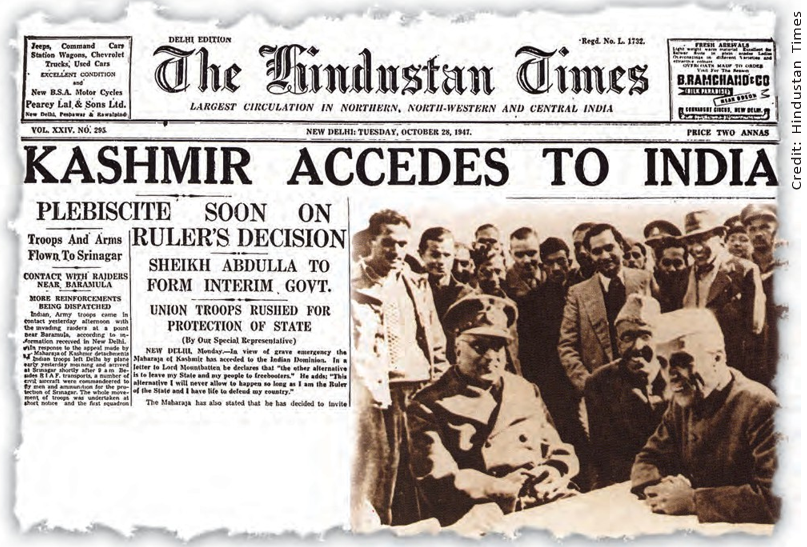
- October 1947Pakistan sent tribal infiltrators into Kashmir. Maharaja Hari Singh requested Indian military assistance and signed the Instrument of Accession; Indian forces drove the infiltrators back from the Kashmir Valley.
- March 1948Sheikh Abdullah became Prime Minister of Jammu and Kashmir.
- 21 April 1948A United Nations resolution proposed a three-step process to address the dispute.
Accession and the Proposed UN Process
- Tribal infiltration from Pakistan → Maharaja sought Indian military help.
- Indian assistance → Maharaja signed the Instrument of Accession to India.
- Pakistan continued to control a sizeable part of the State → the issue was taken to the United Nations.
- UN proposal → Pakistan was to withdraw its nationals who had entered Kashmir.
- After withdrawal → India was to progressively reduce forces while maintaining law and order; then a free and impartial plebiscite was to be held.
Outcome and Special Autonomy
- UN resolution: The proposed three-step process made no progress.
- Autonomy: India agreed to grant Jammu and Kashmir provisional autonomy under Article 370.
- Government title: At that time, the head of the State government was called the Prime Minister.
Sheikh Mohammad Abdullah
- Role: Leader of the National Conference; led the popular struggle against princely rule and supported autonomy and secularism for Jammu and Kashmir.
- Position on Pakistan: Opposed joining Pakistan because he viewed it as non-secular.
- Government: Became Prime Minister after accession; later became Chief Minister following an agreement with Indira Gandhi.
- Imprisonment: Dismissed and jailed by the Government of India from 1953 to 1964, and again from 1965 to 1968.
Sheikh Abdullah: Dates
- 1905–1982Life of Sheikh Mohammad Abdullah.
- 1953–1964Dismissed and jailed by the Government of India.
- 1965–1968Jailed again.
- 1974An agreement with Indira Gandhi preceded his becoming Chief Minister of the State.
Dravidian Movement
Dravidian movement — One of the first regional movements in Indian politics, it challenged North Indian political, economic and cultural dominance and asserted Dravidian regional pride.
Aims and Methods
- Slogan: “Vadakku Vaazhgiradhu; Therkku Thaeikiradhu” means “The north thrives even as the south decays.”
- Early demand: Some sections imagined a separate Dravida nation, but the movement did not take up arms.
- Democratic strategy: It used public debate and elections to pursue its aims, eventually gaining power in Tamil Nadu and influence nationally.
- Limits: It initially spoke for all South India, but limited support from other States narrowed its base to Tamil Nadu.
Dravidar Kazhagam and the DMK
- Dravidar Kazhagam (DK): Formed under Tamil social reformer E.V. Ramasami “Periyar”; opposed Brahmin dominance and asserted regional pride.
- DMK: The DK split, and the movement’s political legacy passed to the Dravida Munnetra Kazhagam.
- Three-pronged agitation: In 1953–54, the DMK demanded restoration of Kallakudi railway station’s original name, greater importance for Tamil cultural history in school curricula, and agitated against the State craft-education scheme.
- Kallakudi: The station had been renamed Dalmiapuram after an industrial house from North India; the protest challenged North Indian economic and cultural symbols.
- Craft education: The DMK alleged that the scheme was linked to a Brahmanical social outlook.
Growth of Dravidian Politics
- 1953–54The DMK launched its three-pronged agitation.
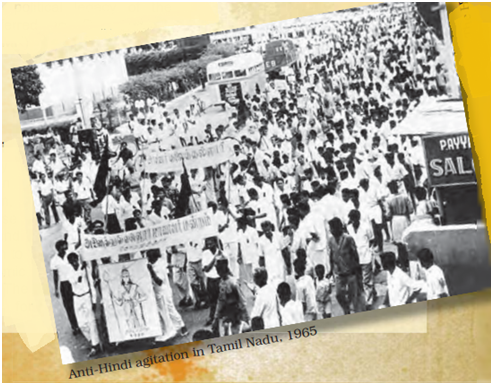
- 1965The successful anti-Hindi agitation increased the DMK’s popularity.
- 1967The DMK came to power in the Tamil Nadu Assembly elections.
- After C. Annadurai’s deathThe DMK split; the DMK and AIADMK both claimed the Dravidian legacy.
- 1990sOther regional parties emerged, including MDMK, PMK and DMDK.
- Since 1996One of the two major Dravidian parties has been part of the ruling coalition at the Centre.
Language, Parties and National Politics
- Anti-Hindi agitation: The DMK opposed making Hindi the country’s official language; the agitation’s success in 1965 strengthened its popularity.
- Party dominance: Since the DMK entered power in 1967, Dravidian parties have dominated Tamil Nadu politics.
- Party split: After C. Annadurai’s death, the DMK split into the DMK and All India Anna DMK (AIADMK); both continued to claim the movement’s legacy.
- Continuing regional pride: MDMK, PMK and DMDK also kept regional pride central to Tamil Nadu politics.
- Nationalism: Though once viewed as a threat to Indian nationalism, Tamil Nadu’s regional politics illustrates that regionalism and nationalism can coexist.
- Kashmiriyat
- A shared regional identity in which people saw themselves first as Kashmiris.
- Instrument of Accession
- The document signed by Maharaja Hari Singh to accede Jammu and Kashmir to India in 1947.
- Plebiscite
- A vote proposed by the UN resolution to be conducted freely and impartially after the earlier steps.
- Article 370
- The constitutional provision under which Jammu and Kashmir was granted provisional autonomy.
- Dravidar Kazhagam
- The organisation formed under Periyar that opposed Brahmin dominance and asserted regional pride.
- DMK
- The party that inherited the DK’s political legacy and led major Dravidian agitations.
What were the three steps proposed by the UN resolution of 21 April 1948?
How did the Dravidian movement pursue its aims?
Quick recap
- Jammu and Kashmir comprised Jammu, Kashmir and Ladakh, with distinct terrain and population patterns.
- Kashmiriyat expressed a shared Kashmiri regional identity; the National Conference opposed both princely rule and accession to Pakistan.
- The 1947 accession followed tribal infiltration; the 1948 UN resolution proposed withdrawal, force reduction and a plebiscite, but made no progress.
- Article 370 provided provisional autonomy, while Sheikh Abdullah led the National Conference and later became Chief Minister.
- The Dravidian movement was among India’s first regional movements and asserted regional pride through democratic politics.
- The DMK’s anti-Hindi agitation and electoral success strengthened Dravidian parties and showed regionalism could coexist with nationalism.
External and internal disputes , Politics since 1948, Insurgency and After, 2002 and Beyond
External and Internal Disputes
External dispute — The dispute between India and Pakistan over the status and territory of Jammu and Kashmir.
India–Pakistan dispute
- Pakistan’s claim: Pakistan has claimed that the Kashmir Valley should be part of Pakistan.
- 1947 invasion: Pakistan sponsored a tribal invasion; part of the State came under Pakistani control.
- POJK: India regards the territory under Pakistani control as Indian territory under illegal occupation, called Pakistan-occupied Jammu and Kashmir (POJK).
- Continuing conflict: Kashmir has remained a major point of conflict between India and Pakistan since 1947.
| Viewpoint | Main concern | Demand |
|---|---|---|
| Some people outside Jammu and Kashmir | Article 370’s special status was seen as preventing full integration with India. | Revoke Article 370 and treat the State like any other Indian state. |
| Many Kashmiris | Autonomy was considered insufficient; promises and democratic rights were seen as unmet. | Plebiscite, restoration of autonomy or ‘Greater State Autonomy’, and stronger democratic institutions. |
Grievances expressed by many Kashmiris
- Plebiscite: The promise to refer accession to the people after conditions created by the tribal invasion were normalised was not fulfilled.
- Autonomy: Many felt that Article 370’s guaranteed federal status had been eroded in practice, leading to demands for its restoration.
- Democracy: Many felt that democratic processes had not been established in Jammu and Kashmir in the same way as in the rest of India.
Politics Since 1948
Political developments and their effects
- Sheikh Abdullah: As Prime Minister, he introduced major land reforms and policies that benefited ordinary people.
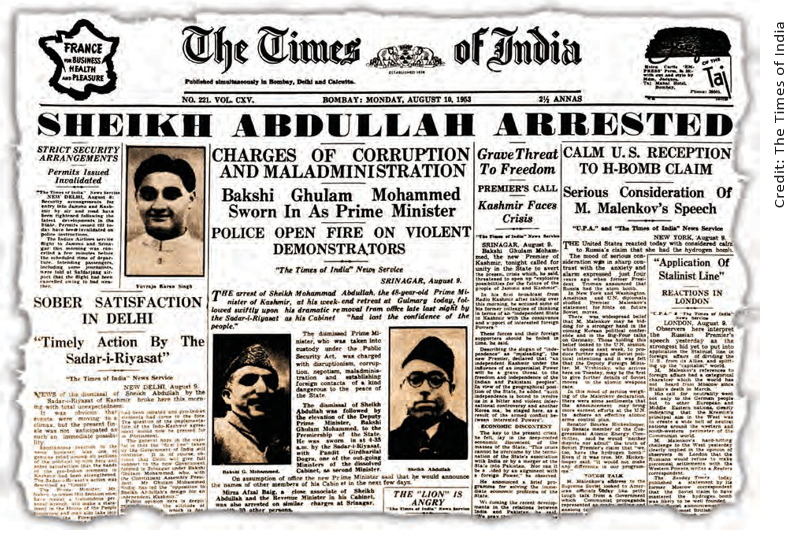
- Centre–State tension: Differences grew between Abdullah and the Central Government over Kashmir’s political status; he was dismissed in 1953 and detained for several years.
- Weak popular support: Successor governments relied heavily on Centre support, while allegations of election malpractice and rigging damaged confidence.
- Congress influence: From 1953 to 1974, Congress had strong influence; the National Conference without Sheikh Abdullah first remained in power with Congress support and later merged with it.
- 1965 change: The State’s Prime Minister was redesignated as Chief Minister; Ghulam Mohammed Sadiq of Congress became the first Chief Minister.
- 1974 agreement: Indira Gandhi and Sheikh Abdullah reached an agreement, after which Abdullah became Chief Minister and revived the National Conference.
- 1977 election: The National Conference won a majority under Sheikh Abdullah.
- After 1982: Sheikh Abdullah’s son Farooq Abdullah became Chief Minister; the Governor dismissed his government, and a breakaway National Conference faction briefly took power.
- Political resentment: Farooq Abdullah’s dismissal and the 1986 National Conference–Congress electoral alliance strengthened the view that the Centre was interfering in State politics.
Major political milestones
- 1953Sheikh Abdullah was dismissed and detained; the period of strong Congress influence in State politics followed.
- 1965The State’s Prime Minister was redesignated as Chief Minister; Ghulam Mohammed Sadiq became the first Chief Minister.
- 1974Indira Gandhi and Sheikh Abdullah reached an agreement; Abdullah returned as Chief Minister.
- 1977The revived National Conference won a majority in the Assembly election.
- 1982Sheikh Abdullah died; Farooq Abdullah succeeded him as Chief Minister.
- 1986The National Conference agreed to an electoral alliance with Congress.
Insurgency and After
Factors leading to the political crisis and insurgency
- Alleged inefficiency in administration and popular resentment had been growing since the early 1980s.
- The widely disputed 1987 election was believed by many not to reflect popular choice; rigging was alleged.
- Many felt democratic processes were being undermined by the State at the Centre’s behest.
- The crisis intensified, and by 1989 a militant movement for a separate Kashmiri nation had emerged.
- Insurgents received moral, material and military support from Pakistan; violence and army action marked the years that followed.
Conflict, elections and political change
- From 1990: Jammu and Kashmir experienced extraordinary violence by insurgents and through army action; the State remained under President’s rule for a number of years and was effectively controlled by the armed forces.
- 1996 election: The National Conference, led by Farooq Abdullah, returned to power and demanded regional autonomy.
- 2002 election: The National Conference failed to win a majority; a coalition of the PDP and Congress replaced it.
Insurgency-era milestones
- 1987The National Conference–Congress alliance won the Assembly election, but many alleged that the election was rigged.
- 1989A militant movement mobilised around the cause of a separate Kashmiri nation.
- From 1990Extraordinary violence affected the State, amid insurgent activity and army action.
- 1996Assembly elections were held; the National Conference led by Farooq Abdullah formed the government.
- 2002The PDP–Congress coalition replaced the National Conference after it failed to win a majority.
2002 and Beyond
Governments and constitutional changes
- 2002Under the coalition agreement, Mufti Mohammed headed the PDP–Congress government for its first three years.
- July 2008President’s rule was imposed after Ghulam Nabi Azad of Congress, who had succeeded Mufti Mohammed, could not complete the term.
- November–December 2008State elections were held.
- 2009An NC–Congress coalition government headed by Omar Abdullah came to power.
- 2014The election recorded the highest voter turnout in 25 years; a PDP–BJP coalition led by Mufti Mohammed Sayeed formed the government.
- April 2016After Mufti Mohammed Sayeed’s death, his daughter Mahbooba Mufti became the State’s first woman Chief Minister.
- June 2018President’s rule was imposed after the BJP withdrew support from the Mufti government.
- 5 August 2019Article 370 was abolished through the Jammu and Kashmir Reorganisation Act 2019; the State was reorganised into the Union Territories of Jammu and Kashmir and Ladakh.
People and pluralism
- Continuing tensions: The State witnessed disturbances led by the Hurriyat Conference; Mahbooba Mufti’s tenure also saw major terrorist acts and mounting external and internal tensions.
- Plural society: Jammu and Kashmir and Ladakh have religious, cultural, linguistic, ethnic and tribal diversity.
- Diverse aspirations: The region’s people have differing political and developmental aspirations; the latest Act sought to address these aspirations.
- Democratic principle: Understanding the region’s future requires taking account of what its people want.
- Article 370
- The constitutional provision associated with Jammu and Kashmir’s special federal status and autonomy.
- Plebiscite
- A vote by the people to decide a political question; demanded by some Kashmiris over accession.
- Insurgency
- An armed militant movement challenging the authority of the State.
- President’s rule
- A period when the State government is placed under President’s rule.
- Regional autonomy
- A demand for greater self-government for Jammu and Kashmir within the Indian Union.
What were the main internal disputes over Jammu and Kashmir’s status?
How did the 1987 election contribute to the rise of insurgency?
Quick recap
- The India–Pakistan dispute over Jammu and Kashmir dates from the 1947 tribal invasion and resulting territorial control.
- Internal disagreements centred on Article 370, autonomy, integration, the unfulfilled plebiscite promise and democratic representation.
- Dismissals, alleged electoral malpractice and Centre–State tensions weakened trust in democratic politics.
- The disputed 1987 election and earlier grievances contributed to the insurgency that emerged by 1989.
- Elections returned in 1996; coalition governments followed the 2002, 2008 and 2014 elections.
- In 2019, Article 370 was abolished and Jammu and Kashmir was reorganised into the Union Territories of Jammu and Kashmir and Ladakh.
- The region is plural and has diverse political and developmental aspirations; the latest Act sought to address them, while democratic decision-making must consider people’s views.
Punjab
Punjab’s Reorganisation
- Partition and reorganisation: Punjab’s social composition changed after Partition and the later creation of Haryana and Himachal Pradesh.
- Punjabi suba: The Akali Dal led the demand for a Punjabi-speaking State, which was created in 1966.
Political Context and the Anandpur Sahib Resolution
- Akali politics: Akali governments formed after reorganisation faced political constraints and limited support across communities.
- Anandpur Sahib Resolution: Adopted in 1973, it called for regional autonomy and a redefinition of Centre–State relations, advocating stronger federalism.
Cycle of Violence
Road to Peace
What were the main provisions of the 1985 Punjab Accord?
Quick recap
- The Akali Dal led the demand for a Punjabi-speaking State, created in 1966.
- Akali coalition governments came to power in 1967 and 1977 but were dismissed by the Centre before completing their terms.
- The 1973 Anandpur Sahib Resolution sought regional autonomy, stronger federalism, and Sikh *bolbala*.
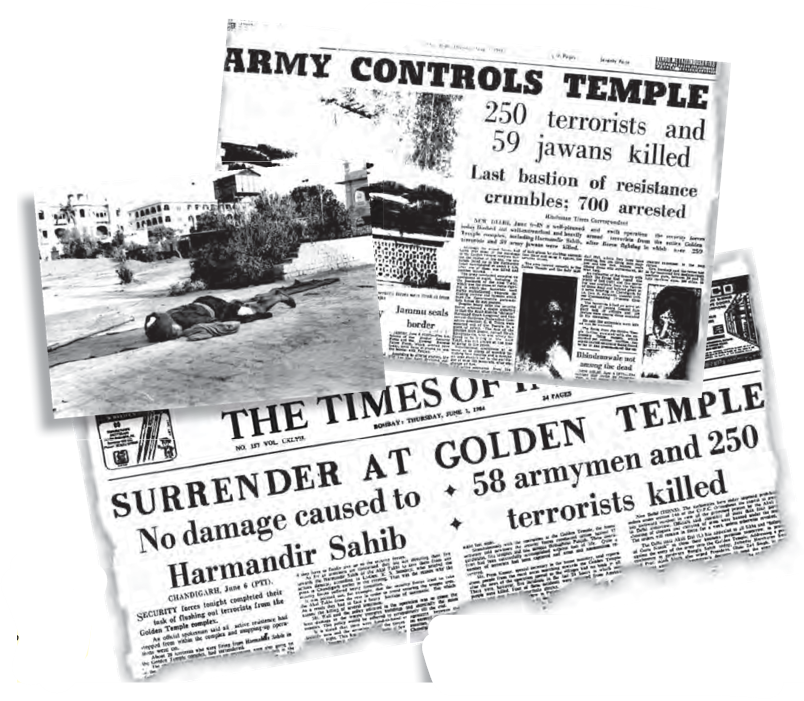
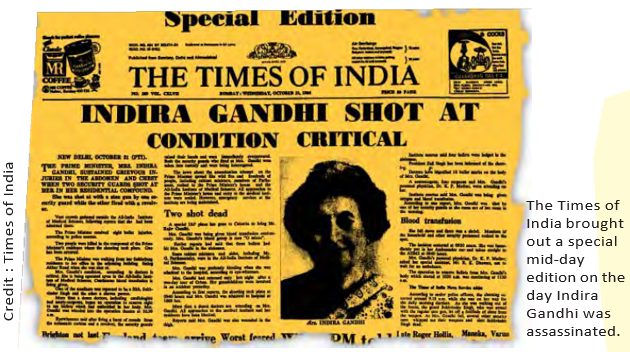
- Operation Blue Star and the anti-Sikh violence that followed Indira Gandhi’s assassination deepened the Punjab crisis.
- The 1985 Punjab Accord proposed steps on Chandigarh, borders, water sharing, and support for people affected by militancy.
- Peace returned by the mid-1990s; the Akali Dal (Badal)–BJP alliance won in 1997, and politics gradually moved back along secular lines.
The North-East
The Region and Its Political Setting
Regional setting
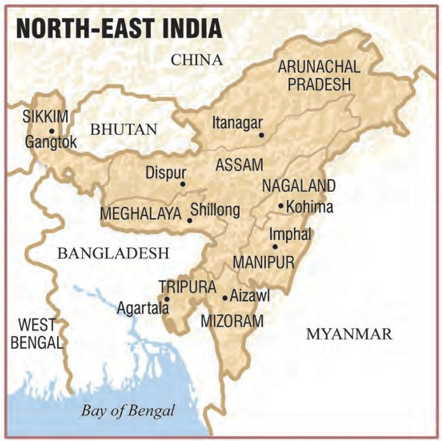
- Eight states: Arunachal Pradesh, Assam, Nagaland, Manipur, Tripura, Mizoram, Meghalaya and Sikkim.
- Seven Sisters: The first seven states are often called the Seven Sisters; Sikkim is called their Brother.
- Population and area: The region has about 4% of India’s population and roughly twice that share of its area.
- Location: A corridor about 22 km wide connects it to the rest of India; it also borders China, Myanmar and Bangladesh.
- Importance: Its location makes the North-East a gateway to South-East Asia.
Changes since Independence
- At Independence: Most of the region, except Manipur and Tripura, formed part of Assam.
- Former princely states: Tripura, Manipur and the Khasi Hills of Meghalaya merged with India after Independence.
- Partition: The 1947 Partition left the North-East landlocked, disrupting its economy and links with the rest of India.
- Long-term pressures: Isolation, developmental neglect and migration from neighbouring regions and countries shaped local politics.
State reorganisation
- 1963Nagaland was created as a state.
- 1972Manipur, Tripura and Meghalaya became states; the main phase of North-East reorganisation was completed.
- 1987Mizoram and Arunachal Pradesh became separate states.
Major political issues
- Autonomy: Demands for self-government or separate statehood within India.
- Secession: Movements seeking independence from India.
- Outsiders: Opposition to migrants viewed as competitors for land, jobs and political power.
- Underlying factors: Social diversity, weak communication, international borders and uneven development intensified regional demands.
Demands for Autonomy
From language concerns to new states
- Non-Assamese communities felt that the Assam government was imposing Assamese language.
- Protests spread, and tribal leaders sought separation from Assam.
- The Eastern India Tribal Union later became the broader All Party Hill Leaders Conference in 1960.
- The leaders demanded a tribal state; instead, the Central Government created several states from Assam over time.
Autonomy within Assam
- Continuing demands: Bodos, Karbis and Dimasas sought separate states even after the wider reorganisation.
- Competing claims: Different communities sometimes claimed the same area, making the creation of ever-smaller states impractical.
- Alternative arrangements: Karbis and Dimasas received autonomy through District Councils; Bodos were granted an Autonomous Council.
| Point | Autonomy | Secession |
|---|---|---|
| Aim | Self-government or separate statehood within India. | A separate country outside India. |
| Response | Can be accommodated through constitutional provisions and federal arrangements. | Much harder to resolve when sought consistently as a principled demand. |
Secessionist Movements
Secession — A demand to separate from a country and form an independent political unit.
Mizoram: From Insurgency to Peace
Growth of the Mizo movement
- After Independence, Mizo Hills became an autonomous district within Assam.
- Some Mizos argued they had never belonged to British India and therefore should not be part of the Indian Union.
- The Assam government’s inadequate response to the 1959 famine deepened anger and popular support for secession.
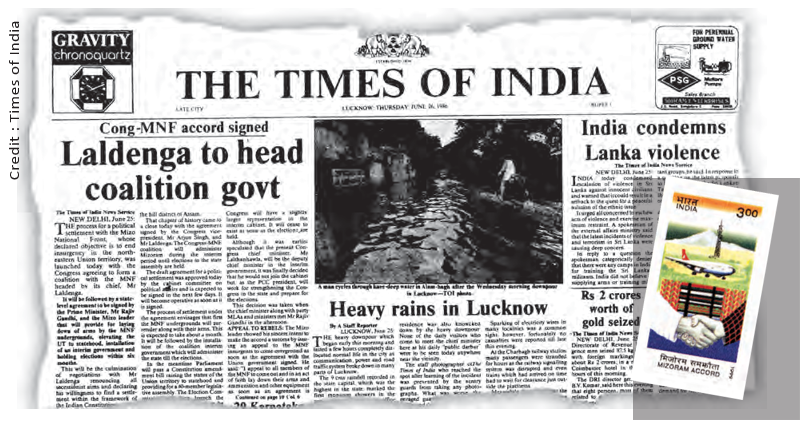
- Laldenga led the Mizo National Front (MNF), which began an armed campaign for independence in 1966.
Conflict and its consequences
- Insurgency: The MNF fought a guerrilla war, received support from Pakistan and found shelter in then East Pakistan.
- Government response: Repressive measures, including the use of the Air Force, harmed civilians and increased alienation.
- Outcome: After about two decades of conflict, both sides had suffered; negotiations eventually replaced armed struggle.
Mizoram peace process
- 1986Rajiv Gandhi and Laldenga signed a peace accord; the ceasefire was to take effect on 31 July.
Terms and significance of the Mizoram Accord
- Settlement: Mizoram received full statehood with special powers, and the MNF agreed to end its secessionist struggle.
- Political transition: Laldenga returned from exile and became Chief Minister.
- Significance: The accord was a turning point; Mizoram later became one of the region’s most peaceful places and made progress in literacy and development.
Nagaland: An Unresolved Conflict
Naga movement
- 1951A section of Nagas, led by Angami Zapu Phizo, declared independence from India.
Naga movement and its outcome
- Armed struggle: The Naga National Council launched an insurgency for Naga sovereignty; Phizo rejected several offers of negotiated settlement.
- Partial agreement: One section of Nagas signed an agreement with the Government of India, but other rebels rejected it.
- Unresolved issue: Unlike the Mizoram settlement, the Naga conflict still awaited a final resolution.
| Point | Mizoram | Nagaland |
|---|---|---|
| Movement | MNF insurgency under Laldenga, intensified after the 1959 famine. | Naga National Council struggle associated with Angami Zapu Phizo; a section declared independence in 1951. |
| Outcome | The 1986 accord granted statehood and ended the MNF’s secessionist struggle. | An agreement with one section did not resolve the wider conflict. |
Movements Against Outsiders
Outsider — A migrant, from within India or abroad, viewed by local communities as competing for scarce resources, jobs or political influence.
Why migration became a political issue
- Large-scale migration increased tensions between local communities and newcomers.
- Locals feared losing land, job opportunities and political influence.
- In Assam, fears of illegal immigration combined with poverty, unemployment and a belief that local resources brought inadequate benefit to residents.
- These concerns led to political movements that were sometimes violent.
The Assam Movement and Accord
Causes and demands
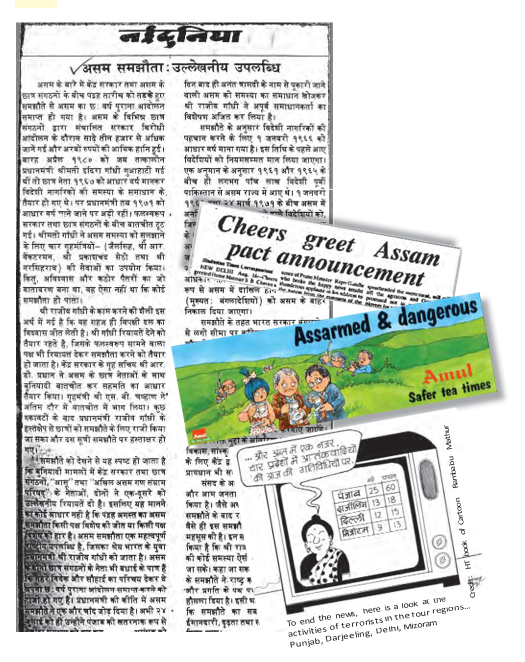
- Main fear: Assamese people suspected large-scale illegal migration from Bangladesh, especially of Bengali Muslims, and feared becoming a minority.
- Other concerns: Protesters opposed the domination of Bengalis and other outsiders and objected to alleged inclusion of immigrants in faulty voters’ registers.
- Economic grievance: Despite oil, tea and coal, Assam faced poverty and unemployment; people felt its resources were drained without adequate local benefit.
- AASU: The non-party All Assam Students’ Union led the movement and drew support from across Assamese society.
- Demand: The movement called for all outsiders who had entered Assam after 1951 to be sent back.
Assam Movement
- 1979–1985The Assam Movement against illegal migration and outsider domination took place.
- 1985The Rajiv Gandhi-led government and AASU leaders signed the Assam Accord after negotiations.
Methods, agreement and political outcome
- Methods: The movement mobilised people across Assam and attempted to block trains and oil supplies going to refineries in Bihar.
- Human cost: The agitation included tragic and violent incidents, with loss of life and property.
- Assam Accord: Foreigners who migrated into Assam during and after the Bangladesh War were to be identified and deported.
- New party: AASU and the Asom Gana Sangram Parishad formed the Asom Gana Parishad (AGP), which came to power in 1985 promising to resolve the foreign-national issue and build a “Golden Assam”.
- Continuing issue: The accord brought peace but did not end immigration concerns. In Tripura, original inhabitants became a minority; locals in Mizoram and Arunachal Pradesh were hostile to Chakma refugees.

Sikkim’s Merger with India
Protectorate — A political arrangement in which Sikkim was neither part of India nor fully sovereign: India managed defence and foreign relations, while the Chogyal handled internal administration.
Background to integration
- Democratic demands: The Chogyal struggled to respond to the people’s aspirations for democracy.
- Social structure: Most residents were Nepali, while the Chogyal was seen as preserving the power of a small Lepcha-Bhutia elite.
- India’s role: Anti-Chogyal leaders from both communities sought and received support from the Government of India.
- Kazi Lhendup Dorji Khangsarpa: A democracy movement leader, he founded the Sikkim Praja Mandal, later led the Sikkim State Congress, and founded the Sikkim National Congress in 1962; after an electoral victory, he led the movement for integration with India.
Sikkim’s integration
- 1962Kazi Lhendup Dorji founded the Sikkim National Congress.
- 1974Sikkim’s first democratic assembly election was won by the Sikkim Congress, which supported closer integration with India.
- April 1975The assembly sought full integration; a referendum supported the request, and Parliament accepted it.
Outcome and debate
- Outcome: Sikkim became the 22nd state of the Indian Union; after integration, the Sikkim Congress merged with the Indian National Congress.
- Opposition: The Chogyal rejected the merger, and his supporters alleged foul play and use of force by India.
- Public response: Despite the controversy, the merger had popular support and did not become a divisive issue in Sikkim’s politics.
- Autonomy
- Self-government or control over specified local affairs within a larger political unit.
- Secession
- Withdrawal from a country to form an independent state.
- Insurgency
- An organised armed rebellion against government authority.
- Protectorate
- A territory under another country’s protection, with limited sovereignty.
How did the Mizoram Accord bring the secessionist movement to an end?
What were the main demands of the Assam Movement, and what was its outcome?
How did Sikkim become a state of India?
Quick recap
- The North-East’s isolation, social diversity, migration and uneven development shaped its regional politics.
- The three major political issues were autonomy, secession and opposition to outsiders.
- Autonomy demands could be accommodated through constitutional and federal arrangements; secession demanded a separate country and was harder to resolve.
- The 1986 Mizoram Accord ended the MNF’s secessionist struggle, while Nagaland’s conflict remained unresolved.
- The Assam Movement opposed illegal migration and outsider domination; the 1985 Accord brought peace but did not end immigration concerns.
- Sikkim became India’s 22nd state in 1975 after an assembly resolution and referendum, with Kazi Lhendup Dorji leading the integration movement.
Accommodation and National Integration
Lessons for National Integration
Regional aspirations — Demands by people or regions for recognition, development, statehood, autonomy or separation.
Regional aspirations are part of democracy
- Normal feature: Regional demands are not abnormal; they are a regular part of democratic politics.
- Examples abroad: Regional aspirations are expressed in Scotland, Wales and Northern Ireland; Spain faces a Basque secessionist movement, and Sri Lanka has faced one among Tamils.
- India: A large, diverse democracy must address regional aspirations continuously; nation-building is an ongoing process.
Democratic negotiation is better than suppression
- Approach: Treat regional conflicts as political issues to be negotiated, not merely as law-and-order problems.
- 1980s: Militancy in Punjab, problems in the North-East, agitation in Assam and unrest in Kashmir tested democratic accommodation.
- Outcome: Negotiated settlements helped reconcile regional movements with the political system and reduce tensions.
- Example: Mizoram showed that a political settlement can effectively resolve separatism.
Power-sharing prevents alienation
- State level: Regional groups and parties need a meaningful share in power within their state.
- National level: Regions must also participate in decisions that shape the country as a whole.
- Risk: Autonomy on paper is not enough; exclusion from national decision-making can create feelings of injustice and alienation.
Regional economic imbalance
- Uneven development between states or regions
- Backward regions feel neglected and may see government policies as responsible
- Perceptions of regional discrimination and demands for priority support grow
- Persistent differences contribute to inter-regional migration
Flexible federalism accommodates diversity
- Federal arrangement: India’s federal system is flexible; most states have equal powers, while Jammu and Kashmir and some North-Eastern states have had special constitutional provisions.
- Article 370: It contained special provisions for Jammu and Kashmir and was abrogated in August 2019.
- Sixth Schedule: It allows different tribes autonomy to preserve their practices and customary laws.
- Significance: Flexible, accommodative constitutional arrangements have helped address complex political problems, particularly in the North-East.
- Regionalism can be accommodated within democracy; it does not automatically mean separatism.
- Negotiation, power-sharing, balanced development and flexible federalism strengthen national integration.
Constitutional provision
- August 2019Article 370, which contained special provisions for Jammu and Kashmir, was abrogated.
Goa’s Liberation and Statehood
Liberation from Portuguese rule
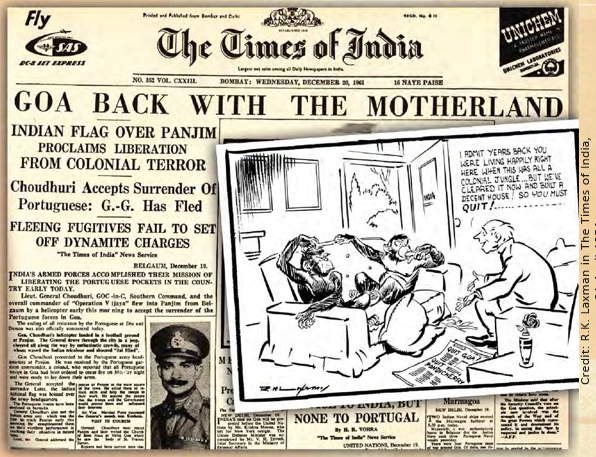
- Colonial rule: Portugal retained Goa, Diu and Daman after British rule in India ended in 1947; Portuguese rule there dated from the sixteenth century.
- Conditions: The Portuguese suppressed people, denied civil rights and carried out forced religious conversions.
- Freedom movement: India patiently tried to persuade Portugal to withdraw. A popular Goan movement was strengthened by socialist satyagrahis from Maharashtra.
- Liberation: In December 1961, Indian forces liberated the territories after about two days of action; they became a Union Territory.
| Position | Maharashtrawadi Gomantak Party (MGP) | United Goan Party (UGP) |
|---|---|---|
| Preference | Merge Goa with Maharashtra, viewing it as a Marathi-speaking area | Keep Goa separate to protect its distinct identity and culture, particularly Konkani |
| Public decision | The majority rejected merger in the 1967 opinion poll | The majority chose to remain outside Maharashtra |
Key dates in Goa’s status
- 1947British rule in India ended, but Portugal retained Goa, Diu and Daman.
- December 1961Indian forces liberated Goa, Diu and Daman; the territories became a Union Territory.
- January 1967A referendum-like opinion poll asked Goans whether to merge with Maharashtra or remain separate; the majority chose to remain separate.
- 1987Goa became a state of the Indian Union.
Why are democratic negotiations preferred to suppressing regional movements?
How can power-sharing help national integration?
How was Goa’s status decided after liberation?
Quick recap
- Regional aspirations are a normal part of democracy and ongoing nation-building.
- Regional demands appear in many countries; India must address them through democratic accommodation.
- Negotiated political settlements, power-sharing and balanced development help reduce alienation.
- India’s flexible federalism includes special constitutional provisions for Jammu and Kashmir and some North-Eastern states; the Sixth Schedule protects tribal practices and customary laws.
- Goa was liberated in 1961, voted to remain separate from Maharashtra in 1967, and became a state in 1987.
Political Science — ALL CHAPTERS
1
THE END OF BIPOLARITY
2
CONTEMPORARY CENTRES OF POWER
3
CONTEMPORARY SOUTH ASIA
4
INTERNATIONAL ORGANISATIONS
5
SECURITY IN THE CONTEMPORARY WORLD
6
ENVIRONMENT AND NATURAL RESOURCES
7
GLOBALISATION
1
Challenges of Nation Building
2
Era of one-party dominance
3
Politics Of Planned Development
4
India’s external relations
5
Challenges to and Restoration of the Congress System
6
The Crisis of Democratic Order
7
Regional Aspirations
8
Recent Developments in Indian Politics