Class 12 Humanities . Sociology . Social Change And Development In India . Change and Development in Rural Society
Chapter 4: Change and Development in Rural Society
Ch 4
Sociology
Class 12 Humanities
Introduction
Rural India and Agriculture
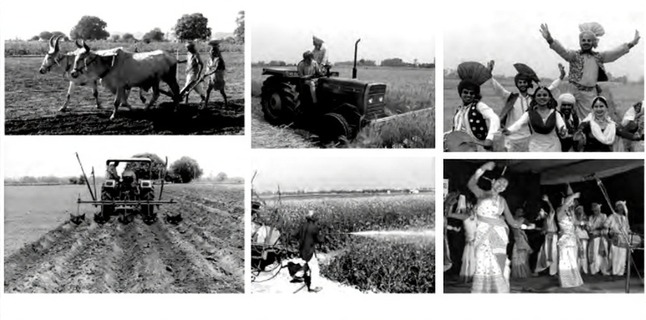
Agriculture, Culture and Rural Livelihoods
| Type | Examples | Change or role |
|---|---|---|
| Agricultural | Farming and related work | A major source of livelihood for rural people. |
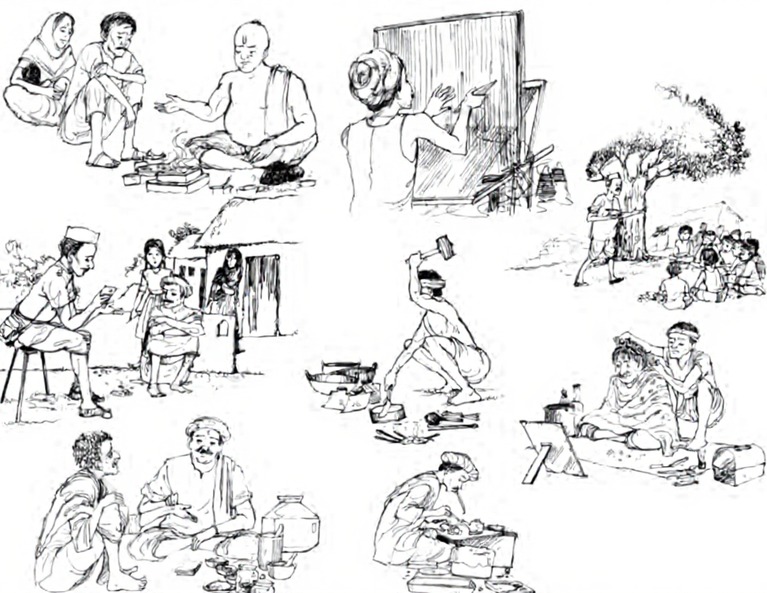
| Traditional crafts and services | Potters, carpenters, weavers, ironsmiths, goldsmiths, storytellers, astrologers, priests, water-distributors and oil-pressers | Many were part of the village economy; some traditional occupations have declined. |
| Rural non-farm | Government services such as postal and education work, factory work and the army | Provides livelihoods not based directly on agriculture. |
Occupations and Social Change
- Village economy: Rural communities included artisans and specialists who provided goods and services.
- Caste and work: Occupational diversity was reflected in caste structures, including specialist and service castes such as cleaners, potters and goldsmiths.
- Decline of crafts: Artisan numbers have fallen since the colonial period, as manufactured goods replaced many handmade products.
- Changing livelihoods: Greater links between rural and urban economies have expanded the range of rural non-farm occupations.
- Agrarian
- Related to agriculture and the social and cultural life shaped by it.
- Productive resource
- A resource used to produce goods or support livelihoods; agricultural land is a major example.
- Rural non-farm activity
- Work in rural areas that does not depend directly on farming.
- Service caste
- A caste traditionally associated with providing a particular service or occupation.
Quick recap
- The 2011 Census recorded 69 per cent of India’s population as rural.
- Land is both a productive resource and an important form of property.
- Agriculture shapes rural culture and social structure as well as livelihoods.
- Regional farming practices are reflected in regional cultures and harvest festivals.
- Rural livelihoods include farming, traditional crafts, services and non-farm work.
- Manufactured goods contributed to the decline of many traditional artisan occupations, while rural–urban links expanded non-farm work.
Agrarian Structure: Caste and Class in Rural India
Land Distribution and Rural Class Structure
Agrarian structure — The distribution of landholdings and access to land in rural society.
Land, livelihoods and inequality
- Land is rural society’s most important productive resource, but holdings are distributed very unequally; access to land strongly shapes class position.
- Ownership varies by region: some areas have many households with tiny plots, while elsewhere 40–50% of families own no land.
- Landless households depend on agricultural labour or other work; a small number of families are well-off while most live near or below the poverty line.
- Women are legally entitled to an equal share of family property, but patrilineal inheritance and social practice limit their rights. In practice, access to land is often only as part of a household headed by a man.
| Group | Role and income | Key condition |
|---|---|---|
| Medium and large landowners | Cultivate land and may earn sufficient or high incomes. | Earnings can vary with crop prices, the monsoon and other factors. |
| Agricultural labourers | Work for wages, often below the statutory minimum; incomes are low. | Employment is insecure, usually paid by the day, and workers may have no work for many days of the year. |
| Tenants | Cultivate land leased from landowners and earn less than owner-cultivators. | Rent may take 50–75% of crop income. |
Underemployment — A situation in which workers do not get work for many days of the year, despite needing employment.
Tenant — A cultivator who leases land from a landowner and pays rent, often from the crop income.
Caste and Class in Rural Society
How caste and class are linked
- Class in agrarian society is shaped largely by access to land and by a person’s role in agricultural production.
- Caste and class often correspond: upper and middle castes have generally had better access to land, resources and power than lower castes.
- The relationship is not exact: Brahmins, despite their high caste rank, are not major landowners in many regions and may fall outside the agrarian structure.
- Landowning groups in a region often belong to one or two influential castes that are also numerically significant.
Dominant caste — A regionally powerful caste group, usually important in landownership and influential economically and politically in local society.
Dominant caste examples
- M. N. Srinivas used the term “dominant caste” for such powerful regional groups.
- Examples: Jats and Rajputs in Uttar Pradesh; Vokkaligas and Lingayats in Karnataka; Kammas and Reddis in Andhra Pradesh; Jat Sikhs in Punjab.
Productivity, land structure and labour
- Assured irrigation or plentiful rainfall supports high agricultural productivity; for example, rice-growing river deltas such as the Kaveri basin in Tamil Nadu.
- Intensive cultivation in these areas requires more labour.
- Highly unequal agrarian structures can develop, with many landless labourers.
- Landless workers may be bonded and often belong to the lowest castes.
Caste, ownership and labour relations
- Regional pattern: dominant landowners are usually middle- or high-ranking castes, while marginal farmers and landless workers often belong to SC, ST or OBC groups.
- Historical exclusion: in many regions, Dalit castes, formerly treated as “Untouchable”, were denied landownership and supplied much of the labour for dominant landowners.
- Proprietary caste groups own a large share of local resources and can command labour to cultivate their land.
- Intensive cultivation: landowners’ access to a dependable labour force could help them cultivate more intensively and gain higher returns.
Begar — Forced or unpaid labour that low-ranked caste members had to provide to a landlord for a fixed number of days.
Labour dependence and inequality
- Hereditary labour ties: many working poor were bound to landowners through relationships passed across generations.
- Begar and such labour practices have been legally abolished, but they continue in some areas.
- Social consequence: unequal access to land and resources has reinforced caste-based power, privilege and dependence.
- Agrarian structure
- The distribution of landholdings and access to land in rural society.
- Dominant caste
- A locally powerful caste group with economic and political influence.
- Underemployment
- Not receiving work for many days despite needing employment.
- Begar
- Forced or unpaid labour historically demanded by landlords.
How does land access shape rural class structure?
What is a dominant caste? Give examples.
Explain the relationship between caste and class in rural India.
Quick recap
- Land is rural society’s key productive resource, but access to it is highly unequal.
- Landownership shapes class position, work, income and employment security.
- Caste and class often overlap, although the relationship is not uniform across regions.
- Dominant castes combine local economic and political power, often through landownership.
- Lower-caste groups have often been concentrated among marginal farmers and landless labourers.
- Begar and hereditary labour ties show how land control could reinforce caste-based dependence.
The Impact of Land Reforms
Agrarian Structure in the Colonial Period
- Zamindar
- A landlord with land rights and local political power, often serving as an intermediary between cultivators and the state.
- Raiyat
- A cultivator; the term is identified in the text as Telugu.
- Tenant
- A person who cultivates land belonging to someone else, usually under a tenancy arrangement.
- Land ceiling
- The legal upper limit on the amount of land a household may own.
- Benami transfer
- A transfer or arrangement made to conceal ownership and evade legal restrictions.
Land Reforms After Independence
- Purpose: After Independence, planned development treated agrarian reform as essential to raise agricultural productivity and reduce rural poverty.
- Programme: From the 1950s to the 1970s, national and state laws sought to change landholding patterns and strengthen cultivators’ position.
Major Land Reform Laws
- Zamindari abolition: Removed intermediaries between cultivators and the state, weakening zamindars’ economic and political power.
- Tenancy laws: Sought to abolish tenancy or regulate rents and protect tenants; implementation was generally limited, though Kerala and West Bengal carried out major changes.
Land Ceiling Acts and Their Limits
Why Land Reforms Matter
- Highly unequal land ownership → many rural households remain land-poor or landless.
- Unequal access to land → constraints on agricultural productivity and continued rural poverty.
- Effective land reform → fairer land distribution and improved opportunities for cultivators.
- Fairer agrarian relations → potential gains in agricultural growth, poverty reduction and social justice.
Why was zamindari abolition considered an important land reform?
What were Land Ceiling Acts intended to do, and why were they often ineffective?
How did tenancy reforms differ in most states and in West Bengal and Kerala?
Quick recap
- Colonial zamindari policies strengthened landlords and contributed to heavy extraction from cultivators.
- Raiyatwari settlement dealt directly with cultivators or landlords and was associated with relatively greater productivity and prosperity.
- Land reforms after independence aimed to improve land distribution and address poor agricultural conditions and rural poverty.
- Zamindari abolition was generally the most effective reform; tenancy reforms had mixed results.
- Land Ceiling Acts aimed to redistribute surplus land but were often weakened by loopholes and evasion.
- Despite major historical changes, India’s agrarian structure remains highly unequal, making reform important for growth, poverty reduction and social justice.
The Green Revolution and its Social Consequences
The Green Revolution: Programme and Reach
- Programme: The Green Revolution was a government-led agricultural modernisation programme, largely funded by international agencies, using high-yielding or hybrid seeds with fertilisers, pesticides and other inputs.
- Reach and outcome: It was introduced where irrigation was assured, mainly in wheat- and rice-growing areas such as Punjab, western U.P., coastal Andhra Pradesh and parts of Tamil Nadu; productivity rose and India became self-sufficient in foodgrain production.
Who Benefited? Peasants, Farmers and Rural Inequality
- Peasants: Cultivate mainly for household needs and are unable to produce a surplus for the market.
- Farmers: Produce a surplus beyond family needs and are linked to the market; those with land, capital and access to inputs were better placed to benefit from new technology.
First Phase: Changes in Rural Society
- Unequal gains: In the first phase, well-to-do farmers who could afford the costly inputs increased production and profits, while many poorer cultivators gained less.
- Rural changes: Some landowners took land back from tenants for direct cultivation, and farm machinery displaced service-caste workers; demand for agricultural labour and wages also rose in many areas.
Second Phase: Market Dependence and Regional Inequality
- Expansion: From the 1980s, Green Revolution practices spread to dry and semi-arid regions, bringing shifts towards irrigation and commercial crops.
- Risks and disparities: Dependence on markets and single-crop farming made livelihoods vulnerable to price falls and crop failure, while regions outside the main centres of agricultural change often lagged behind.
Traditional Knowledge, Seeds and Farming Methods
Phases of the Green Revolution
- 1960s–1970sFirst phase: new technology spread mainly to irrigated wheat- and rice-growing areas; output rose, alongside social differentiation.
- 1980s onwardSecond phase: practices spread into dry and semi-arid regions, increasing commercial cultivation and market dependence.
- HYV seeds
- High-yielding variety seeds used with modern agricultural inputs to increase output.
- Commercialisation of agriculture
- Growing and selling produce for the market rather than producing mainly for household needs.
- Rural-to-urban migration
- Movement from rural areas to towns and cities, which displacement of traditional agricultural work helped accelerate.
- Feudal agrarian structure
- A rural order in which landlords and landed castes retain power over lower castes, landless workers and small cultivators.
Why did medium and large farmers benefit more from the Green Revolution?
Explain two ways mechanisation affected rural society.
How can commercial mono-cropping increase farmers’ livelihood insecurity?
Quick recap
- The Green Revolution used HYV or hybrid seeds and modern inputs, mainly in irrigated wheat- and rice-growing regions.
- It sharply raised agricultural productivity and helped India become self-sufficient in foodgrains.
- Medium and large farmers were best placed to benefit because they could afford costly inputs and produce marketable surpluses.
- Tenant displacement, mechanisation and unequal gains contributed to rural differentiation and migration.
- The second phase expanded into dry regions, where commercial mono-cropping could increase market and livelihood risks.
- Uneven regional development, caste and class inequalities, and the loss of traditional seed knowledge were important concerns.
Transformations in Rural Society after Independence
Changing Agricultural Labour Relations
Changes, especially in Green Revolution regions
- More labour use: Intensive cultivation increased the demand for agricultural workers.
- Cash wages: Payment in grain increasingly shifted to payment in cash.
- Looser ties: Hereditary, bonded relationships between landowners and workers weakened.
- Free wage labour: A growing number of workers sold their labour for wages rather than being tied to a particular landowner.
Patronage to exploitation — Sociologist Jan Breman’s phrase for the changing relationship between dominant-caste landlords and usually low-caste agricultural workers, as traditional ties gave way to more exploitative wage relations.
Commercialisation of agriculture — The shift towards growing crops primarily for sale in the market.
Link to capitalist agriculture
- Some scholars’ view: Commercial farming and free wage labour indicate a transition towards capitalist agriculture.
- Key feature: Capitalist production separates workers from the means of production—in this case, land—and employs them as wage labourers.
- Market orientation: Farmers in more developed regions increasingly produced for and engaged with markets.
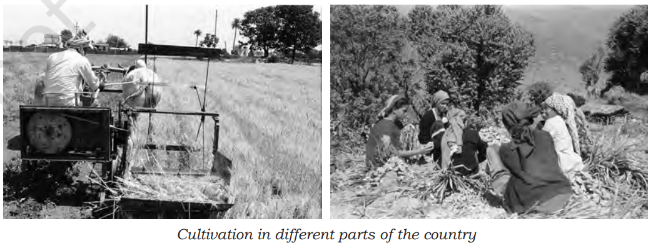
Rural Development and Economic Integration
Commercialisation and rural change
- Commercialised farming → greater integration with the wider economy.
- Wider economic links → more money flowing into villages.
- Increased money and demand → expanded business and employment opportunities.
- State-led rural development → changes in agriculture, agrarian structure and rural society.
Colonial roots and post-Independence acceleration
- Colonial beginnings: Rural economic change had already begun; in the nineteenth century, large areas of Maharashtra were devoted to cotton, linking farmers directly to world markets.
- After Independence: Change spread faster as the government promoted modern cultivation and broader rural modernisation.
- Infrastructure: The state invested in irrigation, roads and electricity.
- Agricultural support: The state provided agricultural inputs; credit was made available through banks and cooperatives.
- Electricity: Reliable power is important for regular agricultural growth; the Deen Dayal Upadhyaya Gram Jyoti Yojna, launched in 2014, aimed to support rural power supply.
Key periods and date
- 19th centuryCotton cultivation in parts of Maharashtra connected farmers to world markets.
- After IndependenceGovernment investment and modern farming accelerated rural transformation.
- Since the 1960sAgricultural development helped enrich medium and large farmers who adopted new technologies.
- 1974Jan Breman described changing landlord-worker relations as a shift from “patronage to exploitation.”
- 2014The Deen Dayal Upadhyaya Gram Jyoti Yojna was launched to support rural electricity supply.
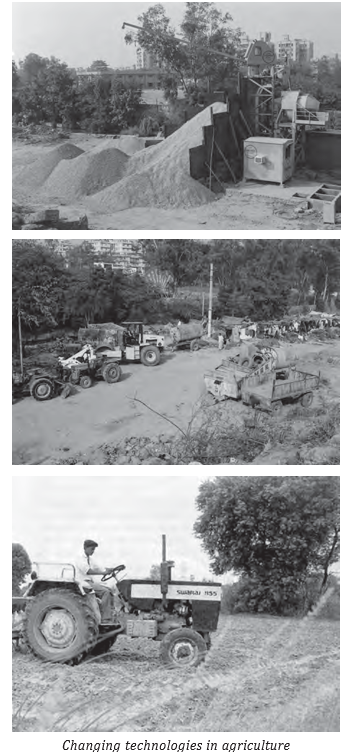
Changing Agrarian Structure and Regional Outcomes
From agricultural profits to new rural elites
- Medium and large farmers adopt new technologies and increase production.
- Profits are invested in businesses beyond agriculture.
- Entrepreneurial groups move from rural areas into growing towns and gain economic and political influence.
- The spread of higher education—especially private professional colleges in rural and semi-urban areas—helps rural elites’ children enter professional or white-collar work or start businesses.
- These changes contribute to the expansion of urban middle classes and create a dominant rural-urban class.
| Region | Pattern of change |
|---|---|
| Coastal Andhra Pradesh, western Uttar Pradesh and central Gujarat | Well-to-do farmers, mostly from dominant castes, invested agricultural profits in other businesses. New entrepreneurial groups and regional elites gained economic and political power. |
| Eastern Uttar Pradesh and Bihar | Limited land reform, political mobilisation and redistribution meant relatively little change in agrarian structure and many people’s living conditions. |
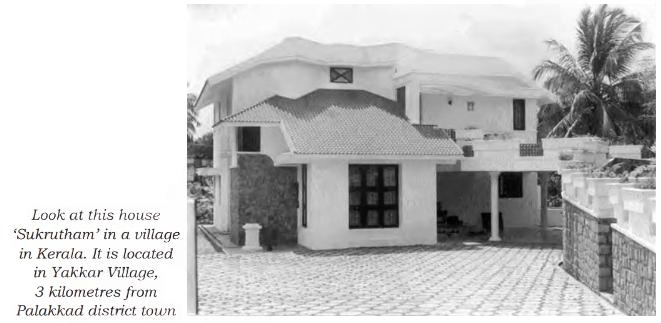
| Kerala | Political mobilisation, redistribution and links to the Gulf economy transformed rural life. The rural economy combines some agriculture with retail and services; many families rely on overseas remittances. |
- Bonded labour
- Labour tied to an employer through traditional or hereditary obligations.
- Free wage labour
- Labour hired for wages without a hereditary bond to a particular landowner.
- Agrarian structure
- The organisation of landholding and relationships among groups involved in agriculture.
- Remittances
- Money sent home by people working elsewhere, including abroad.
What changes in agricultural labour relations accompanied commercialisation?
How did agricultural development create new rural elites?
Why did rural transformation differ between eastern Uttar Pradesh and Bihar, and Kerala?
Quick recap
- Commercialisation expanded market links and changed agricultural labour relations.
- Cash wages and free wage labour increasingly replaced grain payments and hereditary ties.
- Post-Independence infrastructure, agricultural inputs and credit accelerated rural change.
- Agricultural profits helped some dominant-caste farmers become business and political elites.
- Private professional colleges in rural and semi-urban areas helped elite children move into professional and white-collar occupations.
- The scale and form of rural transformation varied sharply across regions; Kerala’s rural economy combines agriculture, services, retail and remittances.
Circulation of Labour
Growth of Migrant Agricultural Labour
Circulation of labour — The seasonal movement of workers between their home villages and places where work is available and wages are higher.
Why seasonal migration increased
- Commercialisation of agriculture and the breakdown of traditional patronage ties between landlords and labourers or tenants
- Seasonal labour demand grew in prosperous Green Revolution regions, especially Punjab.
- Rural inequality, increasing from the mid-1990s, pushed households to combine several occupations for survival.
- Livelihood strategy: men often migrate periodically for work and better wages; women, children and elderly grandparents may remain in the village.
| Origin | Destination and work |
|---|---|
| Drought-prone and less productive regions | Farms in Punjab and Haryana |
| Drought-prone and less productive regions | Brick kilns in Uttar Pradesh |
| Drought-prone and less productive regions | Construction sites in cities such as New Delhi and Bangalore |
Migrant Workers and Their Conditions
Footloose labour — Jan Breman’s term for migrant workers who move in search of work; it does not mean that they are free from exploitation or insecurity.
Precarious work
- Limited rights: Breman’s 1985 study found that landless workers had few rights and were often not paid the minimum wage.
- Employer preference: Wealthy farmers may hire migrants for harvesting and other labour-intensive work because migrants are easier to exploit and can be paid less.
- Poor conditions: Migration and lack of job security contribute to poor working and living conditions.
A pattern in some agricultural regions
- During peak agricultural seasons, local landless labourers may leave their villages to seek work elsewhere.
- Farmers bring in migrant workers from other areas to work on local farms.
- This contrasting movement is especially found in sugarcane-growing areas.
Effects on Rural Society and Women
Effects in labour-supplying regions
- Male family members spend much of the year working outside their villages.
- Women take on most cultivation and become a major source of agricultural labour.
- This growing role of women is called the feminisation of the agricultural labour force.
Women’s work and unequal rights
- Lower wages: Women are more insecure and earn less than men for similar work.
- Invisible work: Until recently, women were rarely counted as earners or workers in official statistics.
- Land and labour: Women work as landless labourers and cultivators, but patrilineal kinship and cultural practices favouring male rights largely exclude them from land ownership.
- Seasonal migration
- Movement for work during particular seasons, followed by return to the home village.
- Footloose labour
- Breman’s term for mobile migrant workers, whose mobility does not guarantee freedom or rights.
- Feminisation of agricultural labour force
- Women’s growing role as the main agricultural workers, particularly when men migrate.
- Patrilineal kinship
- A kinship system that traces descent through the male line and, with male-favouring practices, restricts women’s land ownership.
Why is the term “footloose labour” not the same as freedom?
Explain the feminisation of agricultural labour and one inequality faced by women.
Quick recap
- Commercialisation, seasonal labour demand and rural inequality encouraged migration between villages and work destinations.
- Migrants often travel from drought-prone, less productive regions to farms, brick kilns and construction sites.
- Breman’s term “footloose labour” describes mobile workers, not workers free from exploitation.
- Some sugarcane regions have local landless workers leaving while migrants are brought in to work locally.
- Male migration has increased women’s cultivation work and contributed to the feminisation of agricultural labour.
- Women face lower wages, poor recognition in official statistics and restricted access to land.
Globalisation, Liberalisation, and Rural Society
Liberalisation and Globalisation of Agriculture
Opening Agriculture to Global Markets
- Liberalisation: Since the late 1980s, India’s policy of liberalisation has significantly affected agriculture and rural society.
- WTO: India’s participation in the World Trade Organization supports a freer international trading system and requires opening Indian markets to imports.
- Competition: After decades of state support and protected markets, Indian farmers have faced competition from global products.
- Policy shift: Imported fruits and other foods—previously limited by import substitution policies—and the decision to import wheat mark a shift from earlier food-grain self-reliance.
- Historical concern: Wheat imports recall India’s dependence on American food grains in the early years after Independence.
Globalisation of agriculture — The incorporation of agriculture into the larger global market, with direct effects on farmers and rural society.
Contract Farming
Contract farming — An arrangement in which a company contracts farmers to grow specified crops and agrees to purchase the harvest, often at a predetermined price.
How Contract Farming Works
- Where and who: Practised in regions such as Punjab and Karnataka; PepsiCo is an example of a company contracting farmers.
- Crops: Farmers may grow tomatoes and potatoes for company processing or export.
- Company’s role: The company may select the crop and provide seeds, other inputs, technical knowledge and working capital.
- Farmer’s assurance: A guaranteed purchase at a predetermined fixed price provides an assured market.
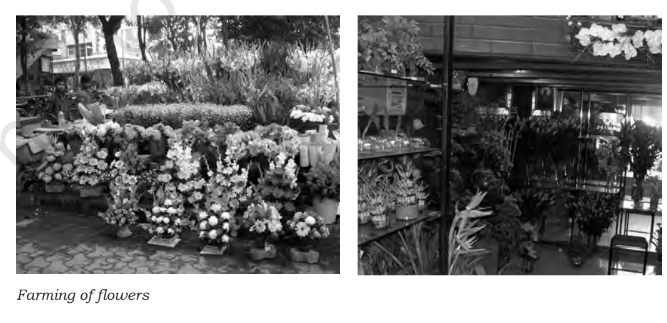
- Common products: Specialised and export-oriented products include cut flowers, grapes, figs, pomegranates, cotton and oilseeds.
| Point | Potential benefit | Risk or wider effect |
|---|---|---|
| Market and income | A guaranteed buyer and fixed price can provide financial security. | Farmers may become dependent on companies for their livelihoods. |
| Land use | Specialised crops can be produced for processing or export. | Export crops such as flowers and gherkins can divert land from food-grain production. |
| Knowledge and work | Companies supply inputs and cultivation know-how. | Indigenous agricultural knowledge may become irrelevant, and some people may be disengaged from production. |
| Environment | Production is organised for commercial markets. | High fertiliser and pesticide use can make farming ecologically unsustainable. |
Multinational Companies and Agricultural Inputs
Changing Sources of Inputs and Advice
- New role of multinationals: Companies entered agriculture as sellers of seeds, pesticides and fertilisers.
- Reduced public extension: As government agricultural development programmes were scaled down, company agents increasingly replaced agricultural extension agents in villages.
- Biased advice: Company agents often became farmers’ main source of information about seeds and cultivation, while having an interest in selling their products.
- Consequences: Dependence on costly fertilisers and pesticides can reduce profits, increase debt and contribute to ecological crises in rural areas.
Agrarian Distress and Farmer Suicides
- Policy and market changes → reduced state support and subsidies, unstable markets and exposure to global competition.
- Costly production → expensive inputs and reduced subsidies raise production costs; farmers may borrow heavily to increase productivity.
- High-risk farming → many victims were marginal farmers trying to raise productivity, primarily through Green Revolution methods.
- Crop failure → natural disasters or other failures of agricultural produce can leave farmers unable to repay debts.
- Debt and distress → debt combined with crop losses and economic pressures is associated with farmer suicides.
Structural Sources of Agrarian Distress
- Agricultural changes: Changing landholding patterns, shifts towards cash crops and individualisation of agricultural operations.
- Reduced state role: Declining state support and withdrawal of public agricultural extension, with multinational seed and fertiliser companies taking a greater role.
- Input and market pressures: Heavy dependence on high-cost inputs and exposure to global markets intensified the risks of farming.
- Official figure: 8,900 farmer suicides were recorded in Andhra Pradesh, Karnataka, Kerala and Maharashtra between 2001 and 2006 (Suri, 2006: 1523).
Key Periods
- Late 1980sIndia began following liberalisation policies that significantly affected agriculture and rural society.
- 1997–98 onwardA spate of farmer suicides occurred in different parts of the country, linked to agrarian distress.
- 2001–2006Official statistics recorded 8,900 farmer suicides across Andhra Pradesh, Karnataka, Kerala and Maharashtra.
Government Schemes for Farmers
- Schemes named: Pradhan Mantri Fasal Bima Yojana, Gram Uday se Bharat Uday Abhiyan, National Urban Mission, National Mission for Sustainable Agriculture and Kisan Credit Card.
- Intended role: These schemes may provide unified help to farmers and support quality of life in rural India.
- Liberalisation
- Reducing market restrictions and opening the economy to greater trade and competition.
- Globalisation of agriculture
- The integration of agriculture into the wider global market.
- WTO
- The World Trade Organization, associated here with a freer international trading system and market opening.
- Contract farming
- Company–farmer production agreements that specify crops and usually include a purchase commitment.
- Agrarian distress
- Economic and social hardship linked to structural and policy changes, costs, debt and agricultural risks.
What is contract farming, and what are its main social and ecological effects?
How did changes in agricultural support and production contribute to farmer distress?
Quick recap
- Liberalisation and WTO-linked market opening exposed Indian agriculture to global competition.
- Contract farming may guarantee a buyer, but can increase company dependence, weaken food-grain production and harm ecological sustainability.
- Multinational input sellers increasingly replaced public agricultural extension agents in villages.
- Costly inputs, reduced state support, unstable markets and crop failures can deepen farmers’ debt and distress.
- Many farmer-suicide victims were marginal farmers attempting to raise productivity, often through Green Revolution methods.
- Farmer suicides since 1997–98 are linked to agrarian distress; 8,900 were recorded in four states during 2001–2006.
- The lecture lists government schemes as possible sources of support for farmers and rural India.
Sociology — ALL CHAPTERS
1
INTRODUCING INDIAN SOCIETY
2
THE DEMOGRAPHIC STRUCTURE OF THE INDIAN SOCIETY
3
SOCIAL INSTITUTIONS CONTINUITY AND CHANGE
4
THE MARKET AS SOCIAL INSTITUTIONS
5
PATTERNS OF SOCIAL INEQUALITY AND EXCLUSION
6
THE CHALLENGES OF CULTURAL DIVERSITY
7
SUGGESTIONS FOR PROJECT WORK
1
Structural Change
2
Cultural Change
3
The Constitution and Social Change
4
Change and Development in Rural Society
5
Patterns of Industrialisation and Urbanisation
6
Globalisation and Social Change
7
Mass Media and Communications
8
Social Movements